Artwork
Legend of Durga
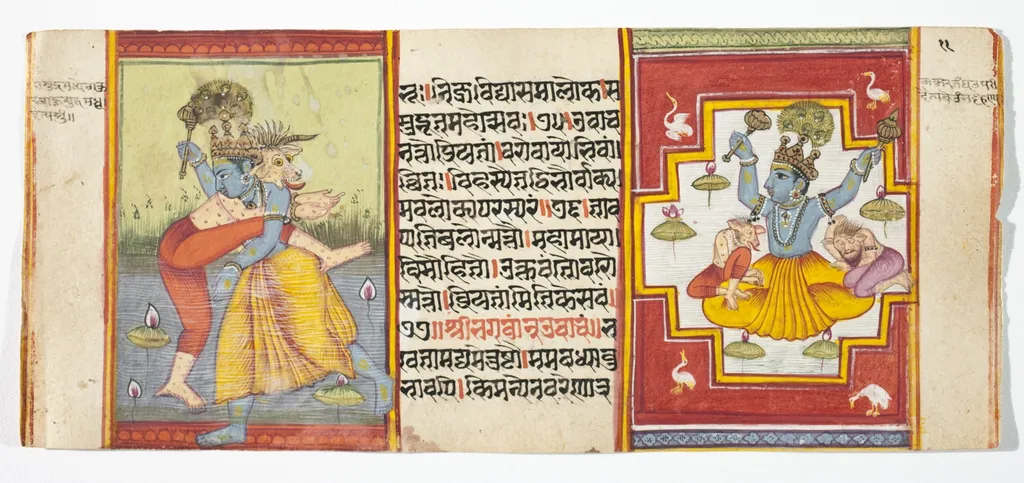
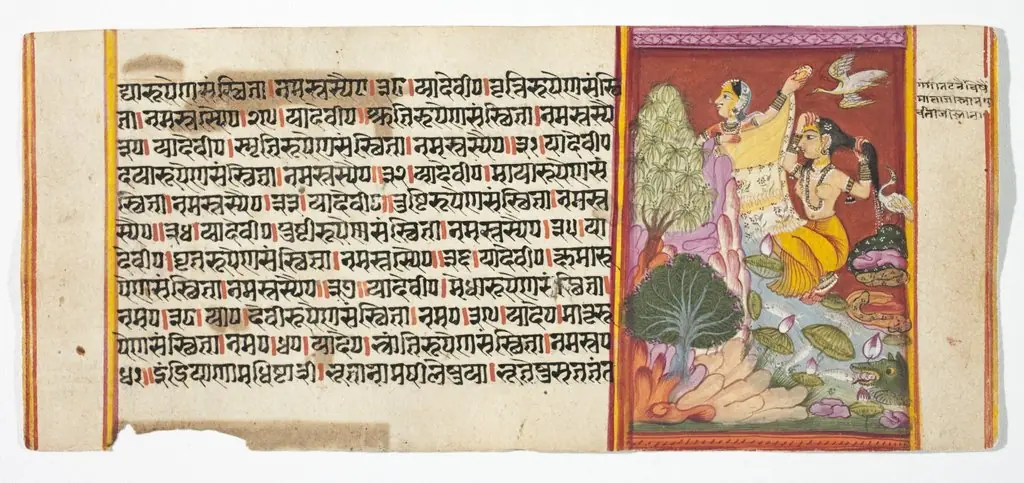
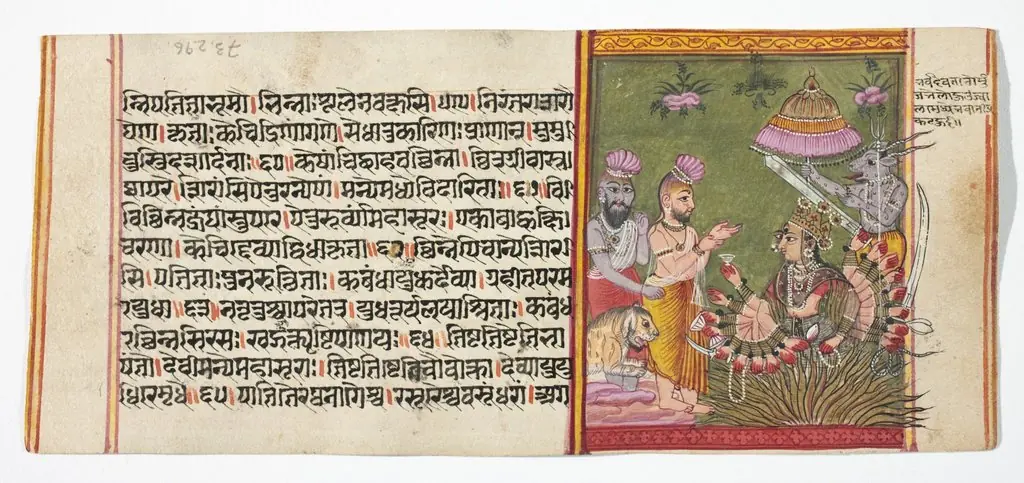
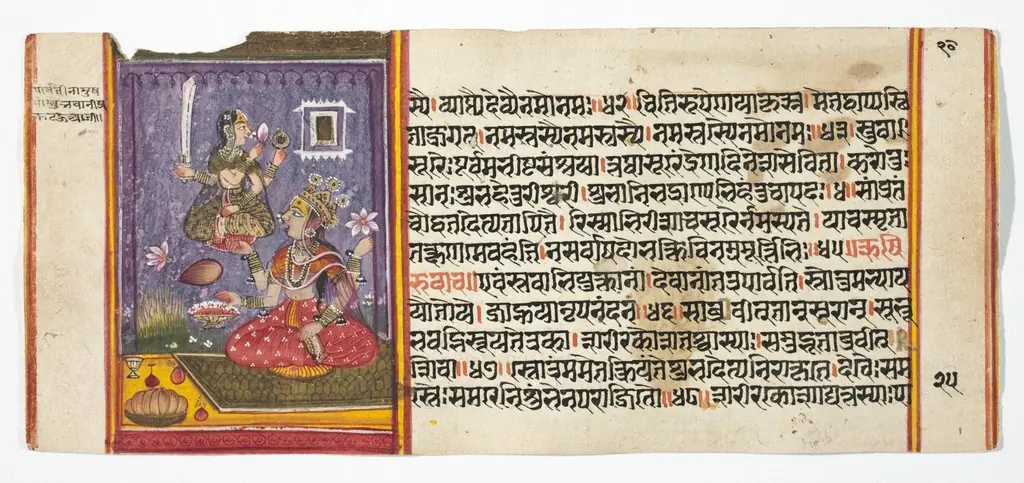
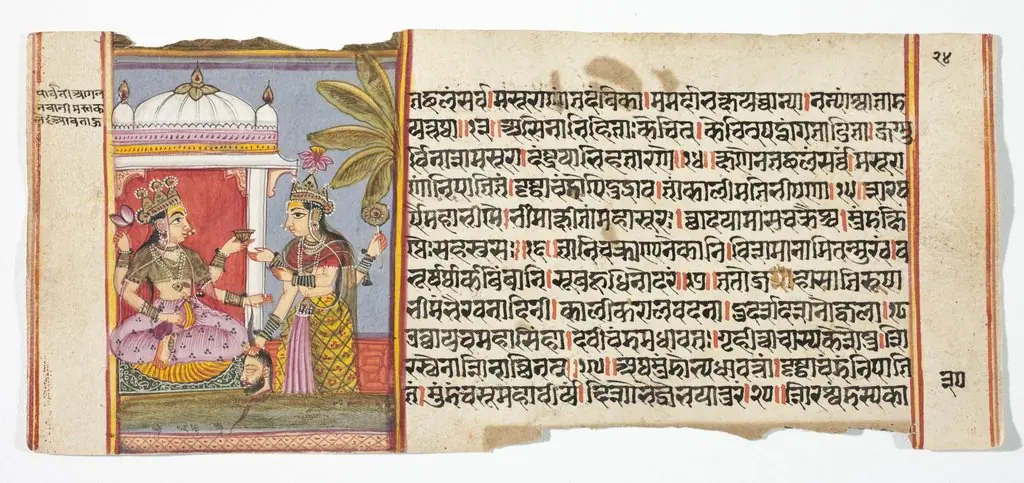
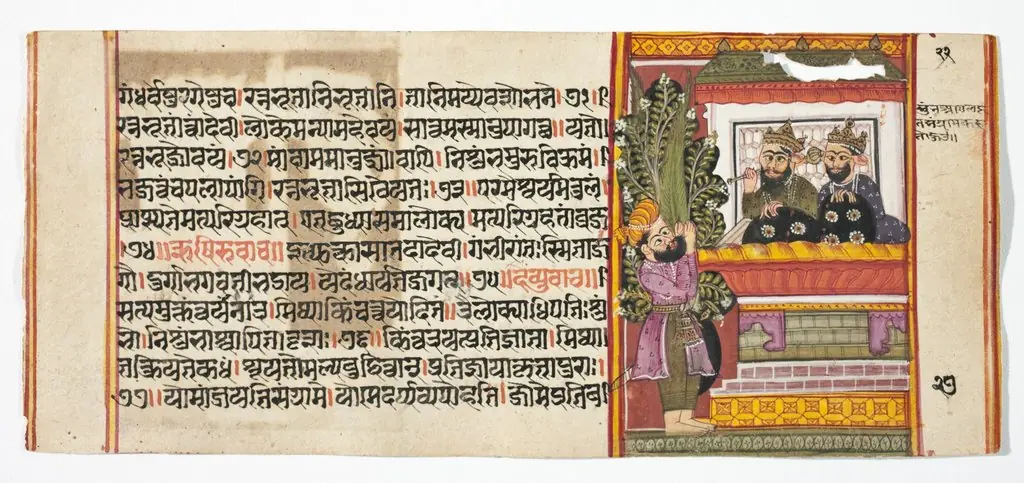
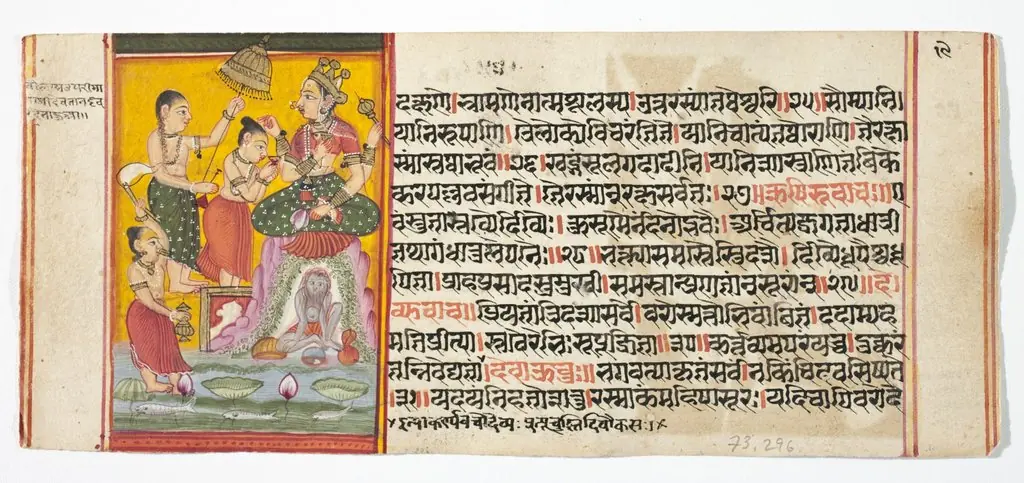
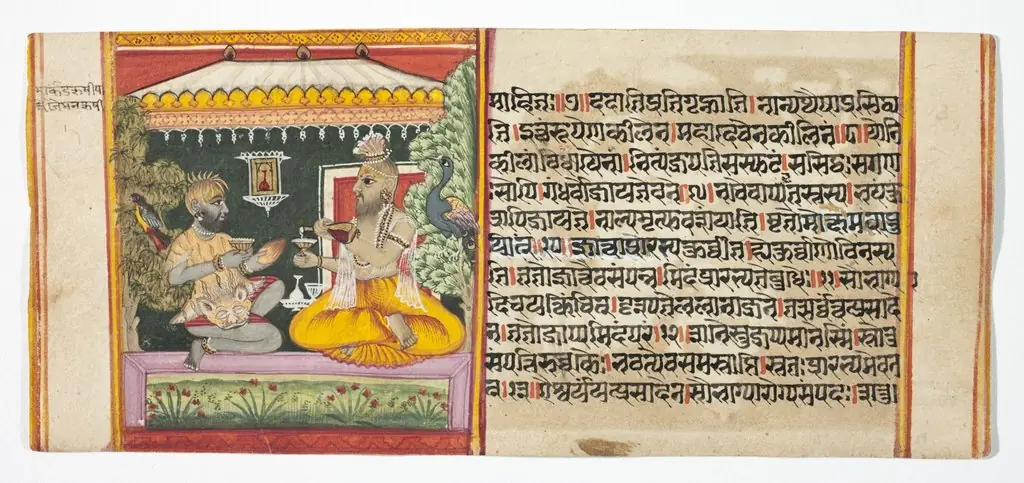
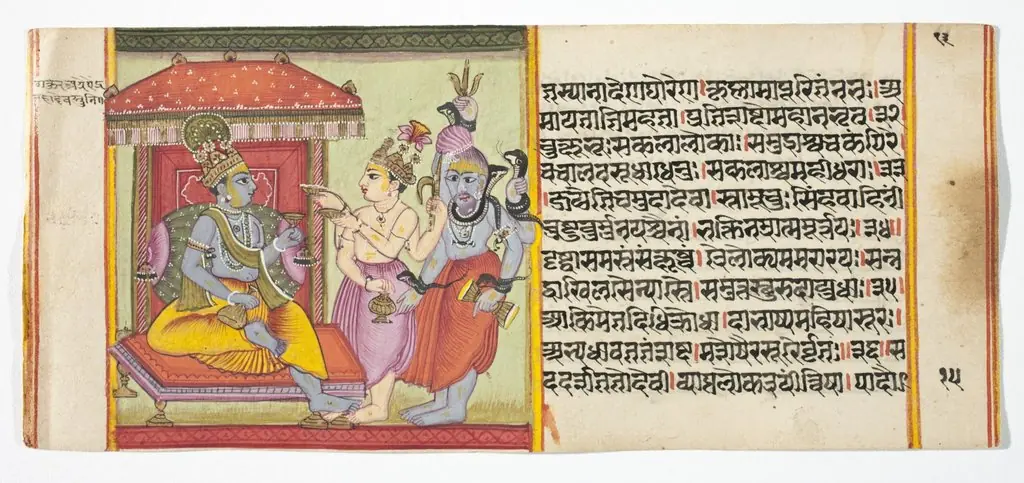
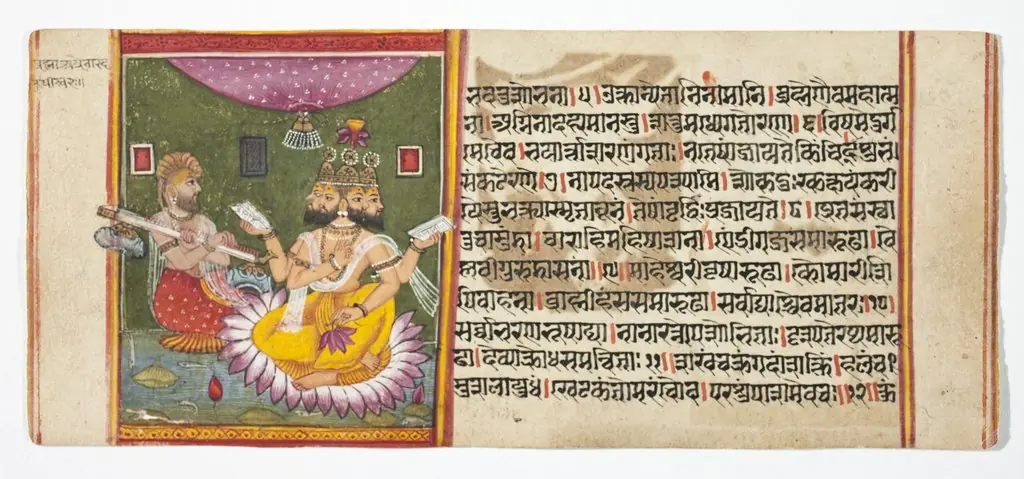
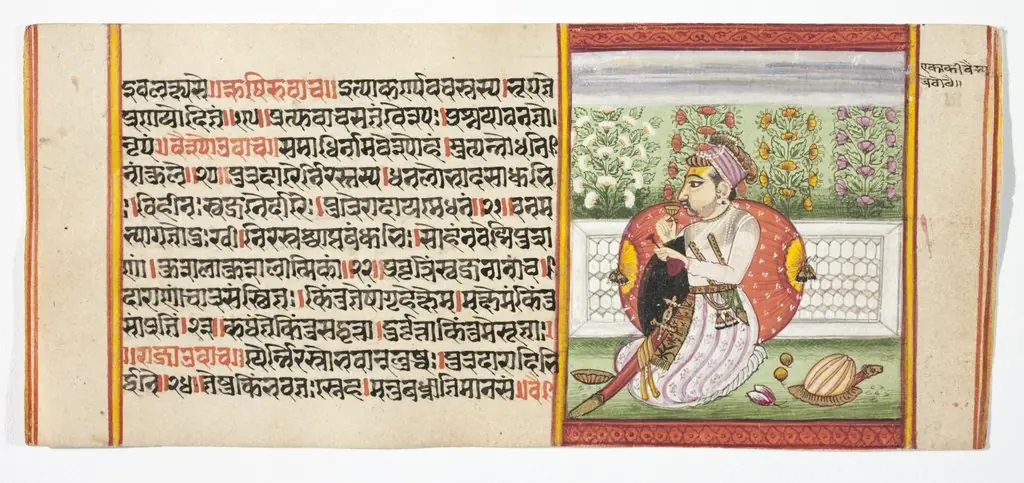
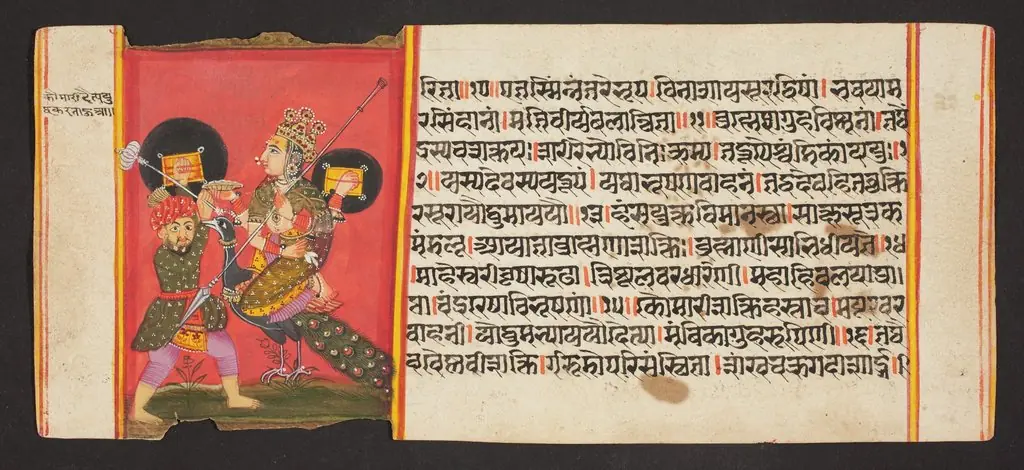
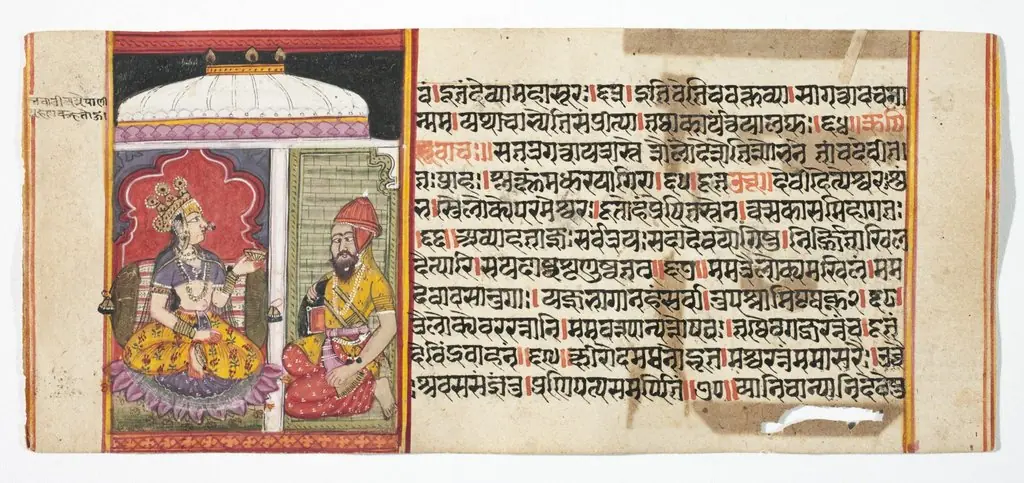
Legend of Durga is an unspecified painting by Unknown. It is held in the collection of the Detroit Institute of Arts. This two-panel painting illustrates episodes from the Hindu myth of Durga, a warrior goddess.
About this work
Overview
The left panel captures her in motion, standing dynamically with one leg bent and the other extended, while the right shows her seated serenely atop a lotus.
This two-panel painting illustrates episodes from the Hindu myth of Durga, a warrior goddess. The left panel captures her in motion, standing dynamically with one leg bent and the other extended, while the right shows her seated serenely atop a lotus. Both panels feature her blue skin, crown, and symbolic attributes—a mace and a lotus—linking the scenes as sequential moments in her divine narrative. The composition uses vivid pigments and fine detailing to emphasize spiritual significance over naturalism.
Subject & Meaning
The painting depicts Durga in two states: active combat and tranquil sovereignty. The dynamic pose in the left panel suggests her triumph over chaos, while the seated form on the right signifies post-victory stillness and divine authority. The lotus symbolizes purity and spiritual emergence, and the mace represents power over evil. Together, the panels convey the cyclical nature of divine intervention—action followed by rest, destruction followed by order.
Technique & Style
The work employs traditional Indian miniature painting techniques, with fine brushwork, flat planes of color, and intricate patterns in clothing and surroundings. Bright mineral pigments—ochres, blues, and greens—are applied with precision, creating a luminous effect. Figures are stylized rather than anatomically realistic, with elongated limbs and expressive gestures. Backgrounds are minimally rendered, focusing attention on the central deities and their symbolic elements.
History & Provenance
The painting likely originates from a Rajasthani or Pahari court atelier in the 18th or early 19th century, where devotional themes were commonly commissioned by royalty or temple patrons. Its dual-panel format suggests it was part of a larger illustrated manuscript or devotional album. No documented ownership history is available, but stylistic elements align with regional traditions of Hindu narrative painting from that period.
Context
This artwork reflects the broader tradition of illustrating Hindu epics and Puranic texts in visual form, particularly during periods when devotional movements emphasized personal connection with deities. Such paintings were used in private worship, temple rituals, or as teaching tools. The emphasis on Durga’s dual aspects—power and peace—mirrors theological concepts of Shakti, the divine feminine energy that upholds cosmic balance.
Legacy
Paintings like this contributed to the visual canon of Durga in South Asian art, influencing later religious illustrations and festival imagery. Though not widely known outside regional collections, they remain important examples of how mythological narratives were encoded in portable, intimate formats. Their continued study helps preserve the iconographic language of pre-colonial Hindu art traditions.
Artist & collection

 Domestic Scene
 Giacomo and Cardinal Marco, investing Andrea, Abbot of San Zeno, with his Benefice
 The Nymph of Fontainebleau
 Portrait of a Woman
 Madonna and Child with Saints in the Enclosed Garden
 Venus and Minerva
 Family Group of Four on Sofa
 Wall painting from Room H of the Villa of P. Fannius Synistor at Boscoreale