Artwork
Page from Tales of a Parrot (Tuti-nama): text page
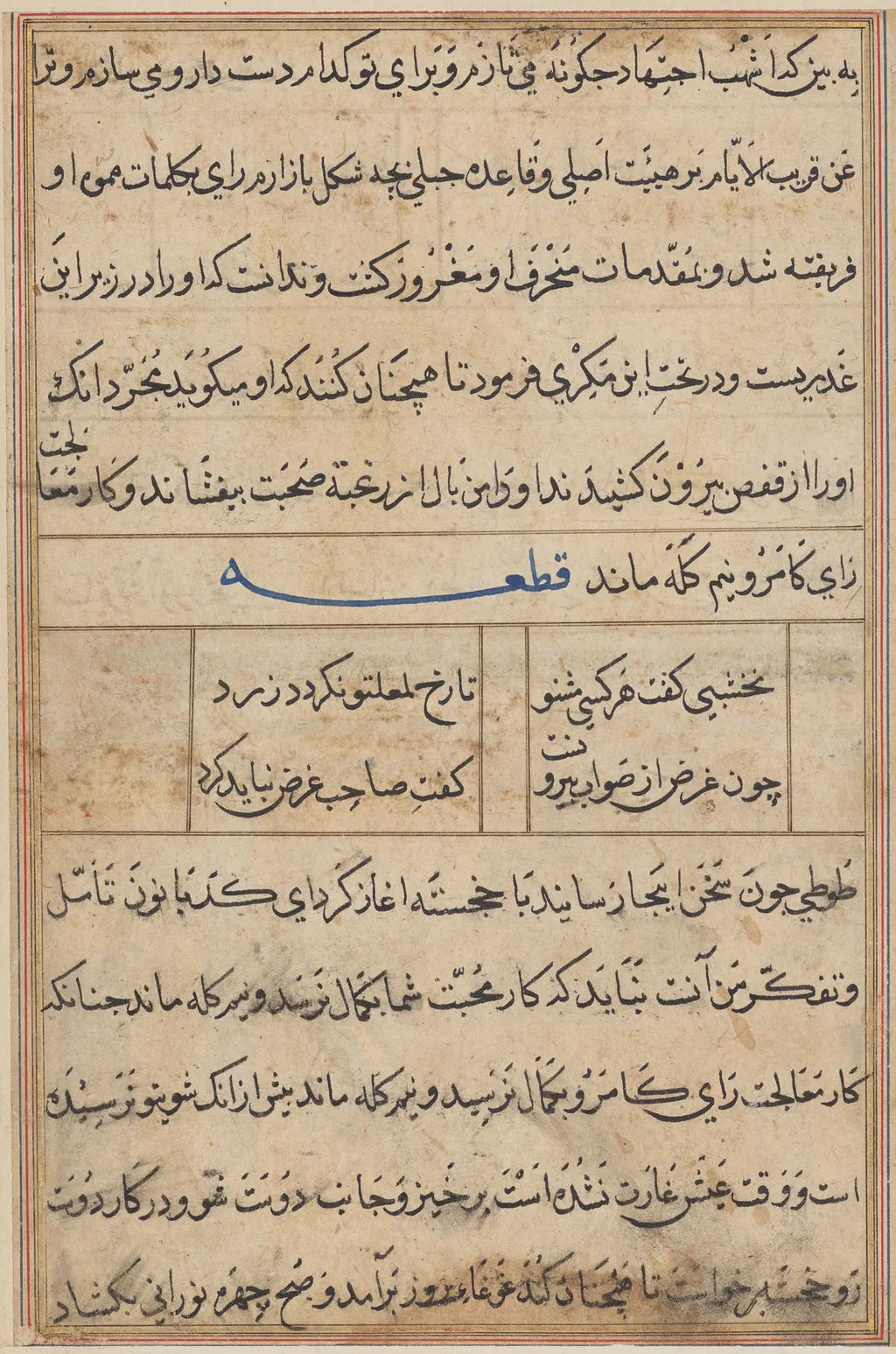
Page from Tales of a Parrot (Tuti-nama): text page is an unspecified painting. It dates from 1560 and is held in the collection of the Cleveland Museum of Art. The work is a painted page from the illustrated manuscript known as Tales of a Parrot (Tuti‑nama).
About this work
The page is divided into sections by thin lines, and there are some small illustrations or decorations throughout the text.
This painting shows a page filled with writing in a language that looks like Arabic or Persian. The text is written in black ink on a beige background, with some words highlighted in blue. The page is divided into sections by thin lines, and there are some small illustrations or decorations throughout the text. The writing is very detailed and intricate, with many flourishes and embellishments. The overall effect is one of great beauty and craftsmanship. The page appears to be from an old book or manuscript, and the writing style suggests that it may be from the 16th century.
Overview
The work is a painted page from the illustrated manuscript known as Tales of a Parrot (Tuti‑nama). Executed as a miniature painting, it reproduces a single leaf of text rather than a full illustration, presenting the page as an object of visual art.
Subject & Meaning
The page contains a narrative written in a cursive script resembling Arabic or Persian, suggesting a literary tradition of storytelling. The text itself, though not transcribed here, forms part of the larger tale of the parrot, a common motif in Persian folklore that often conveys moral or didactic messages.
Technique & Style
Rendered with black ink on a light‑tan ground, the calligraphy is interlaced with delicate flourishes and occasional blue accents that highlight key words. Thin ruled lines separate the text into columns, while miniature decorative motifs—such as vegetal vines and tiny figurative sketches—punctuate the margins, demonstrating the meticulous hand of a courtly scribe‑artist.
History & Provenance
The page is dated to the 16th century, a period when Persian manuscript production flourished under Safavid patronage. Its survival as a painted replica indicates that it may have been copied for a later collector or for inclusion in a museum collection, preserving the original's aesthetic qualities.
Context
Manuscript culture in the early modern Islamic world prized the integration of literary and visual arts. Pages like this one exemplify the harmonious blend of calligraphic excellence and ornamental design that characterized elite book production, reflecting both religious reverence for the written word and secular enjoyment of storytelling.
Legacy
As a representative example of Persian miniature book art, the page illustrates the enduring influence of calligraphic decoration on later artistic traditions, informing modern understandings of manuscript illumination and the visual rhetoric of textual presentation.
Artist & collection

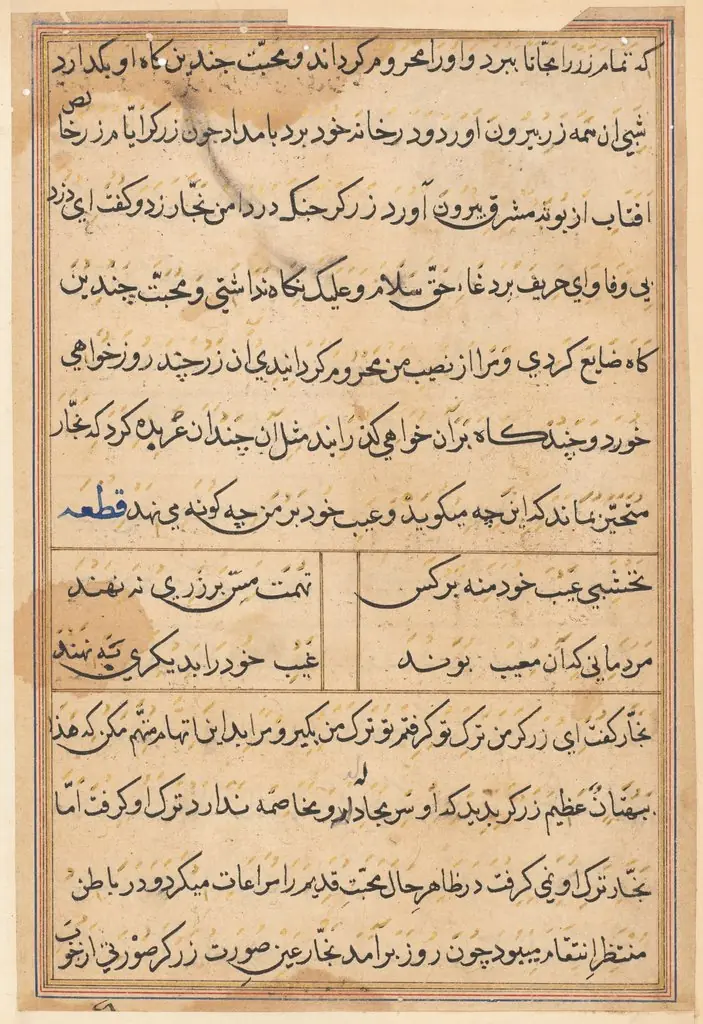 Page from Tales of a Parrot (Tuti-nama): text page
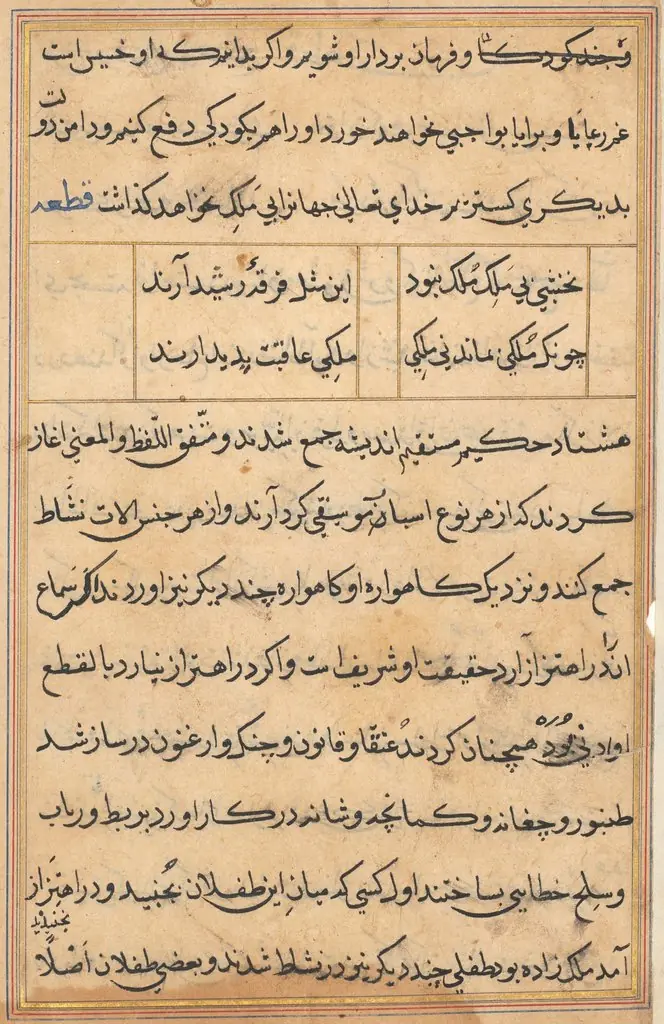 Page from Tales of a Parrot (Tuti-nama): text page
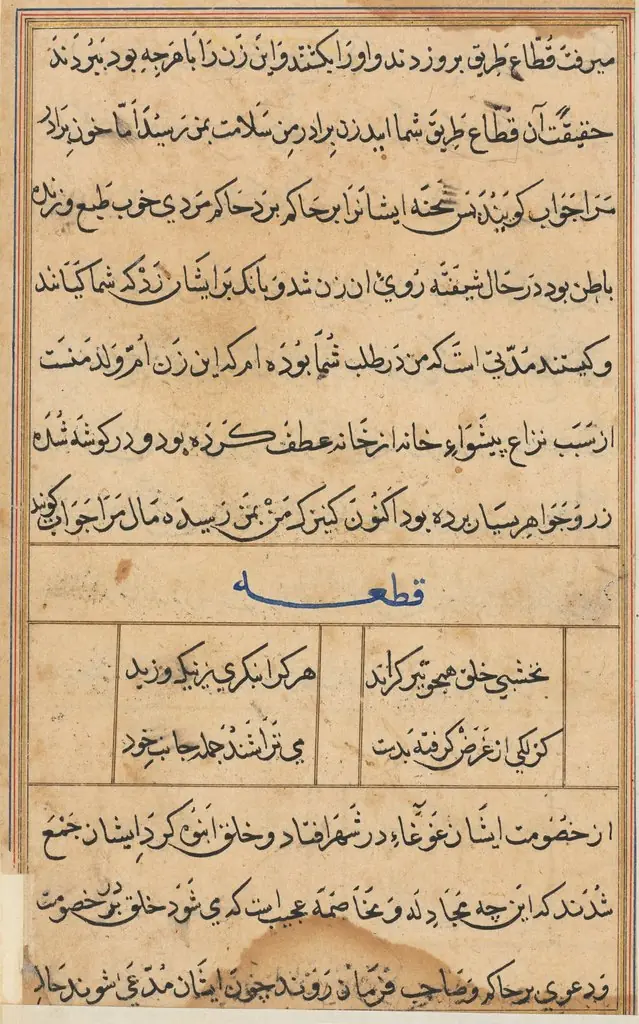 Page from Tales of a Parrot (Tuti-nama): text page
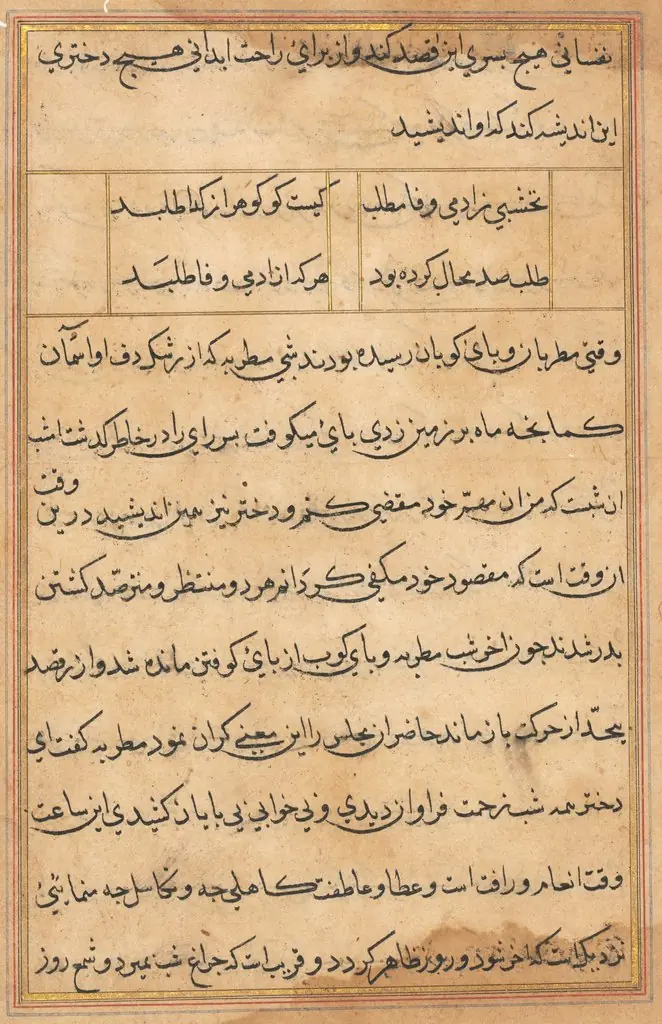 Page from Tales of a Parrot (Tuti-nama): text page
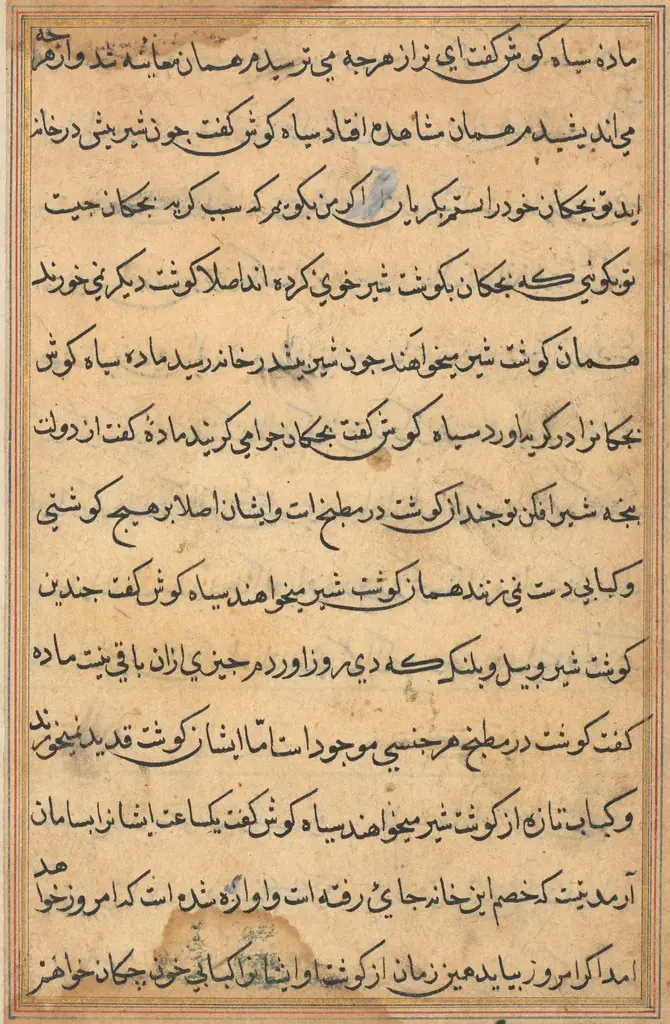 Page from Tales of a Parrot (Tuti-nama): text page
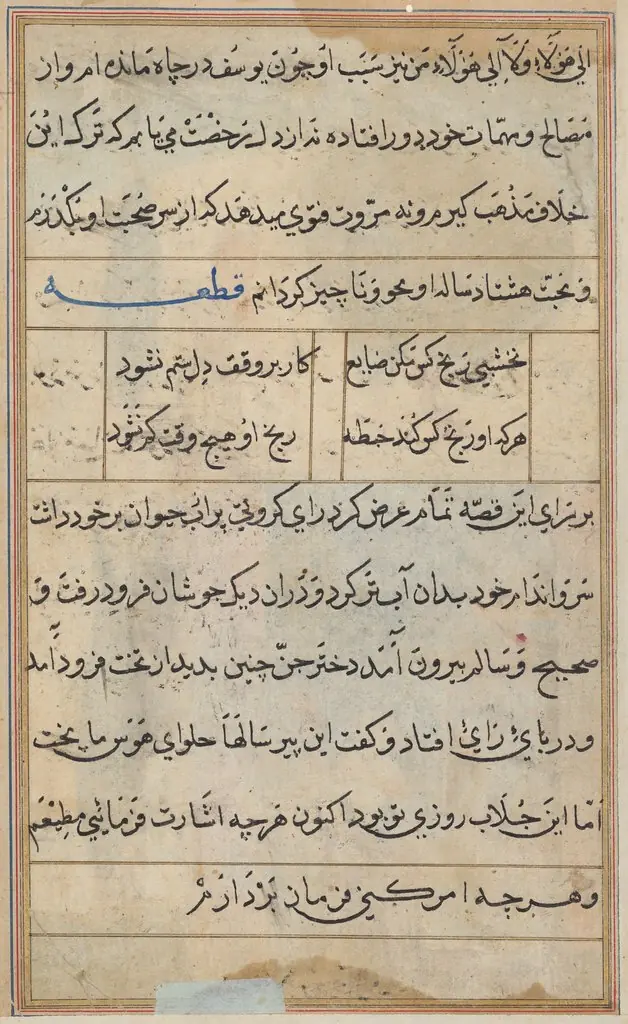 Page from Tales of a Parrot (Tuti-nama): text page
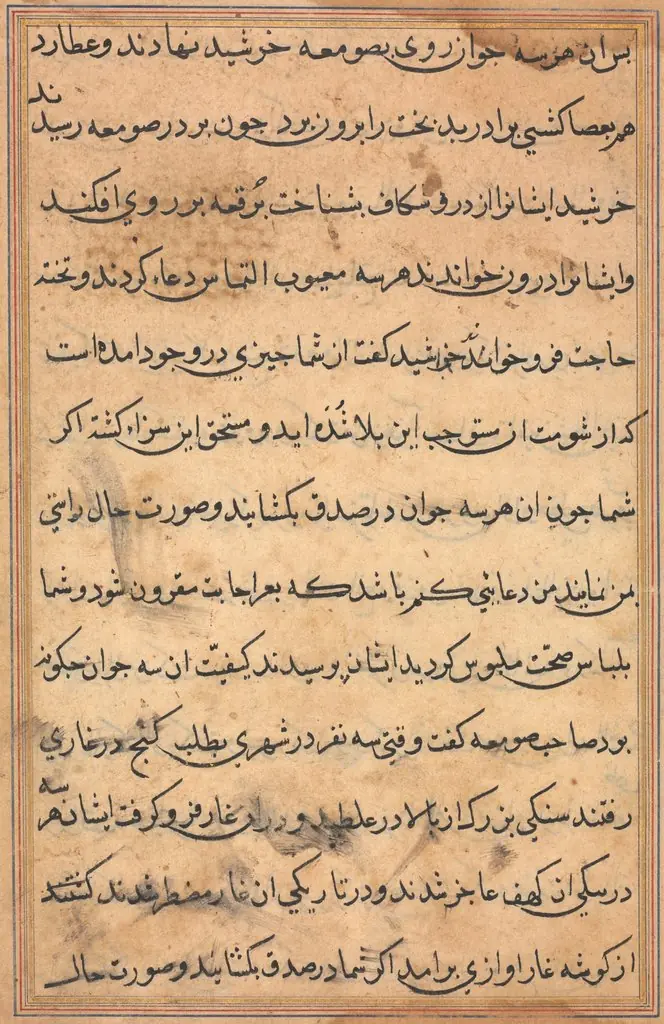 Page from Tales of a Parrot (Tuti-nama): text page
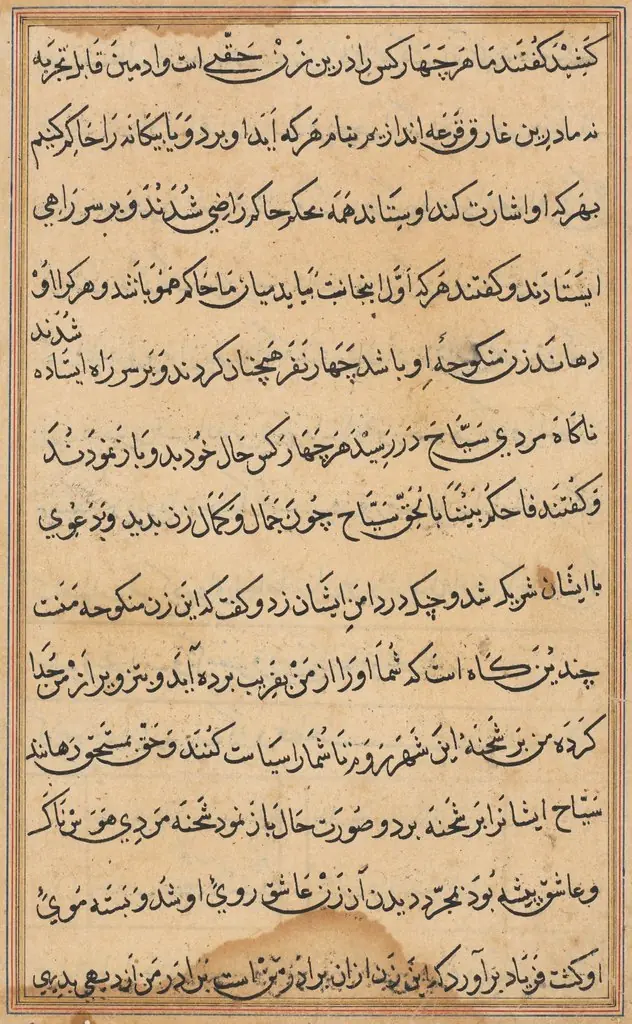 Page from Tales of a Parrot (Tuti-nama): text page
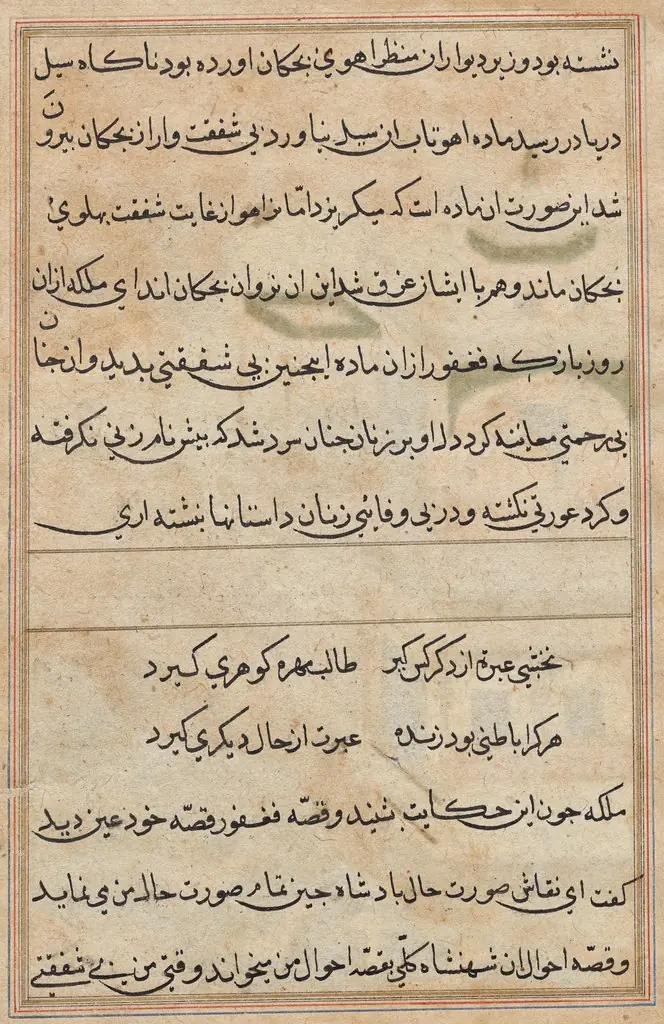 Page from Tales of a Parrot (Tuti-nama): text page
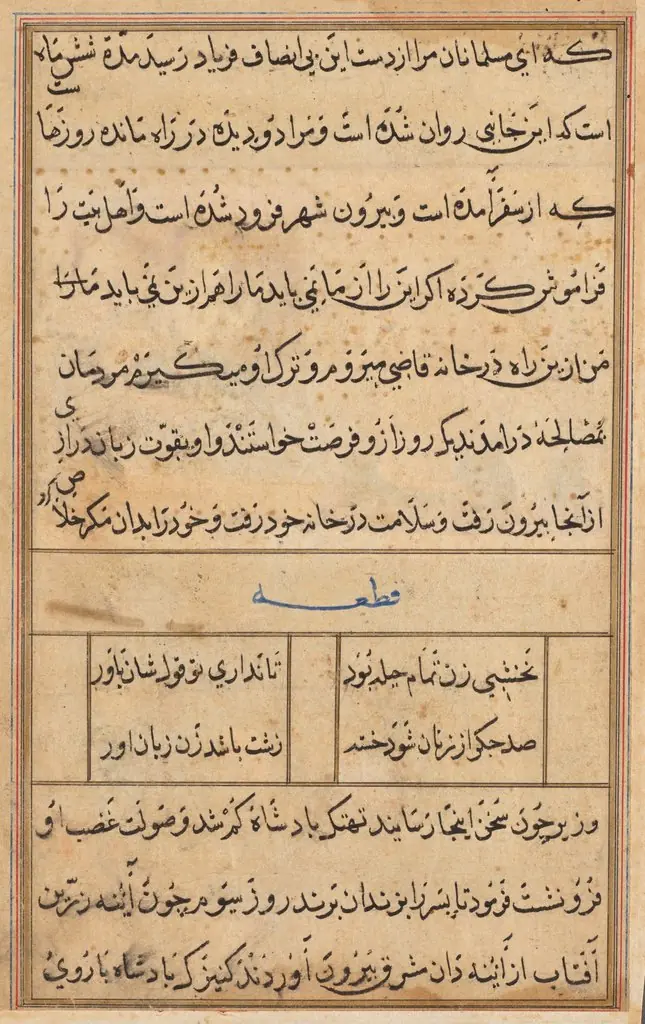 Page from Tales of a Parrot (Tuti-nama): text page