Artwork
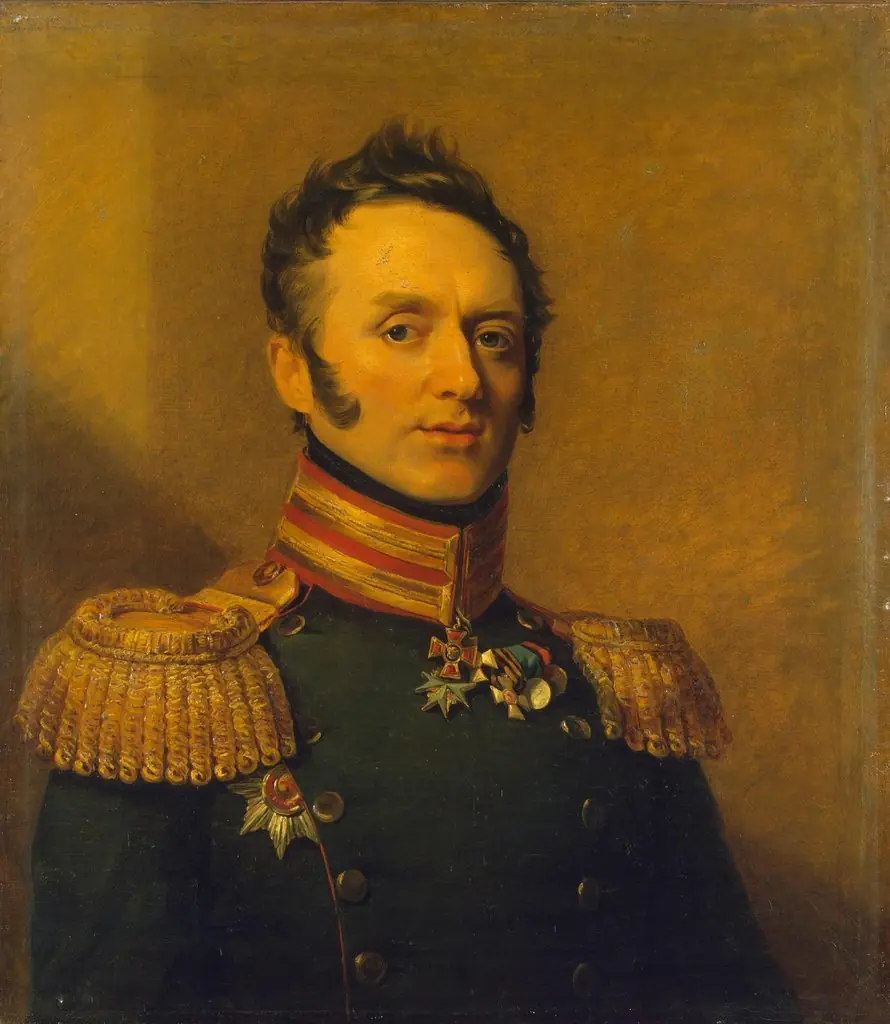
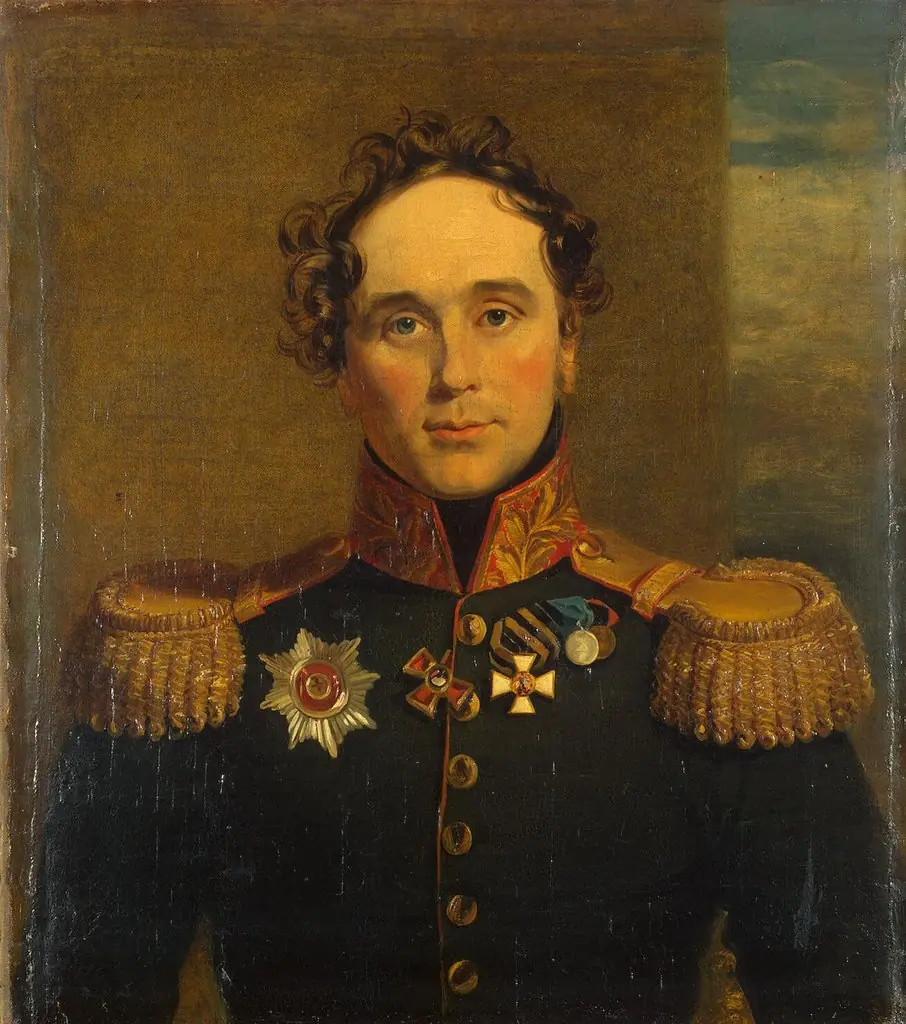
Portrait of Fyodor I. Talyzin (1773-1844) (1st)
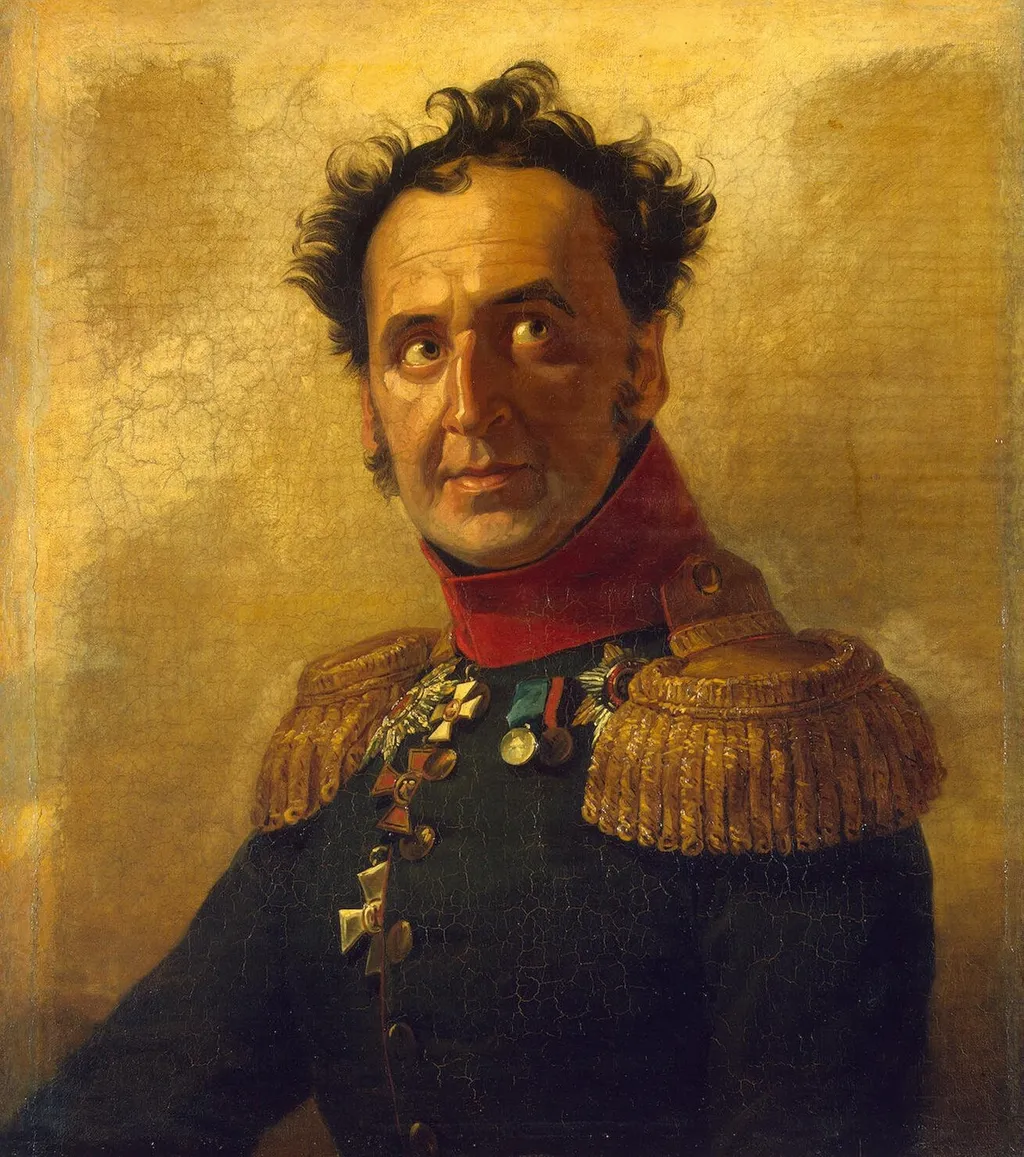
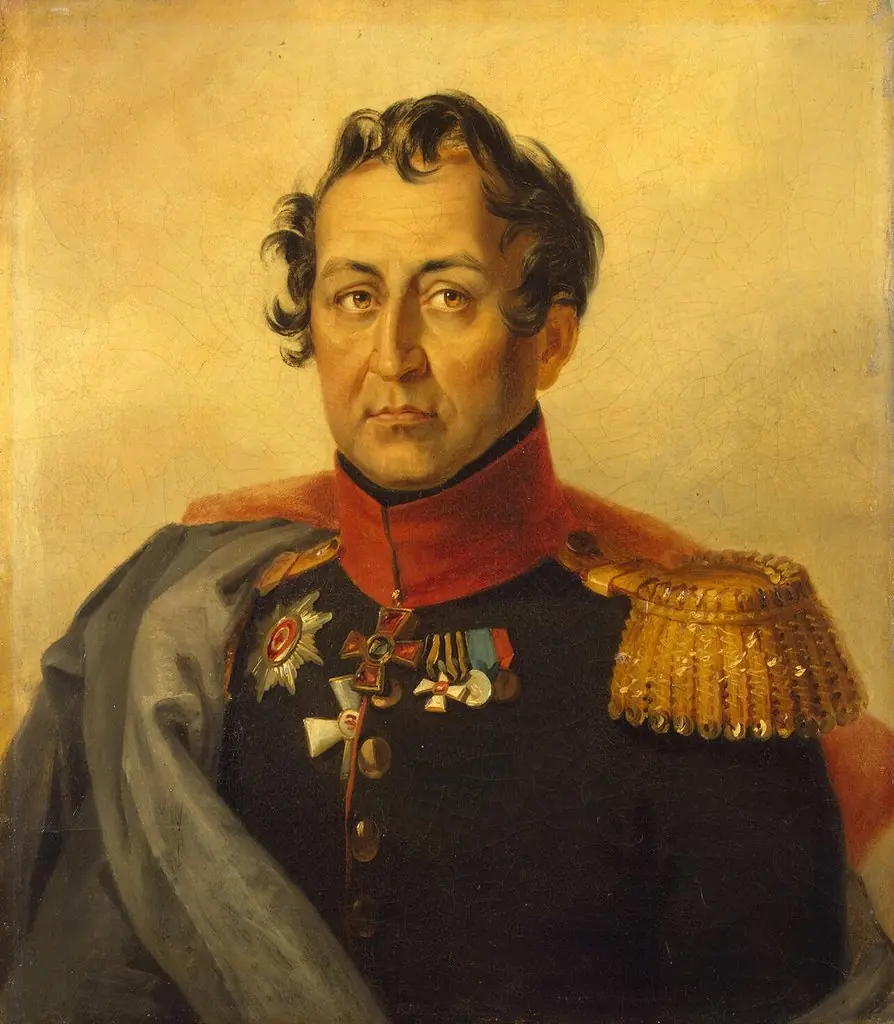
Portrait of Fyodor I. Talyzin (1773-1844) (1st) is an oil painting by the Neoclassicist artist Unknown. It dates from 1822 and is held in the collection of the Hermitage Museum. This oil painting portrays Fyodor I.
About this work
Overview
This oil painting portrays Fyodor I. Talyzin, a military figure, in a formal, detailed representation. Executed in oil paint, the work emphasizes Talyzin's dignified presence through meticulous rendering of his attire and facial expression.
Subject & Meaning
The subject, Fyodor I. Talyzin (1773-1844), is depicted in a military uniform adorned with a red collar, gold epaulettes, and numerous medals, signifying his rank and honors. His serious expression conveys a sense of solemnity and professionalism.
Technique & Style
The artist employs chiaroscuro to create a three-dimensional effect on Talyzin's face, drawing the viewer's focus. The plain background further emphasizes the subject, allowing the intricate details of the uniform and medals to take precedence.
Context
The painting's style and attention to military detail suggest it was likely created to commemorate Talyzin's service or achievements, reflecting the societal value placed on military honor during his time.
History & Provenance
Unfortunately, specific details about the painting's creation date, artist, or ownership history before its current location are not provided in the available information.
Legacy
The work is now part of the State Hermitage Museum's collection, where it contributes to the institution's extensive holdings of portraiture and military-themed art, offering insights into the era's military culture and artistic practices.
Artist & collection

 Domestic Scene
 Giacomo and Cardinal Marco, investing Andrea, Abbot of San Zeno, with his Benefice
 The Nymph of Fontainebleau
 Portrait of a Woman
 Madonna and Child with Saints in the Enclosed Garden
 Venus and Minerva
 Family Group of Four on Sofa
 Wall painting from Room H of the Villa of P. Fannius Synistor at Boscoreale