Artwork
Portrait of Alexander I. Talyzin (1777-1849) (2nd)
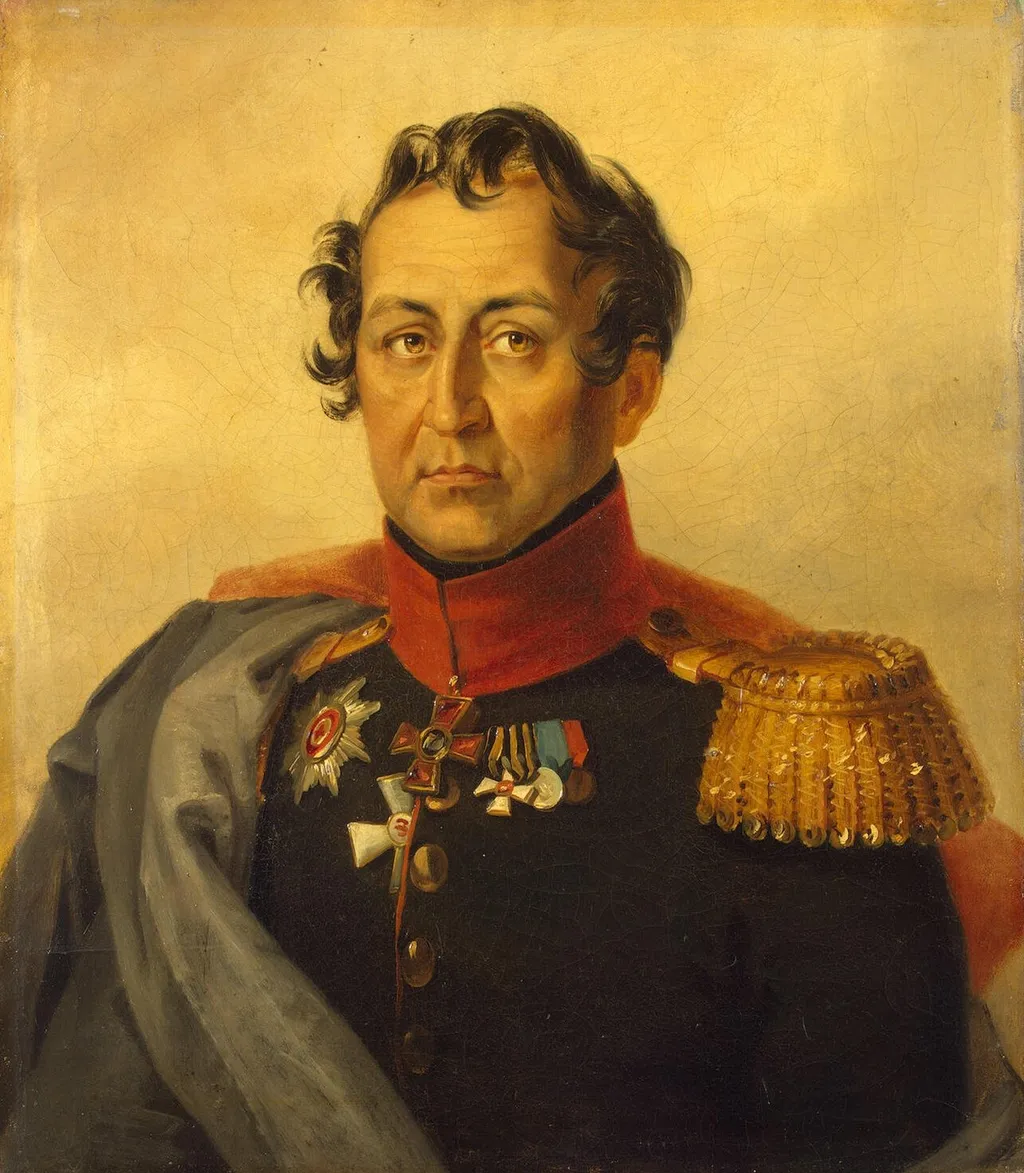
Portrait of Alexander I. Talyzin (1777-1849) (2nd) is an oil painting by George Dawe. It dates from 1823 and is held in the collection of the Hermitage Museum.
About this work
Overview
This 1823 oil painting by George Dawe portrays Alexander I. Talyzin, a Russian military figure, in formal attire adorned with medals and insignia, set against a light yellow background.
Subject & Meaning
The subject, Alexander I. Talyzin (1777-1849), is depicted in a military uniform with a red collar, gold epaulets, and numerous medals, including a prominent cross on a red ribbon, signifying his rank and honors.
Technique & Style
Dawe employed chiaroscuro, leveraging strong light-dark contrasts to imbue Talyzin's figure with depth and volume, while meticulous detail work characterizes the rendering of textures and insignia.
History & Provenance
Painted during Dawe's time in Saint Petersburg (from 1819), the work is now part of the State Hermitage Museum's collection, reflecting Dawe's integration into Russian artistic circles.
Context
Dawe's success in Russia, including the patronage of figures like Pushkin, contrasts with his family's background in politically charged art, as seen in his father Philip Dawe's mezzotint engravings.
Legacy
While specific lasting impacts of this portrait on broader art historical trends are not prominently noted, it remains a testament to Dawe's influence within early 19th-century Russian portraiture.
Artist & collection
Artist
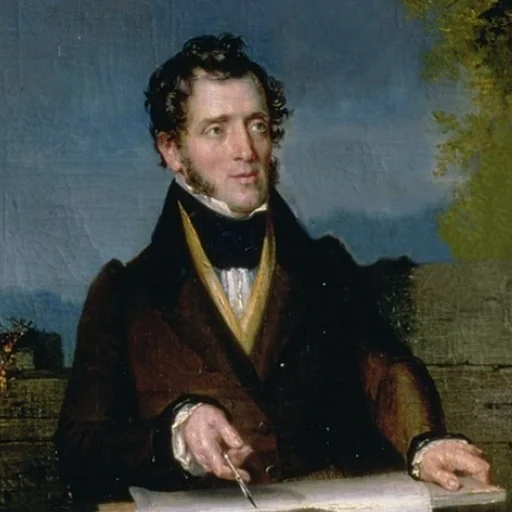
George Dawe (6 February 1781 – 15 October 1829) was an English portraitist who painted 329 portraits of Russian generals active during Napoleon's invasion of Russia for the Military Gallery of the Winter Palace.

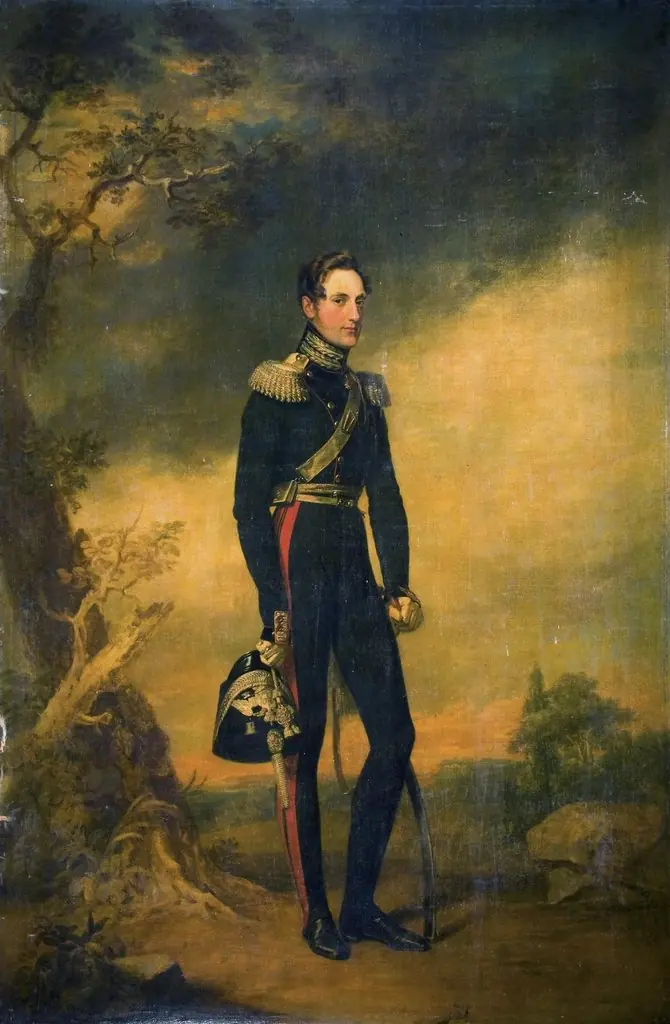 Portrait of Grand Duke Nikolai Pavlovich
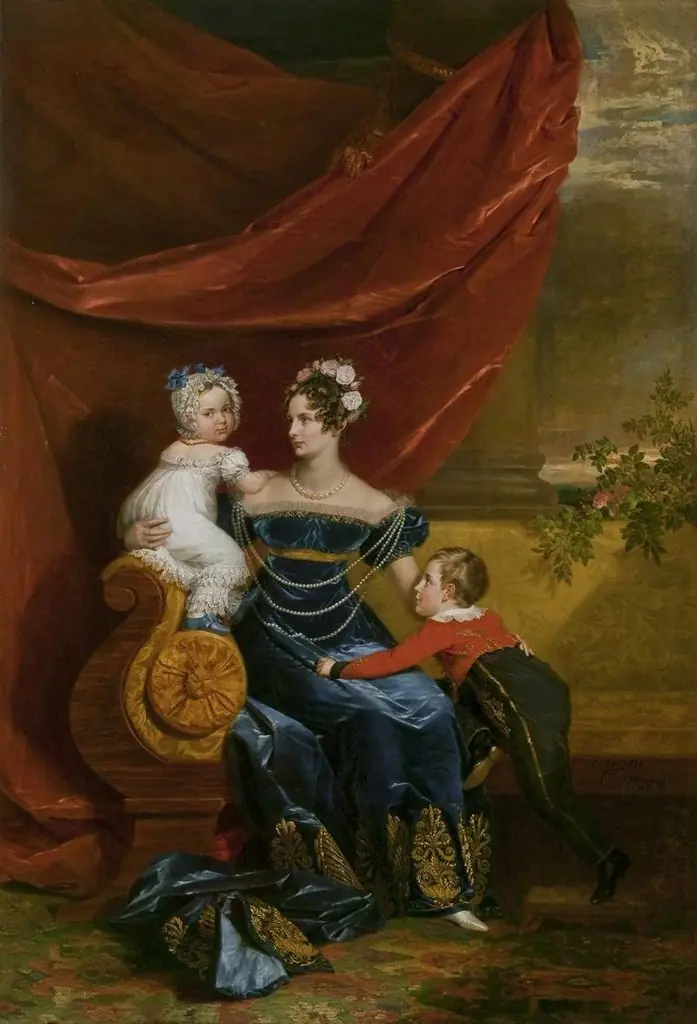 Portrait of Grand Duchess Alexandra Fiodorovna with Children
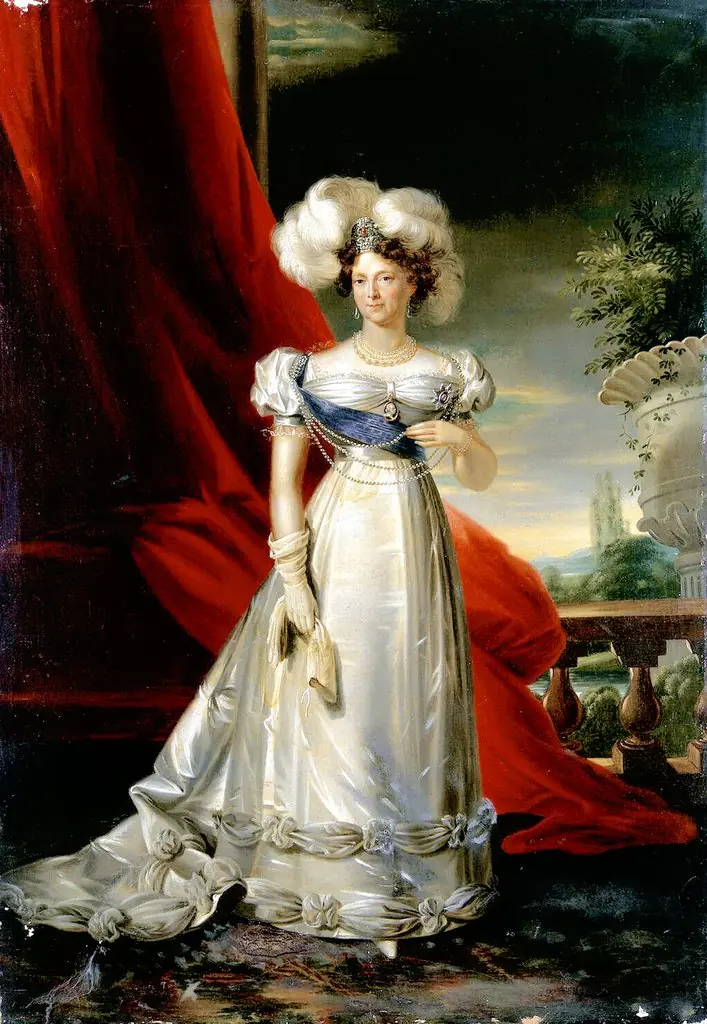 Portrait of the Empress Dowager Maria Feodorovna
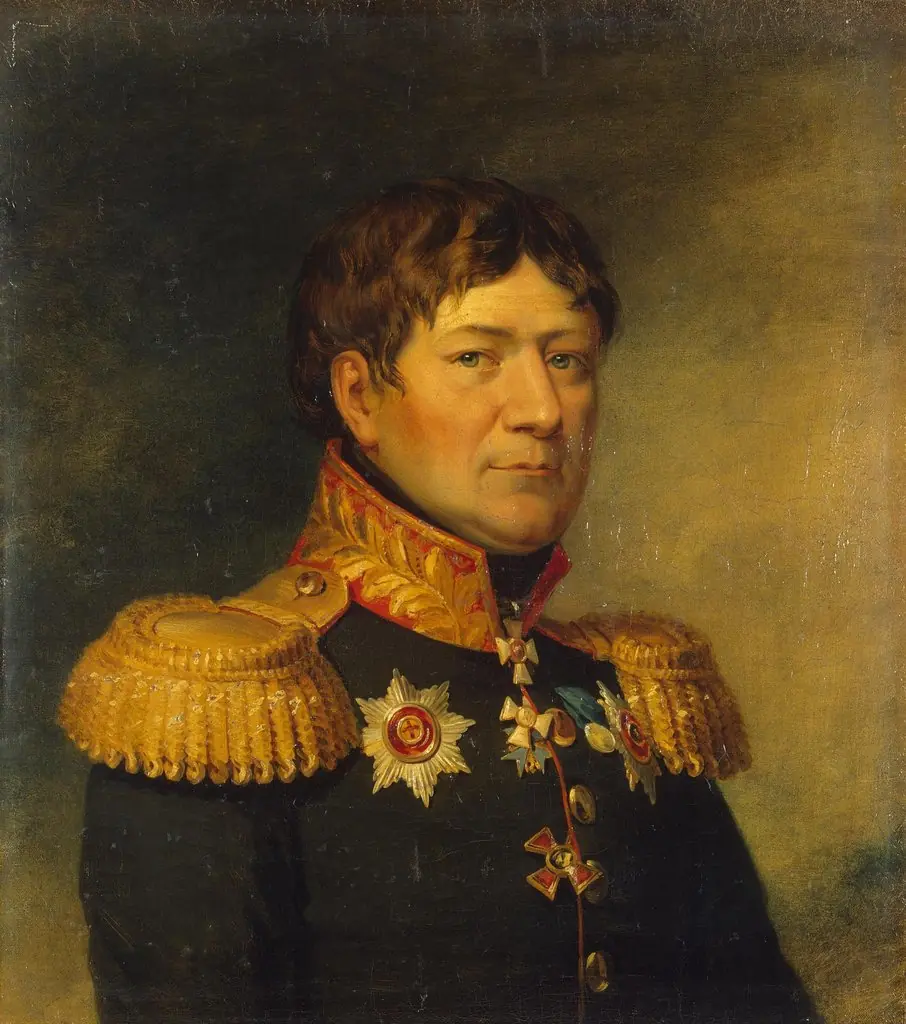 Portrait of Yegor M. Pillar (1767-1830)
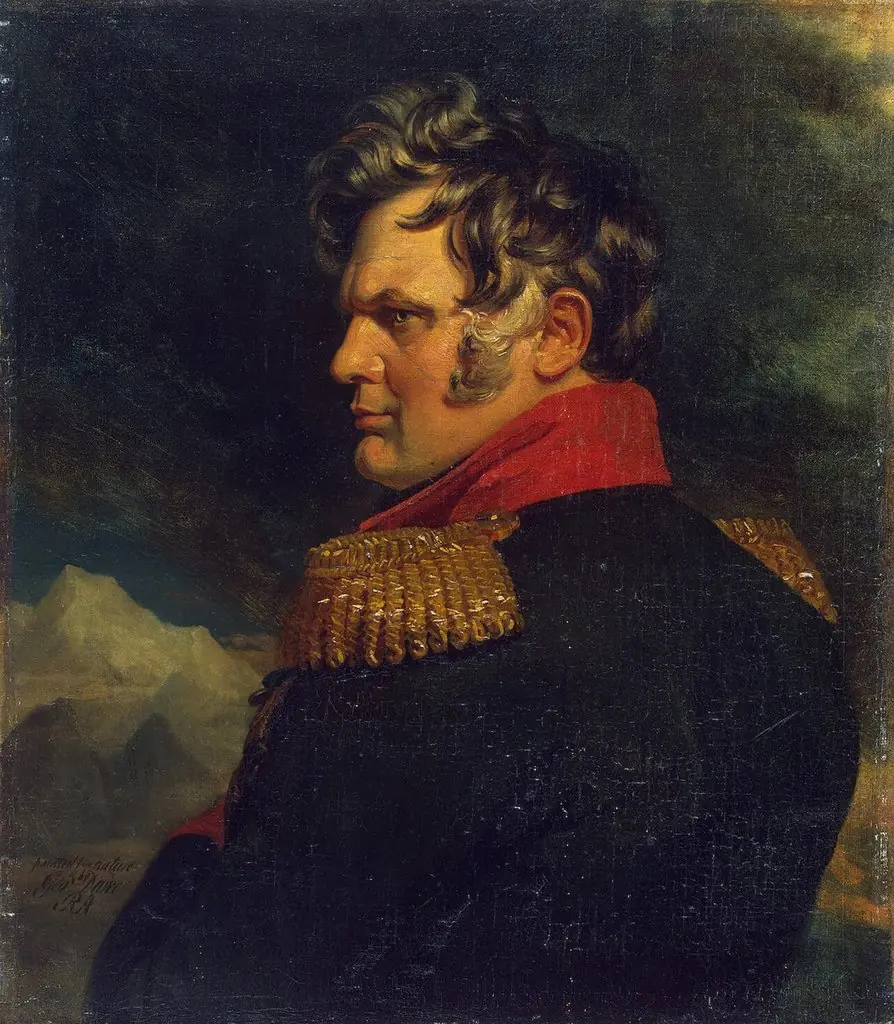 Portrait of Alexei P. Yermolov (1772/77-1861)
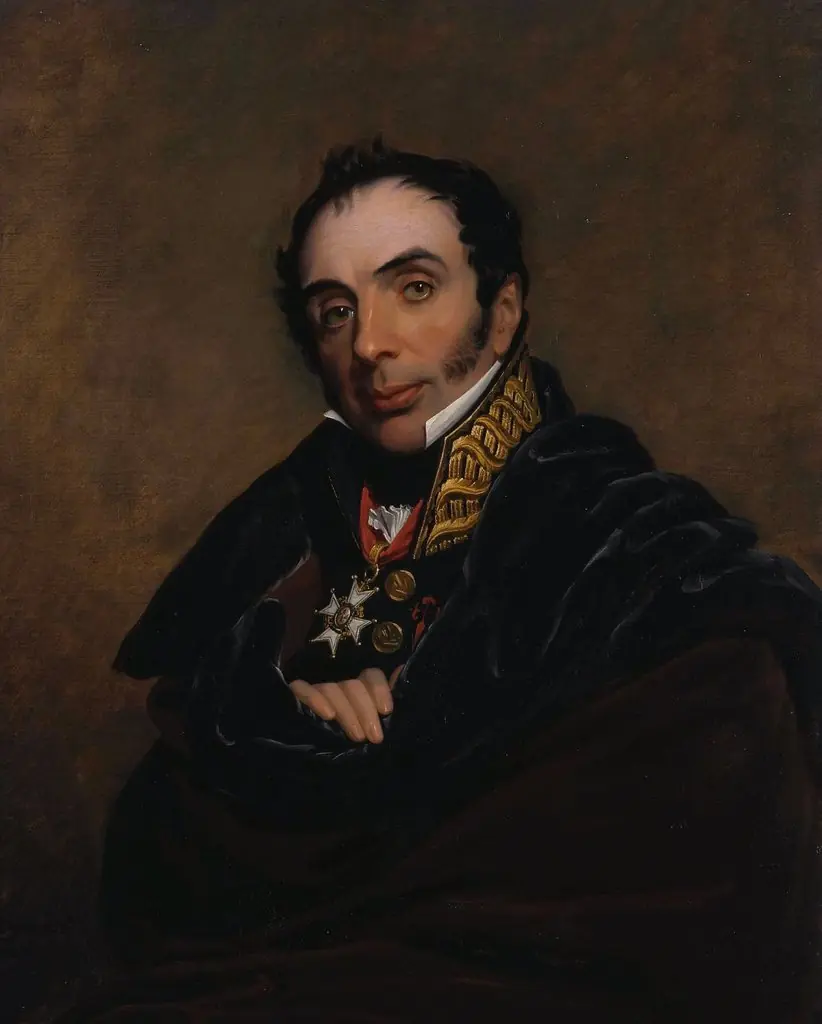 Portrait of Miguel Ricardo de Alava
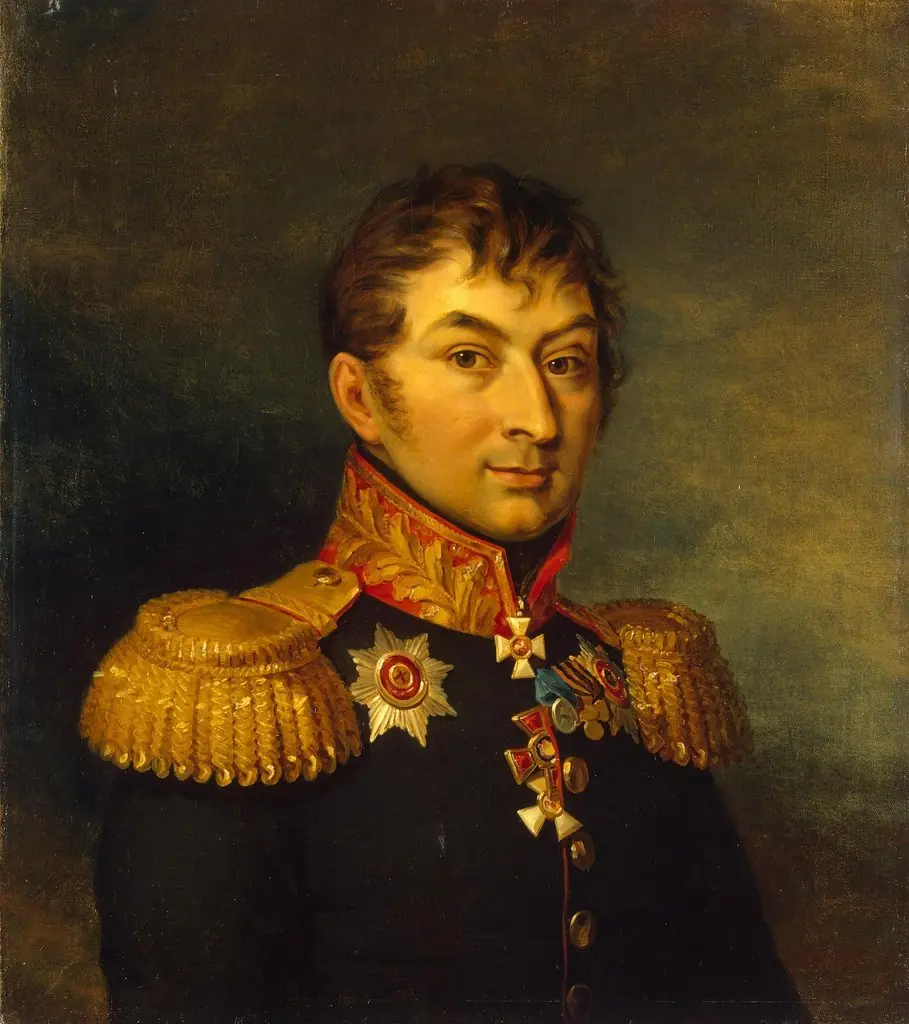 Portrait of Ivan D. Panchulidzev (1759-1815) (1st)
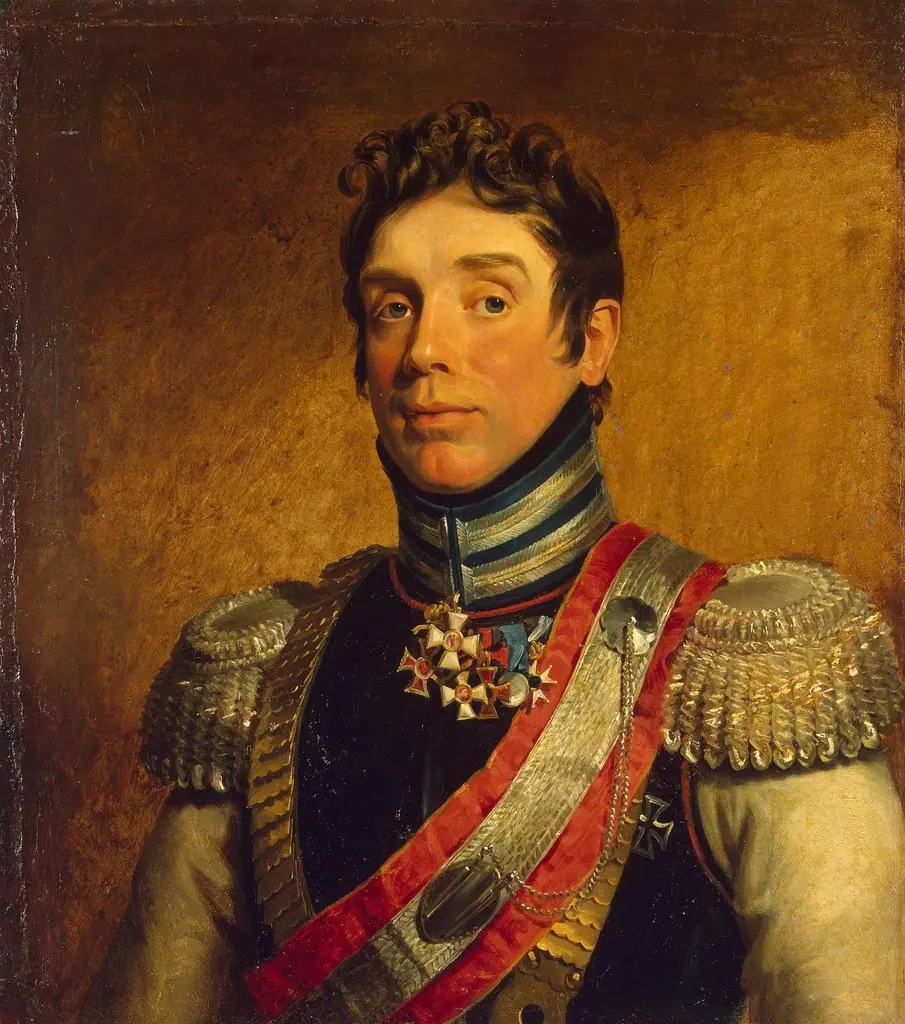 Portrait of Karl V. Budberg (1774-1829)
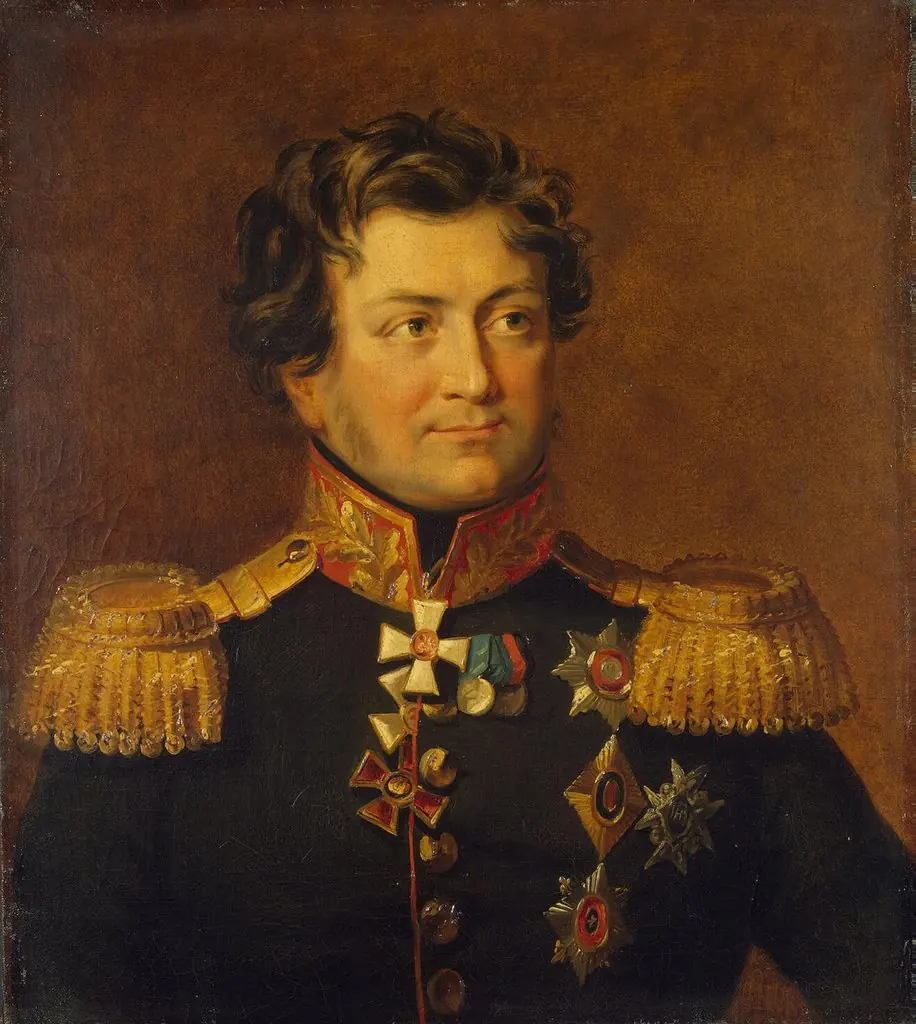 Portrait of Alexander Ya. Rudzevich (1775-1829)
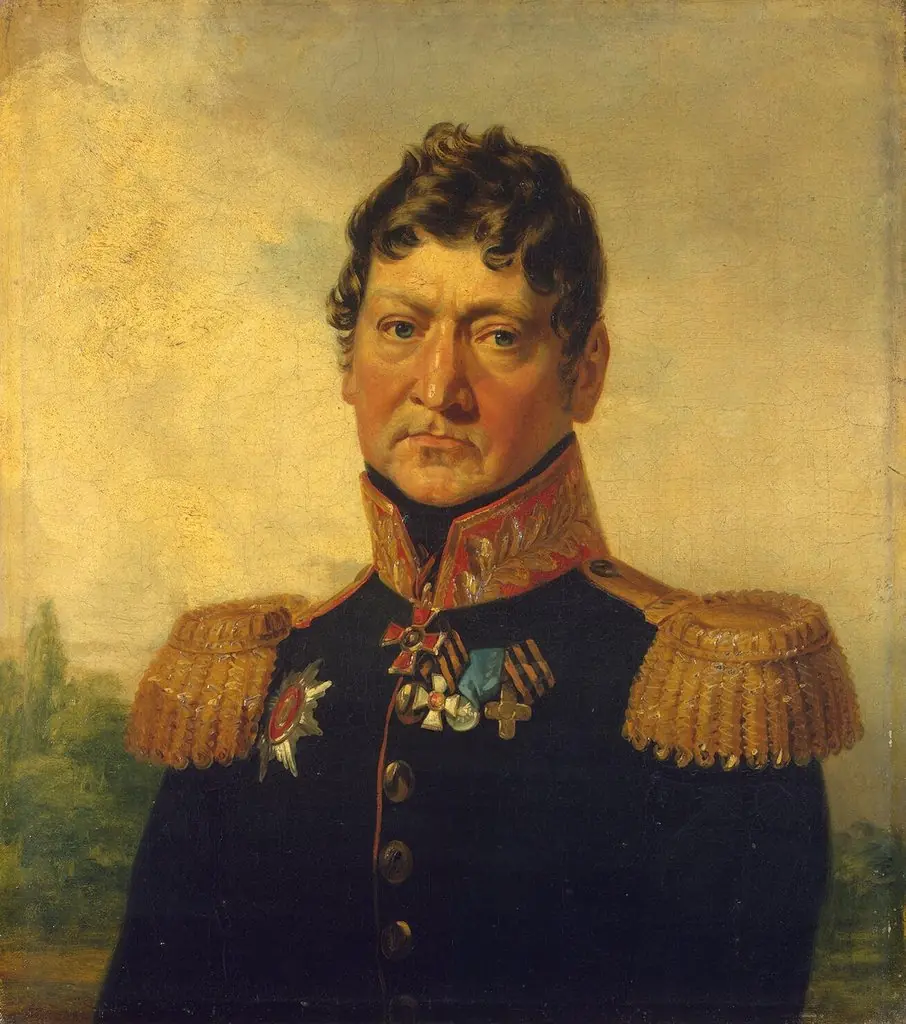 Portrait of Andrey A. Zass (1776-1830) (2nd)
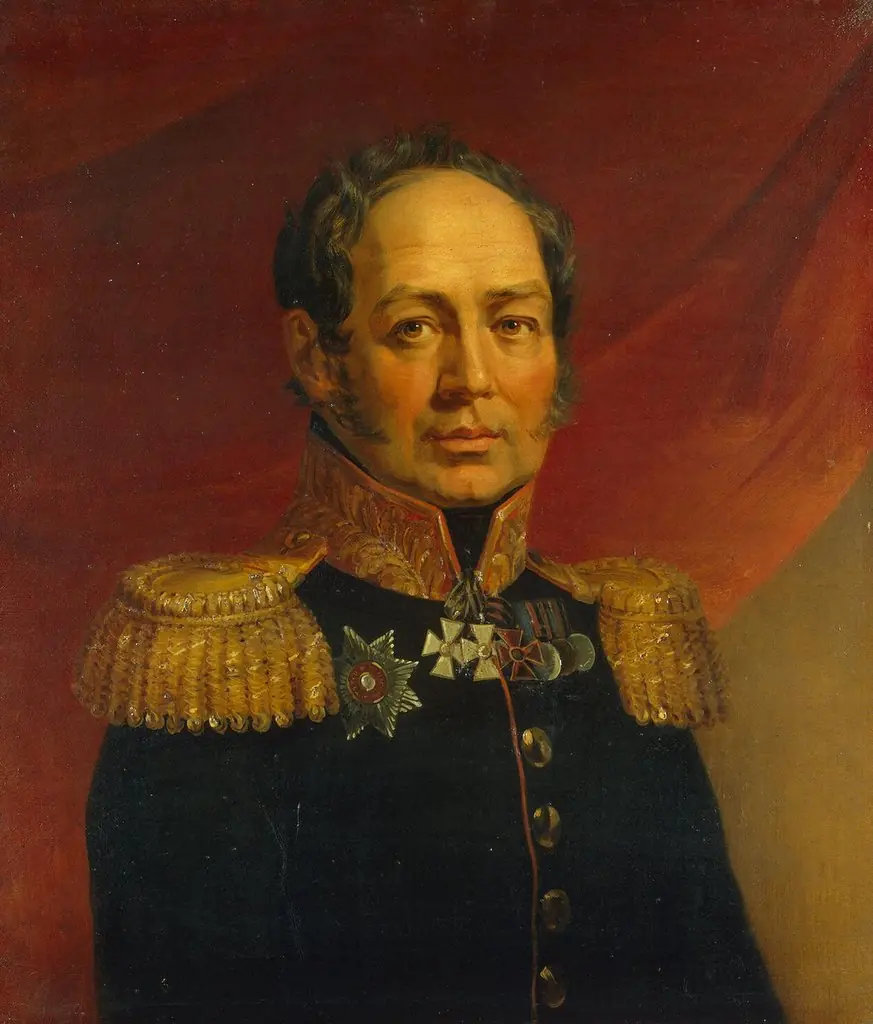 Portrait of Dmitry V. Lyalin (1772-1847/48)
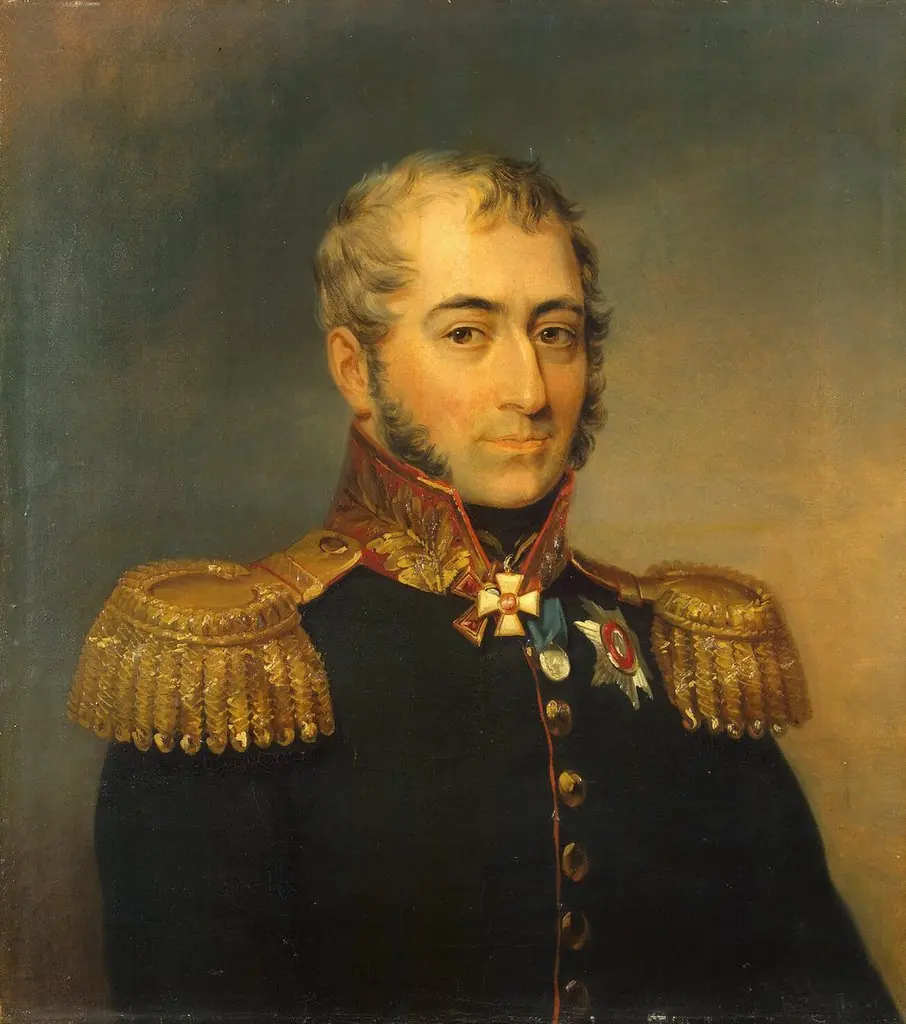 Portrait of Andrey P. Zass (1753-1816) (1st))
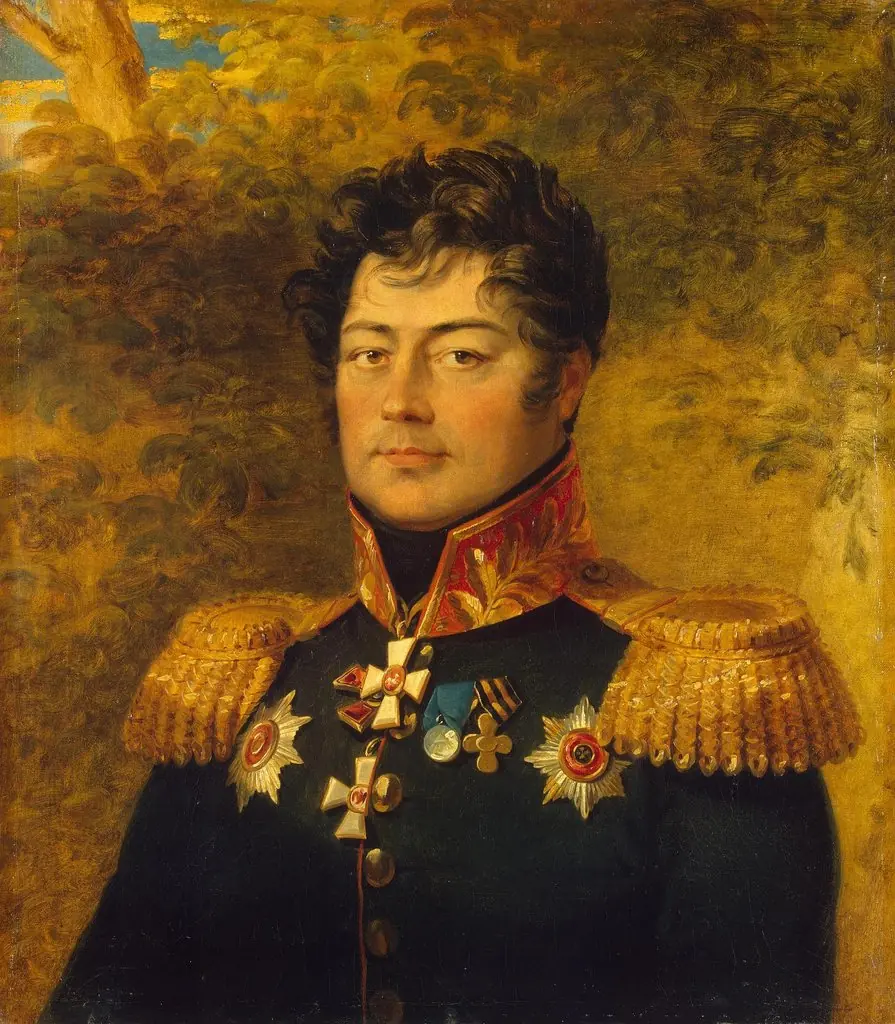 Portrait of Semyon D. Panchulidzev (1767-1817) (2nd)
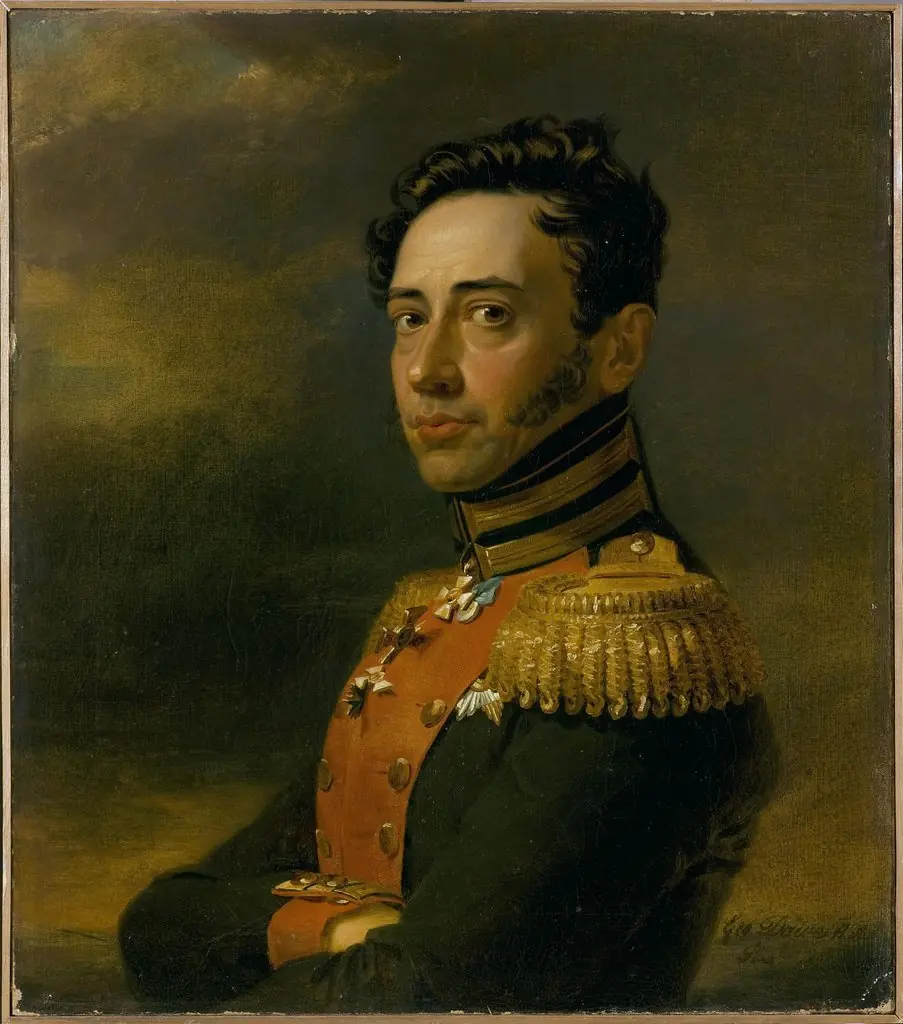 Portrait of Piotr Zheltukhin (1777-1829)
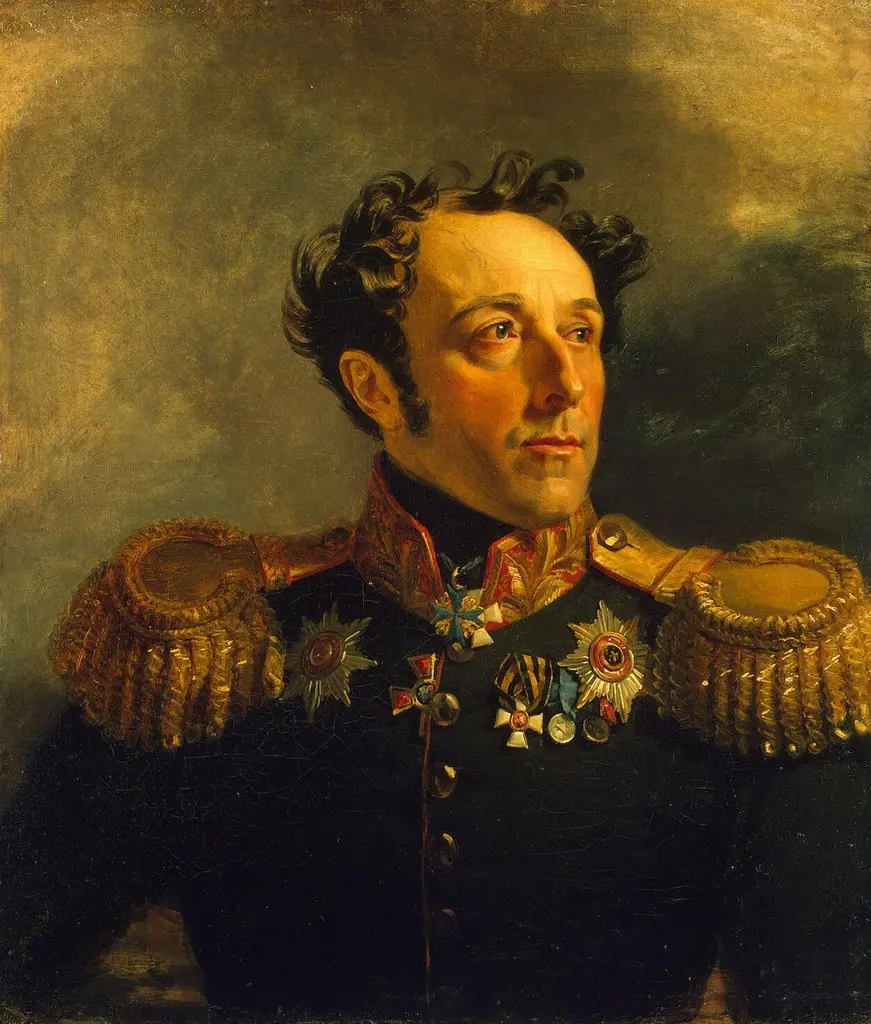 Portrait of Boris Ya. Knyazhnin (1777-1854) (2nd)
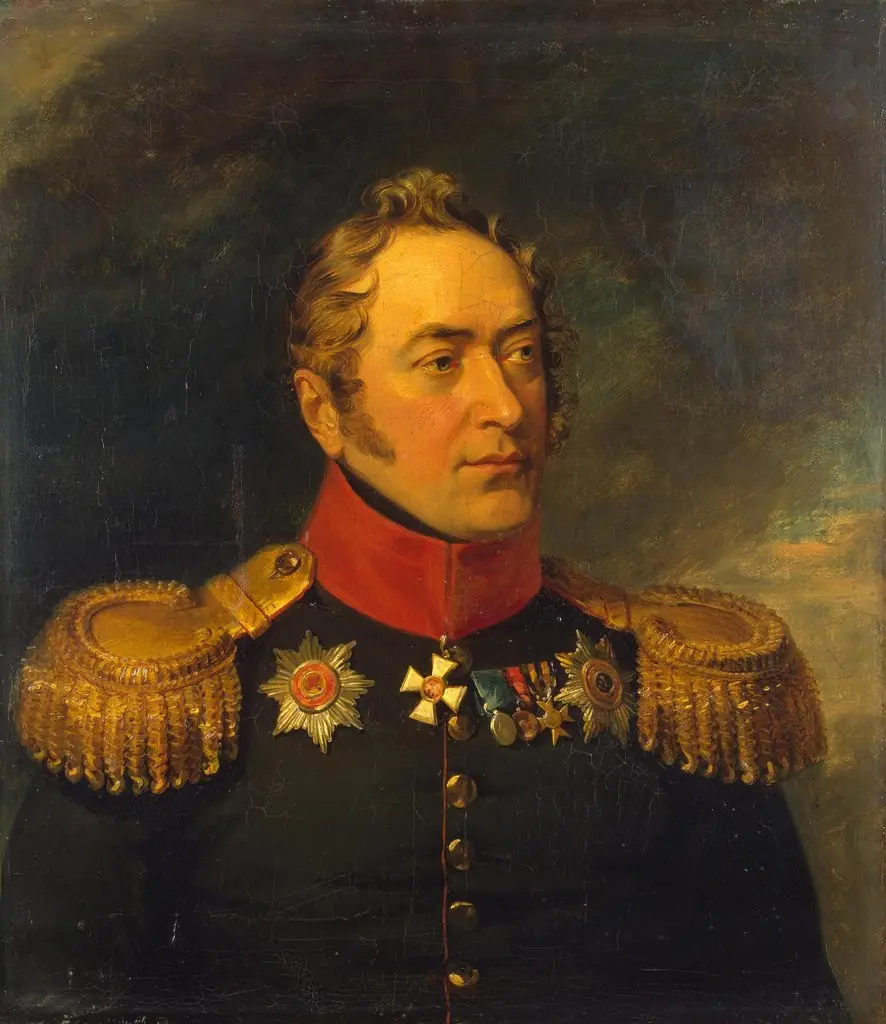 Portrait of Nikolai N. Khovansky (1777-1837)