Artwork
Page from Tales of a Parrot (Tuti-nama): text page
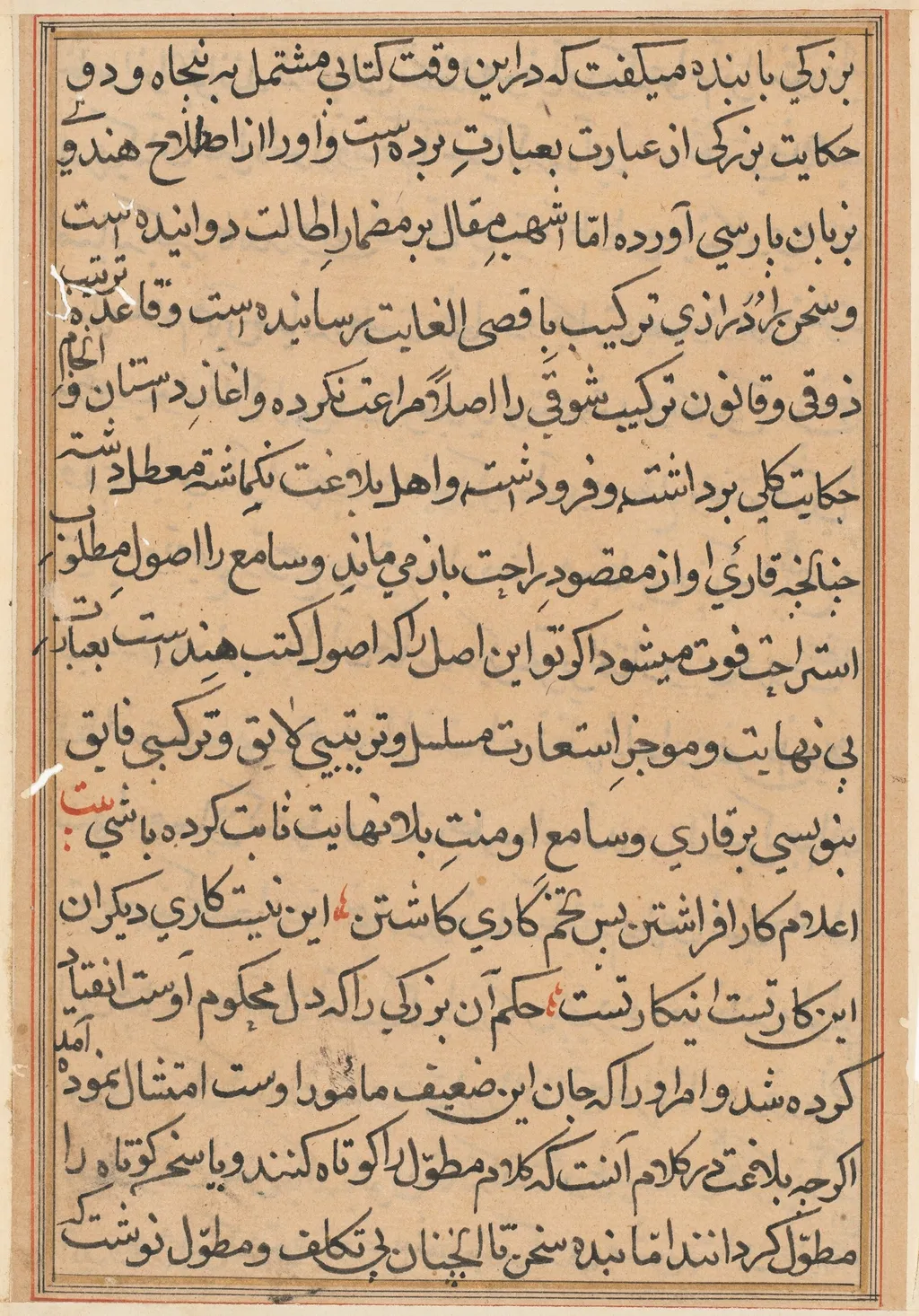
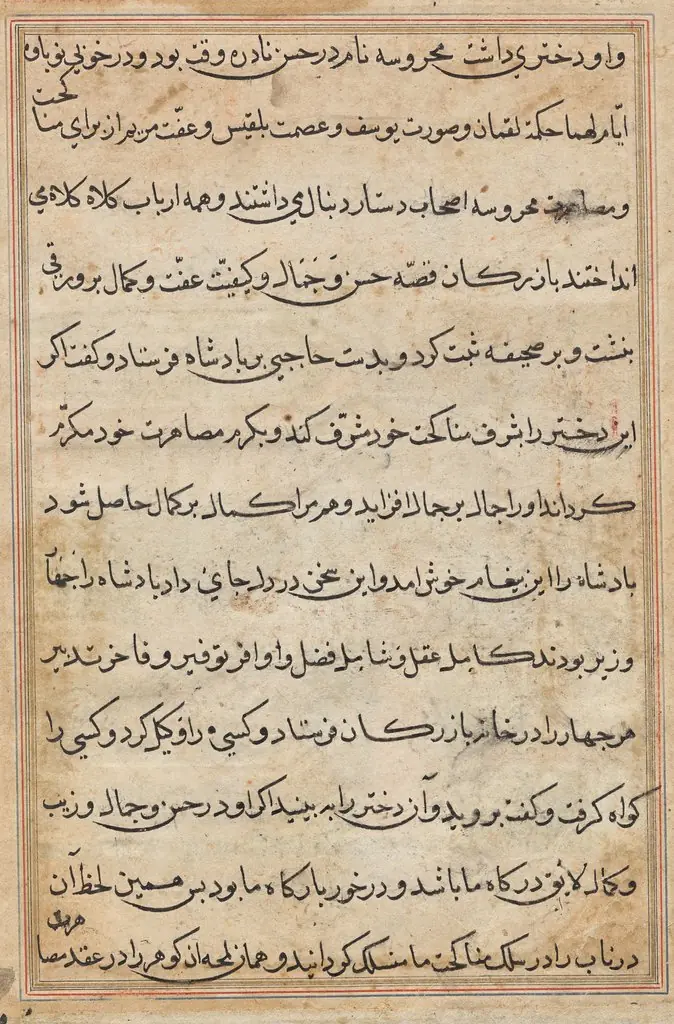
Page from Tales of a Parrot (Tuti-nama): text page is an unspecified painting. It dates from 1560 and is held in the collection of the Cleveland Museum of Art. This object is a single leaf from the illustrated manuscript known as *Tales of a Parrot* (Tuti‑nama).
About this work
Overview
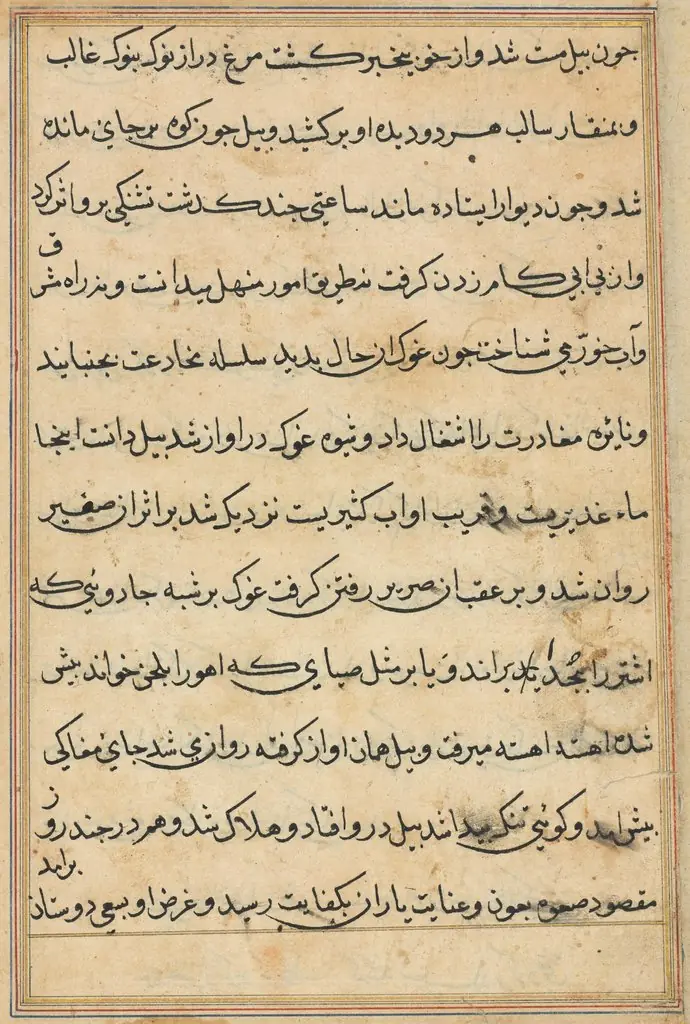
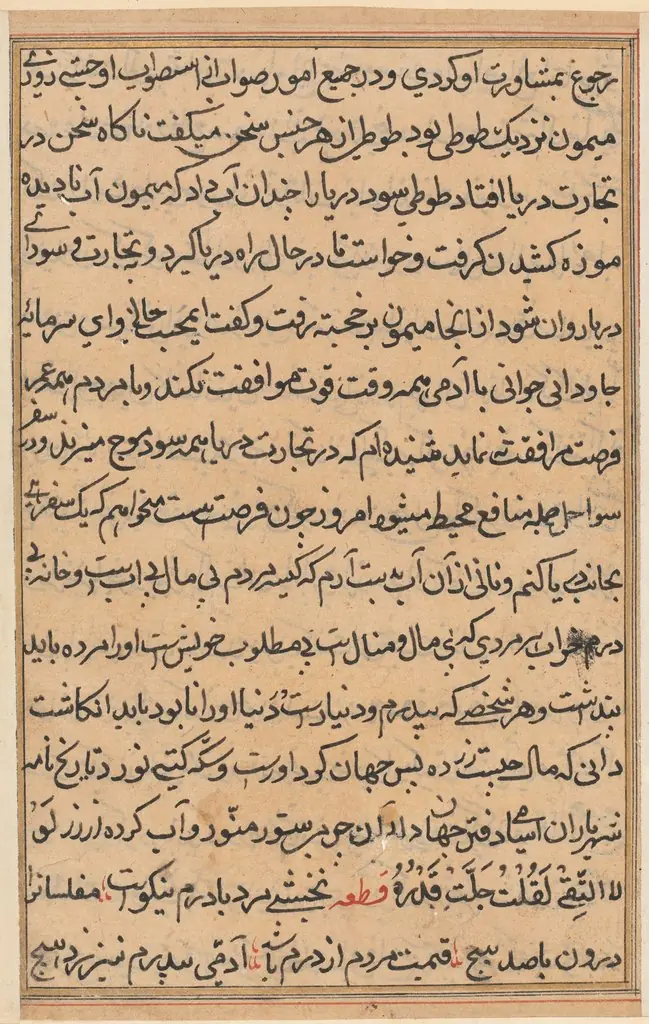
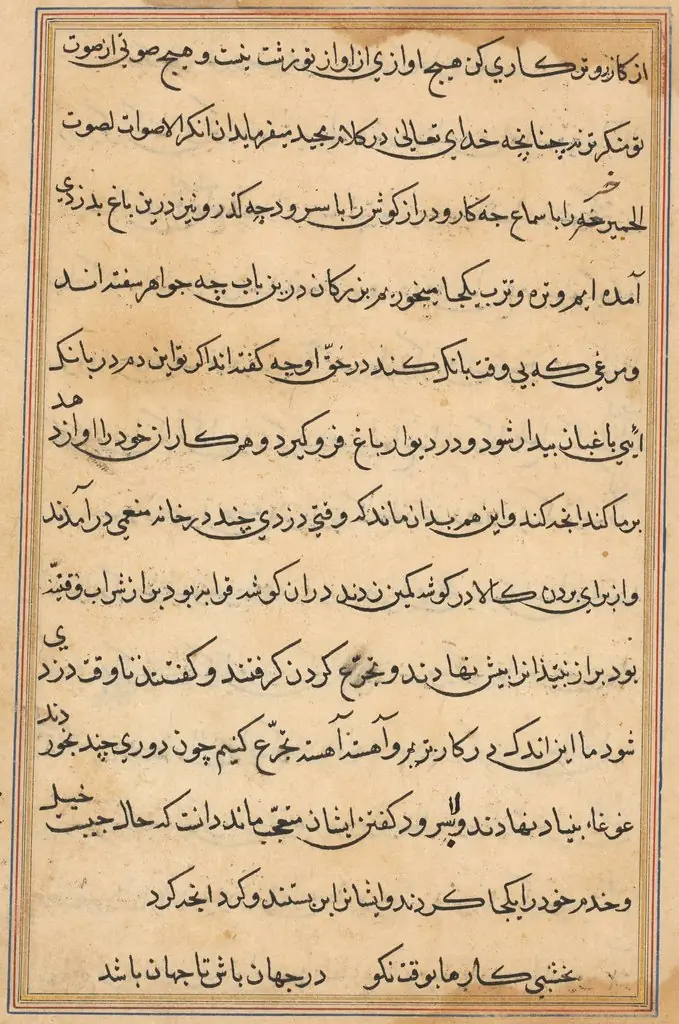
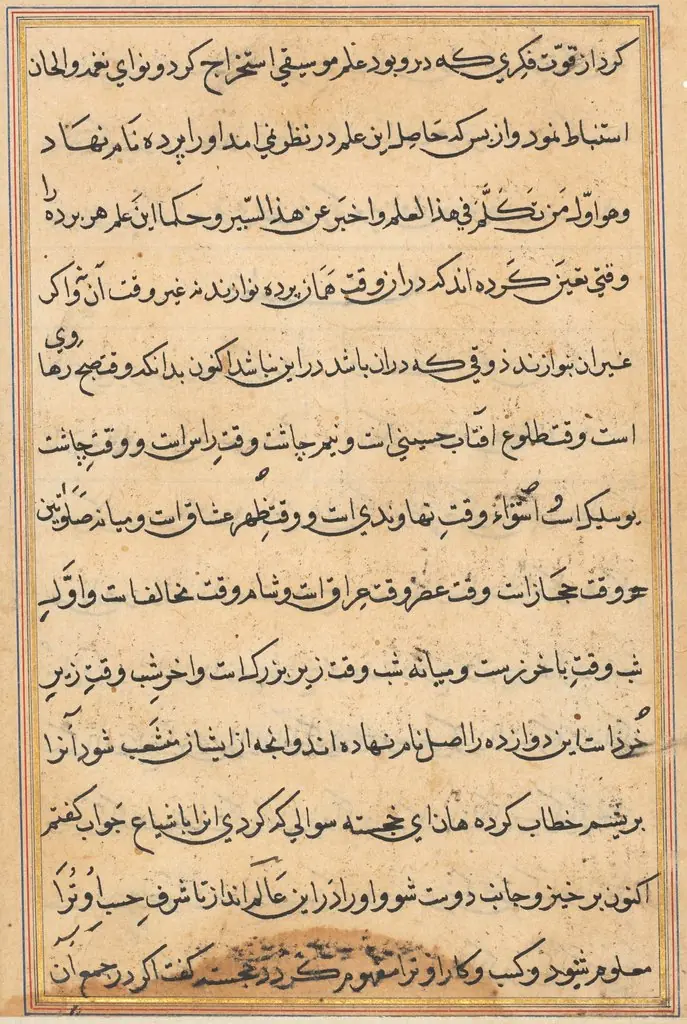
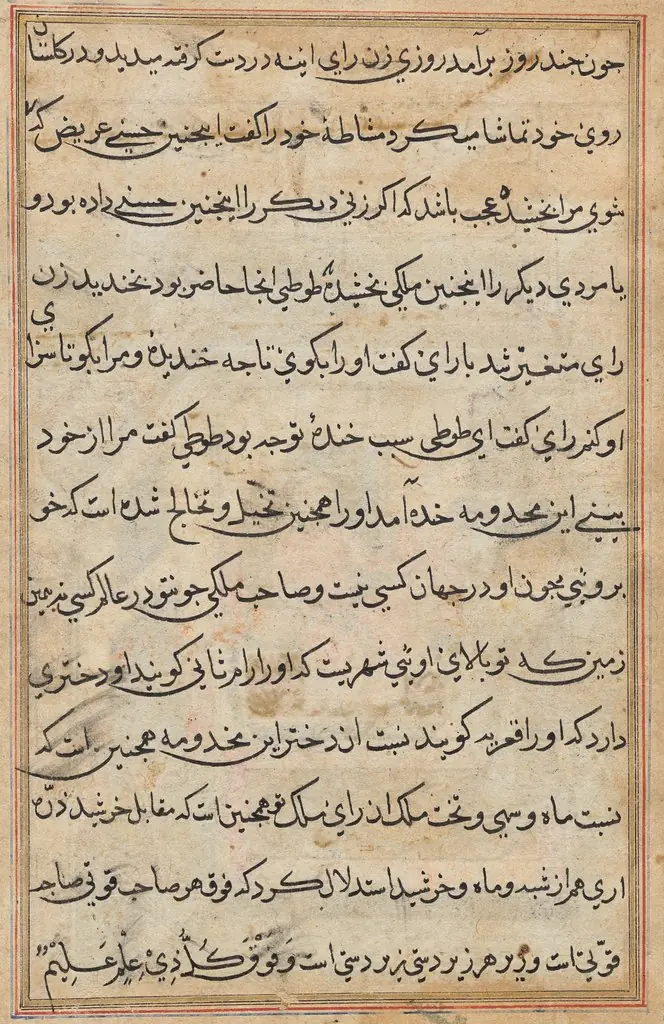
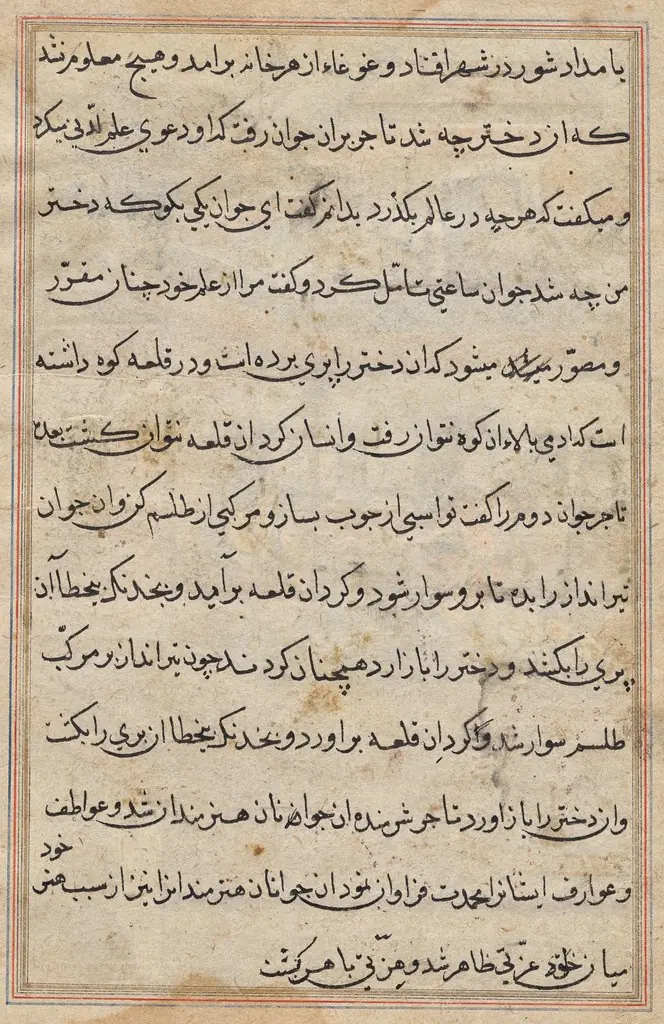
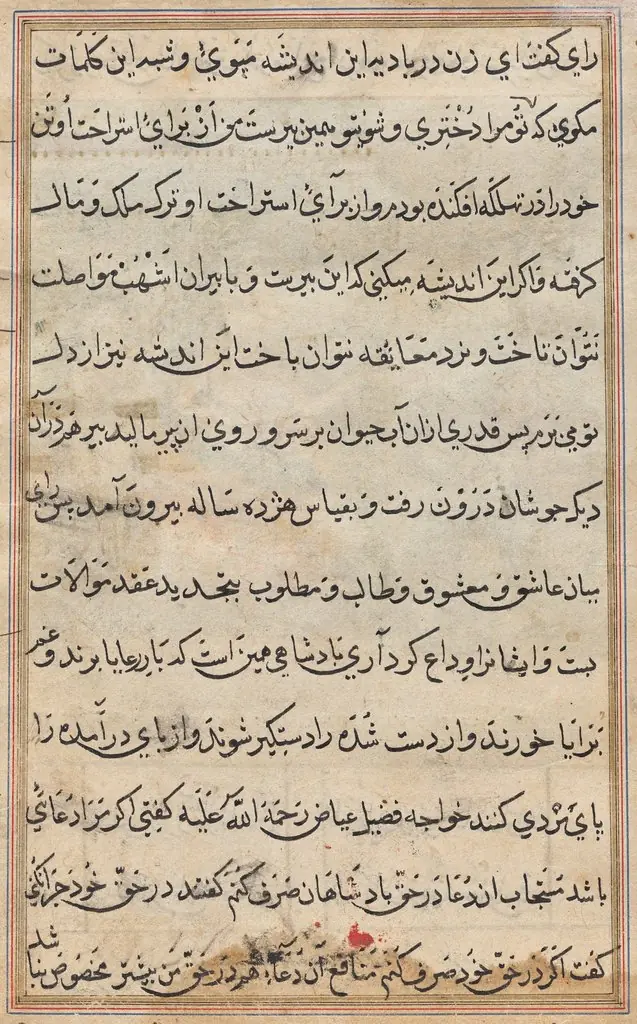
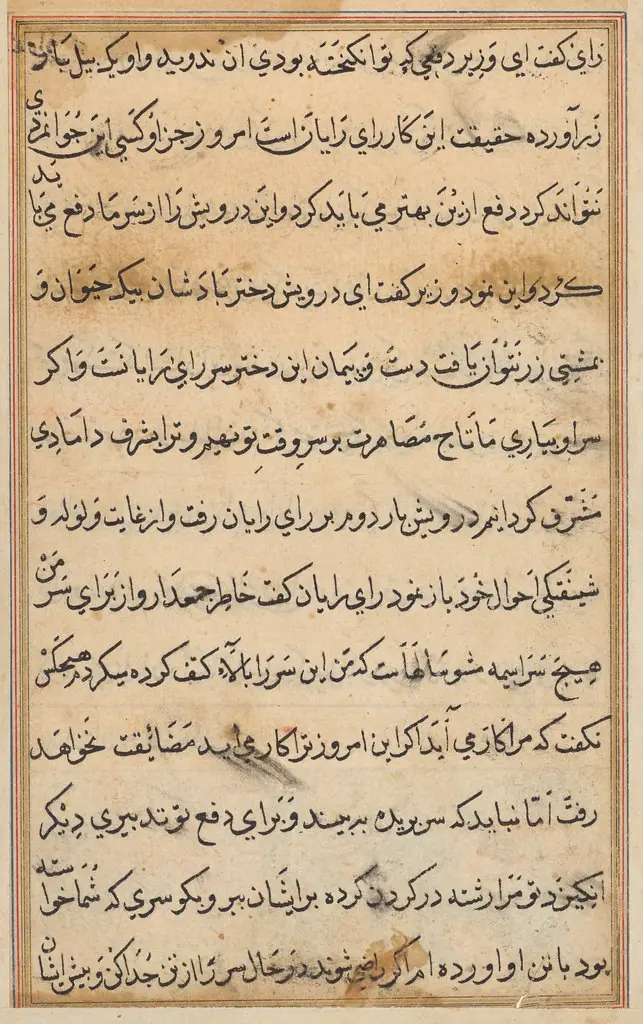
This object is a single leaf from the illustrated manuscript known as *Tales of a Parrot* (Tuti‑nama). The page functions as a painted text sheet, its surface covered with dense black calligraphy set against a light, slightly yellowed paper. A thin red strip runs along the lower margin, and the sheet is framed by a darker border that defines its edges.
Subject & Meaning
The script presents a narrative written in a stylised, decorative hand, suggesting a literary work intended for an educated audience familiar with the language. While the exact story cannot be identified without translation, the title indicates a collection of fables or anecdotes involving a parrot, a common motif in Persian and South Asian storytelling.
Technique & Style
The calligraphic text is executed in fine black ink, applied in tightly packed rows that create a rhythmic visual texture. The background paper shows a subtle yellowing, typical of aged manuscript material. The red line at the bottom and the darker framing outline are painted pigments, likely added to demarcate the page and enhance its visual balance.
History & Provenance
The leaf originates from a manuscript tradition that flourished in the Indian subcontinent, where illustrated books combining prose and decorative script were produced for courtly or scholarly use. The specific copy entered the collection of the Cleveland Museum of Art, where it is conserved and displayed as part of the museum’s Asian art holdings.
Context
Manuscripts such as *Tales of a Parrot* belong to a broader cultural practice of embedding moral or entertaining stories within richly illustrated volumes. The integration of text and ornamental borders reflects aesthetic conventions of the period, where visual harmony was prized alongside literary content.
Artist & collection

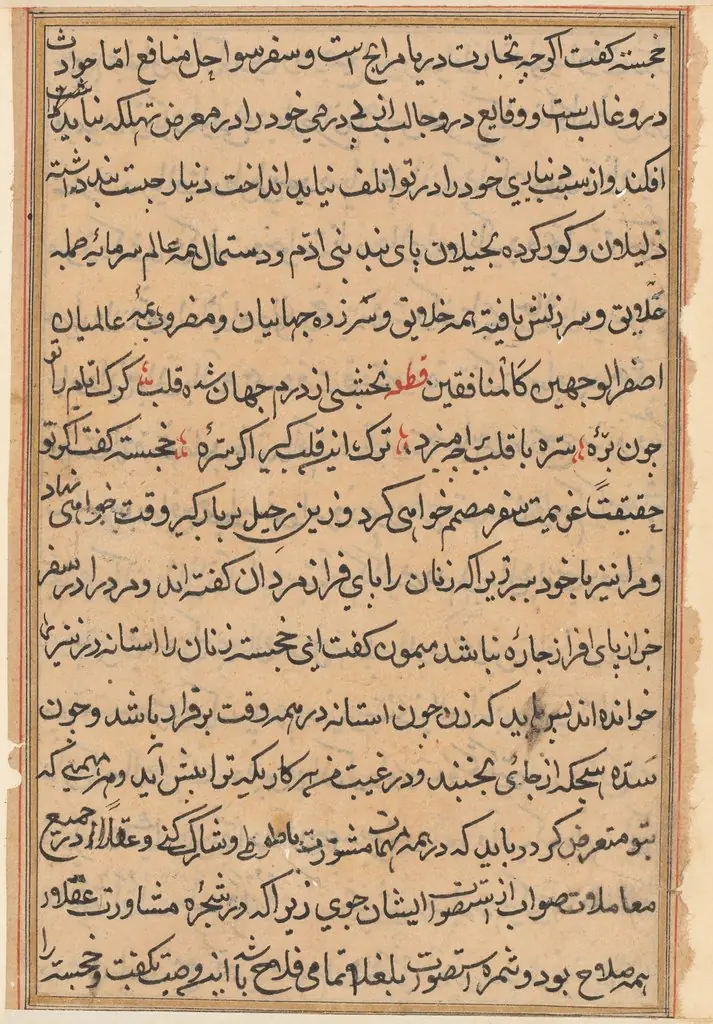 Page from Tales of a Parrot (Tuti-nama): text page
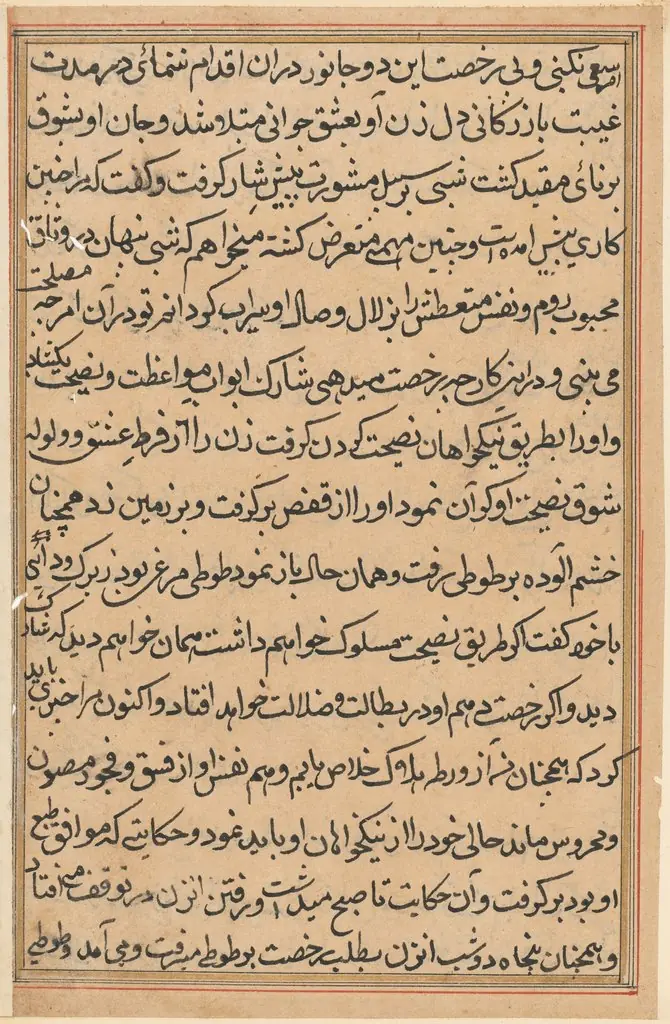 Page from Tales of a Parrot (Tuti-nama): text page
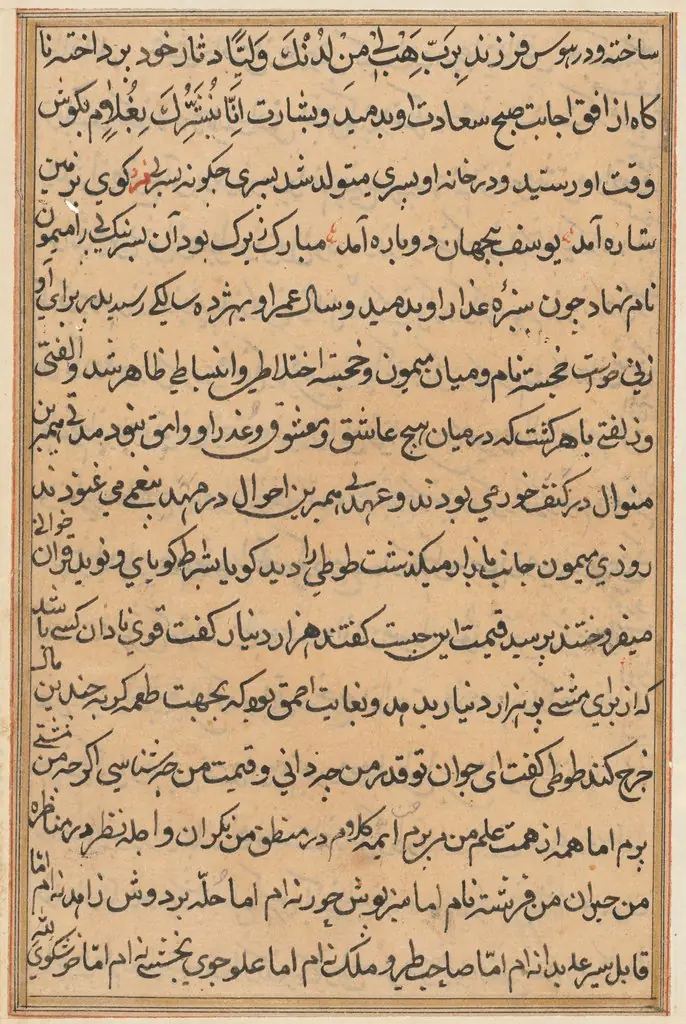 Page from Tales of a Parrot (Tuti-nama): text page
 Page from Tales of a Parrot (Tuti-nama): text page
 Page from Tales of a Parrot (Tuti-nama): text page
 Page from Tales of a Parrot (Tuti-nama): text page
 Page from Tales of a Parrot (Tuti-nama): text page
 Page from Tales of a Parrot (Tuti-nama): text page
 Page from Tales of a Parrot (Tuti-nama): text page
 Page from Tales of a Parrot (Tuti-nama): text page
 Page from Tales of a Parrot (Tuti-nama): text page
 Page from Tales of a Parrot (Tuti-nama): text page