Artwork
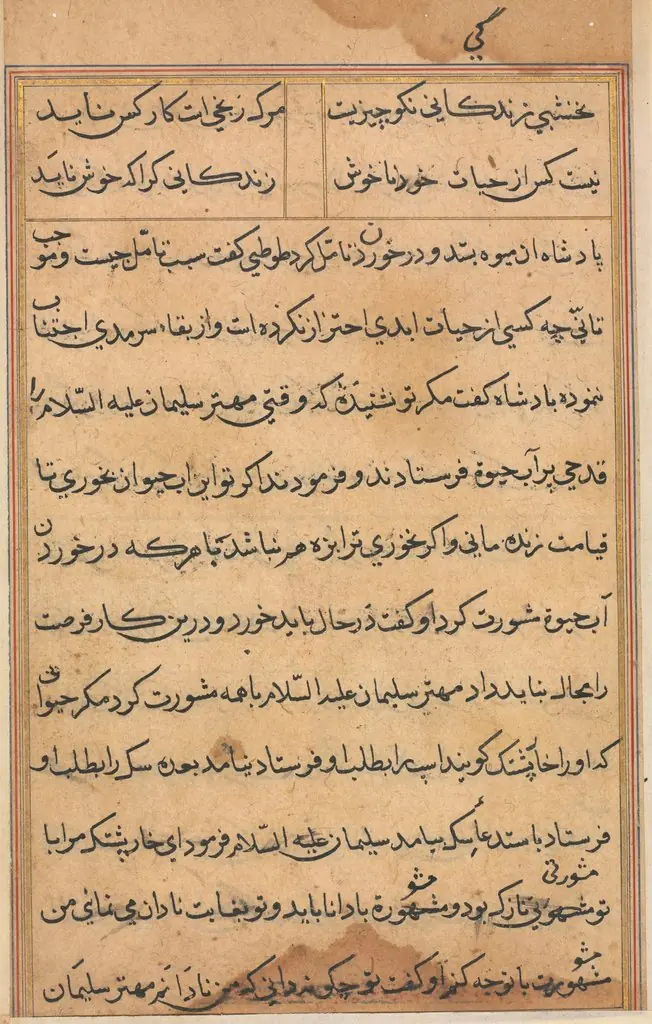
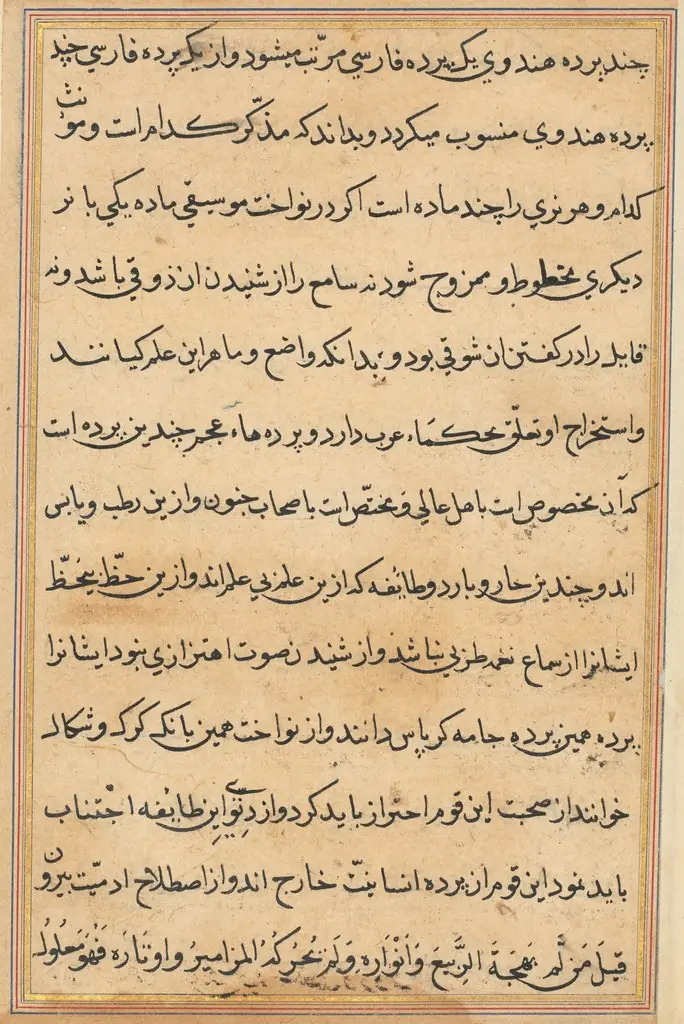
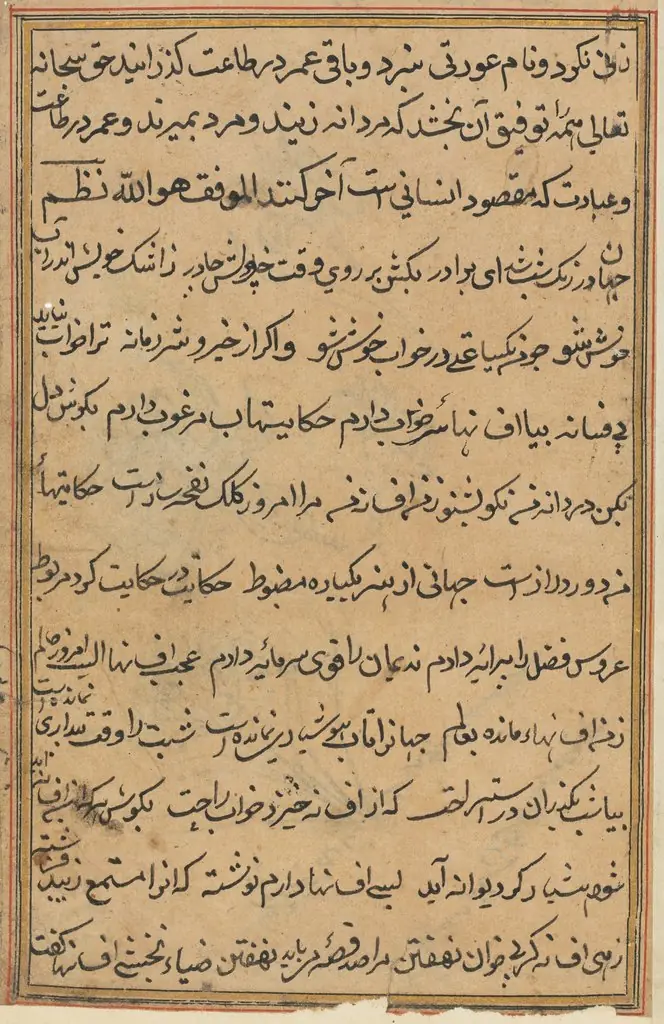
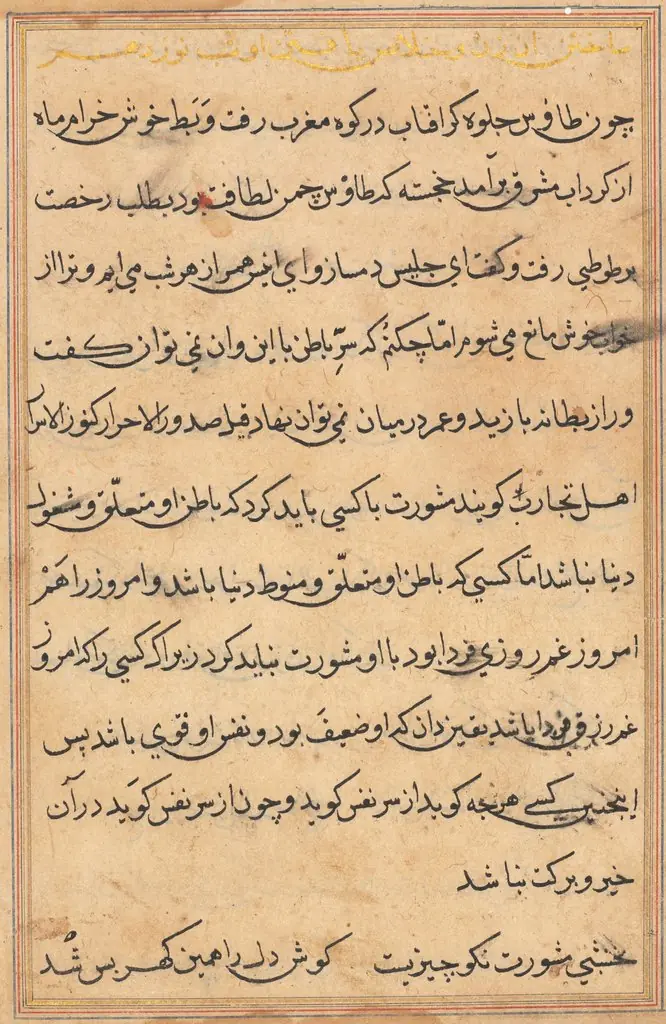
Page from Tales of a Parrot (Tuti-nama): text page
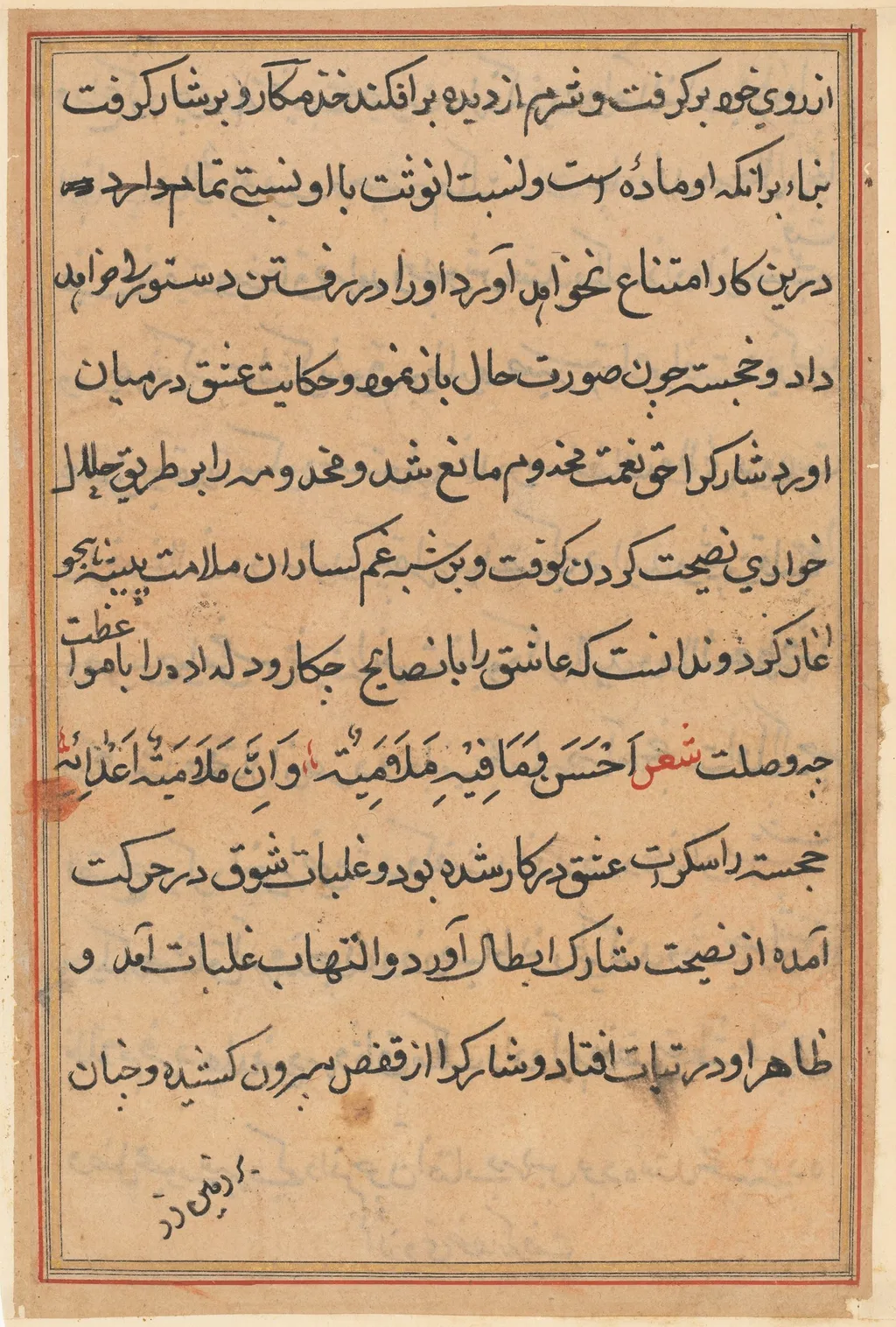
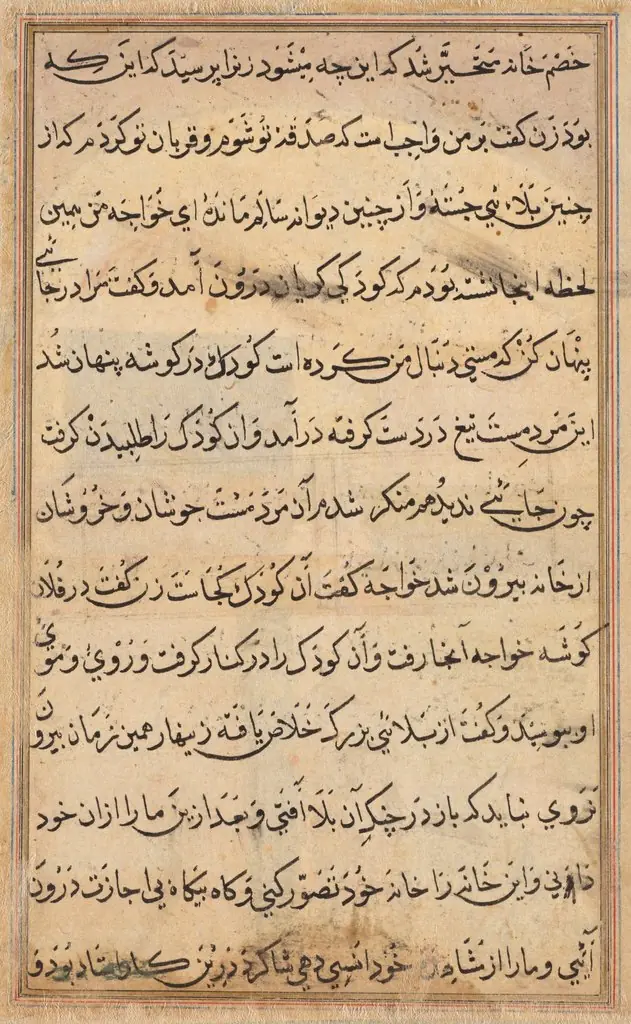
Page from Tales of a Parrot (Tuti-nama): text page is an unspecified painting. It dates from 1560 and is held in the collection of the Cleveland Museum of Art. The object is a single folio from the medieval manuscript known as *Tuti‑nama* (Tales of a Parrot).
About this work
Overview
The object is a single folio from the medieval manuscript known as *Tuti‑nama* (Tales of a Parrot). The sheet consists of a light‑brown parchment on which a continuous block of text is rendered in black ink, accented with occasional red markings. A thin red line frames the page, while a slightly broader central band also appears in red, giving the page a measured decorative outline.
Subject & Meaning
The written portion contains narrative prose in a cursive Arabic‑ or Persian‑derived script, typical of literary works that blended poetry and storytelling. While the specific passage is not illustrated, the *Tuti‑nama* traditionally recounts moral and romantic tales, using the parrot as a symbolic narrator to convey ethical lessons and courtly values.
Technique & Style
The red border and central band are executed with fine brushwork, adding a subtle visual framework without detracting from the script.
The calligrapher employed a flowing, connected hand that balances legibility with ornamental grace. Black ink provides the main text, while red ink highlights initials, punctuation, or marginal annotations, a common practice to guide readers and emphasize structural divisions. The red border and central band are executed with fine brushwork, adding a subtle visual framework without detracting from the script.
History & Provenance
Manuscripts of the *Tuti‑nama* were produced for elite patrons in the Islamic world between the 13th and 15th centuries, often commissioned by courts or wealthy individuals seeking refined literary entertainment. The surviving page reflects the high‑quality materials and skilled scribal labor associated with such commissions, suggesting it originated from a well‑funded workshop.
Context
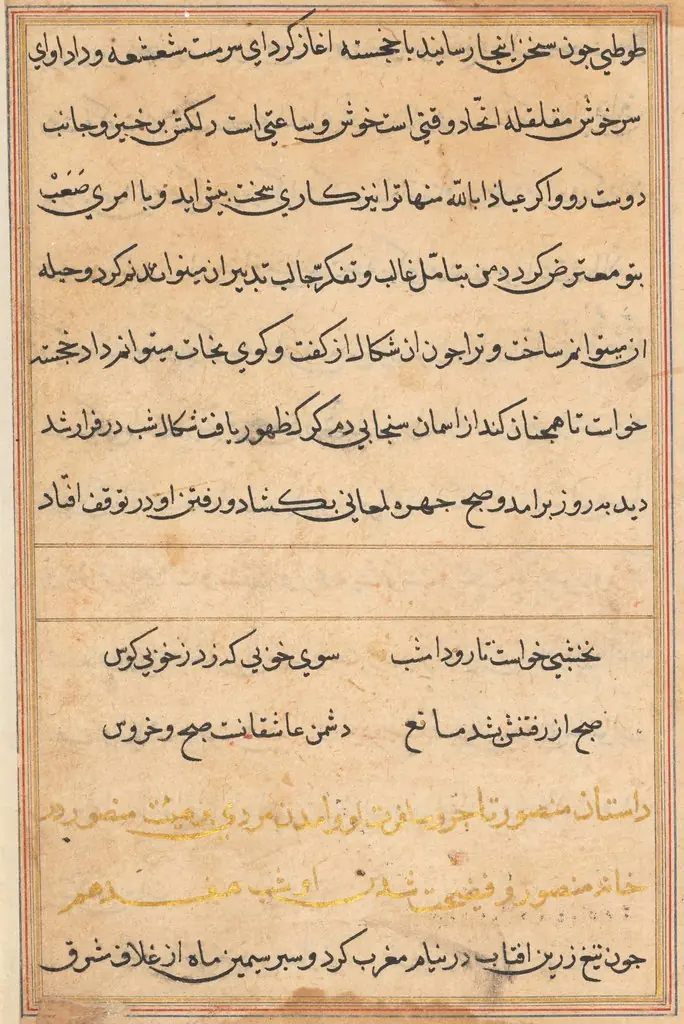
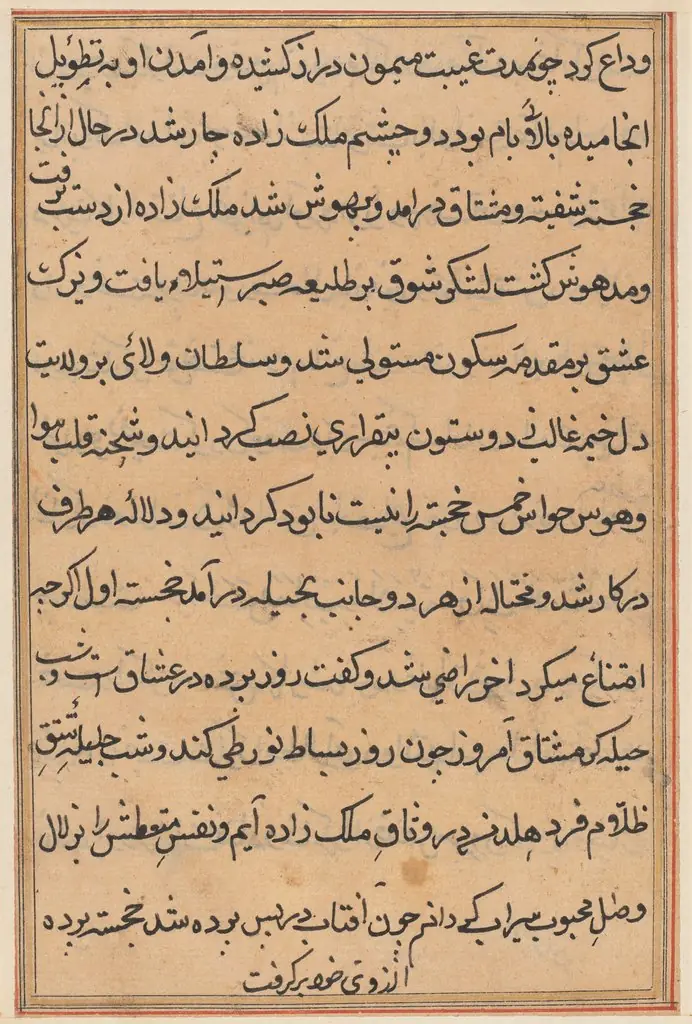
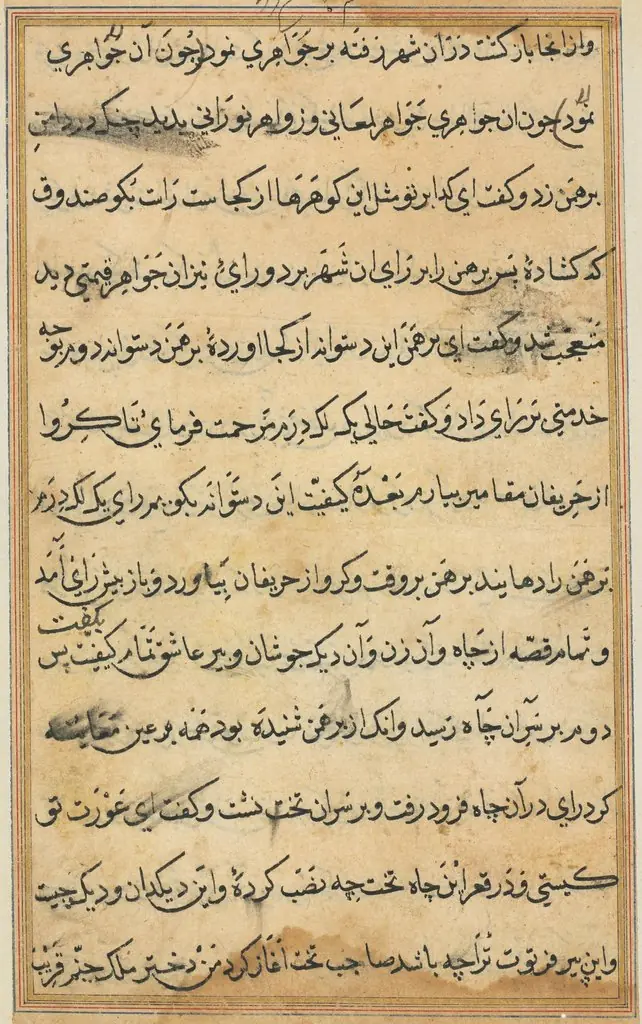
The folio belongs to a broader tradition of illustrated and illuminated books that circulated across Persia, Central Asia, and the Indian subcontinent. While many copies feature elaborate miniature paintings, this particular page is text‑only, indicating that not all sections of the work received visual embellishment, a practice that allowed scribes to allocate resources to the most narratively significant portions.
Artist & collection

 Page from Tales of a Parrot (Tuti-nama): text page
 Page from Tales of a Parrot (Tuti-nama): text page
 Page from Tales of a Parrot (Tuti-nama): text page
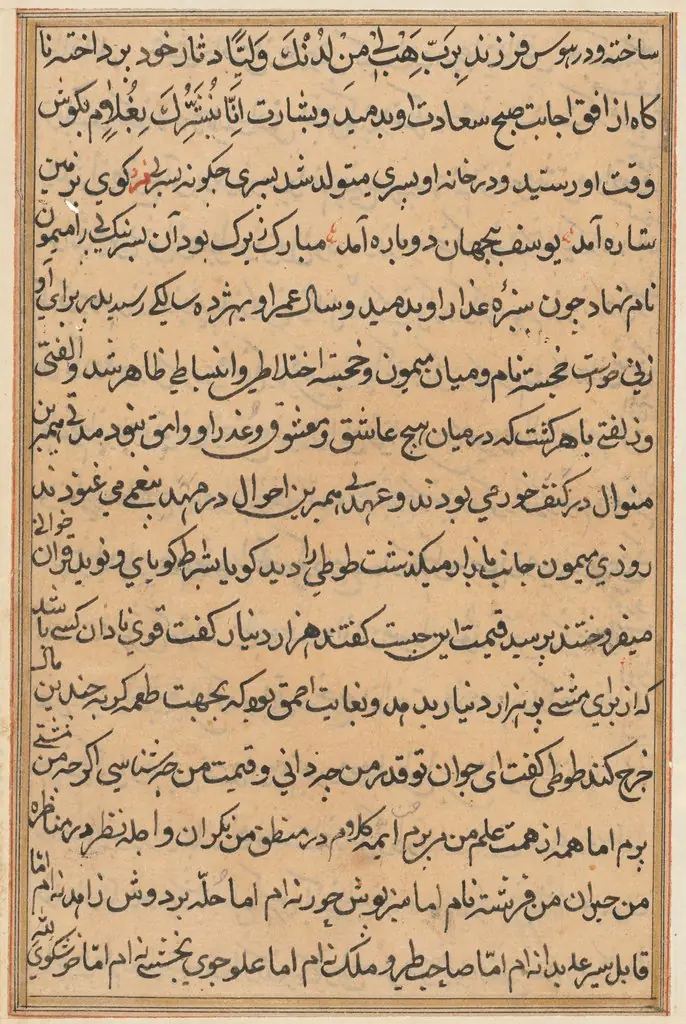 Page from Tales of a Parrot (Tuti-nama): text page
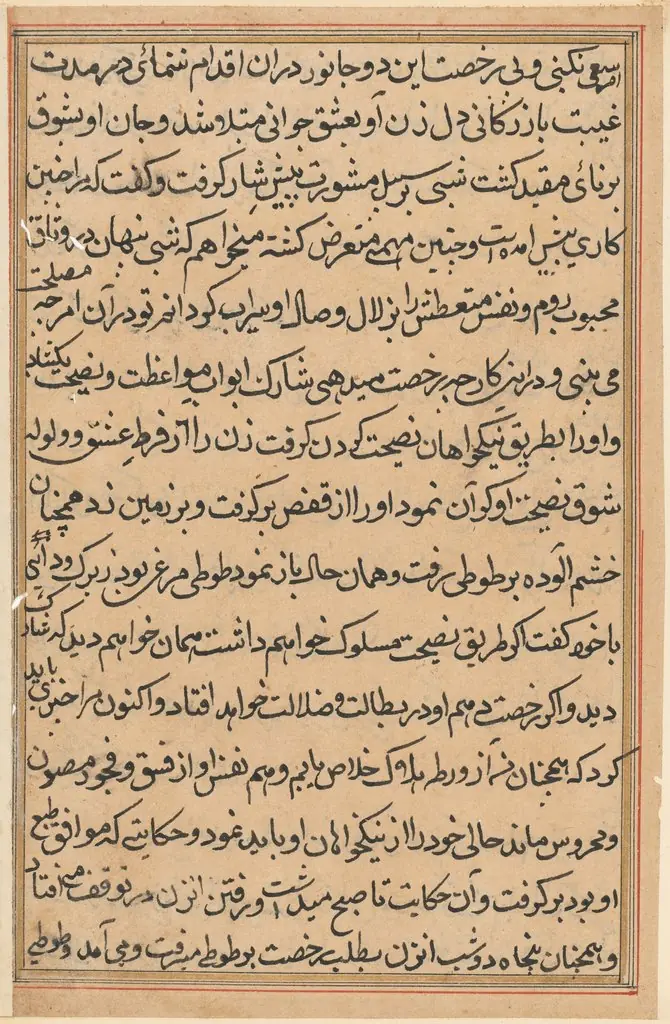 Page from Tales of a Parrot (Tuti-nama): text page
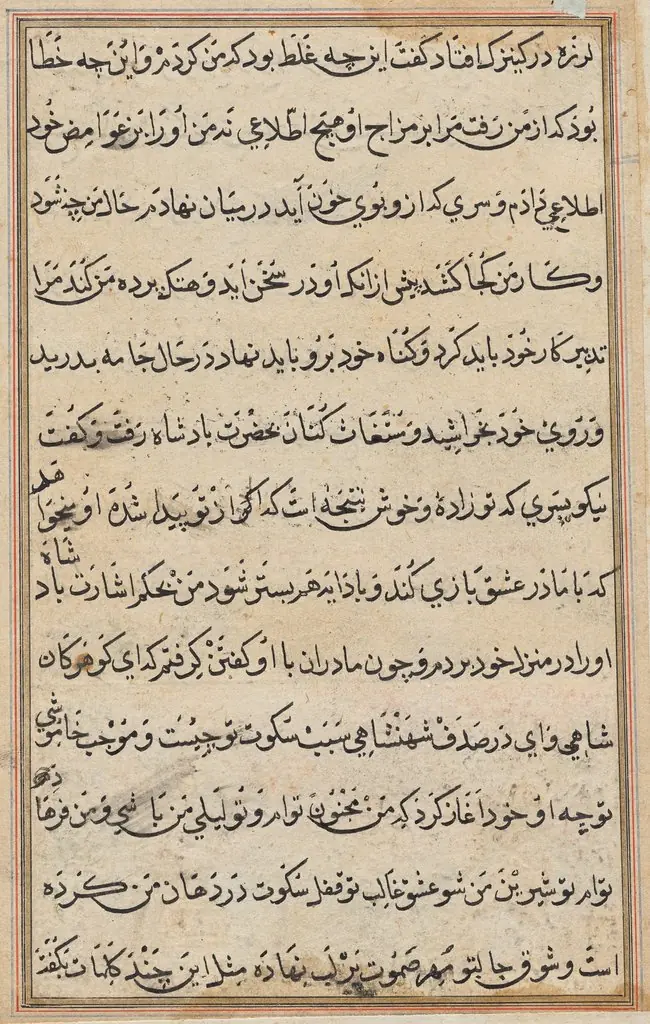 Page from Tales of a Parrot (Tuti-nama): text page
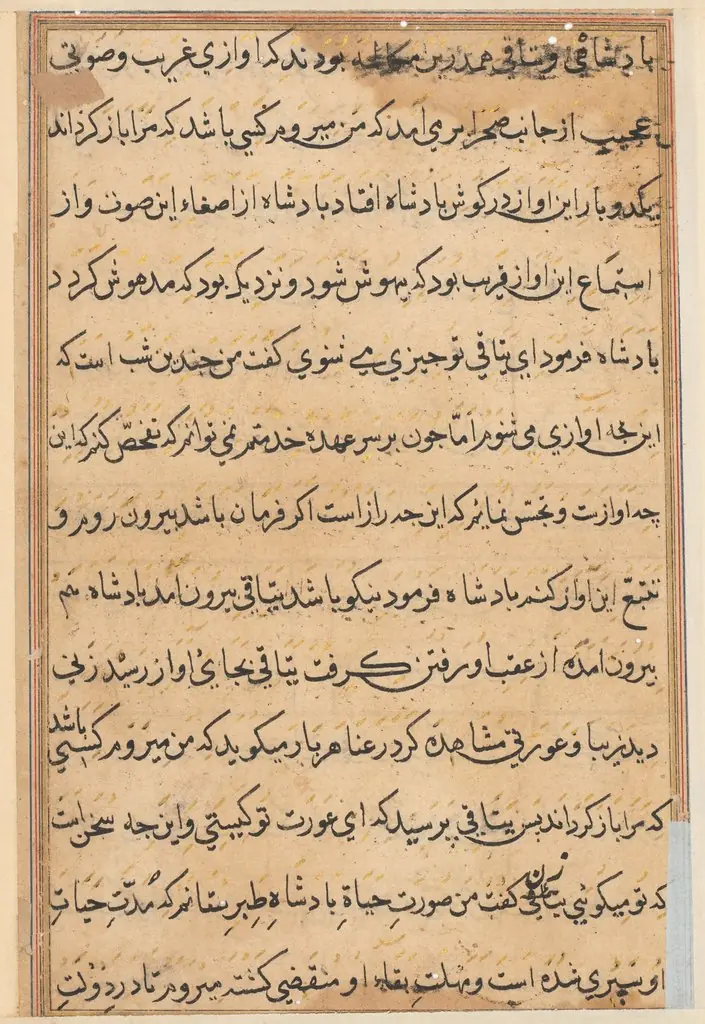 Page from Tales of a Parrot (Tuti-nama): text page
 Page from Tales of a Parrot (Tuti-nama): text page
 Page from Tales of a Parrot (Tuti-nama): text page
 Page from Tales of a Parrot (Tuti-nama): text page
 Page from Tales of a Parrot (Tuti-nama): text page
 Page from Tales of a Parrot (Tuti-nama): text page