Artwork
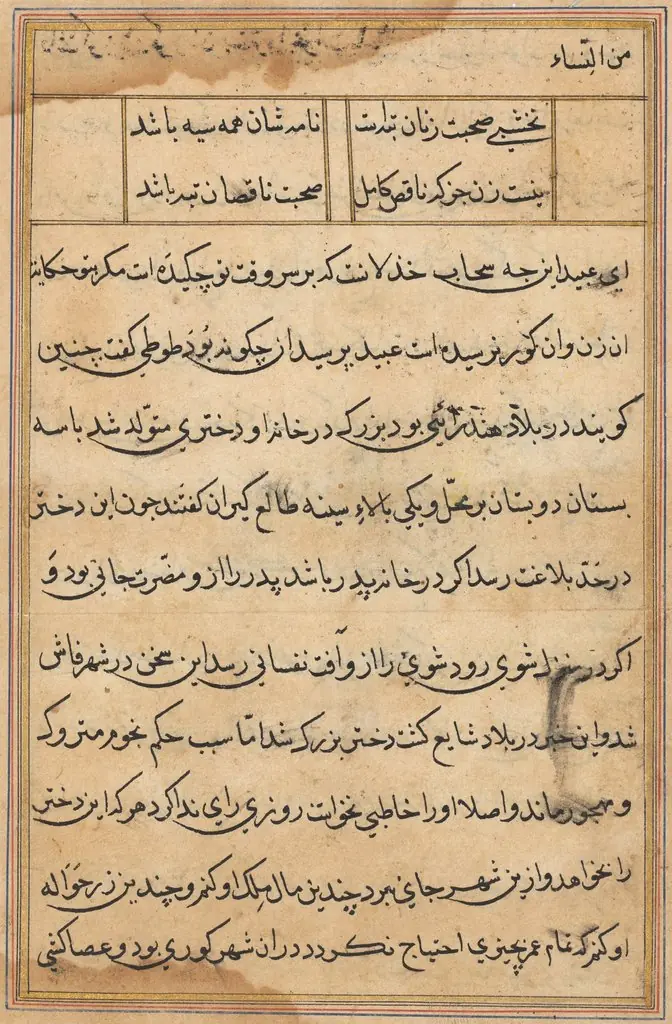
Page from Tales of a Parrot (Tuti-nama): text page
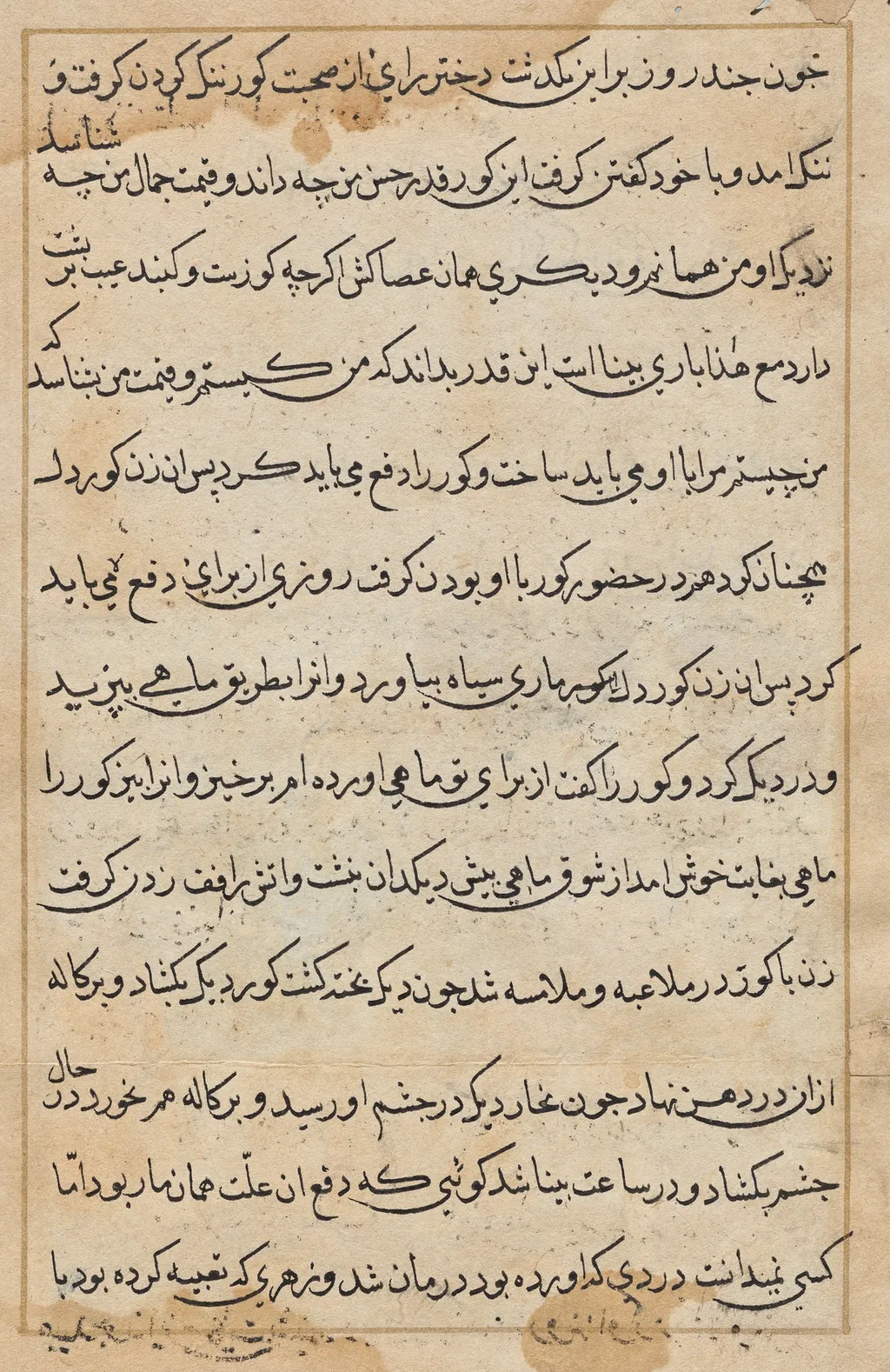
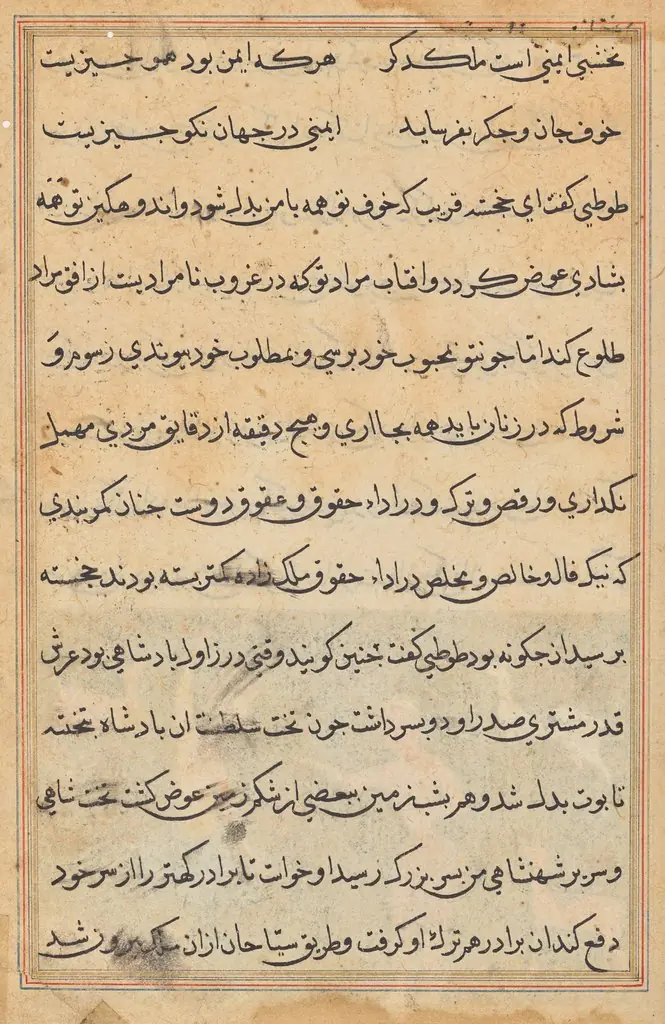
Page from Tales of a Parrot (Tuti-nama): text page is an unspecified painting. It dates from 1560 and is held in the collection of the Cleveland Museum of Art. The object is a single folio from the illustrated manuscript known as *Tales of a Parrot* (Tuti‑nama).
About this work
Overview
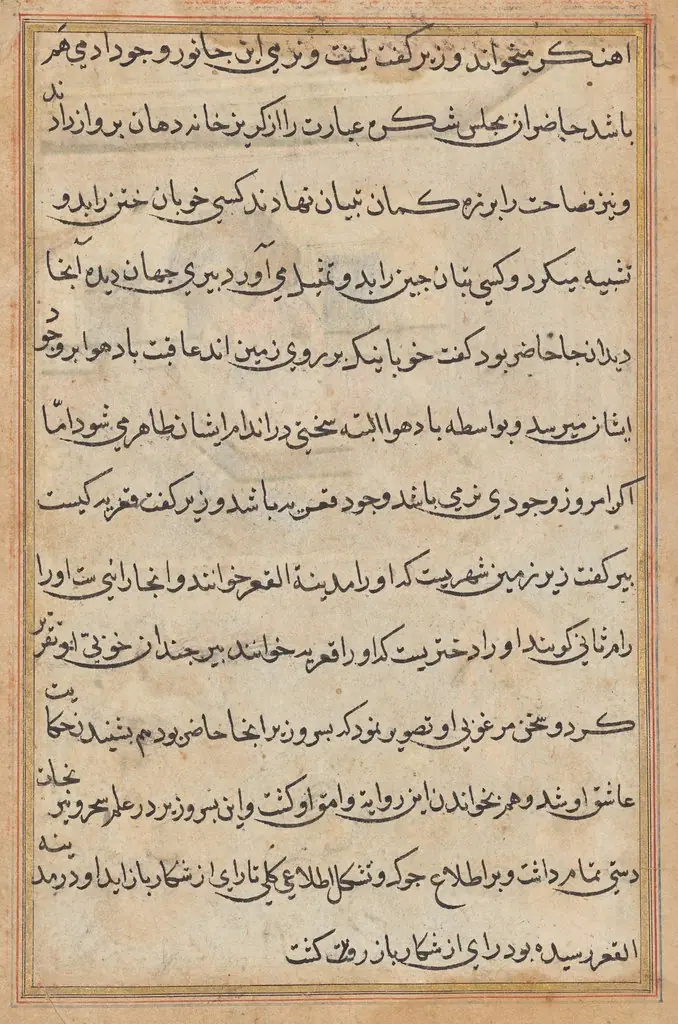
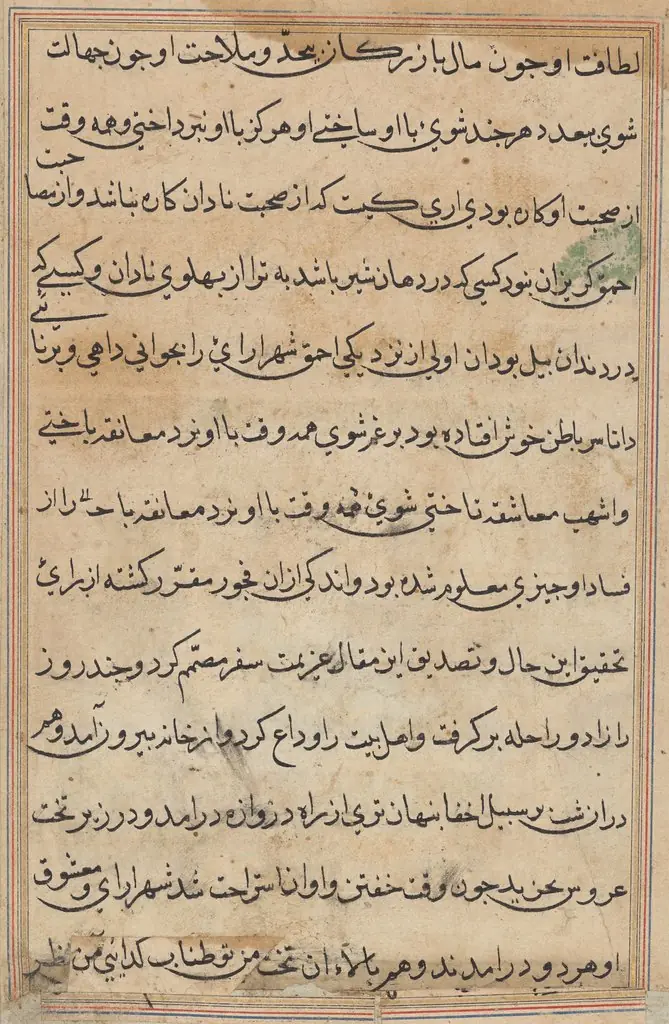
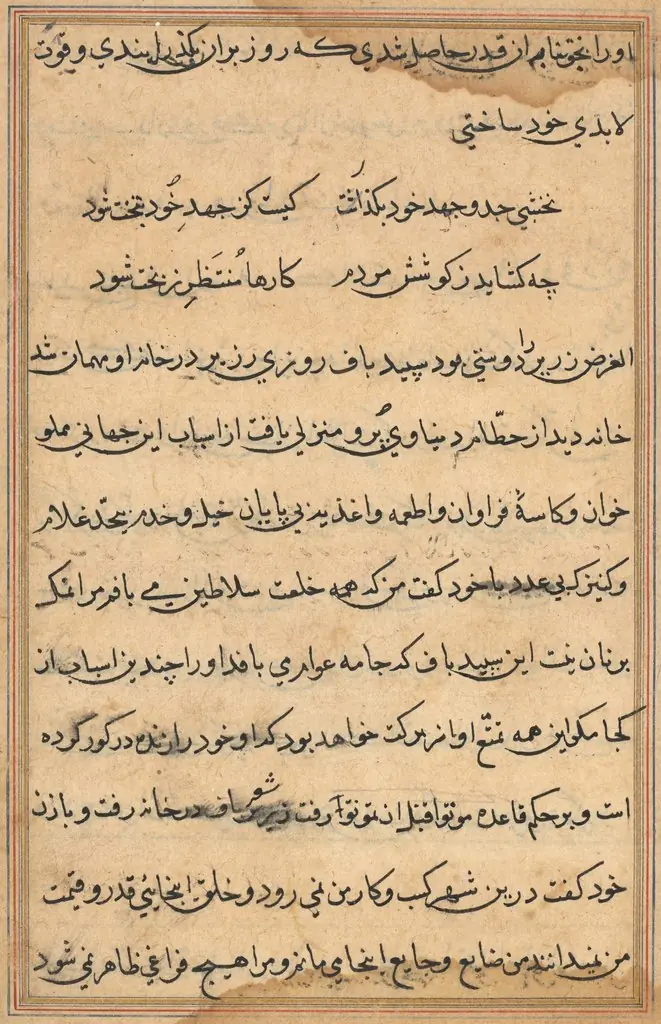
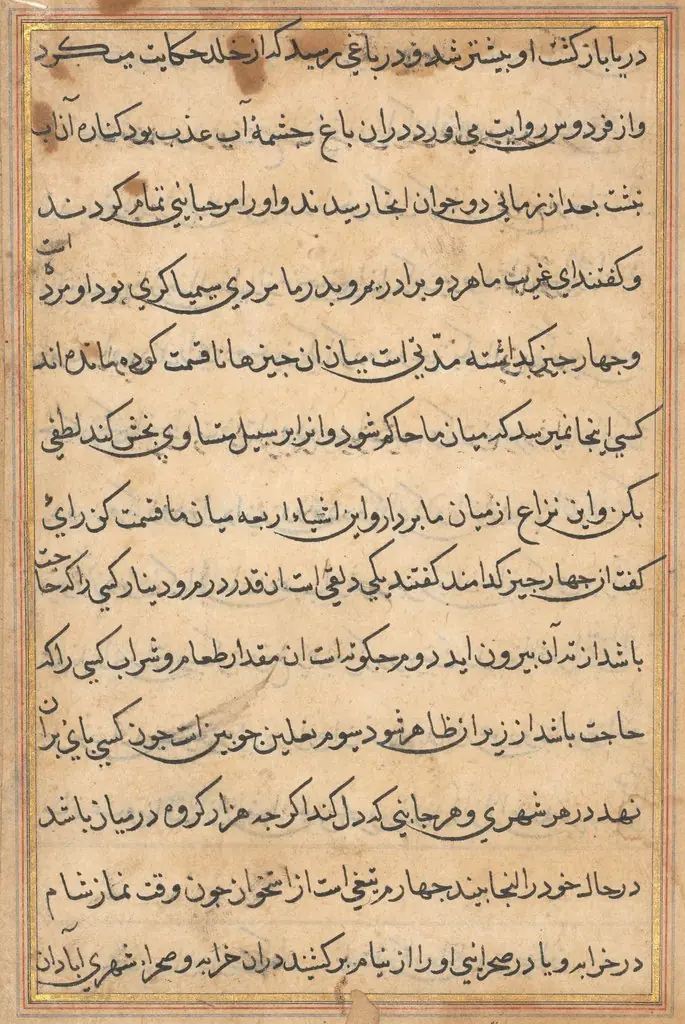
The object is a single folio from the illustrated manuscript known as *Tales of a Parrot* (Tuti‑nama). It consists of a rectangular page on a tan, slightly yellowed support, framed by a narrow decorative border. The surface bears a continuous block of text rendered in black ink, executed in a refined cursive hand with ornamental terminal strokes.
Subject & Meaning
The written passage forms part of the narrative collection that compiles moral and didactic stories, traditionally conveyed through the voice of a parrot. While the specific excerpt on this leaf is not identified here, the overall work functions as a vehicle for ethical instruction and entertainment within its cultural context.
Technique & Style
The script exemplifies a late‑medieval Persian calligraphic style, characterized by fluid, interconnected letters and elaborate flourishes that enhance legibility and aesthetic appeal. Ink application is uniform, producing a clear contrast against the aged, light‑colored substrate, a visual effect reminiscent of chiaroscuro principles employed in manuscript illumination.
History & Provenance
The page shows typical signs of age—yellowing, surface staining, and a softened paper texture—indicating it has survived several centuries. Its condition suggests careful handling and possible conservation, though precise details of its ownership history or acquisition are not provided in the source material.
Context
*Tuti‑nama* belongs to a broader tradition of Persian illustrated books that blend literary content with visual decoration. Produced in a period when manuscript production was a major cultural activity, such works were often commissioned by patrons seeking to preserve and disseminate moral tales.
Legacy
Pages like this folio illustrate the durability of manuscript culture and the continued scholarly interest in Persian narrative literature. Their preservation allows contemporary researchers to study calligraphic practices, textual transmission, and the aesthetic values of the societies that created them.
Artist & collection

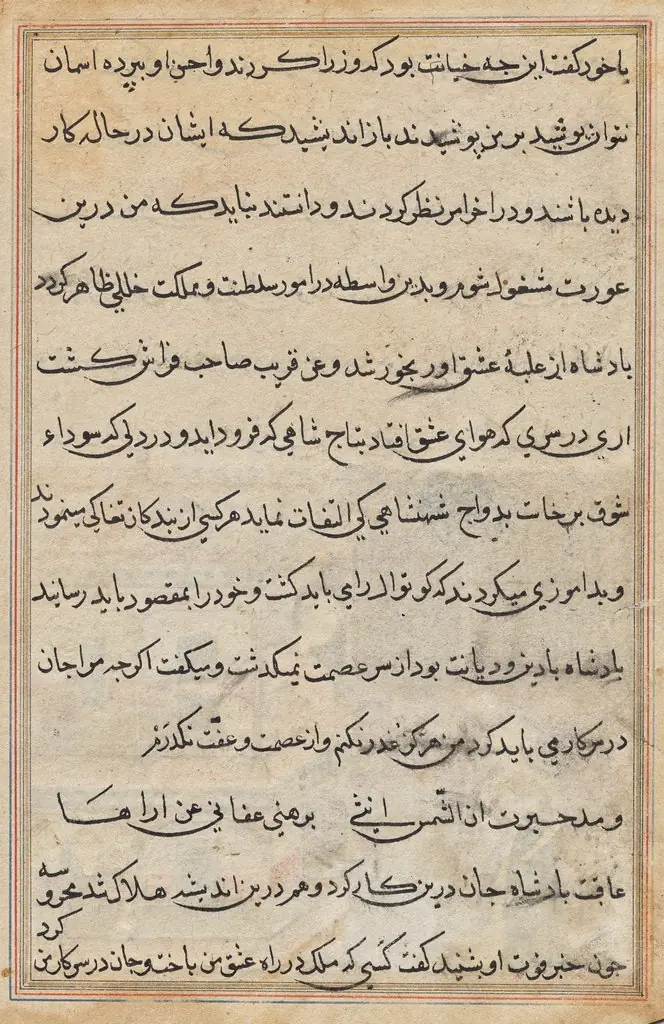 Page from Tales of a Parrot (Tuti-nama): text page
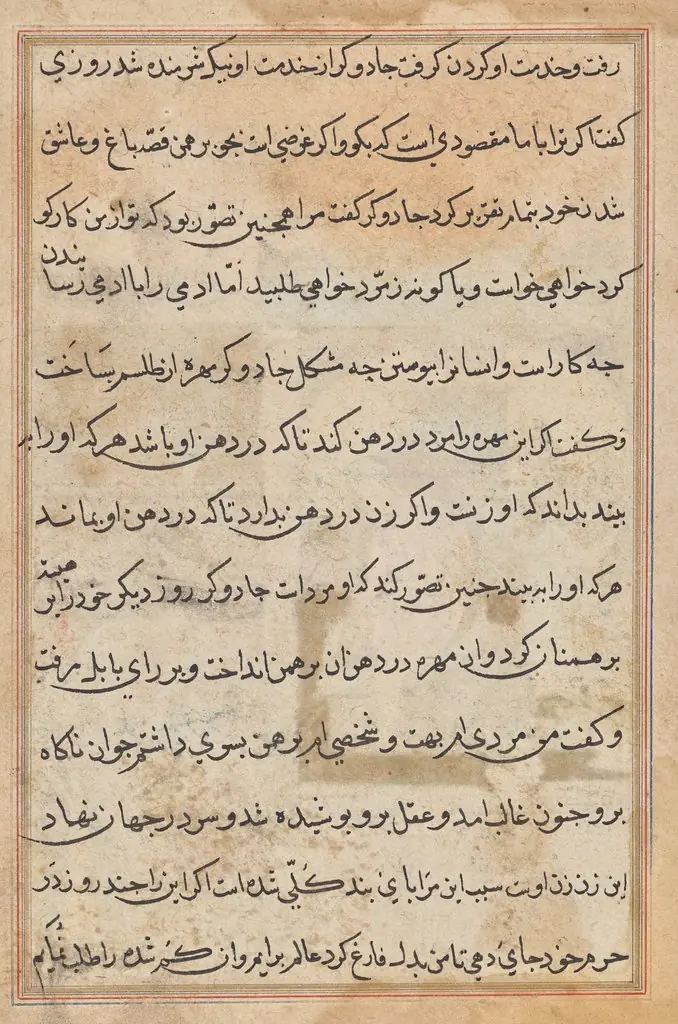 Page from Tales of a Parrot (Tuti-nama): text page
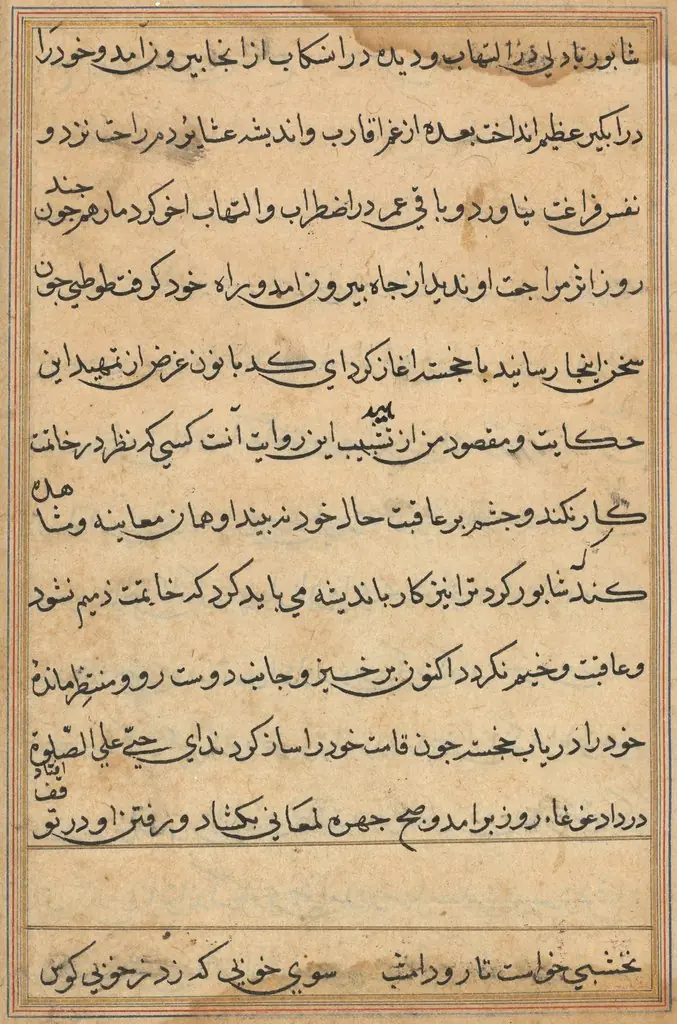 Page from Tales of a Parrot (Tuti-nama): text page
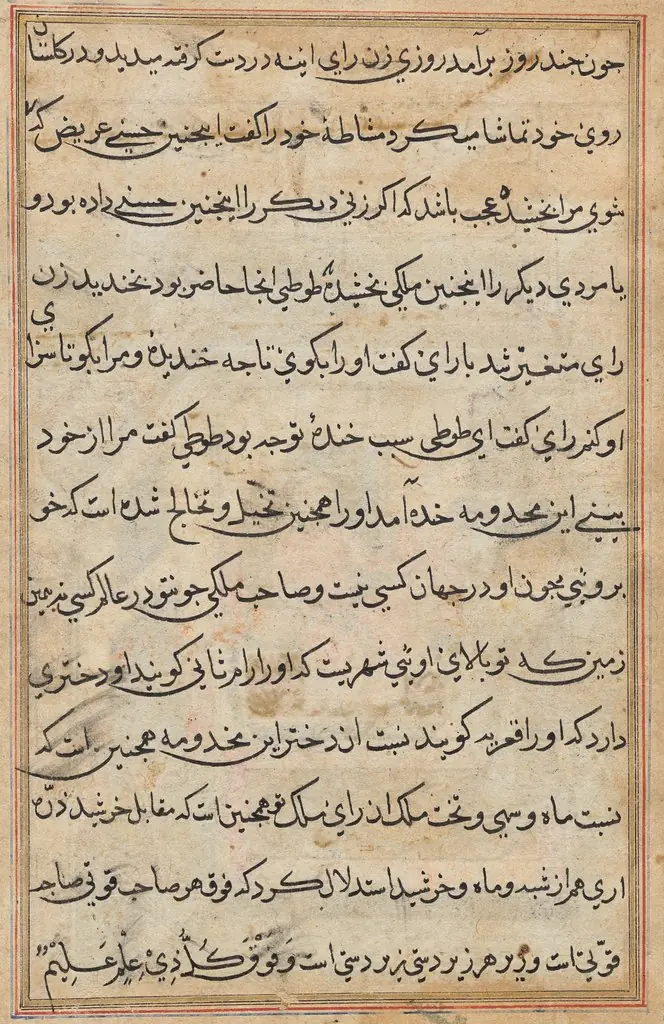 Page from Tales of a Parrot (Tuti-nama): text page
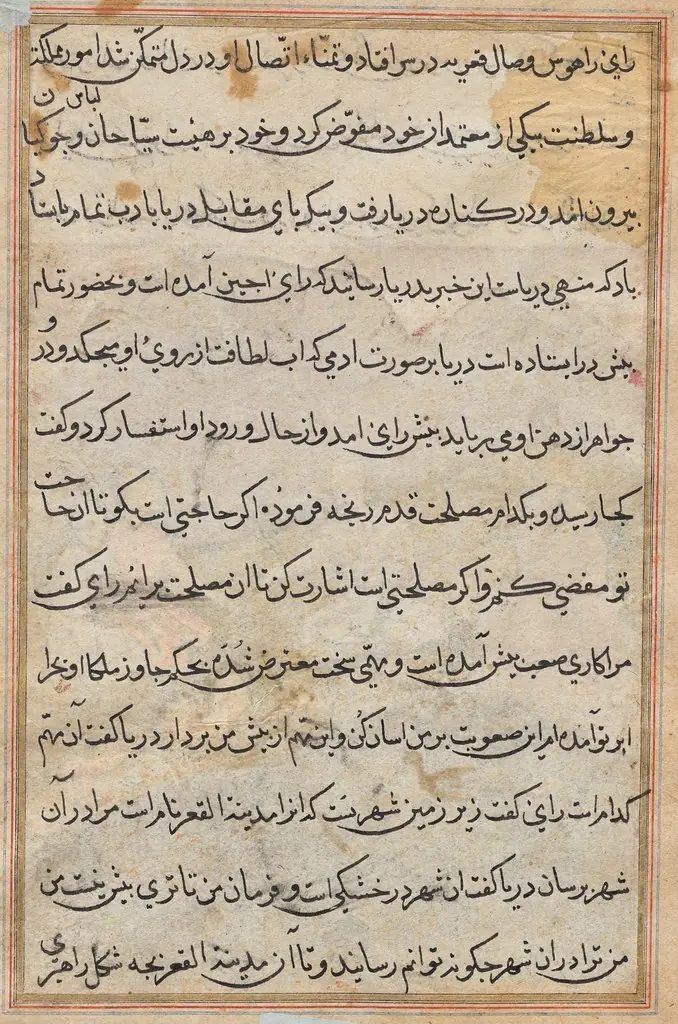 Page from Tales of a Parrot (Tuti-nama): text page
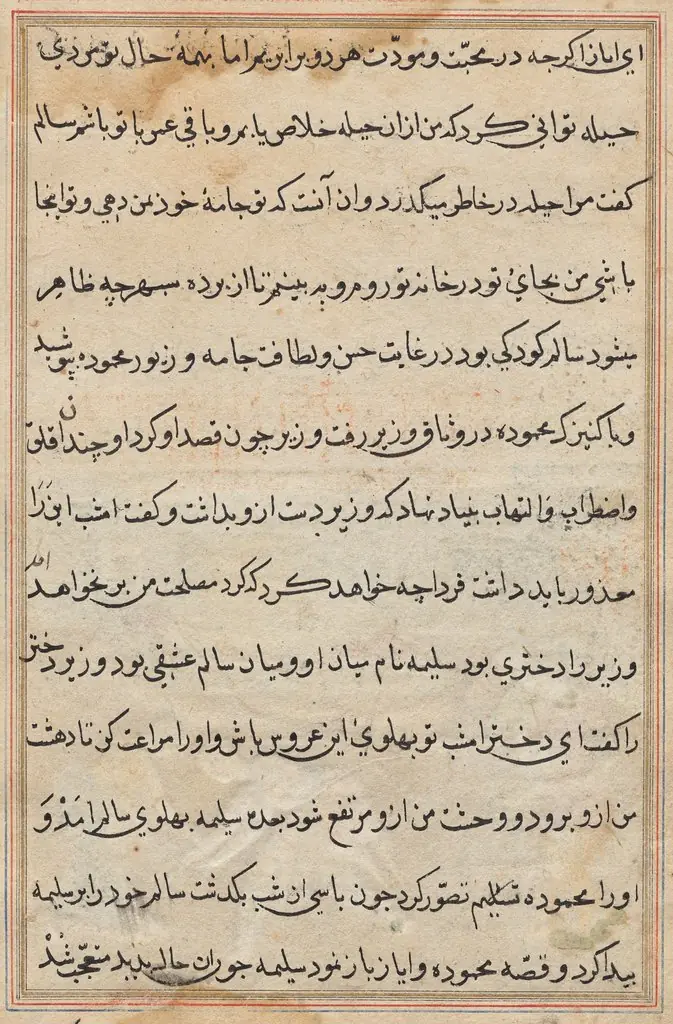 Page from Tales of a Parrot (Tuti-nama): text page
 Page from Tales of a Parrot (Tuti-nama): text page