Artwork
Page from Tales of a Parrot (Tuti-nama): text page
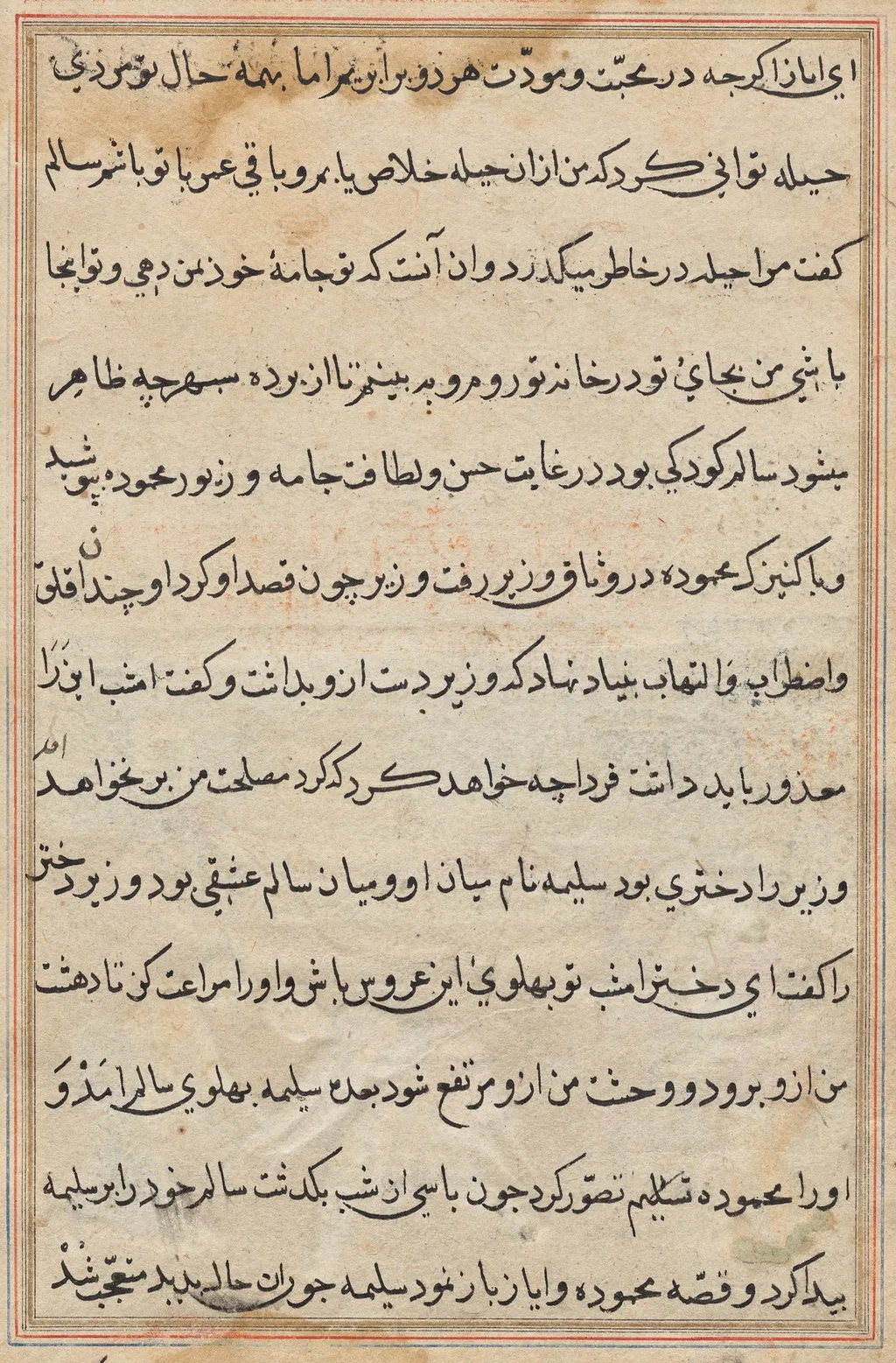
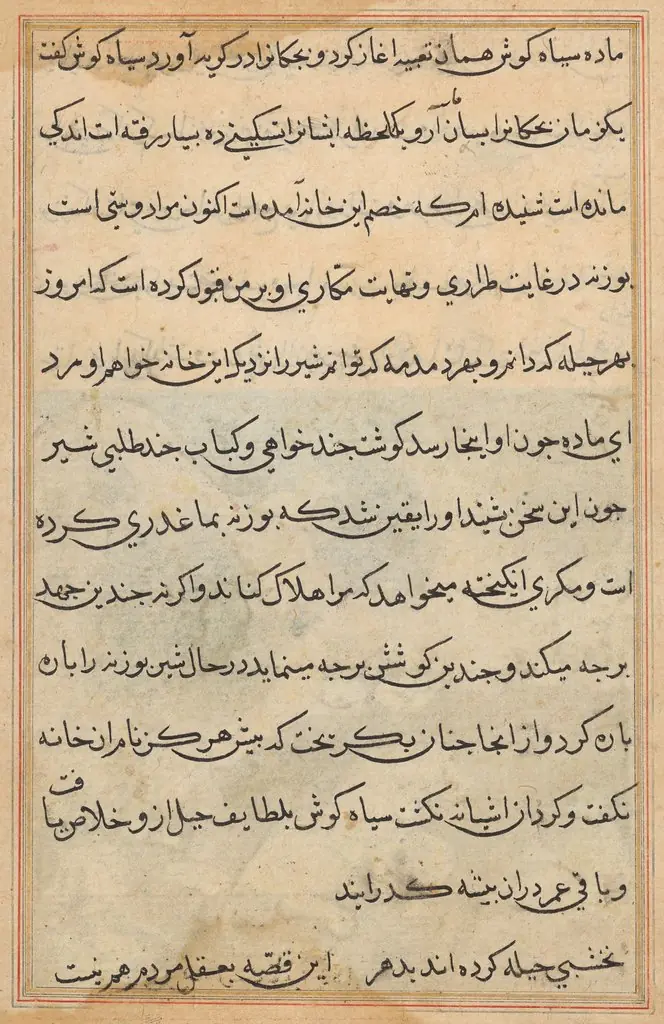
Page from Tales of a Parrot (Tuti-nama): text page is an unspecified painting. It dates from 1560 and is held in the collection of the Cleveland Museum of Art. This object is a single leaf from a 16th‑century manuscript titled *Tales of a Parrot* (Tuti‑nama).
About this work
The page appears to be a fragment of a larger manuscript, with the text continuing onto the next page.
This painting is a page from the "Tales of a Parrot" (Tuti-nama), created in 1560. The page features a text written in a foreign language, with no images or illustrations. The text is written in black ink on a beige background, with a thin red border around the edges. The text is written in a flowing script, with some words and phrases highlighted in red. The language is not recognizable, but the script is ornate and decorative. The page appears to be a fragment of a larger manuscript, with the text continuing onto the next page. The page is held at the Cleveland Museum of Art.
Overview
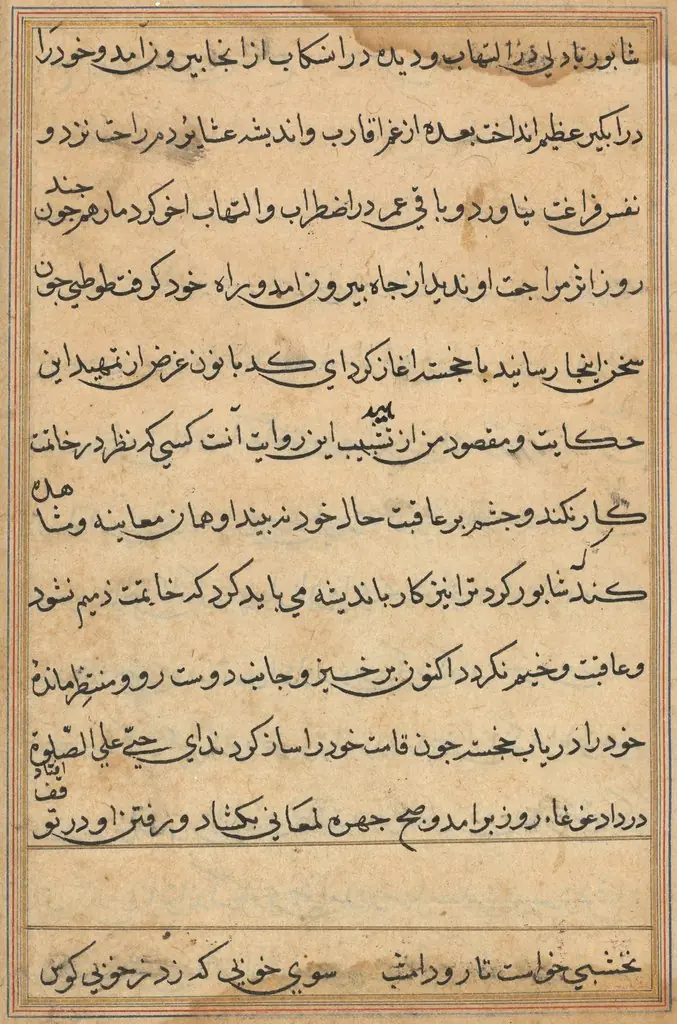
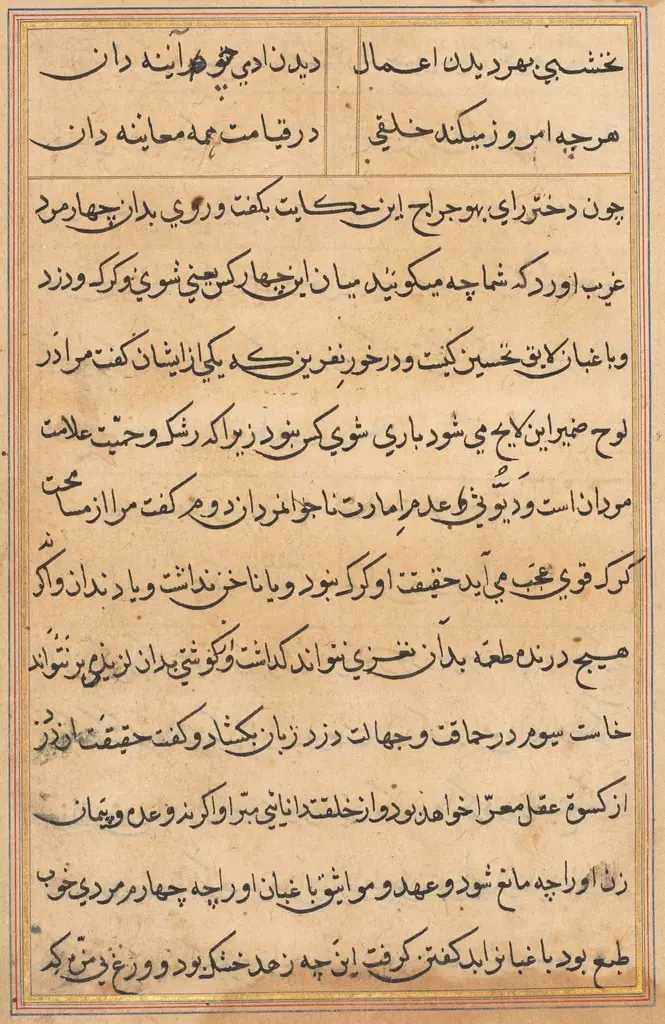
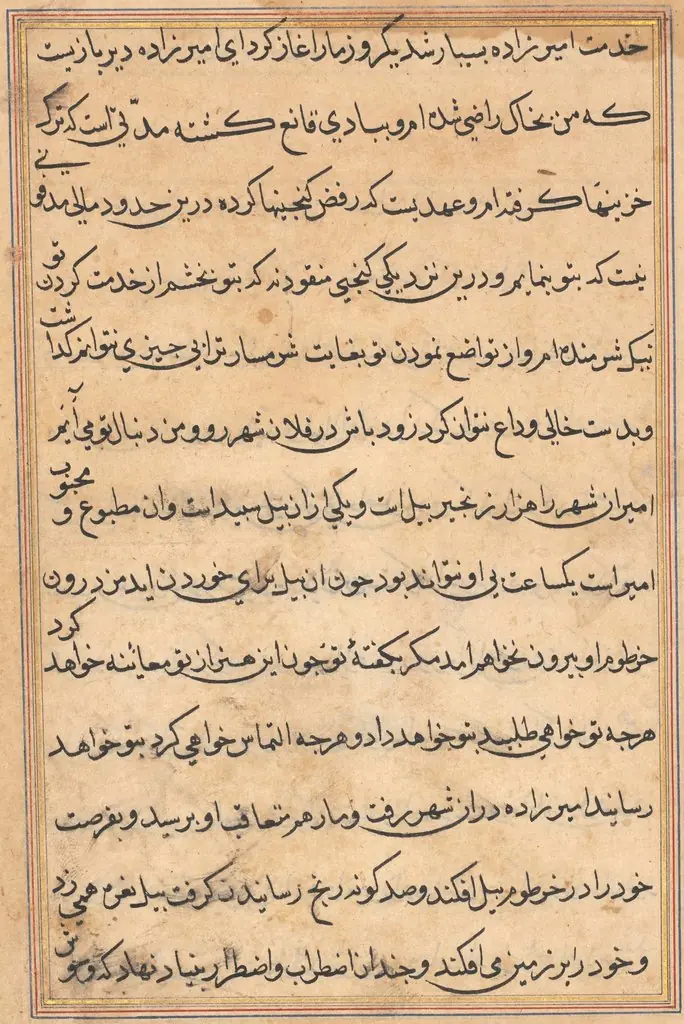
This object is a single leaf from a 16th‑century manuscript titled *Tales of a Parrot* (Tuti‑nama). The page consists solely of text, rendered in black ink on a light‑beige parchment, and is framed by a narrow red border. Decorative, flowing script dominates the surface, with occasional words highlighted in red, suggesting emphasis or annotation. The fragment is part of a larger codex, the surrounding leaves of which continue the narrative.
Subject & Meaning
The manuscript’s title implies a collection of stories narrated by a parrot, a motif common in Persian and Central Asian literary traditions. Although the language of the text is not immediately identifiable, the ornamental script and use of red for emphasis indicate a work intended for a cultured audience, possibly conveying moral or didactic tales through the voice of a talking bird.
Technique & Style
The scribe employed a fine-point pen to lay down a smooth black line, creating a continuous, cursive hand that balances legibility with decorative flourish. A thin red border frames the page, while selective red ink highlights specific terms, a practice known as rubrication. The parchment’s beige tone and the uniform ink application reflect standard mid‑16th‑century manuscript production in the region.
History & Provenance
Created around 1560, the leaf has been preserved within the Cleveland Museum of Art’s collection of Islamic and Persian manuscripts. Its exact origin—whether Persian, Ottoman, or from another cultural sphere—remains uncertain due to the undeciphered script, but the dating aligns with a period of prolific manuscript copying in the Islamic world.
Context
During the mid‑1500s, illustrated and text‑only manuscripts circulated among courts and scholarly circles, often serving as entertainment or moral instruction. The *Tuti‑nama* fits within a broader tradition of animal‑narrated literature, echoing works such as the *Kalila wa Dimna* and other fable collections that used animal protagonists to explore human virtues and vices.
Artist & collection

 Page from Tales of a Parrot (Tuti-nama): text page
 Page from Tales of a Parrot (Tuti-nama): text page
 Page from Tales of a Parrot (Tuti-nama): text page
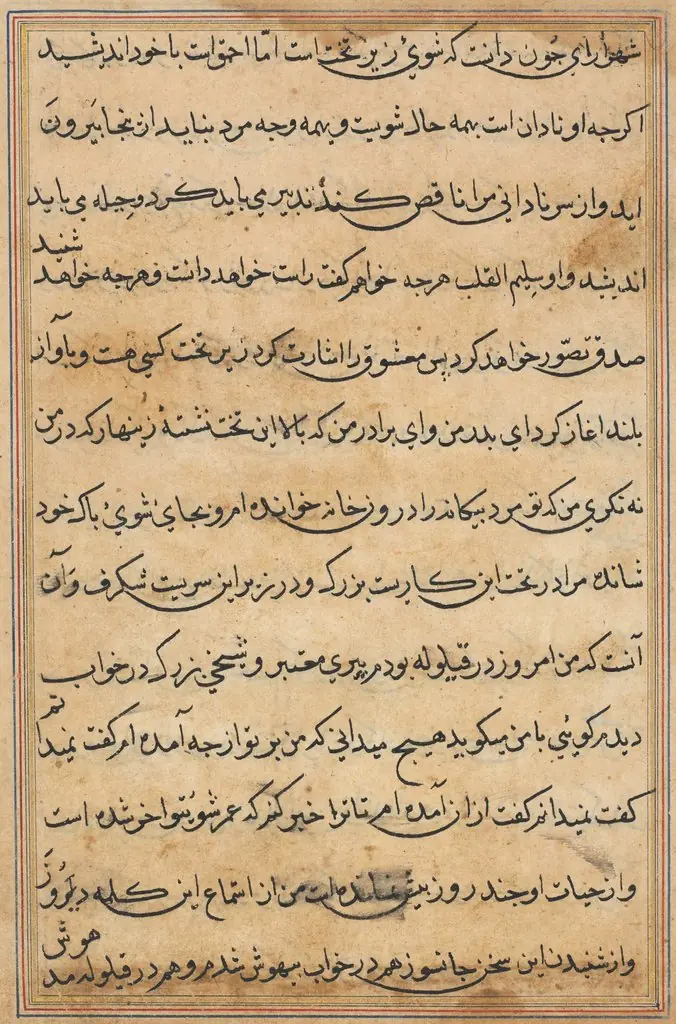 Page from Tales of a Parrot (Tuti-nama): text page
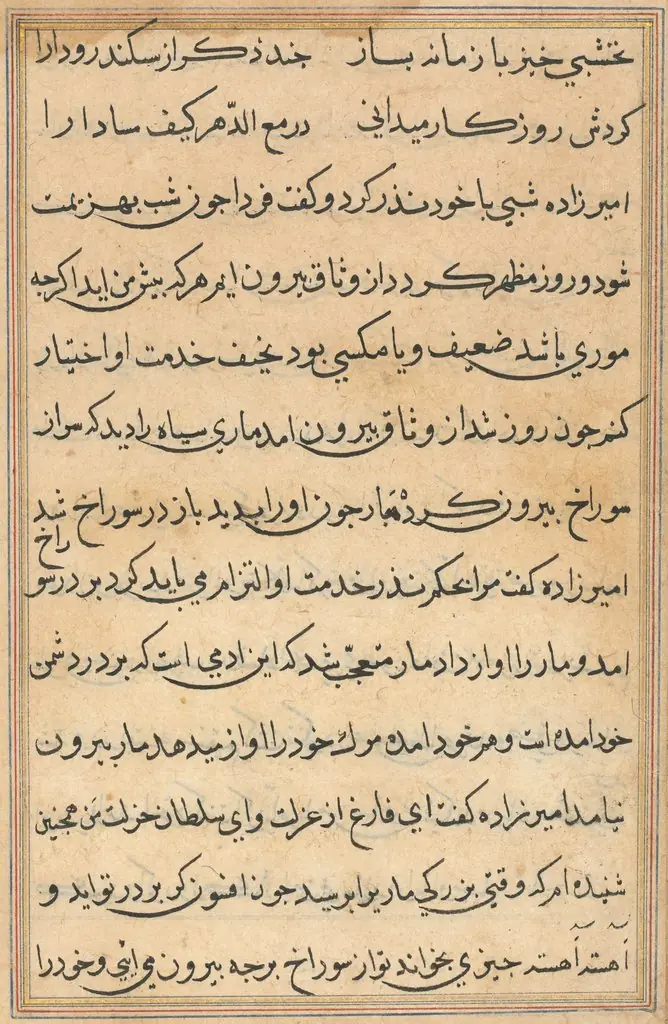 Page from Tales of a Parrot (Tuti-nama): text page
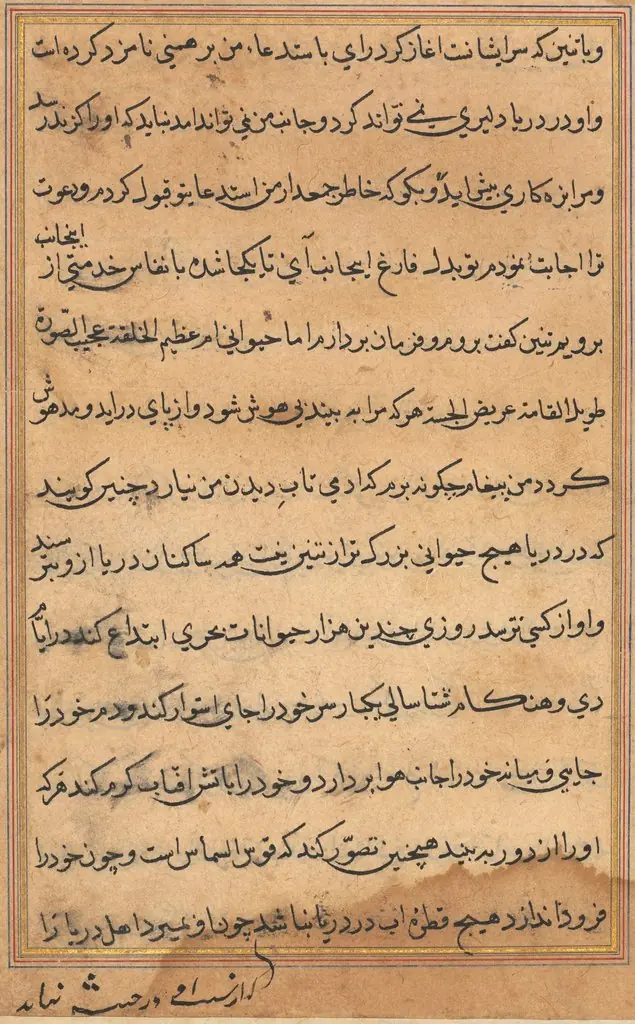 Page from Tales of a Parrot (Tuti-nama): text page
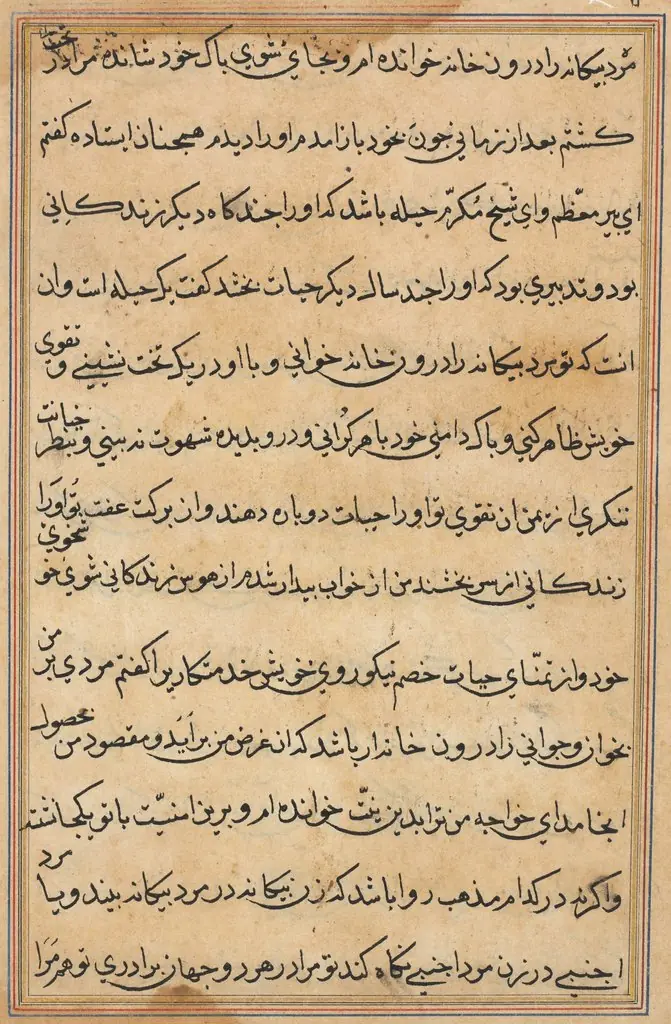 Page from Tales of a Parrot (Tuti-nama): text page
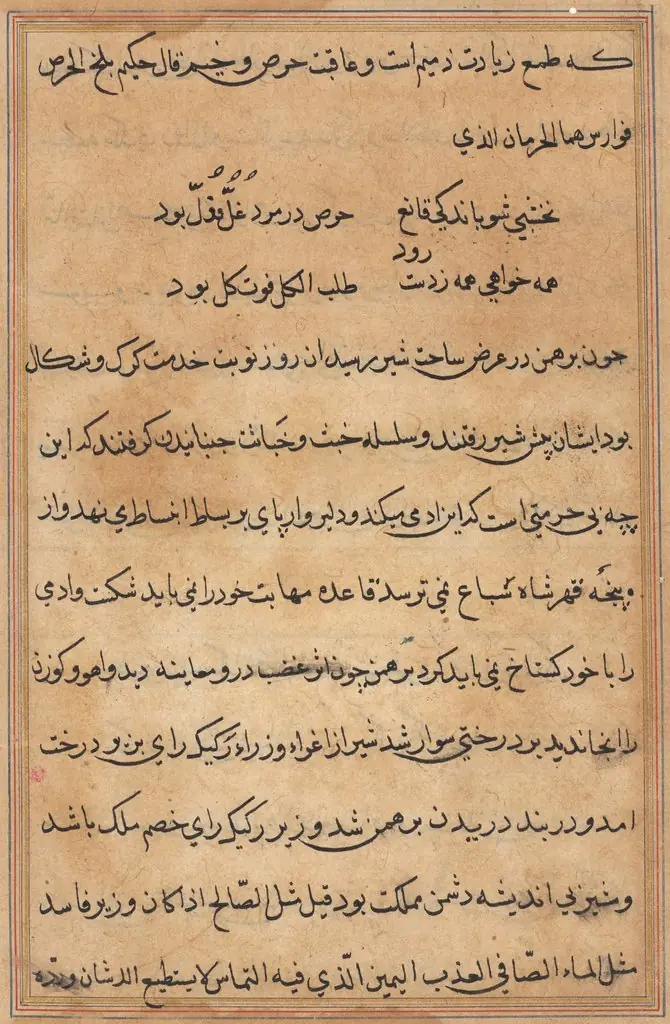 Page from Tales of a Parrot (Tuti-nama): text page
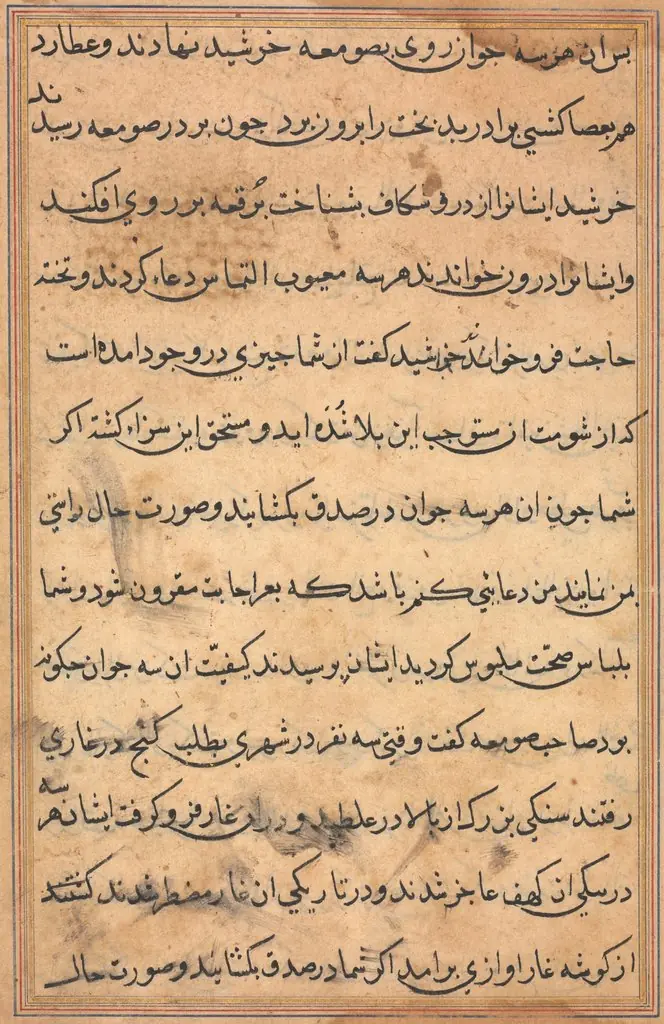 Page from Tales of a Parrot (Tuti-nama): text page
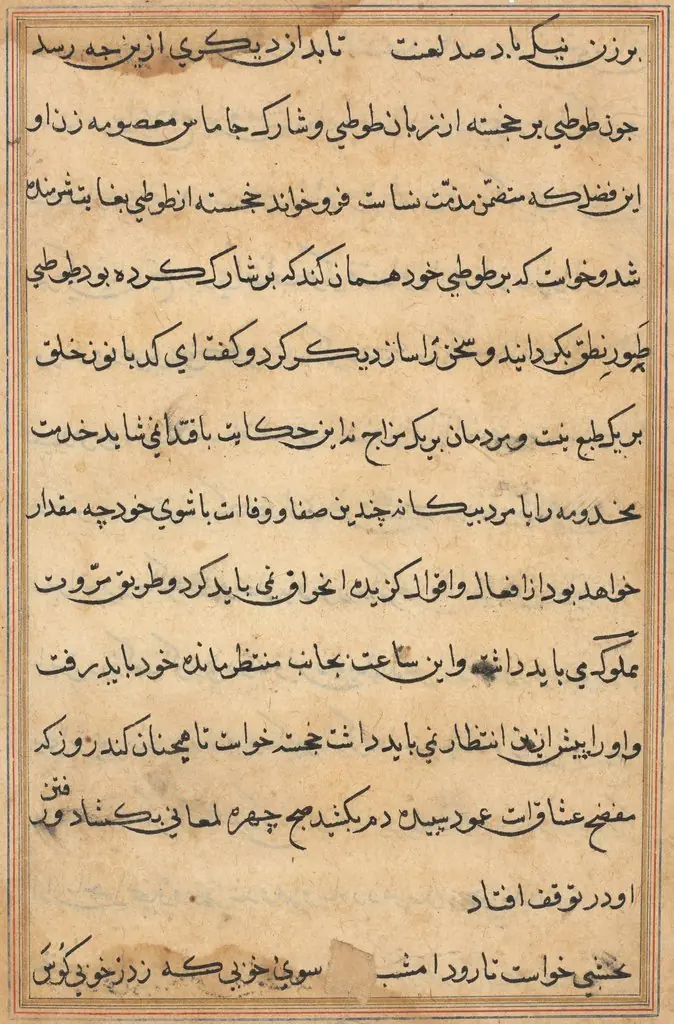 Page from Tales of a Parrot (Tuti-nama): text page
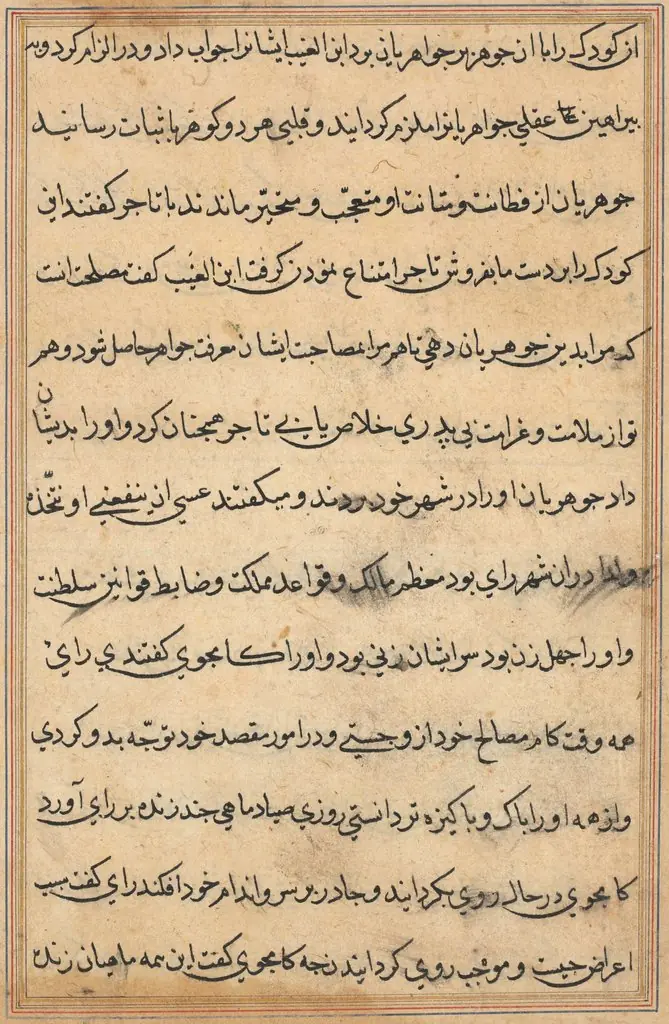 Page from Tales of a Parrot (Tuti-nama): text page
 Tuti-Nama (Tales of a Parrot)