Artwork
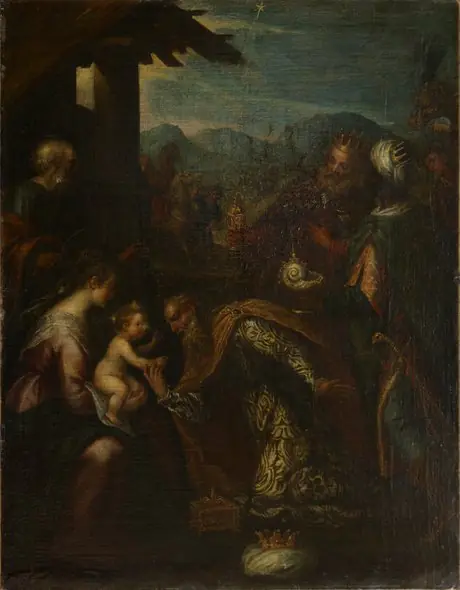
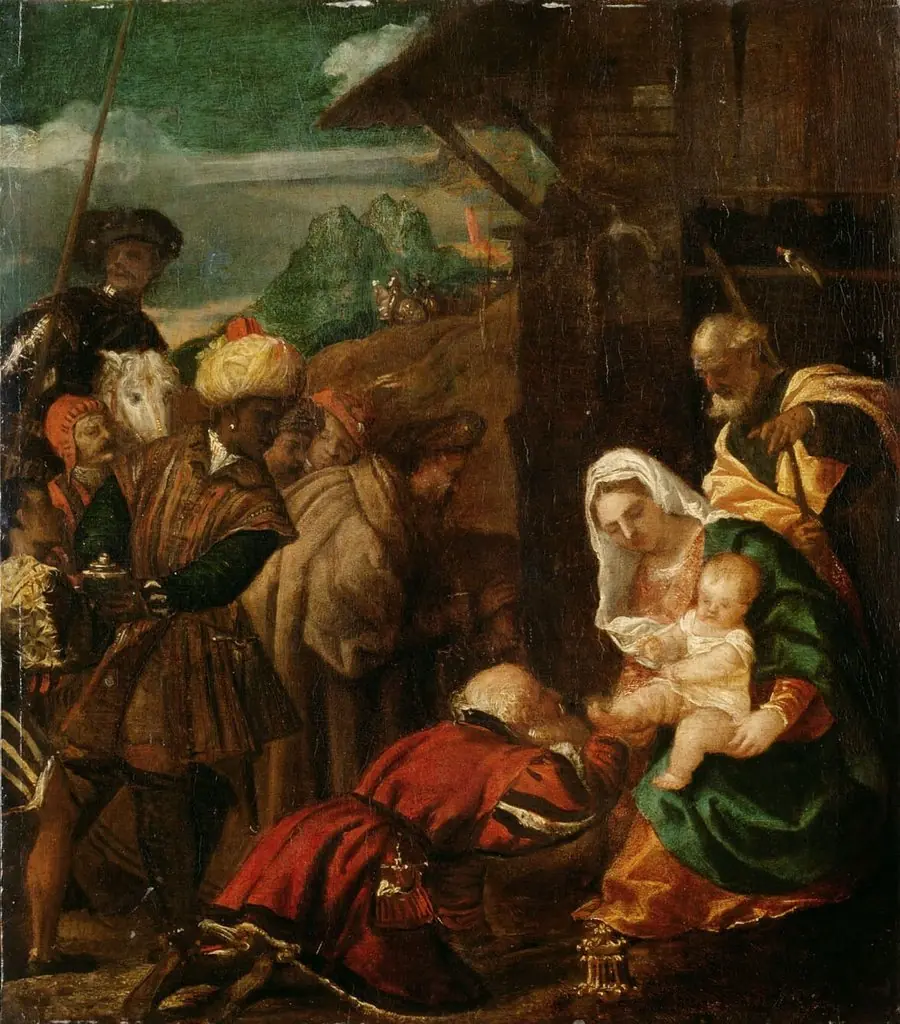
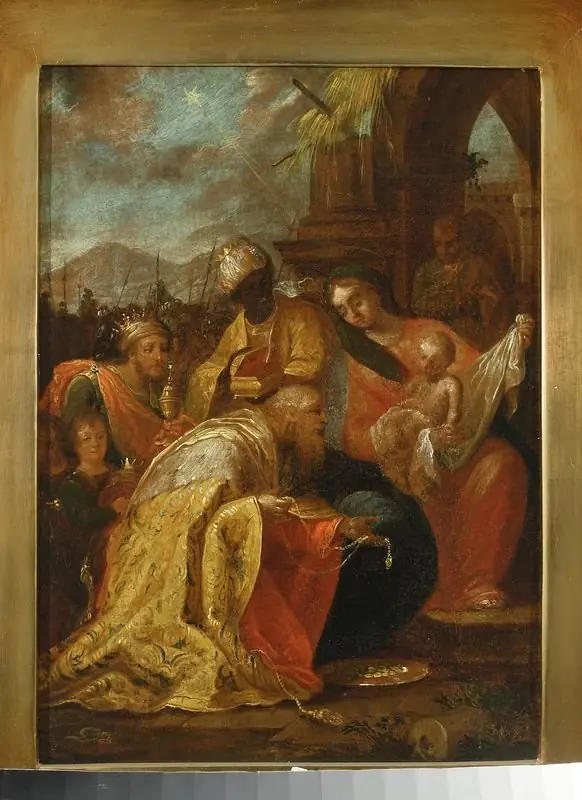
The Adoration of the Kings
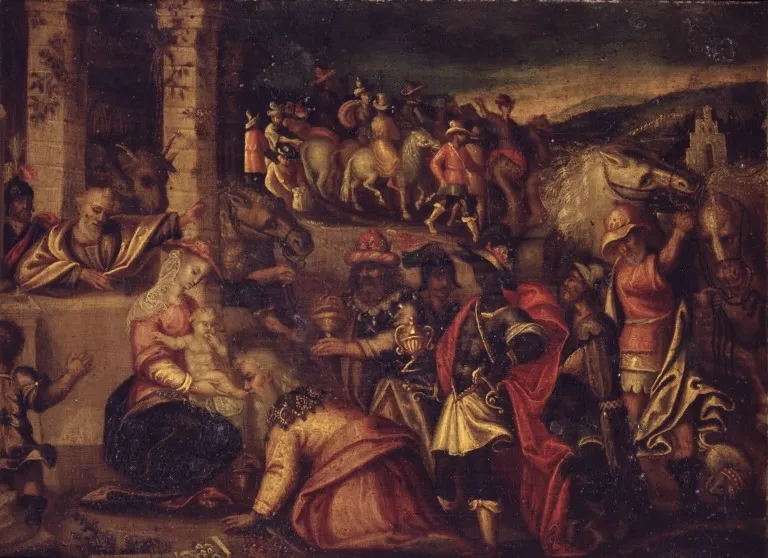
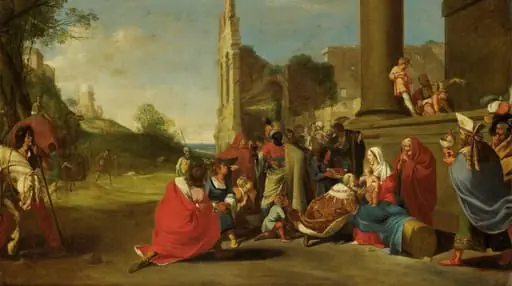
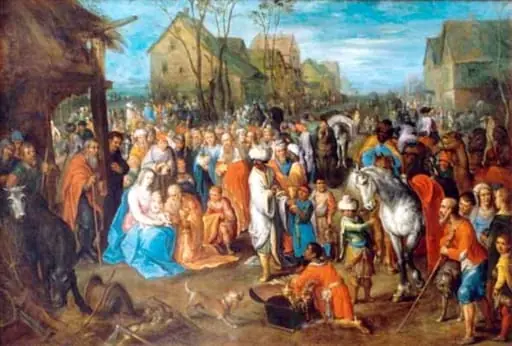
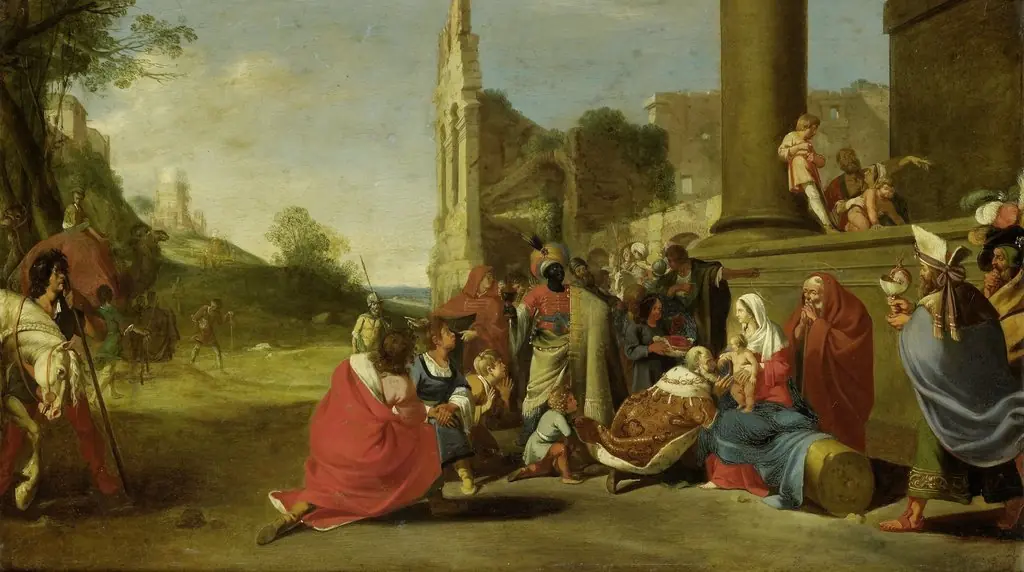
The Adoration of the Kings is an unspecified painting by the Mannerist artist Unknown. It dates from 1597 and is held in the collection of the Statens Museum for Kunst.
About this work
Overview
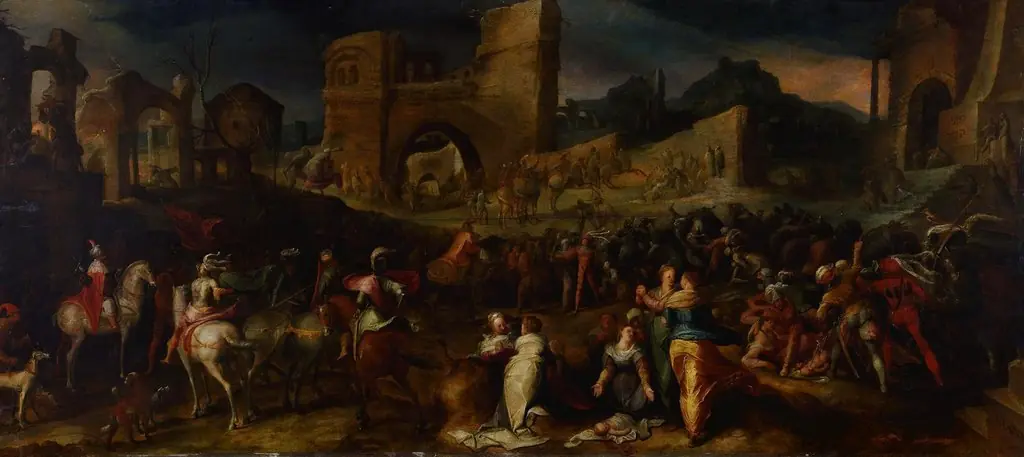
The work depicts a bustling tableau centered on a woman cradling an infant, surrounded by attendants in opulent red and gold garments and armored figures.
The work depicts a bustling tableau centered on a woman cradling an infant, surrounded by attendants in opulent red and gold garments and armored figures. Beyond the immediate group, a chaotic battle unfolds with mounted soldiers near a fortified structure. The composition is dominated by stark contrasts of light and shadow, drawing the eye to the infant while enveloping the surrounding drama in darkness.
Subject & Meaning
At its core, the painting presents a reverent gathering around the newborn, suggesting a narrative of adoration and protection. The presence of armed men and a distant conflict hints at the tension between sacred devotion and worldly turmoil, underscoring themes of vulnerability, divine favor, and the juxtaposition of peace within chaos.
Technique & Style
The artist employs chiaroscuro, using intense illumination on the central figures against deep, enveloping shadows to create a three‑dimensional effect. Rich, saturated reds and golds on the robes contrast with the muted blues of the woman's attire, while the metallic sheen of armor reflects limited light, enhancing the dramatic atmosphere characteristic of late Renaissance or early Baroque visual strategies.
Context
The scene reflects a period when religious narratives were often merged with contemporary military imagery, possibly alluding to a specific historical event or patron’s interest in both piety and martial prowess. The inclusion of a castle and combat suggests a setting familiar to viewers of a fortified landscape, linking the sacred story to the lived experience of the era.
Legacy
Through its striking use of light and composition, the painting has been referenced in discussions of how artists balance narrative clarity with emotional intensity. Its treatment of a holy infant amid conflict continues to inform scholarly analysis of devotional art that incorporates secular, martial elements, illustrating the complex interplay of faith and power in visual culture.
Artist & collection

 Domestic Scene
 Giacomo and Cardinal Marco, investing Andrea, Abbot of San Zeno, with his Benefice
 The Nymph of Fontainebleau
 Portrait of a Woman
 Madonna and Child with Saints in the Enclosed Garden
 Venus and Minerva
 Family Group of Four on Sofa
 Wall painting from Room H of the Villa of P. Fannius Synistor at Boscoreale