Artwork
Fuga lui Iacov
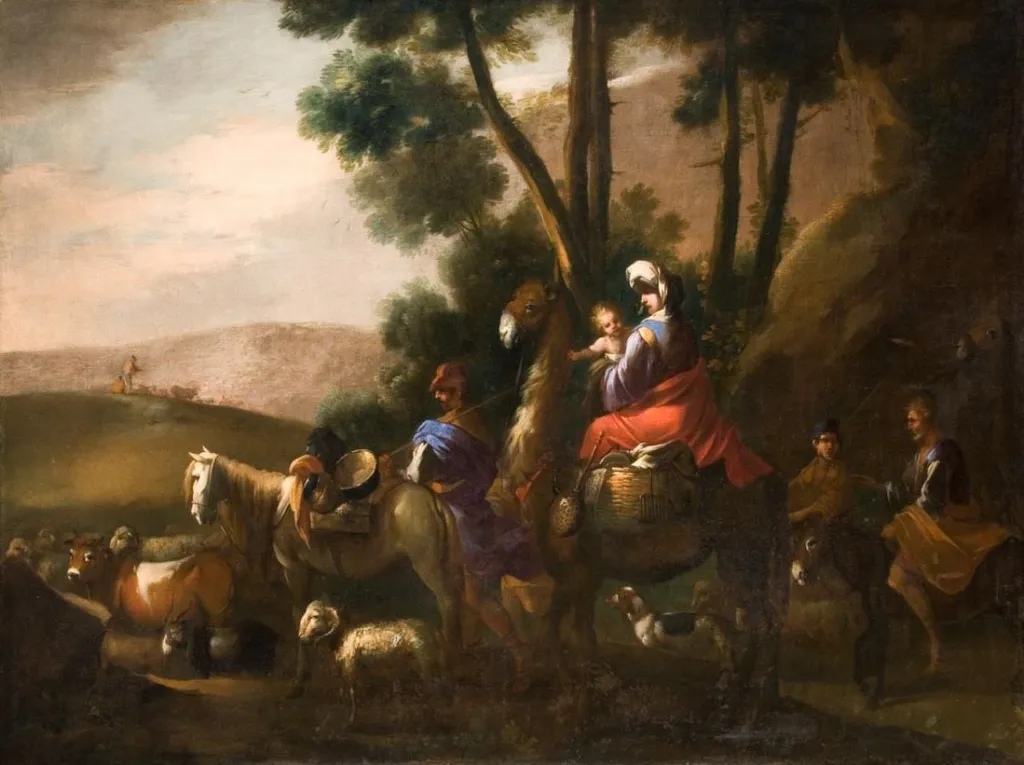
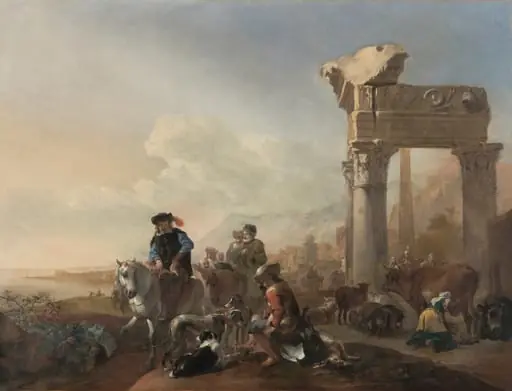
Fuga lui Iacov is a print by Jean Tassel. It dates from 1650 and is held in the collection of the National Museum of Art of Romania.
About this work
Overview
Painted around 1650 by the French artist Jean Tassel, *Fuga lui Iacov* portrays a biblical journey through a quiet rural landscape. Though Tassel is better known for mythological and portrait subjects, this work reflects his engagement with religious narratives. The composition centers on movement and quiet endurance, capturing a moment of travel rather than dramatic climax.
Subject & Meaning
The narrative emphasizes pilgrimage and protection, rendered without overt symbolism, allowing the act of journeying to convey spiritual resolve.
The scene illustrates the flight of Jacob, as recounted in Genesis, when his family departs under divine guidance. The central figure, a woman in a red cloak holding an infant, likely represents Rachel or another matriarch, while the surrounding figures and livestock suggest a household in transit. The narrative emphasizes pilgrimage and protection, rendered without overt symbolism, allowing the act of journeying to convey spiritual resolve.
Technique & Style
Tassel employs chiaroscuro to model forms with subtle gradations of light and shadow, particularly on faces and animal hides. Soft tonal transitions create a sense of volume and spatial depth, while the muted palette grounds the scene in naturalism. The brushwork remains restrained, avoiding theatricality; even the movement of figures feels deliberate and unhurried, reinforcing the painting’s contemplative tone.
History & Provenance
The painting’s early ownership is undocumented, and it likely remained in private collections in France or Eastern Europe. Its title, in Romanian, suggests later association with regions where biblical stories were commonly depicted in vernacular contexts. No major exhibitions or catalogues from the 17th century reference the work, indicating it was not widely circulated during Tassel’s lifetime.
Context
In mid-17th-century France, religious subjects were less dominant than in earlier decades, yet biblical narratives persisted in private commissions. Tassel’s choice to depict Jacob’s flight aligns with a broader interest in domesticated sacred stories—those emphasizing family, travel, and quiet faith—rather than grand miracles. The landscape setting reflects contemporary Flemish and Dutch influences on French genre painting.
Legacy
Though not widely studied today, *Fuga lui Iacov* offers insight into the adaptability of religious themes in French art beyond the courtly or monumental. Tassel’s restrained approach to biblical storytelling, blending genre realism with spiritual quietude, represents a lesser-known thread in the evolution of European narrative painting during the Baroque era.
Artist & collection
Artist
Jean Tassel (20 March 1608, in Langres – 6 April 1667, in Langres) was a French painter who specialized in mythological and genre scenes. He also did some portraits.

 Peisaj stâncos cu vite
 The Harvest Wagon, 1784
 Labán busca los ídolos
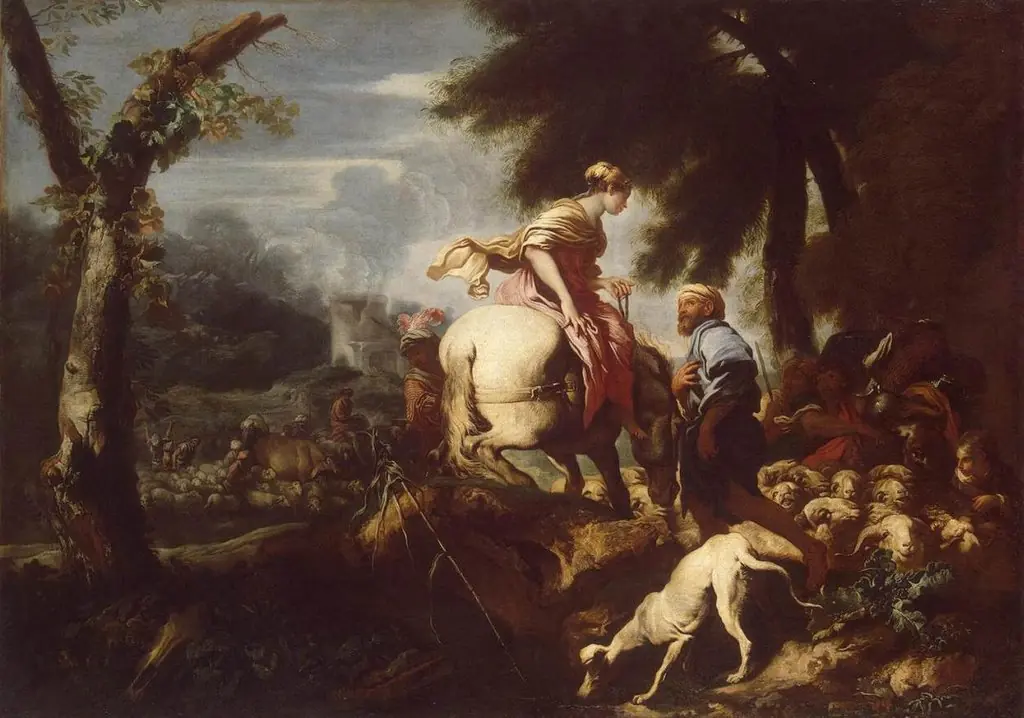 Isaac Meeting Rebecca
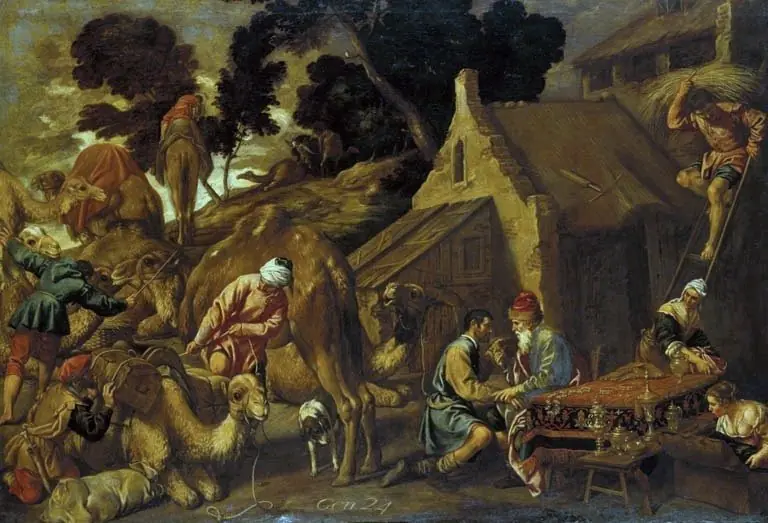 Abraham sends Eliezer to find a wife for Isaac
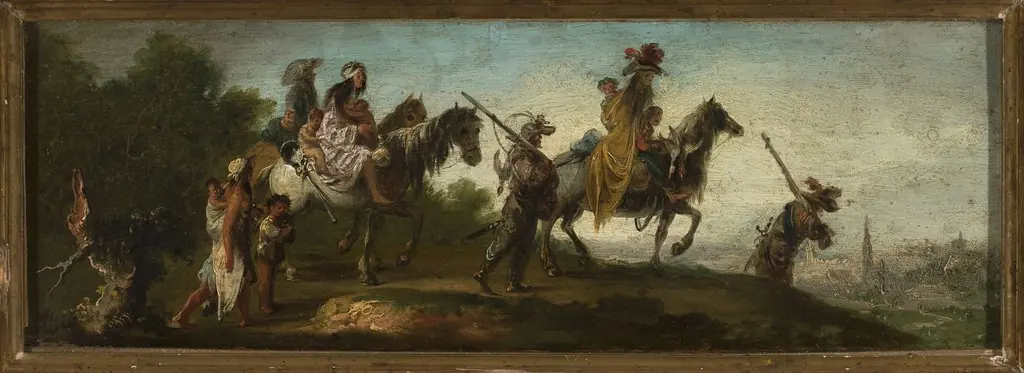 Gipsies on the road
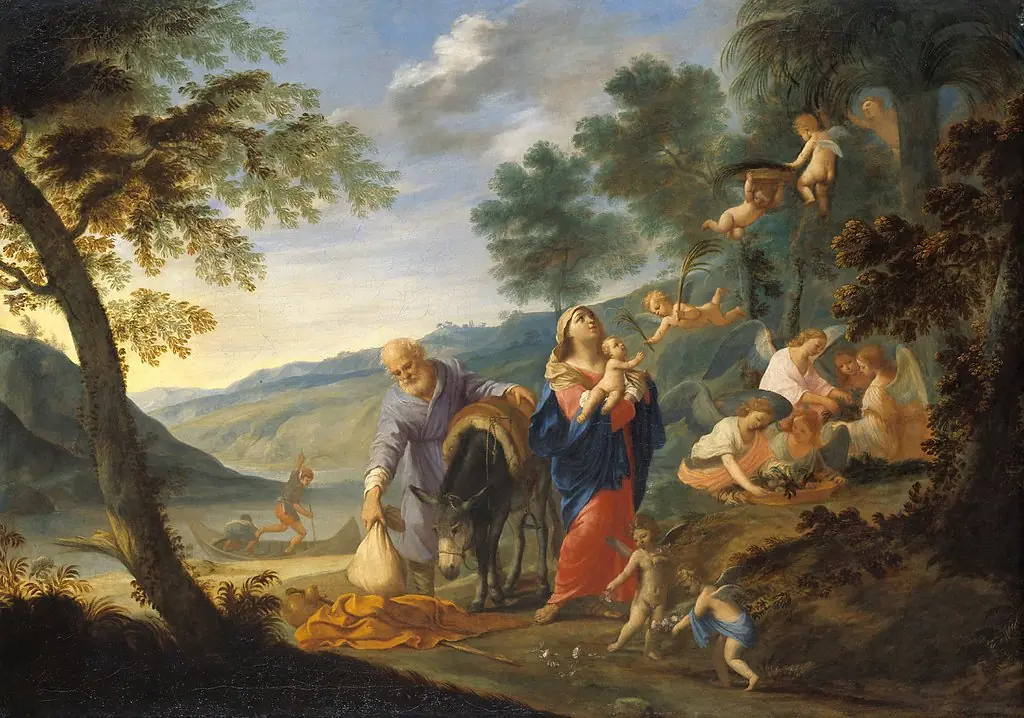 The Rest on the Flight into Egypt
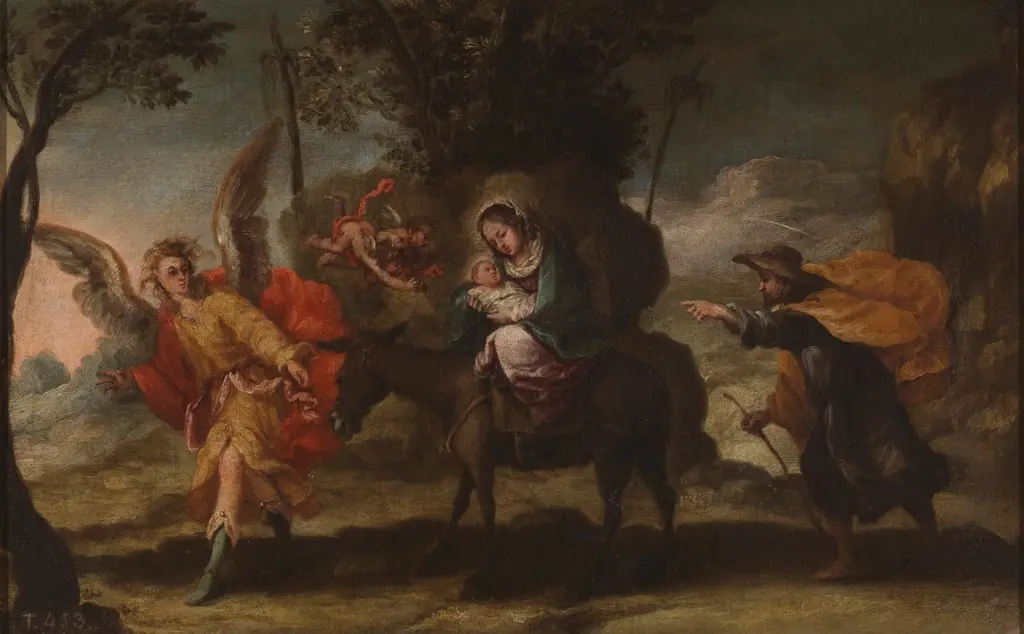 The Flight into Egypt
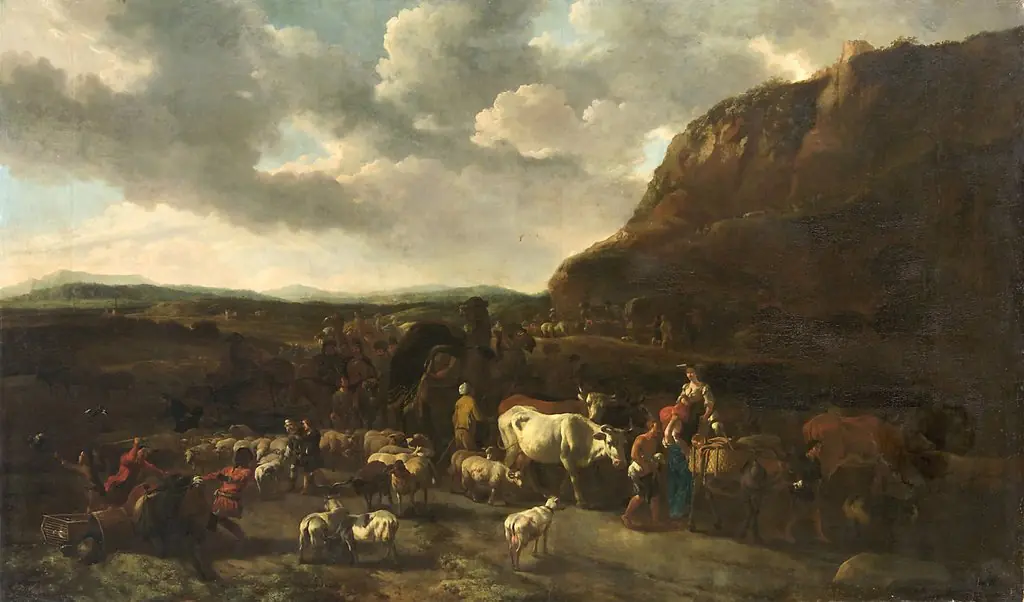 Landscape with Jacob and his family on the way to Canaan (Genesis 31:17-18)
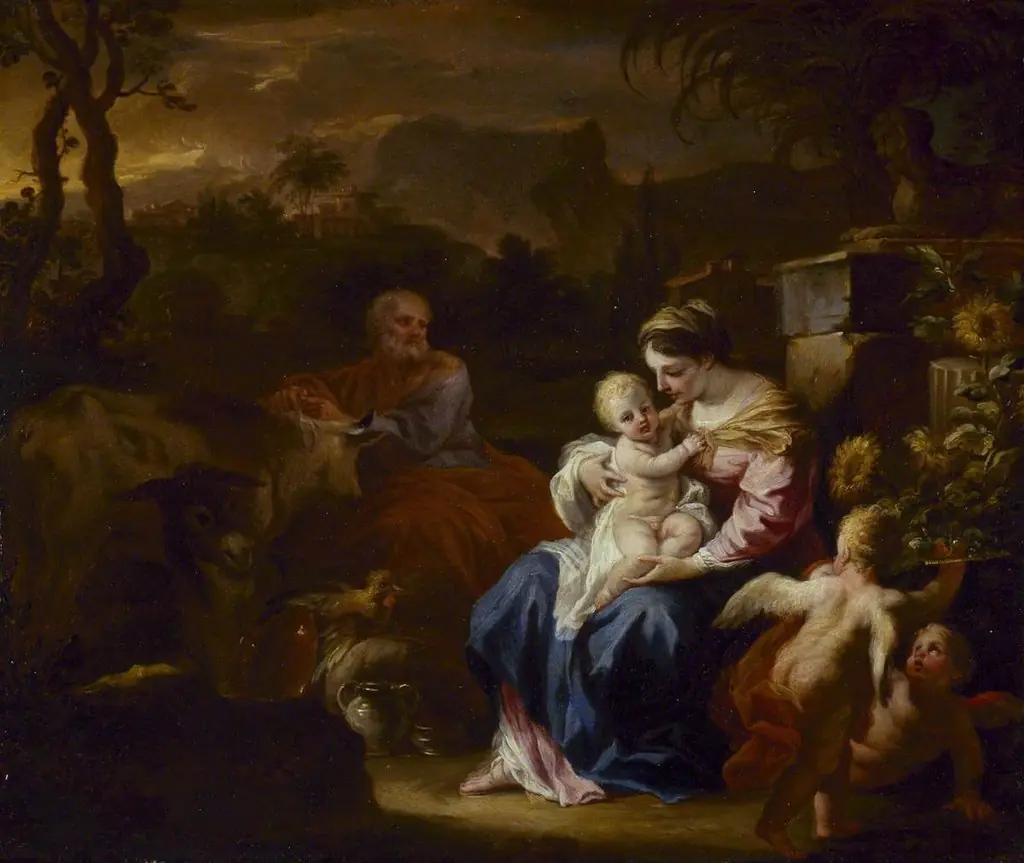 The Rest on the Flight into Egypt
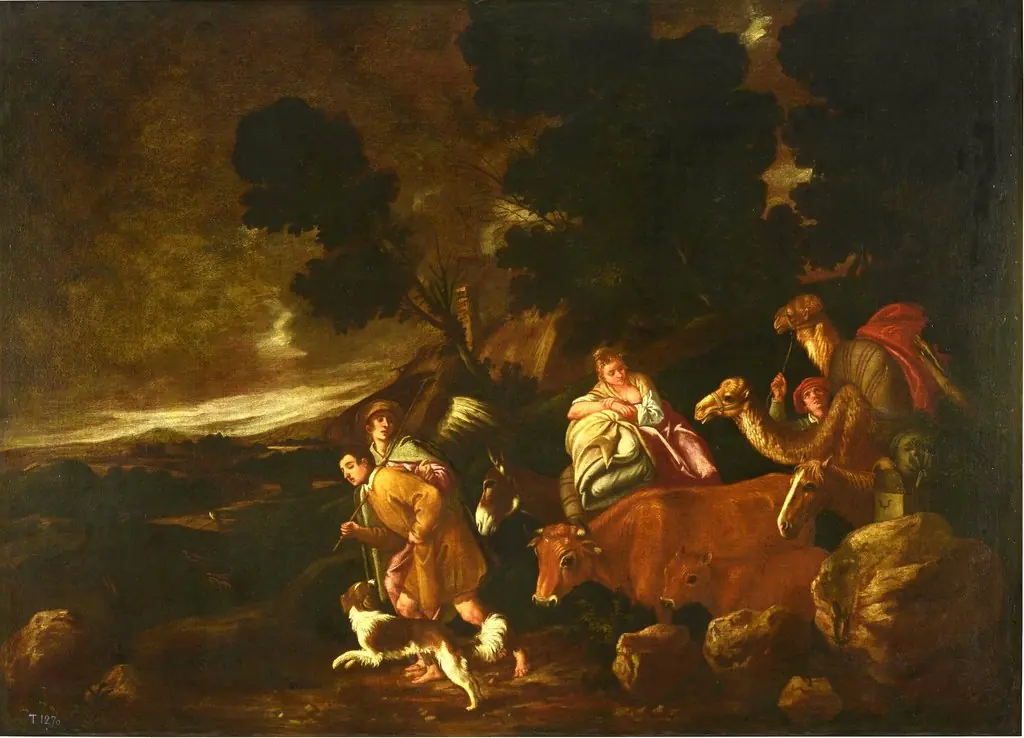 Viaje de Tobías y Sara
 Hunters Near Ruins