Artwork
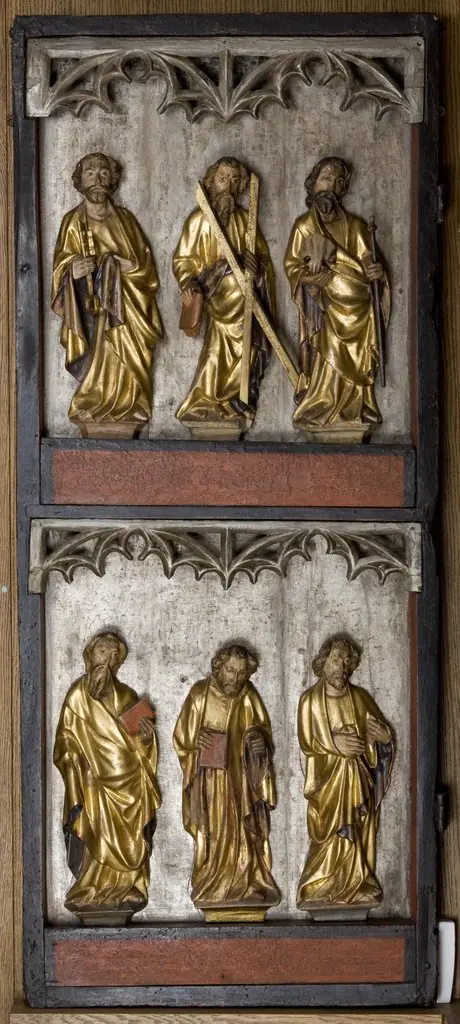
Saint Apostles (reverse: Our Lady of Sorrows). The right panel of the retable from Stary Żywiec
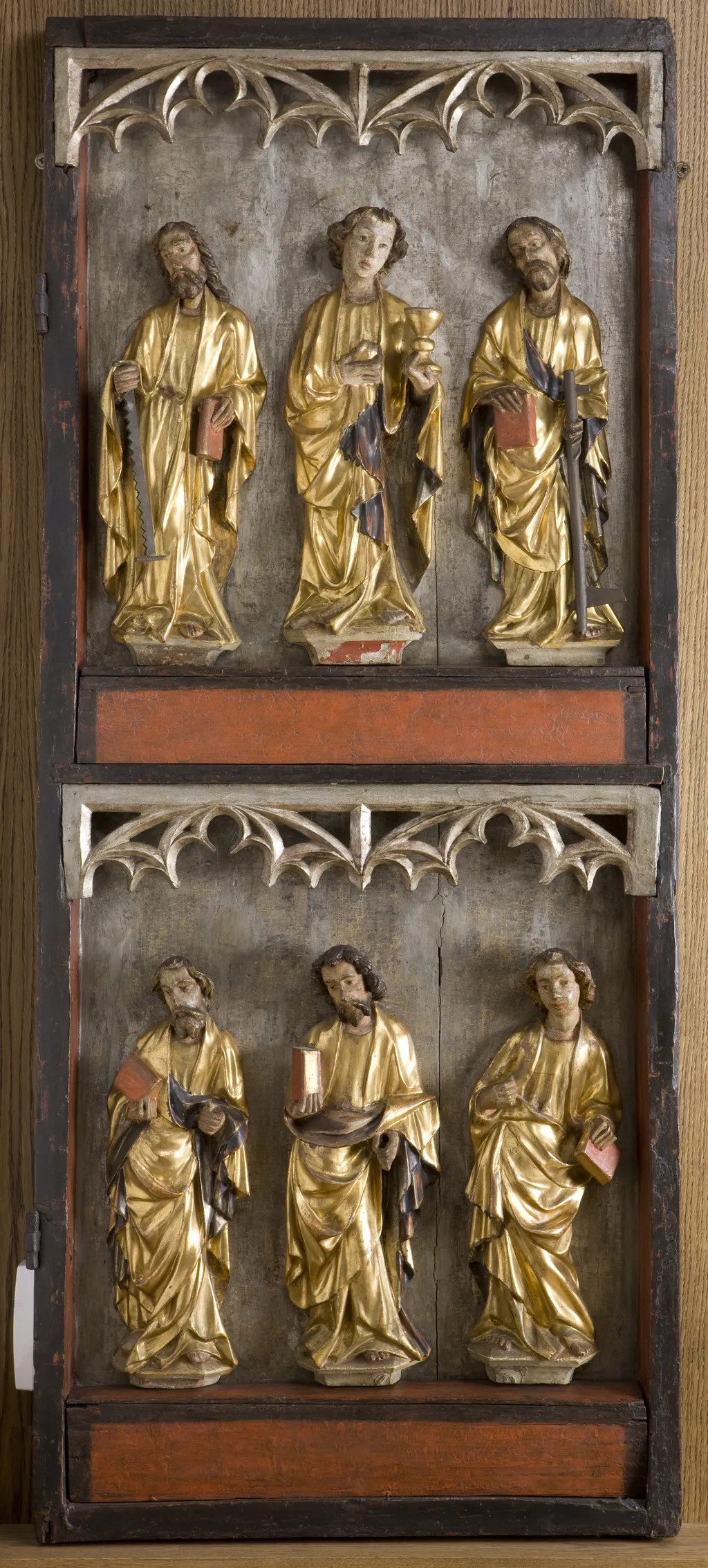
Saint Apostles (reverse: Our Lady of Sorrows). The right panel of the retable from Stary Żywiec is an unspecified painting by Unknown. It dates from 1400 and is held in the collection of the National Museum in Kraków. The work is a painted panel from the right side of a retable originally installed in the church of Stary Żywiec.
About this work
Overview
The work is a painted panel from the right side of a retable originally installed in the church of Stary Żywiec. It is divided horizontally into two registers, each containing three figures dressed in gold‑embroidered robes. A narrow red band runs along the lower edge of each register, set against a muted gray backdrop.
Subject & Meaning
The upper register presents a male figure holding a book and a sword, a female figure with a chalice, and another male holding a book and a staff, suggesting a theological grouping of saints or apostles. The lower register shows three male figures, each with a book and a cloth, reinforcing themes of learning and liturgical service.
Technique & Style
Executed in tempera with extensive application of gold leaf, the panel displays meticulous attention to the drapery’s folds and the delicate modeling of facial features. The gold background and the precise linear outlines reflect the late Gothic decorative idiom common in Central European ecclesiastical art.
History & Provenance
The panel formed part of a larger retable that once stood in the parish church of Stary Żywiec. Over time the retable was dismantled, and the right wing, bearing this painting, entered museum collections, where it is now displayed as a representative fragment of the original ensemble.
Context
The composition aligns with the devotional program of medieval Polish churches, where paired panels often juxtaposed saints with the Virgin in sorrowful contemplation. The inclusion of a chalice and liturgical objects underscores the sacramental focus of the parish’s worship during the period of the panel’s creation.
Artist & collection

 Domestic Scene
 Giacomo and Cardinal Marco, investing Andrea, Abbot of San Zeno, with his Benefice
 The Nymph of Fontainebleau
 Portrait of a Woman
 Madonna and Child with Saints in the Enclosed Garden
 Venus and Minerva
 Family Group of Four on Sofa
 Wall painting from Room H of the Villa of P. Fannius Synistor at Boscoreale
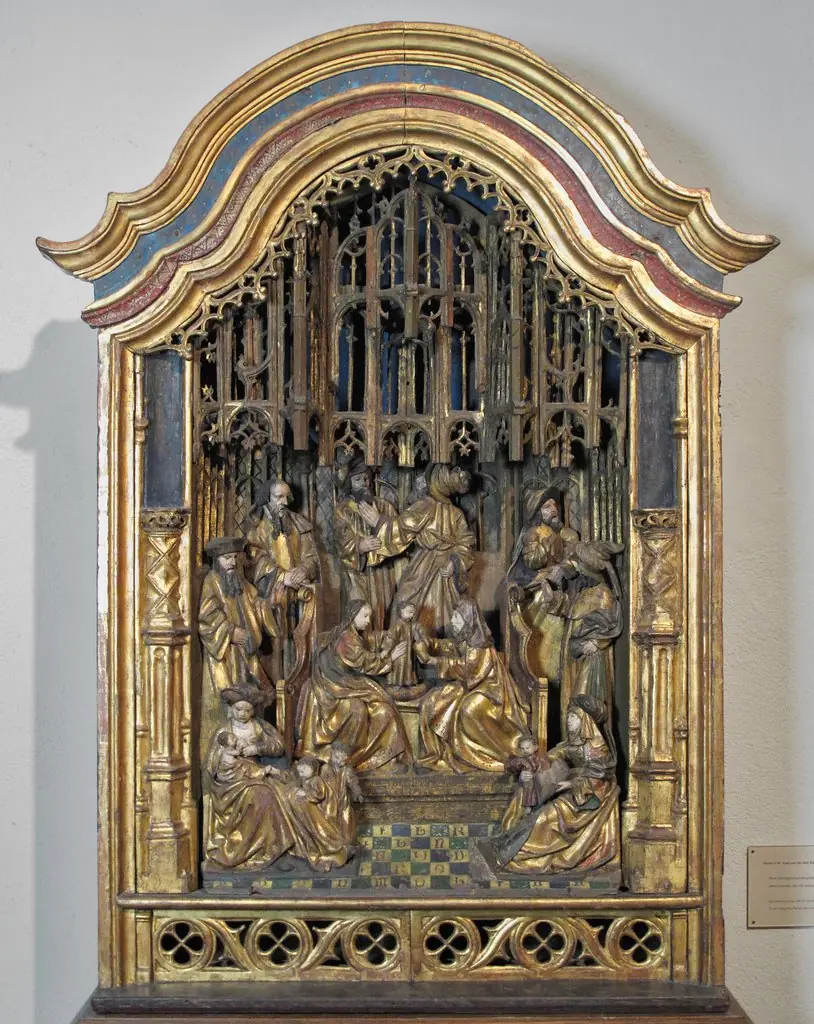 Shrine of Saint Anne and the Holy Kinship
 The Swansea Altarpiece
 Virgin and Child, the Coronation of the Virgin and scenes from the Nativity
 Altar frontal from Santa Maria in Taüll
 Untitled
 Central Panel of a Triptych
 Adoration of the Magi
 The Lamentation
 Marien Altar from St. Gereon
 The Crucifixion
 Dormition of the Virgin Relief
 Saint Apostles (reverse: Christ – Man of Sorrows). The left panel of the retable from Stary Żywiec