Artwork
Virgin and Child, the Coronation of the Virgin and scenes from the Nativity
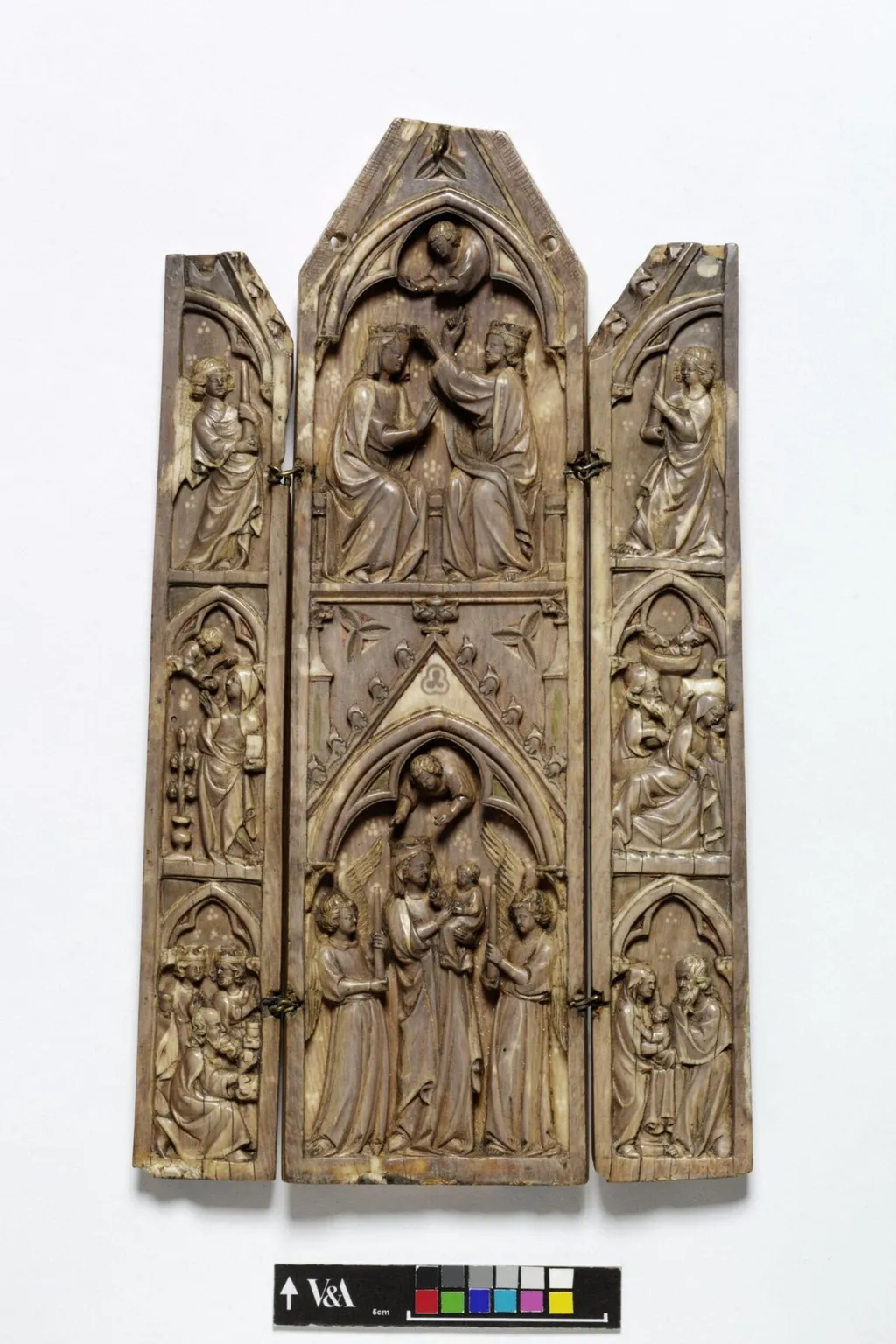
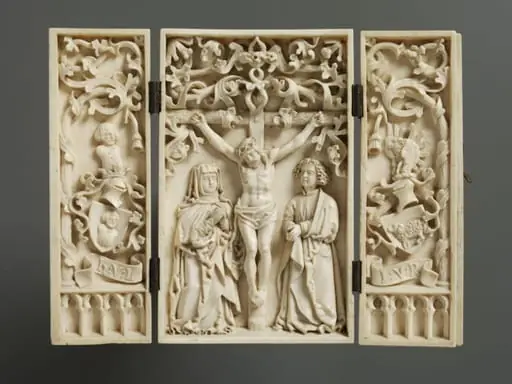
Virgin and Child, the Coronation of the Virgin and scenes from the Nativity is a work on paper by Unknown. It dates from 1300 and is held in the collection of the Victoria and Albert Museum. This small ivory triptych, crafted in France around 1300, likely in Paris, served as a portable devotional object.
About this work
Overview
The work was once misattributed to an Italian artist, but stylistic evidence firmly ties it to French traditions of the period.
This small ivory triptych, crafted in France around 1300, likely in Paris, served as a portable devotional object. Its three hinged panels—central and two side wings—form a compact altar suitable for private prayer and travel. Made from a rare and delicate material, it reflects the high skill of Gothic ivory carvers. The work was once misattributed to an Italian artist, but stylistic evidence firmly ties it to French traditions of the period.
Subject & Meaning
The central panel depicts the Virgin and Child, flanked by angels, while the side panels illustrate scenes from the Nativity, emphasizing Christ’s earthly origins. The Coronation of the Virgin, though not explicitly detailed in the source, is implied as part of the devotional narrative. These images were chosen to inspire contemplation of Christ’s divine nature and humanity, reinforcing the spiritual focus of personal worship among the mobile elite.
Technique & Style
The carving demonstrates exceptional precision, with fine detailing in drapery, facial features, and architectural elements. The figures echo the naturalism of contemporary Parisian stone sculpture, particularly the Poissy angels, suggesting shared workshop traditions. While the source mentions chiaroscuro, ivory’s material limits mean modeling is achieved through subtle relief and linear depth rather than tonal contrast, relying on light play across carved surfaces.
History & Provenance
Once incorrectly linked to the Italian sculptor Andrea di Cione Orcagna, the triptych’s origins were reassessed through stylistic comparison with French ivories, notably the Louvre’s 'diptyque du Christ-Juge.' Its form aligns with portable altars carried in cuir bouilli cases, indicating use by travelers or nobility. No documented ownership before the modern era is recorded, but its survival suggests it was preserved in ecclesiastical or aristocratic collections.
Context
In early 14th-century France, small ivory triptychs were produced for private devotion, catering to a mobile aristocracy and clergy. They functioned as spiritual companions on journeys, replacing larger altarpieces. Their compact size and rich imagery mirrored the growing trend of personal piety, while their material—ivory—signified status and sacred value, linking them to elite religious culture in the Île-de-France region.
Legacy
This triptych exemplifies the refinement of French Gothic ivory carving at its peak. Though few such works survive intact, it contributes to understanding the spread of devotional practices beyond cathedrals into domestic and itinerant contexts. Its stylistic connections to Parisian sculpture and Louvre ivories help define a regional aesthetic, influencing later studies of medieval portable art and workshop networks in northern Europe.
Artist & collection

 Domestic Scene
 Giacomo and Cardinal Marco, investing Andrea, Abbot of San Zeno, with his Benefice
 The Nymph of Fontainebleau
 Portrait of a Woman
 Madonna and Child with Saints in the Enclosed Garden
 Venus and Minerva
 Family Group of Four on Sofa
 Wall painting from Room H of the Villa of P. Fannius Synistor at Boscoreale
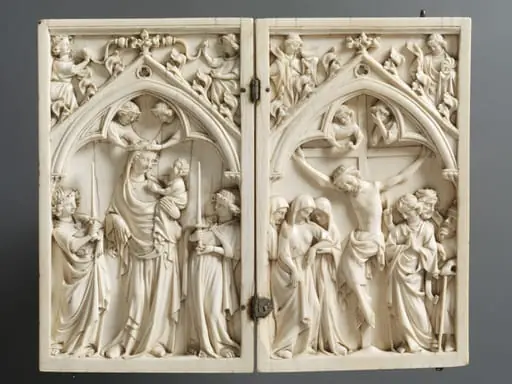 The Virgin and Child and the Crucifixion
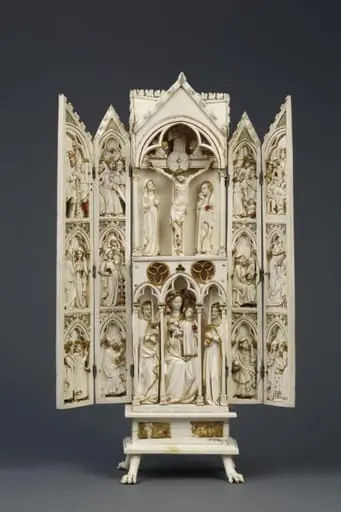 Virgin and Child, the Crucifixion and Scenes from the Life of Christ
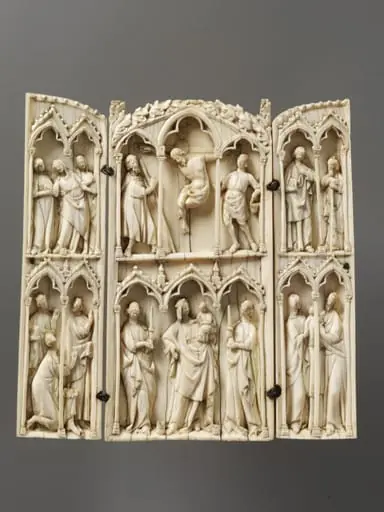 The Crucifixion, the Virgin and Child and Scenes from the Life of Christ
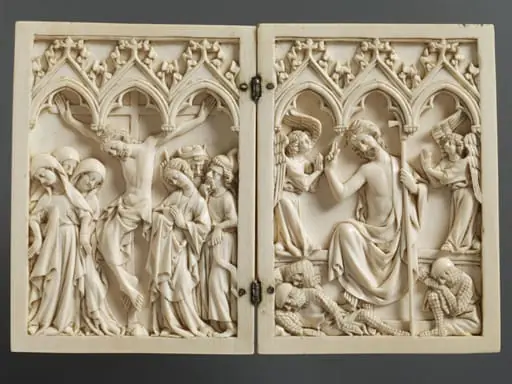 Diptych
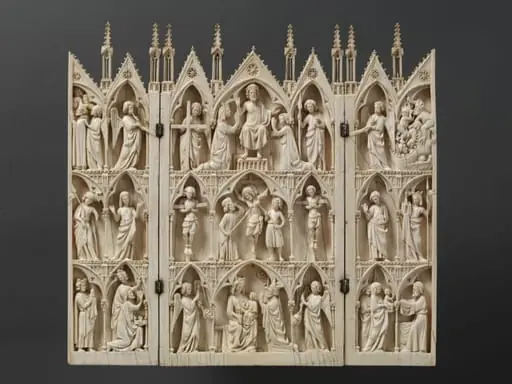 The Virgin and Child, the Crucifixion and the Last Judgement
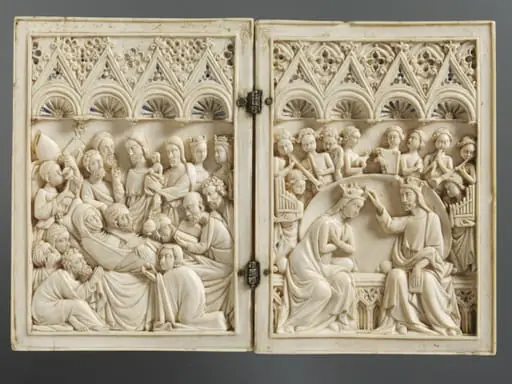 Death and the Coronation of the Virgin
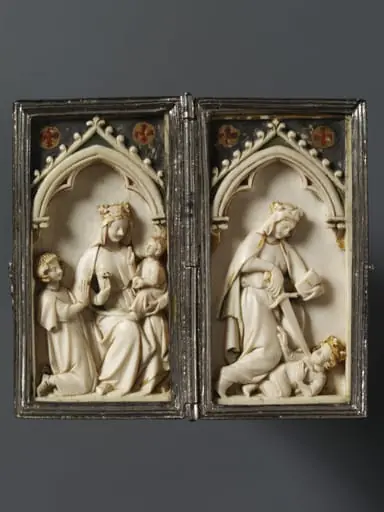 The Virgin and Child and St Catherine with the Emperor Maxentius
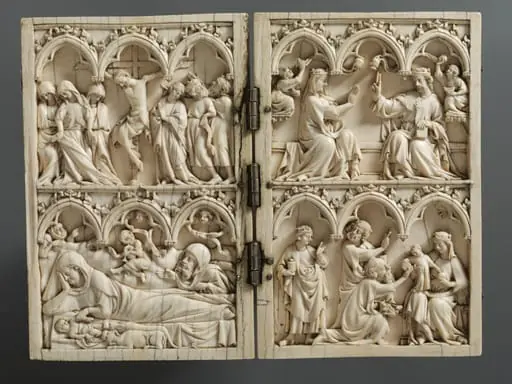 The Nativity, the Adoration of the Magi, the Crucifixion and the Coronation of the Virgin
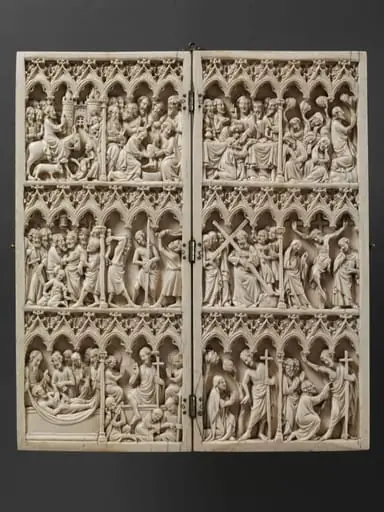 Scenes from the Passion of Christ
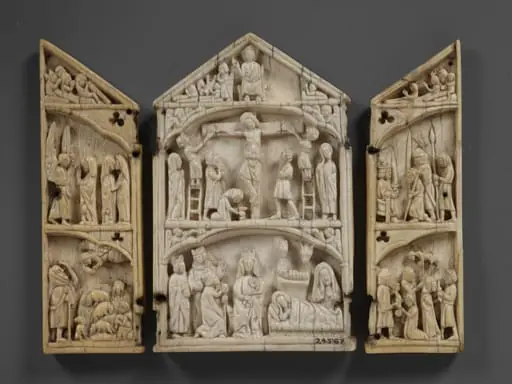 The Nativity with the Adoration of the Magi, the Crucifixion and the Last Judgement
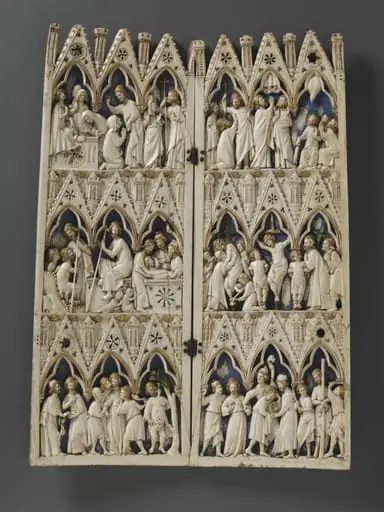 The Soissons Diptych
 The Crucifixion