Artwork
Life of Christ in 35 scenes
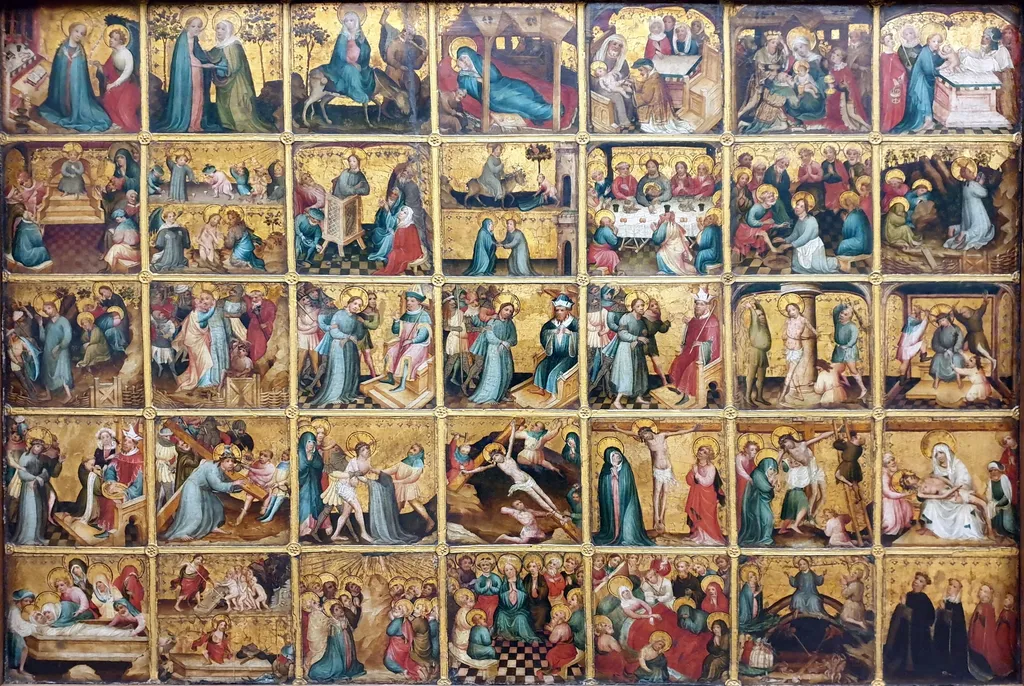
Life of Christ in 35 scenes is a paint painting by Unknown. It dates from 1415 and is held in the collection of the Gemäldegalerie Berlin.
About this work
Overview
This painting comprises thirty-five distinct narrative panels, each illustrating a moment from the life of Christ as recounted in the Gospels.
This painting comprises thirty-five distinct narrative panels, each illustrating a moment from the life of Christ as recounted in the Gospels. Arranged in a structured grid, the scenes are unified by a consistent medieval aesthetic. The work functions as a visual catechism, guiding viewers through sacred events in sequential order. Its format suggests use in devotional or educational contexts, likely within a religious setting.
Subject & Meaning
Each panel captures a pivotal episode from Christ’s life—his birth, miracles, teachings, passion, and resurrection. The selection emphasizes doctrinal themes central to medieval Christian belief: redemption, divine authority, and human salvation. By presenting these moments in miniature, the artist invites contemplation, encouraging the faithful to reflect on the spiritual significance of each scene as part of a larger divine narrative.
Technique & Style
Executed in tempera or similar pigments, the scenes employ vivid, flat colors and fine linear detail characteristic of late medieval panel painting. Gold leaf backgrounds elevate the sacred nature of the events, symbolizing divine light and heavenly space. Figures are stylized rather than naturalistic, with gestures and postures conveying spiritual meaning over anatomical accuracy. The composition prioritizes clarity and symbolic resonance over spatial depth.
History & Provenance
The painting likely originated in a monastic or ecclesiastical workshop in late medieval Europe, possibly between the 13th and 15th centuries. Its grid format aligns with devotional altarpieces or portable triptychs used in private worship. While its exact origin and early ownership remain undocumented, its craftsmanship suggests commission by a wealthy patron or religious institution seeking to reinforce faith through visual instruction.
Context
In an era of widespread illiteracy, such multi-scene paintings served as biblical textbooks for the laity. The use of gold and rich pigments reflected both theological reverence and the economic means of the patron. Similar narrative cycles appear in stained glass, manuscripts, and church frescoes across Europe, indicating a shared visual language for conveying scripture to communities without access to written texts.
Legacy
This work exemplifies the medieval tradition of didactic religious art, where narrative clarity and symbolic richness took precedence over individual artistic expression. Though later Renaissance artists moved toward naturalism, such grid-based cycles preserved their influence in liturgical settings well into the early modern period. Today, they remain valuable records of how faith was visually structured and transmitted across generations.
Artist & collection

 Domestic Scene
 Giacomo and Cardinal Marco, investing Andrea, Abbot of San Zeno, with his Benefice
 The Nymph of Fontainebleau
 Portrait of a Woman
 Madonna and Child with Saints in the Enclosed Garden
 Venus and Minerva
 Family Group of Four on Sofa
 Wall painting from Room H of the Villa of P. Fannius Synistor at Boscoreale
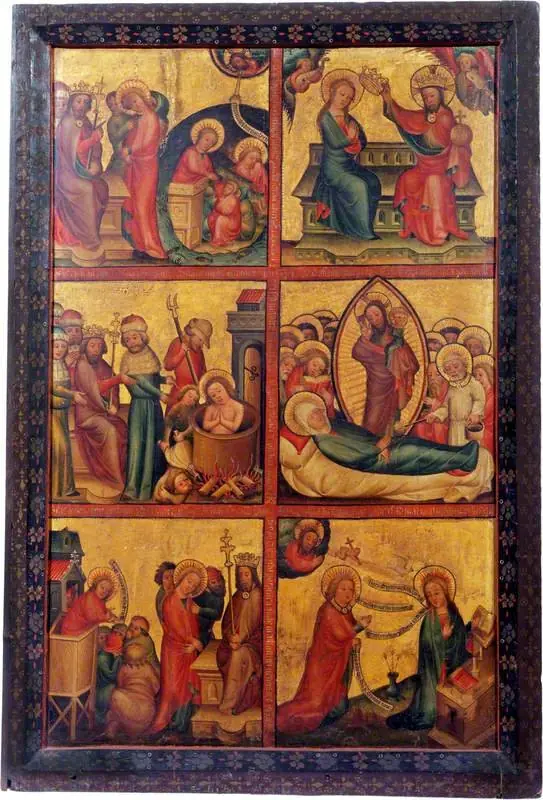 3 Scenes from the Life of Saint John the Evangelist; 3 Scenes from the Life of the Virgin (triptych altarpiece, left wing, outer)
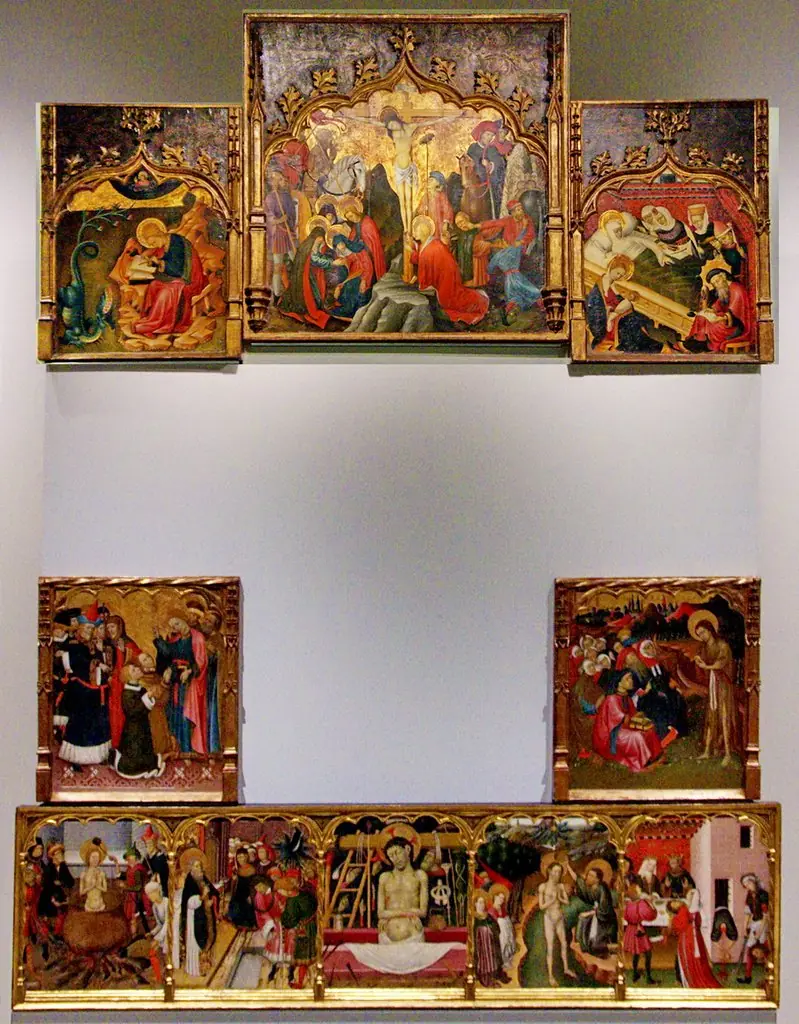 Altarpiece of the Saints John
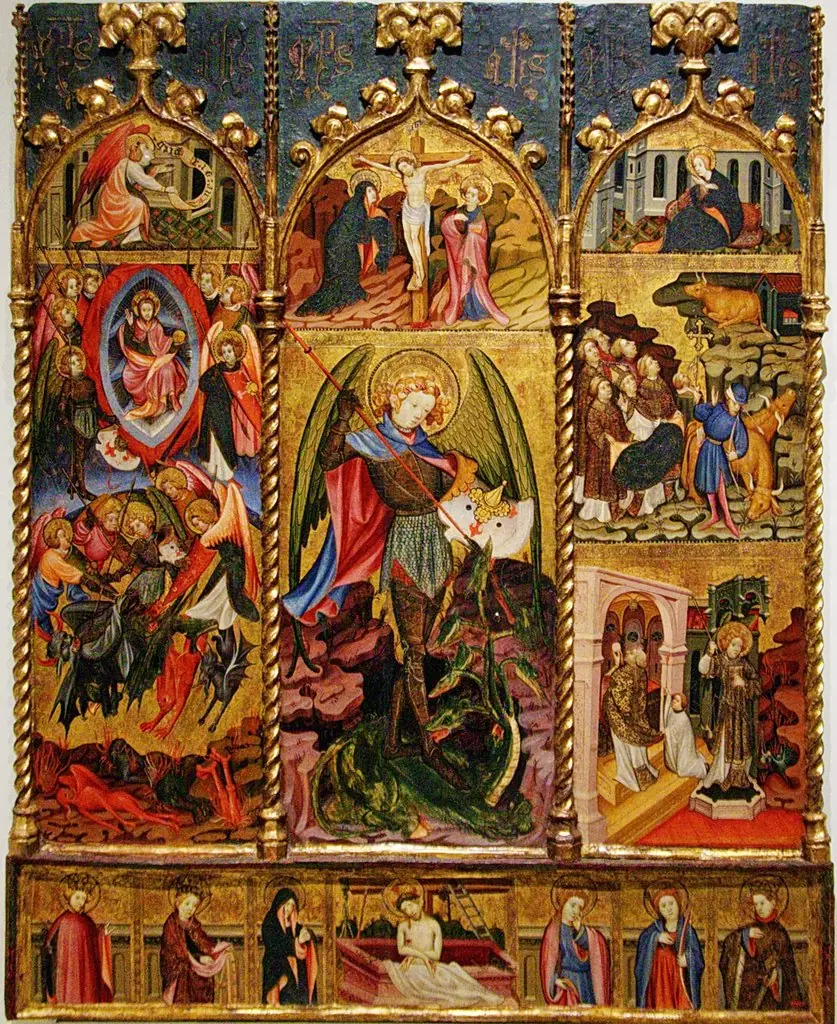 Altarpiece of Saint Michael the Archangel
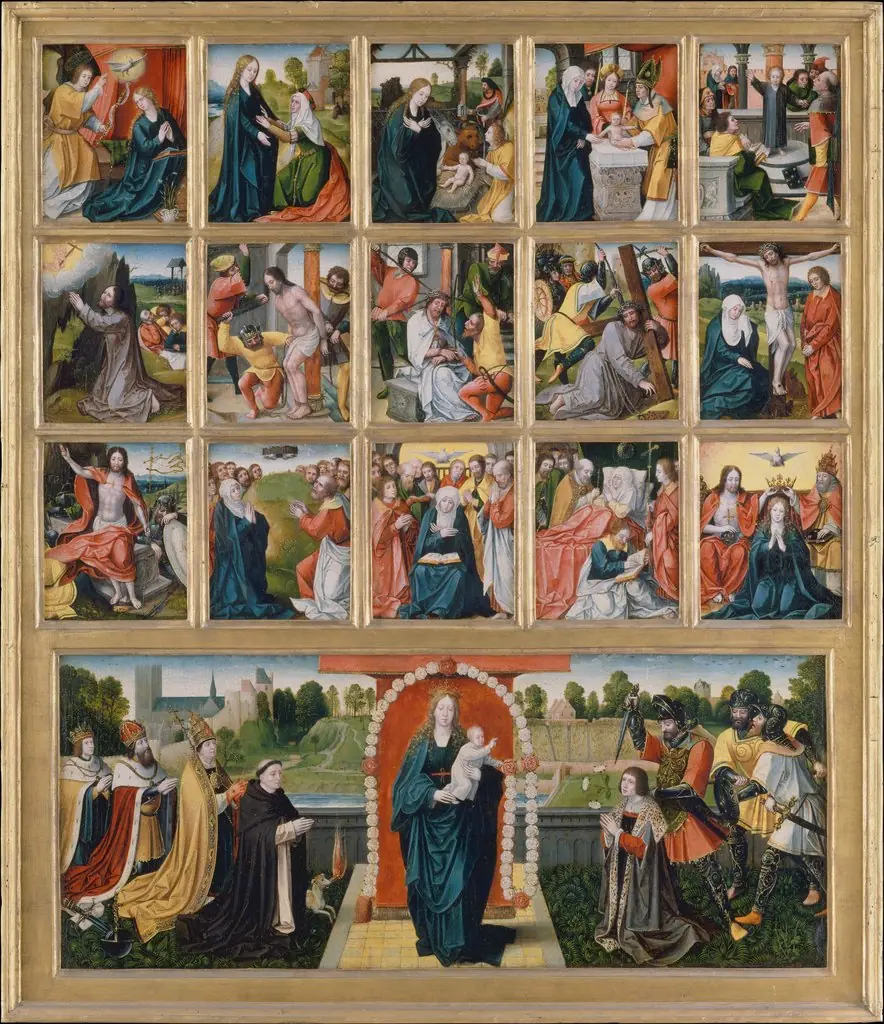 The Fifteen Mysteries and the Virgin of the Rosary
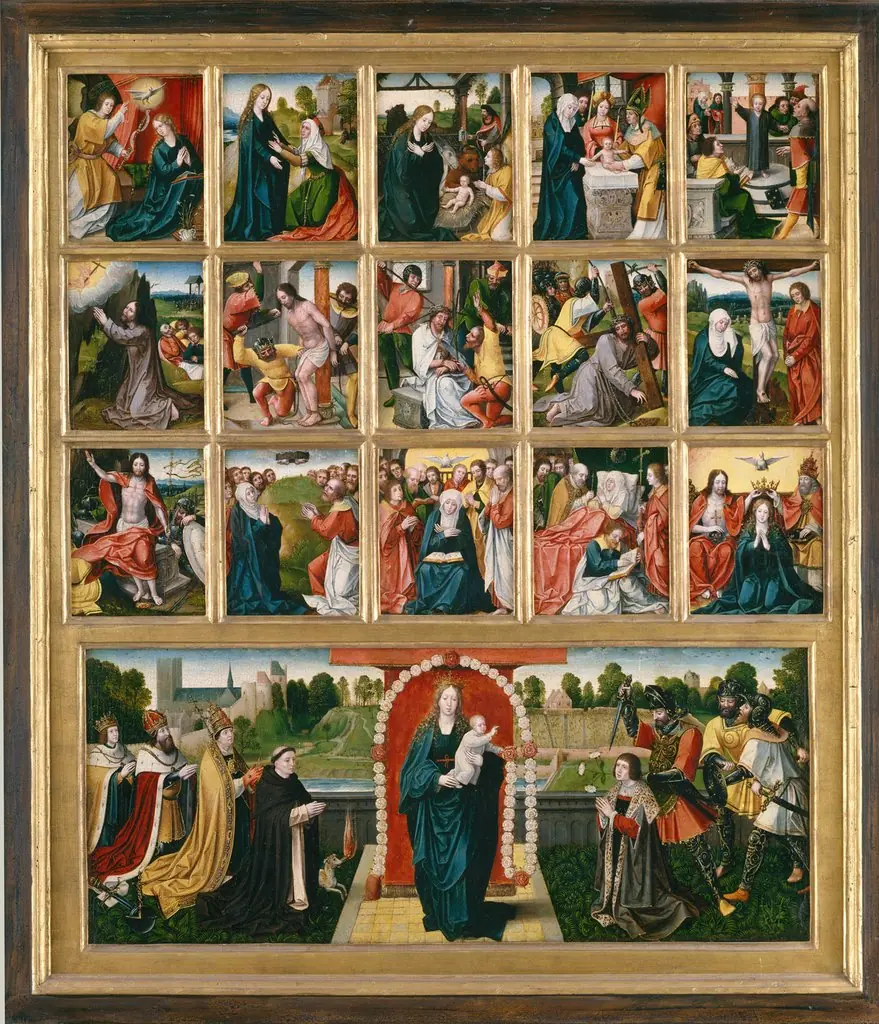 The Fifteen Mysteries and the Virgin of the Rosary
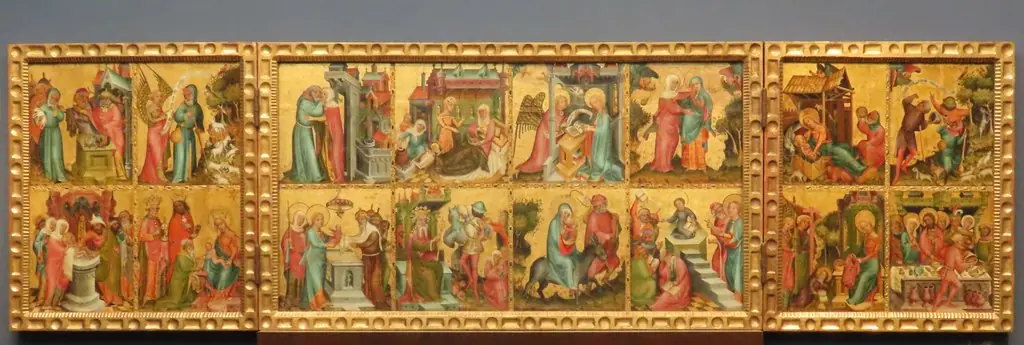 The Buxtehude Altar
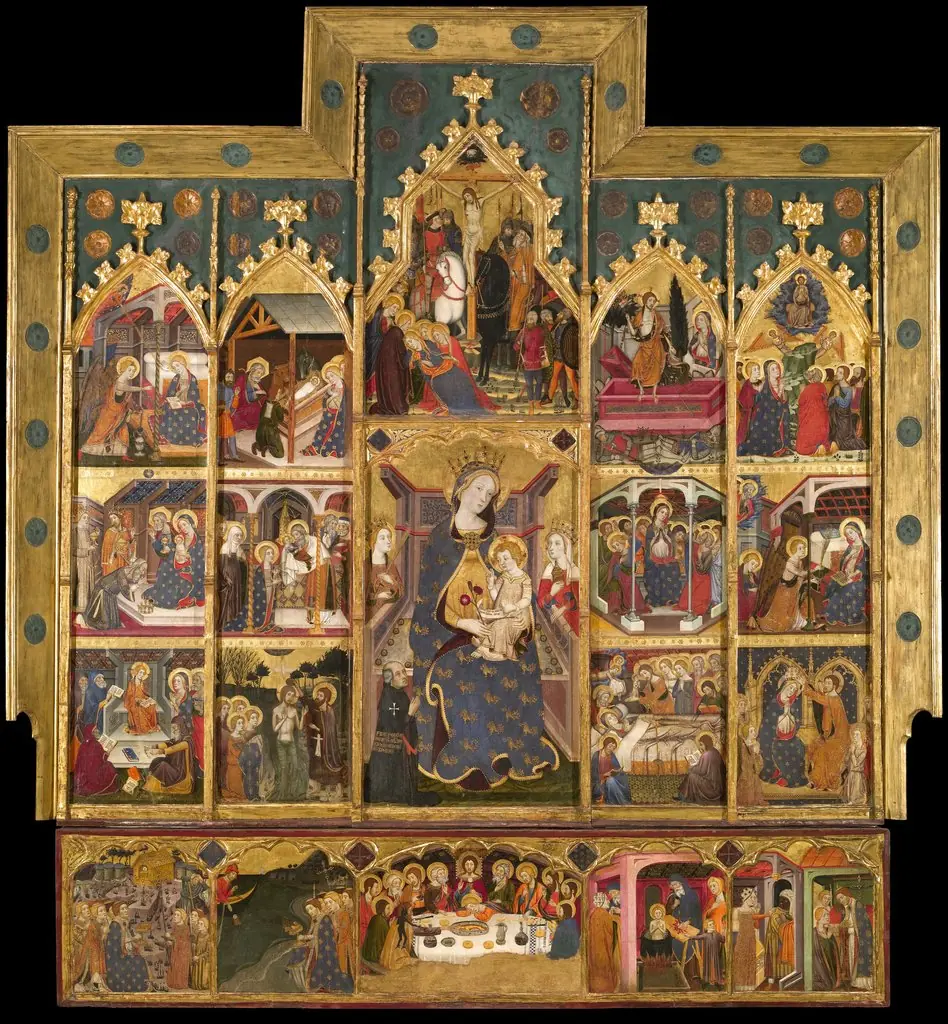 Altarpiece of the Virgin
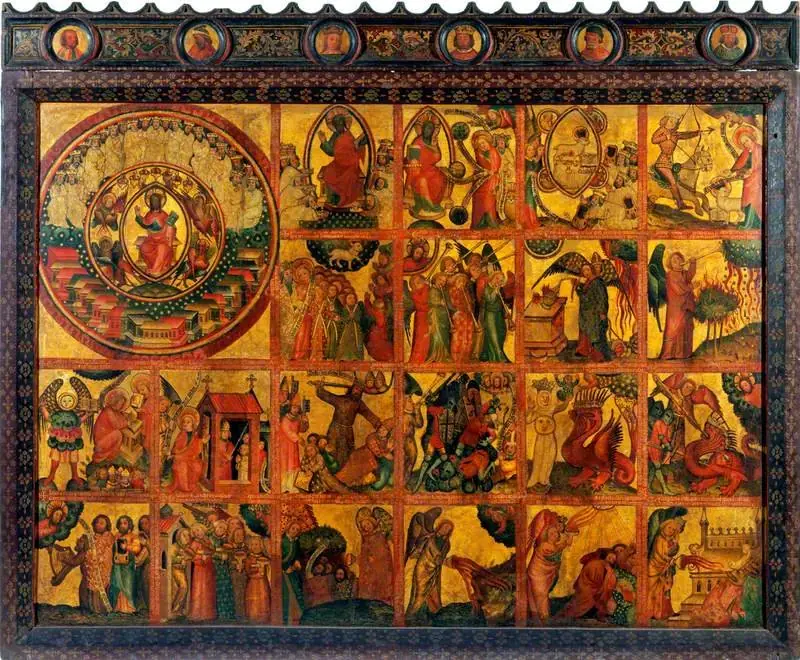 21 Scenes of the Apocalypse (triptych altarpiece, centre panel)
 Scene din viața lui Iisus
 Prăznicar cu 12 scene