Artwork
Altarpiece of the Saints John
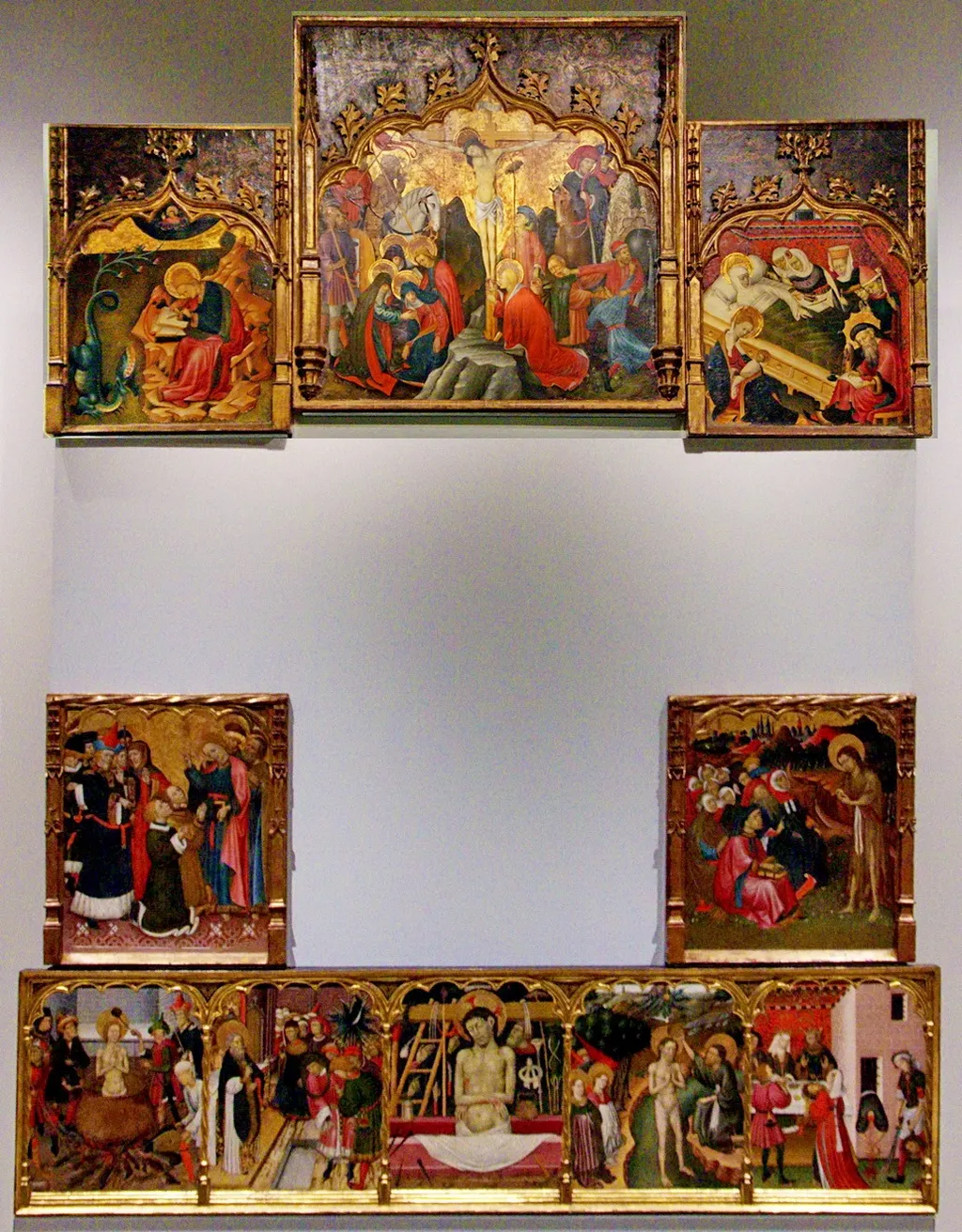
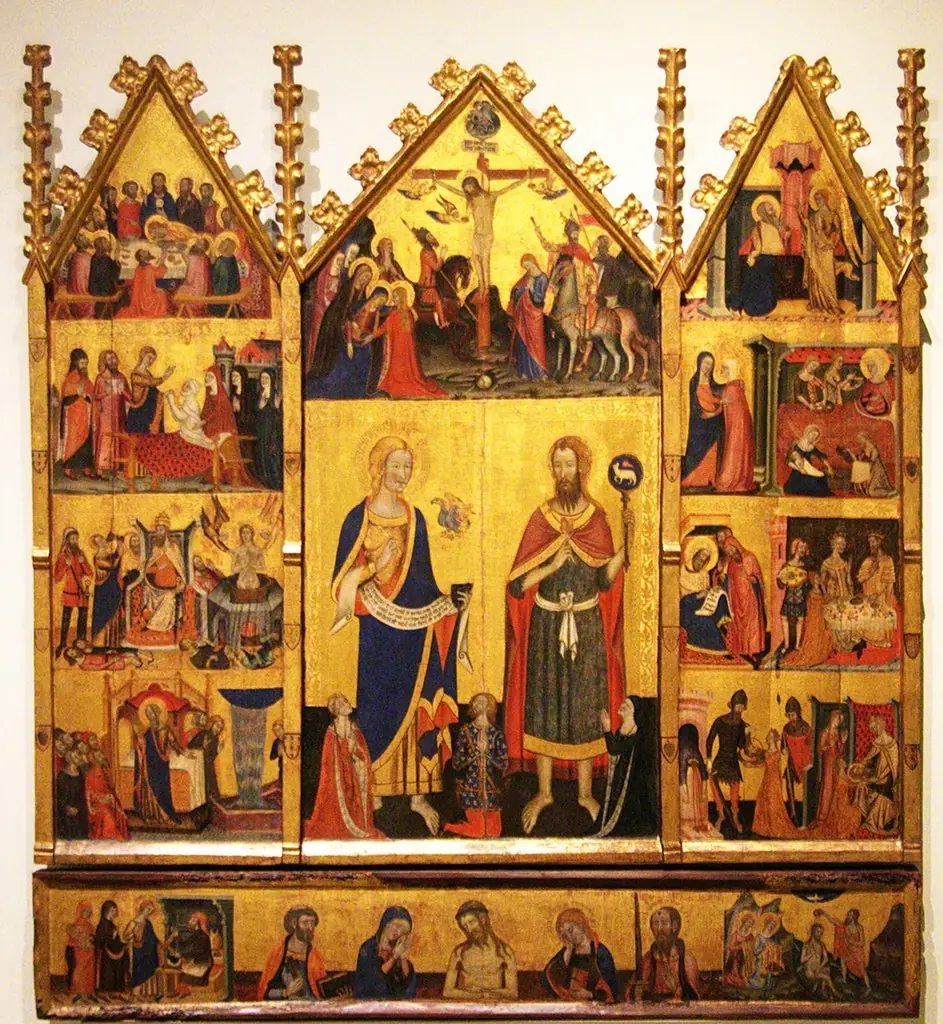
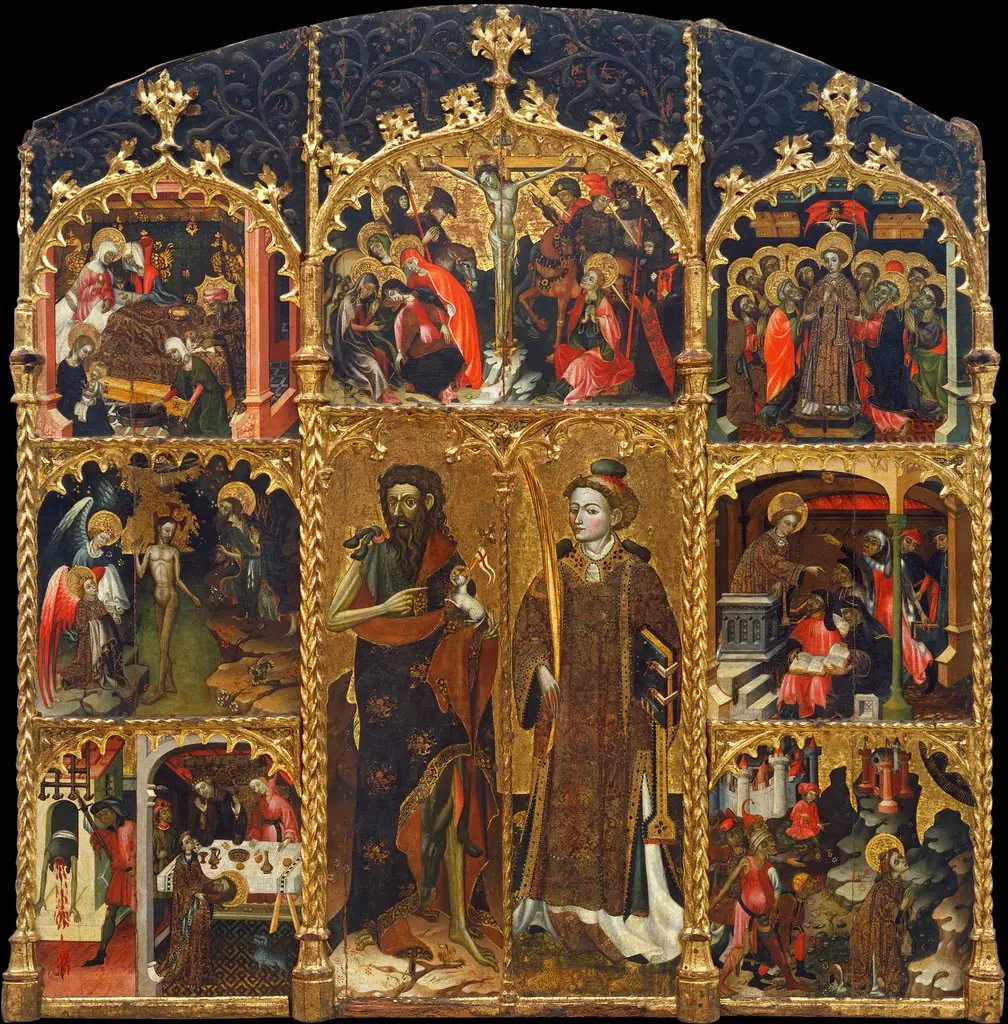
Altarpiece of the Saints John is a tempera painting by Bernat Martorell. It dates from 1430 and is held in the collection of the Museu Nacional d'Art de Catalunya.
About this work
Overview
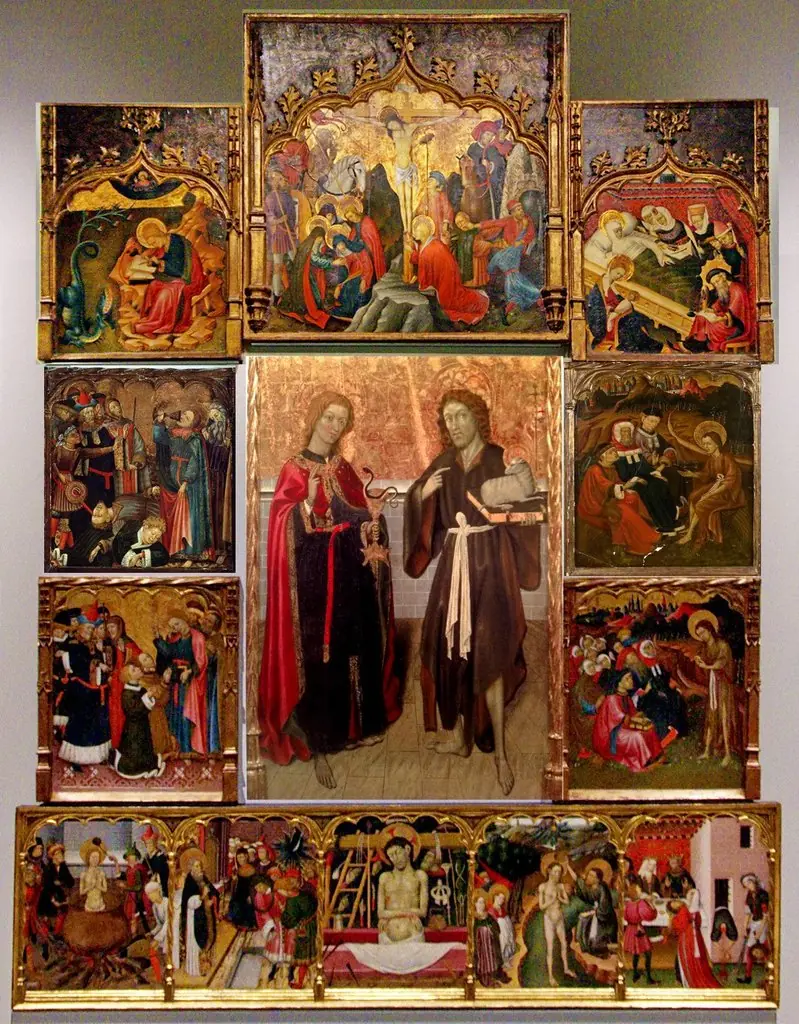
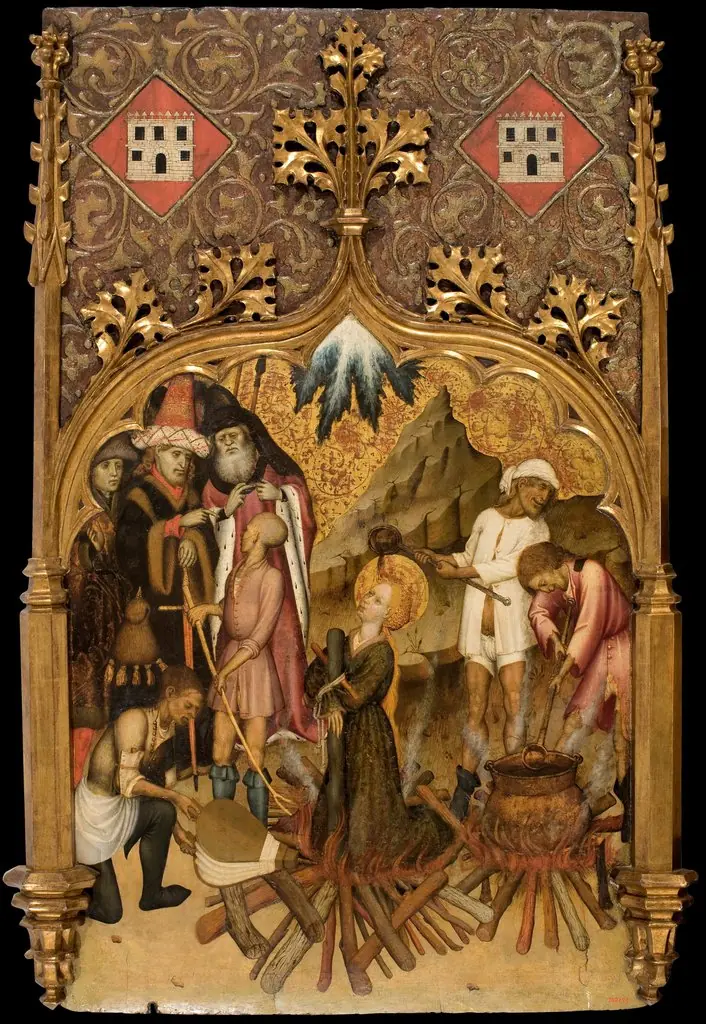
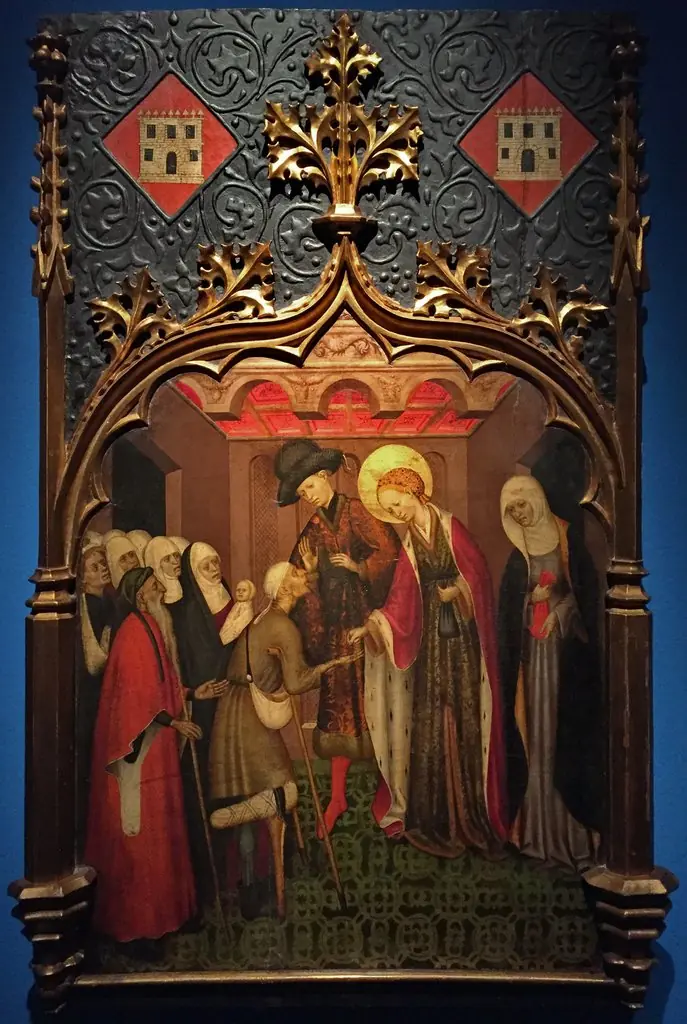
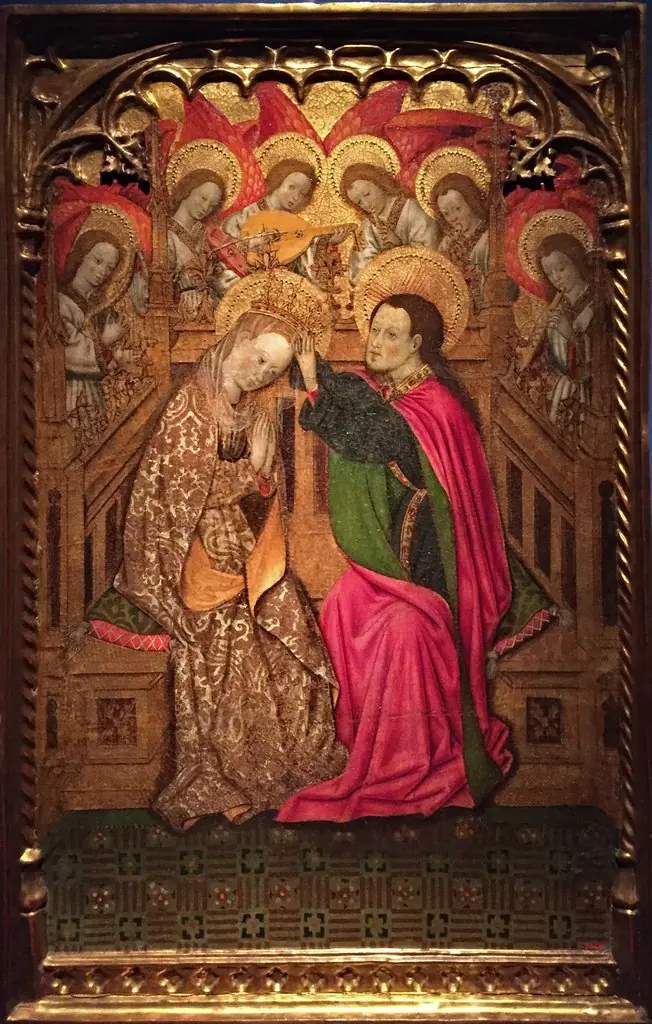
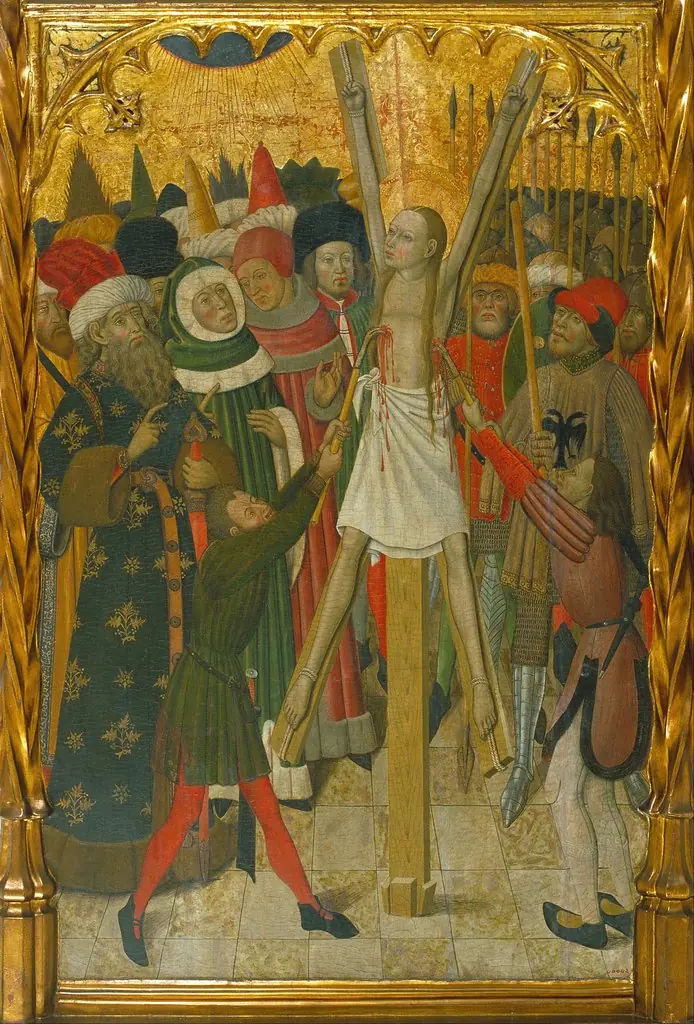
Painted in 1430 by Bernat Martorell, this tempera-on-panel altarpiece depicts scenes centered on the Saints John—John the Baptist and John the Evangelist. Commissioned for devotional use, it was originally installed in a church setting in Catalonia. Today, it resides in the Museu Nacional d'Art de Catalunya, where it serves as a key example of early 15th-century Catalan religious art.
Subject & Meaning
The altarpiece presents narrative episodes from the lives of John the Baptist and John the Evangelist, emphasizing their spiritual roles in Christian tradition.
The altarpiece presents narrative episodes from the lives of John the Baptist and John the Evangelist, emphasizing their spiritual roles in Christian tradition. Scenes include baptism, martyrdom, and divine revelation, arranged to guide contemplation and reinforce doctrinal themes. The pairing of the two Johns underscores their complementary witness to Christ’s mission, one as herald, the other as theologian.
Technique & Style
Executed in tempera on wood panel, the work displays fine linear detail and flat, decorative color fields typical of late Gothic Catalan painting. Figures are elongated and arranged in hierarchical scale, with gold leaf accents highlighting sacred elements. The composition is compartmentalized, reflecting the altarpiece’s function as a multi-panel devotional object.
History & Provenance
Created for a Catalan church, likely in the region of Barcelona, the altarpiece remained in ecclesiastical use until the 19th century. It entered the Museu Nacional d'Art de Catalunya’s collection following the secularization of religious properties, preserving its original structure and condition. Its survival offers rare insight into pre-Renaissance Catalan altar ensembles.
Context
Made during a period of economic and cultural flourishing in Catalonia, the altarpiece reflects the region’s strong tradition of religious patronage. Artists like Martorell worked within established iconographic conventions, yet infused local stylistic nuances. The work aligns with broader Iberian Gothic trends while maintaining distinct Catalan characteristics in its pacing and ornamentation.
Legacy
As one of the few surviving multi-panel altarpieces from 15th-century Catalonia, it provides critical evidence of devotional practices and artistic training in the region. Its preservation allows study of workshop methods and the transition from medieval to early Renaissance aesthetics in Spanish-speaking territories, influencing later scholarly understanding of Catalan art.
Artist & collection

Artist
Bernat Martorell was the leading painter of Barcelona, in modern-day Spain. He is considered to be the most important artist of the International Gothic style in Catalonia. Martorell painted retable panels and…