Artwork
Our Lady of the Rosary with Saint Dominic and Saint Rose
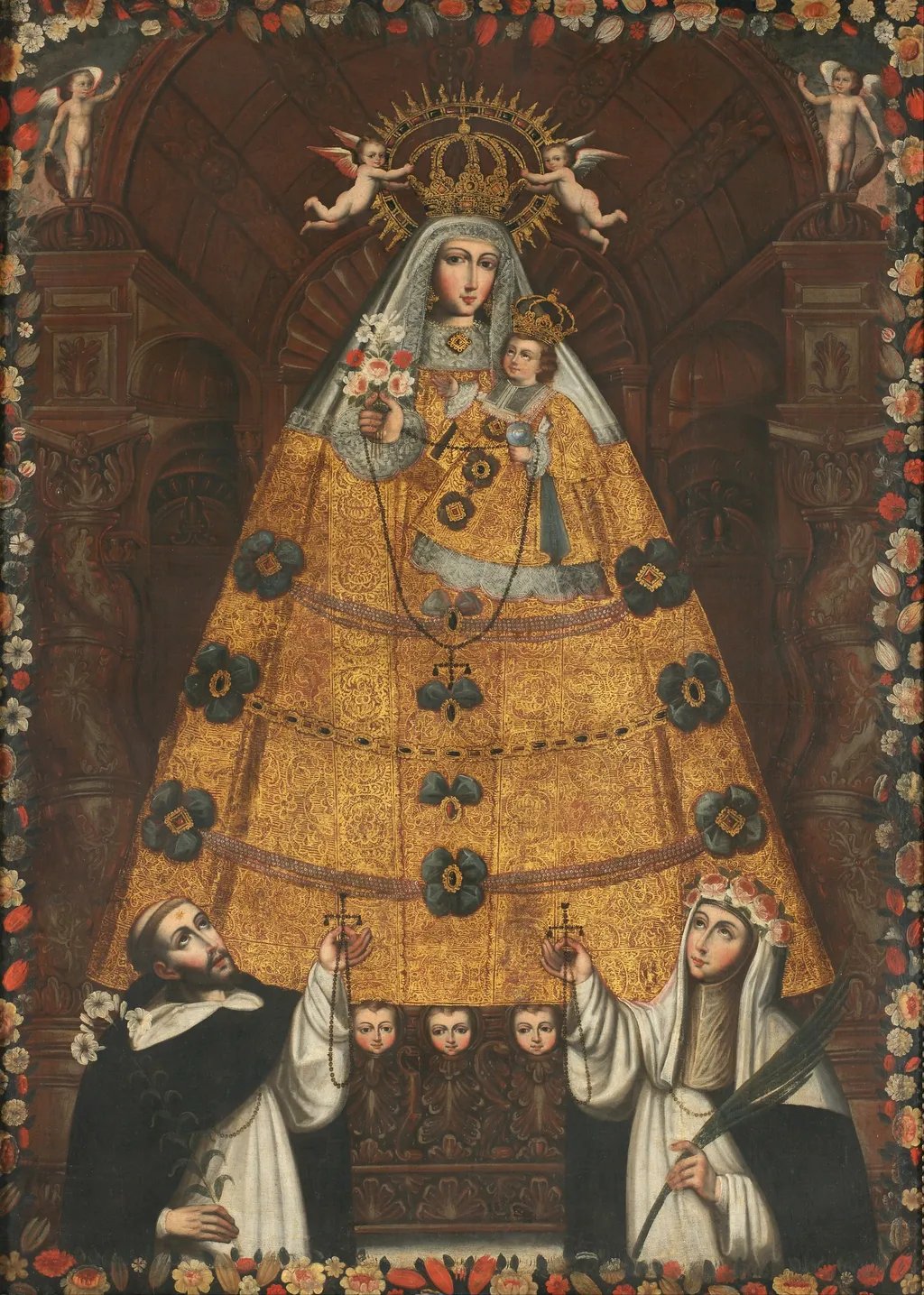
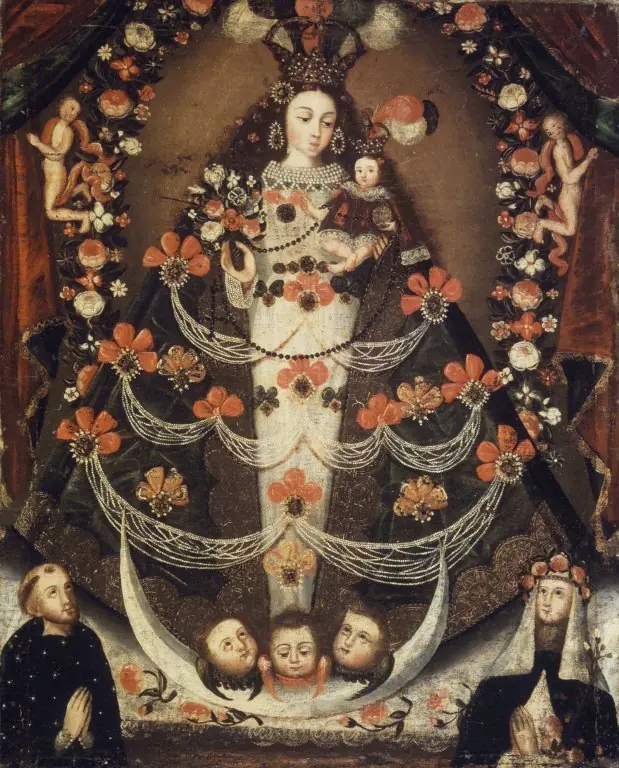
Our Lady of the Rosary with Saint Dominic and Saint Rose is an oil painting by the Rococo painting artist Unknown. It dates from 1750 and is held in the collection of the Lima Art Museum. The oil painting presents a richly dressed female figure, likely the Virgin Mary, cradling an infant crowned and holding a globe.
About this work
Overview
The backdrop features a muted brown wall punctuated by arches and columns, while the foreground is filled with intricate floral motifs and gilded detailing.
The oil painting presents a richly dressed female figure, likely the Virgin Mary, cradling an infant crowned and holding a globe. Beneath her, two kneeling figures—one in a black habit and another in white robes adorned with a floral crown—gaze upward. The backdrop features a muted brown wall punctuated by arches and columns, while the foreground is filled with intricate floral motifs and gilded detailing.
Subject & Meaning
The central woman, identified as Our Lady of the Rosary, holds the Christ Child, symbolizing his dominion over the world. The kneeling figures represent Saint Dominic, founder of the Dominican Order, and Saint Rose, traditionally associated with the rosary devotion. Their reverent posture underscores the intercessory role of the Virgin and the importance of the rosary in Catholic spirituality.
Technique & Style
Executed in oil, the work showcases a luminous palette of gold, deep reds, and earthy tones. Fine brushwork renders the sumptuous fabric, delicate veil, and botanical patterns with tactile realism. Architectural elements are rendered with linear perspective, while the use of chiaroscuro models the figures, creating a sense of depth and three‑dimensional presence.
Context
The composition reflects Counter‑Reformation iconography, emphasizing Marian devotion and the promotion of the rosary as a tool for personal piety. By pairing the Virgin with Dominican and Franciscan saints, the painting aligns with the order’s missionary aims and the broader Catholic emphasis on intercessory prayer during the post‑Council of Trent period.
History & Provenance
Details of the painting’s ownership history are not documented in the available sources. Its stylistic attributes suggest it originated in a European workshop that catered to devotional patrons, likely remaining within ecclesiastical or private collections before entering its present setting.
Artist & collection

 Domestic Scene
 Giacomo and Cardinal Marco, investing Andrea, Abbot of San Zeno, with his Benefice
 The Nymph of Fontainebleau
 Portrait of a Woman
 Madonna and Child with Saints in the Enclosed Garden
 Venus and Minerva
 Family Group of Four on Sofa
 Wall painting from Room H of the Villa of P. Fannius Synistor at Boscoreale
 Virgin of the Rosary of Guápulo
 Virgin of Bethlehem
 Virgin of Belén (Virgen de Belén)
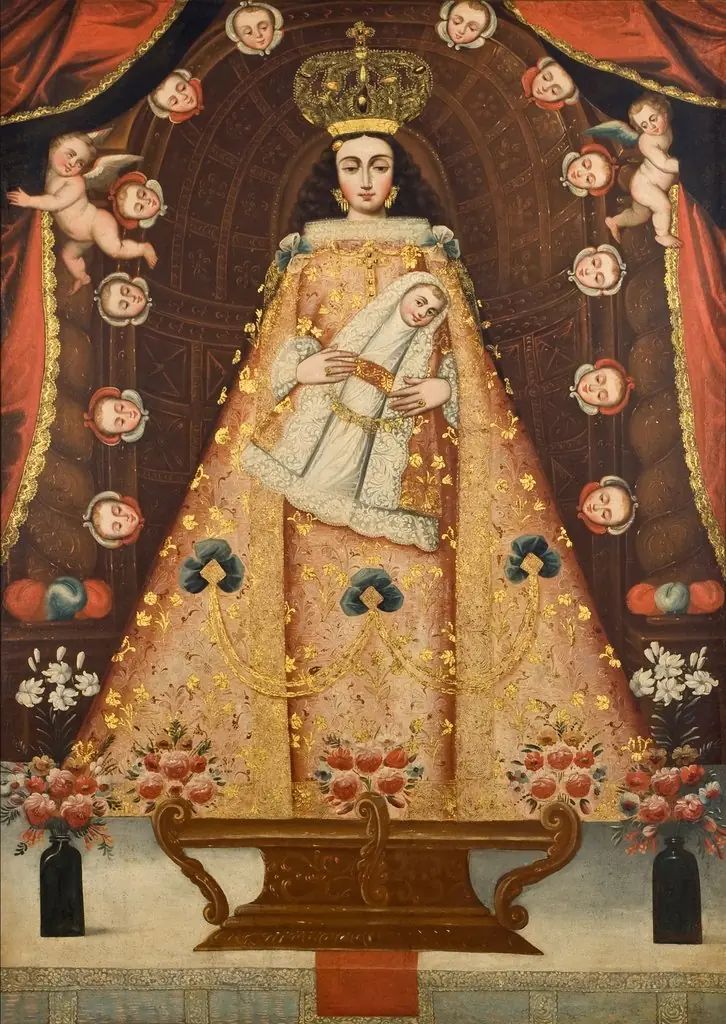 Virgin of Bethlehem
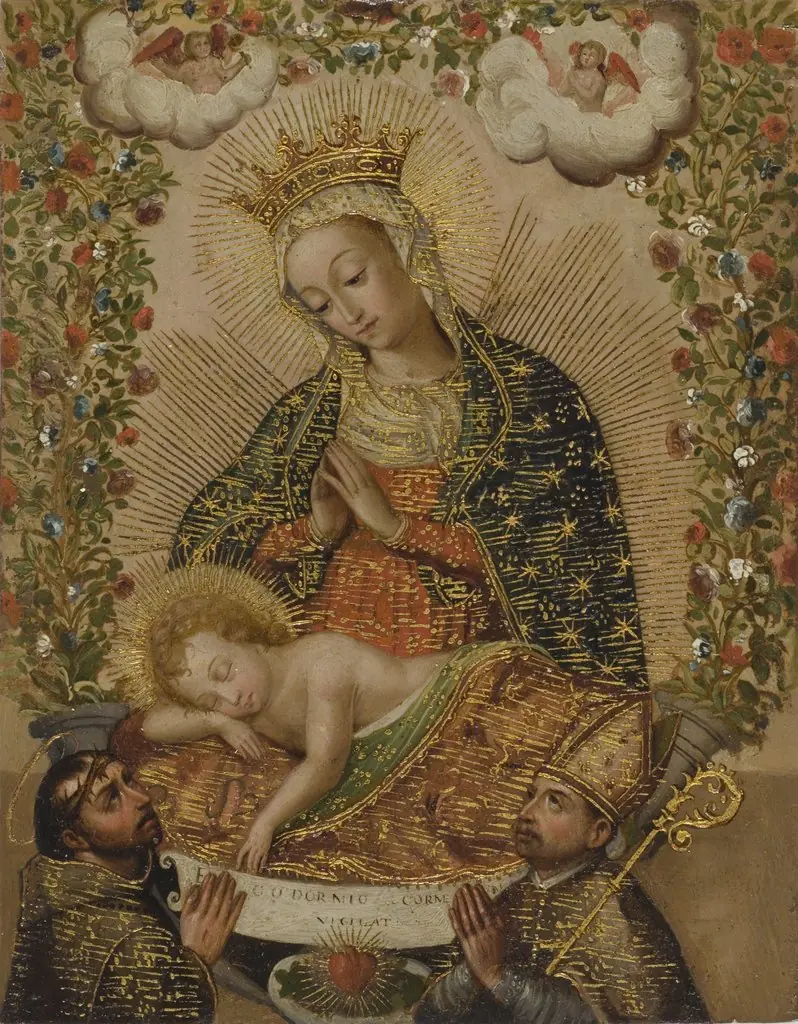 The Virgin Adoring the Christ Child with Two Saints (La Virgin adorando al Niño Jesús con dos santos)
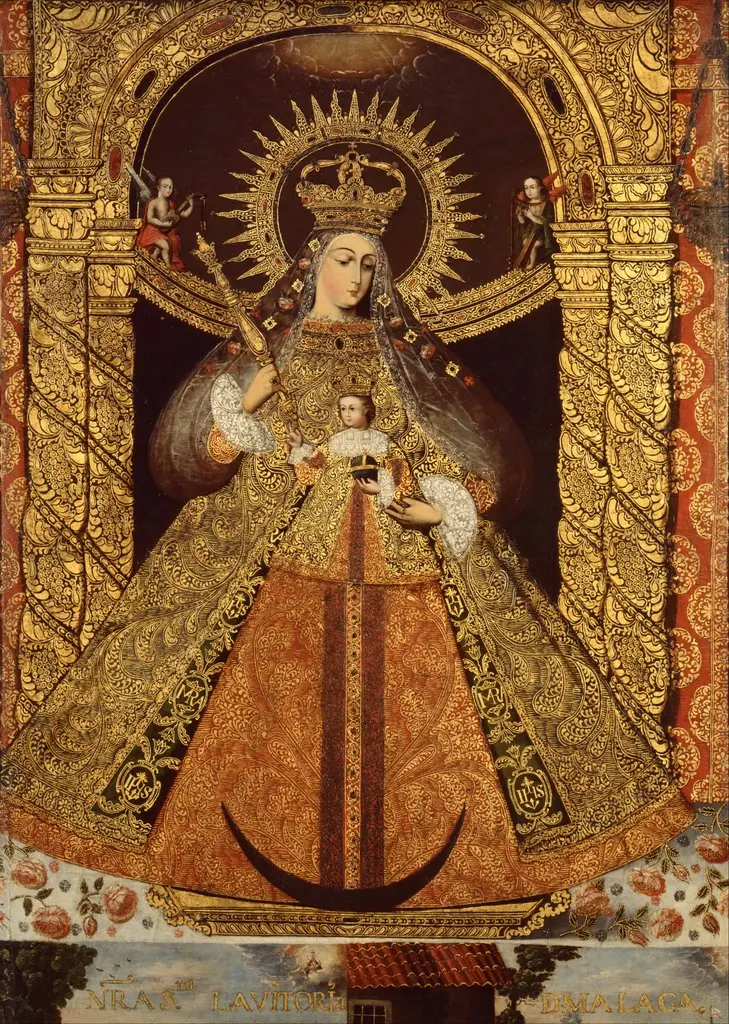 Virgin of the Victory of Malaga
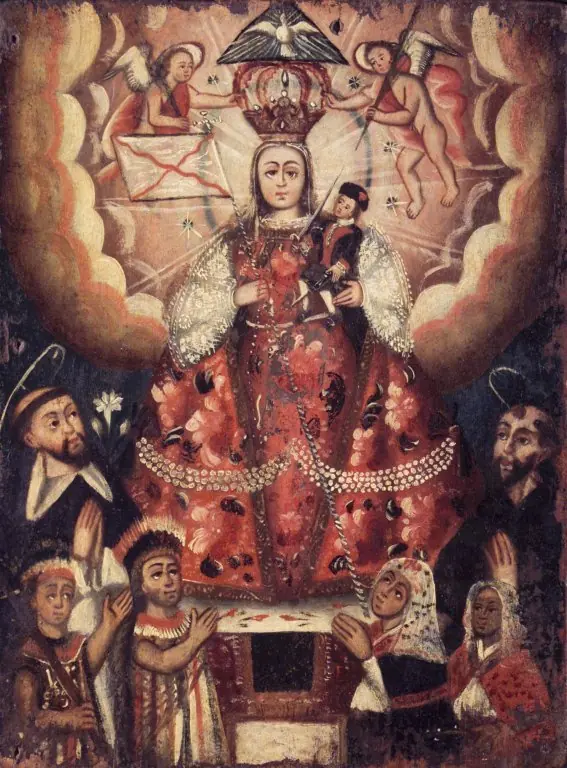 Madonna with Christ Child, St. Dominic, St. Francis, and Indian Worshippers
 Virgin of Pomata with St. Nicholas Tolentino and St. Rose of Lima
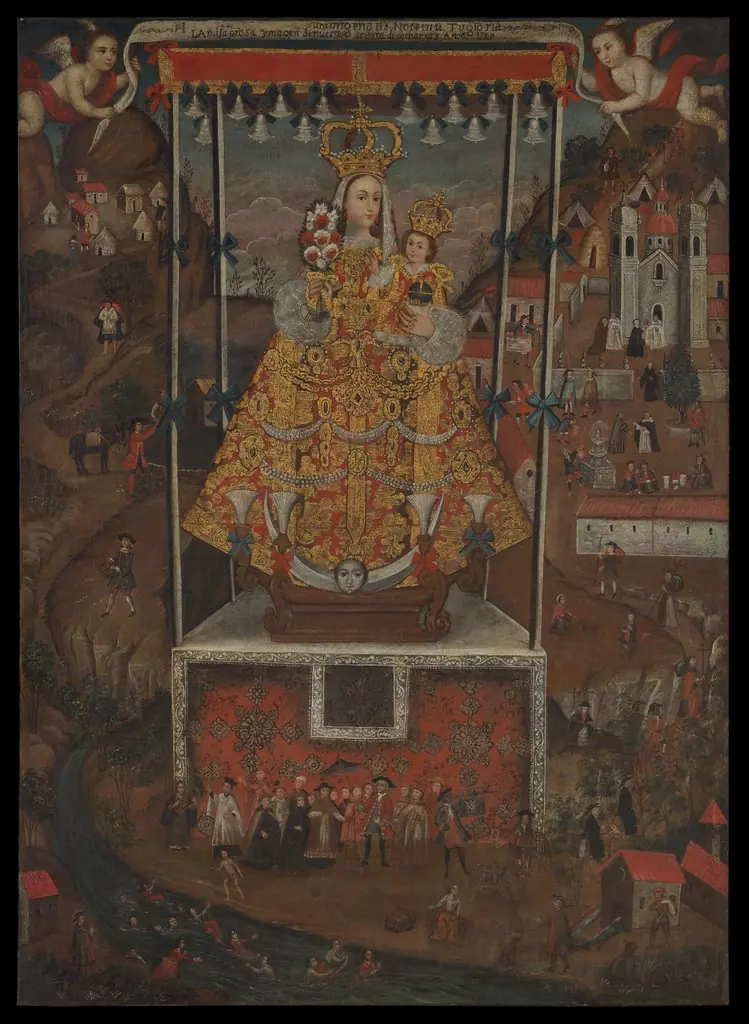 Our Lady of Cocharcas