Artwork
Virgin of Bethlehem
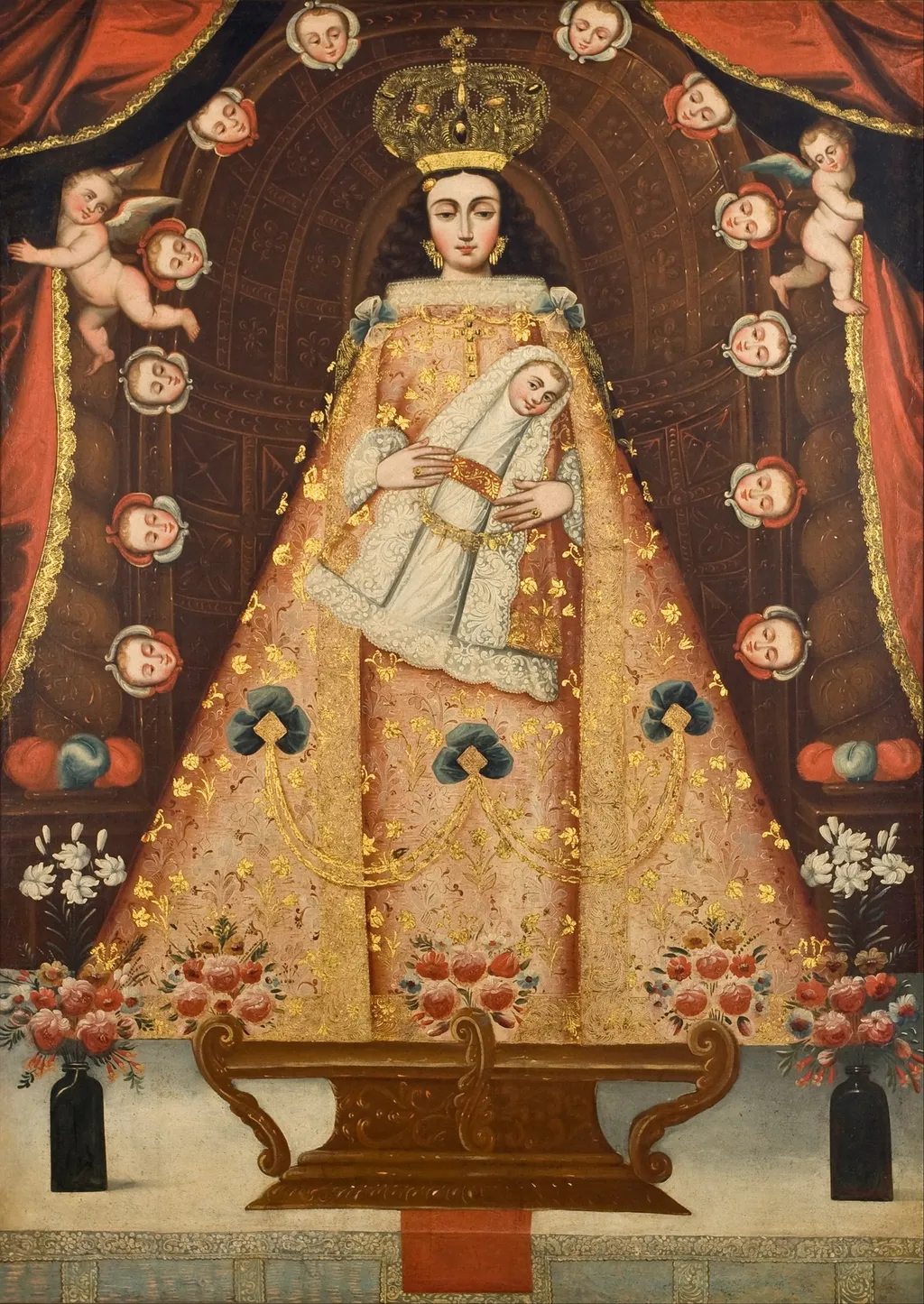
Virgin of Bethlehem is an oil painting by the Rococo painting artist Unknown. It dates from 1740 and is held in the collection of the Lima Art Museum.
About this work
Overview
Rendered with careful attention to sacred symbolism, the figure is centered against a deep, shadowed background that intensifies the glow surrounding her.
This oil painting portrays the Virgin of Bethlehem, a devotional representation of the Virgin Mary, in a solemn and luminous composition. Rendered with careful attention to sacred symbolism, the figure is centered against a deep, shadowed background that intensifies the glow surrounding her. The work is part of the collection at the Lima Art Museum, where it is displayed as an example of colonial religious art from the Americas.
Subject & Meaning
The Virgin is depicted holding the infant Jesus, emphasizing her role as the Mother of God. Her white robe and red cloak symbolize purity and divine love, while the golden belt signifies royal dignity. The radiant halo encircling her head underscores her spiritual status. The composition invites contemplation, aligning with devotional practices that sought to foster reverence and personal connection with the divine in colonial Latin American communities.
Technique & Style
The artist employs chiaroscuro to heighten the contrast between the illuminated figures and the dark background, drawing focus to the Virgin and Child. Brushwork is refined but not overly detailed, favoring emotional impact over naturalism. Gold accents on the belt and halo add luminosity, reflecting the influence of European Renaissance traditions adapted to local aesthetic sensibilities in 17th- or 18th-century Peru.
History & Provenance
The painting originated in colonial Peru during a period of intense religious patronage by the Catholic Church. It likely served in a convent or chapel before entering the Lima Art Museum’s collection. Its preservation reflects its enduring cultural value, though specific details of its early ownership and commission remain undocumented in public records.
Context
Created during the Spanish colonial era, the image aligns with broader trends in Andean religious art that blended European iconography with indigenous interpretations of sacred figures. The Virgin of Bethlehem was particularly venerated in Peru, where Marian devotion was central to both public worship and private piety, reinforcing the Church’s presence in daily life.
Legacy
The painting continues to serve as a touchstone for understanding the fusion of European religious traditions and colonial Andean culture. It remains a key example in studies of Latin American sacred art, offering insight into how visual imagery was used to communicate theological concepts to diverse, often non-literate populations across the Spanish Empire.
Artist & collection

 Domestic Scene
 Giacomo and Cardinal Marco, investing Andrea, Abbot of San Zeno, with his Benefice
 The Nymph of Fontainebleau
 Portrait of a Woman
 Madonna and Child with Saints in the Enclosed Garden
 Venus and Minerva
 Family Group of Four on Sofa
 Wall painting from Room H of the Villa of P. Fannius Synistor at Boscoreale
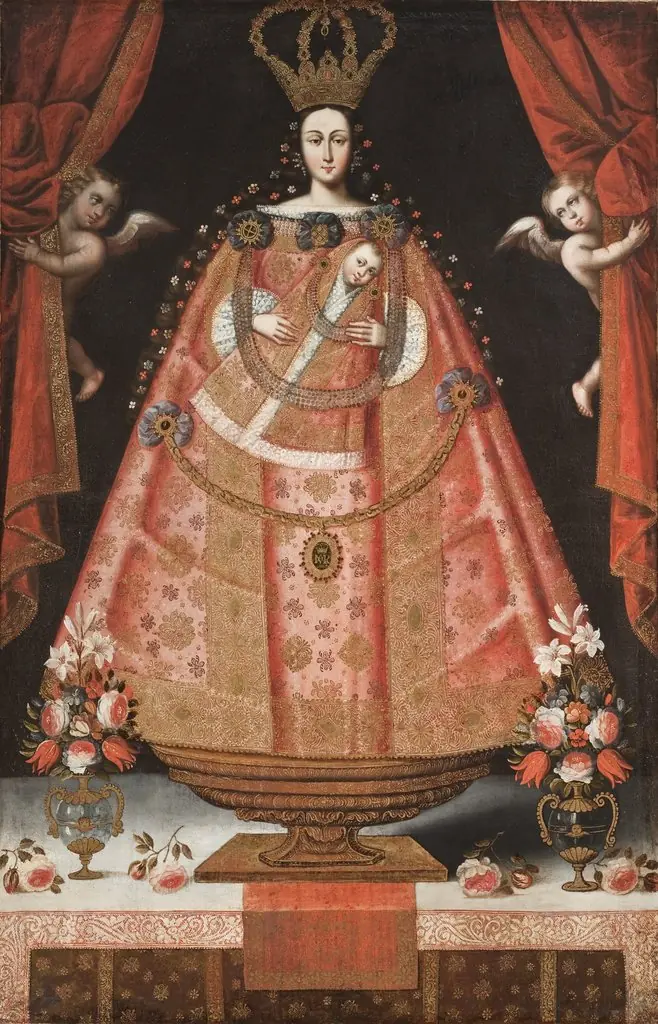 Virgin of Belén (Virgen de Belén)
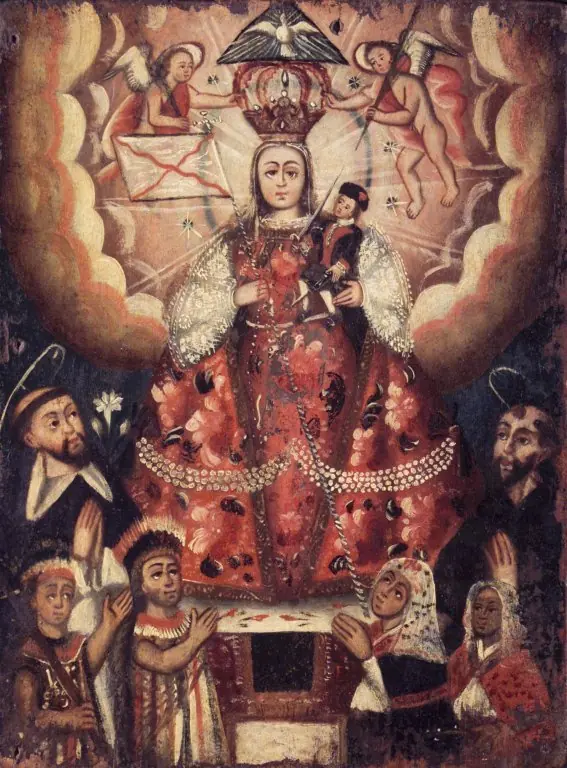 Madonna with Christ Child, St. Dominic, St. Francis, and Indian Worshippers
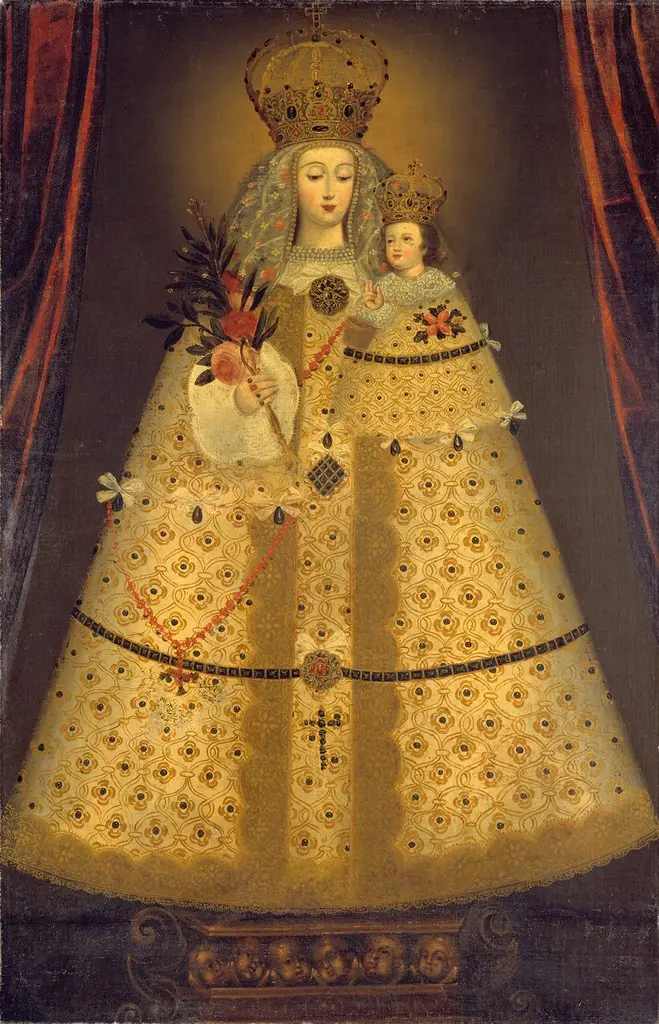 Virgin of the Rosary of Guápulo
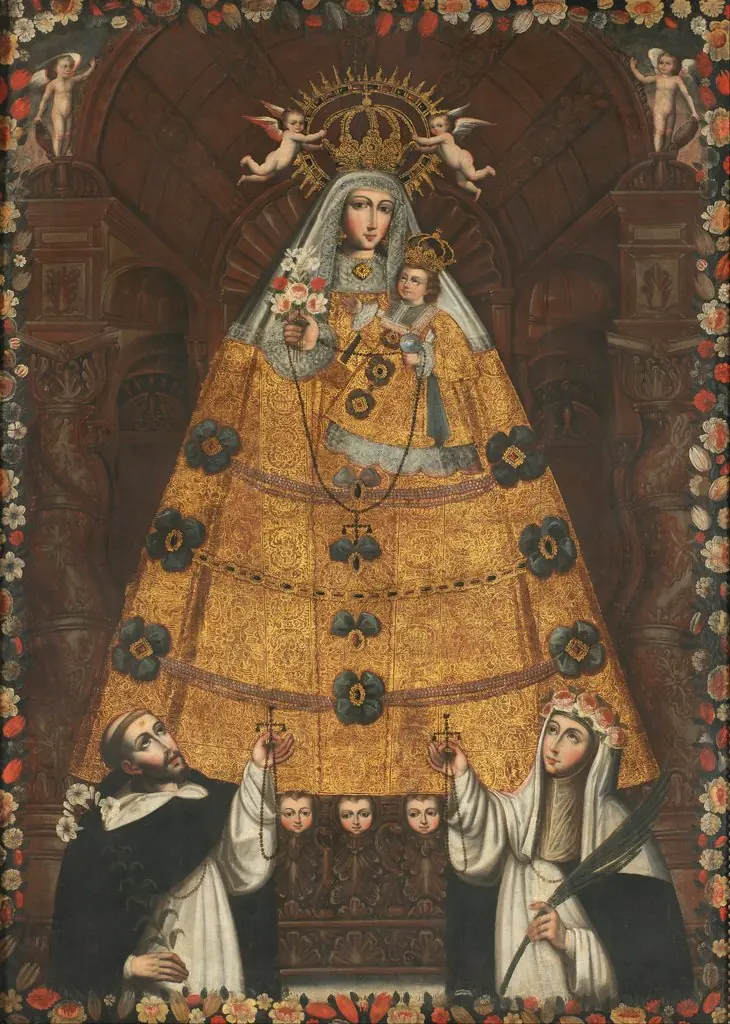 Our Lady of the Rosary with Saint Dominic and Saint Rose
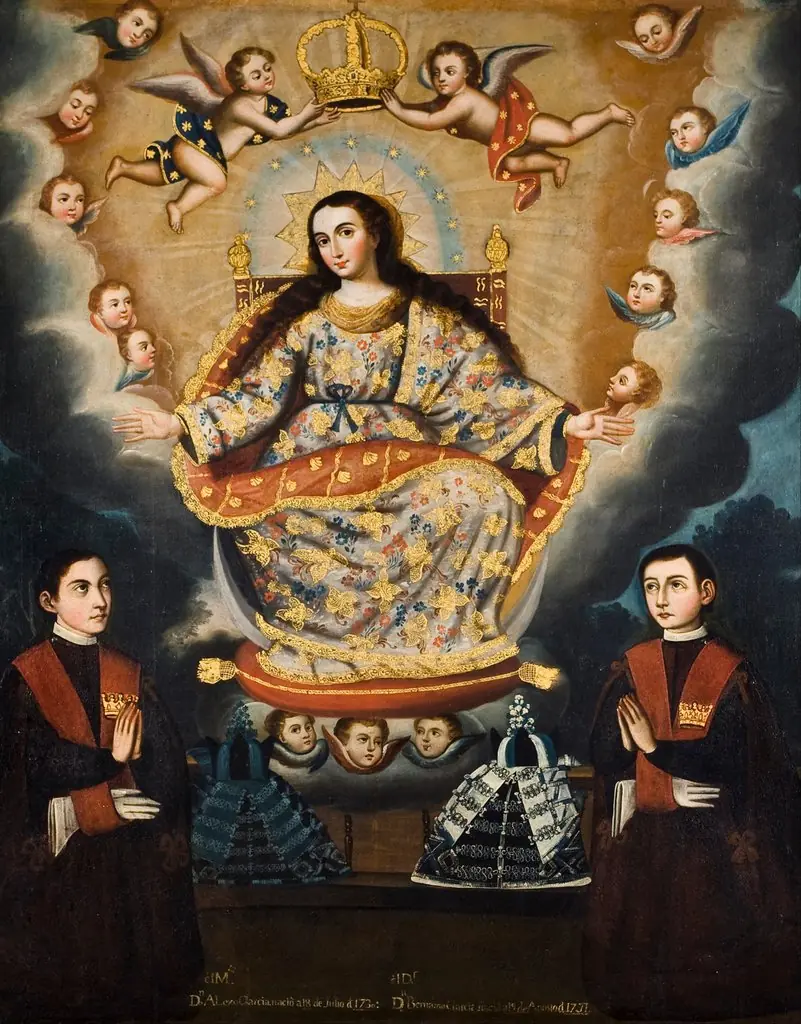 Seated Madonna with Graduation of the García Brothers
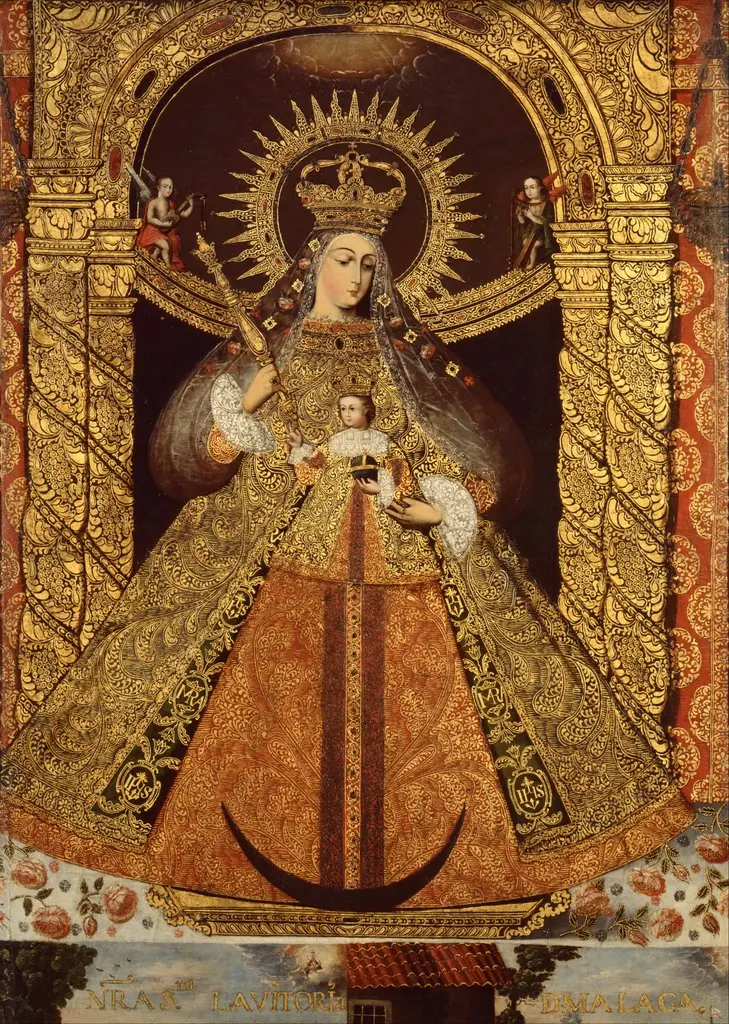 Virgin of the Victory of Malaga
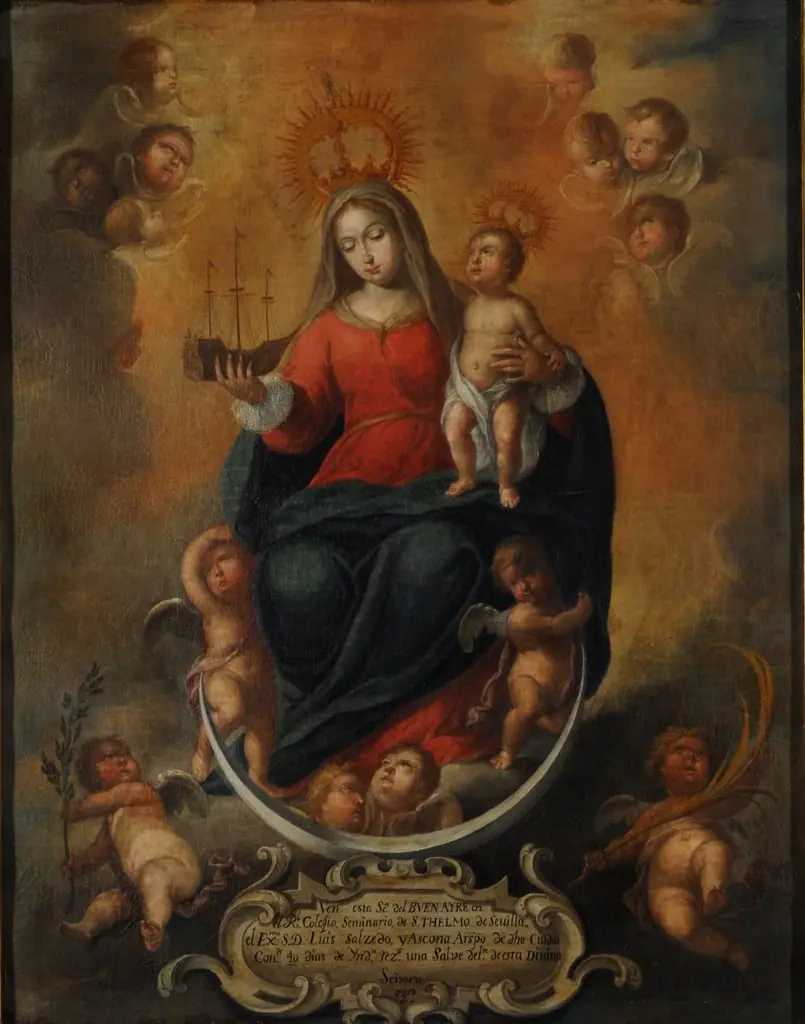 The Virgin of Buen Ayre
 Virgin of Carmel Saving Souls in Purgatory
 The Virgin of the Pilgrims and Child