Artwork
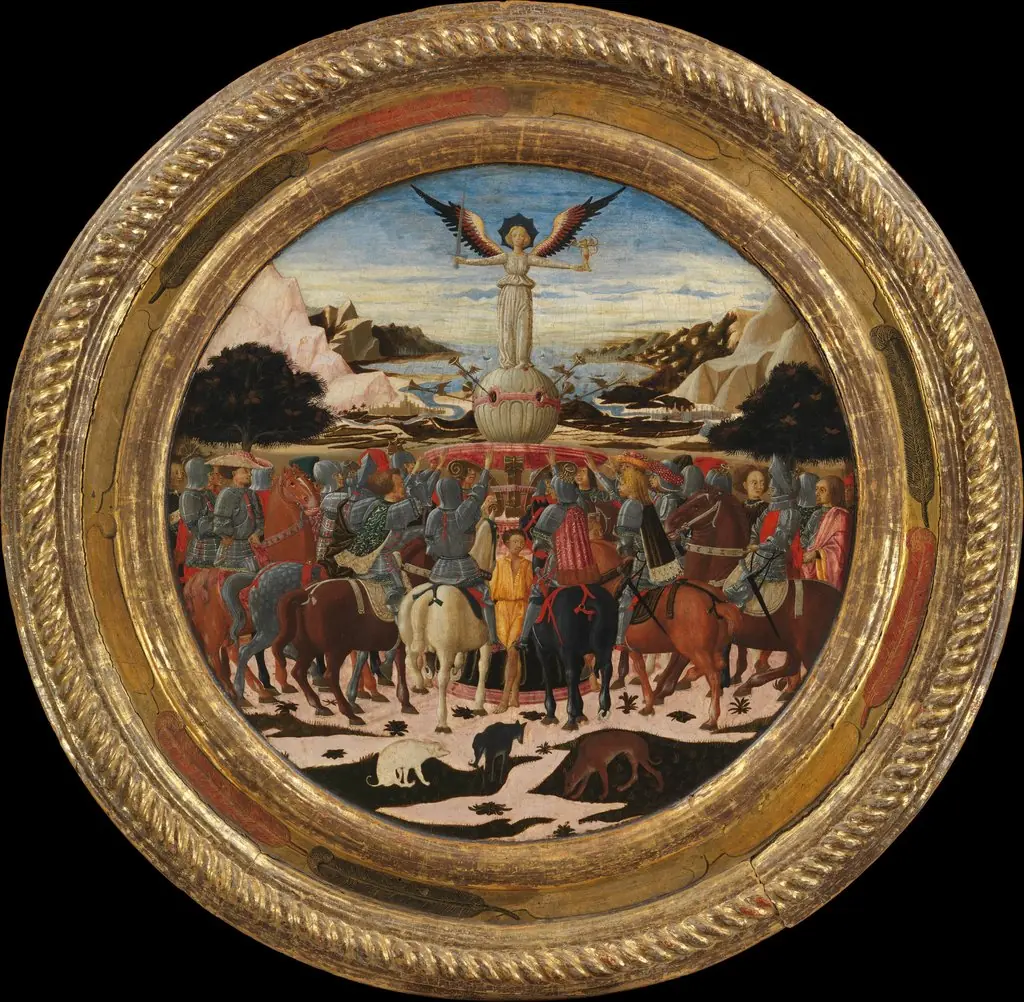
desco da parto con il trionfo dell'amore
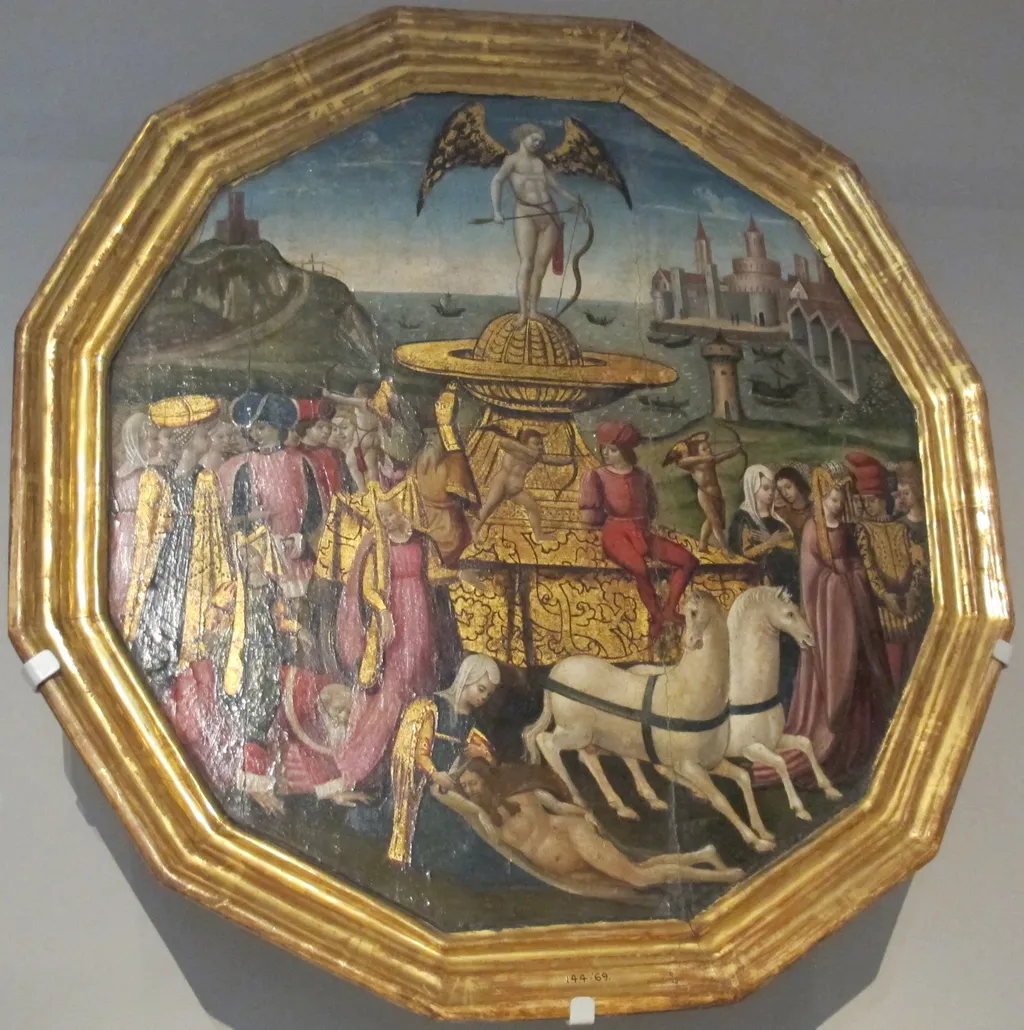
desco da parto con il trionfo dell'amore is an unspecified painting by the Early Renaissance artist Unknown. It dates from 1465 and is held in the collection of the Victoria and Albert Museum.
About this work
Overview
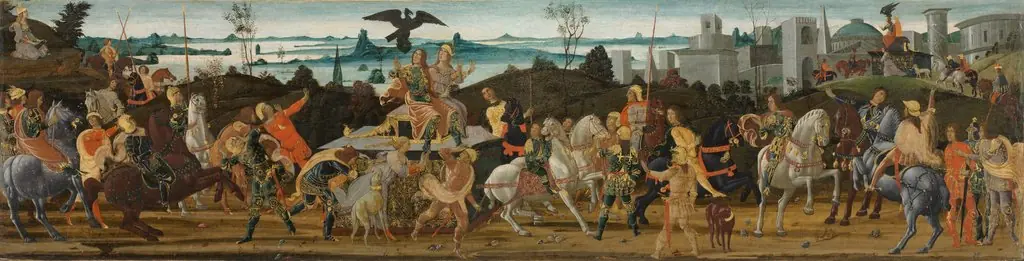
Desco da Parto con il Trionfo dell'Amore is a painting featuring a complex, multi-layered scene. At its center is a nude, winged figure on a pedestal, armed with a bow and arrow, surrounded by characters in Renaissance attire. The composition also includes a foreground scene with a fountain, a white horse, and a prone figure, set against a backdrop of buildings and water.
Subject & Meaning
The juxtaposition of this figure with the diverse surrounding elements may symbolize the pervasive influence of love across different aspects of life.
The central figure, likely Cupid (given the wings, bow, and arrow), suggests the theme of love's triumph. The juxtaposition of this figure with the diverse surrounding elements may symbolize the pervasive influence of love across different aspects of life. However, the exact interpretation of the overall scene remains open due to the painting's complexity and the lack of specific contextual information.
Technique & Style
Executed in a style consistent with Renaissance art, the painting showcases detailed rendering of textures, from the nudity of the central figure to the intricacies of Renaissance clothing. The use of a landscape background with architectural elements further emphasizes its Renaissance characteristics.
History & Provenance
The painting is currently housed at the Victoria and Albert Museum, though specific details regarding its creation date, artist, and historical ownership prior to its museum acquisition are not provided in the available information.
Context
Given its Renaissance style, the painting likely originated in Italy during the 15th to 16th centuries, a period when mythological and allegorical themes were popular. The 'desco da parto' designation suggests it may have been created for a birth celebration, possibly as a decorative piece for a new mother's room.
Artist & collection

 Domestic Scene
 Giacomo and Cardinal Marco, investing Andrea, Abbot of San Zeno, with his Benefice
 The Nymph of Fontainebleau
 Portrait of a Woman
 Madonna and Child with Saints in the Enclosed Garden
 Venus and Minerva
 Family Group of Four on Sofa
 Wall painting from Room H of the Villa of P. Fannius Synistor at Boscoreale
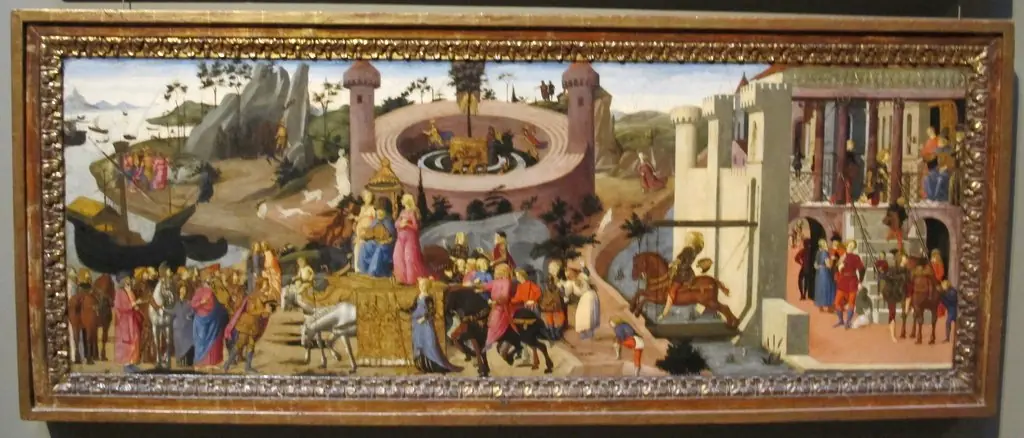 scene con storie degli argonauti
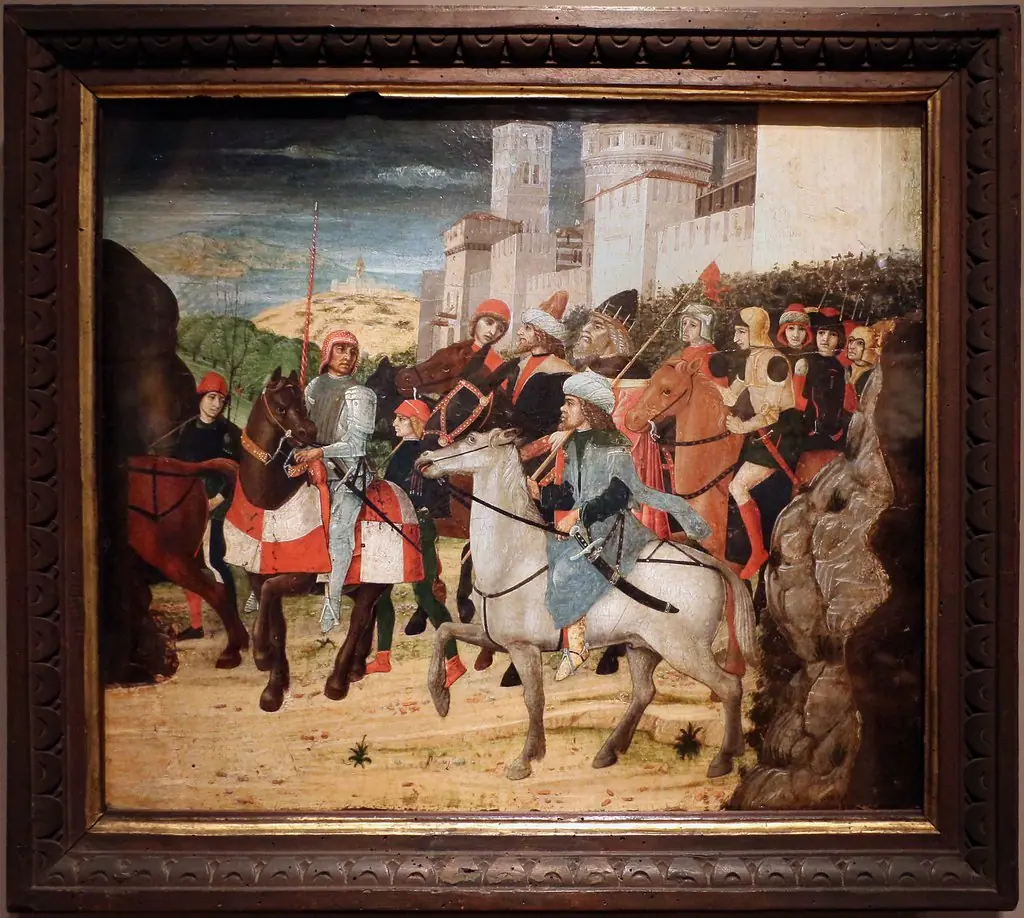 processione dei magi
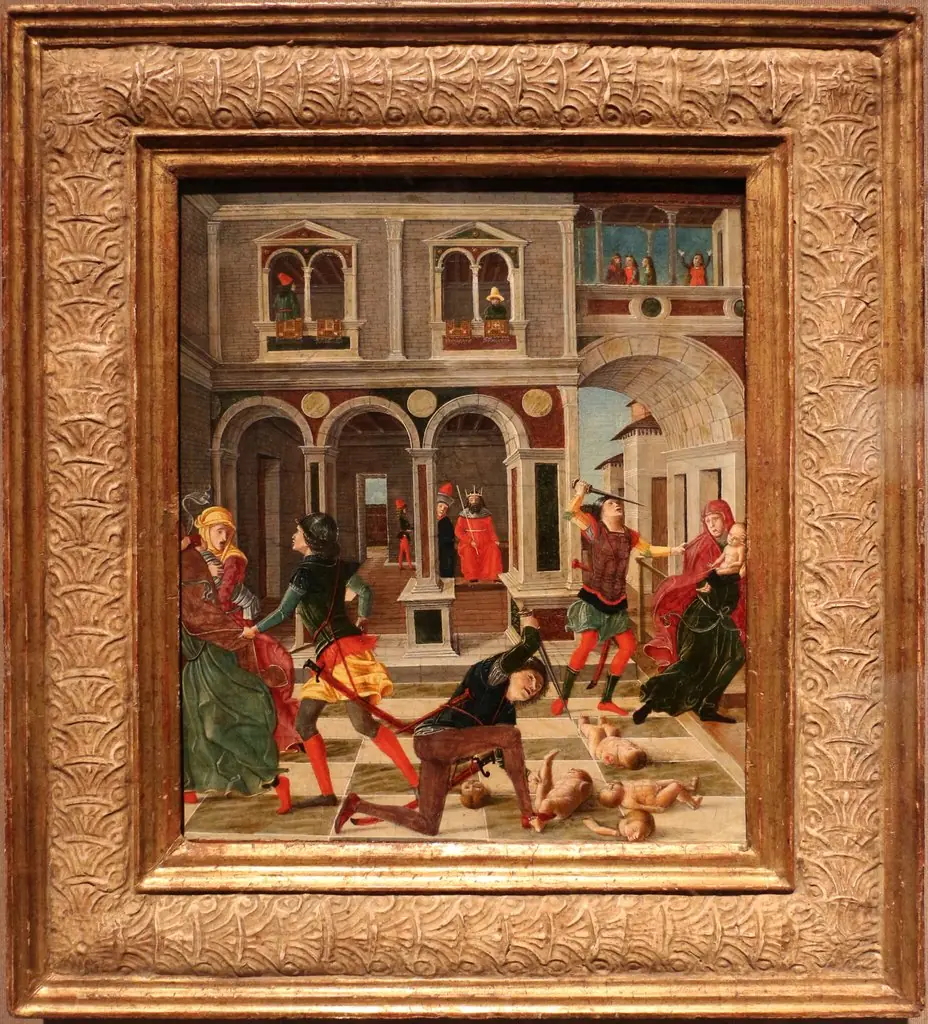 strage degli innocenti
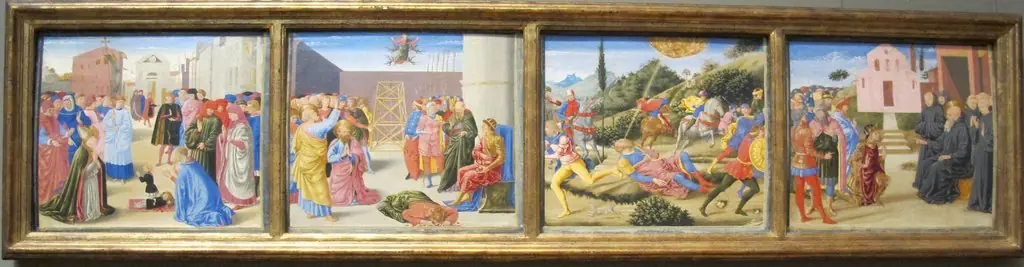 Predella with scenes from the Life of the Saint
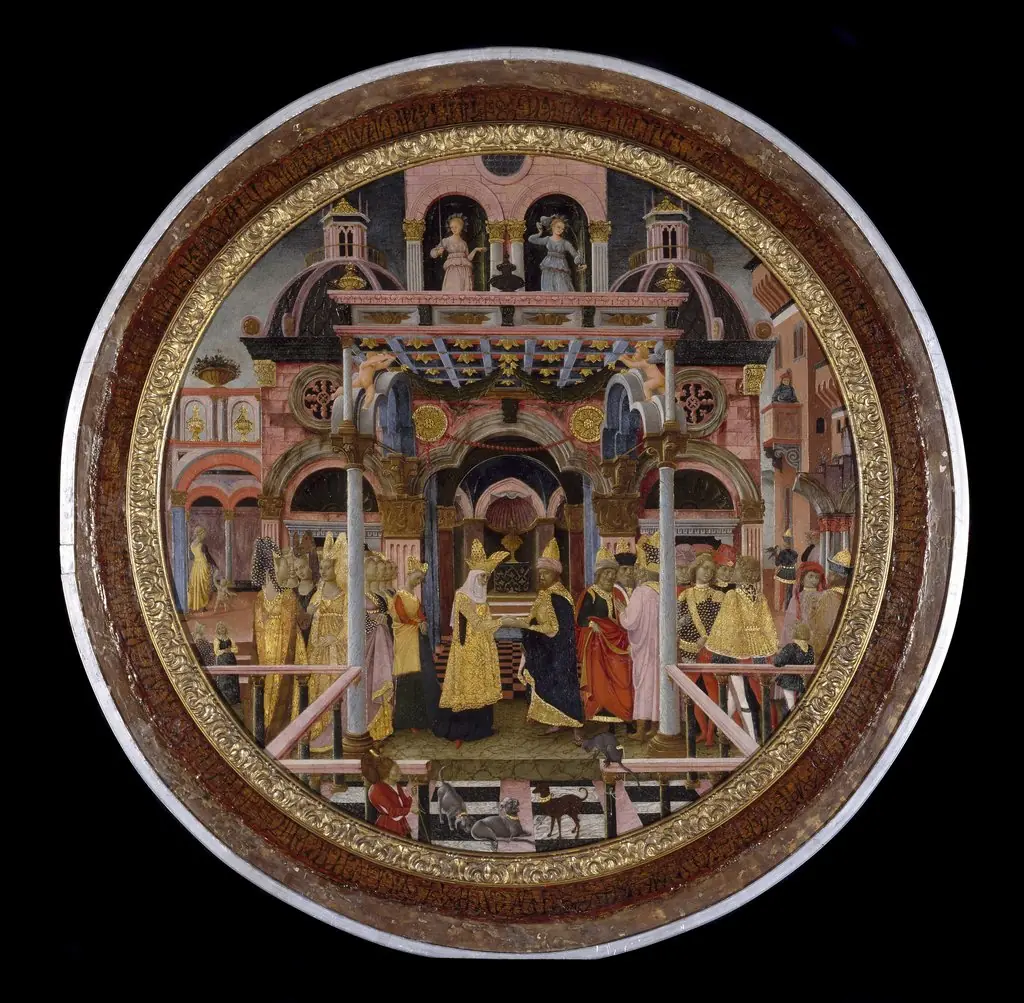 The Meeting of Solomon and the Queen of Sheba
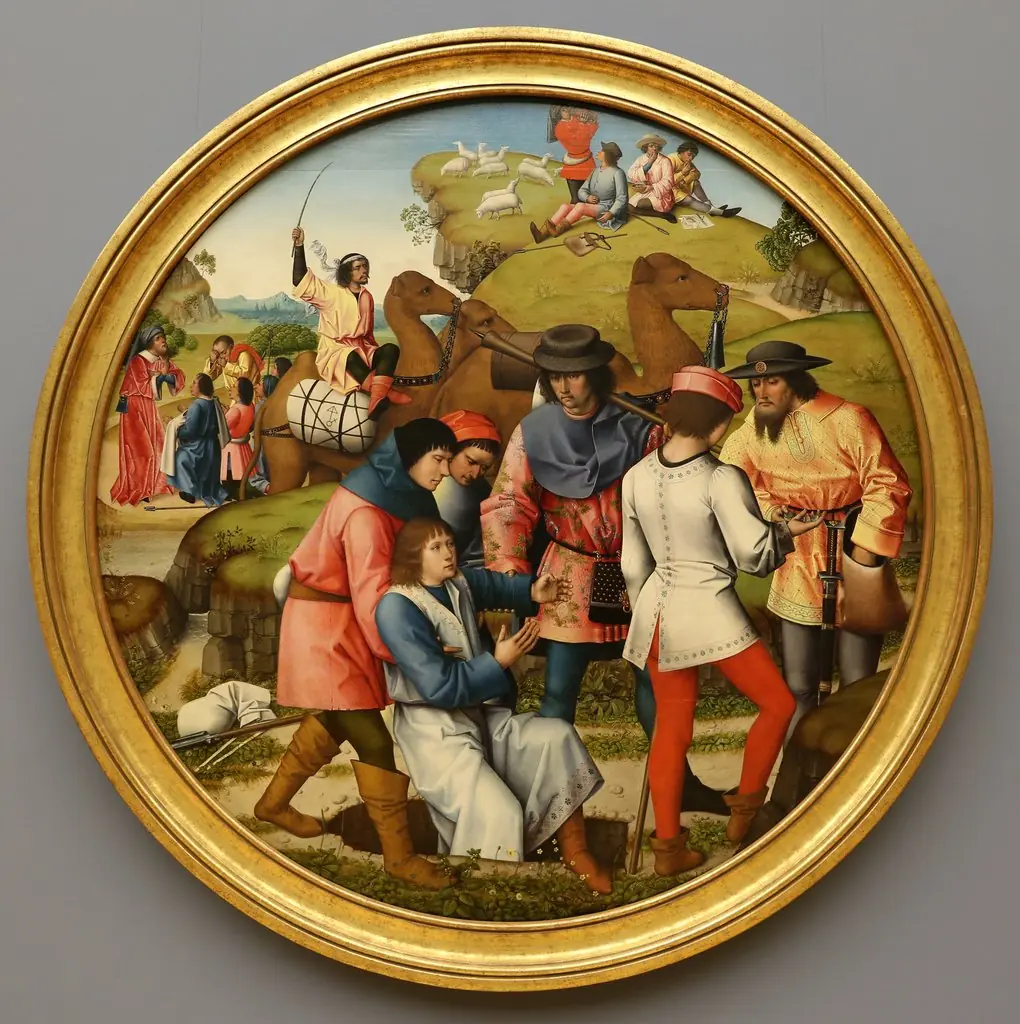 Joseph sold by his brothers
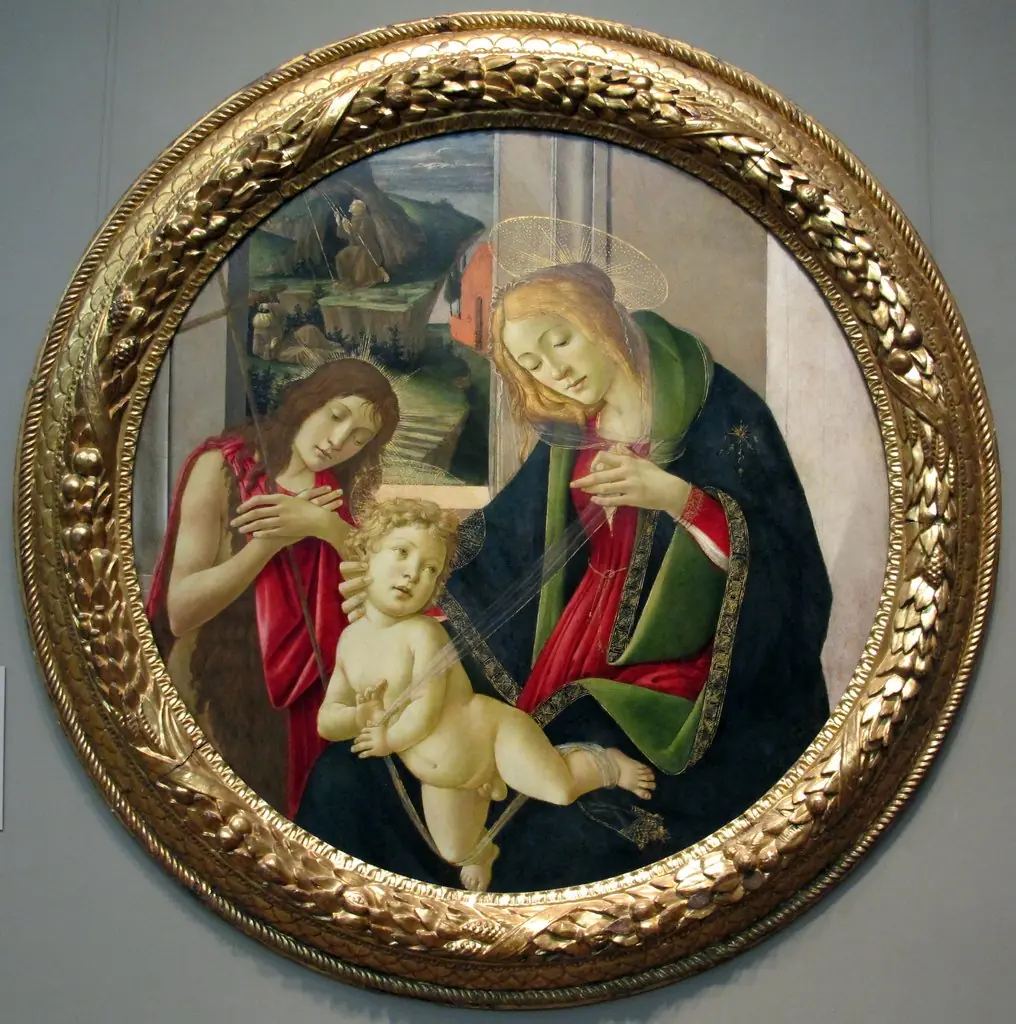 Madonna and Child with Saint John
 The Triumph of Fame
 Madonna and Child with Angels
 Adoration of the Magi
 Ecce Homo
 Tarquinius Priscus Entering Rome