Artwork
Coffered ceiling panel with a knight of the House of Anjou struck down by a knight with the coat of arms of Catalonia-Aragon and those of Swabia of Frederic of Sicily
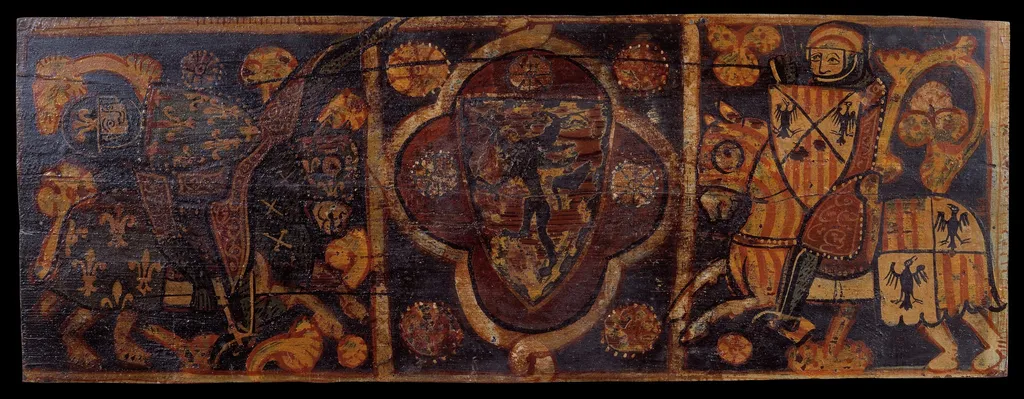
Coffered ceiling panel with a knight of the House of Anjou struck down by a knight with the coat of arms of Catalonia-Aragon and those of Swabia of Frederic of Sicily is an unspecified painting by Unknown. It is held in the collection of the Museu Nacional d'Art de Catalunya.
About this work
Overview
The composition is divided into three horizontal zones, with the central scene dominating the visual focus and ornamental motifs flanking it.
This painted ceiling panel once formed part of a decorative scheme in a royal or noble residence, likely in the Mediterranean region during the late 13th or early 14th century. It depicts a single moment of combat between two armored knights, framed within a structured architectural layout. The composition is divided into three horizontal zones, with the central scene dominating the visual focus and ornamental motifs flanking it. The work served both aesthetic and political purposes, commemorating a symbolic victory.
Subject & Meaning
The scene illustrates the defeat of a knight bearing the black and gold arms of the House of Anjou by a warrior displaying the red-and-yellow stripes of Catalonia-Aragon and the bird emblem of Swabia, associated with Frederick III of Sicily. This confrontation likely references historical conflicts over control of Sicily following the War of the Sicilian Vespers. The imagery functions as a visual assertion of legitimacy and territorial claim, transforming martial victory into dynastic propaganda.
Technique & Style
The panel employs tempera or oil on wood, with bold outlines and high-contrast pigments to heighten the drama of the clash. The dark background isolates the figures, while highlights on armor and banners create a sense of motion. Brushwork is decisive, emphasizing the thrust of weapons and the fall of the fallen knight. Decorative borders feature stylized floral or geometric patterns, typical of Gothic decorative arts, reinforcing the panel’s function as part of a larger architectural ensemble.
History & Provenance
The panel originated in a royal palace or chapel associated with the Crown of Aragon, possibly in Palermo or Barcelona, during the reign of Frederick III. It was likely installed in a ceiling or vaulted chamber to celebrate Aragonese sovereignty over Sicily. Its survival suggests it was preserved through later renovations or removed for safekeeping. Its current location and acquisition history reflect 19th- or 20th-century museum collecting practices focused on medieval Iberian and Sicilian art.
Context
Created amid the political turmoil following the Sicilian Vespers of 1282, the panel reflects the intense rivalry between the Angevin and Aragonese dynasties for control of the island. Such ceiling decorations were common in royal courts, where imagery reinforced power through mythic or historical narratives. The inclusion of Swabian symbols acknowledges Frederick’s imperial lineage, linking his rule to the broader Hohenstaufen legacy, even as the Angevins sought to reclaim the throne.
Legacy
This panel stands as a rare surviving example of secular medieval ceiling painting in the Mediterranean, offering insight into how political narratives were visualized in architectural spaces. It contributes to the understanding of heraldic symbolism in art and the role of decorative programs in legitimizing rule. Though not widely known outside specialist circles, it remains a significant artifact for studying the intersection of art, politics, and identity in late medieval Europe.
Artist & collection

 Domestic Scene
 Giacomo and Cardinal Marco, investing Andrea, Abbot of San Zeno, with his Benefice
 The Nymph of Fontainebleau
 Portrait of a Woman
 Madonna and Child with Saints in the Enclosed Garden
 Venus and Minerva
 Family Group of Four on Sofa
 Wall painting from Room H of the Villa of P. Fannius Synistor at Boscoreale
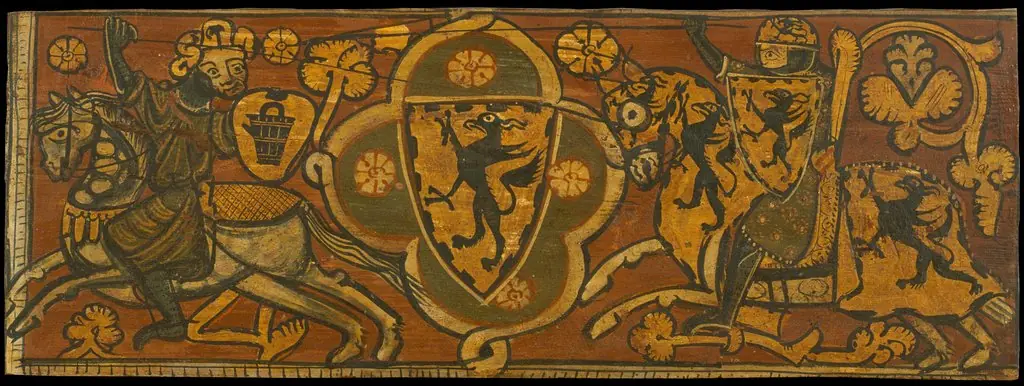 Coffered ceiling panel with a fight between a Christian knight and a Muslim
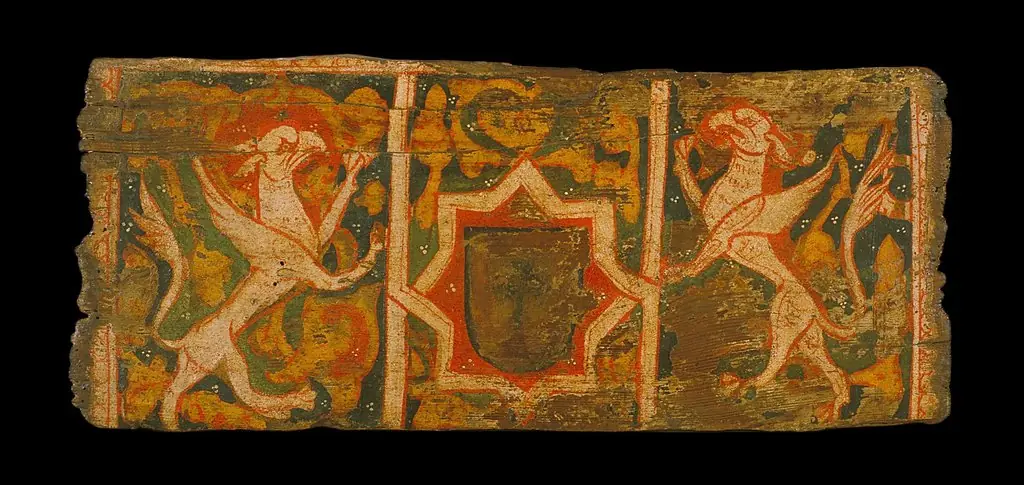 Coffered ceiling panel with coat of arms and griffins rampant
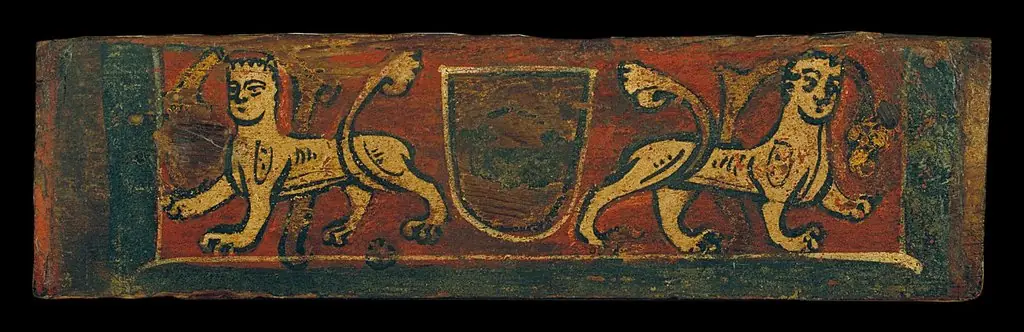 Small coffered ceiling panel with coat of arms and manticores
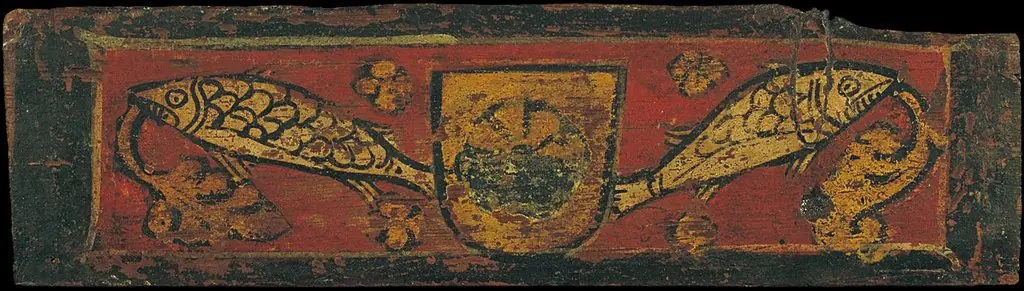 Small coffered ceiling panel with coat of arms and fishes devouring plant motifs
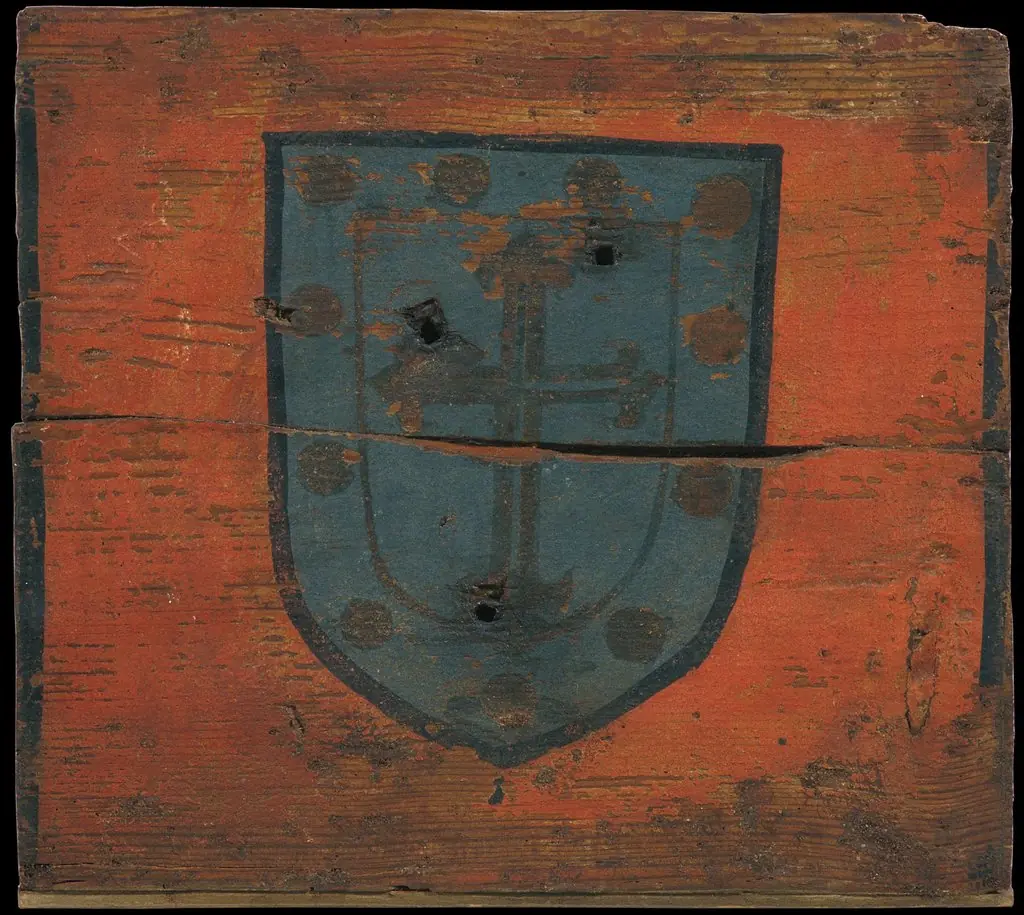 Small coffered ceiling panel with coat of arms
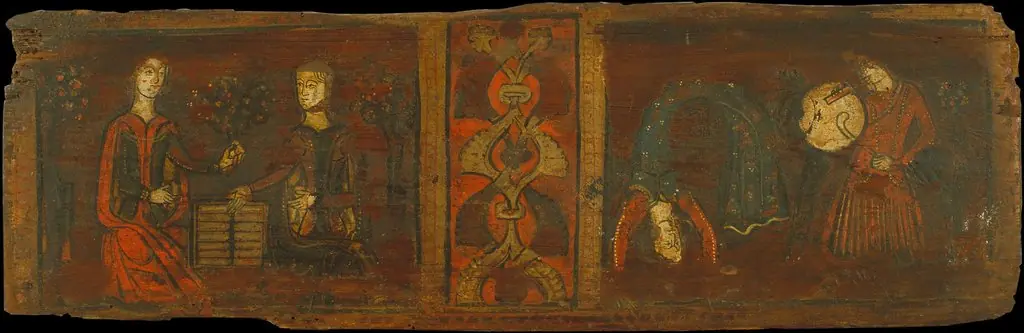 Small coffered ceiling panel with scenes of gallantry and dancing
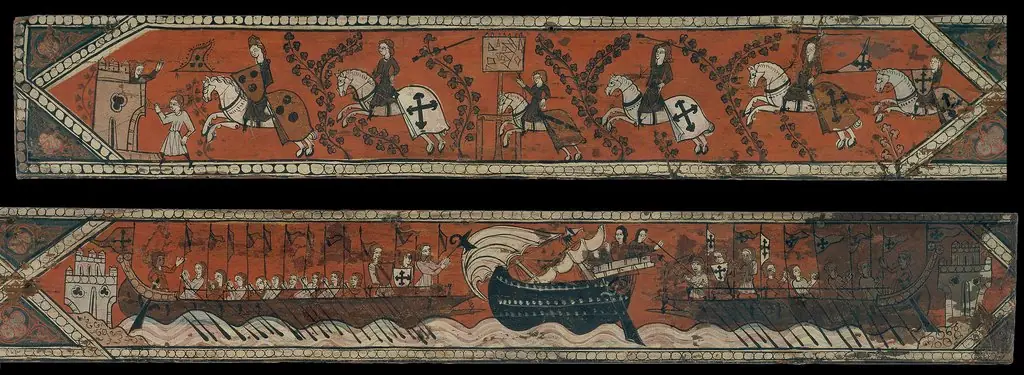 Coffered ceiling panel with knights, galleys and a boat with a high gunwale
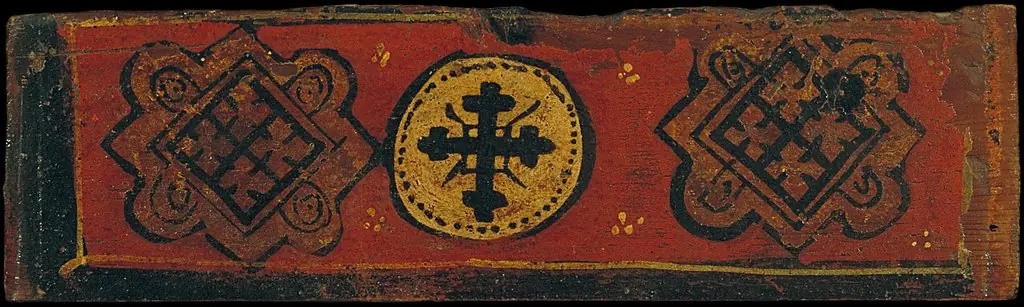 Small coffered ceiling panel with a cross and coats of arms in lozenge form
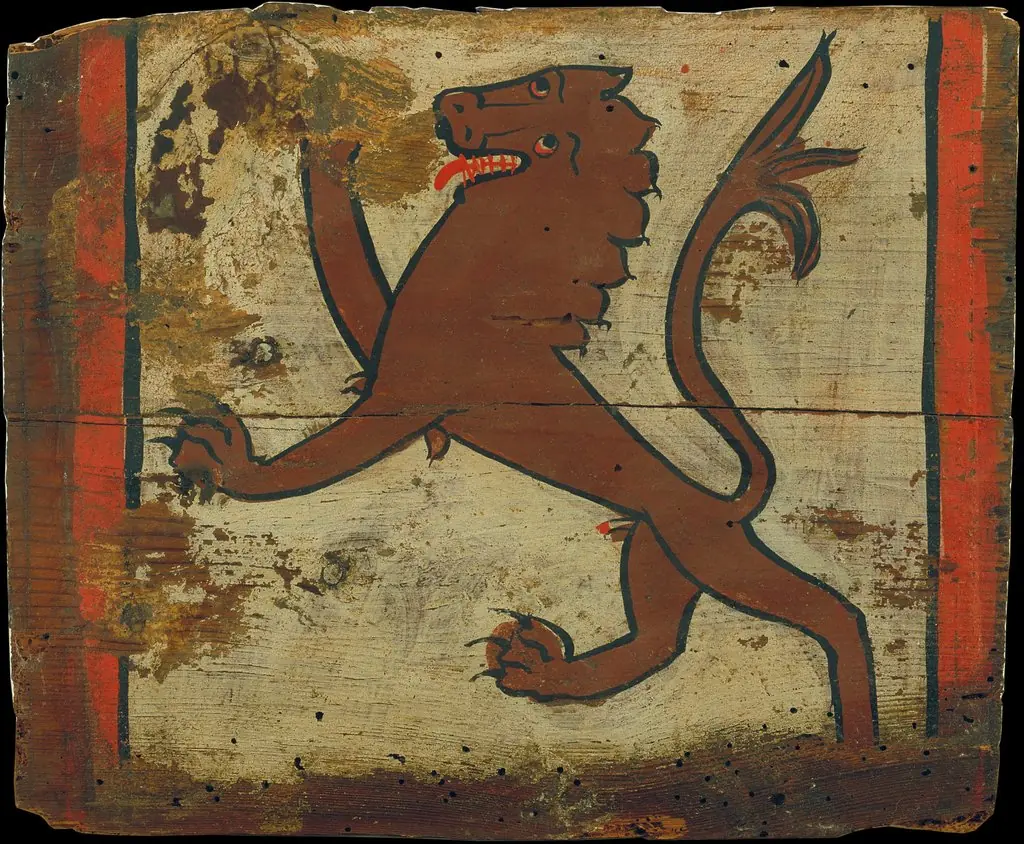 Small coffered ceiling panel with rampant lion
 Coffered ceiling panel
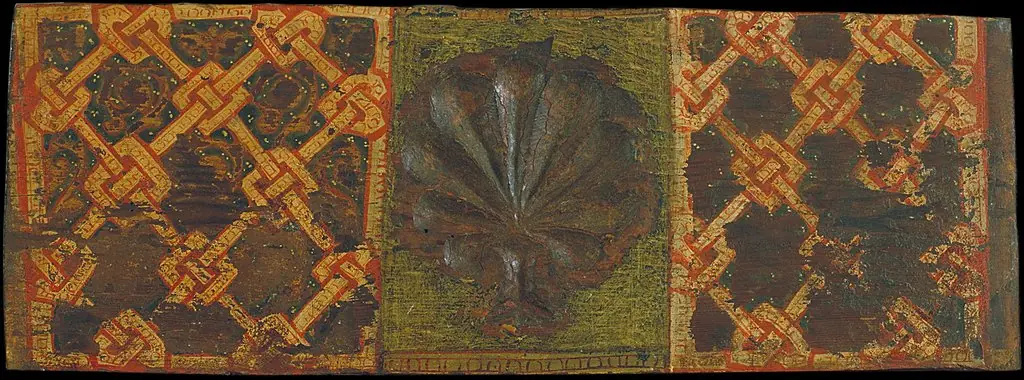 Coffered ceiling panel with palm leaf and interlacing motifs
 Coffered ceiling panel with plant motifs