Artwork
Charles II
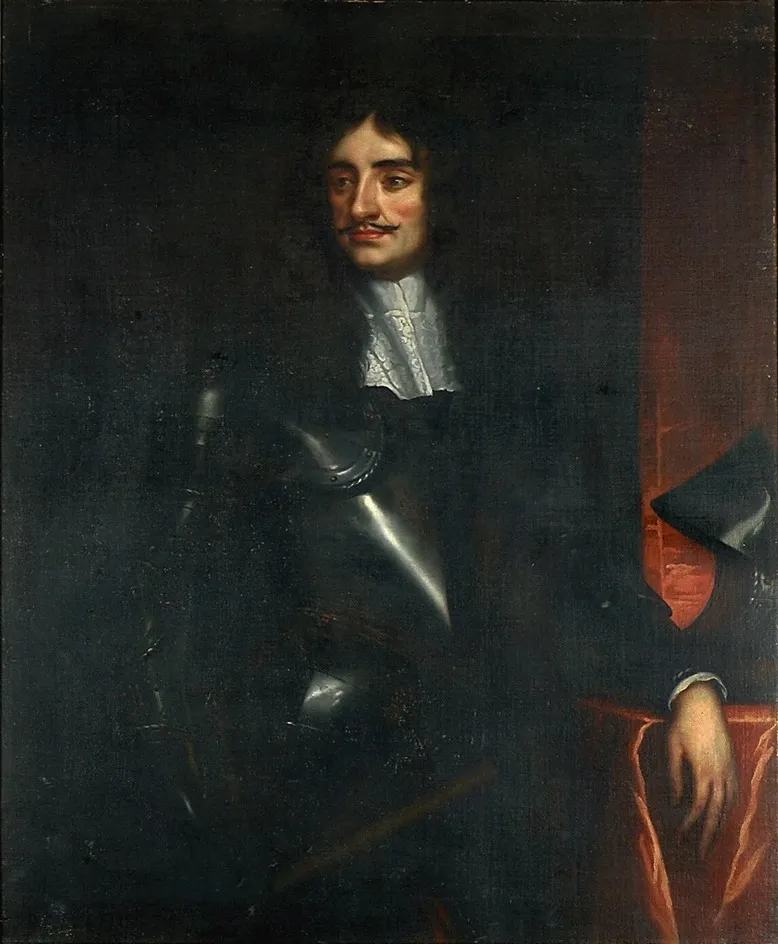
Charles II is an oil painting by Unknown. It dates from 1675 and is held in the collection of the Ashmolean Museum.
About this work
If you're interested in learning more about the artist's technique, you might want to look up chiaroscuro.
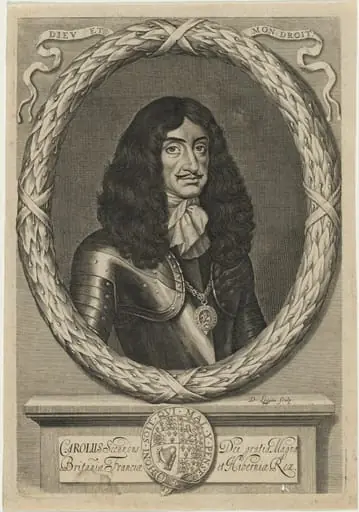
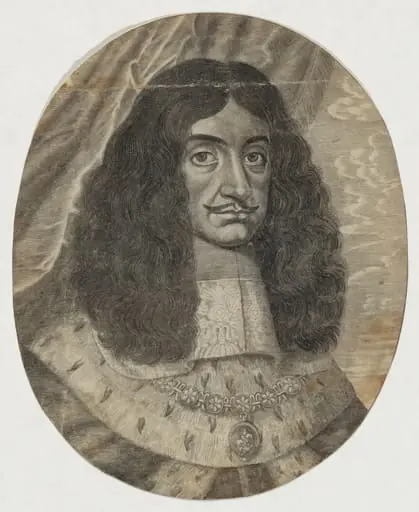
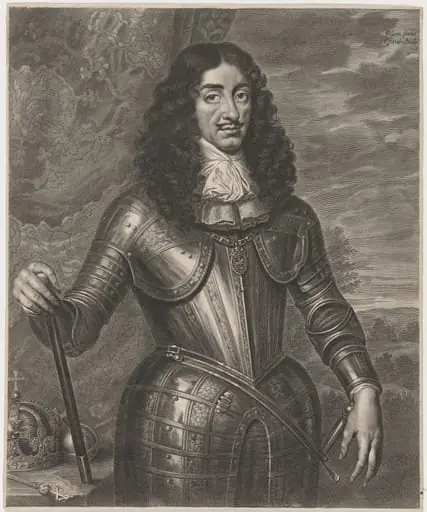
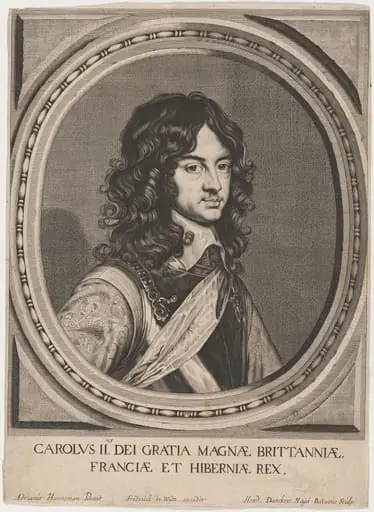
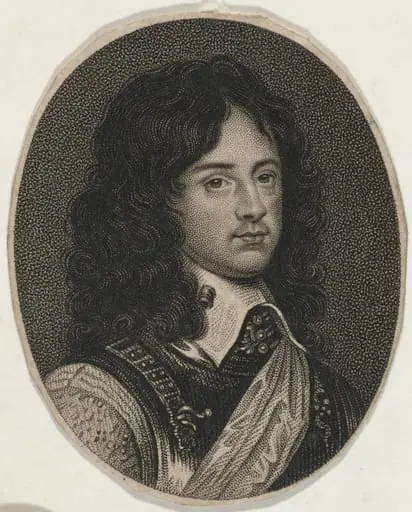
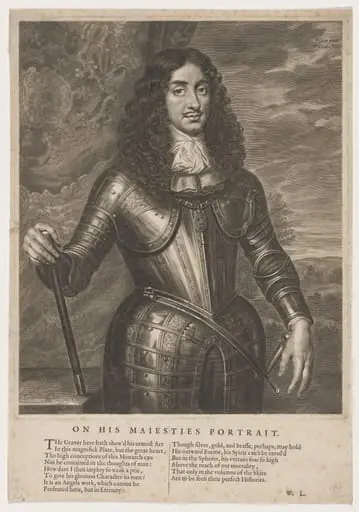
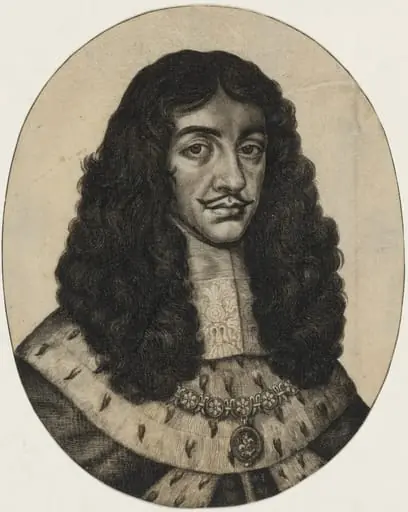
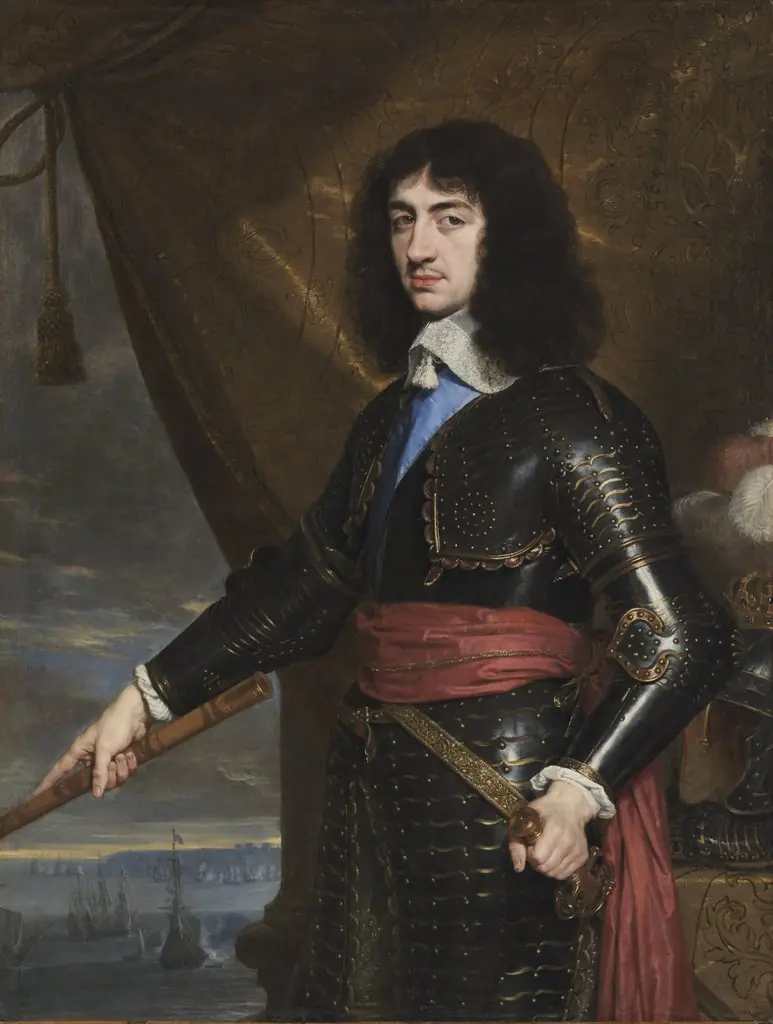
The painting depicts a man in a black suit with a white lace collar, sitting in a red chair. He has long, dark hair and is wearing a black leather breastplate. The background is dark, with a red glow on the right side.
The man's face is blurred, but his expression appears serious. He is holding a sword in his right hand, which is resting on his lap. The sword has a gold hilt and a long, curved blade.
This painting is a portrait of Charles II, created by an unknown artist in 1675. It is currently held at the Ashmolean Museum. If you're interested in learning more about the artist's technique, you might want to look up chiaroscuro.
Overview
The work is an oil portrait dating from 1675 that shows a seated male figure in a black suit with a white lace collar, positioned in a red chair against a dark backdrop illuminated by a subtle red glow on the right. The sitter holds a sword with a gold hilt on his lap, and his facial features are rendered indistinctly, conveying a solemn demeanor.
Subject & Meaning
Identified as Charles II, the portrait emphasizes regal authority through the inclusion of a sword and a leather breastplate, symbols of military command. The muted expression and blurred visage may reflect the political uncertainties of his reign, while the contrast between the dark surroundings and the red accents underscores a sense of controlled power.
Technique & Style
Executed in oil, the painting employs strong chiaroscuro, using deep shadows to model the figure and a focused red light to highlight the chair and background. The artist’s handling of texture—smooth satin of the suit, crisp lace, and reflective metal of the sword—demonstrates a careful study of material qualities typical of late‑Baroque portraiture.
History & Provenance
Created by an unidentified painter in 1675, the portrait entered the collection of the Ashmolean Museum, where it remains on display. Its attribution to Charles II rests on the costume and insignia rather than a documented commission, and the lack of a signed name has left the artist’s identity uncertain.
Context
The portrait belongs to a period when English monarchs commissioned images that blended personal likeness with state symbolism. In the aftermath of the Restoration, representations of Charles II often highlighted his role as a military leader and patron, aligning with broader European trends of portraying sovereigns in martial attire.
Artist & collection

 Domestic Scene
 Giacomo and Cardinal Marco, investing Andrea, Abbot of San Zeno, with his Benefice
 The Nymph of Fontainebleau
 Portrait of a Woman
 Madonna and Child with Saints in the Enclosed Garden
 Venus and Minerva
 Family Group of Four on Sofa
 Wall painting from Room H of the Villa of P. Fannius Synistor at Boscoreale