Artwork
Revd. H. Davies, died 1868
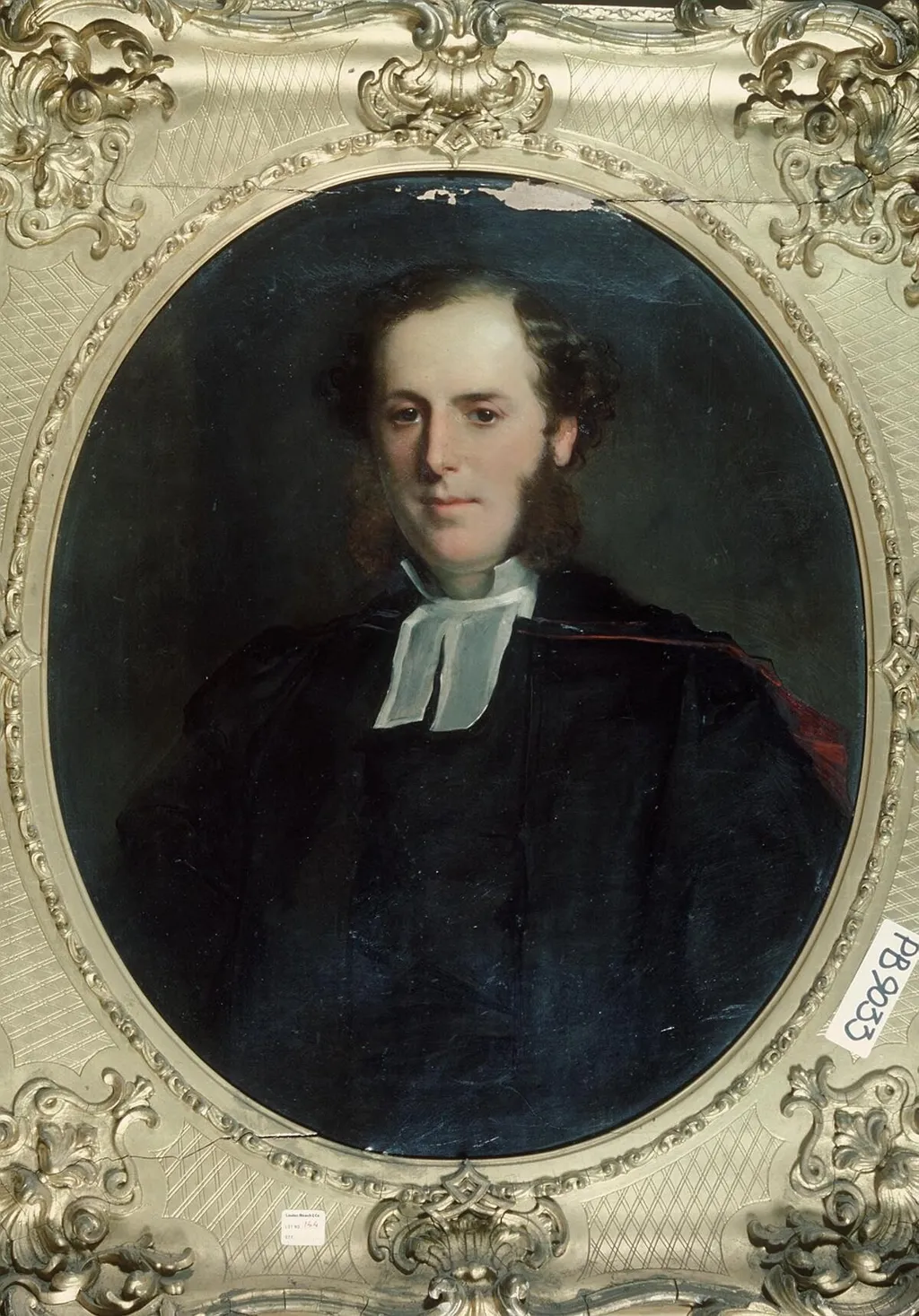
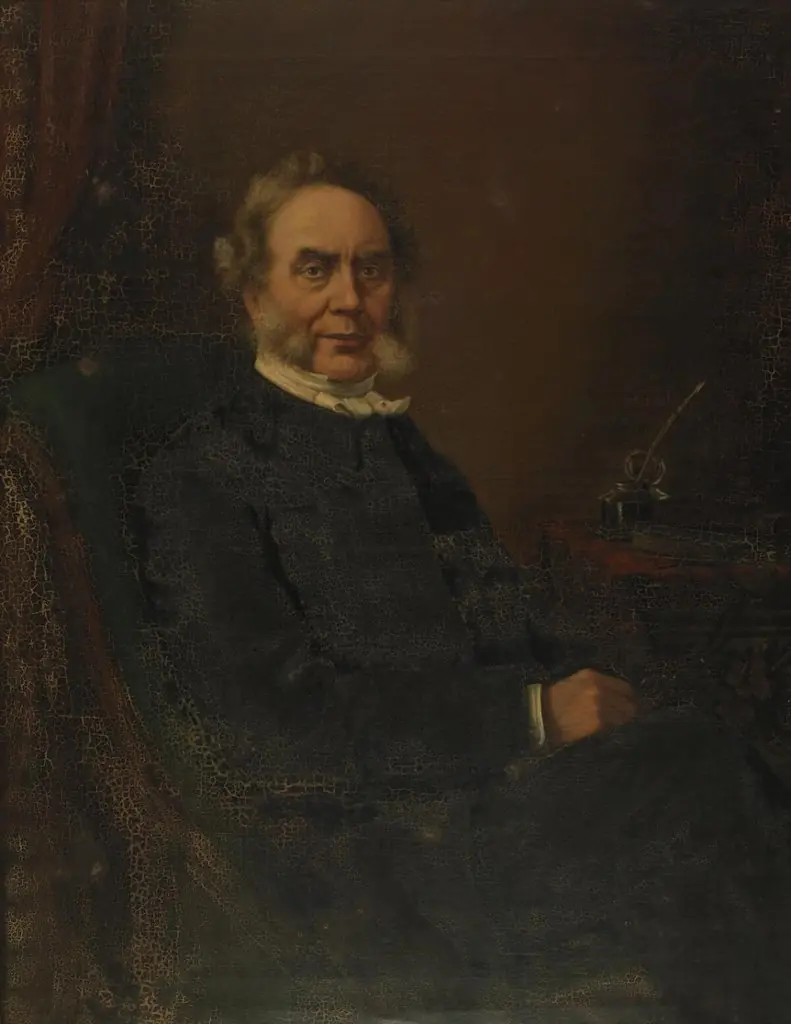
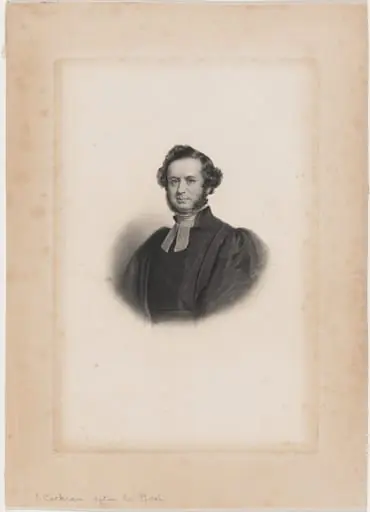
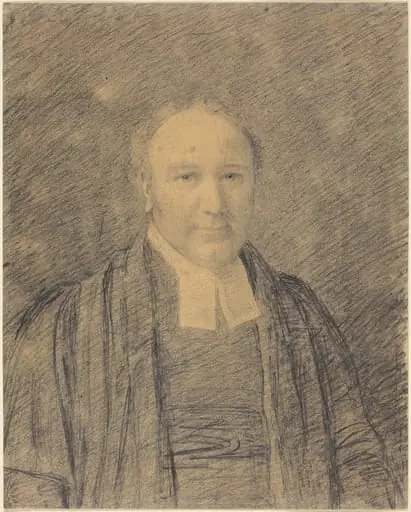
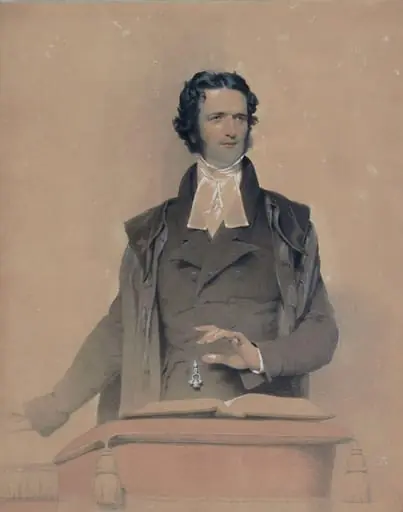
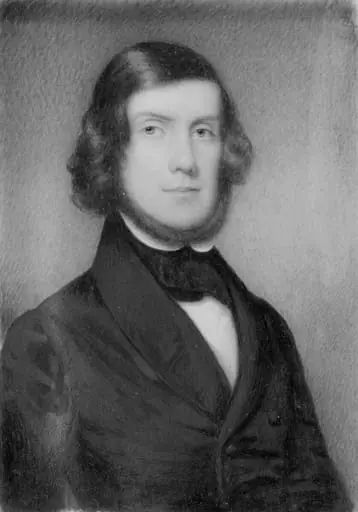
Revd. H. Davies, died 1868 is an oil painting by the British Romanticist artist Unknown. It dates from 1840 and is held in the collection of the National Library of Wales. This oil painting depicts a man identified as Revd.
About this work
Overview
The composition emphasizes the figure through strong contrasts of light and shadow, drawing focus to the face and clothing.
This oil painting depicts a man identified as Revd. H. Davies, who died in 1868. Rendered in a somber palette, the portrait presents the subject in formal attire against a deep, unbroken background. The composition emphasizes the figure through strong contrasts of light and shadow, drawing focus to the face and clothing. It is held in the collection of the National Library of Wales and is accessible to the public.
Subject & Meaning
The subject is likely a clergyman, indicated by his white collar and dignified posture. His serious expression and restrained demeanor suggest a contemplative or solemn character, consistent with religious vocation. The absence of symbolic objects or contextual elements directs attention to the individual’s presence, conveying a sense of quiet authority rather than narrative detail.
Technique & Style
The artist employs chiaroscuro to model the figure with subtle gradations of light, enhancing the three-dimensionality of the face and fabric. The dark background isolates the subject, heightening the impact of the illuminated areas. Brushwork is controlled and precise, particularly in the rendering of the collar and hair, reflecting a traditional approach to portraiture common in mid-19th-century Britain.
History & Provenance
The painting was created during or shortly after the subject’s lifetime, likely commissioned by family or congregation following his death in 1868. It entered the collection of the National Library of Wales at an unknown date, possibly through donation or bequest. Its preservation suggests it held personal or communal significance within Welsh ecclesiastical circles.
Context
In mid-19th-century Wales, portraits of clergy were common, serving both as memorials and as markers of social standing within local communities. The formal, restrained style aligns with prevailing tastes in religious portraiture, where dignity and moral gravity were prioritized over ornamentation or theatricality.
Legacy
The portrait endures as a quiet record of an individual within Welsh religious life. While not attributed to a widely recognized artist, its preservation reflects the value placed on local ecclesiastical figures. It contributes to the historical documentation of clerical identity in Victorian Wales, offering insight into personal and communal memory.
Artist & collection

 Domestic Scene
 Giacomo and Cardinal Marco, investing Andrea, Abbot of San Zeno, with his Benefice
 The Nymph of Fontainebleau
 Portrait of a Woman
 Madonna and Child with Saints in the Enclosed Garden
 Venus and Minerva
 Family Group of Four on Sofa
 Wall painting from Room H of the Villa of P. Fannius Synistor at Boscoreale