Artwork
Page from Tales of a Parrot (Tuti-nama): text page
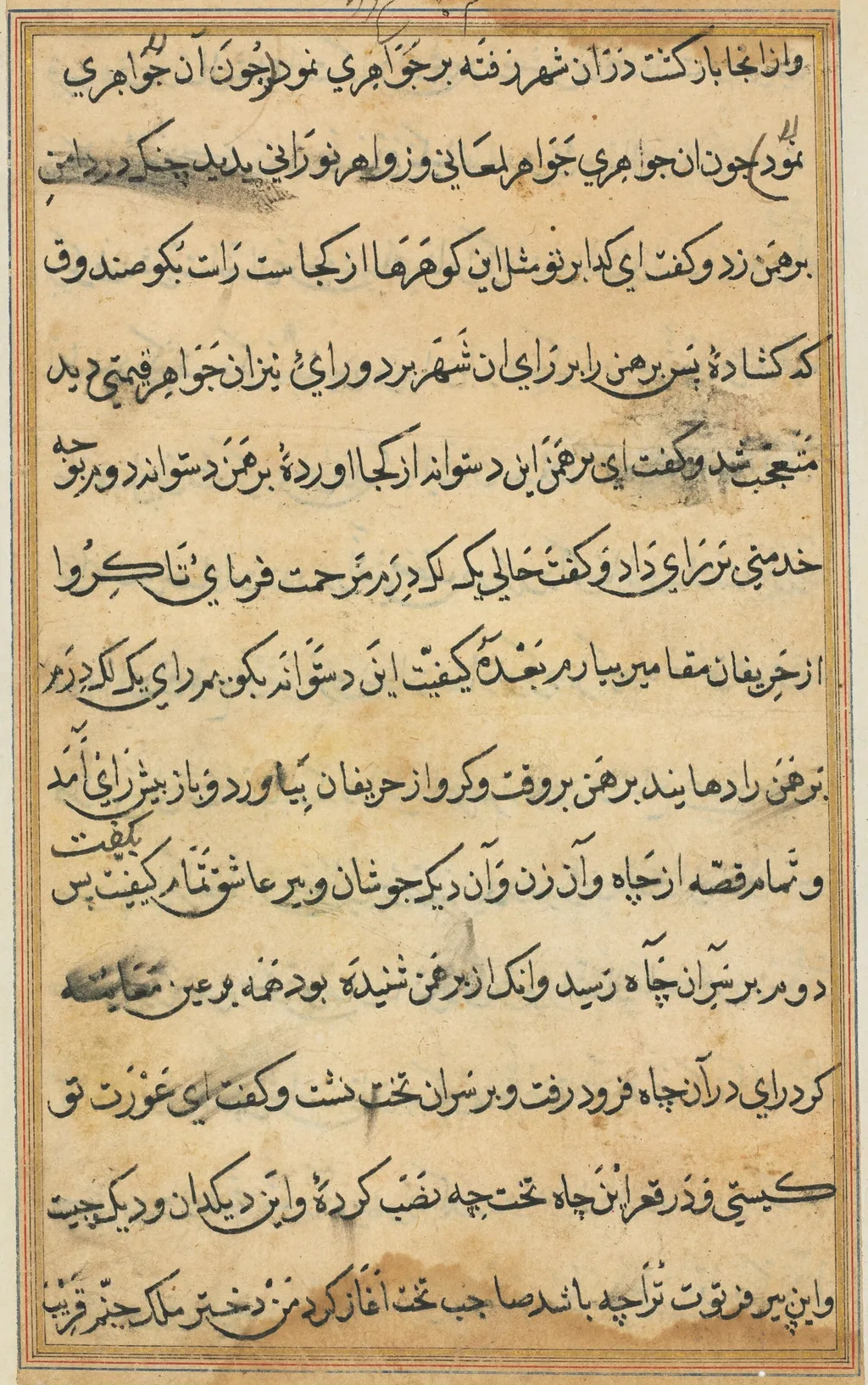
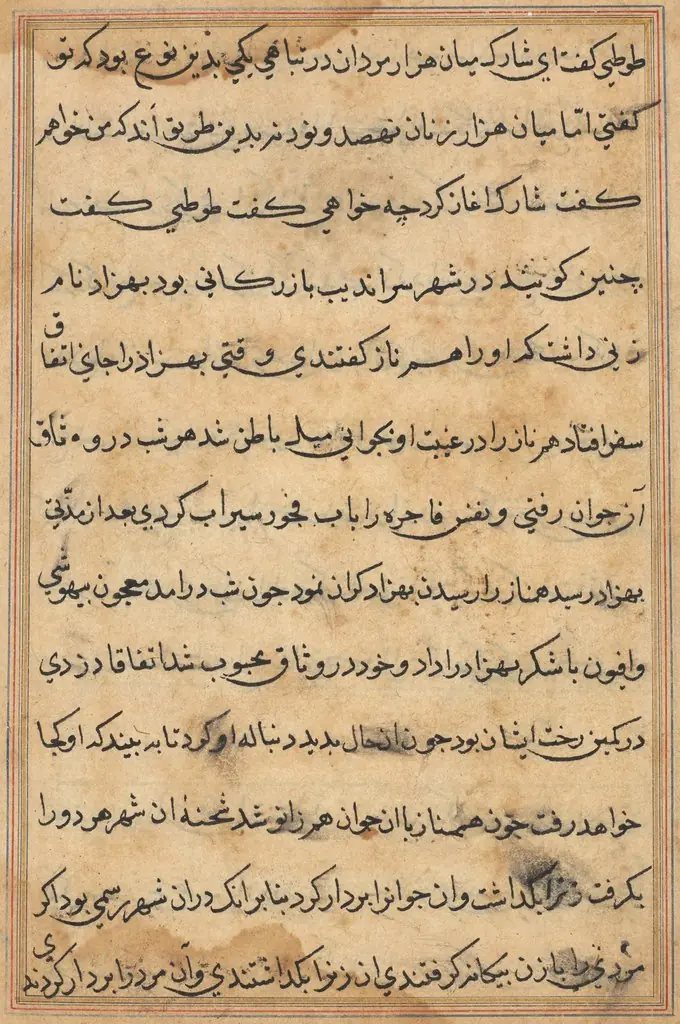
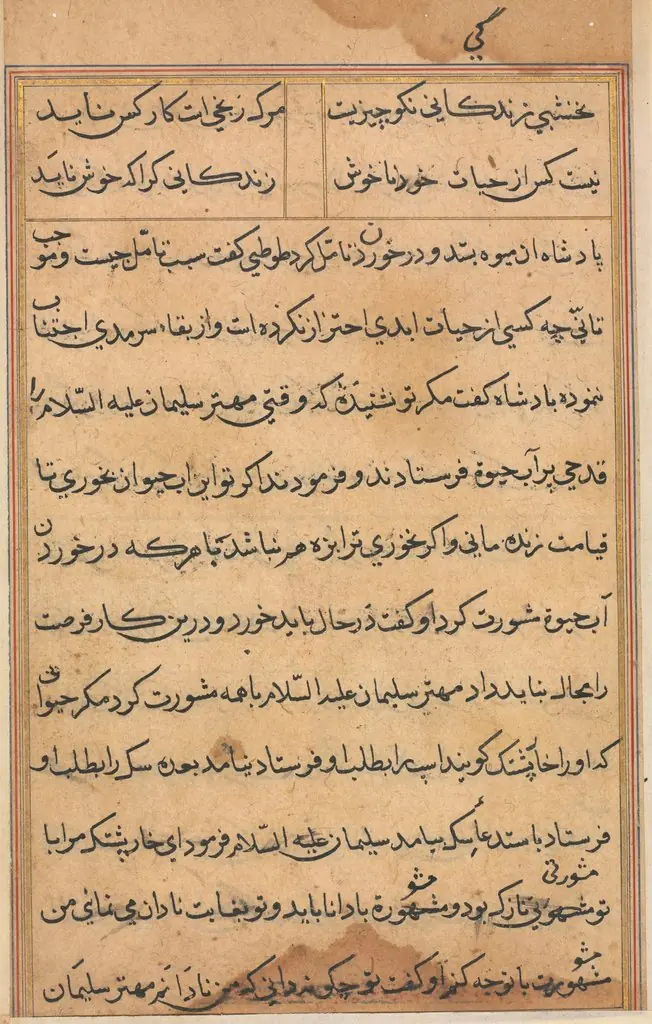
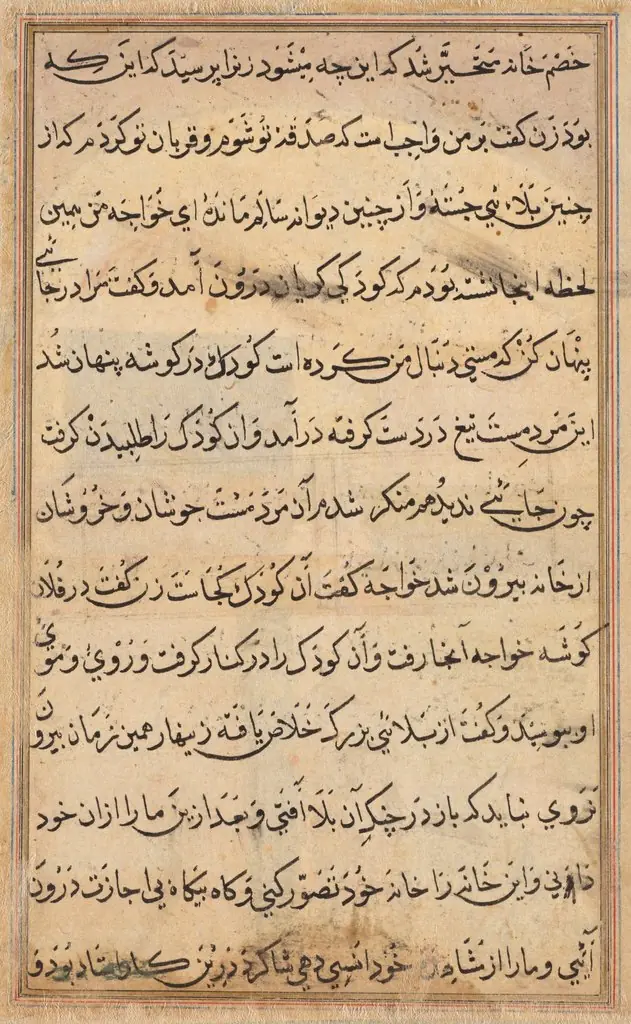
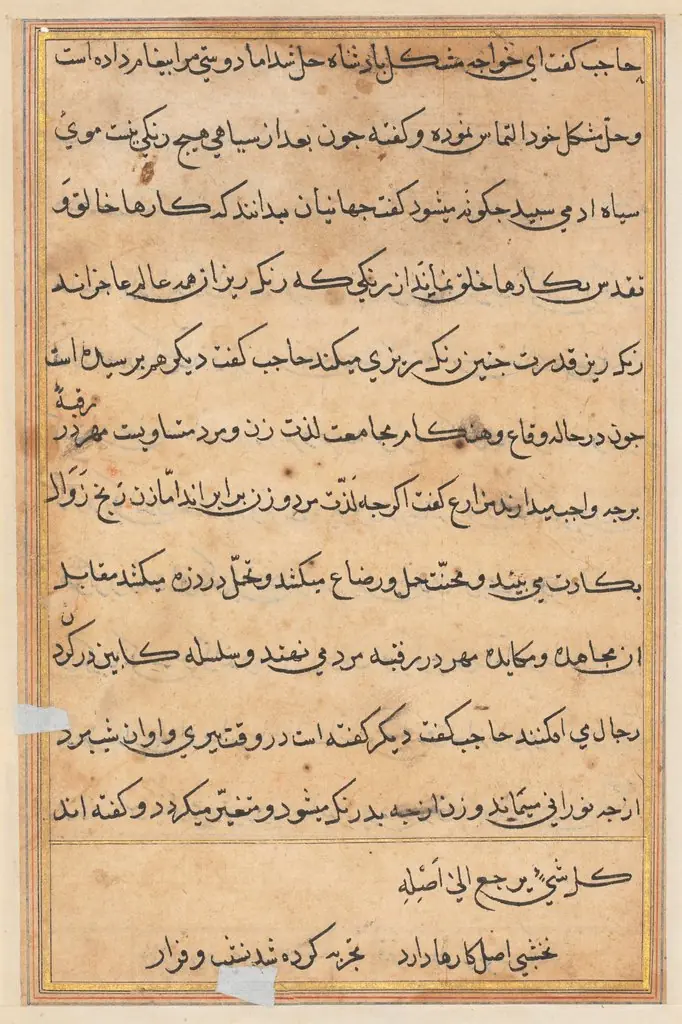
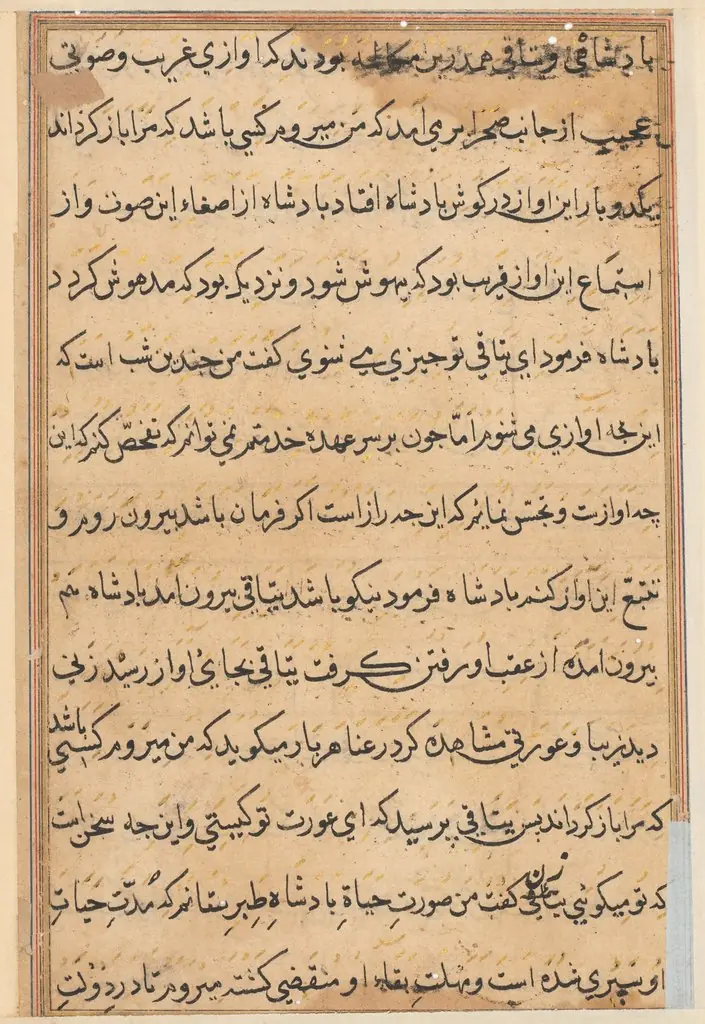
Page from Tales of a Parrot (Tuti-nama): text page is an unspecified painting. It dates from 1560 and is held in the collection of the Cleveland Museum of Art. This illuminated page originates from the manuscript *Tales of a Parrot*, a narrative work created for Prince Salim.
About this work
Overview
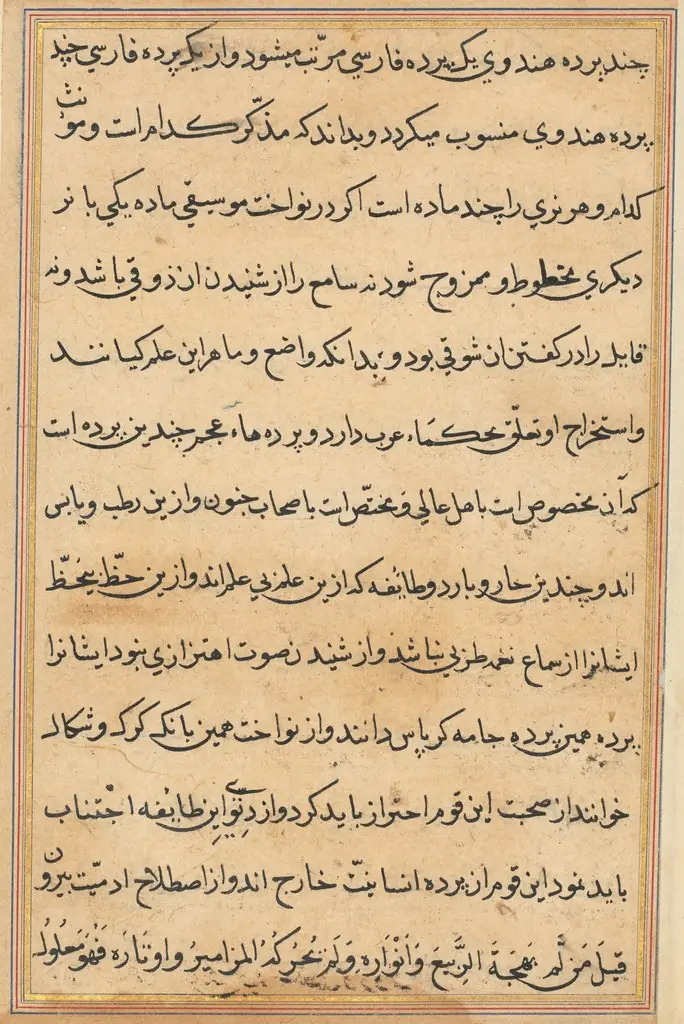
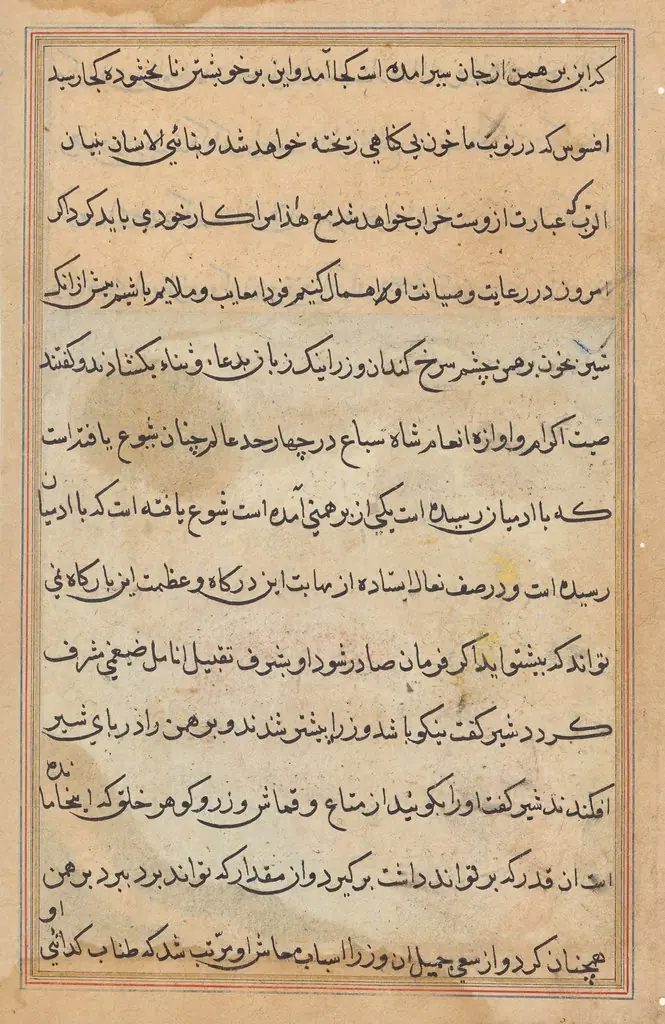
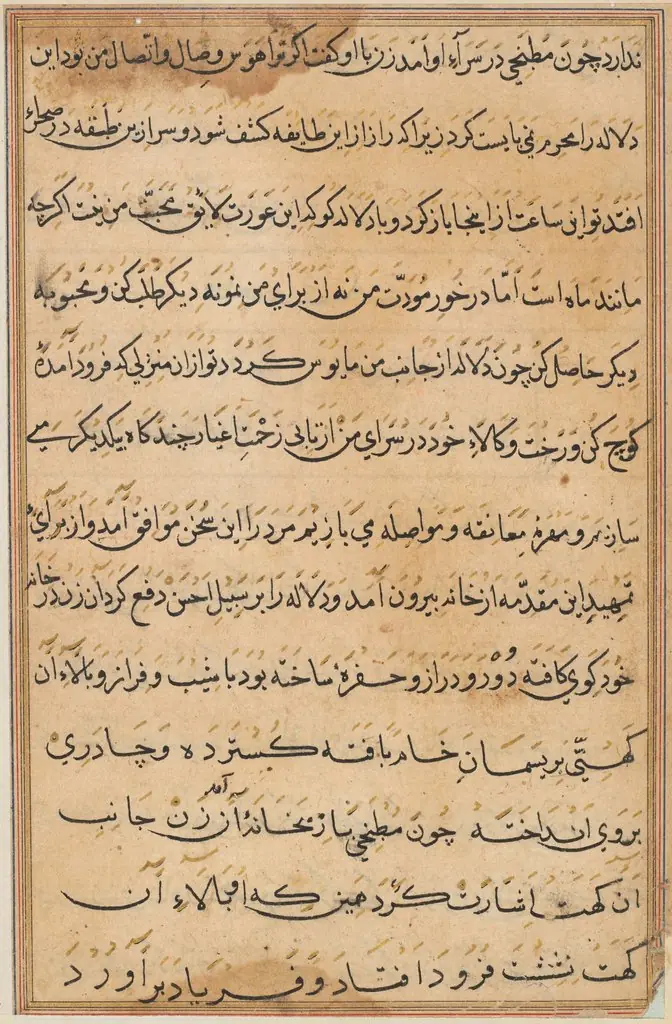
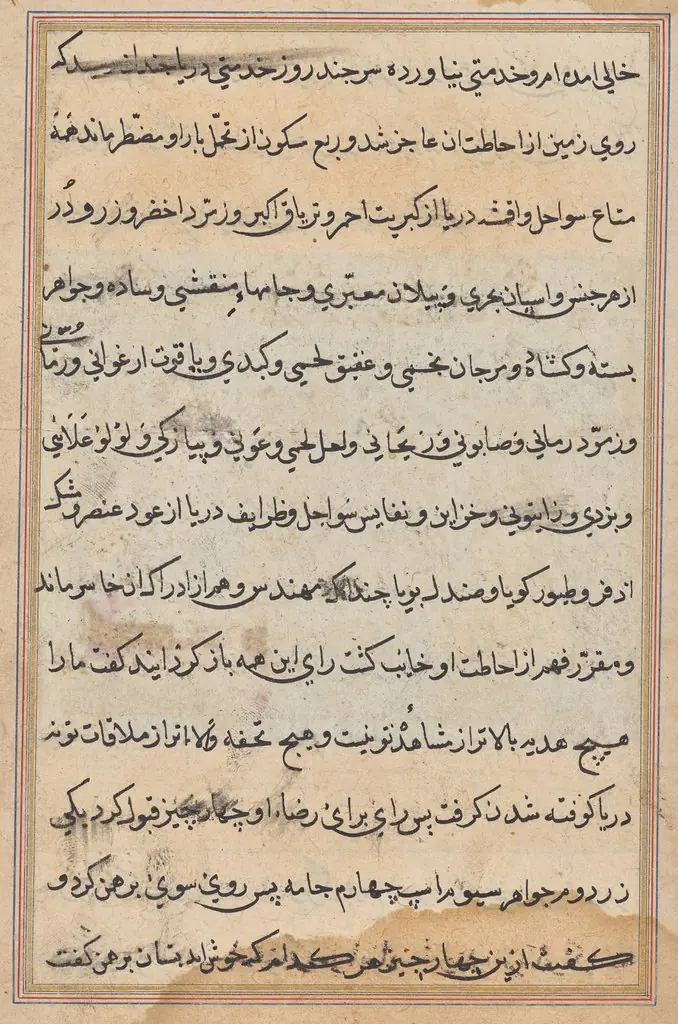
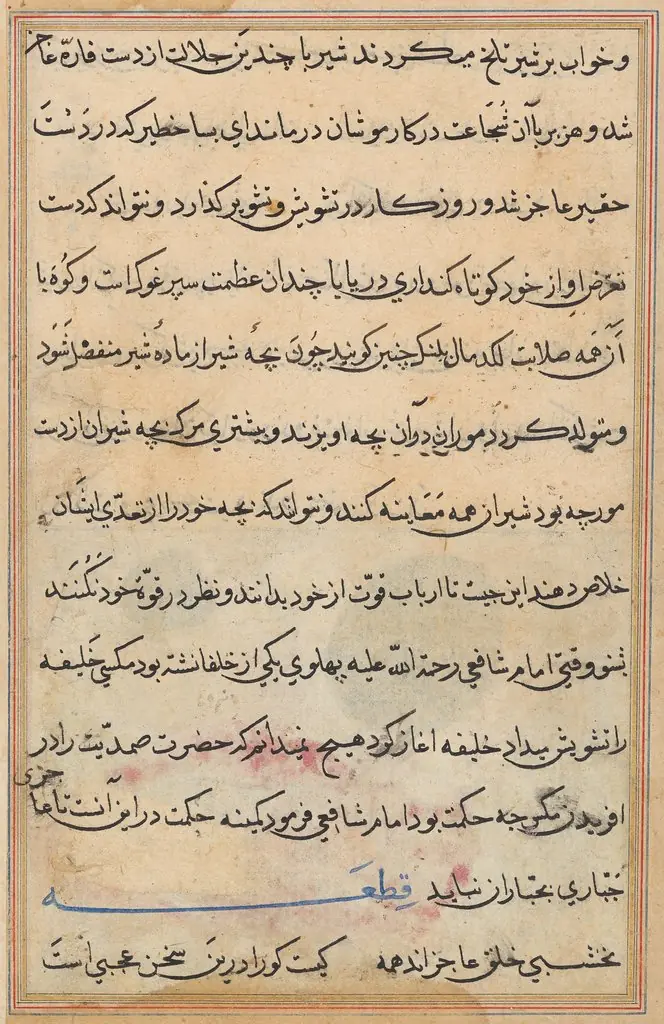
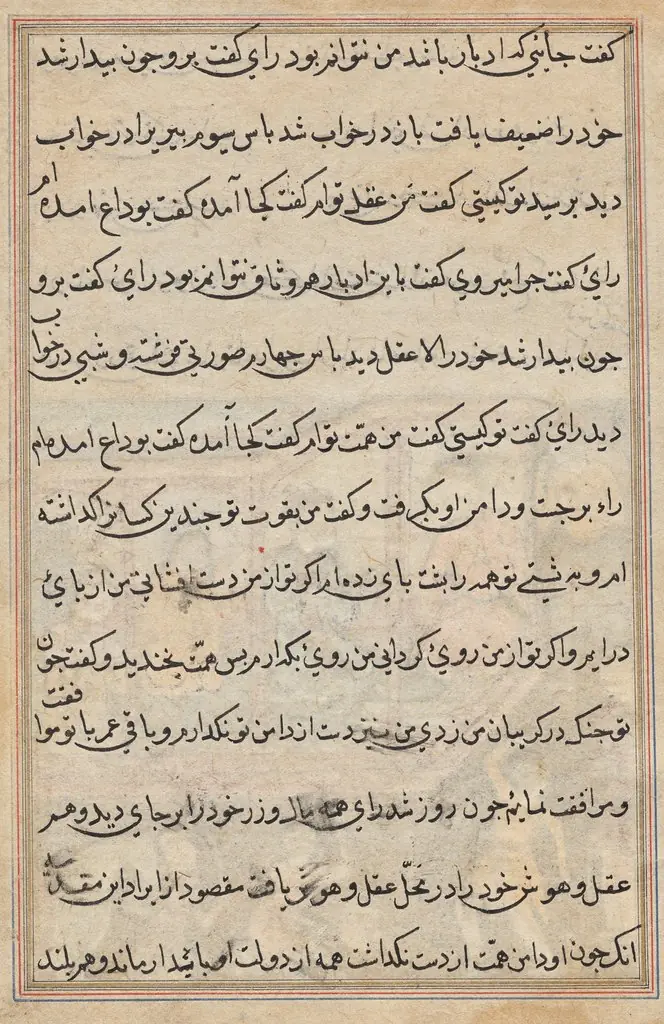
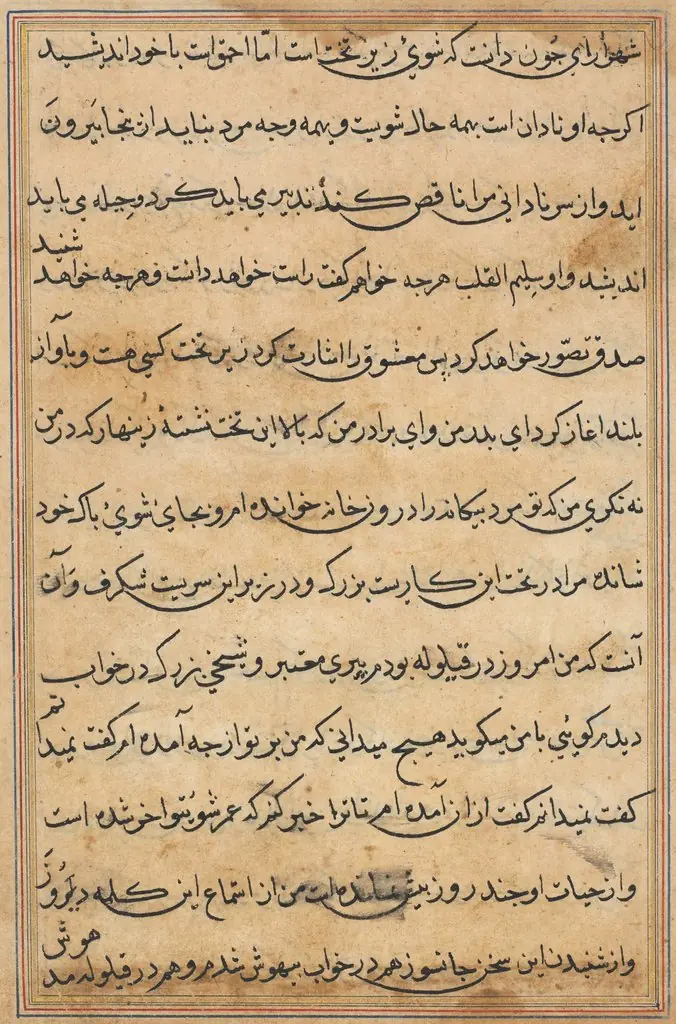
This illuminated page originates from the manuscript *Tales of a Parrot*, a narrative work created for Prince Salim. Executed on light‑beige paper, the surface is densely covered with black ink forming an elegant, cursive script. Small decorative dots and occasional faint red accents punctuate the text, while a thin dark border frames the page.
Subject & Meaning
The manuscript presents a collection of stories centered on a parrot, a motif often employed in Persian literature to convey moral lessons and courtly entertainment. By addressing a princely audience, the text likely served both as a literary pastime and as a vehicle for reinforcing cultural values and royal ideals.
Technique & Style
The calligraphy displays a highly refined hand, with each letter meticulously shaped to flow into the next, creating a continuous visual rhythm. The use of black ink for the main script, interspersed with tiny decorative dots and subtle red highlights, adds visual interest without overwhelming the text. A narrow dark margin defines the page’s limits.
History & Provenance
Commissioned for Prince Salim, the manuscript remained within the royal collection before eventually entering the holdings of the Cleveland Museum of Art. The museum acquired the page through a 20th‑century acquisition, where it now forms part of the museum’s Persian manuscript collection and is available for public viewing.
Context
Produced in the Persianate world, the *Tales of a Parrot* reflects the tradition of illustrated literary codices that combined poetic storytelling with sophisticated calligraphic art. Such works were typically created for elite patrons, illustrating the close relationship between literary culture and courtly patronage during the period.
Artist & collection

 Page from Tales of a Parrot (Tuti-nama): text page
 Page from Tales of a Parrot (Tuti-nama): text page
 Page from Tales of a Parrot (Tuti-nama): text page
 Page from Tales of a Parrot (Tuti-nama): text page
 Page from Tales of a Parrot (Tuti-nama): text page
 Page from Tales of a Parrot (Tuti-nama): text page
 Page from Tales of a Parrot (Tuti-nama): text page
 Page from Tales of a Parrot (Tuti-nama): text page
 Page from Tales of a Parrot (Tuti-nama): text page
 Page from Tales of a Parrot (Tuti-nama): text page
 Page from Tales of a Parrot (Tuti-nama): text page
 Page from Tales of a Parrot (Tuti-nama): text page