Artwork
Page from Tales of a Parrot (Tuti-nama): text page
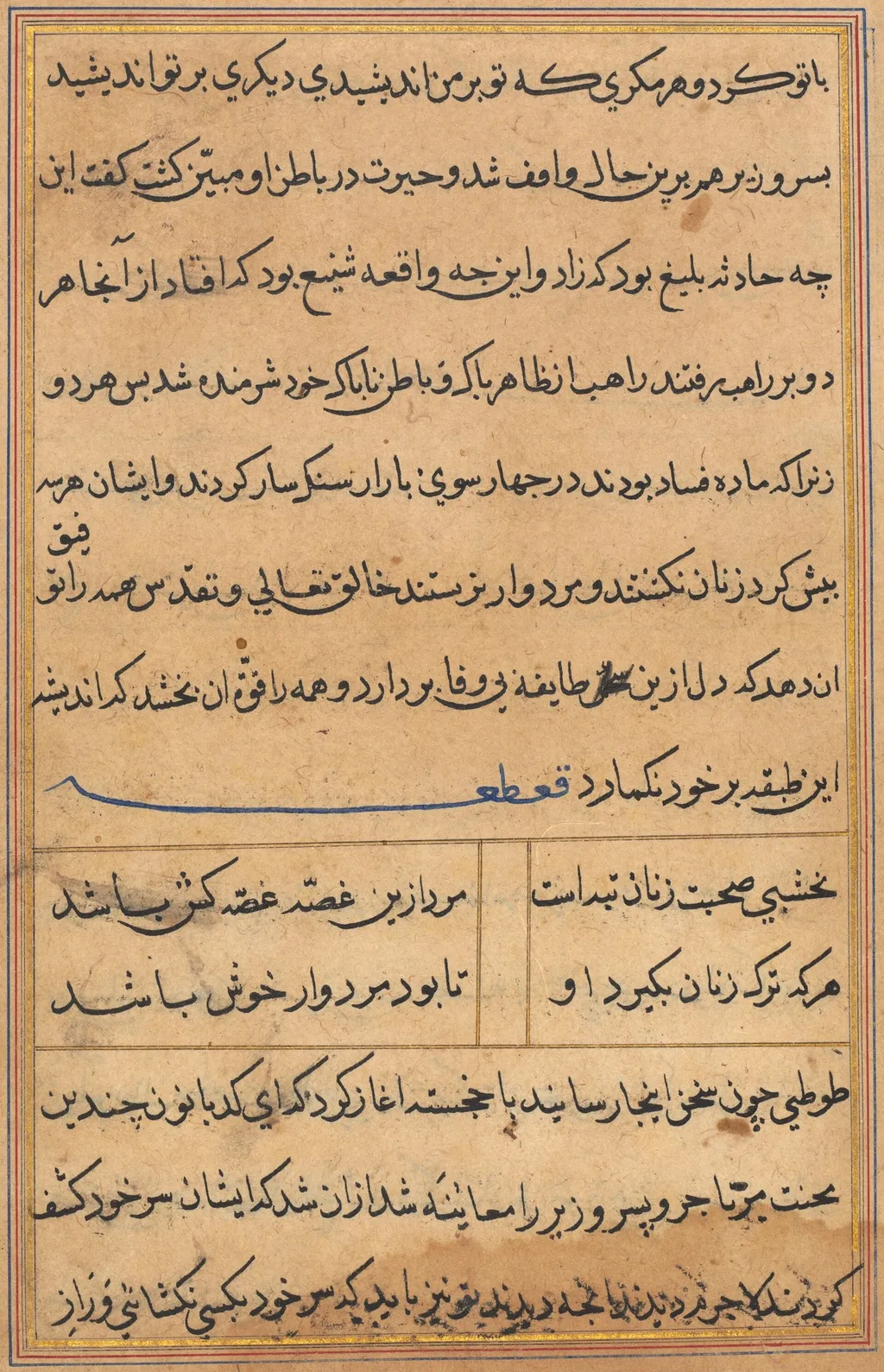
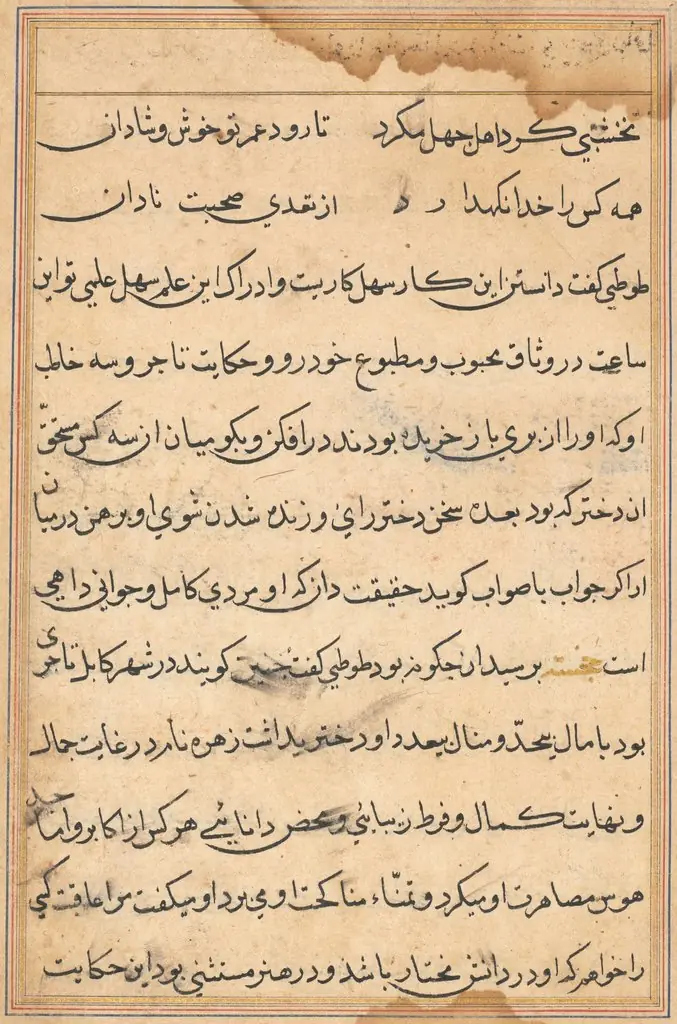
Page from Tales of a Parrot (Tuti-nama): text page is an unspecified painting. It dates from 1560 and is held in the collection of the Cleveland Museum of Art. This object is a single leaf from the Persian illustrated manuscript known as *Tuti‑nama* or *Tales of a Parrot*.
About this work
Overview
This object is a single leaf from the Persian illustrated manuscript known as *Tuti‑nama* or *Tales of a Parrot*.
This object is a single leaf from the Persian illustrated manuscript known as *Tuti‑nama* or *Tales of a Parrot*. The page consists of a sheet of aged paper, yellowed with time and marked by faint brown specks, upon which dense black calligraphic text is set within a narrow gold‑lined frame. Small blue accents appear sporadically, and a brief passage at the bottom is rendered in a contrasting hue.
Subject & Meaning
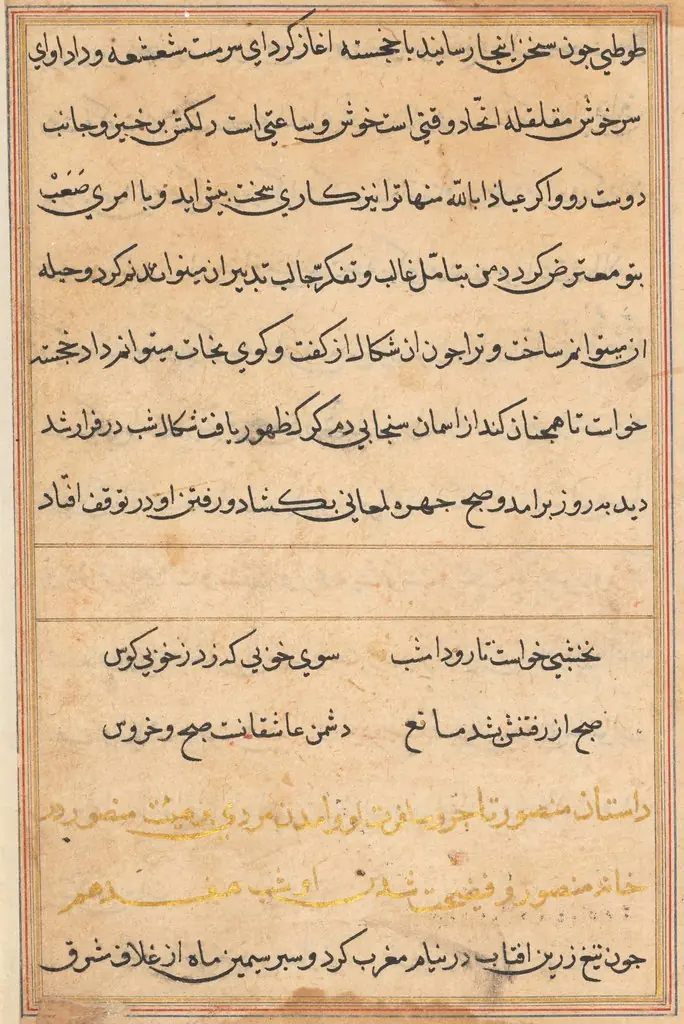
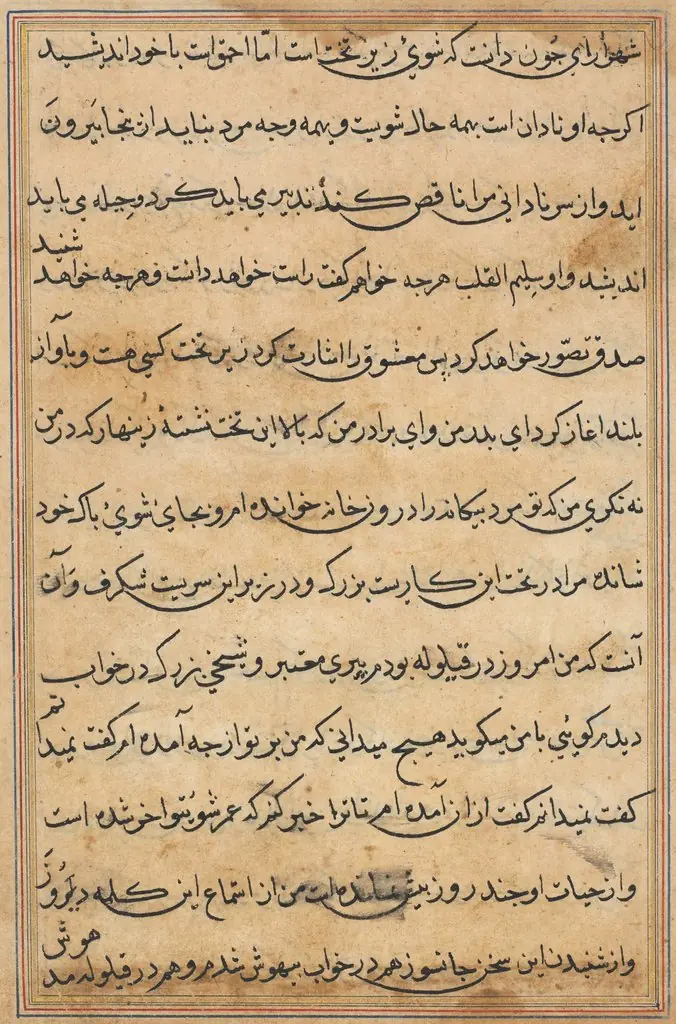
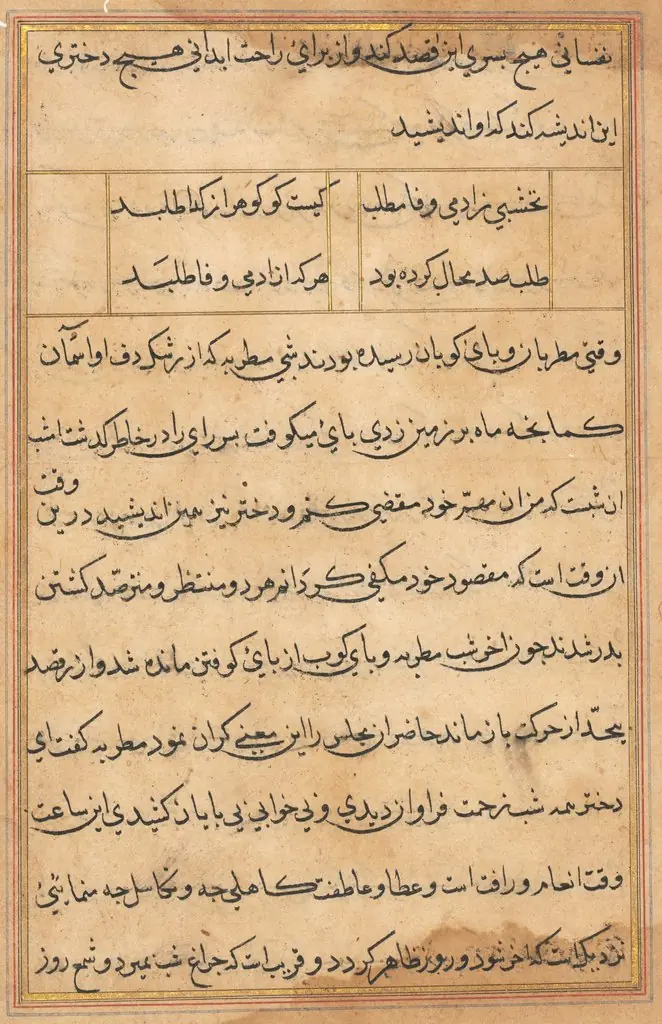
The written portion contains a narrative drawn from the *Tuti‑nama*, a collection of moral and didactic stories traditionally conveyed through the voice of a parrot. The text’s purpose was instructional, offering ethical guidance through allegorical tales that were popular in Persian literary culture.
Technique & Style
The calligraphy is executed in an elegant yet uneven hand, suggesting a skilled scribe working with speed. The script follows a flowing, cursive style typical of Persian manuscript tradition, while the thin gold border frames the text, adding a decorative element. The occasional blue markings likely indicate rubrication, a common practice for emphasizing headings or important lines.
History & Provenance
The leaf originates from a larger codex produced in the Persianate world, probably between the 16th and 18th centuries, when *Tuti‑nama* manuscripts were widely copied. The page now belongs to the collection of the Cleveland Museum of Art, which holds several comparable leaves, indicating it was acquired as part of a larger group of manuscript fragments.
Context
Manuscript production in the Islamic world combined literary, artistic, and devotional functions. *Tuti‑nama* texts were often illustrated, though this particular leaf focuses on the written component, reflecting the emphasis on textual transmission of moral stories within elite courtly and scholarly circles.
Artist & collection

 Page from Tales of a Parrot (Tuti-nama): text page
 Page from Tales of a Parrot (Tuti-nama): text page
 Page from Tales of a Parrot (Tuti-nama): text page
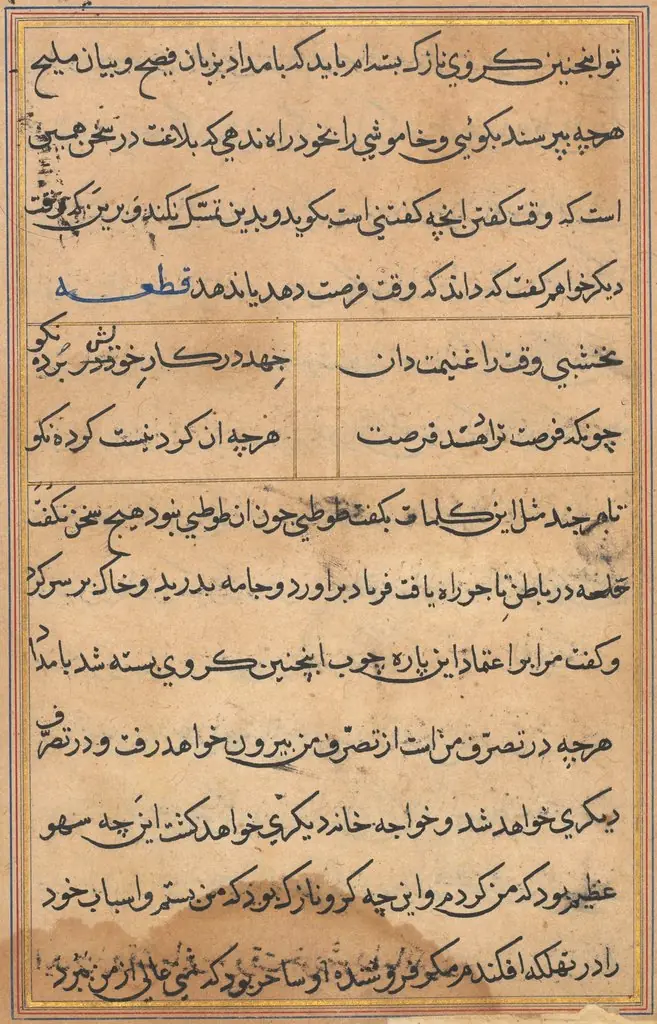 Page from Tales of a Parrot (Tuti-nama): text page
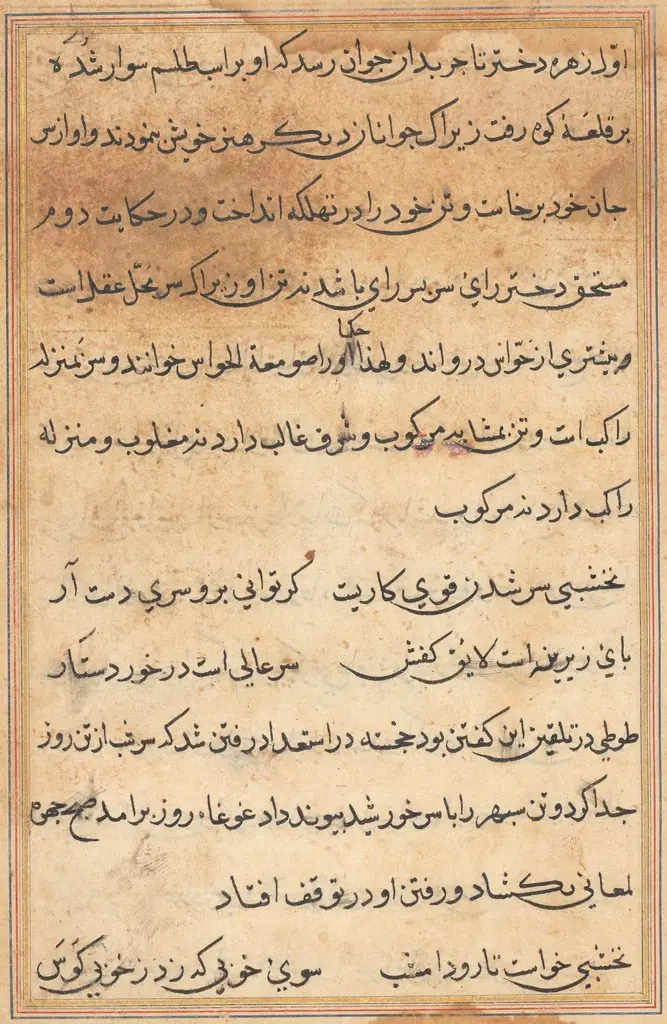 Page from Tales of a Parrot (Tuti-nama): text page
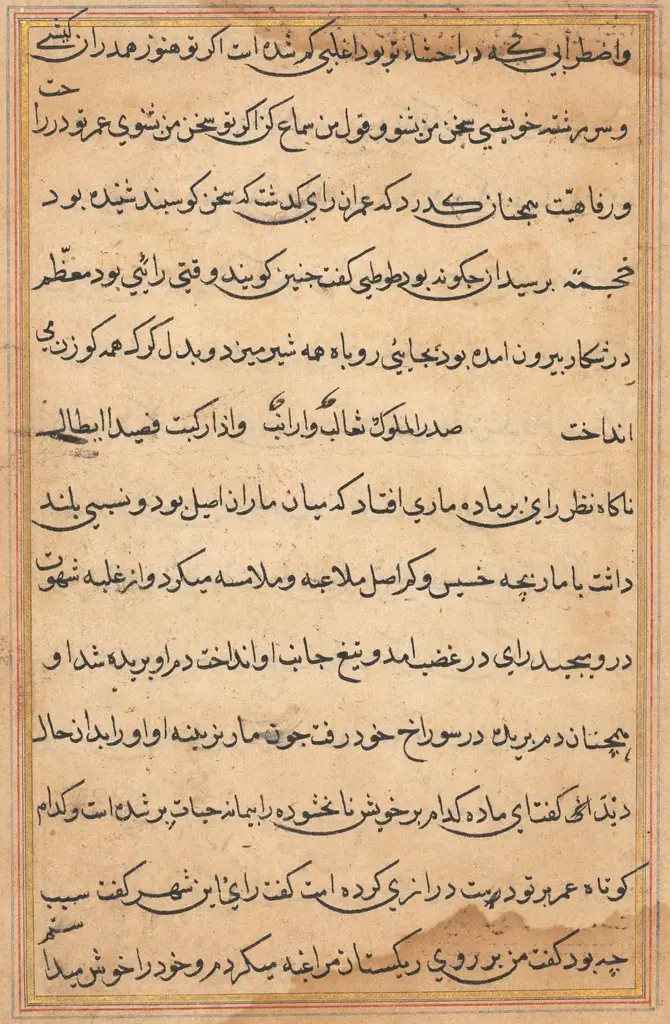 Page from Tales of a Parrot (Tuti-nama): text page
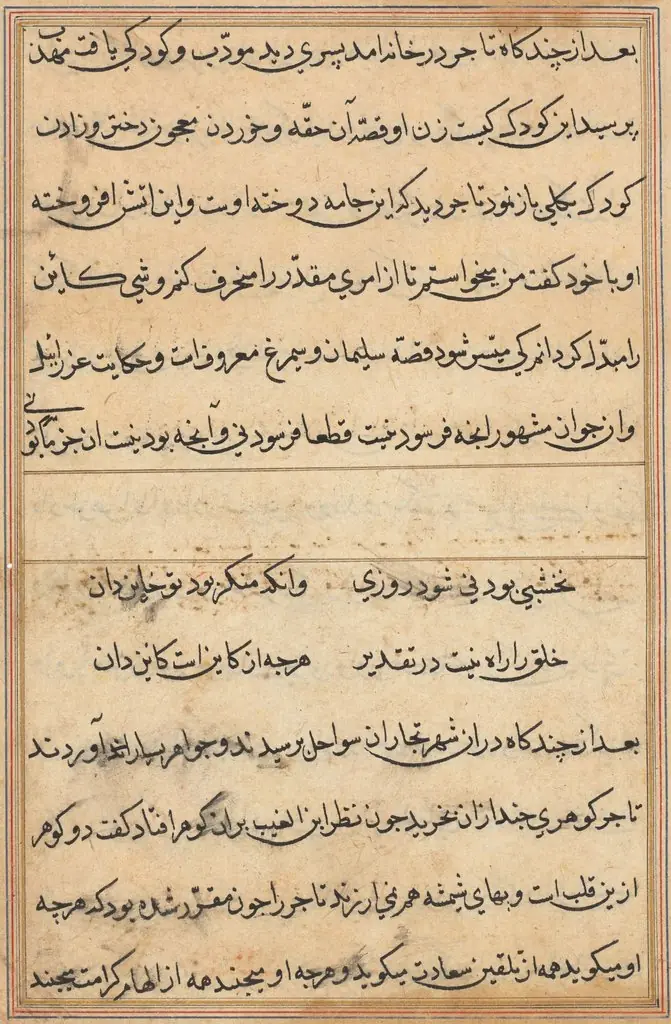 Page from Tales of a Parrot (Tuti-nama): text page
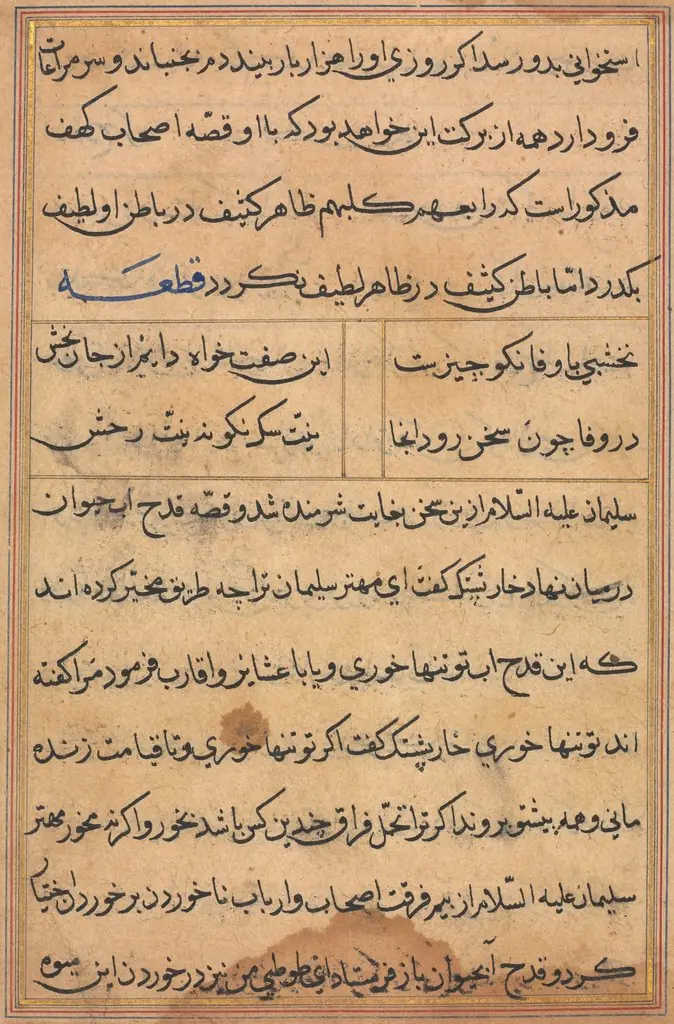 Page from Tales of a Parrot (Tuti-nama): text page
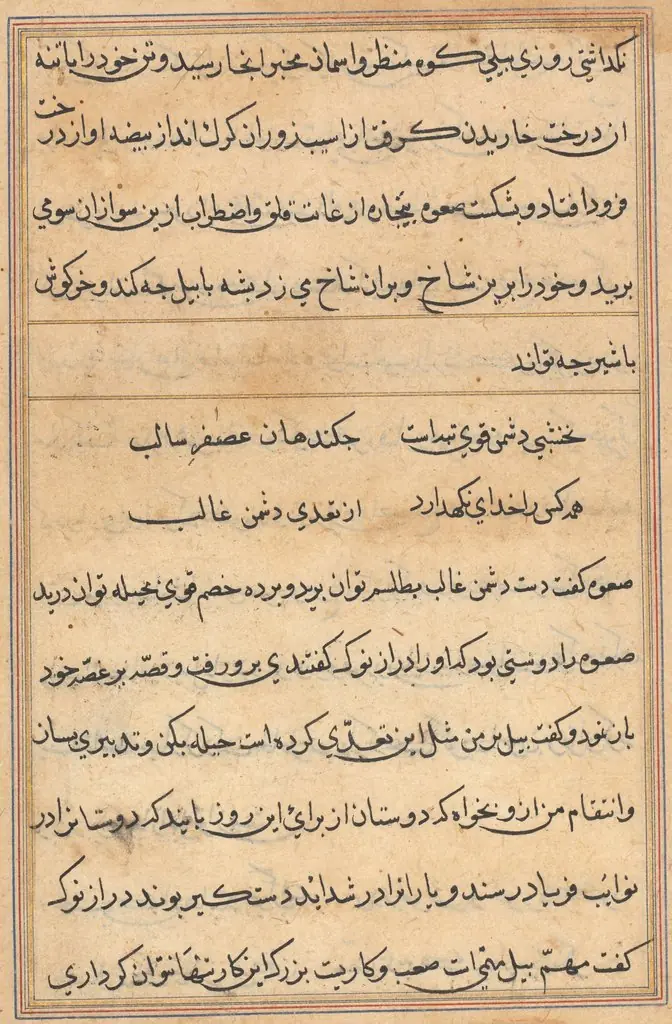 Page from Tales of a Parrot (Tuti-nama): text page
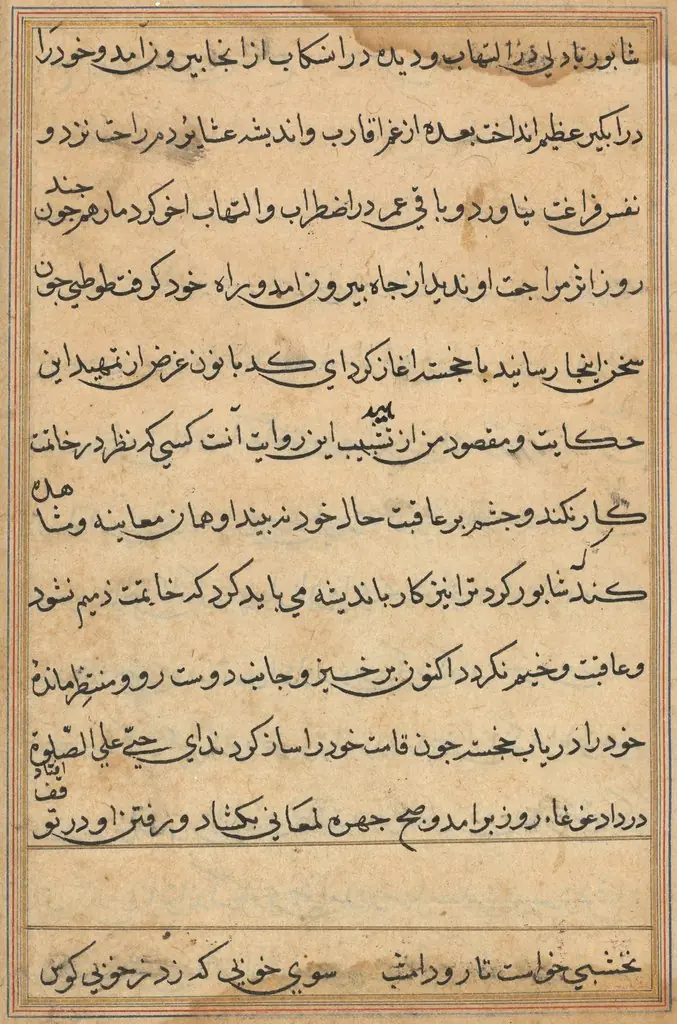 Page from Tales of a Parrot (Tuti-nama): text page
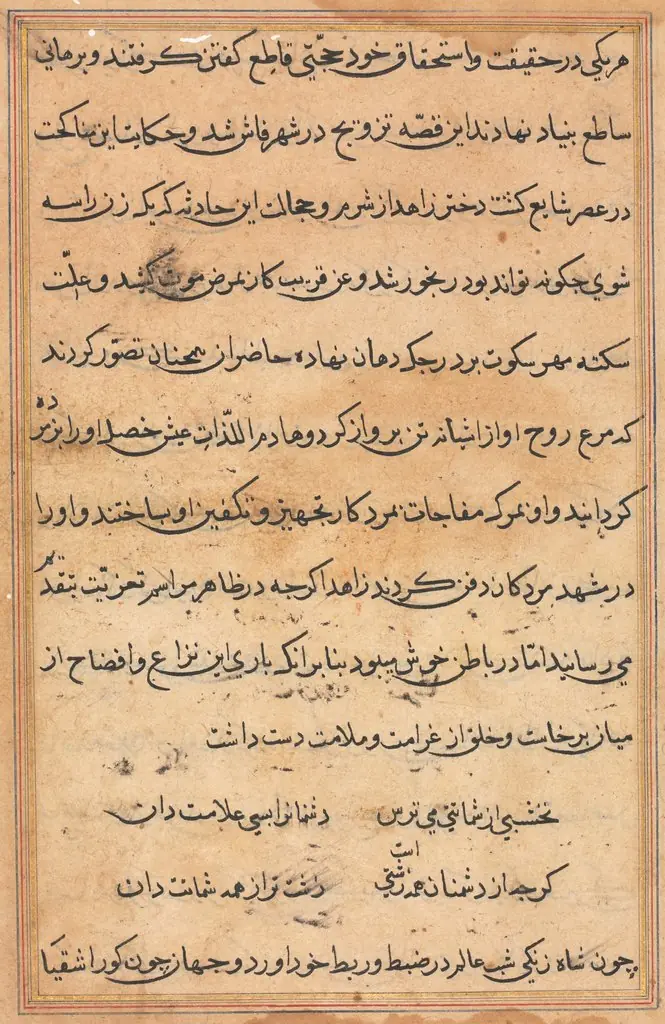 Page from Tales of a Parrot (Tuti-nama): text page
 Page from Tales of a Parrot (Tuti-nama): text page