Artwork
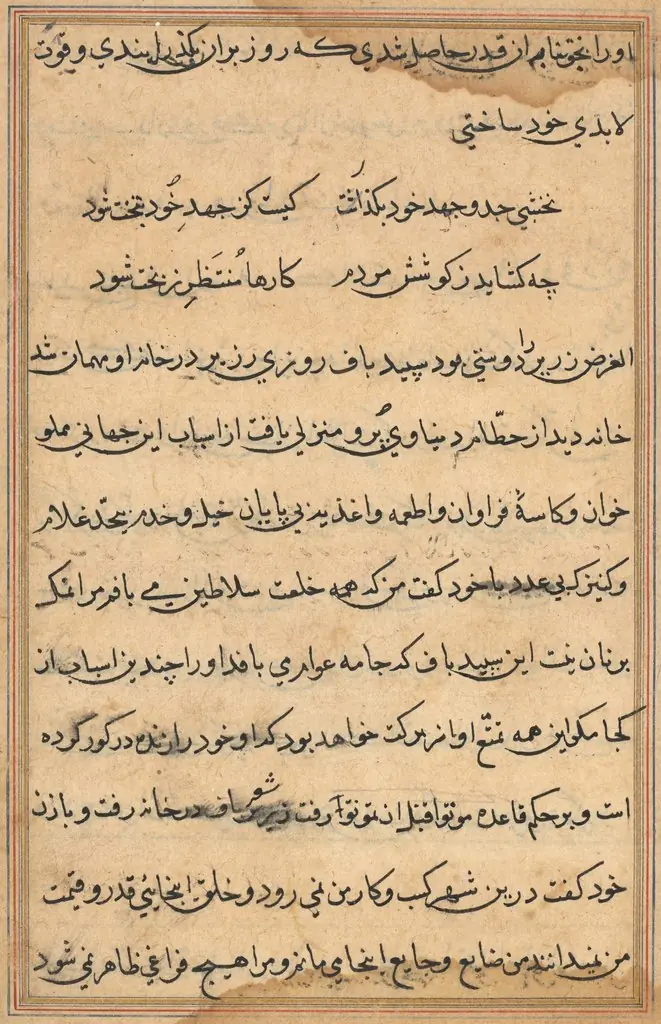
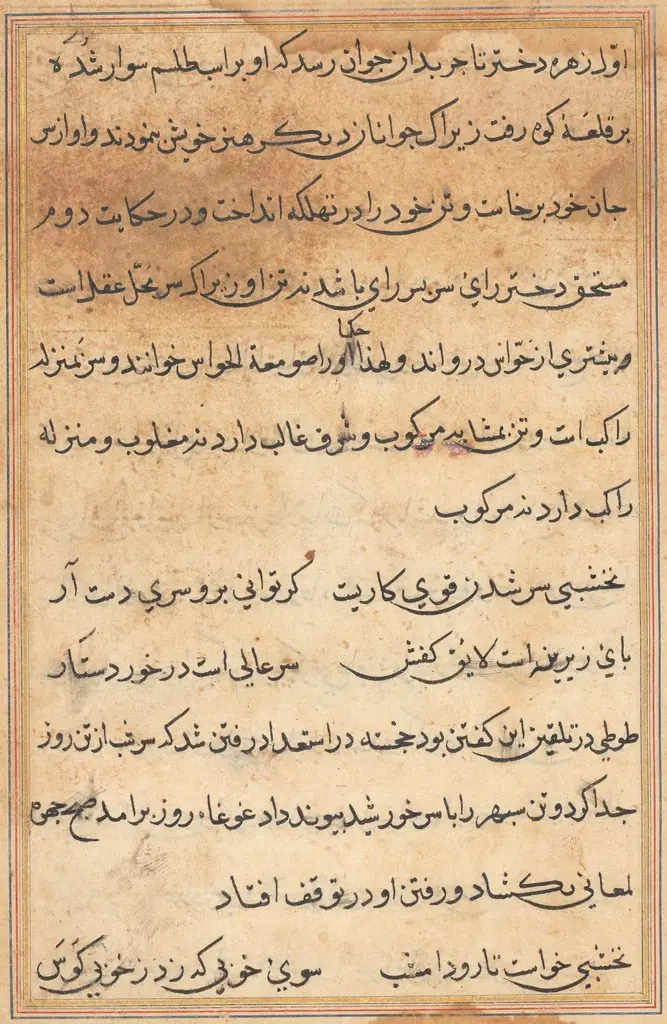
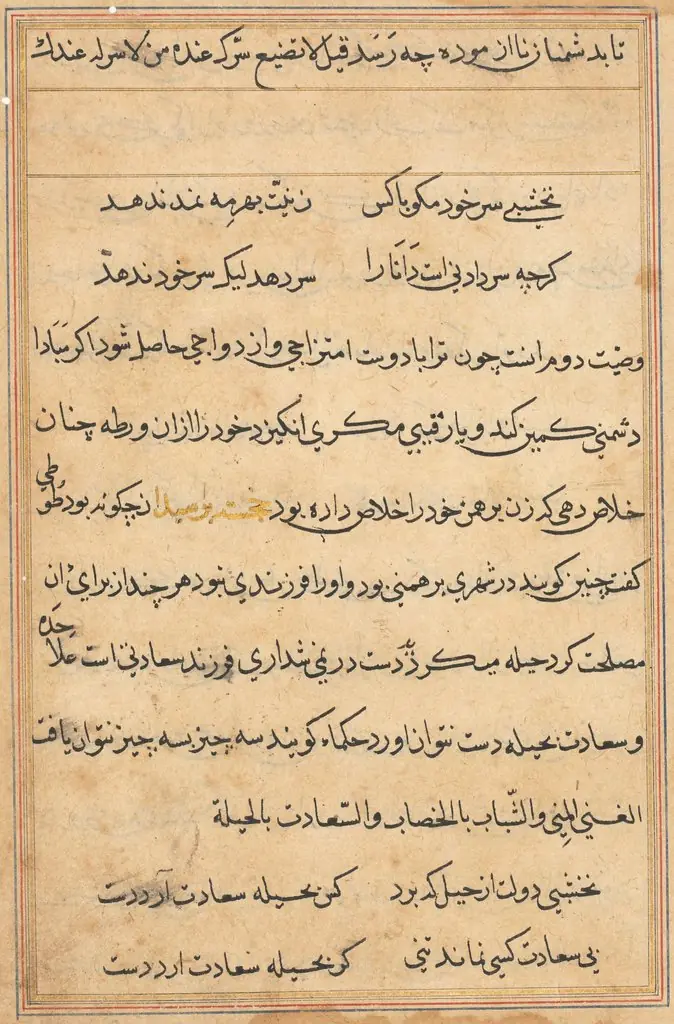
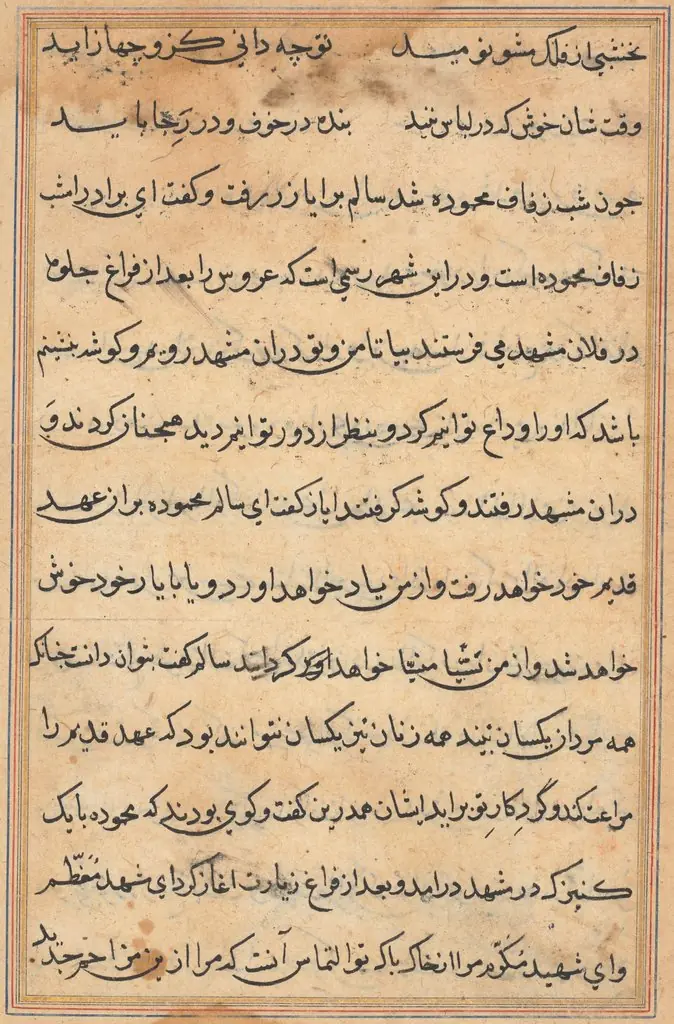
Page from Tales of a Parrot (Tuti-nama): text page
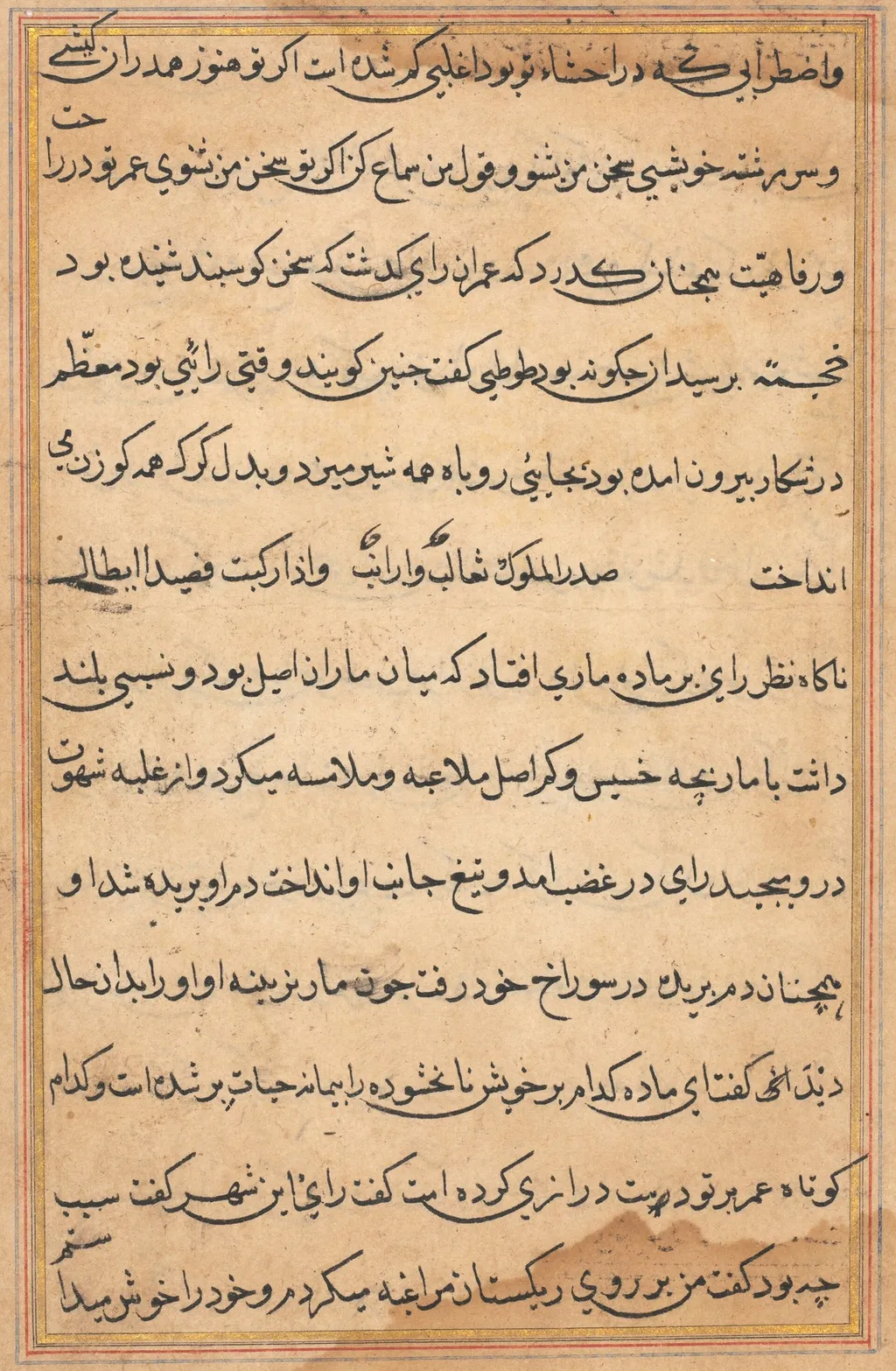
Page from Tales of a Parrot (Tuti-nama): text page is an unspecified painting. It dates from 1560 and is held in the collection of the Cleveland Museum of Art. This object is a single folio from the illustrated Persian manuscript known as the Tales of a Parrot, or Tuti‑nama.
About this work
Overview
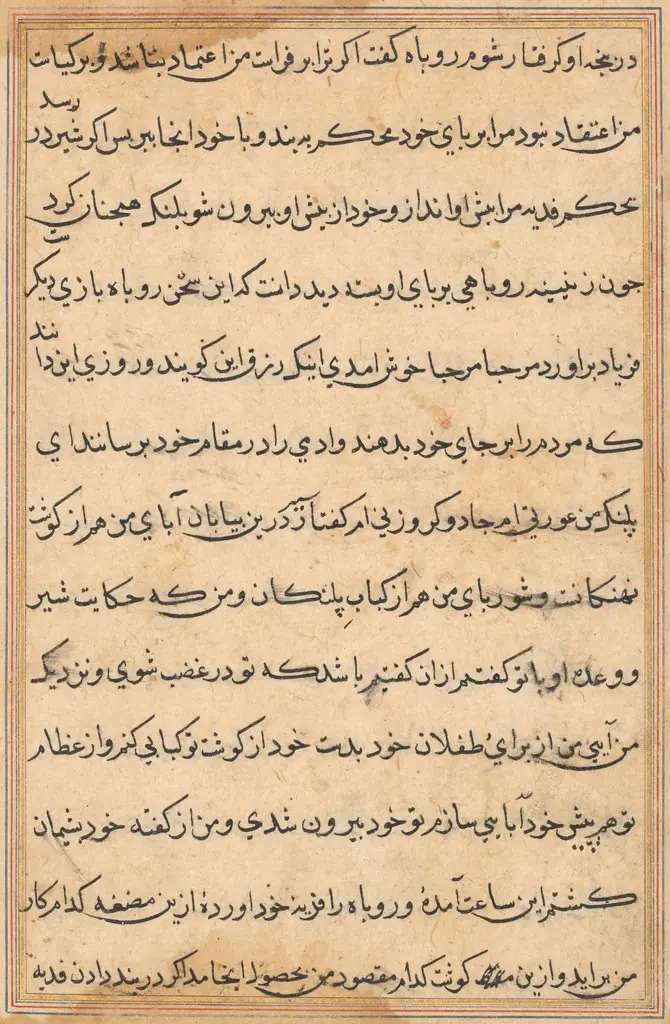
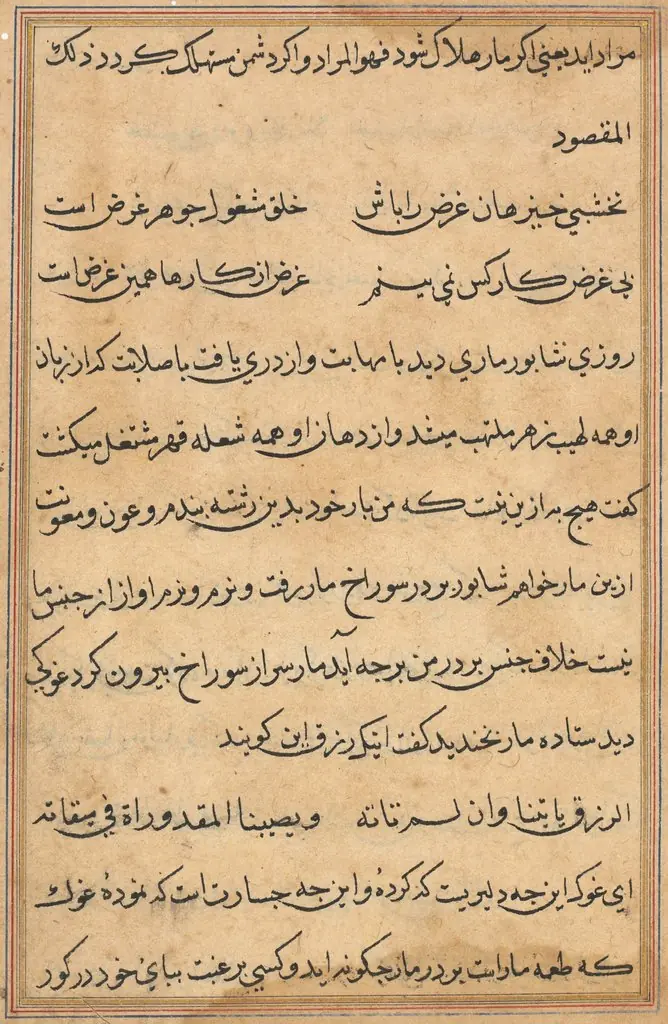
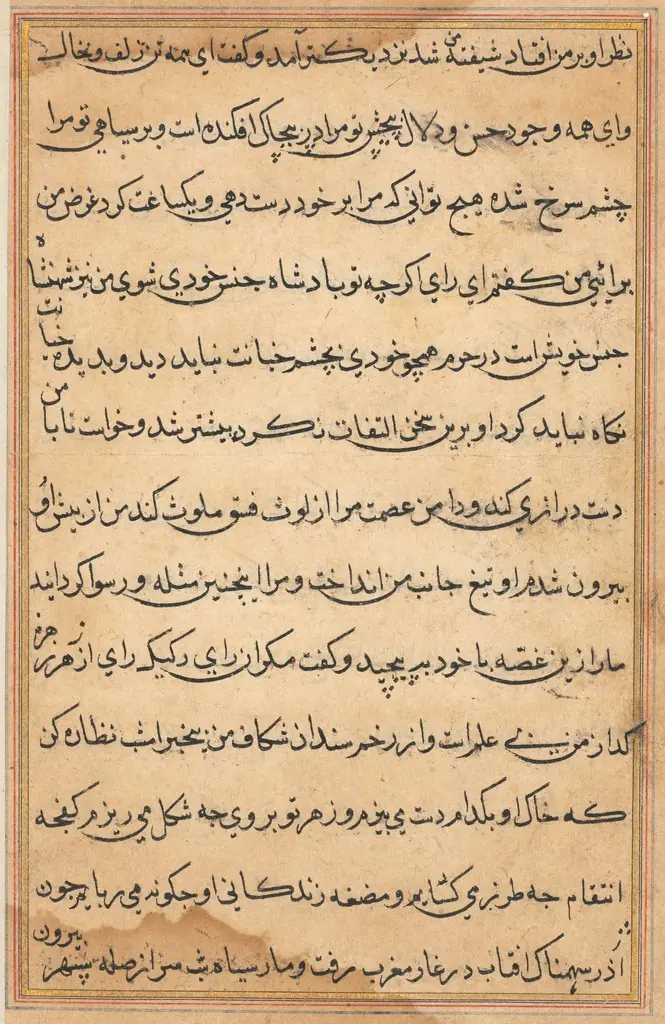
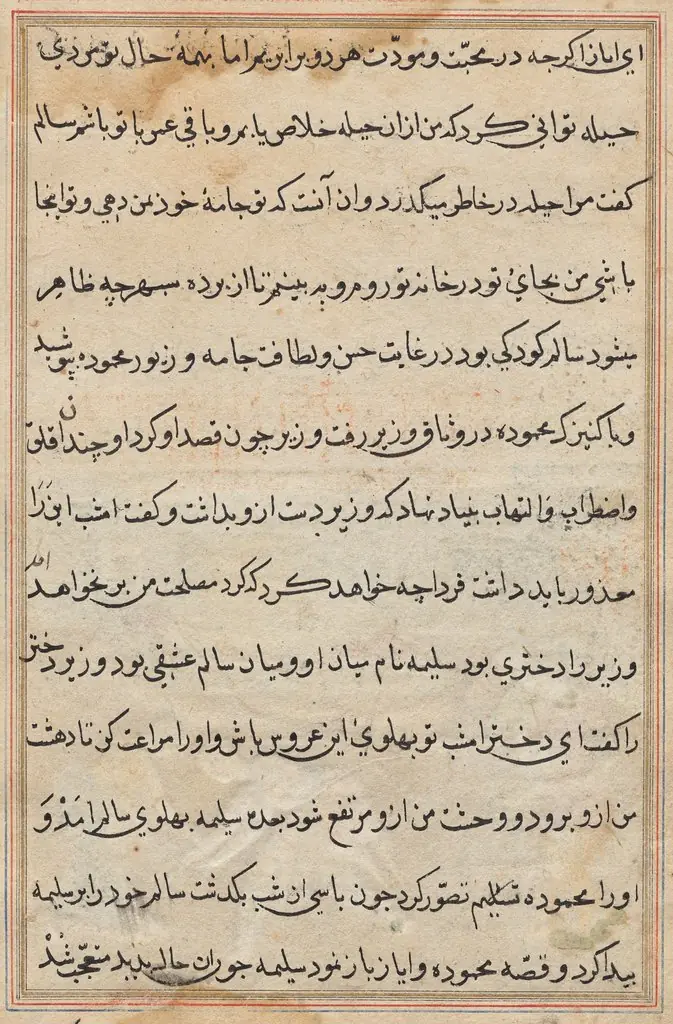
This object is a single folio from the illustrated Persian manuscript known as the Tales of a Parrot, or Tuti‑nama. The page consists of dense black calligraphy set on a beige paper that shows signs of aging, such as fine creases and small brown spots. A thin red line runs along the margin, framing the text. The work is held in the collection of the Cleveland Museum of Art.
Subject & Meaning
The script contains a narrative written in Persian, following the tradition of courtly storytelling where a parrot recounts moral and romantic tales. The continuous flow of letters, without spaces, reflects the conventional script style of the period, emphasizing the lyrical quality of the language and inviting the reader to engage with the story as a seamless whole.
Technique & Style
The calligrapher employed a flowing black ink, varying in intensity; some strokes appear bolder while others fade, creating subtle visual rhythm. The ink was applied with a fine reed pen on handmade paper, and a narrow red pigment—likely derived from cinnabar or vermilion—was used to outline the page’s edge, adding a decorative yet functional border.
History & Provenance
The Tuti‑nama manuscript was produced in the Persianate world during the early modern era, a period when illustrated literary codices were commissioned for elite patrons. The specific folio entered the Cleveland Museum of Art through a 20th‑century acquisition, though the exact details of its previous ownership remain undocumented in publicly available records.
Artist & collection

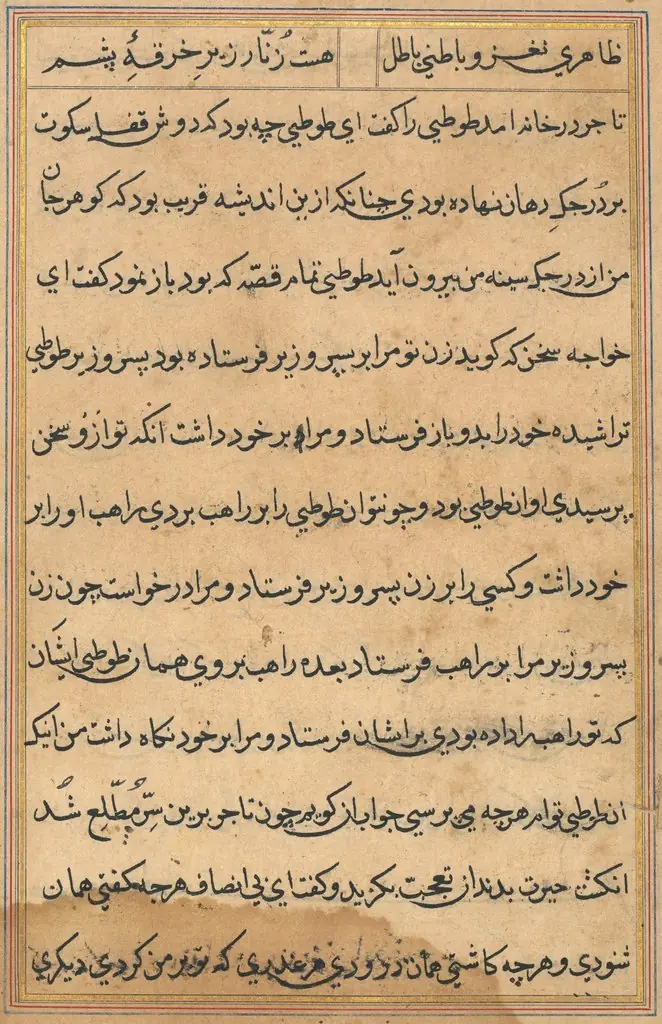 Page from Tales of a Parrot (Tuti-nama): text page
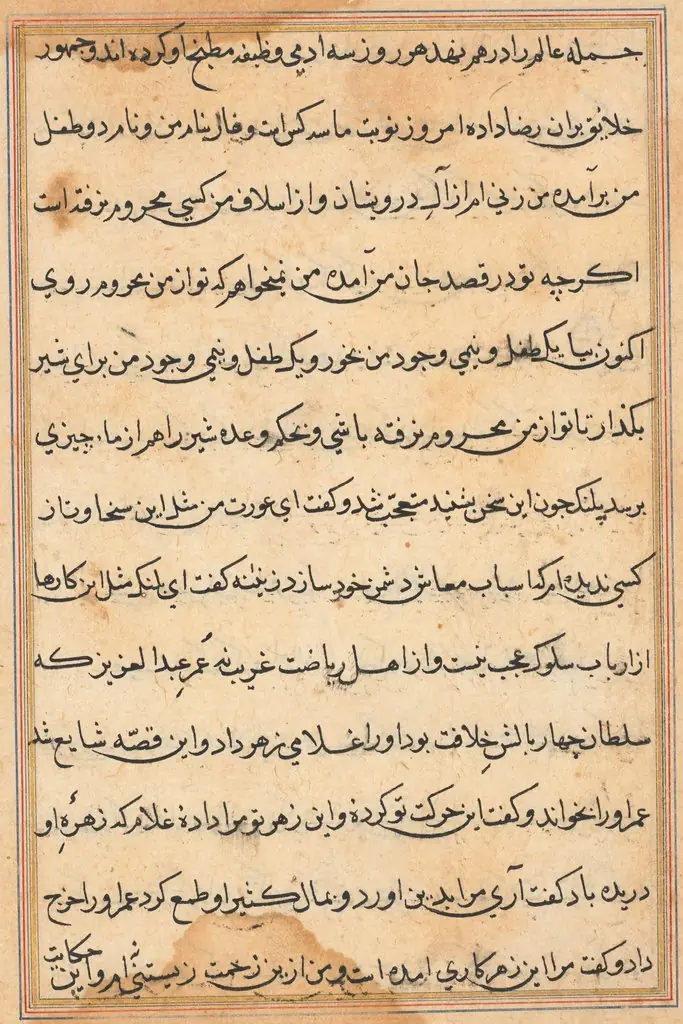 Page from Tales of a Parrot (Tuti-nama): text page
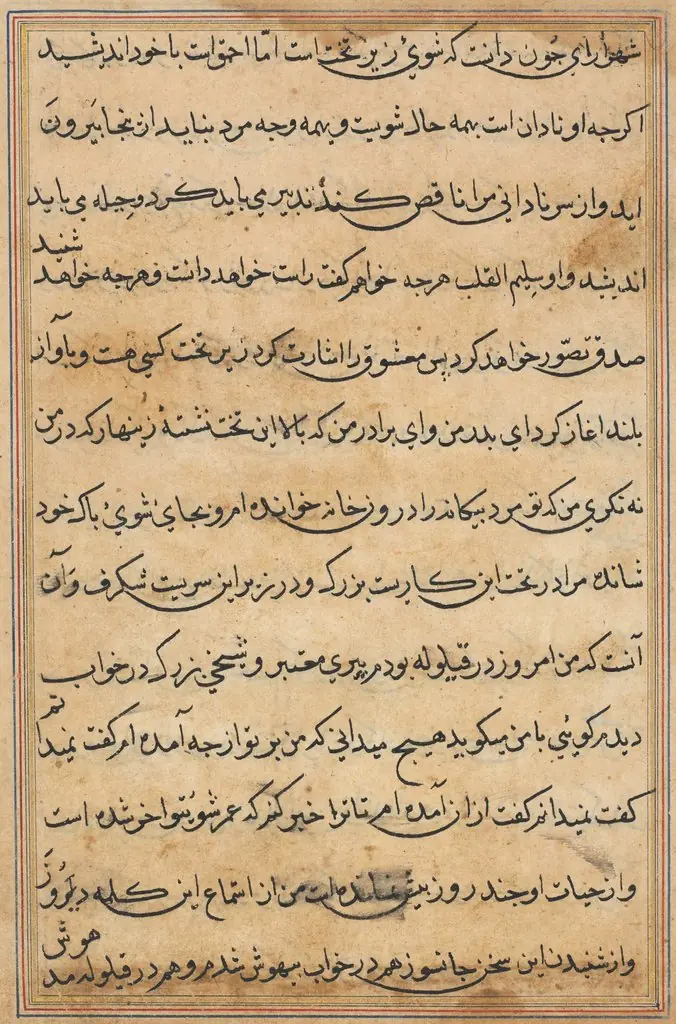 Page from Tales of a Parrot (Tuti-nama): text page
 Page from Tales of a Parrot (Tuti-nama): text page
 Page from Tales of a Parrot (Tuti-nama): text page
 Page from Tales of a Parrot (Tuti-nama): text page
 Page from Tales of a Parrot (Tuti-nama): text page