Artwork
Window of a previous church from Sant Climent de Taüll
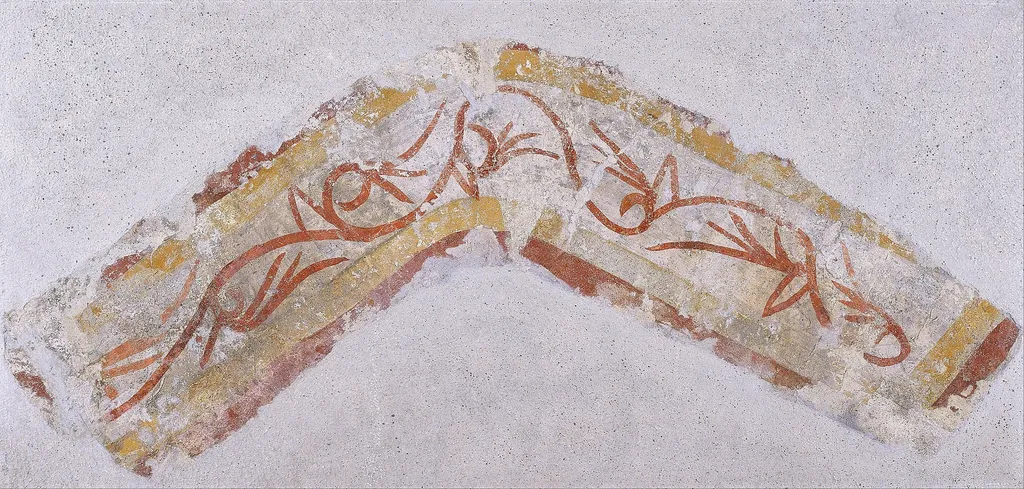
Window of a previous church from Sant Climent de Taüll is an unspecified painting by Unknown. It is held in the collection of the Museu Nacional d'Art de Catalunya. This painted panel originates from the apse of Sant Climent de Taüll, a Romanesque church in the Pyrenees.
About this work
Overview
This painted panel originates from the apse of Sant Climent de Taüll, a Romanesque church in the Pyrenees. It was once part of a larger decorative scheme that adorned the sanctuary wall. The work was detached in the early 20th century and transferred to canvas for preservation, now held in the Museu Nacional d'Art de Catalunya.
Subject & Meaning
The panel depicts a stylized window frame, likely symbolizing the heavenly realm or divine presence within the sacred space. Its geometric precision and lack of naturalistic depth reflect theological priorities over illusionism, emphasizing the church as a threshold between earthly and eternal realms.
Technique & Style
Executed in tempera on wood, the painting employs flat planes of color, bold outlines, and minimal shading. The composition is highly schematic, with architectural elements rendered in simplified forms. This approach aligns with the broader Romanesque tradition, where symbolic clarity outweighed naturalistic representation.
History & Provenance
Created in the early 12th century, the panel was part of the original church decoration until its removal in 1919. It was carefully detached by conservators and transferred to canvas to prevent deterioration. The work was then integrated into the national collection, where it remains as a key example of Catalan Romanesque mural painting.
Context
Sant Climent de Taüll was one of many rural churches in the Pyrenees adorned with comprehensive fresco cycles during the Romanesque period. These interiors served as visual catechisms for largely illiterate congregations. The window motif, though seemingly architectural, functioned as a spiritual emblem within a larger narrative program centered on Christ in Majesty.
Legacy
The panel contributes to the understanding of how religious symbolism was encoded in architectural forms during the Romanesque era. Its preservation allows study of regional artistic practices and the transition from wall painting to portable panels. It remains a reference point for scholars examining the intersection of liturgy, space, and image in medieval Catalonia.
Artist & collection

 Domestic Scene
 Giacomo and Cardinal Marco, investing Andrea, Abbot of San Zeno, with his Benefice
 The Nymph of Fontainebleau
 Portrait of a Woman
 Madonna and Child with Saints in the Enclosed Garden
 Venus and Minerva
 Family Group of Four on Sofa
 Wall painting from Room H of the Villa of P. Fannius Synistor at Boscoreale
 Remains of a quadruped from Boí
 Profane paintings from Sigena: Courtly and battle scenes
 Profane paintings from Sigena: Knights leaving a castle for battle
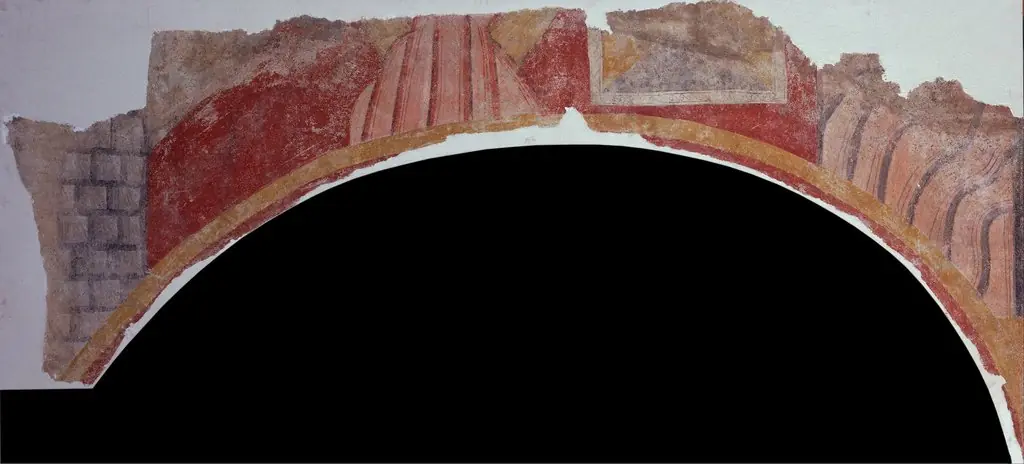 Extrados of an arch from Boí
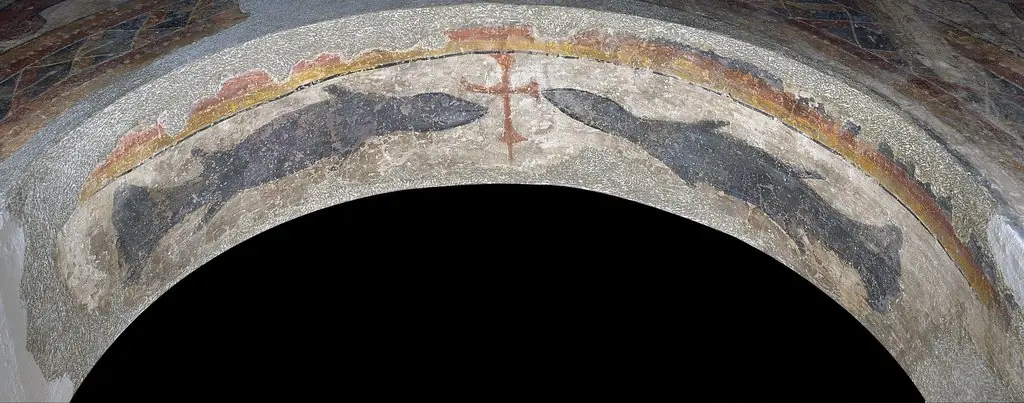 Fish flanking a cross from Santa Maria de Taüll
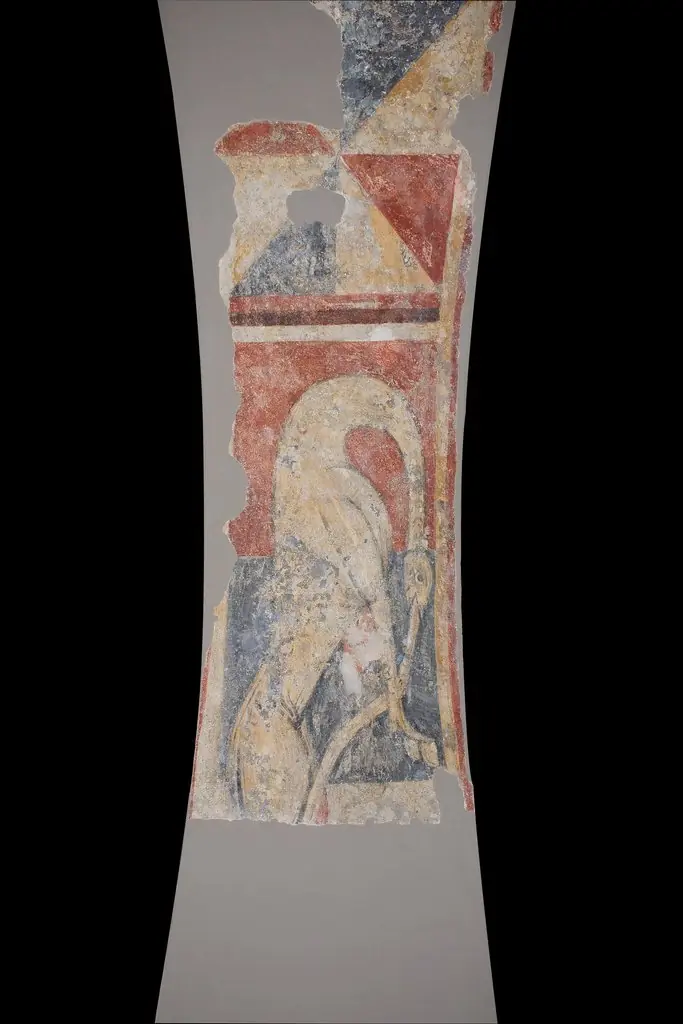 Quadruped biting its tail from Boí
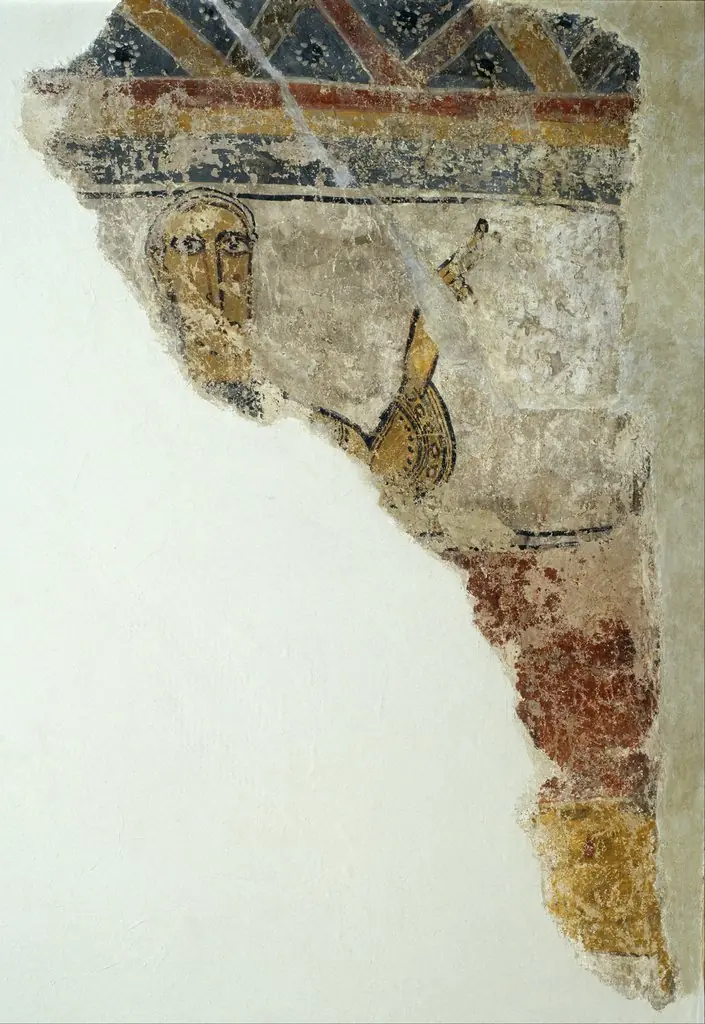 Remains of a figure from Santa Maria de Taüll
 Animals face to face and zig-zag pattern from Boí
 Peacocks drinking from a chalice from Santa Maria de Taüll