Artwork
Portrait of Anna Magdalena Tworowska née Radziwiłł (1553–1590)
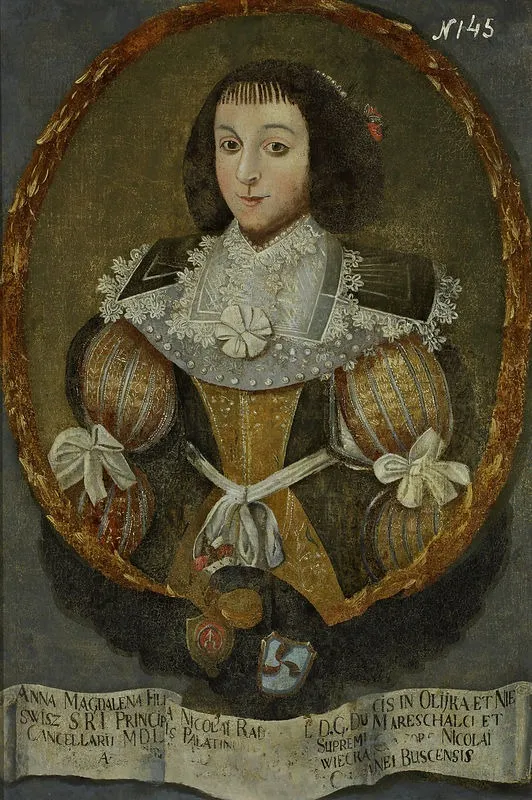
Portrait of Anna Magdalena Tworowska née Radziwiłł (1553–1590) is an oil painting by the Rococo painting artist Unknown. It dates from 1735 and is held in the collection of the National Museum in Warsaw. This portrait depicts Anna Magdalena Tworowska née Radziwiłł, a 16th-century Polish noblewoman, in formal attire within a dark oval frame.
About this work
Overview
The subject's clothing, including a black doublet with puffy sleeves, white lace collar, and gold belt, is characteristic of 16th-century nobility.
This portrait depicts Anna Magdalena Tworowska née Radziwiłł, a 16th-century Polish noblewoman, in formal attire within a dark oval frame. The subject's clothing, including a black doublet with puffy sleeves, white lace collar, and gold belt, is characteristic of 16th-century nobility. A bouquet of white flowers adorns her shoulders, and her hair is styled neatly. She holds an unidentified small object in her right hand.
Subject & Meaning
The portrait honors Anna Magdalena Tworowska née Radziwiłł (1553–1590), highlighting her status through opulent clothing and accessories. The white flowers may symbolize purity or nobility, while the small, unidentifiable object in her hand could represent a personal or symbolic attribute, though its specific meaning is unclear.
Technique & Style
The painting employs chiaroscuro, a technique using strong contrasts between light and dark to create depth and volume. This, combined with the dark oval frame, emphasizes the subject's form. Despite the 16th-century attire, the artwork's style and execution suggest it was created later, potentially as a historical homage or commemoration.
History & Provenance
The painting's age exceeds the timeframe suggested by the subject's clothing, indicating it was executed posthumously. The Latin inscription at the bottom identifies the subject as a Polish noblewoman, though the exact date of creation and the artist's identity are not specified here.
Context
The use of chiaroscuro in this portrait reflects broader artistic trends that emphasized dramatic lighting. The decision to depict a historical figure in their contemporary attire, despite the later creation date, may have been to maintain historical authenticity in representation.
Artist & collection

 Domestic Scene
 Giacomo and Cardinal Marco, investing Andrea, Abbot of San Zeno, with his Benefice
 The Nymph of Fontainebleau
 Portrait of a Woman
 Madonna and Child with Saints in the Enclosed Garden
 Venus and Minerva
 Family Group of Four on Sofa
 Wall painting from Room H of the Villa of P. Fannius Synistor at Boscoreale
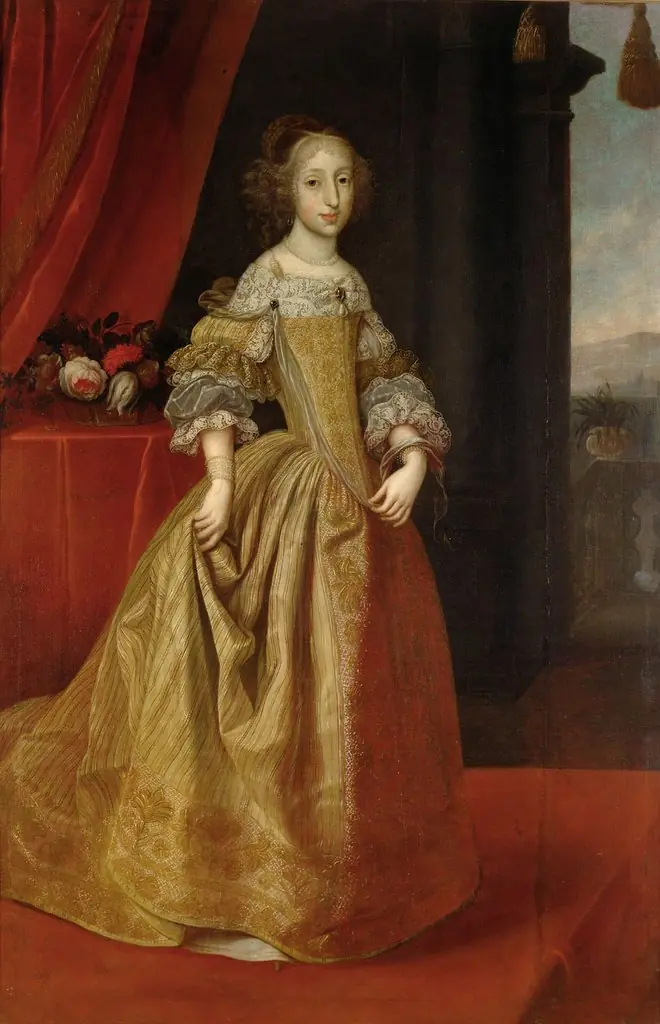 Portrait of Eleanor Maria Josepha of Austria.
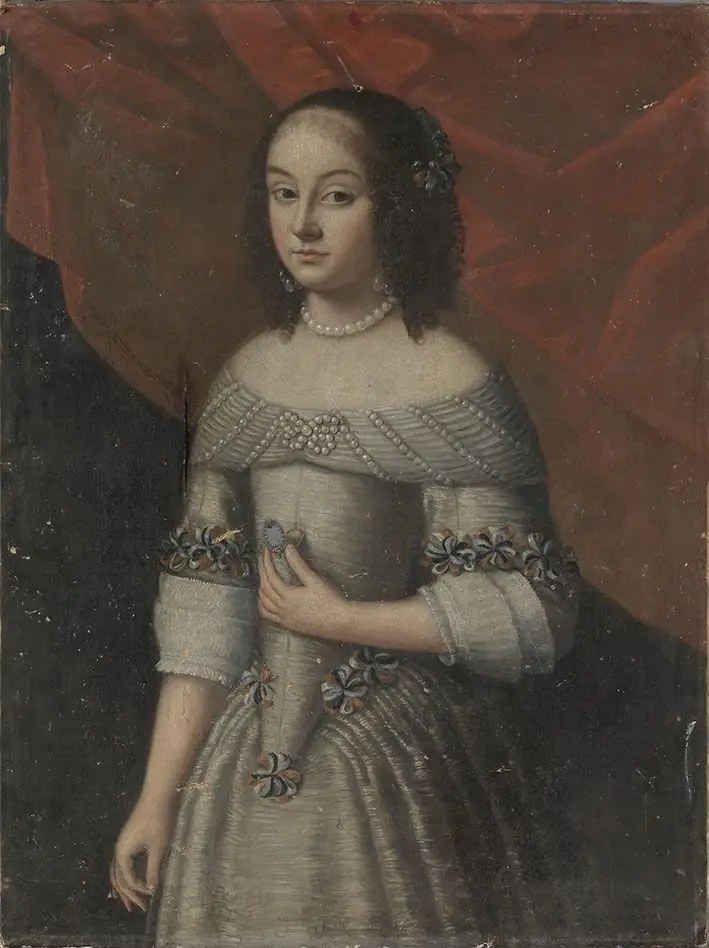 Bildnis einer Hofdame
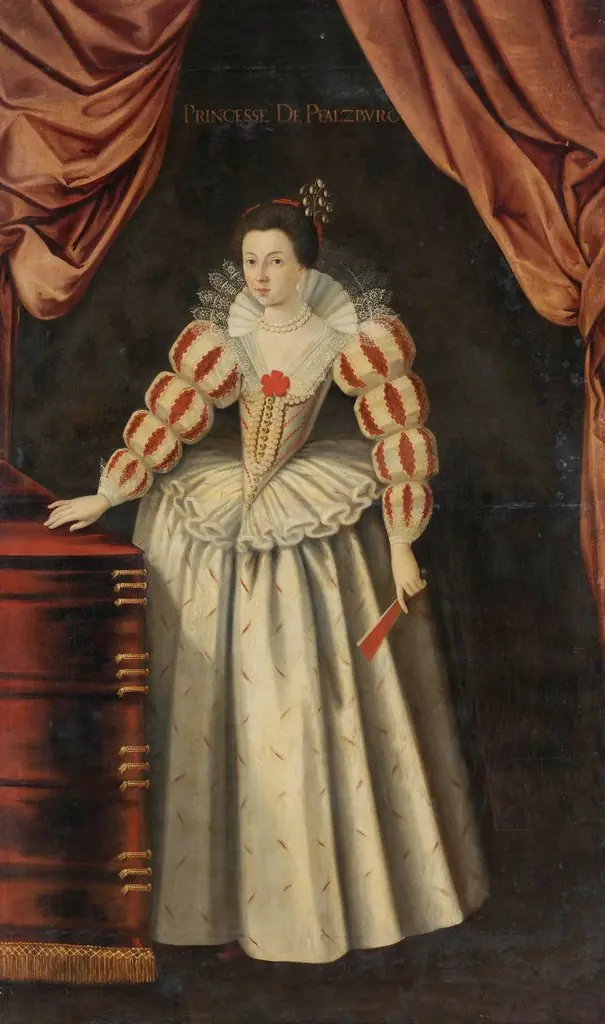 Henriette von Lothringen (1605-1660)
 Untitled
 Portrait of Sophia de Vervou (c. 1613-71)
 Portrait of a lady in a rich costume leaning on the armchair
 Portret de englezoaică aristocrată
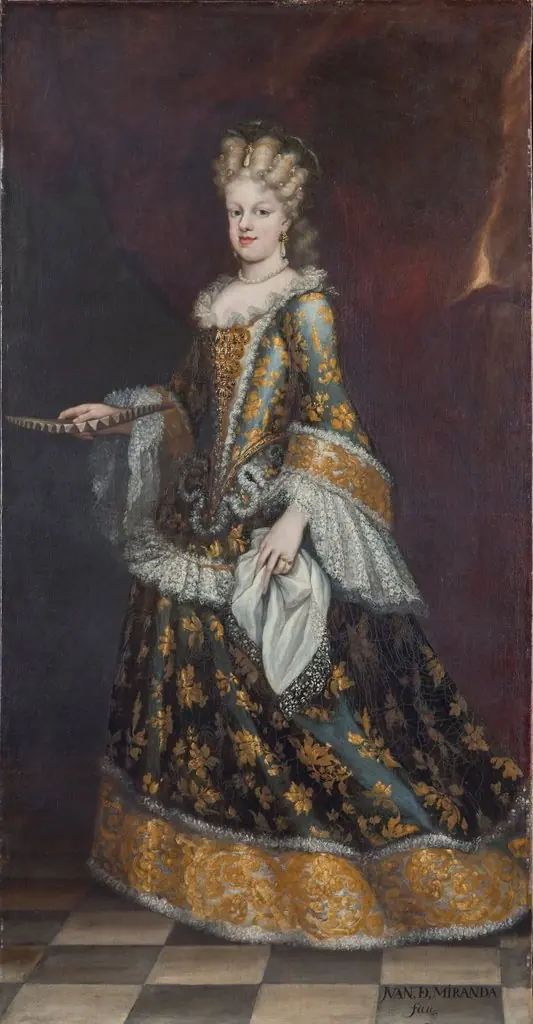 María Luisa Gabriela de Saboya primera esposa de Felipe V
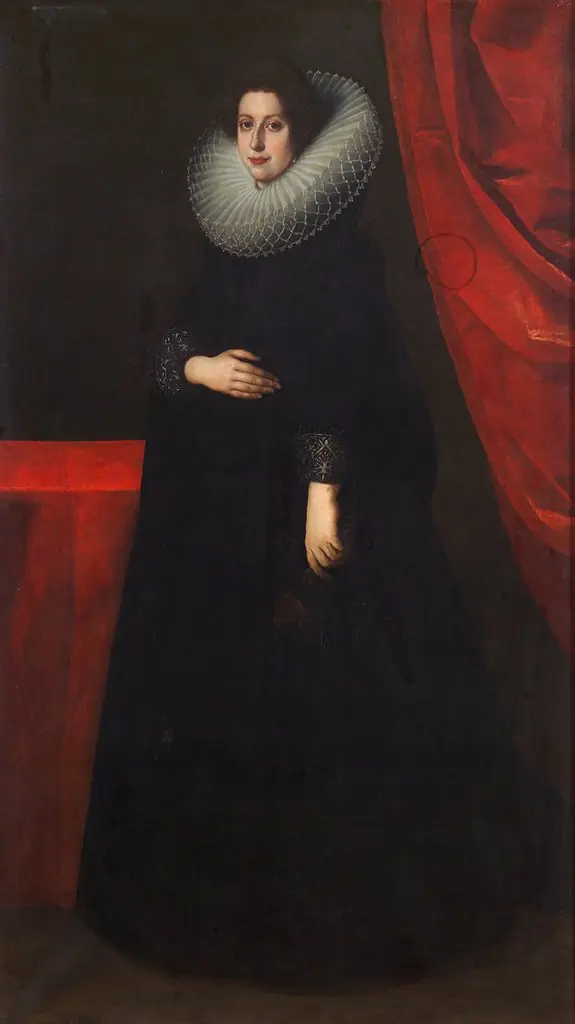 Catarina de' Medici (1593-1629)