Artwork
Portrait of Jacob Bruce
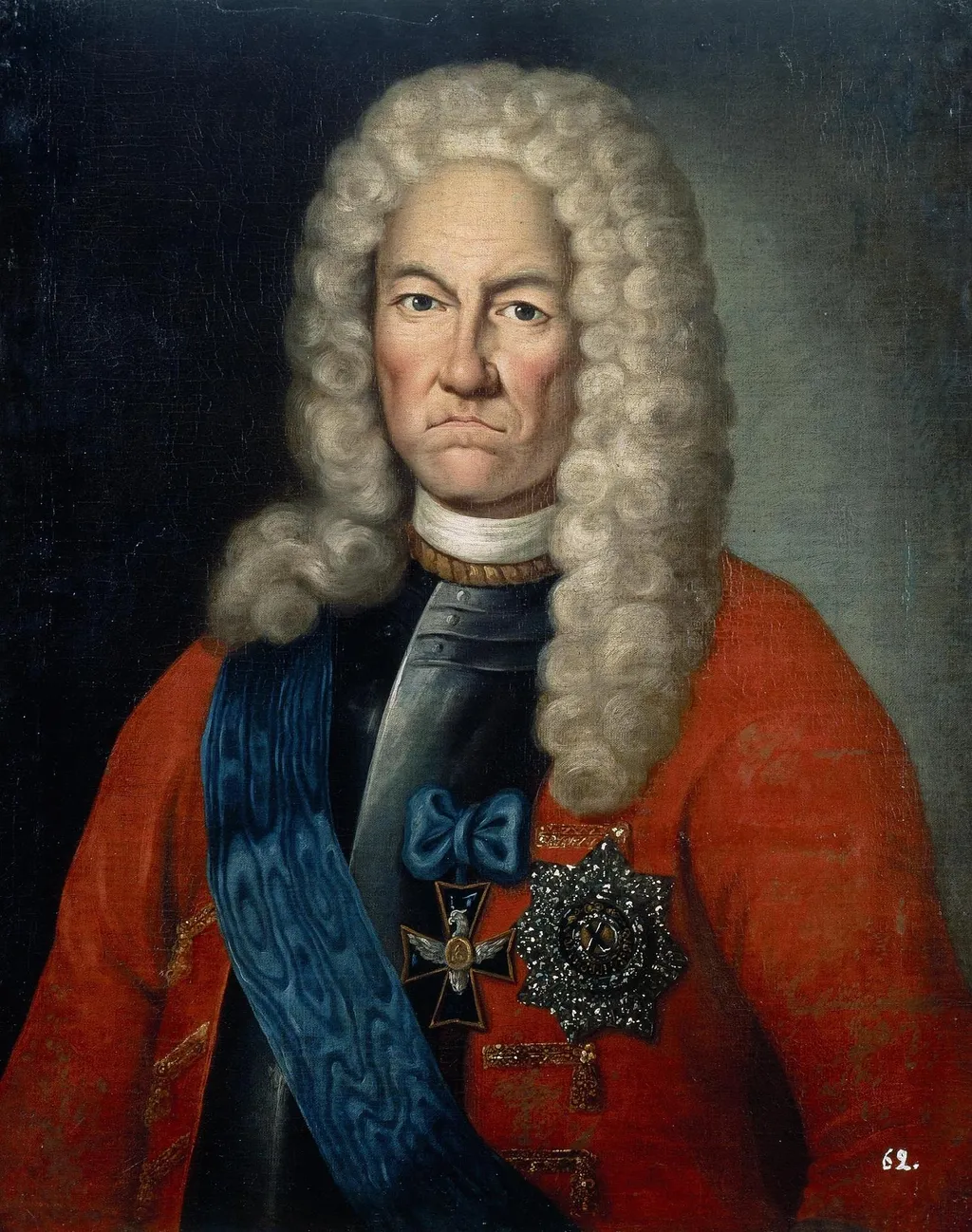
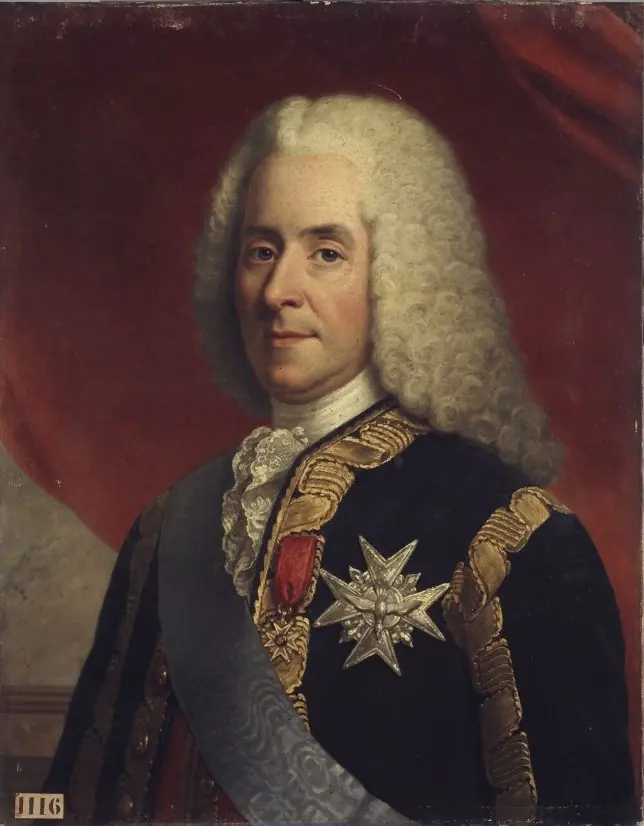
Portrait of Jacob Bruce is an oil painting by the Rococo painting artist Unknown. It dates from 1725 and is held in the collection of the Hermitage Museum. The work is an oil painting portraying a distinguished gentleman with flowing white curls and a solemn gaze.
About this work
Overview
The work is an oil painting portraying a distinguished gentleman with flowing white curls and a solemn gaze. He wears a red coat trimmed in gold, a blue sash across his chest, and a prominent medal pinned to his lapel. The figure is set against a dark background that isolates him, emphasizing his attire and expression.
Subject & Meaning
The sitter’s white hair and formal dress suggest an elderly individual of high status, likely a military officer or nobleman. The conspicuous medal implies recognition for service or achievement, while the sober expression conveys dignity and authority, reinforcing the portrait’s function as a record of personal rank and honor.
Technique & Style
Executed in oil on canvas, the artist employs chiaroscuro, using the deep background to create contrast that highlights the subject’s facial features and richly colored garments. The brushwork renders the texture of the coat’s gold embellishments and the sheen of the medal, while the smooth modeling of the face suggests a careful, realistic approach typical of 18th‑century portraiture.
Context
Portraits of this type were commonly commissioned to commemorate the careers of prominent figures within the Russian aristocracy and military hierarchy. The use of red and gold in the attire aligns with ceremonial dress codes of the period, indicating the sitter’s affiliation with state or courtly institutions.
Artist & collection

 Domestic Scene
 Giacomo and Cardinal Marco, investing Andrea, Abbot of San Zeno, with his Benefice
 The Nymph of Fontainebleau
 Portrait of a Woman
 Madonna and Child with Saints in the Enclosed Garden
 Venus and Minerva
 Family Group of Four on Sofa
 Wall painting from Room H of the Villa of P. Fannius Synistor at Boscoreale
 Portrait of Count G.I.Golovkin
 Portrait of Count Andrey Ostermann
 Portrait of Prince Dmitry Golitsyn
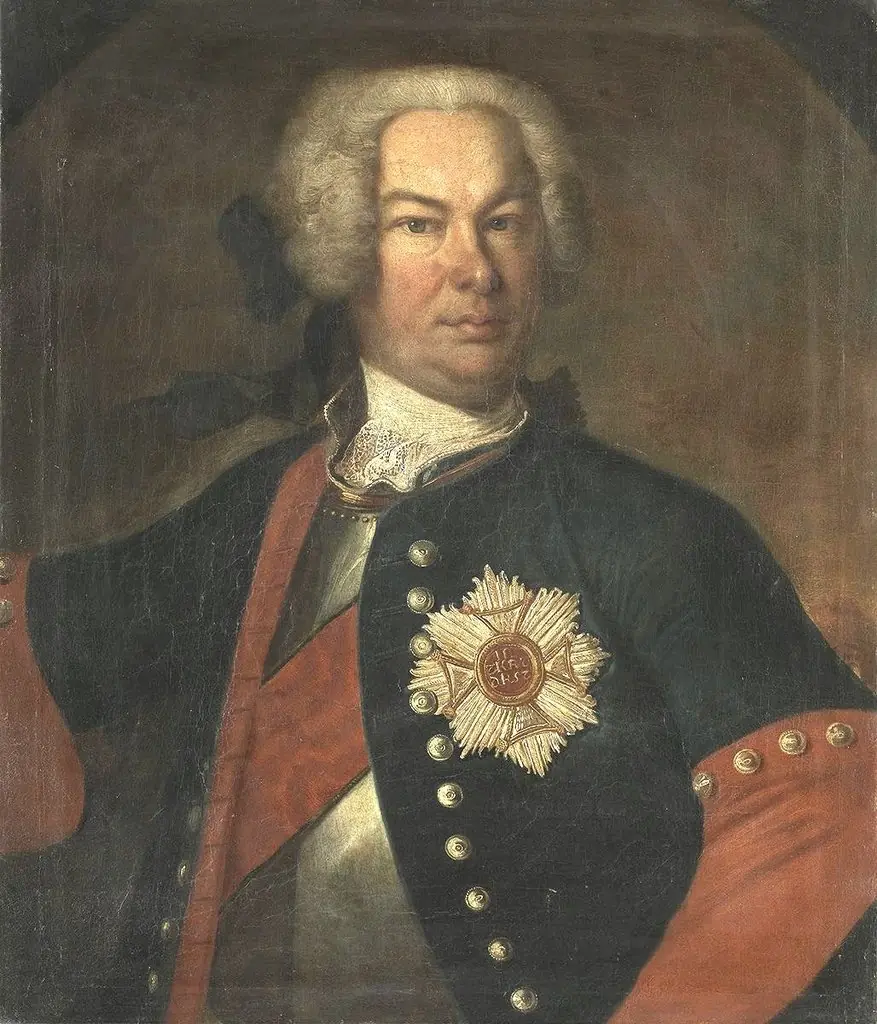 Johann Christian, Father of Carl Theodor of the Pfalz
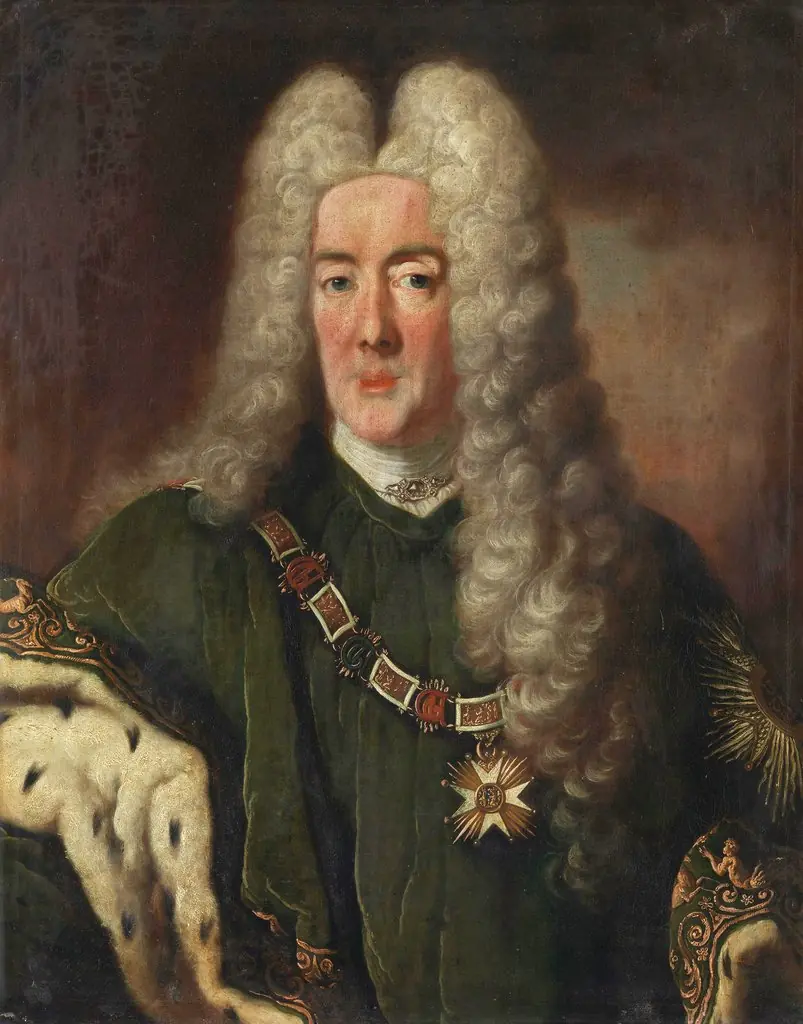 Kurfürst Karl Philipp von der Pfalz
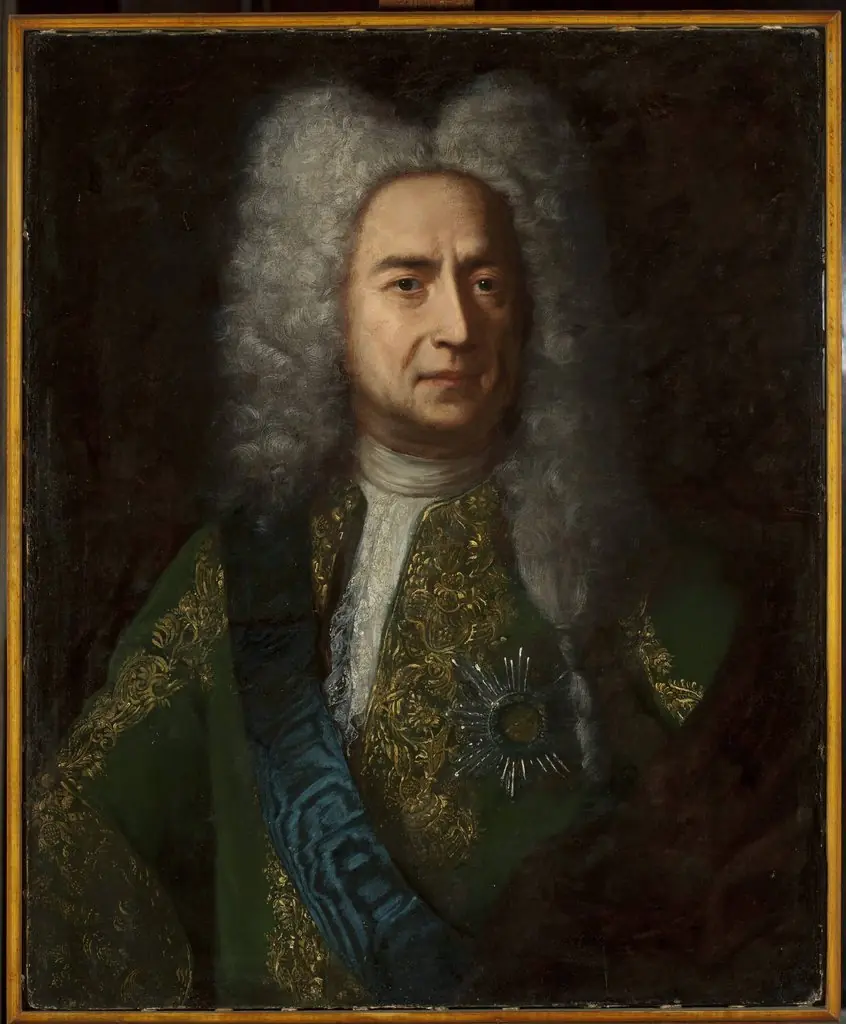 Portrait of an aristocrat
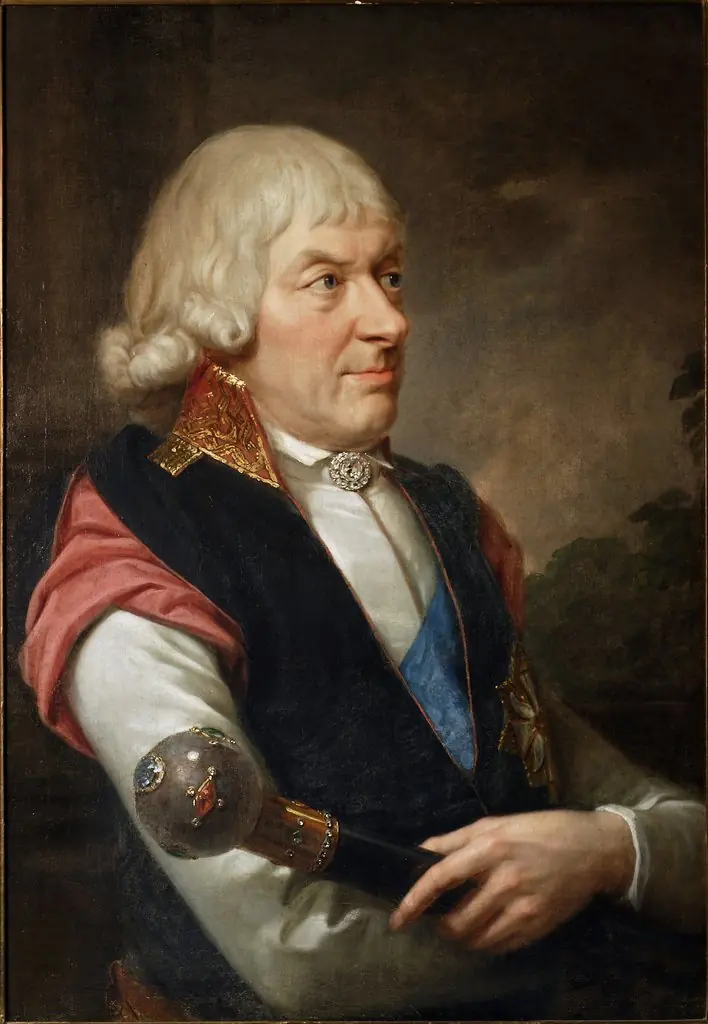 Portrait of Michał Kazimierz Ogiński (1728–1800), hetman of the Duchy of Lithuania
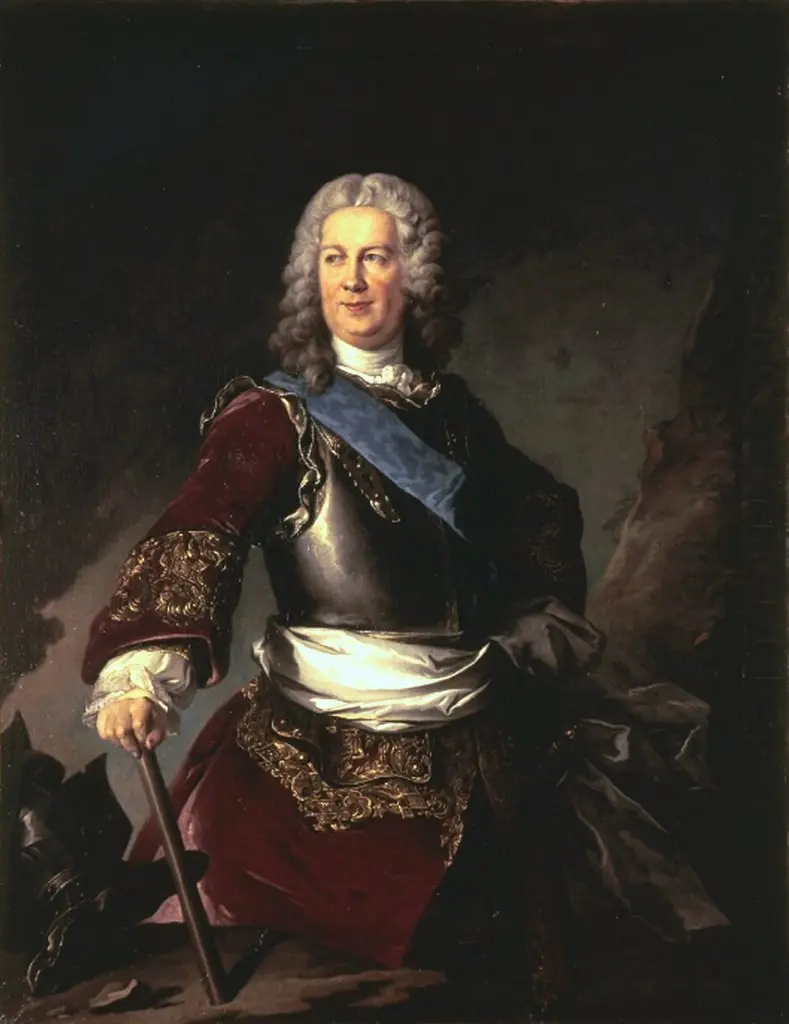 Thomas Goyon de Matignon (1684-1766), comte de Gacé, seigneur de Briquebec, Brigadier des armées du Roi en 1719.
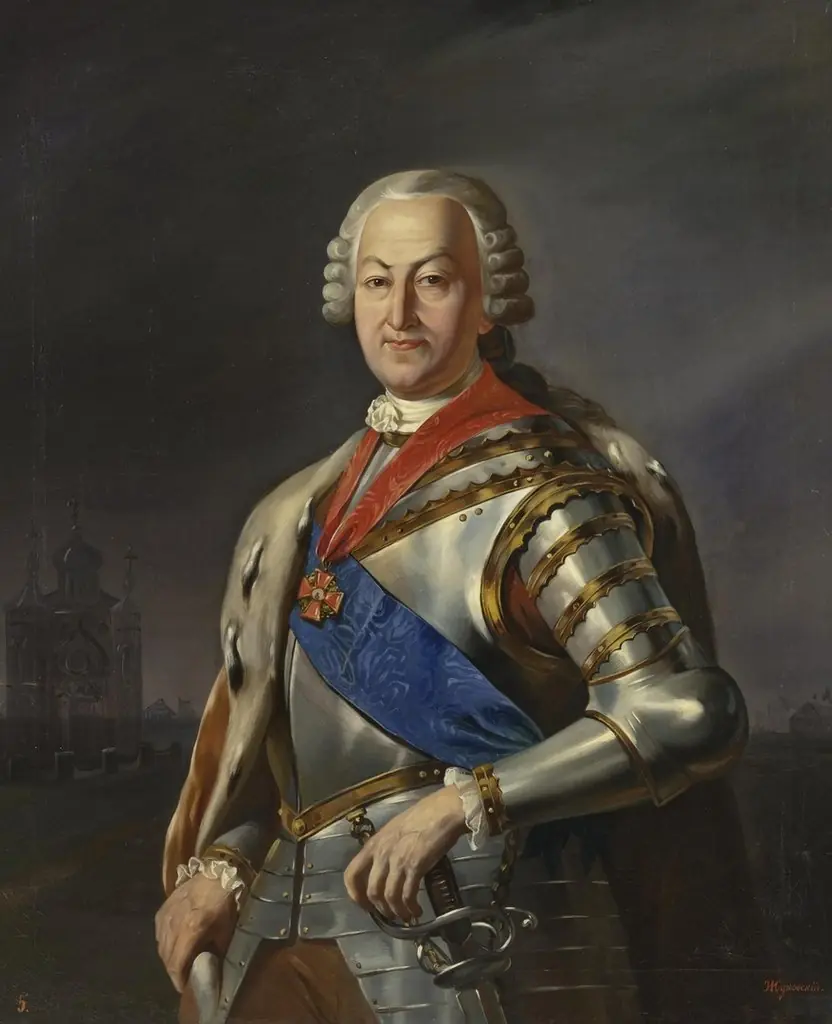 Portrait of Mikhail Golitsyn
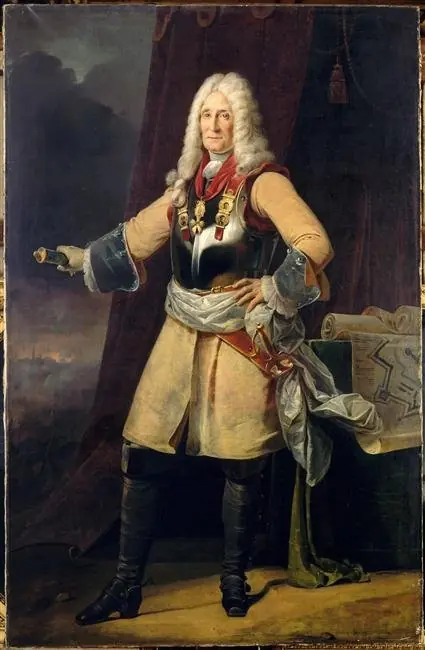 Claude François Bidal d'Asfeld (1665-1743), marquis d'Asfeld, maréchal de France en 1734
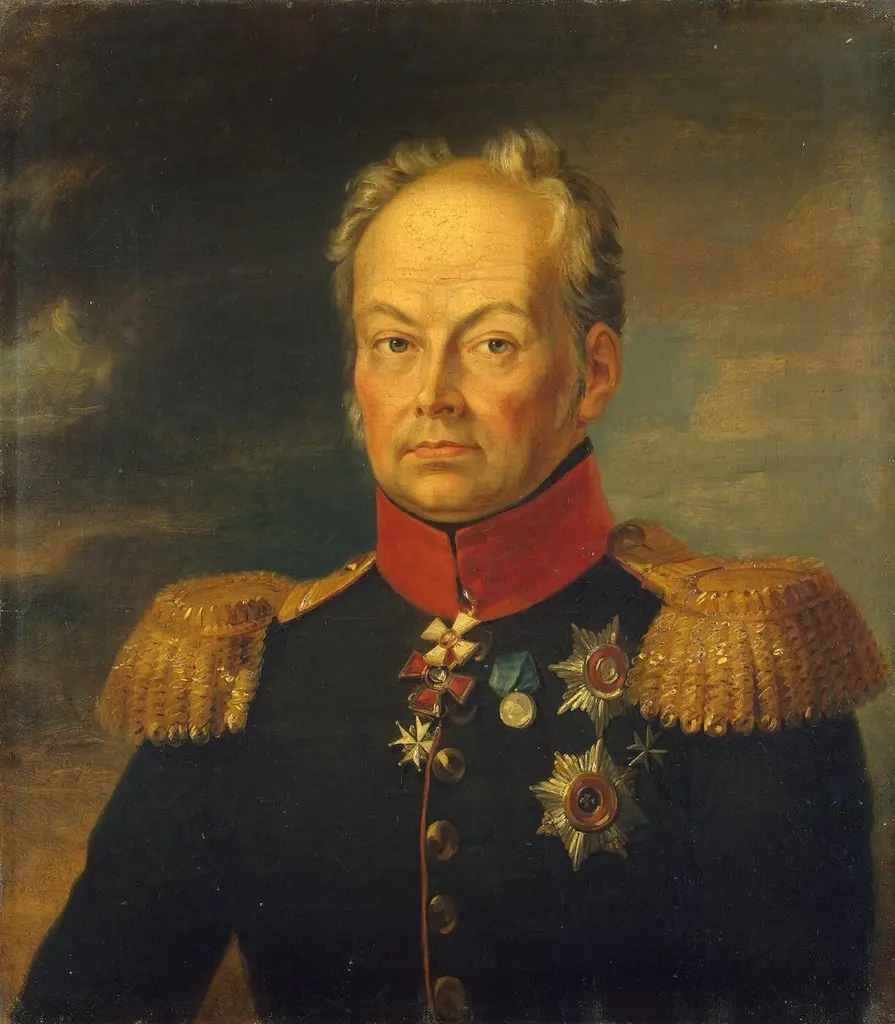 Portrait of Ivan N. Inzov (1768-1845)
 Claude Guillaume Testu de Balincourt, maréchal de France en 1746 (1680-1770)