Artwork
Portrait of Ivan N. Inzov (1768-1845)
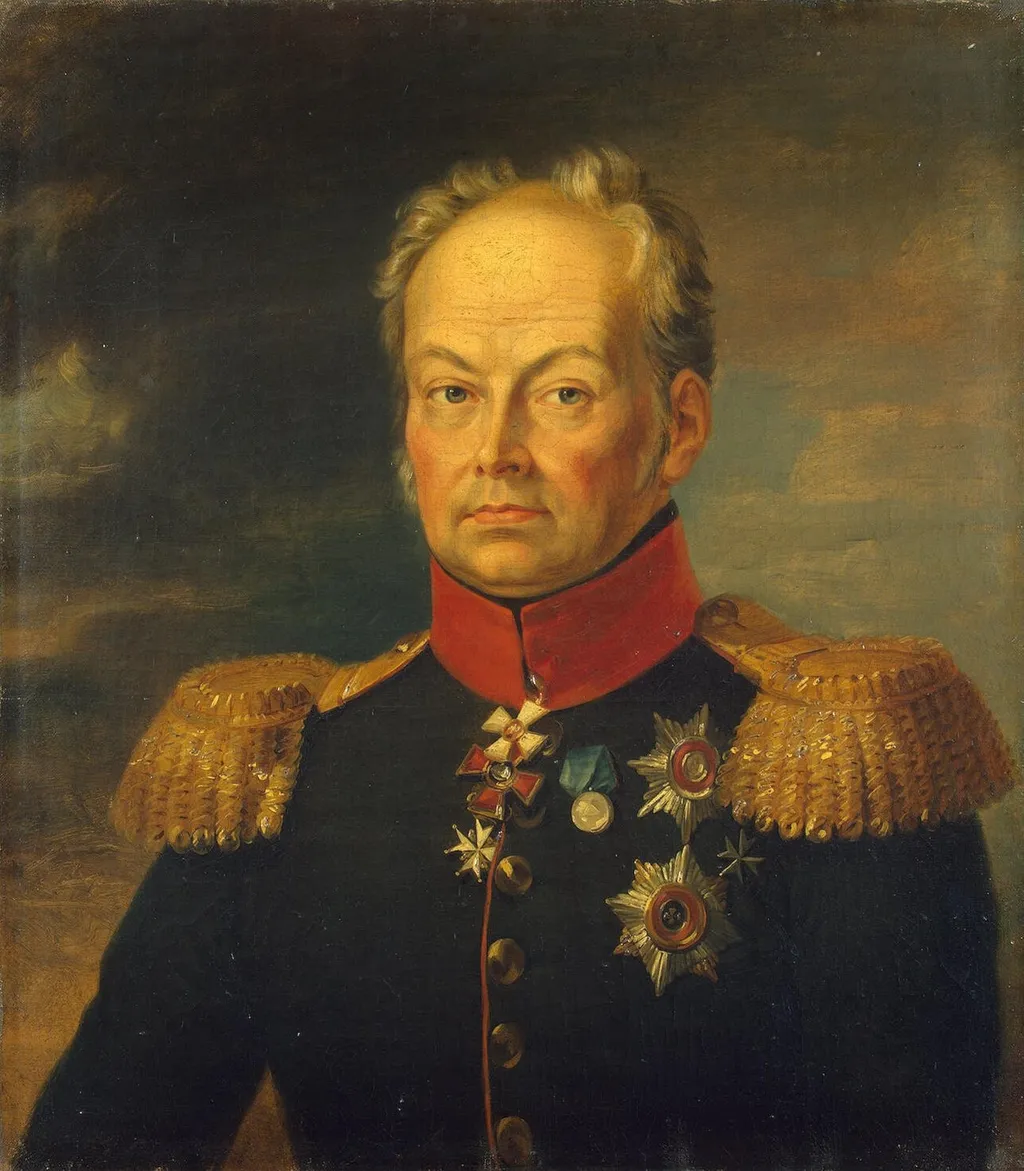
Portrait of Ivan N. Inzov (1768-1845) is an oil painting by Unknown. It dates from 1824 and is held in the collection of the Hermitage Museum. This oil painting depicts Ivan N.
About this work
Overview
This oil painting depicts Ivan N. Inzov, a Russian military figure active in the late 18th and early 19th centuries. Rendered with formal precision, the portrait emphasizes his rank through detailed uniform elements and a restrained composition. The dark, unadorned background isolates the subject, directing attention to his bearing and insignia.
Subject & Meaning
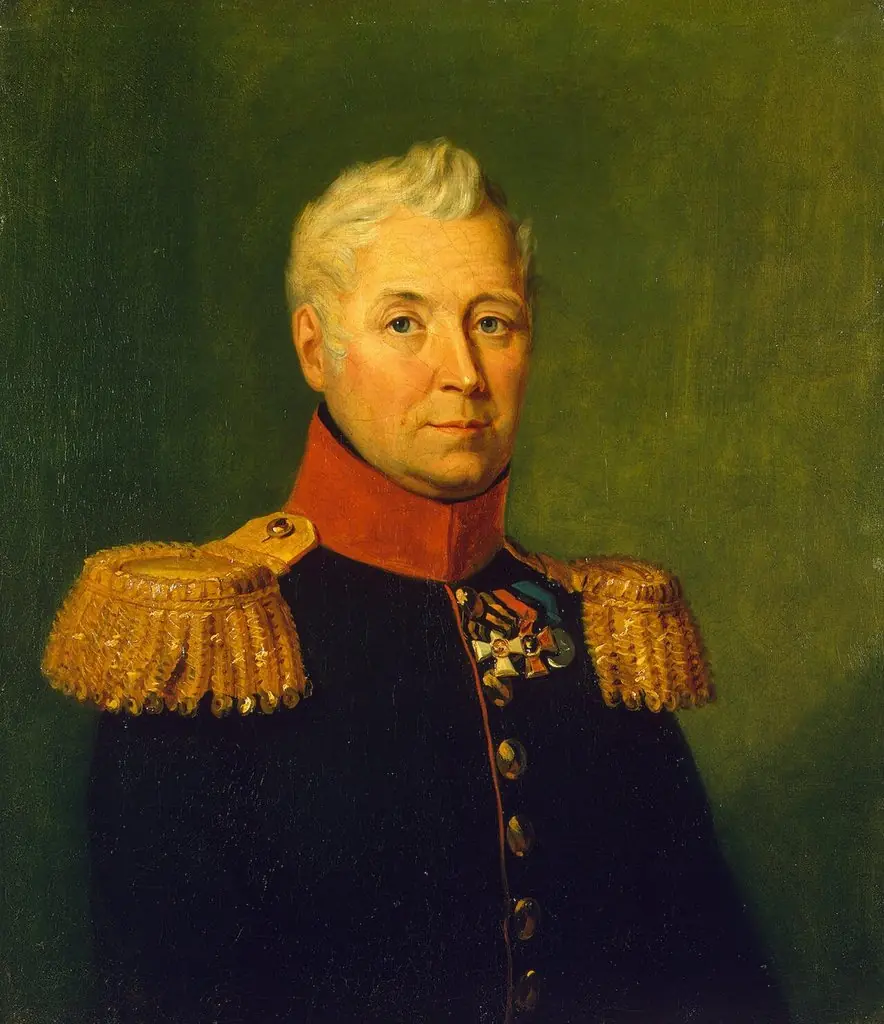
Inzov is portrayed as a high-ranking officer, likely a marshal, distinguished by gold epaulettes, red trim, and multiple medals adorning his collar. His serious expression conveys authority and solemn duty. The portrait functions as a visual record of military status, communicating achievement and service without narrative embellishment.
Technique & Style
The artist employed traditional oil painting techniques to render fabric textures and metallic details with clarity. Brushwork is controlled and smooth, favoring realism over expressionism. Lighting is even and frontal, minimizing shadows to highlight the uniform’s insignia and the sitter’s composed demeanor.
History & Provenance
The portrait was likely commissioned during Inzov’s service in the Russian Imperial Army, possibly around the Napoleonic Wars era. It entered the collection of the State Hermitage Museum, where it remains as part of a broader archive of military portraiture from the period.
Context
During the early 19th century, Russian military elites frequently commissioned formal portraits to affirm their status. These works followed European conventions but emphasized imperial loyalty and decorated service. Inzov’s portrait aligns with this trend, reflecting state-sponsored ideals of discipline and honor.
Legacy
The painting contributes to the historical documentation of Russian military leadership during a transformative era. As part of the Hermitage’s collection, it continues to serve as a reference for studies in imperial portraiture and the visual culture of rank in early modern Russia.
Artist & collection

 Domestic Scene
 Giacomo and Cardinal Marco, investing Andrea, Abbot of San Zeno, with his Benefice
 The Nymph of Fontainebleau
 Portrait of a Woman
 Madonna and Child with Saints in the Enclosed Garden
 Venus and Minerva
 Family Group of Four on Sofa
 Wall painting from Room H of the Villa of P. Fannius Synistor at Boscoreale
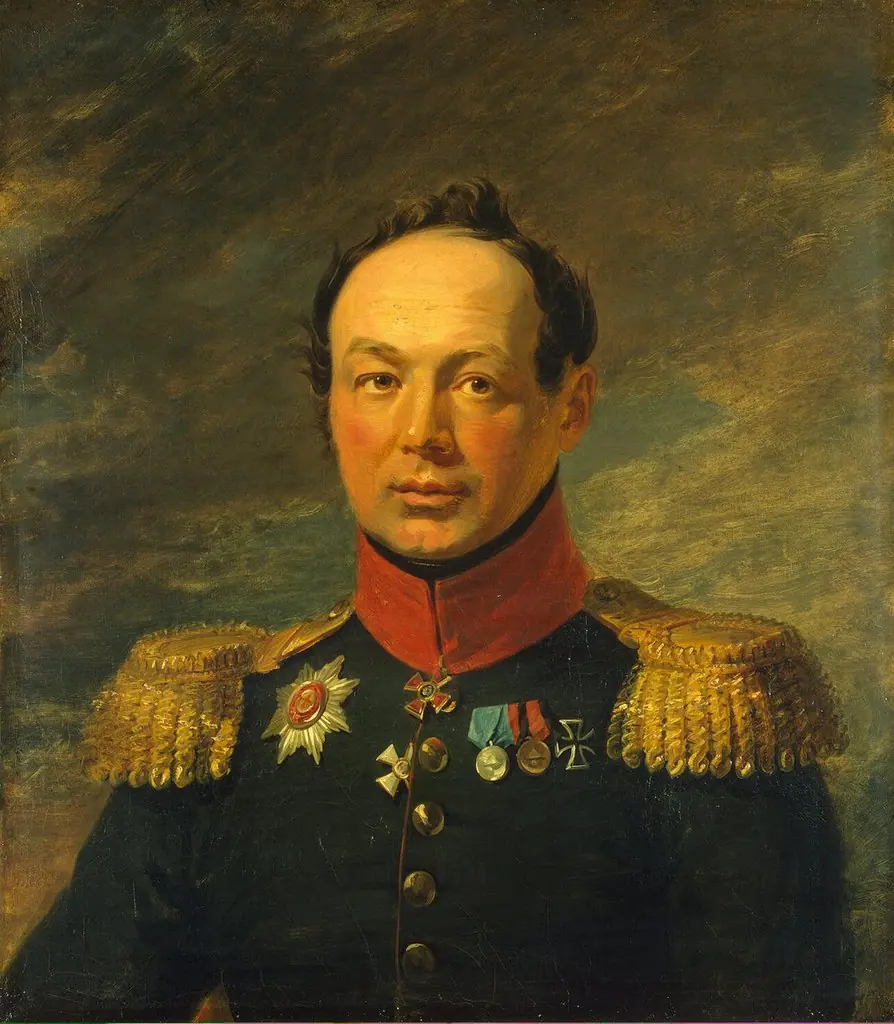 Portrait of Ivan A. Nabokov (1787-1852)
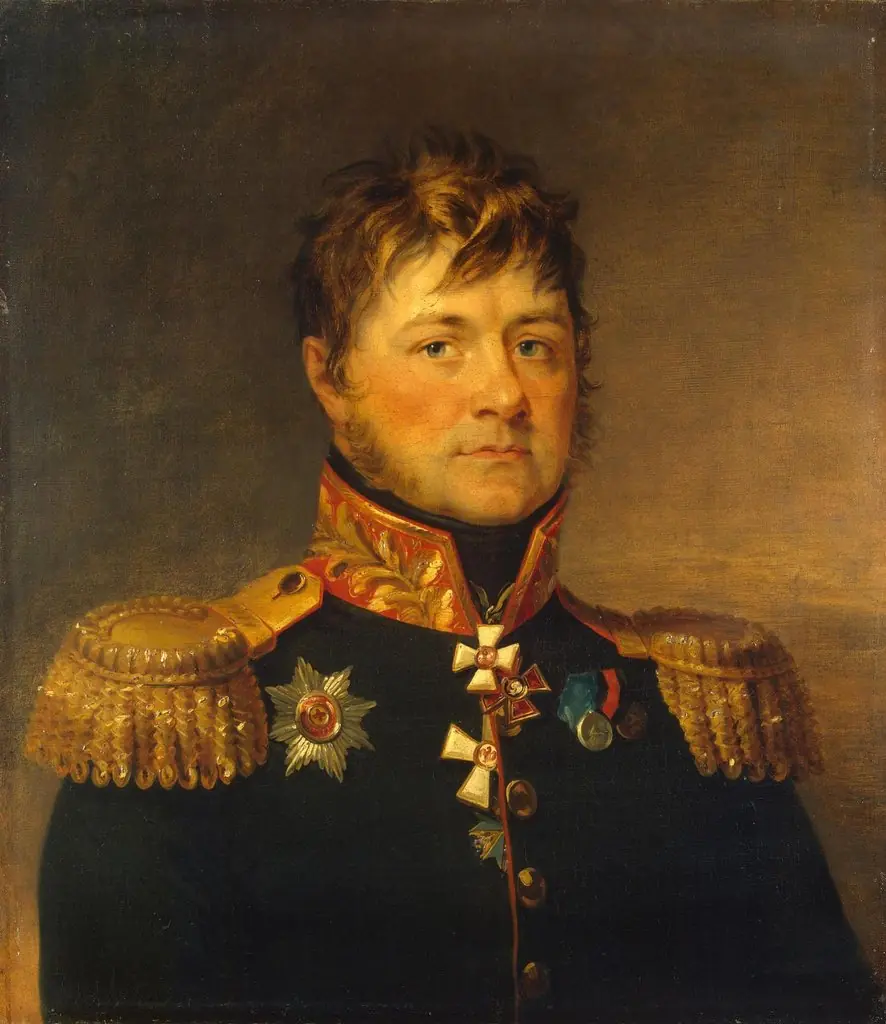 Portrait of Ivan L. Paul (1768-1840)
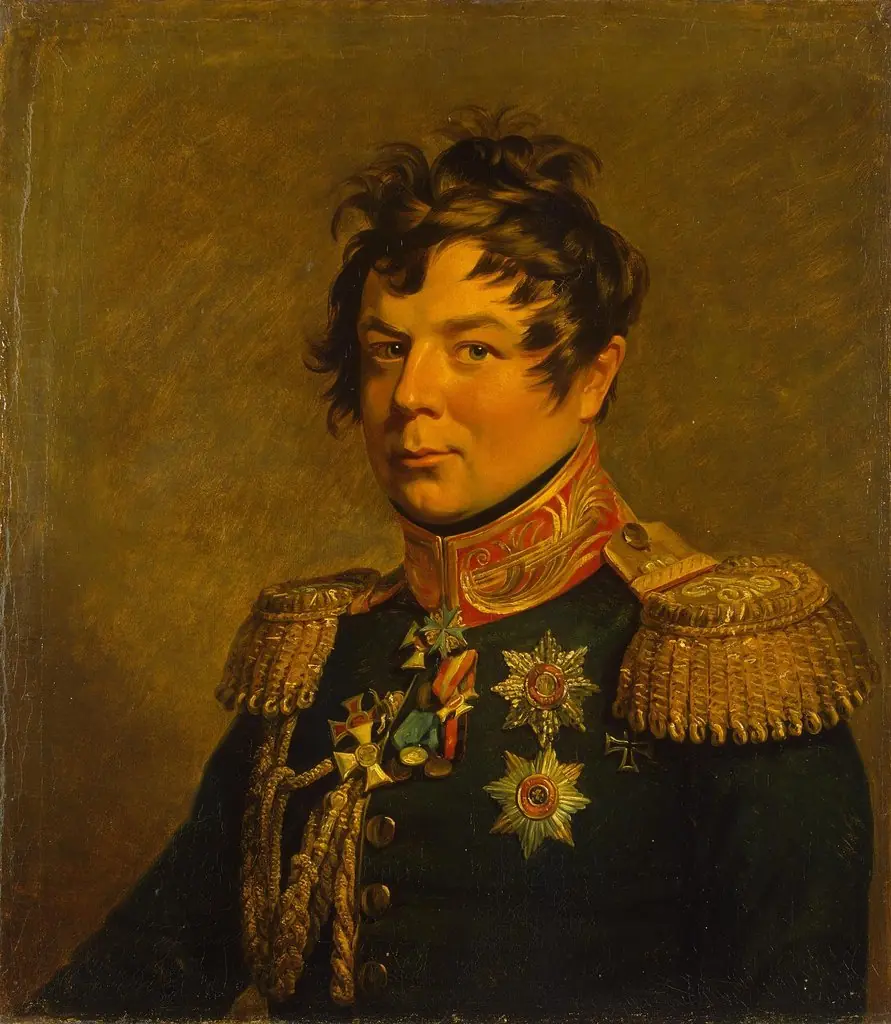 Portrait of Ivan I. Diebitsch-Zabalkansky (1785-1831)
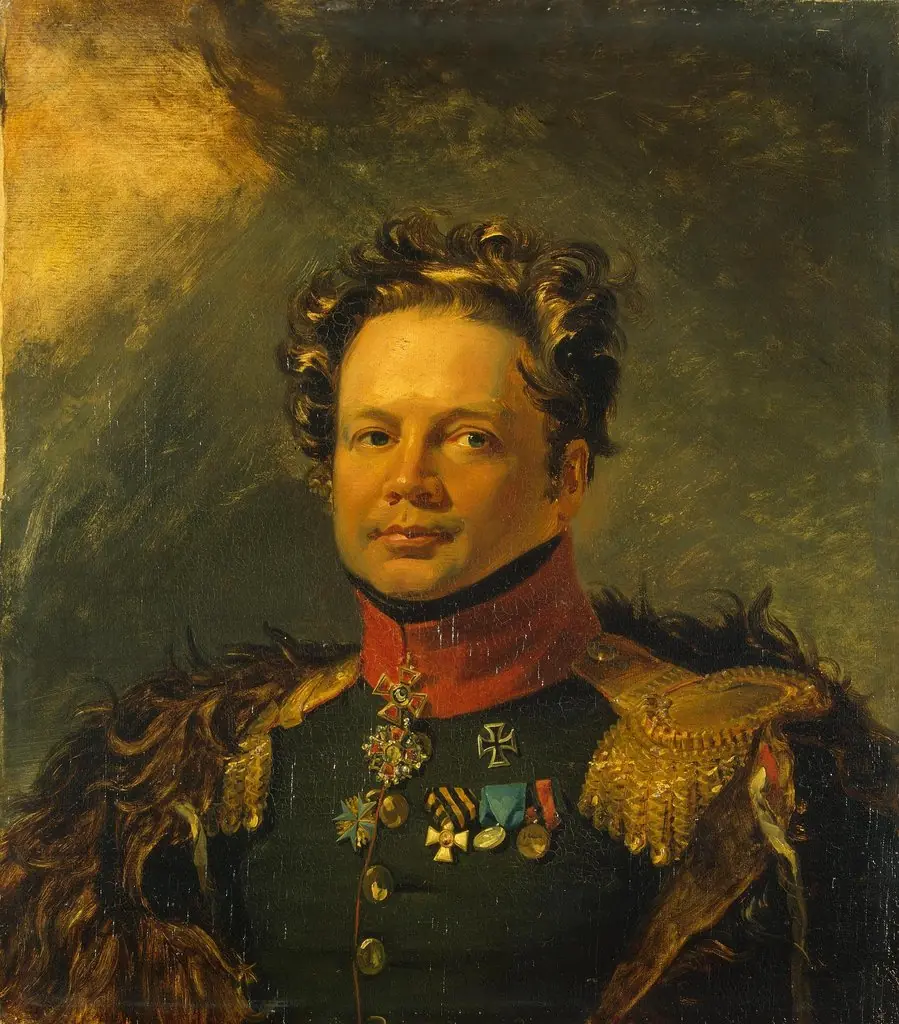 Portrait of Ivan Z. Yershov (1777/78-1852)
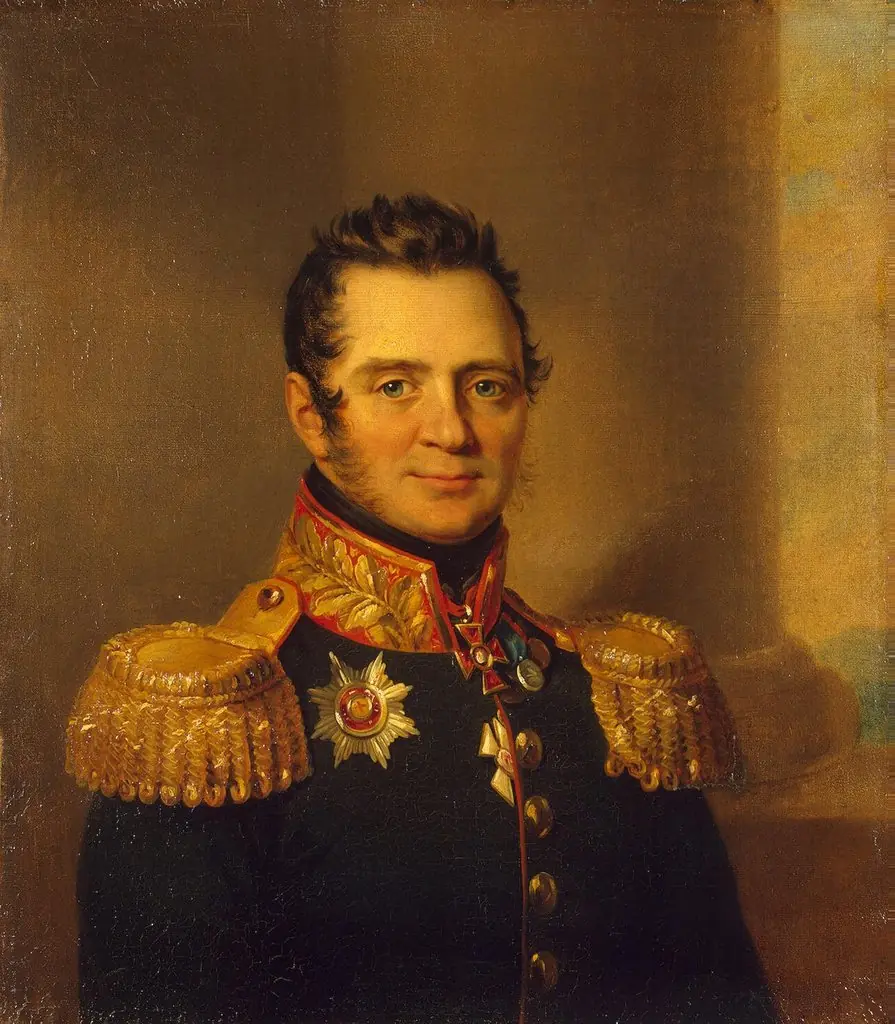 Portrait of Alexander P. Urusov (1768-1835)
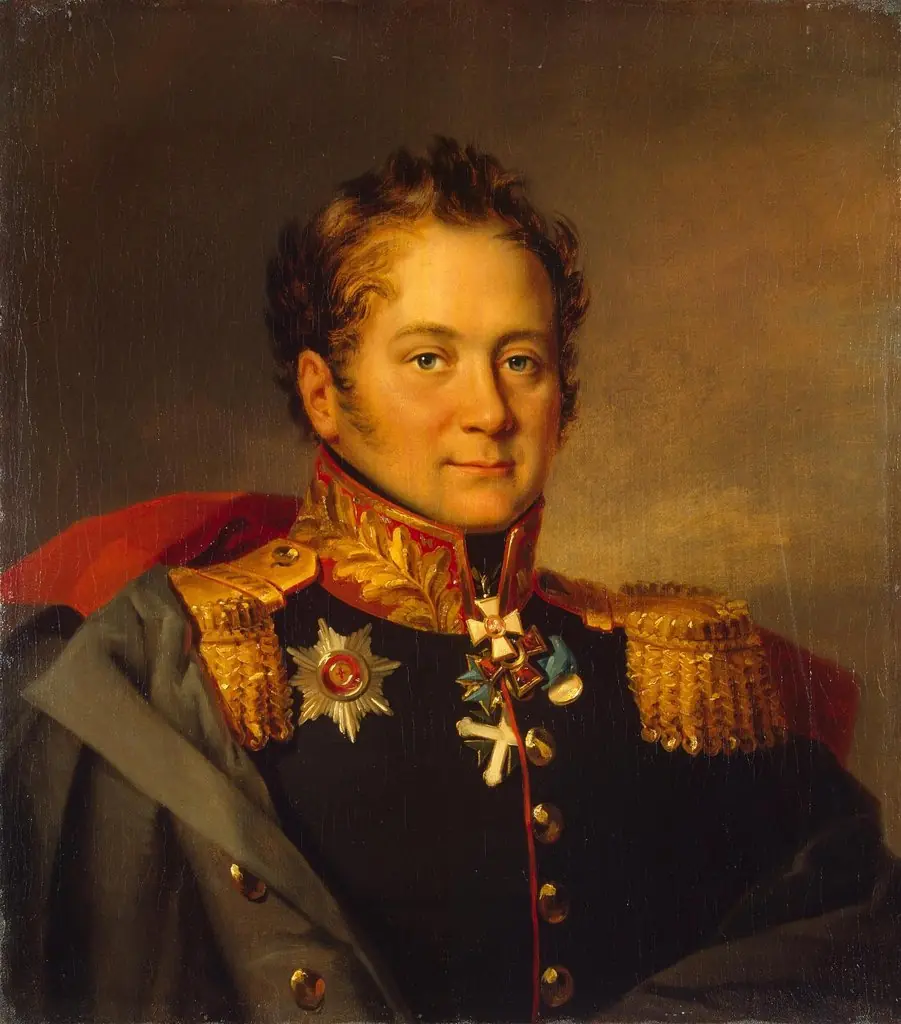 Portrait of Alexander A. Pisarev (1780-1848)
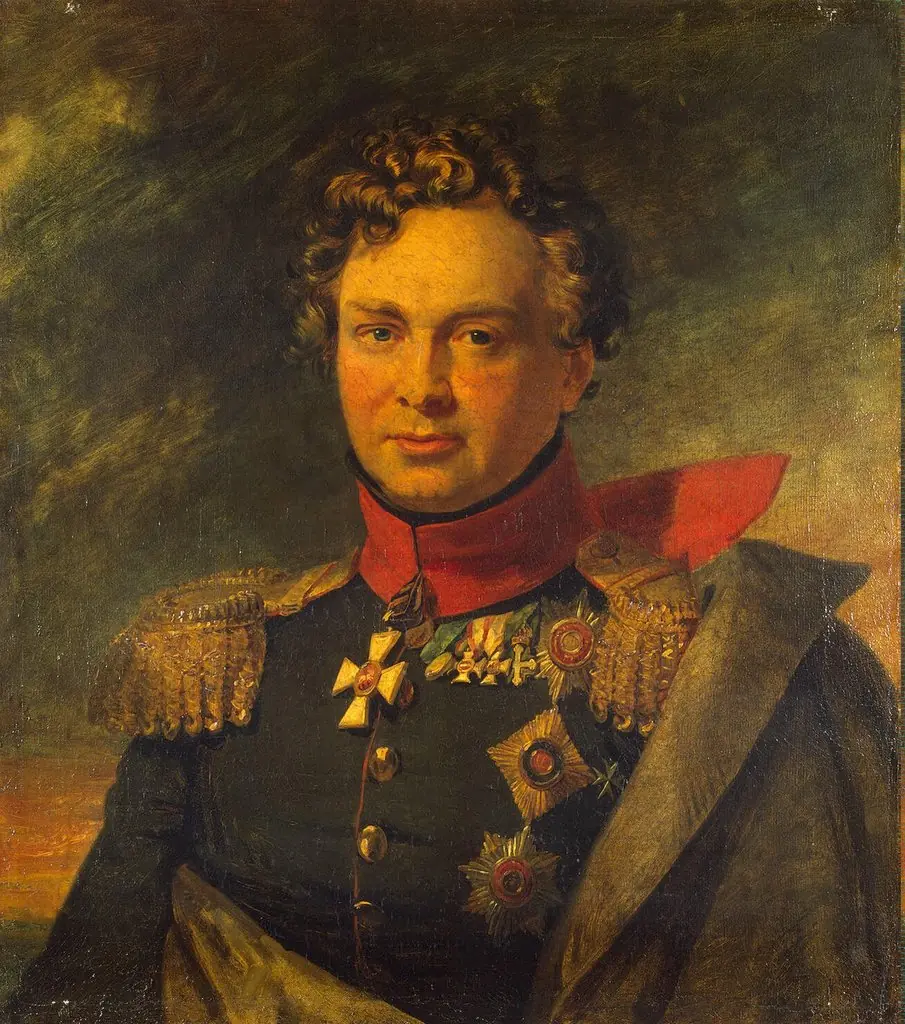 Portrait of Andrey I. Gorchakov (1779-1855)
 Portrait of Andrey T. Maslov (1770-1828)
 Portrait of Dmitry P. Lyapunov (1775-1821)
 Portrait of Alexander P. Tormasov (1752-1819)