Artwork
Sudama
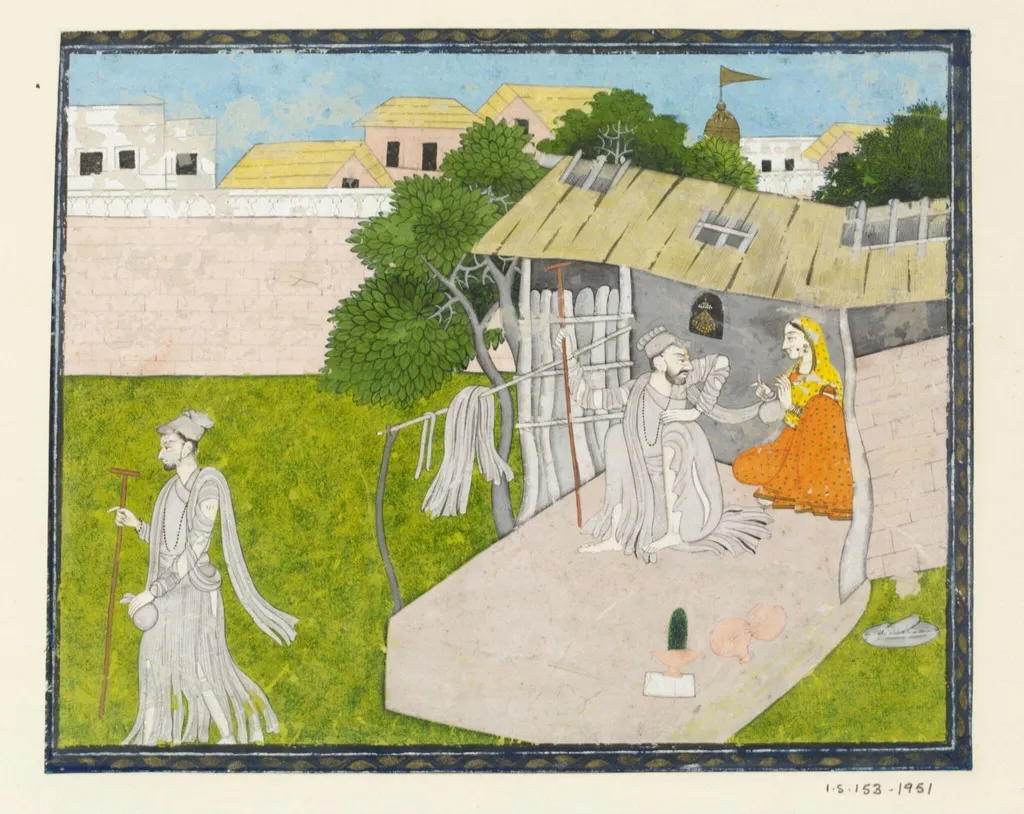
Sudama is a paint painting by the Impressionist artist Unknown. It dates from 1860 and is held in the collection of the Victoria and Albert Museum.
About this work
Overview
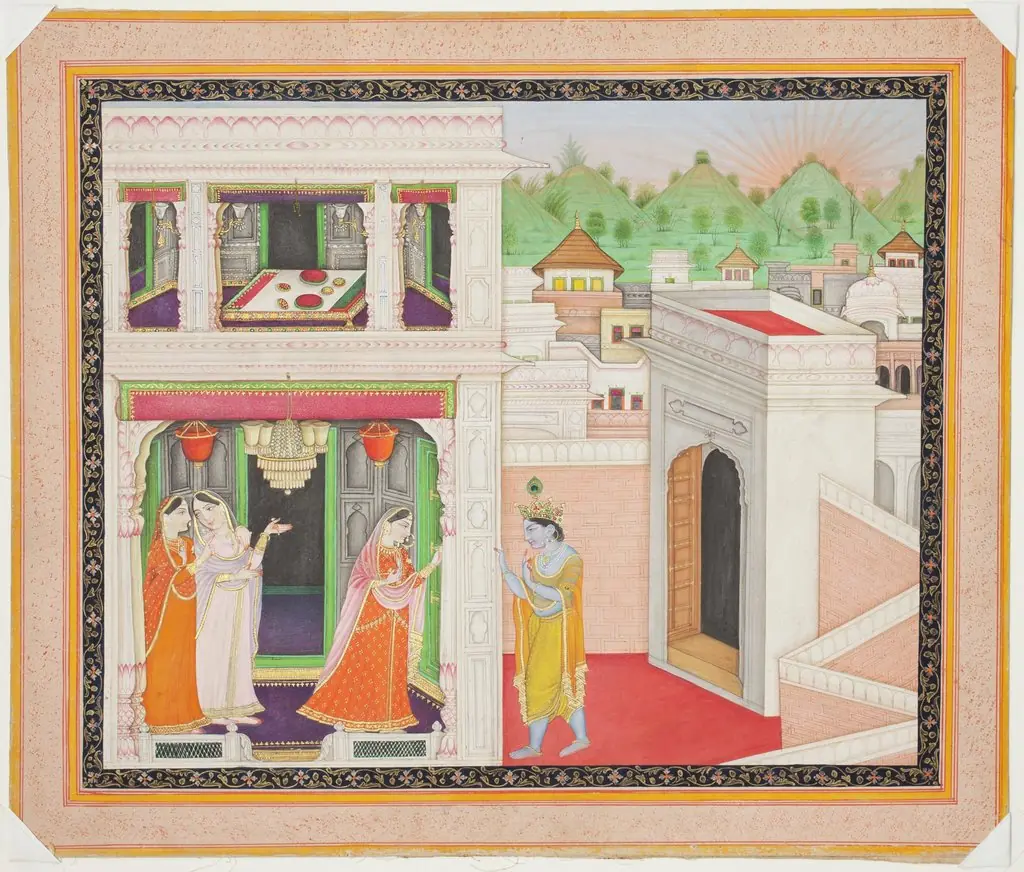
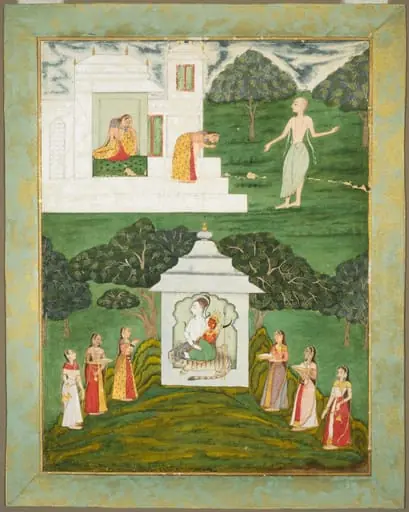
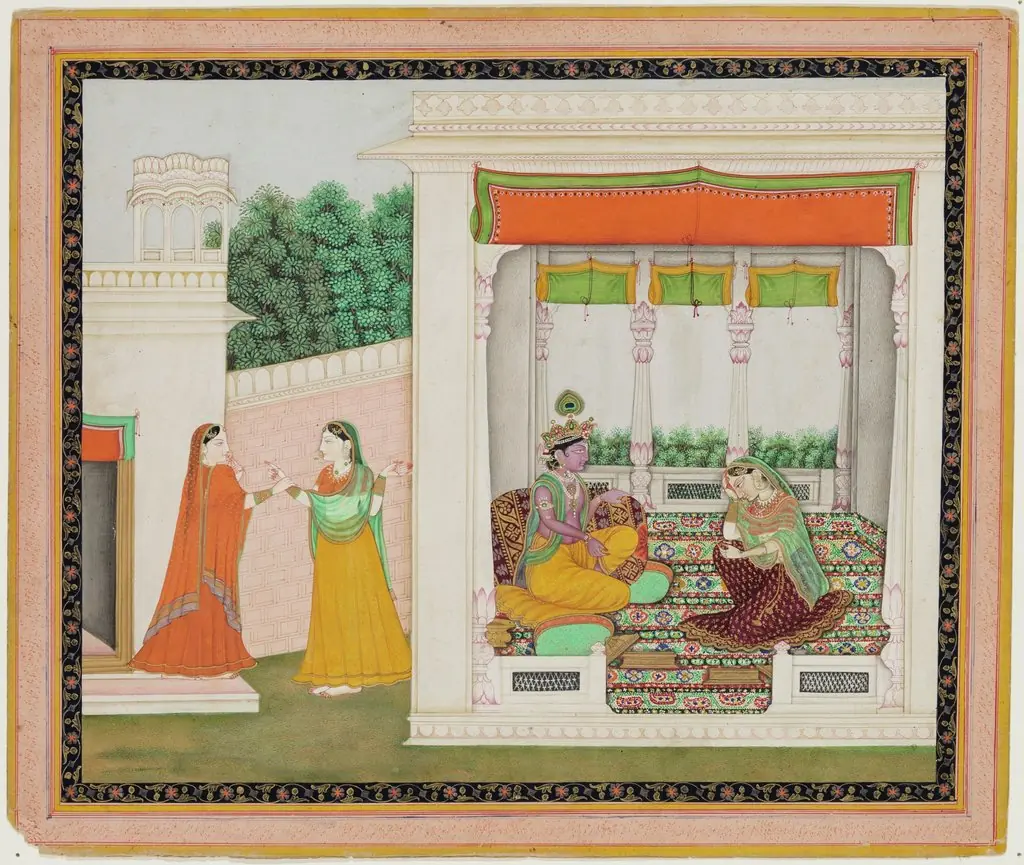
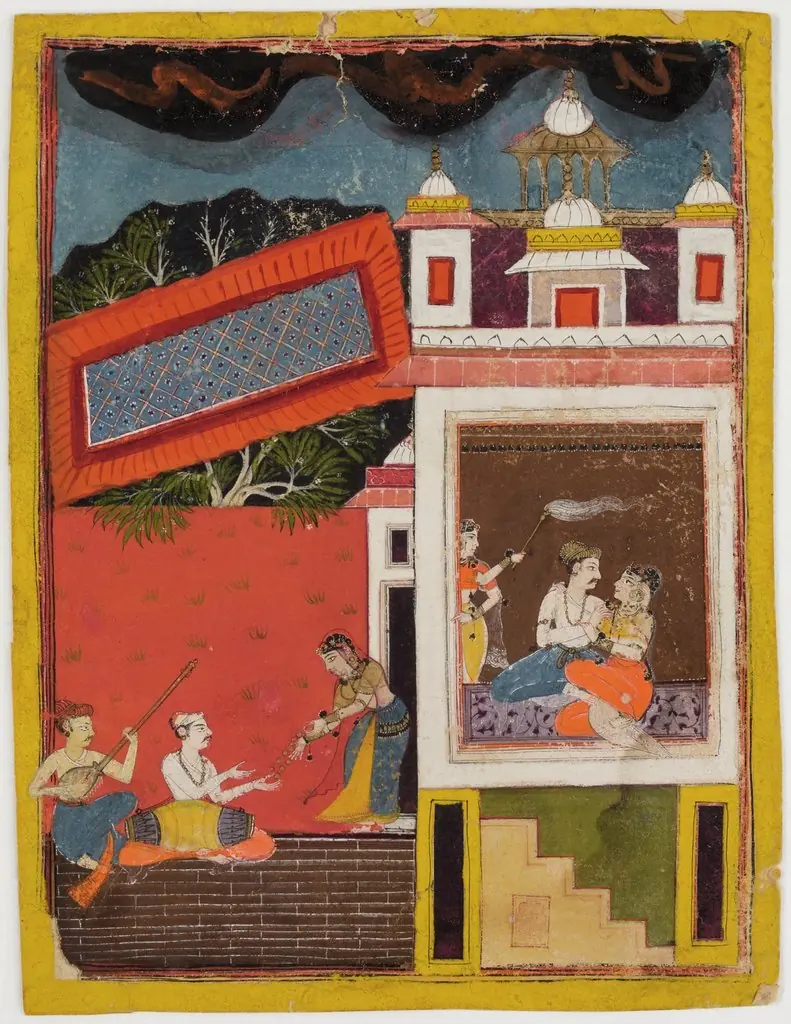
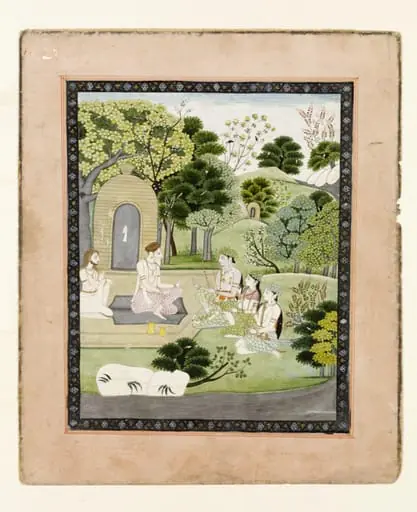
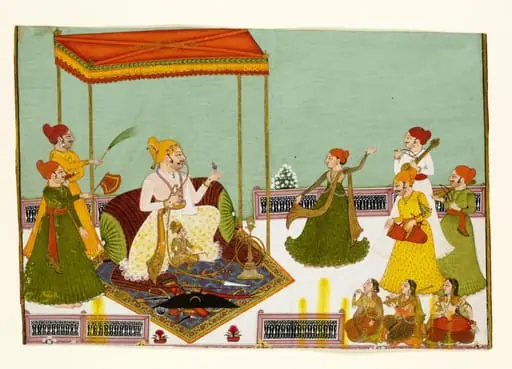
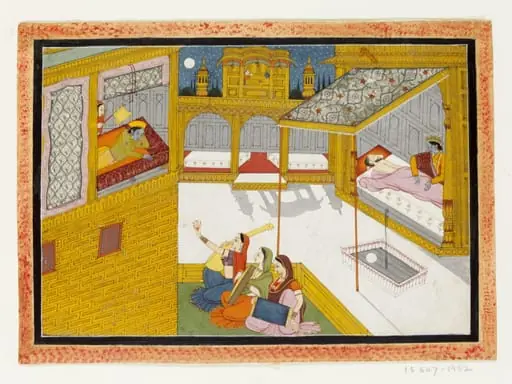
Sudama is an opaque watercolour painting on paper that presents a quiet domestic scene. The composition centers on three figures within a courtyard bounded by a low wall, under a clear blue sky. The setting is rendered with a calm atmosphere, emphasizing modesty and everyday life.
Subject & Meaning
The work portrays Sudama, a figure from Hindu tradition, seated with his wife in a simple dwelling. A second male figure, also in white, holds a staff and a bowl, suggesting a ritual or offering. The woman in an orange dress engages in conversation, highlighting themes of hospitality and humility.
Technique & Style
Executed in opaque watercolour, the artist employs a restrained palette of whites, oranges, and muted earth tones. The medium allows for soft edges and a gentle diffusion of colour, while the paper support contributes to a tactile sense of the modest interior and surrounding courtyard.
Context
The painting reflects traditional Indian narrative art, situating mythological characters within a recognizable, everyday environment. The inclusion of architectural elements such as the low wall and distant trees and buildings situates the scene within a broader landscape, linking the personal to the communal.
History & Provenance
Sudama is part of the permanent collection of the Victoria and Albert Museum in London. The work’s acquisition details are not specified, but its presence in the museum underscores its relevance to the institution’s representation of South Asian art and cultural narratives.
Artist & collection

 Domestic Scene
 Giacomo and Cardinal Marco, investing Andrea, Abbot of San Zeno, with his Benefice
 The Nymph of Fontainebleau
 Portrait of a Woman
 Madonna and Child with Saints in the Enclosed Garden
 Venus and Minerva
 Family Group of Four on Sofa
 Wall painting from Room H of the Villa of P. Fannius Synistor at Boscoreale