Artwork
Legend of Durga
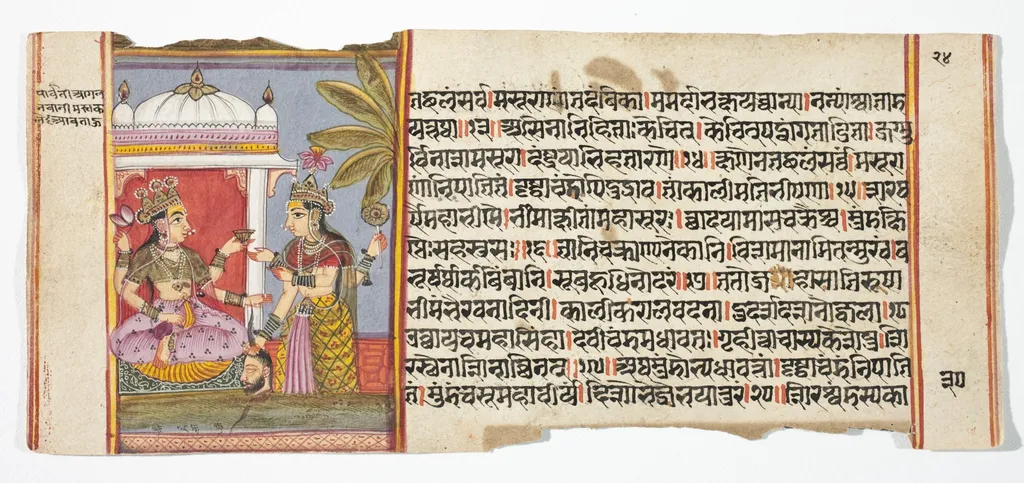
Legend of Durga is an unspecified painting by Unknown. It is held in the collection of the Detroit Institute of Arts.
About this work
Overview
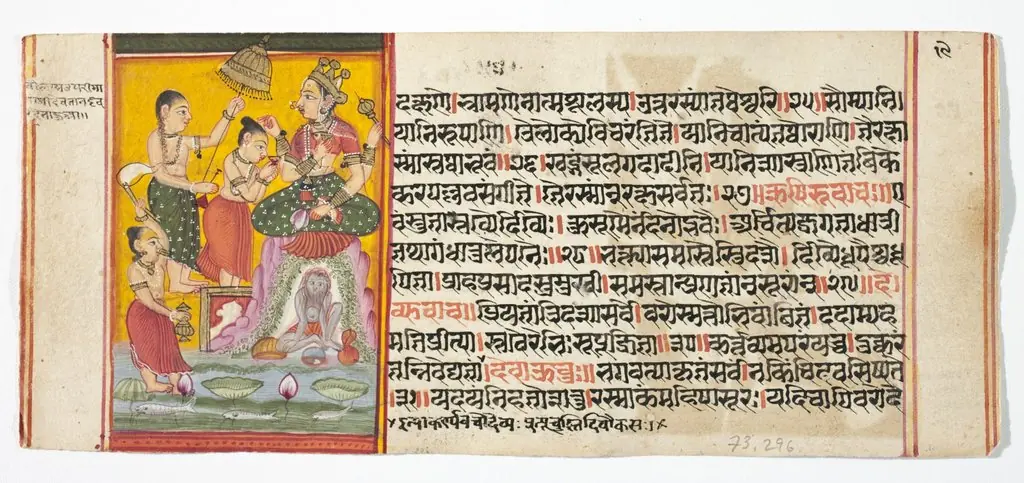
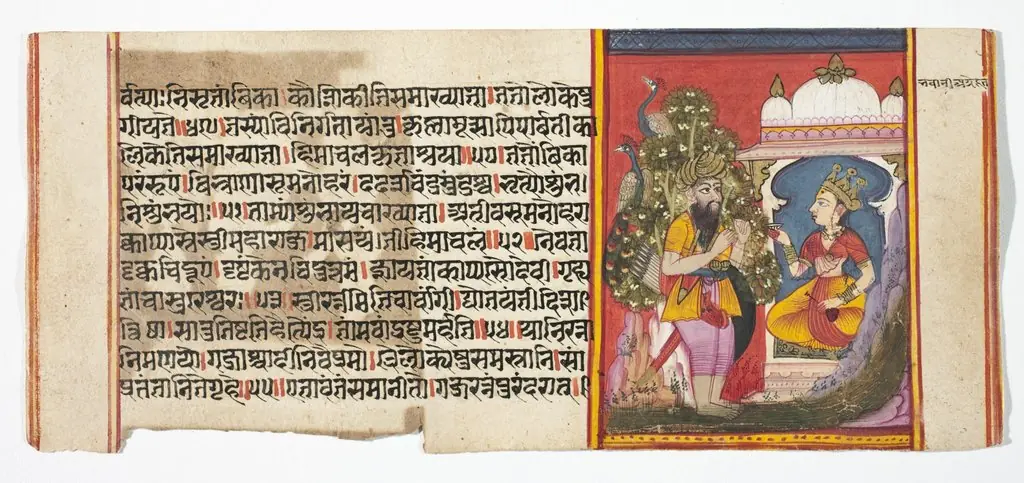
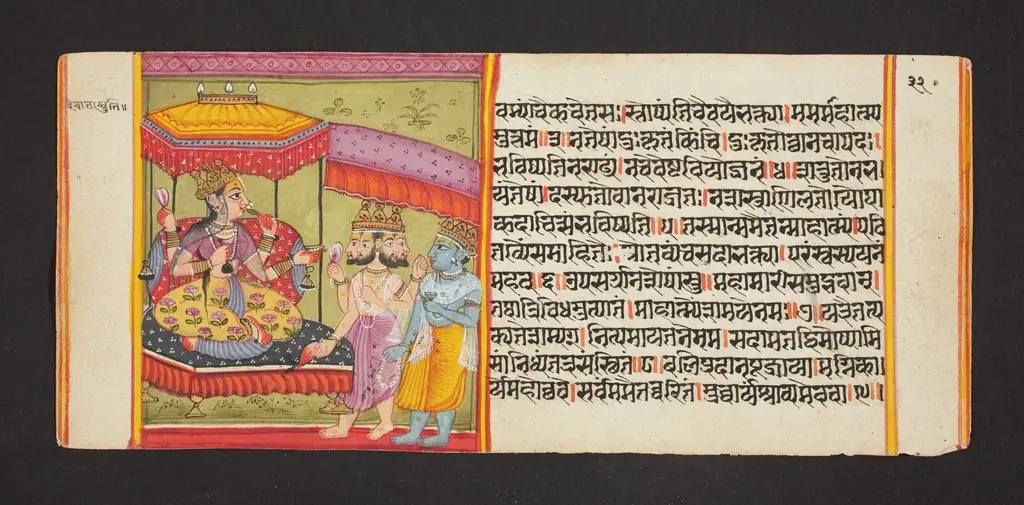
The composition is framed by a bold red wall and a white architectural element, with foliage adding organic contrast.
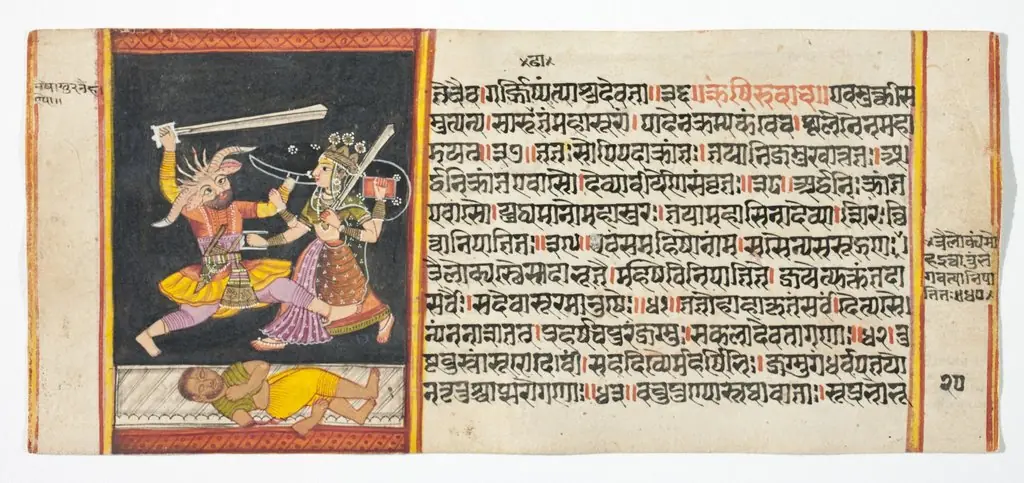
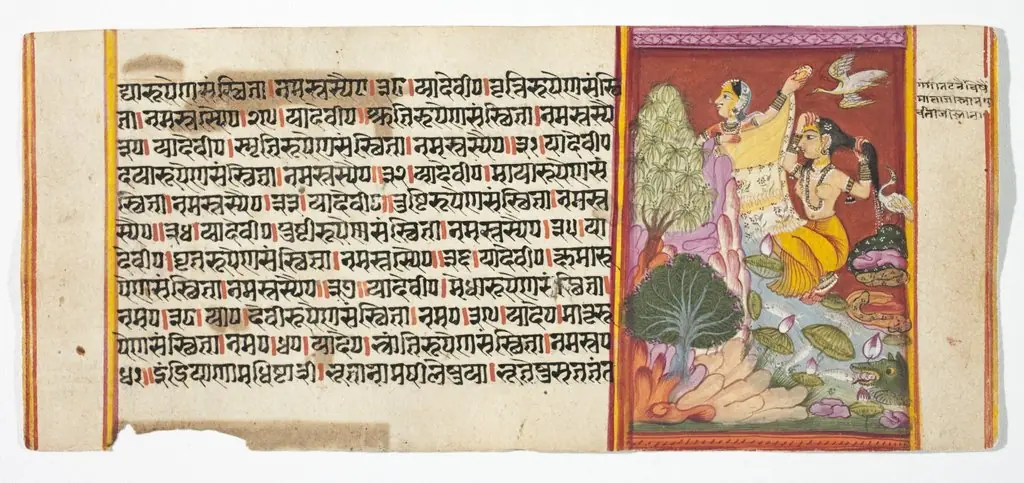
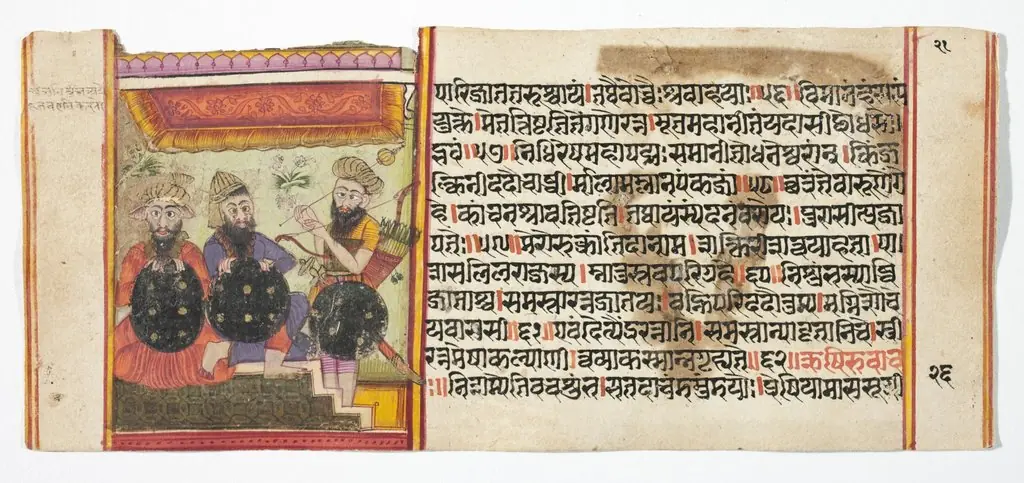
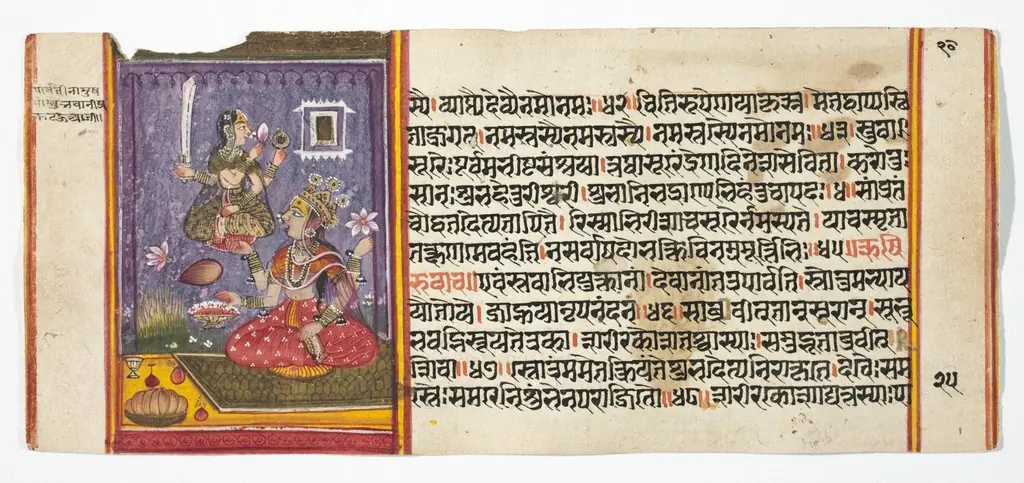
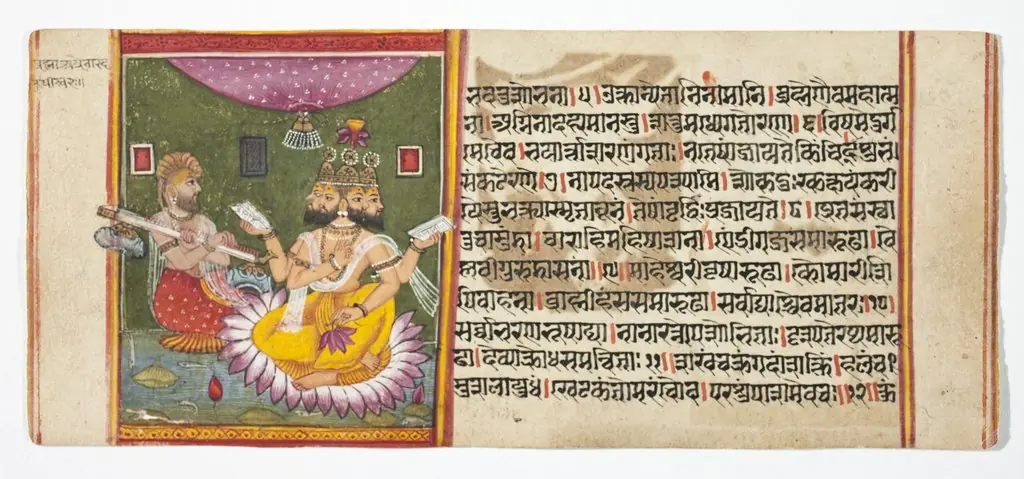
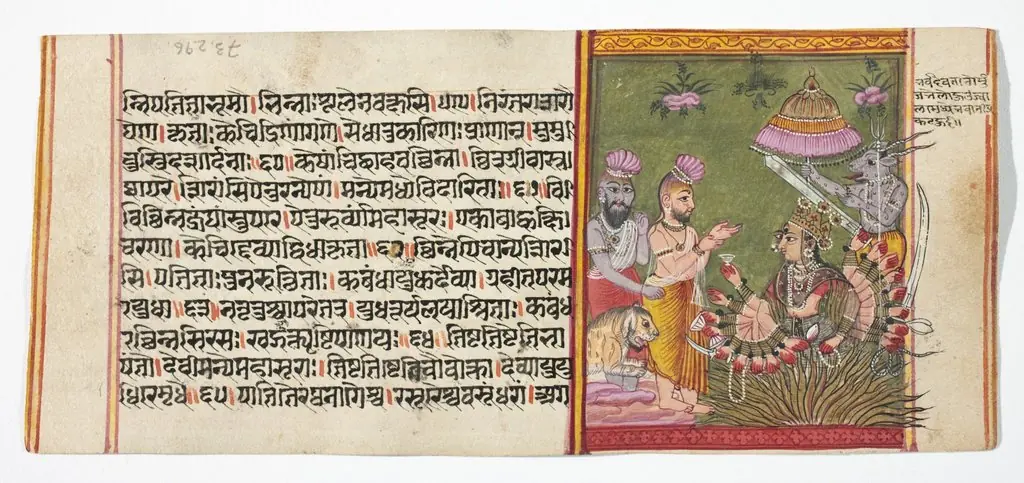
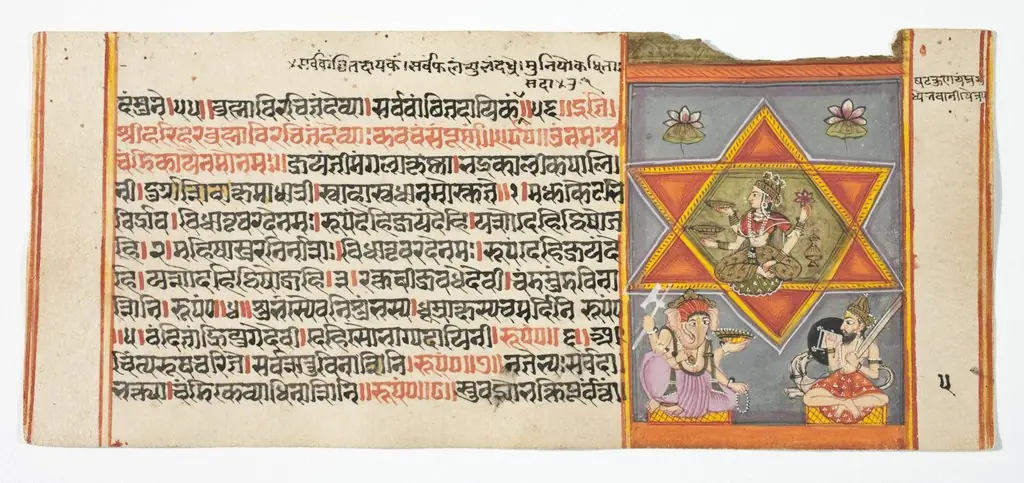
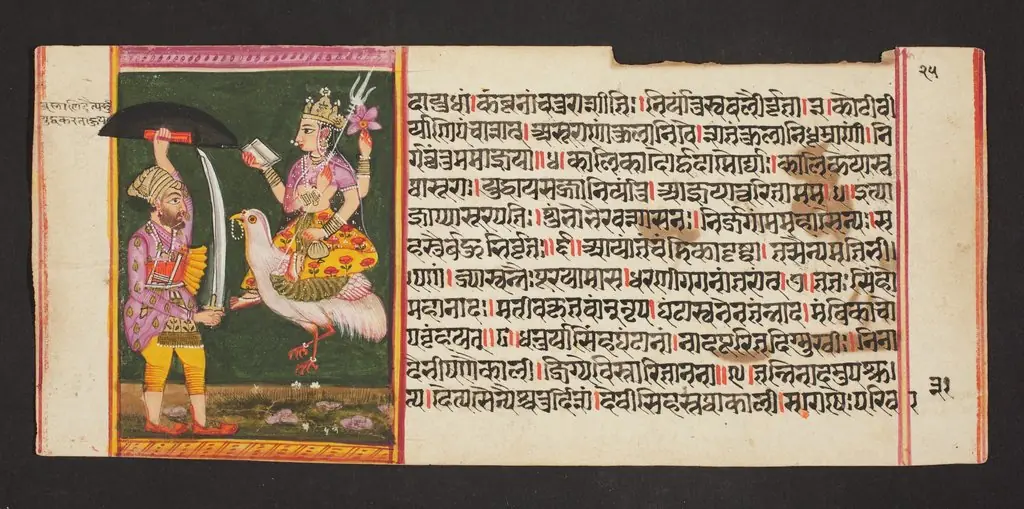
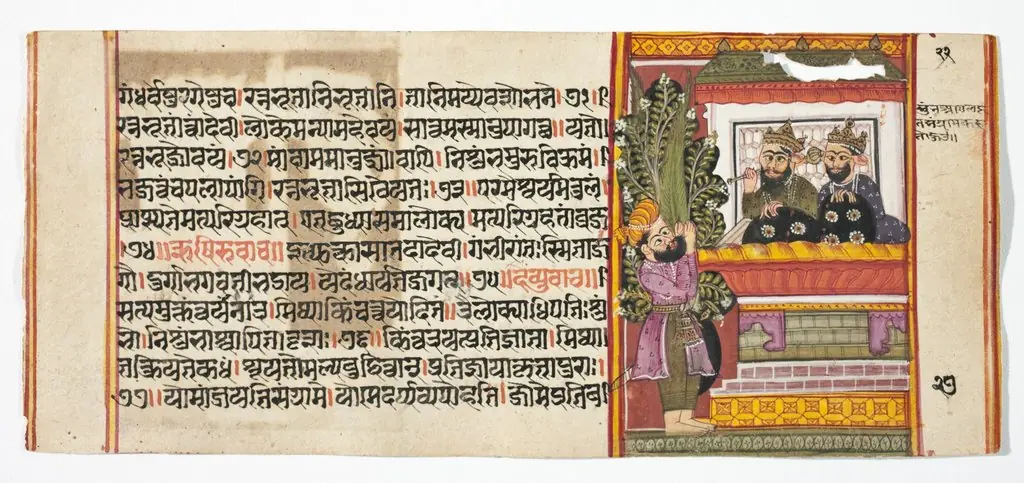
This painting illustrates a narrative scene from the Legend of Durga, rendered in a stylized manner reminiscent of early 20th-century Indian miniature traditions. It features three figures—two women and a seated man—engaged in a moment of ritual or ceremonial exchange. The composition is framed by a bold red wall and a white architectural element, with foliage adding organic contrast. The figures are adorned in detailed garments and jewelry, suggesting elevated social or divine status.
Subject & Meaning
The scene likely depicts a moment from the mythological narrative of Durga, possibly her triumph or a ritual offering. The three figures may represent deities or devotees in a sacred context, with the cups symbolizing libations or offerings. The presence of ornate attire and structured architecture implies a divine or royal setting, reinforcing the spiritual gravity of the moment. The interaction between figures suggests ritual reciprocity, central to many Hindu devotional traditions.
Technique & Style
The painting employs fine brushwork and flat, saturated colors typical of regional Indian miniature styles. Details in jewelry and fabric are rendered with precision, while the background uses simplified forms to focus attention on the figures. The lack of perspective and emphasis on pattern over depth align with traditional Indian pictorial conventions. The red wall and white structure serve as symbolic backdrops rather than realistic environments.
History & Provenance
The painting’s stylistic affinities with works held by the Detroit Institute of Arts suggest it may originate from early 20th-century Indian art collections, possibly from a courtly or devotional tradition. Its provenance remains undocumented, but its aesthetic aligns with works produced in regions like Rajasthan or Pahari, where narrative miniatures flourished under royal patronage. It may have entered Western collections during the colonial era.
Context
Created during a period when Indian artists were navigating colonial influence and reviving indigenous styles, this work reflects a continuity of mythological storytelling through visual art. While Western institutions began collecting such pieces, local artisans maintained traditional iconography. The scene’s focus on ritual and divine figures aligns with broader trends in early modern Indian painting that emphasized spiritual narratives over naturalism.
Legacy
Though not widely published or exhibited, the painting contributes to the corpus of modern Indian miniatures that preserved classical themes amid changing artistic currents. Its stylistic choices affirm the endurance of pre-colonial visual languages in 20th-century practice. It stands as a quiet testament to the persistence of devotional imagery in a period of cultural transition.
Artist & collection

 Domestic Scene
 Giacomo and Cardinal Marco, investing Andrea, Abbot of San Zeno, with his Benefice
 The Nymph of Fontainebleau
 Portrait of a Woman
 Madonna and Child with Saints in the Enclosed Garden
 Venus and Minerva
 Family Group of Four on Sofa
 Wall painting from Room H of the Villa of P. Fannius Synistor at Boscoreale