Artwork
Page from Tales of a Parrot (Tuti-nama): text page
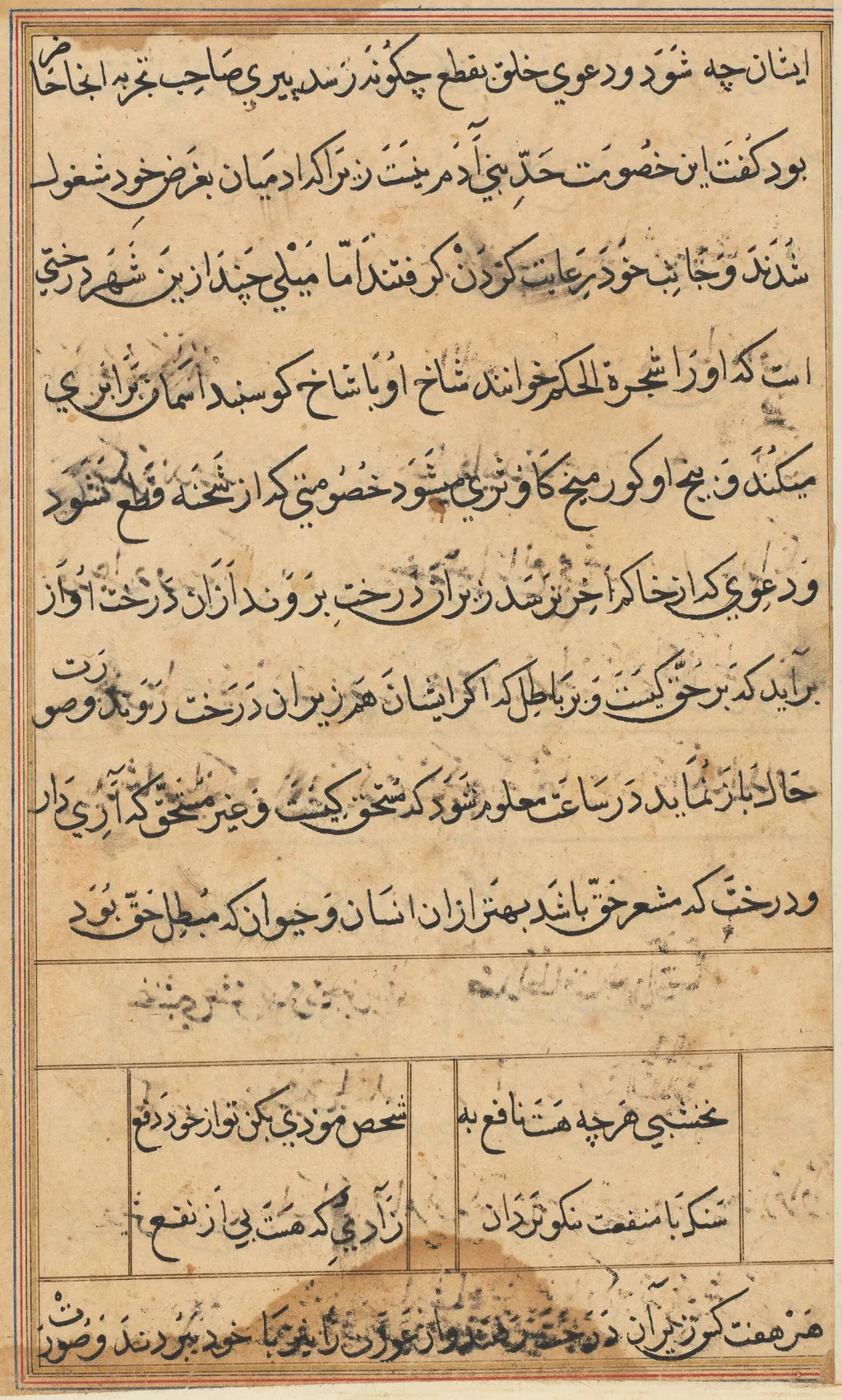
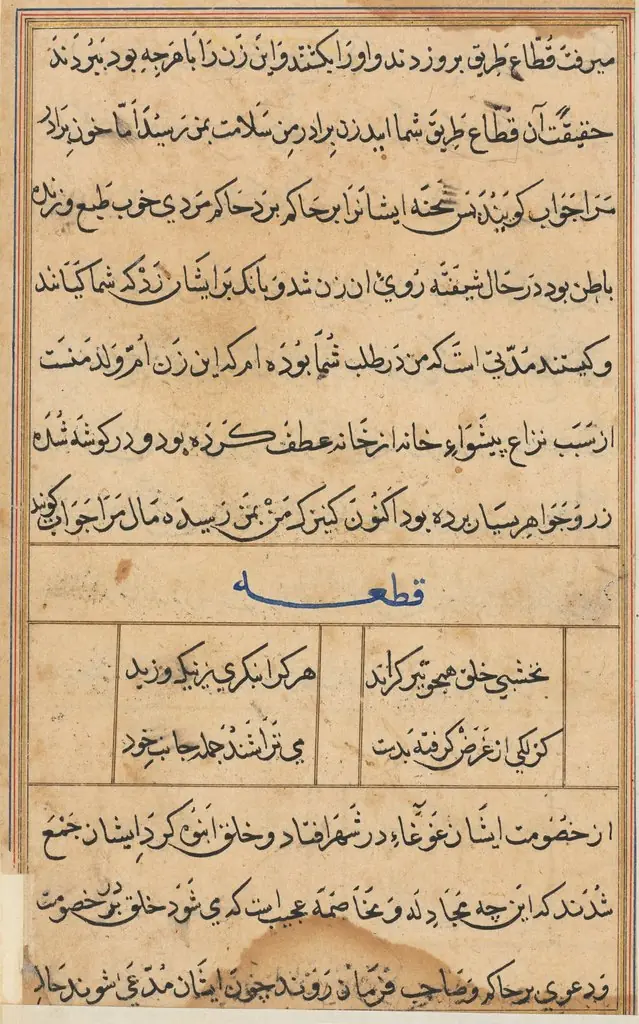
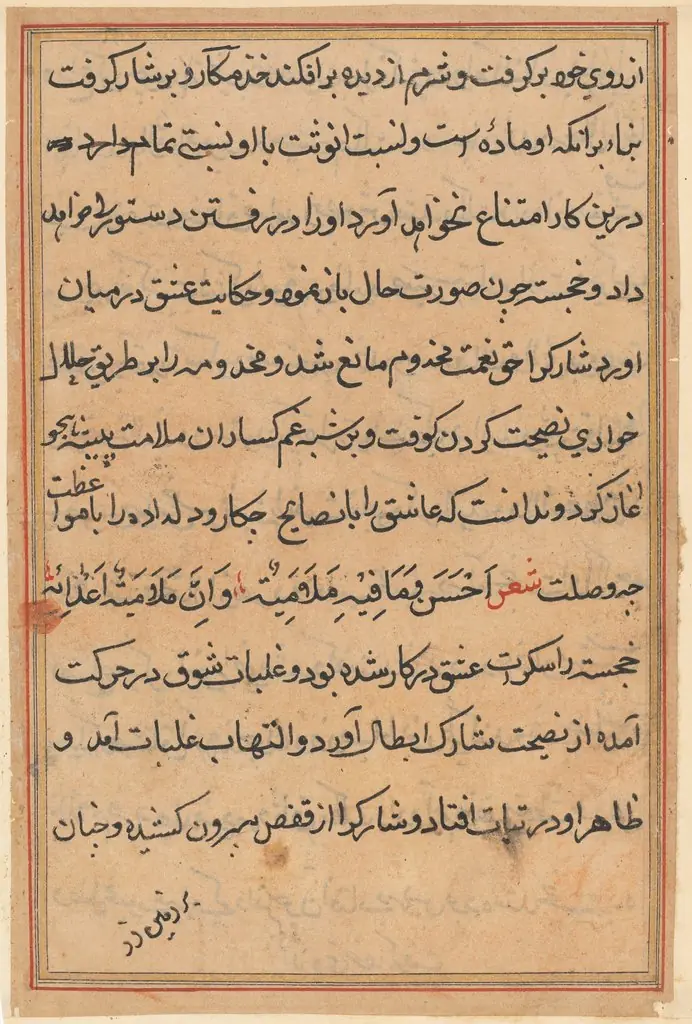
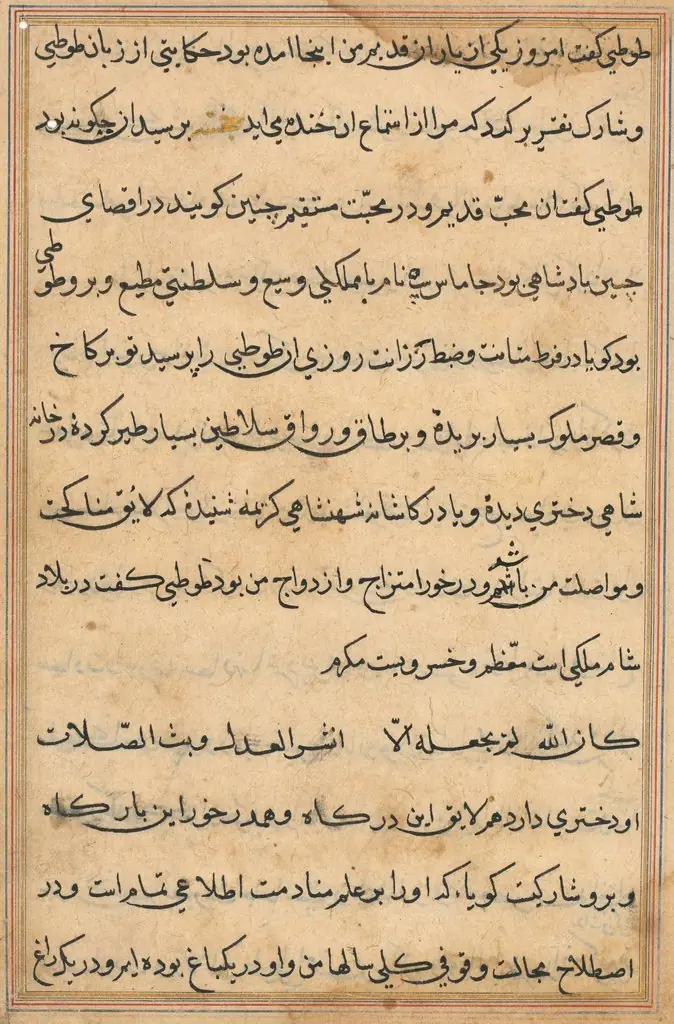
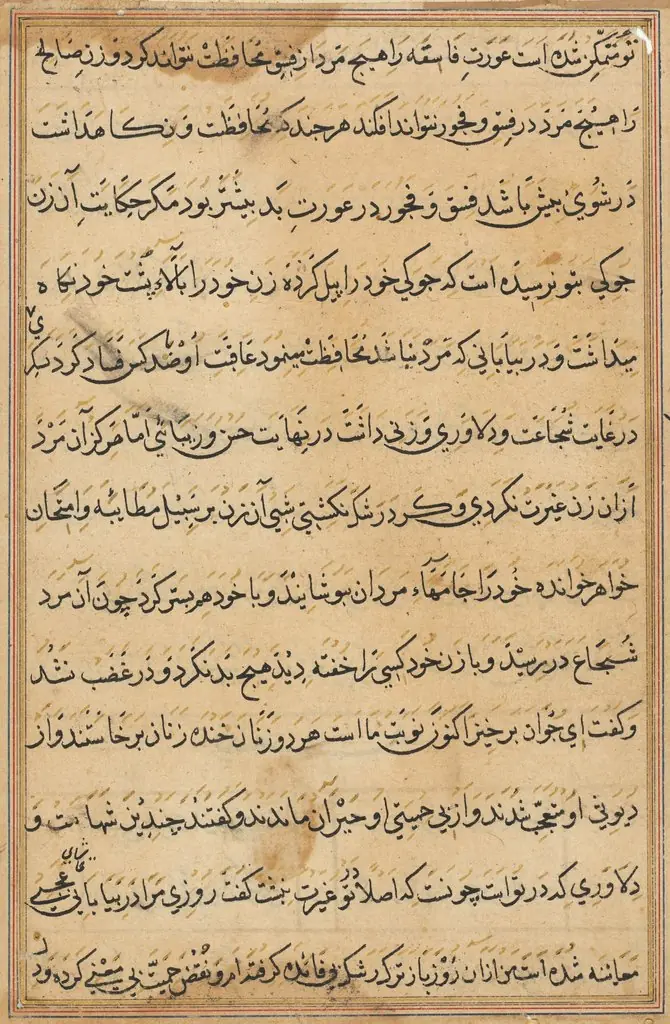
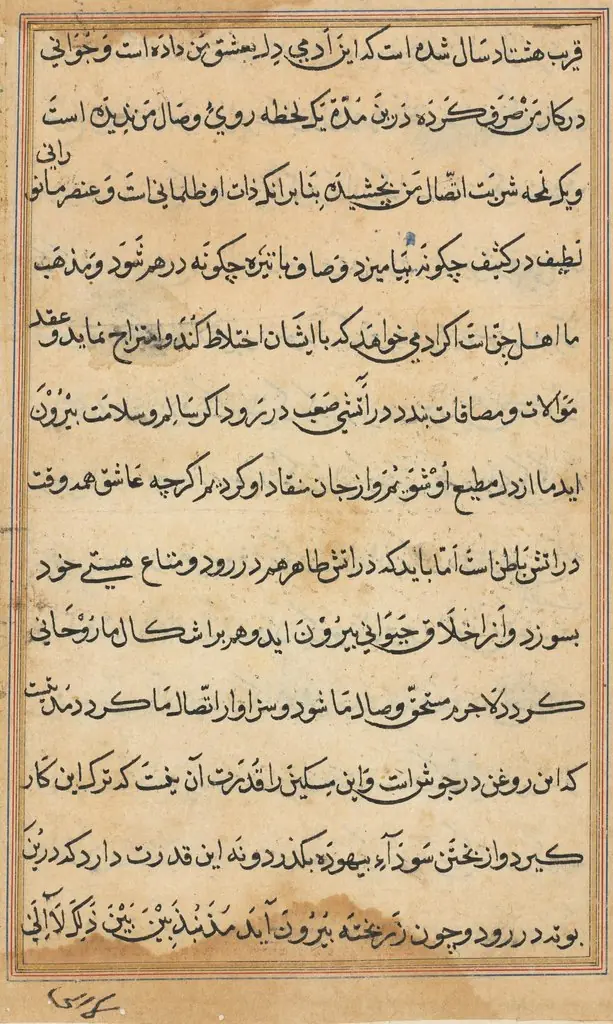
Page from Tales of a Parrot (Tuti-nama): text page is an unspecified painting. It dates from 1560 and is held in the collection of the Cleveland Museum of Art. This object is a painted page from the illustrated manuscript *Tales of a Parrot* (Tuti‑nama).
About this work
Overview
This object is a painted page from the illustrated manuscript *Tales of a Parrot* (Tuti‑nama). Executed on a light‑brown surface, the page is filled with flowing black calligraphy, bordered by delicate red and gold bands that frame the text. The work is held in the collection of the Cleveland Museum of Art.
Subject & Meaning
The text presents a segment of the *Tales of a Parrot*, a narrative traditionally associated with courtly entertainment. The manuscript was commissioned for Prince Salim, suggesting a purpose of literary amusement and moral instruction within a royal context.
Technique & Style
The calligraphic script appears to be hand‑drawn, rendered in black pigment that has darkened with age. Thin red and gold ornamental borders surround the text, while marginal notes or signatures are added in smaller lines at the bottom, indicating a layered approach to composition.
History & Provenance
Created for Prince Salim, the page reflects the patronage practices of the period in which the *Tuti‑nama* was produced. It entered the Cleveland Museum of Art’s collection through acquisition, though the precise chain of ownership before its museum entry is not detailed in the available records.
Context
Manuscript illustration was a prominent art form in the region, combining literary content with visual embellishment. The use of red and gold framing aligns with contemporary decorative conventions intended to highlight the importance of the text for a princely audience.
Artist & collection

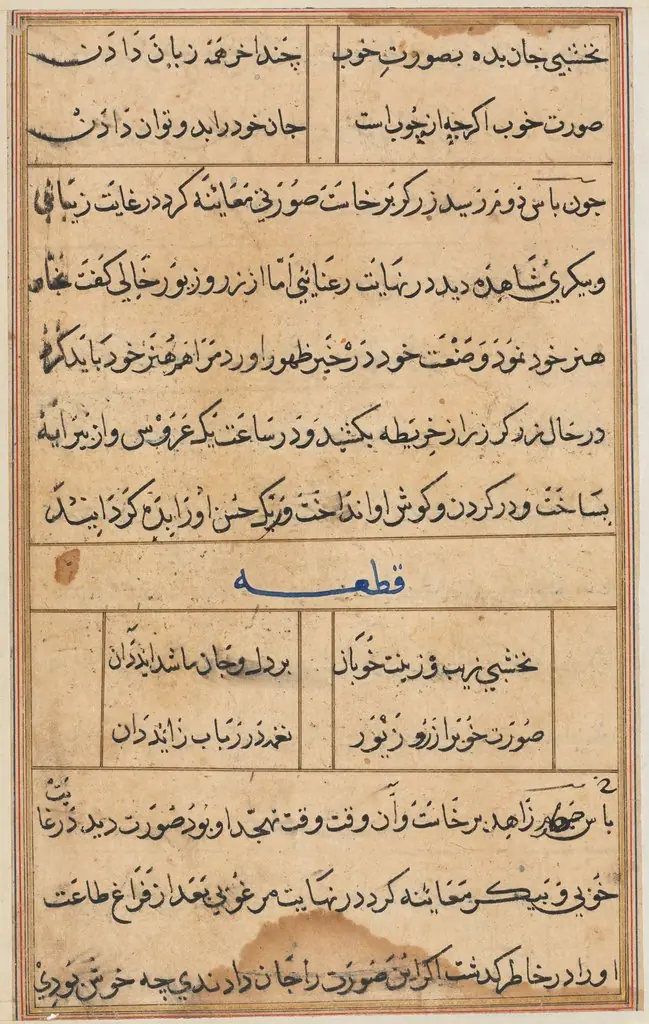 Page from Tales of a Parrot (Tuti-nama): text page
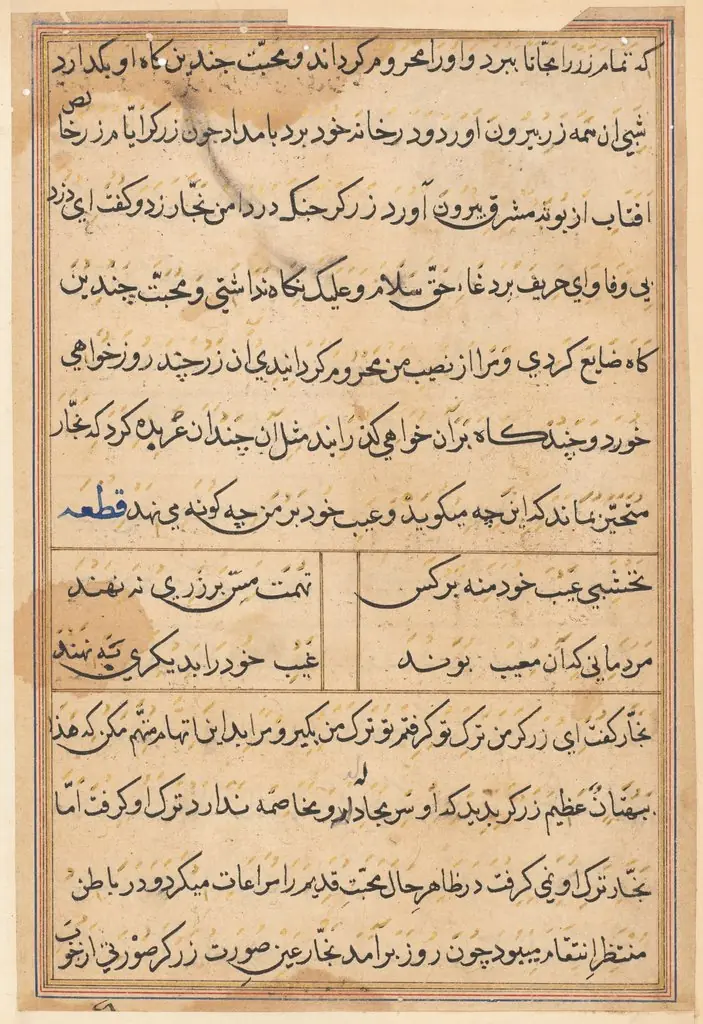 Page from Tales of a Parrot (Tuti-nama): text page
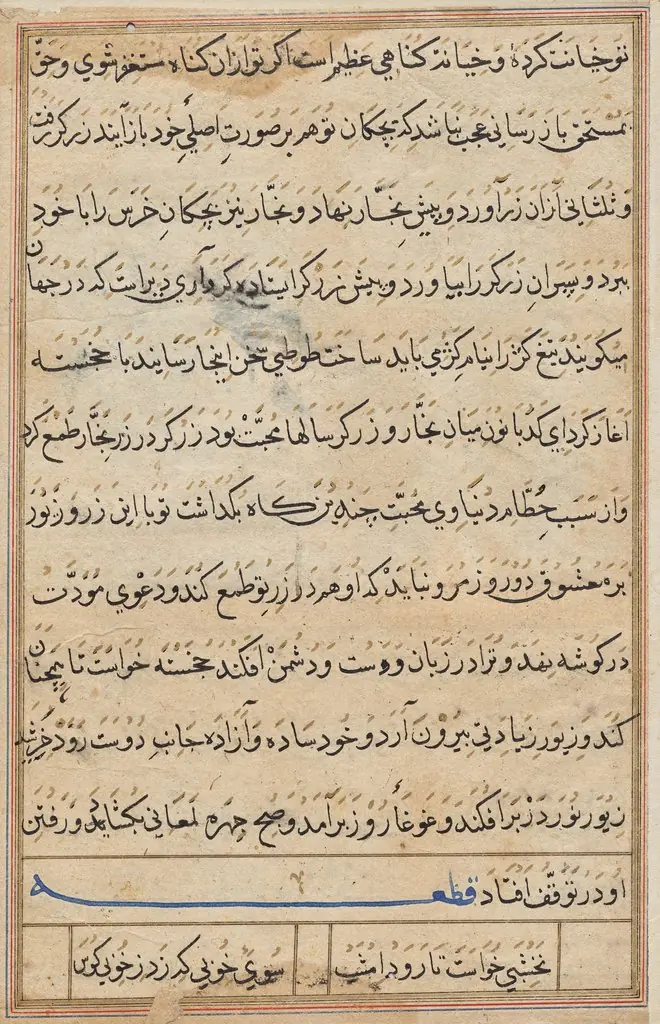 Page from Tales of a Parrot (Tuti-nama): text page
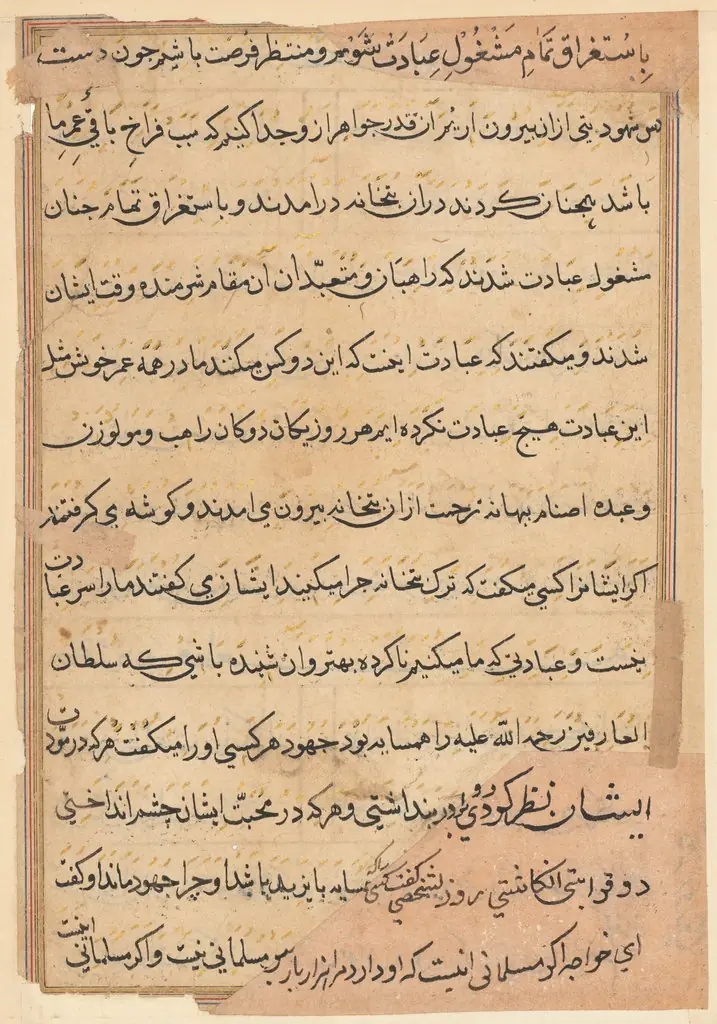 Page from Tales of a Parrot (Tuti-nama): text page
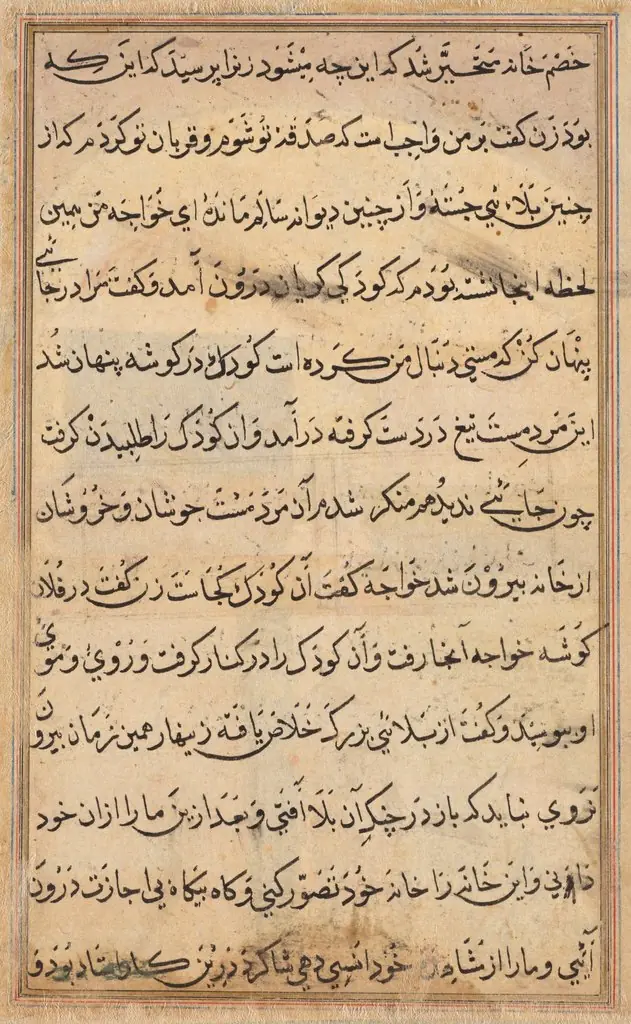 Page from Tales of a Parrot (Tuti-nama): text page
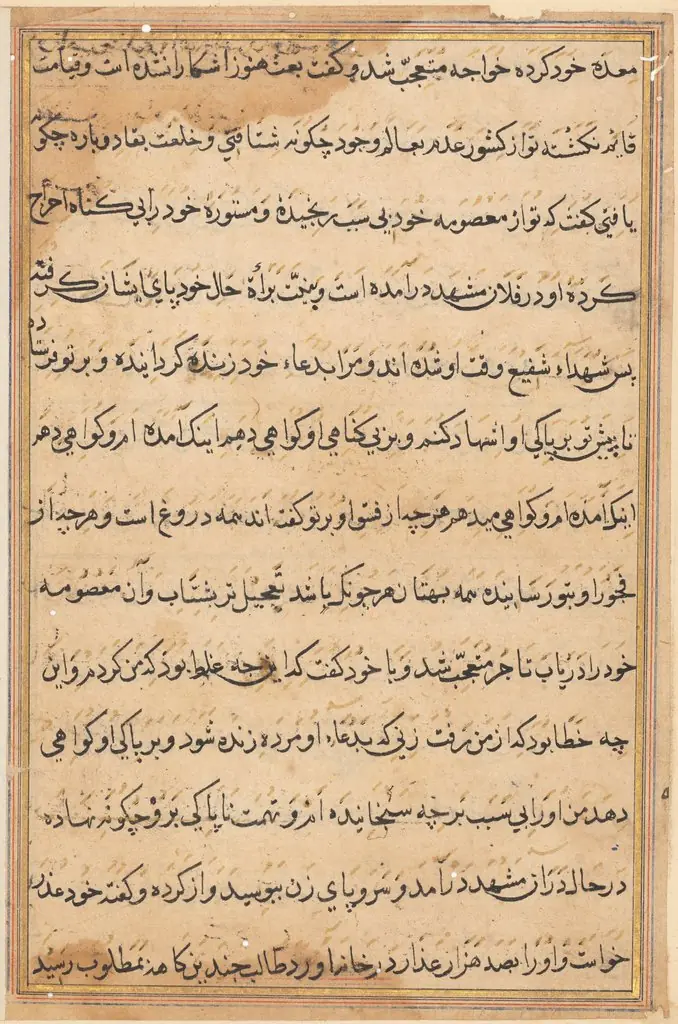 Page from Tales of a Parrot (Tuti-nama): text page
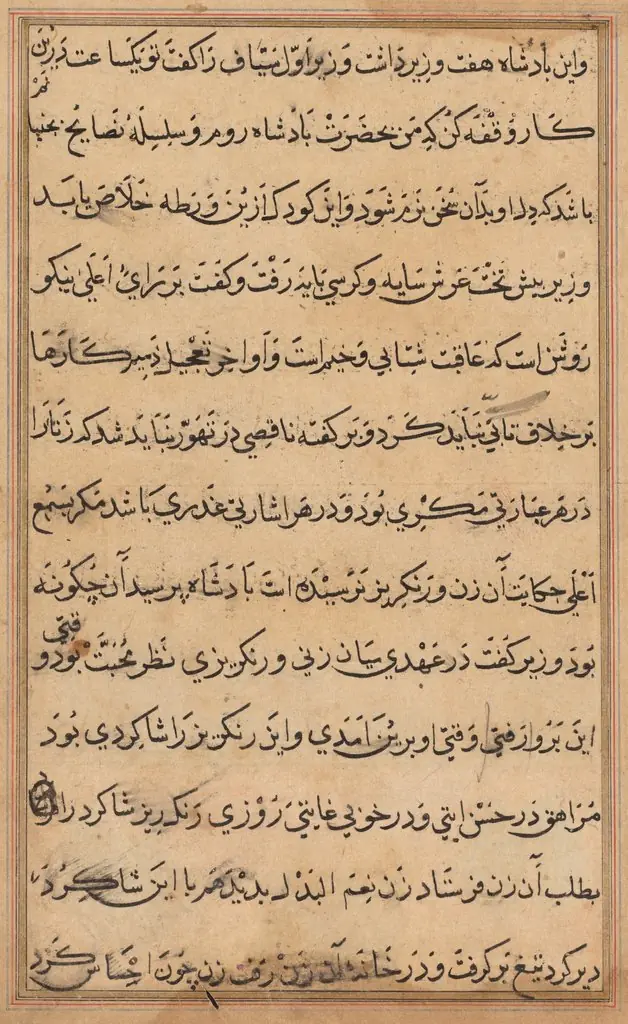 Page from Tales of a Parrot (Tuti-nama): text page
 Page from Tales of a Parrot (Tuti-nama): text page
 Page from Tales of a Parrot (Tuti-nama): text page
 Page from Tales of a Parrot (Tuti-nama): text page
 Page from Tales of a Parrot (Tuti-nama): text page
 Page from Tales of a Parrot (Tuti-nama): text page