Artwork
Page from Tales of a Parrot (Tuti-nama): text page
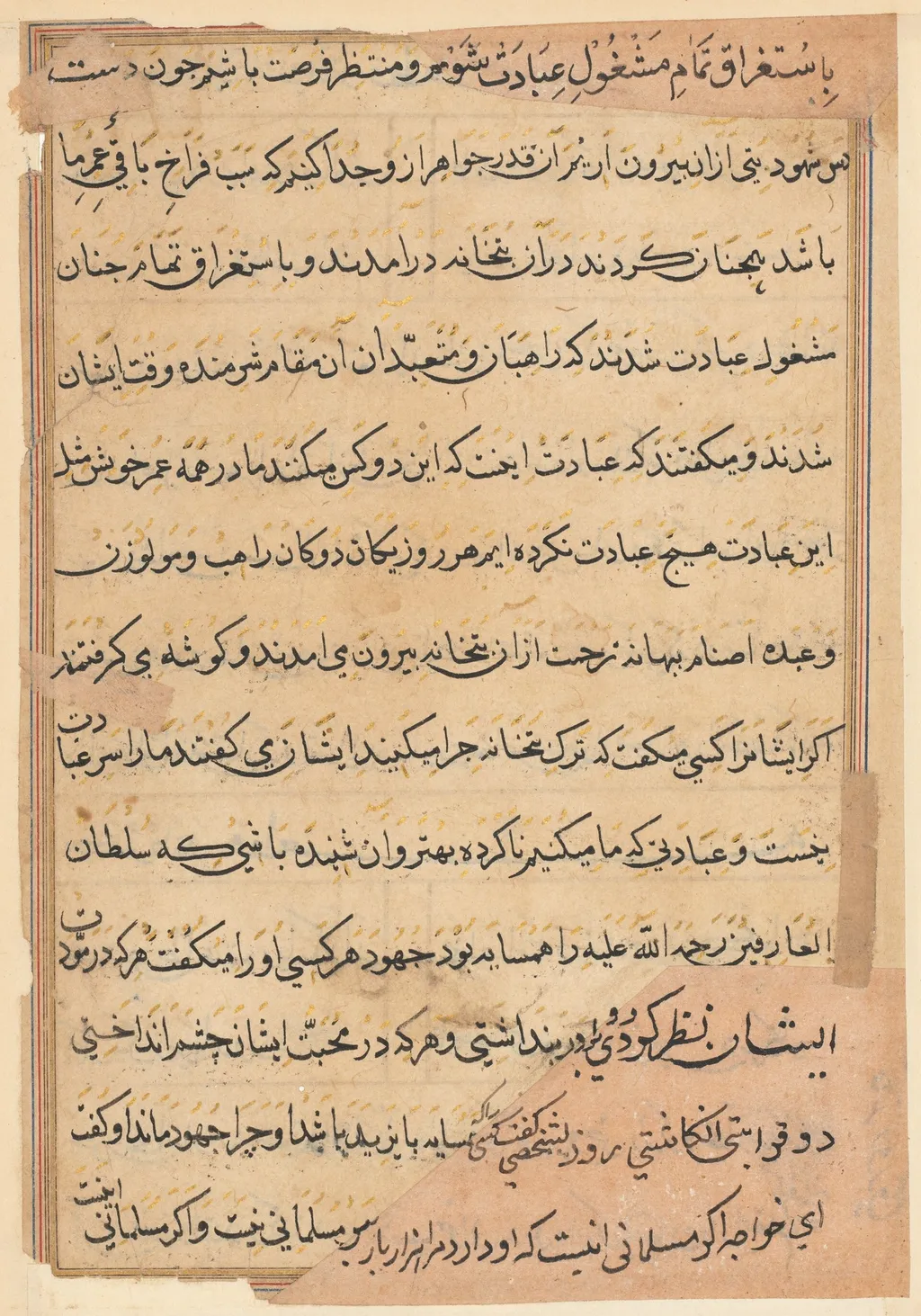
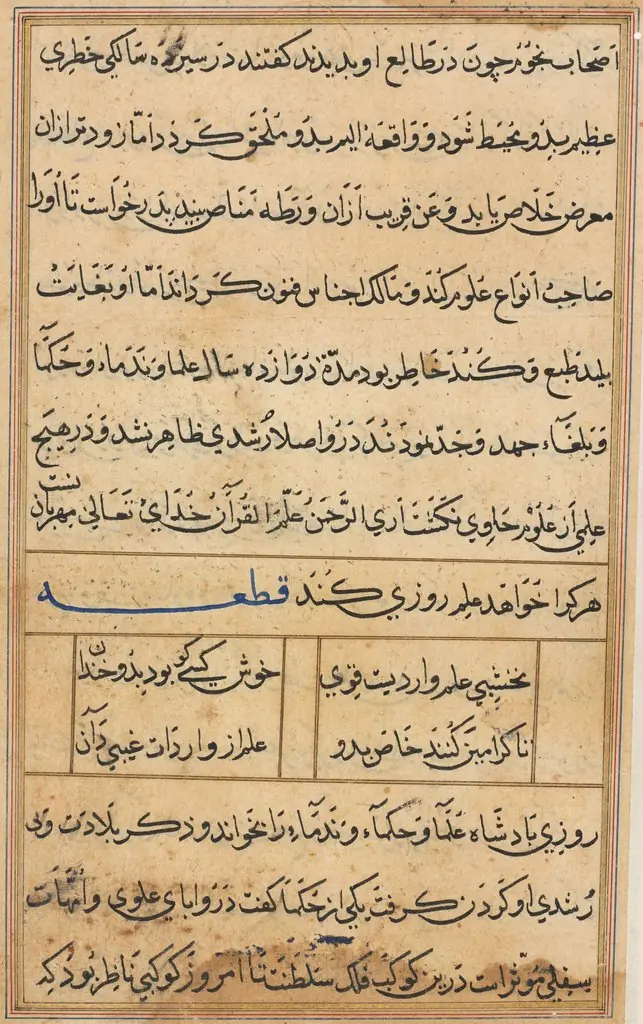
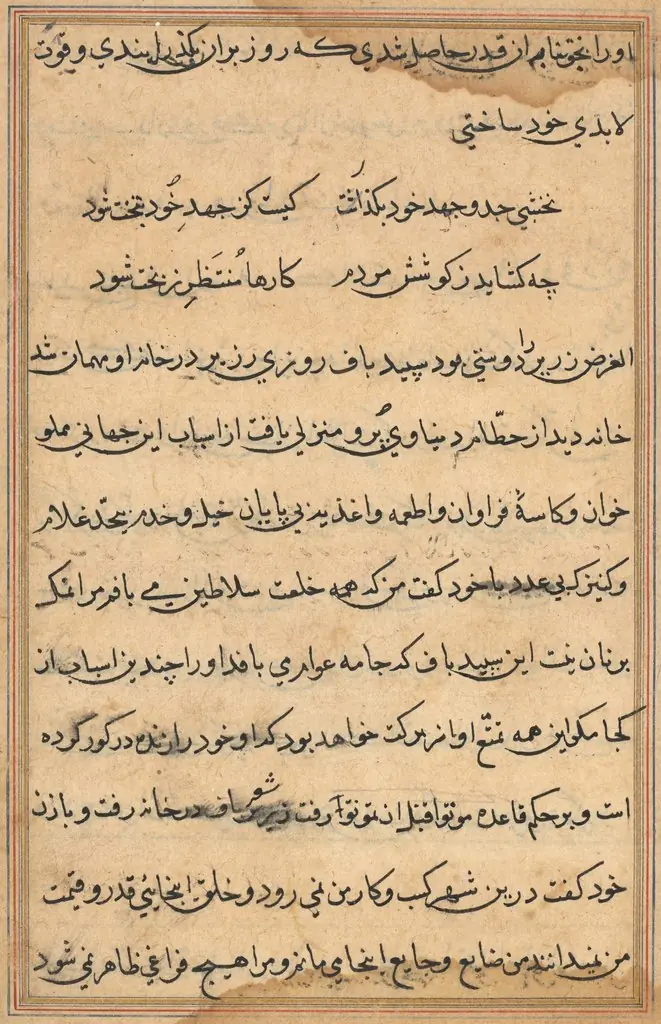
Page from Tales of a Parrot (Tuti-nama): text page is an unspecified painting. It dates from 1560 and is held in the collection of the Cleveland Museum of Art. This object is a painted page from the Persian manuscript known as Tales of a Parrot (Tuti‑nama).
About this work
Overview
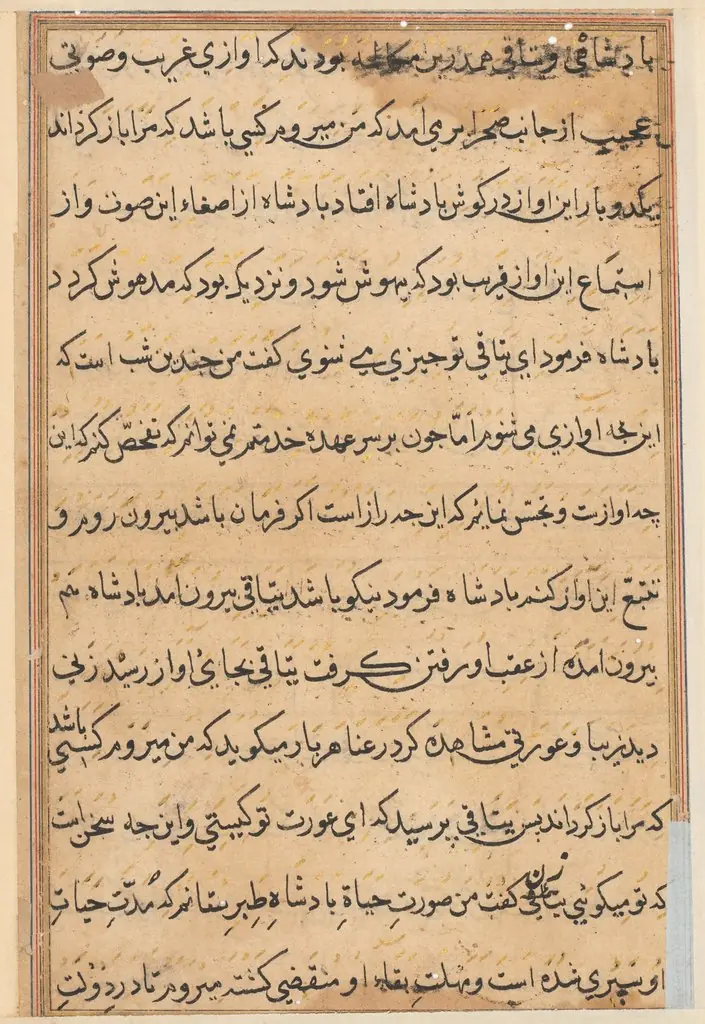
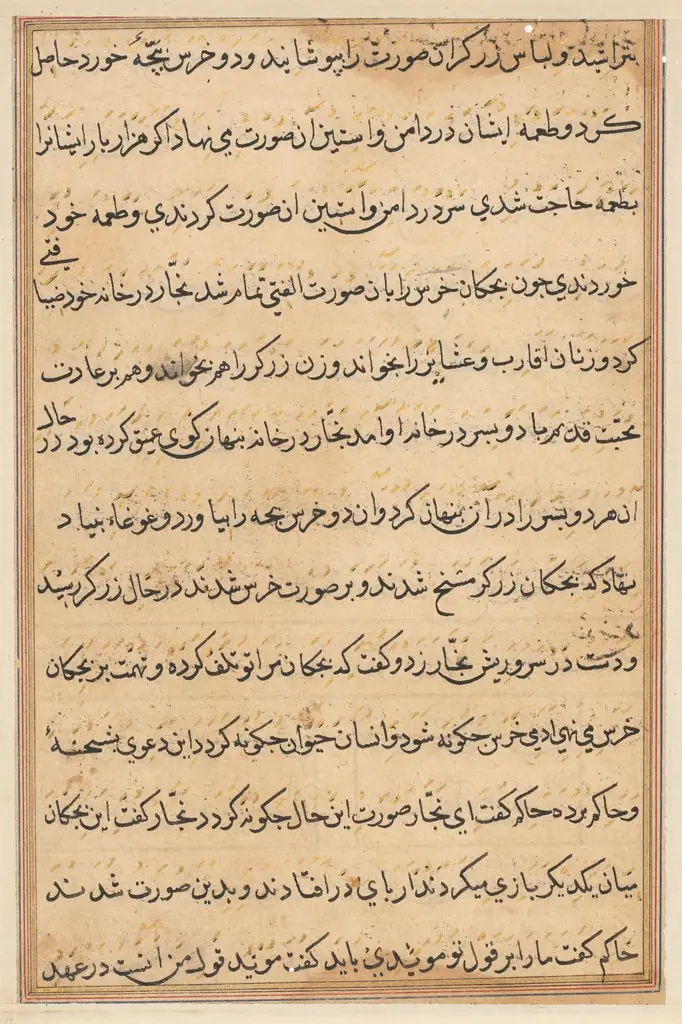
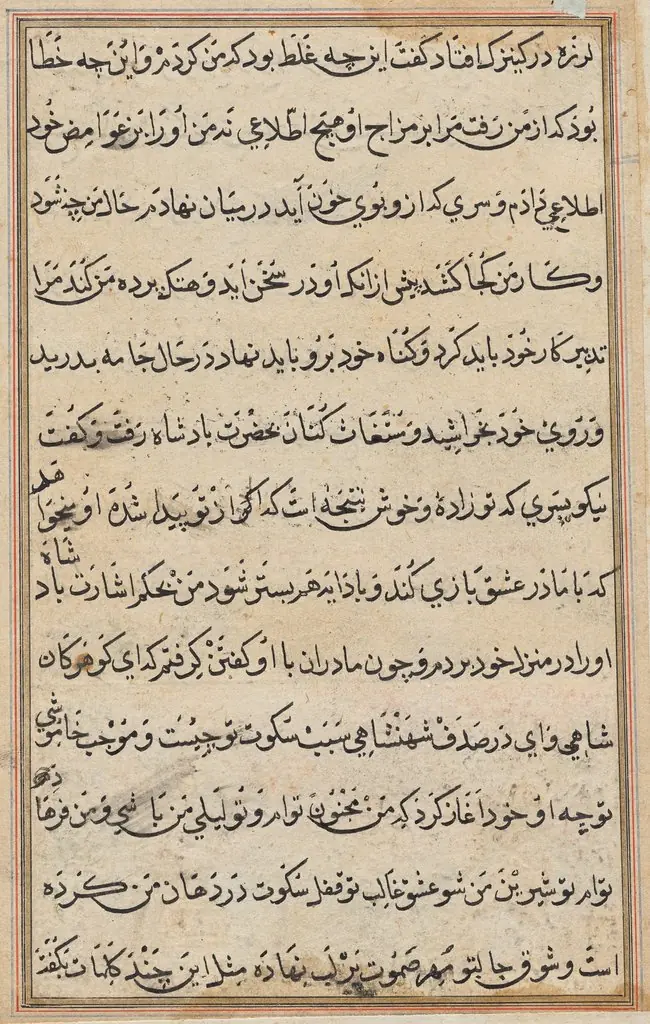
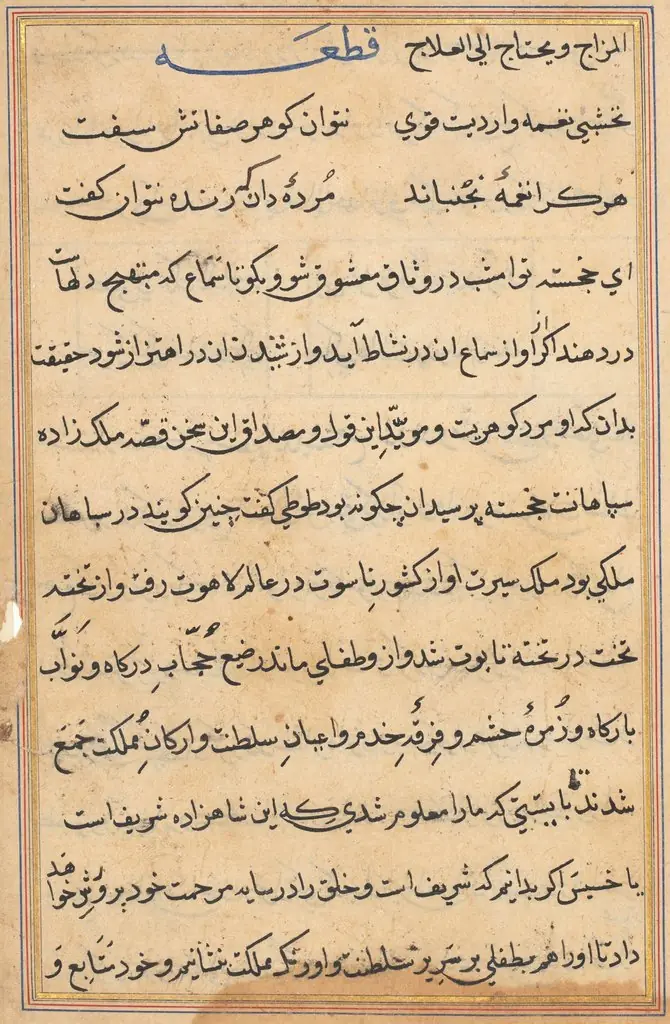
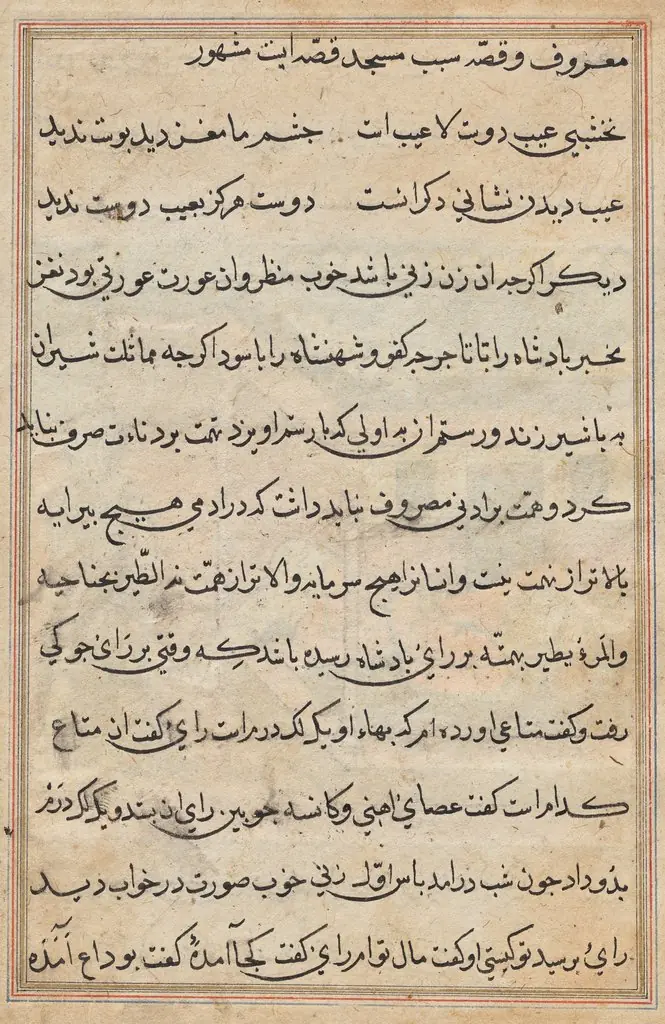
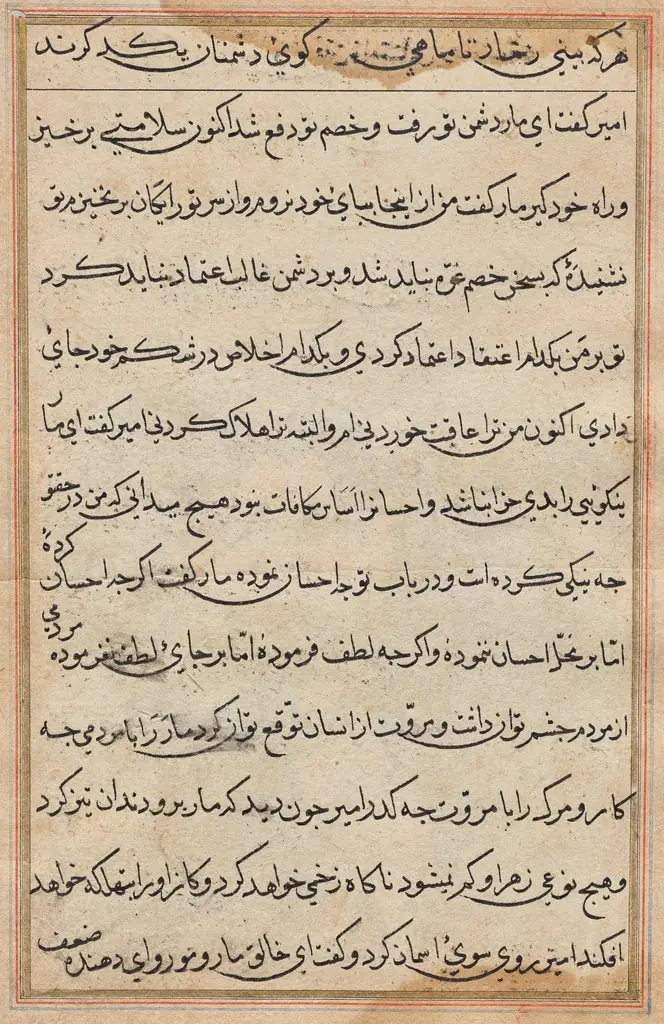
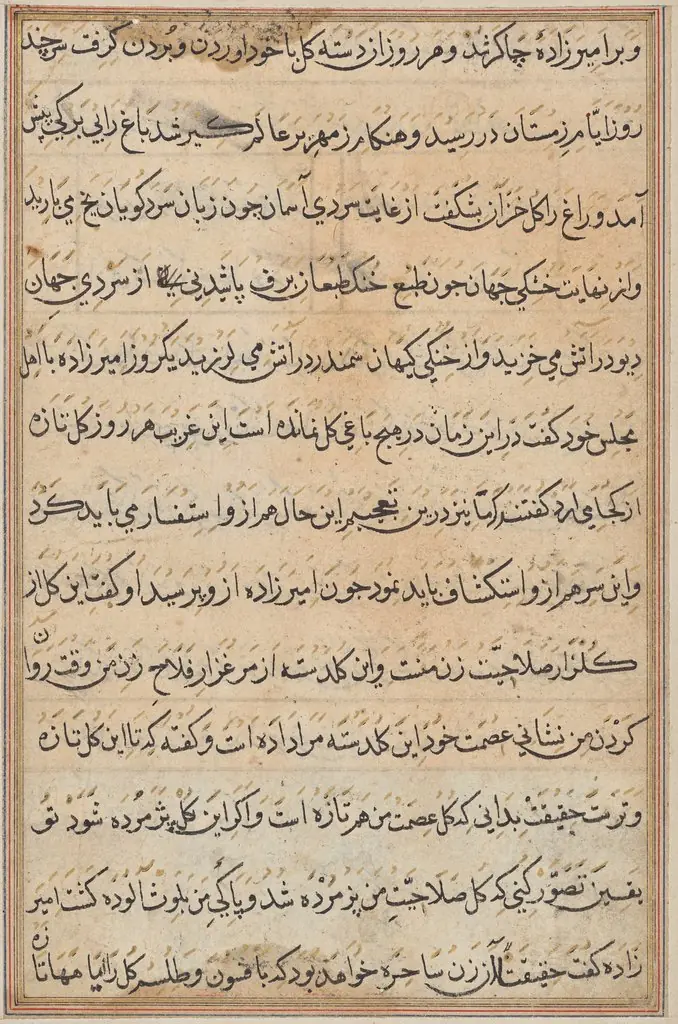
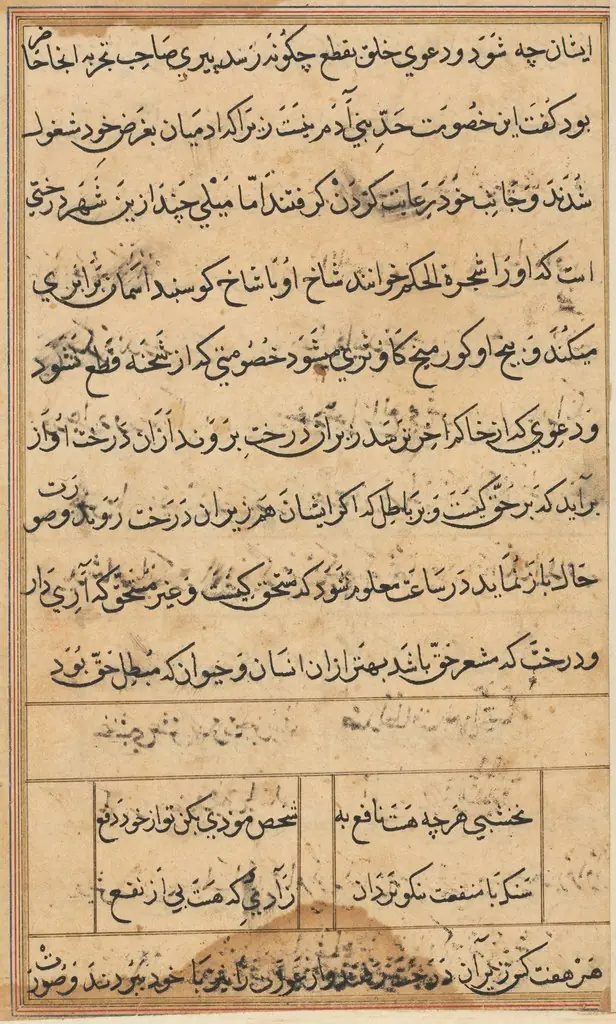
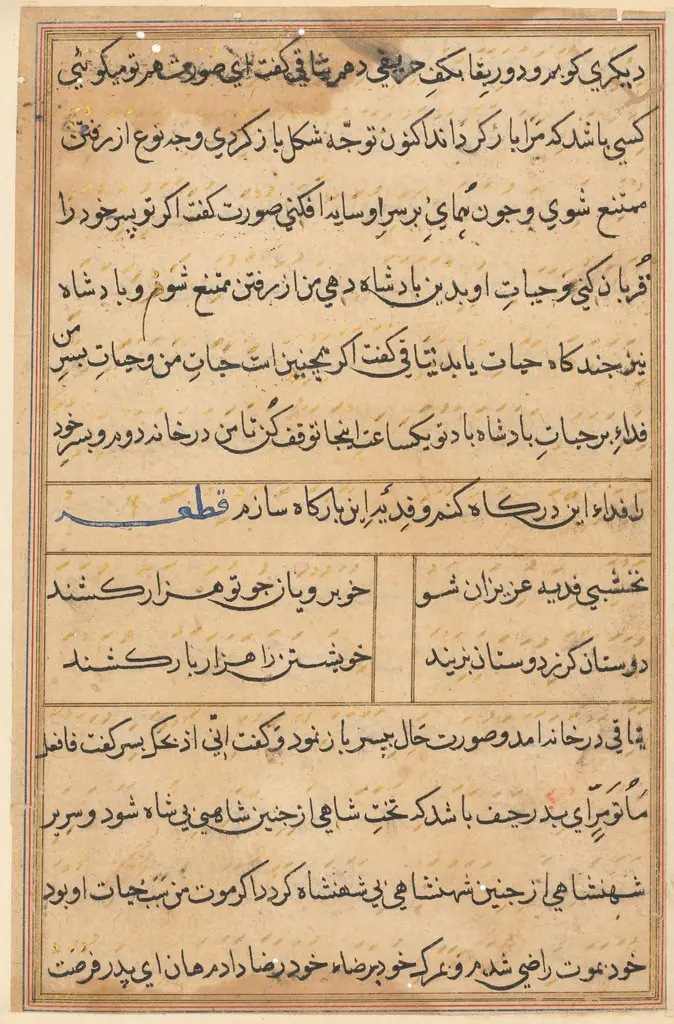
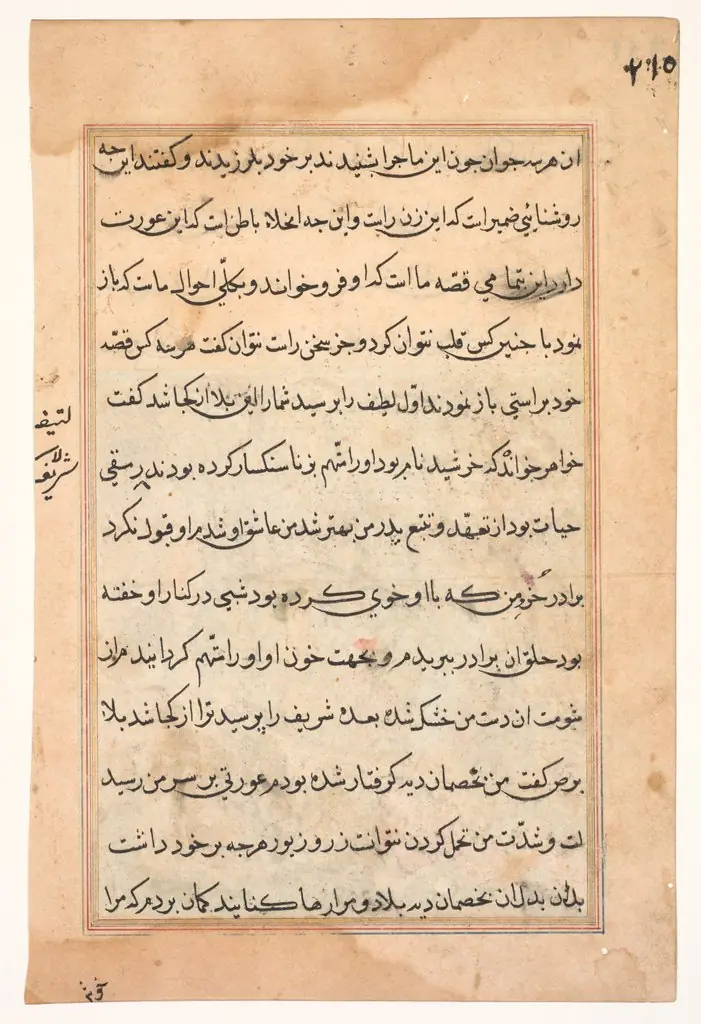
This object is a painted page from the Persian manuscript known as Tales of a Parrot (Tuti‑nama). The sheet measures roughly the size of a standard folio and is executed as a decorative illustration rather than a purely textual document. Its surface bears dense black calligraphy set against a light, slightly yellowed ground, filling the entire page with a continuous flow of narrative text.
Subject & Meaning
The script records episodes from the Tuti‑nama, a collection of moral stories featuring a parrot that imparts wisdom. While the visual content is limited to the written line, the choice of elaborate lettering and ornamental embellishment underscores the didactic purpose of the work, inviting readers to contemplate ethical teachings through an aesthetically engaging medium.
Technique & Style
The artist employed ink on a prepared paper support, applying a uniform black pigment to render the flowing script. Letters are modulated in height and width, creating emphasis and visual rhythm. The page is edged with a narrow ornamental border, and minute specks of gold or brown pigment are scattered across the surface, adding subtle texture without detracting from the legibility of the text.
History & Provenance
The page originates from a Persian manuscript tradition that flourished between the 14th and 16th centuries, though the precise date of this sheet remains uncertain. It entered the collection of the Cleveland Museum of Art as part of a larger acquisition of illustrated manuscripts, where it is displayed alongside other pages from the same work, providing comparative insight into the manuscript’s production.
Context
Tuti‑nama manuscripts were commonly produced for elite patrons interested in moral literature and decorative book arts. The integration of calligraphic artistry with narrative content reflects a cultural emphasis on the visual presentation of text, a hallmark of Persian bookmaking that blended literary and aesthetic values.
Artist & collection

 Page from Tales of a Parrot (Tuti-nama): text page
 Page from Tales of a Parrot (Tuti-nama): text page
 Page from Tales of a Parrot (Tuti-nama): text page
 Page from Tales of a Parrot (Tuti-nama): text page
 Page from Tales of a Parrot (Tuti-nama): text page
 Page from Tales of a Parrot (Tuti-nama): text page
 Page from Tales of a Parrot (Tuti-nama): text page
 Page from Tales of a Parrot (Tuti-nama): text page
 Page from Tales of a Parrot (Tuti-nama): text page
 Page from Tales of a Parrot (Tuti-nama): text page
 Page from Tales of a Parrot (Tuti-nama): text page
 Page from Tales of a Parrot (Tuti-nama): text page