Artwork
Page from Tales of a Parrot (Tuti-nama): text page
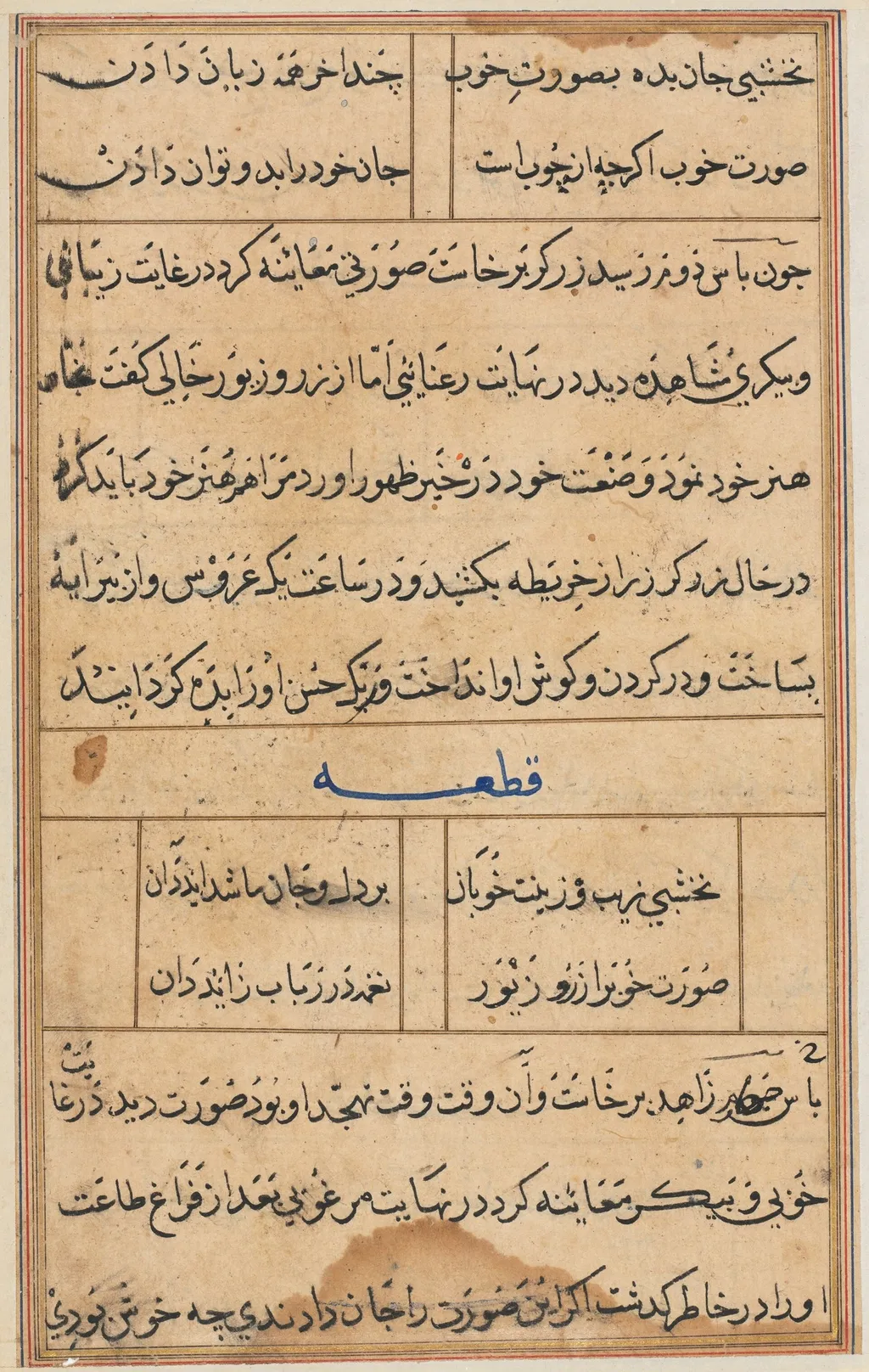
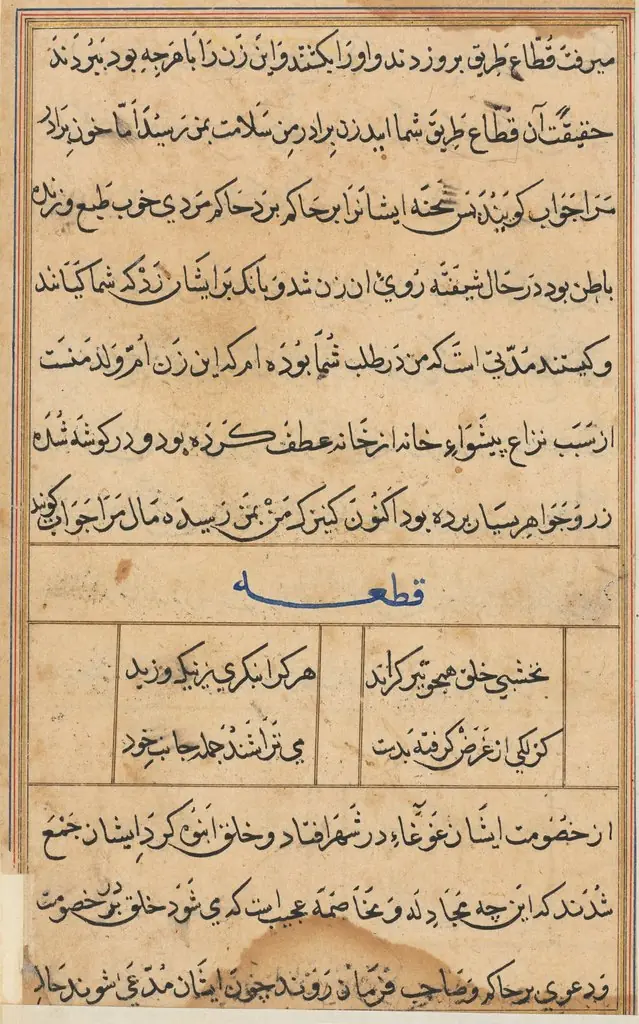
Page from Tales of a Parrot (Tuti-nama): text page is an unspecified painting. It dates from 1560 and is held in the collection of the Cleveland Museum of Art. This object is a painted page from the Persian manuscript *Tuti‑nama* (Tales of a Parrot).
About this work
Overview
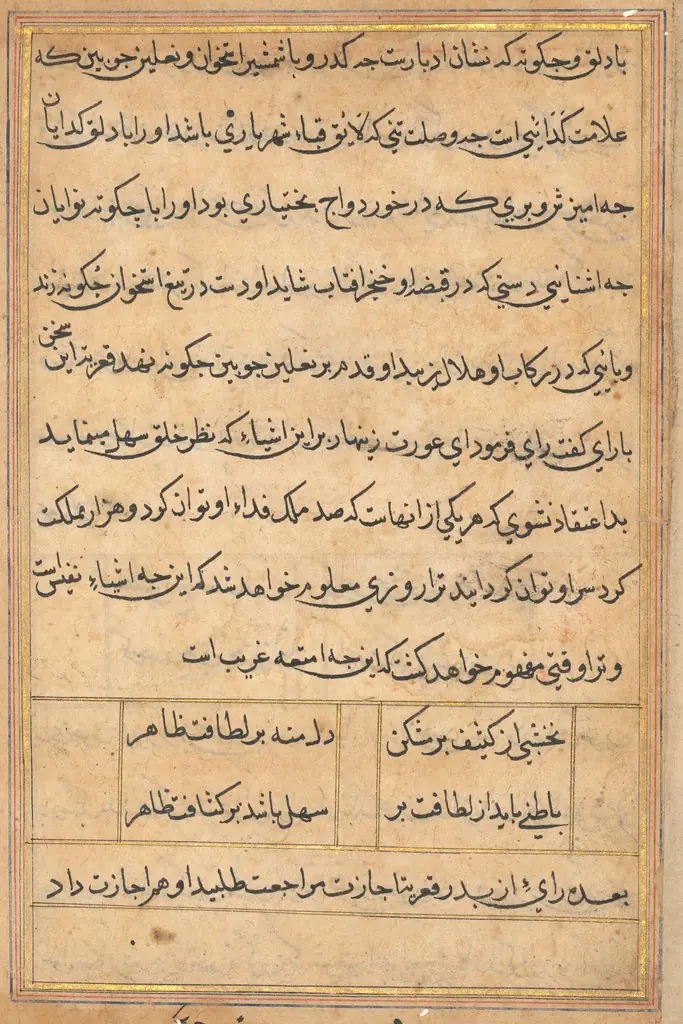
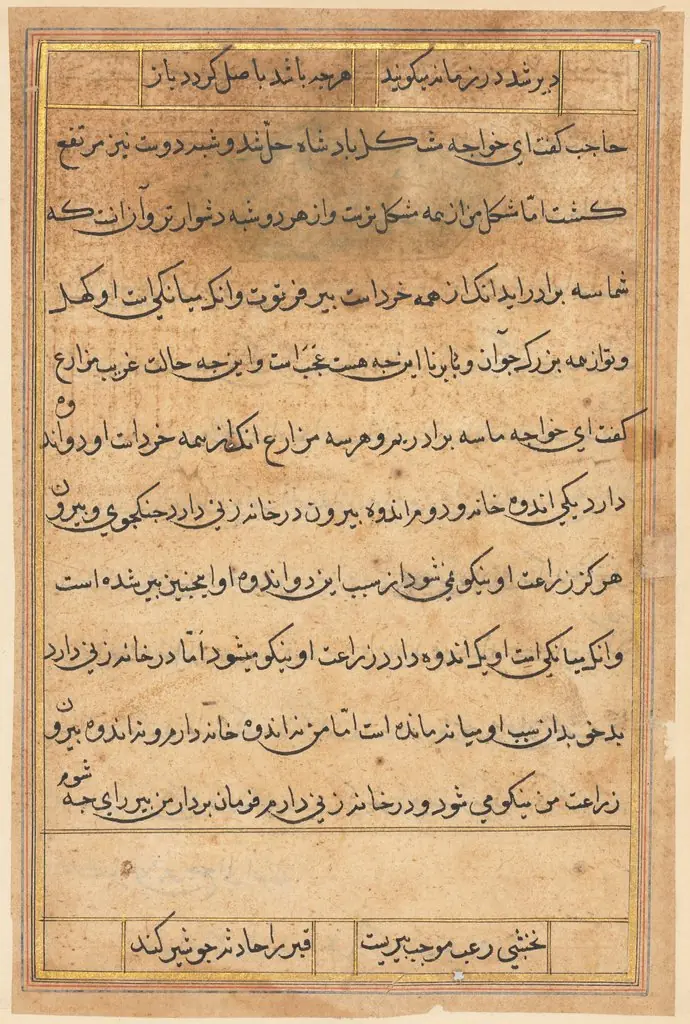
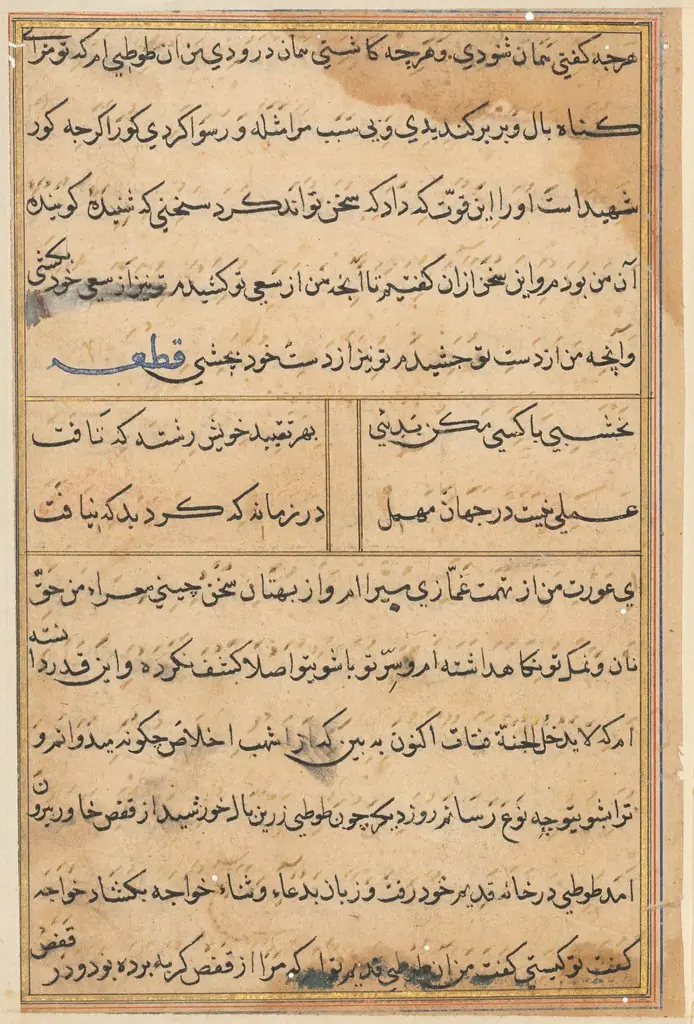
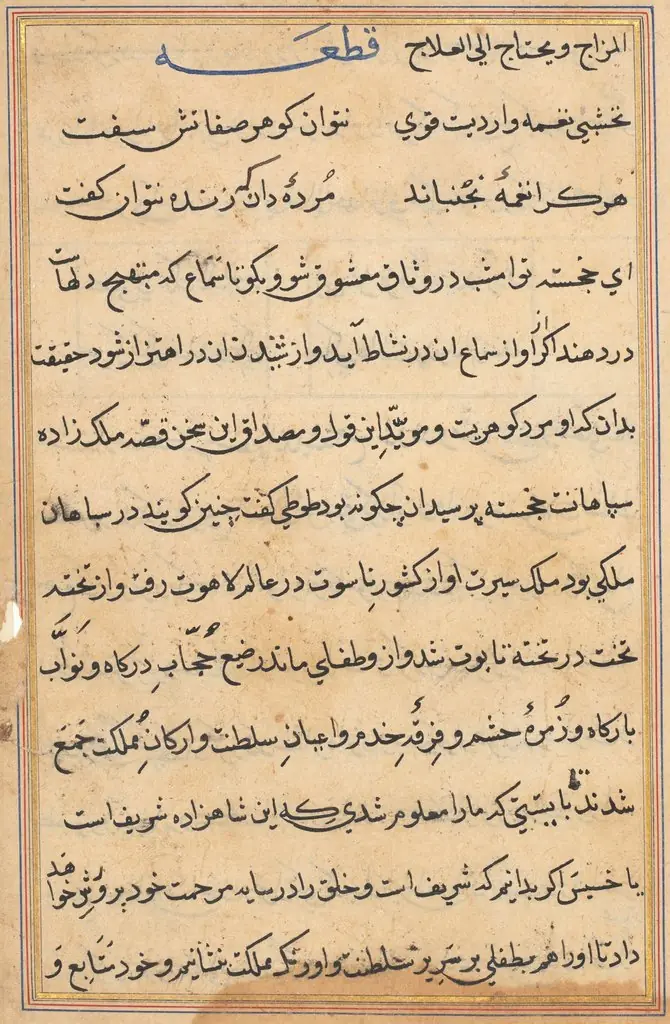
This object is a painted page from the Persian manuscript *Tuti‑nama* (Tales of a Parrot). Executed on a single sheet of paper, it functions as a textual illustration rather than a conventional image, yet its decorative treatment places it within the tradition of illuminated manuscript pages.
Subject & Meaning
The page contains a passage of the *Tuti‑nama* narrative, a moral tale addressed to a young prince named Salim. The story uses the parrot’s speech to convey ethical instruction, and the careful arrangement of the script underscores the didactic purpose of the text.
Technique & Style
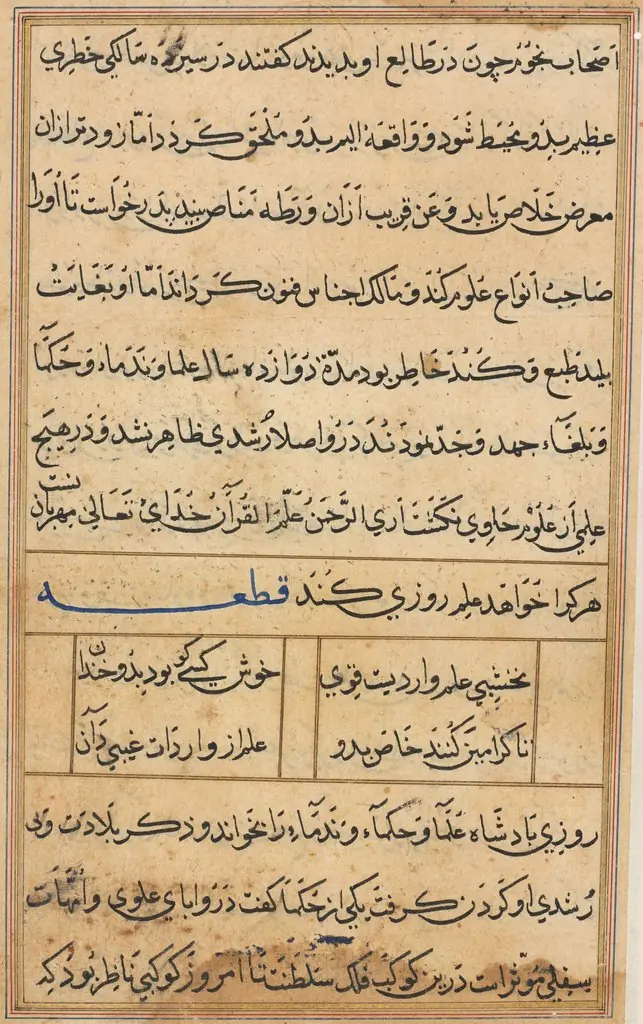
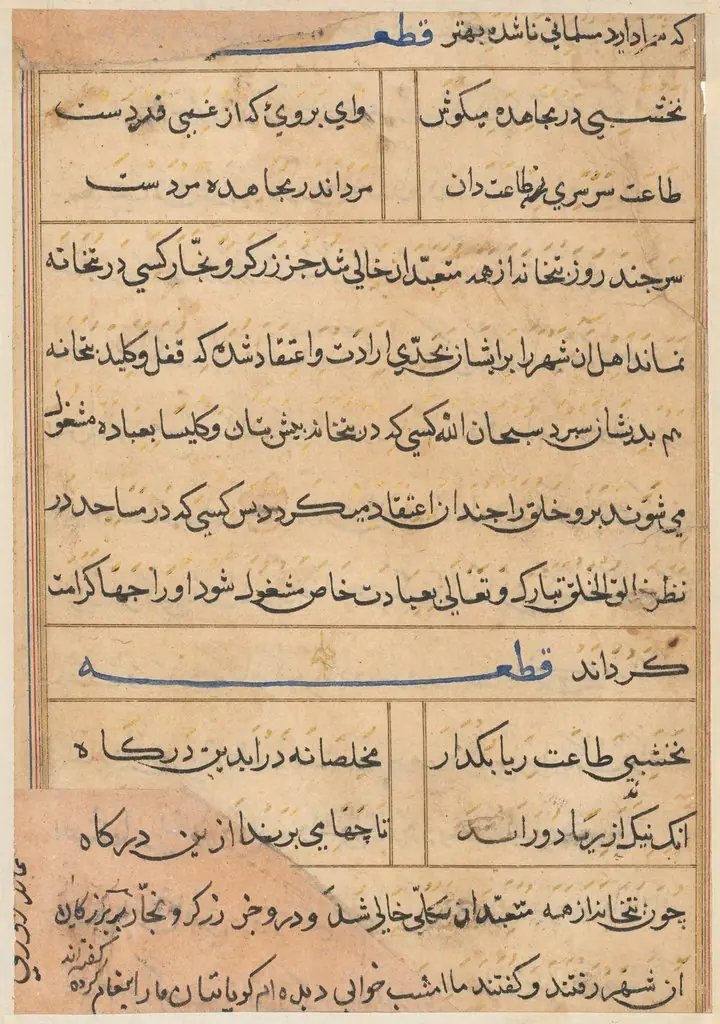
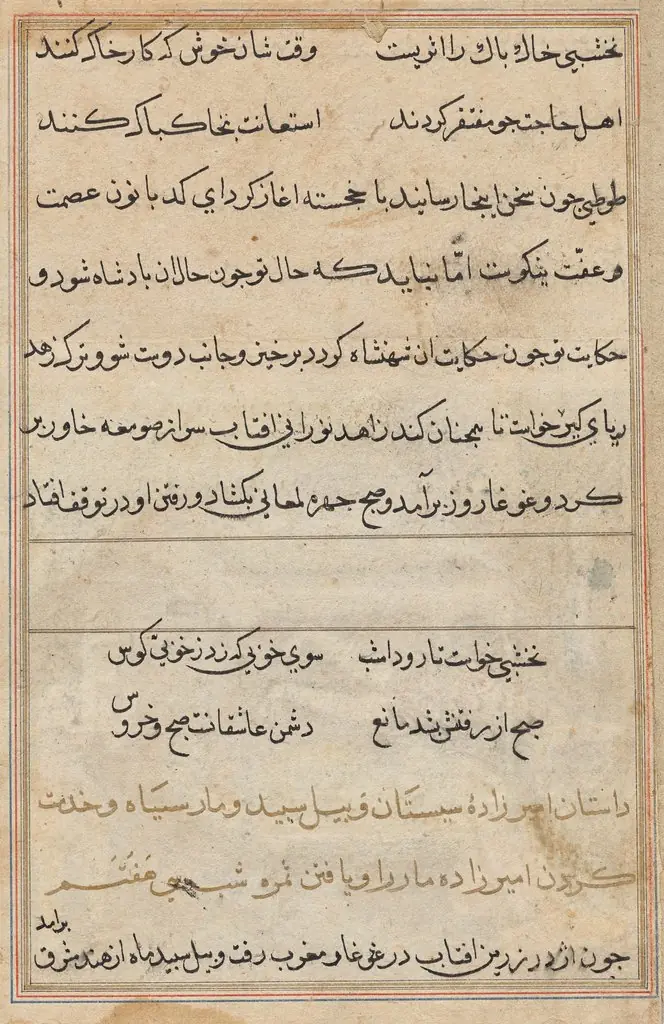
The surface is covered with flowing black ink arranged in tight horizontal lines. Varying brush pressure creates a contrast between bold, thick strokes and delicate, fine lettering. A single blue horizontal band bisects the page, indicating a textual division, while a thin red margin frames the entire sheet, adding a decorative accent typical of Persian book art.
History & Provenance
The page was produced as part of a deluxe copy of the *Tuti‑nama* commissioned for Prince Salim, likely in the Safavid period when such personalized manuscripts were common. The paper shows signs of age, including a warm patina, faint brown spots, and the red border, suggesting it has remained largely intact since its creation.
Context
Manuscript culture in early modern Persia valued the visual presentation of text as much as its literary content. Illuminated pages like this one combined calligraphic excellence with subtle color accents, reflecting the courtly taste for refined, portable works that could be both read aloud and displayed as objects of beauty.
Legacy
Pages from the *Tuti‑nama* continue to be studied for their integration of narrative, calligraphy, and modest illumination, offering insight into the aesthetic priorities of Persian royal patronage. Their preservation in museum collections allows scholars to examine the interplay of text and decoration in pre‑modern literary art.
Artist & collection

 Page from Tales of a Parrot (Tuti-nama): text page
 Page from Tales of a Parrot (Tuti-nama): text page
 Page from Tales of a Parrot (Tuti-nama): text page
 Page from Tales of a Parrot (Tuti-nama): text page
 Page from Tales of a Parrot (Tuti-nama): text page
 Page from Tales of a Parrot (Tuti-nama): text page
 Page from Tales of a Parrot (Tuti-nama): text page
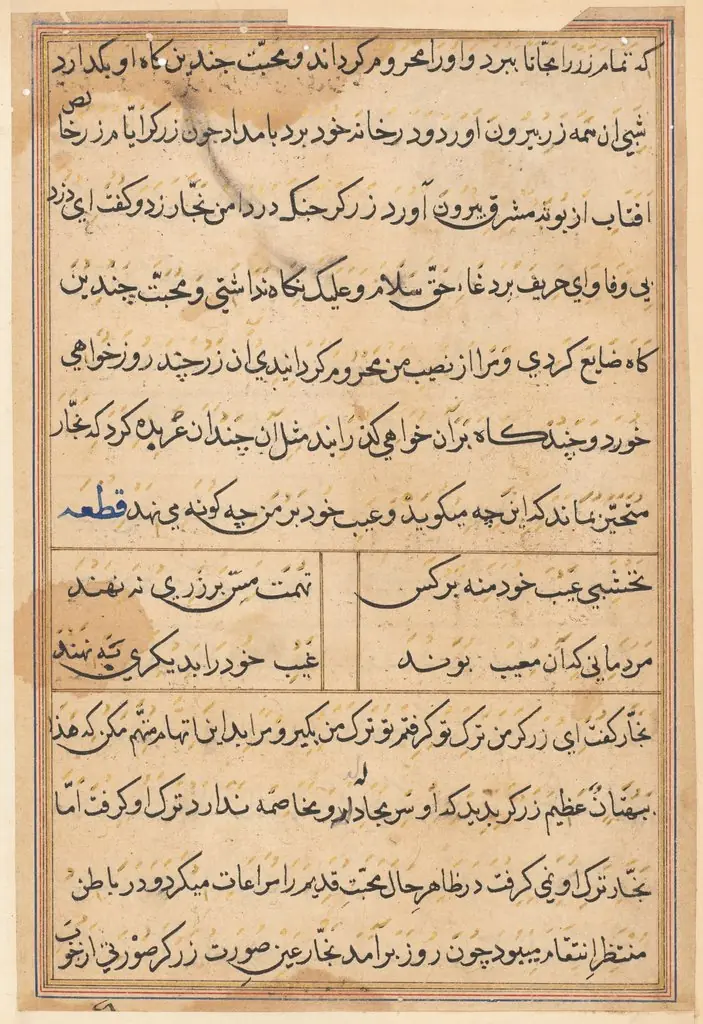 Page from Tales of a Parrot (Tuti-nama): text page
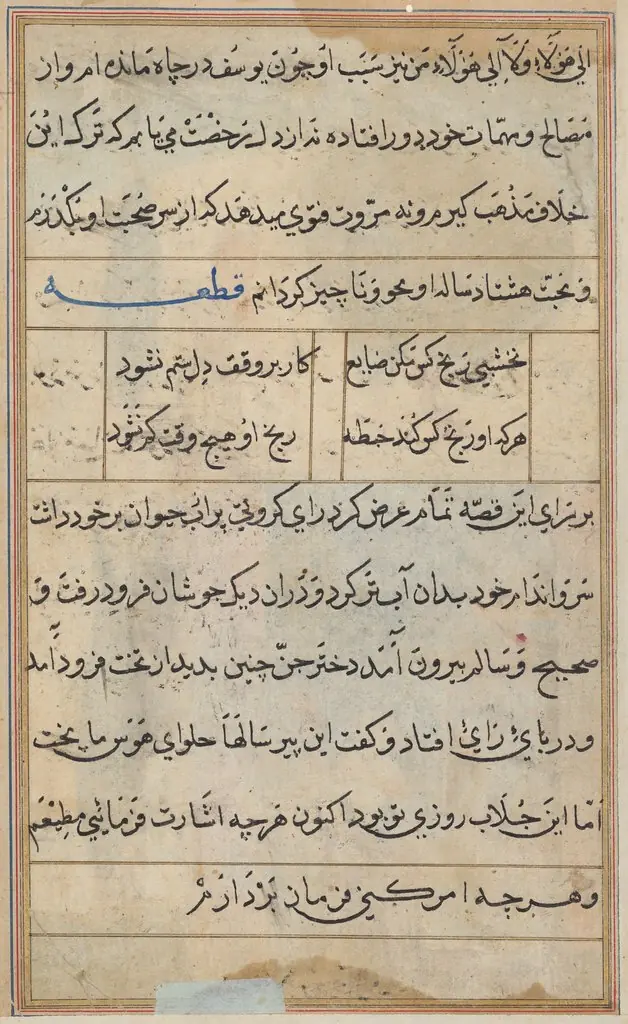 Page from Tales of a Parrot (Tuti-nama): text page
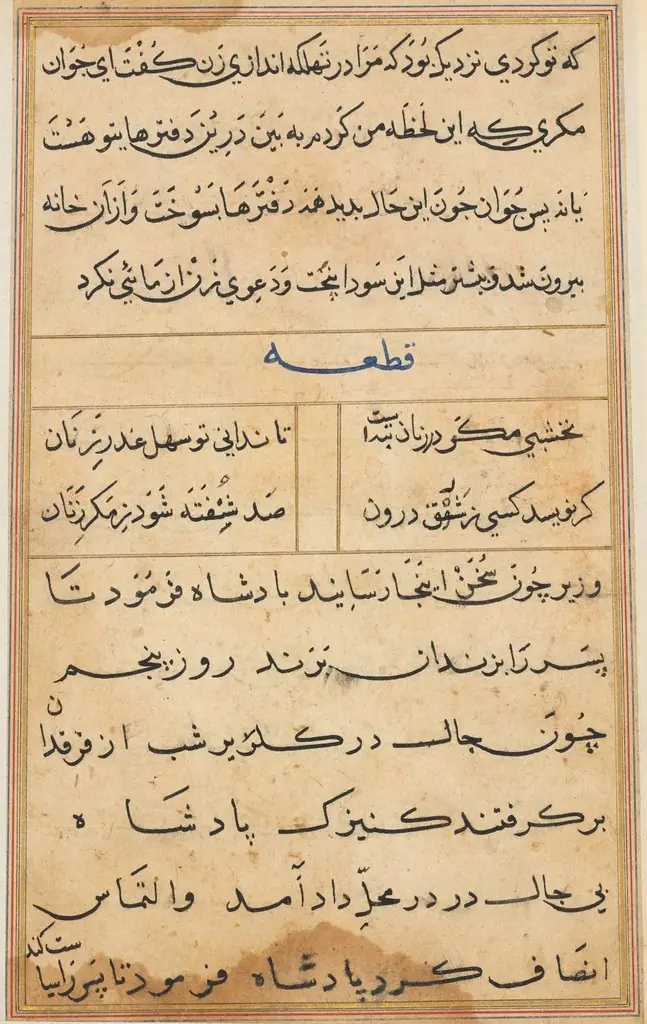 Page from Tales of a Parrot (Tuti-nama): text page
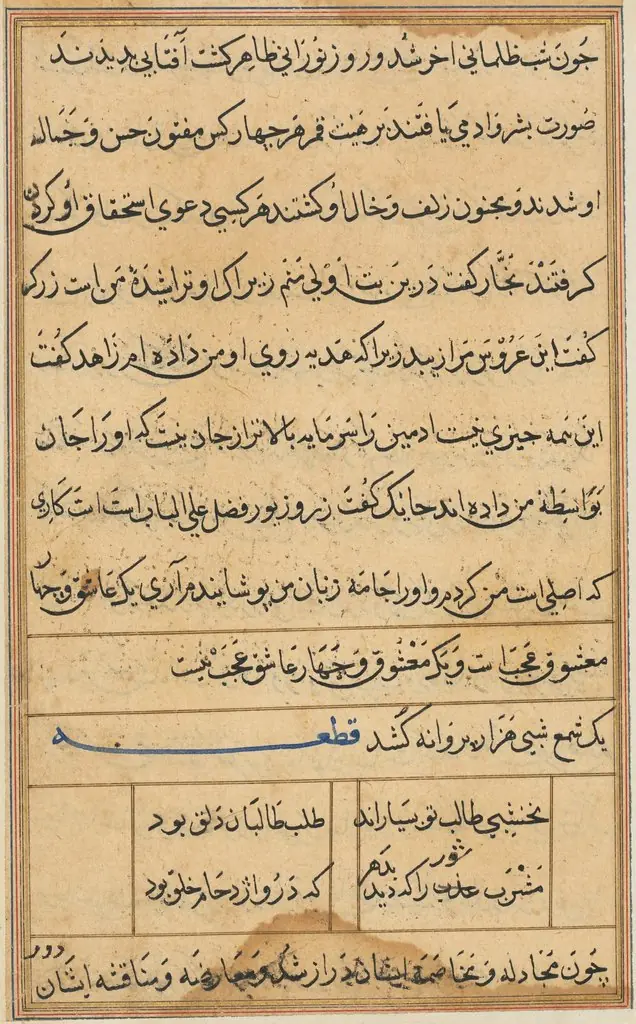 Page from Tales of a Parrot (Tuti-nama): text page
 Page from Tales of a Parrot (Tuti-nama): text page