Artwork
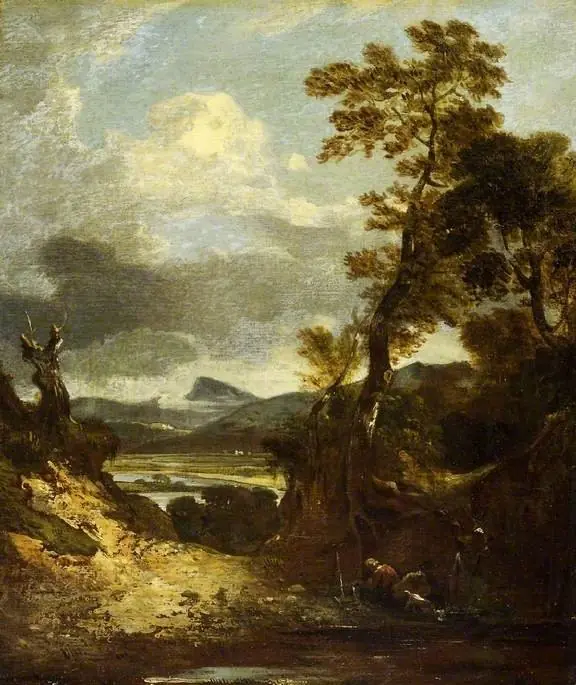
A River Scene with Figures
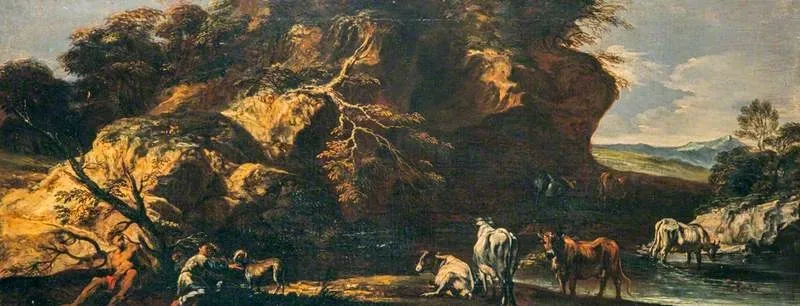
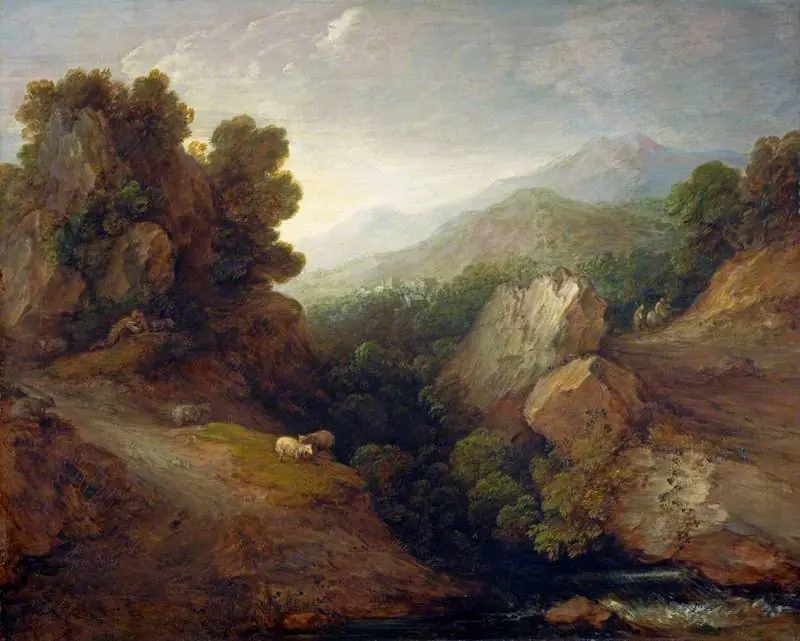
A River Scene with Figures is an oil painting by the Dutch Golden Age artist Unknown. It dates from 1675 and is held in the collection of the National Galleries Scotland. This oil painting depicts a tranquil riverside setting populated by figures engaged in quiet, everyday activities.
About this work
Overview
The palette is dominated by earthy greens, muted browns, and soft blues, suggesting a naturalistic approach to landscape and light.
This oil painting depicts a tranquil riverside setting populated by figures engaged in quiet, everyday activities. The composition centers on a winding waterway flanked by trees and a prominent rocky outcrop. A small boat floats near the center, while individuals in period attire are arranged in varied postures along the bank. The palette is dominated by earthy greens, muted browns, and soft blues, suggesting a naturalistic approach to landscape and light.
Subject & Meaning
The scene portrays ordinary rural life, with no overt narrative or symbolic intent. Figures sit, stand, or row, their actions unremarkable yet collectively evoking a sense of stillness and routine. The absence of dramatic action or idealized forms suggests an interest in observed reality rather than allegory. The painting captures a moment of quiet coexistence between people and their environment.
Technique & Style
The artist employs fine brushwork to render textures—leaves, fabric, water ripples—with careful attention to detail. Colors are applied in layered glazes to achieve depth and subtle tonal shifts. Light falls naturally across the scene, modeling forms without harsh contrasts. The composition is balanced yet informal, with figures placed organically to guide the eye along the river’s curve.
History & Provenance
The painting’s origin is undocumented in public records, though its style and costume details suggest it was created in the late 17th or early 18th century, possibly in Northern Europe. No known collector or exhibition history precedes its current location. Its preservation indicates it was likely kept in private hands rather than publicly displayed during its early years.
Context
During the period it was made, landscape painting with human figures was common in regional art traditions, particularly in the Netherlands and Flanders. Artists often depicted rivers and rural life as subjects of quiet contemplation, reflecting broader cultural values of harmony with nature. This work aligns with such trends, though it lacks the grandeur or mythological references found in more formal commissions.
Legacy
The painting remains a modest example of pre-modern landscape genre work, valued for its observational fidelity rather than artistic innovation. It contributes to the broader understanding of how everyday scenes were rendered before the rise of Romanticism or Impressionism. Its survival offers insight into the visual culture of non-elite, non-religious subjects in early modern European art.
Artist & collection

 Domestic Scene
 Giacomo and Cardinal Marco, investing Andrea, Abbot of San Zeno, with his Benefice
 The Nymph of Fontainebleau
 Portrait of a Woman
 Madonna and Child with Saints in the Enclosed Garden
 Venus and Minerva
 Family Group of Four on Sofa
 Wall painting from Room H of the Villa of P. Fannius Synistor at Boscoreale
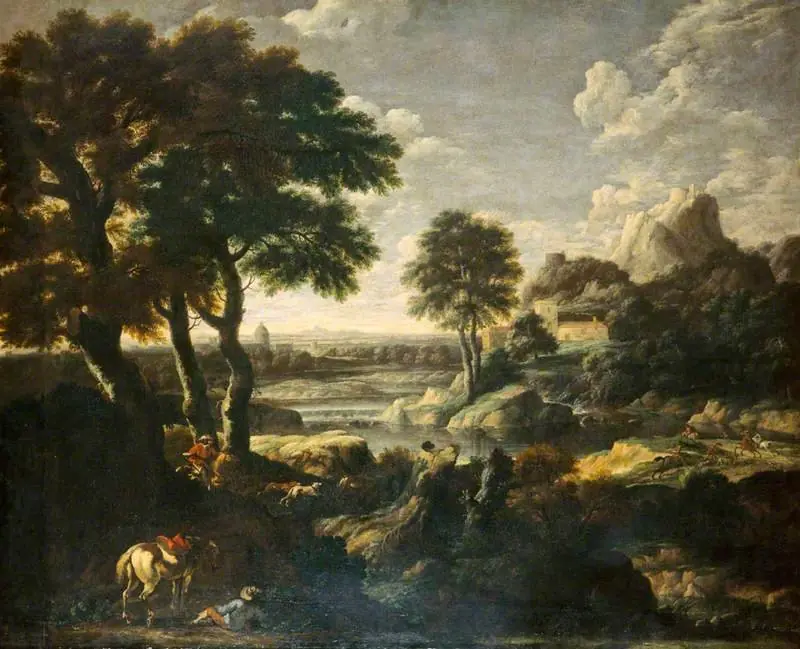 River Landscape with a Hunt
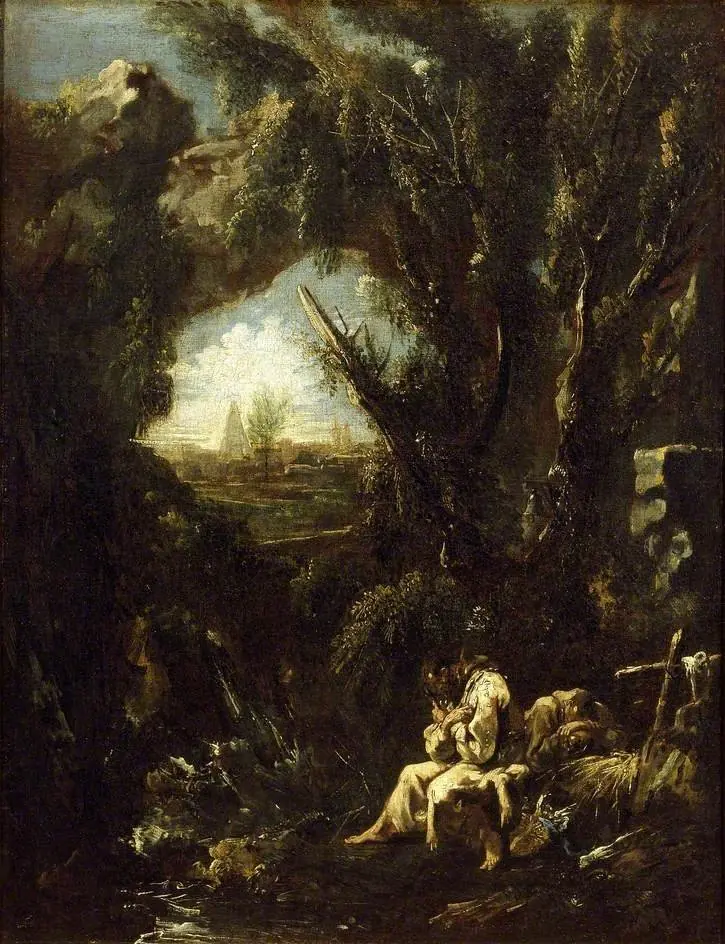 Landscape with two Hermits in meditation
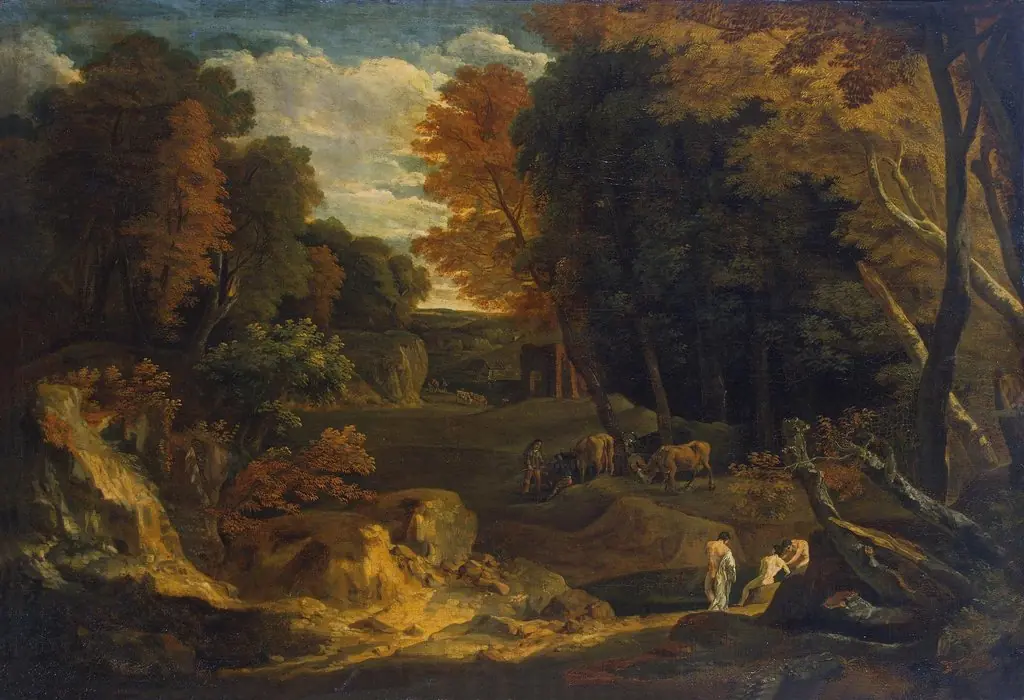 Forest Landscape with a River
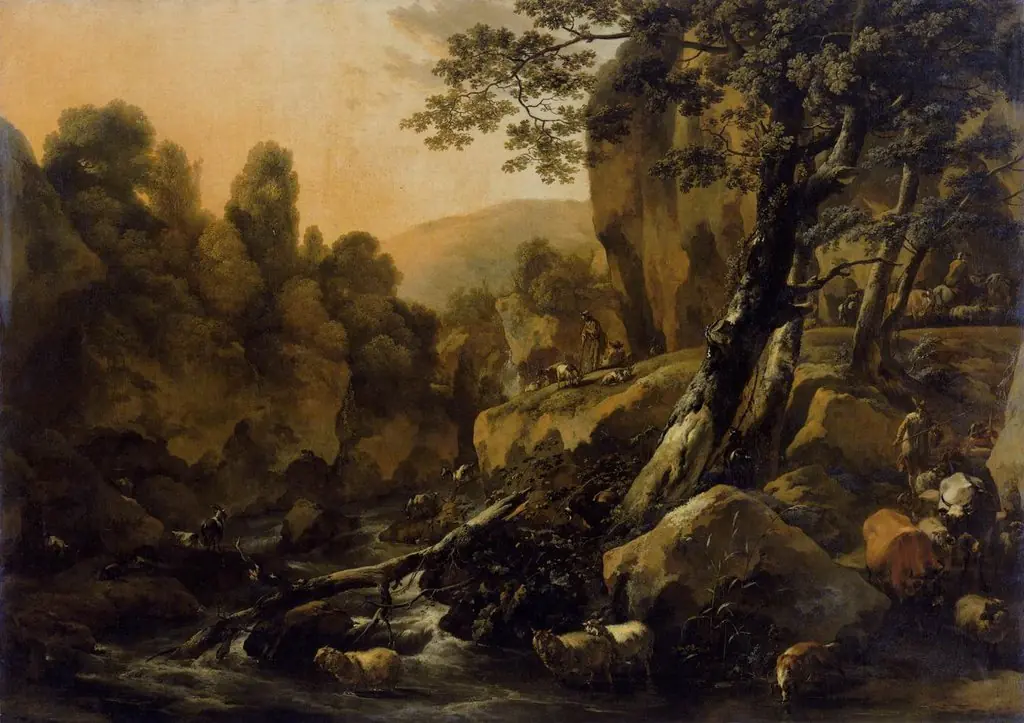 The Waterfall
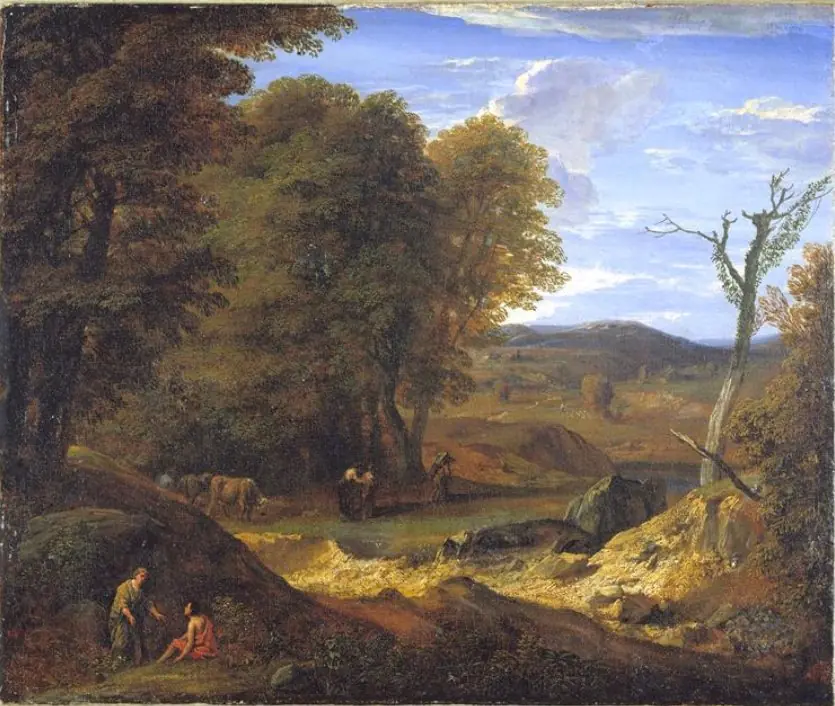 Forest landscape
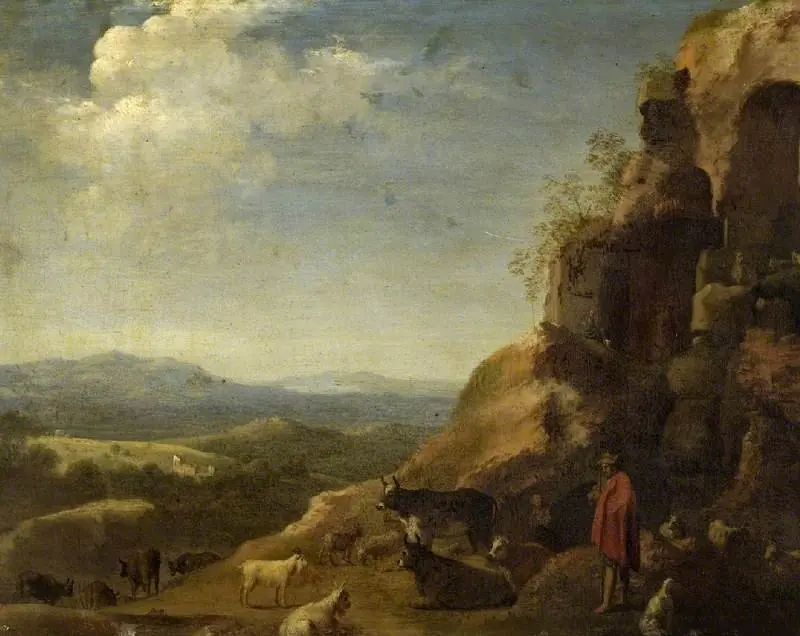 Landscape with herdsman and flocks
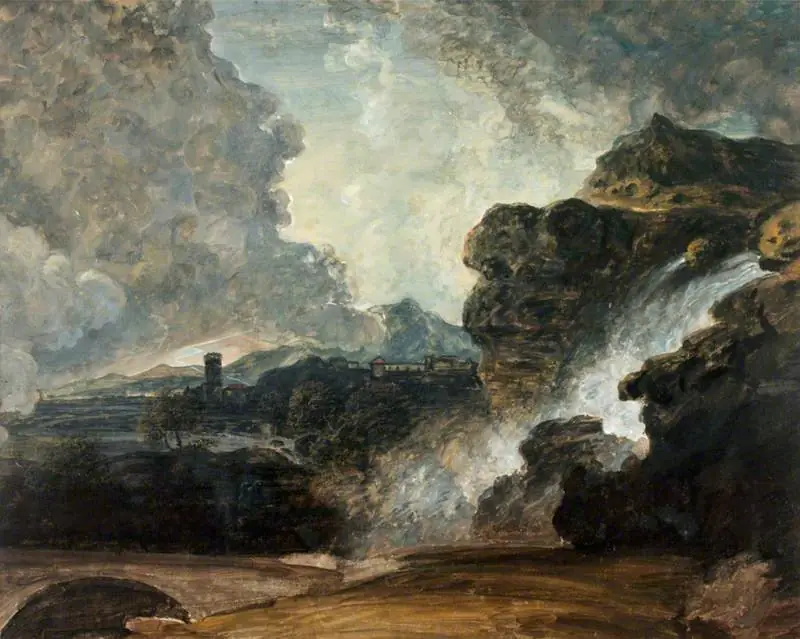 Study for 'Landscape, Destruction of Niobe's Children'
 Landscape
 Landscape with Two Praying Monks
 Landscape with Flight into Egypt
 Landscape
 Rocky Landscape