Artwork
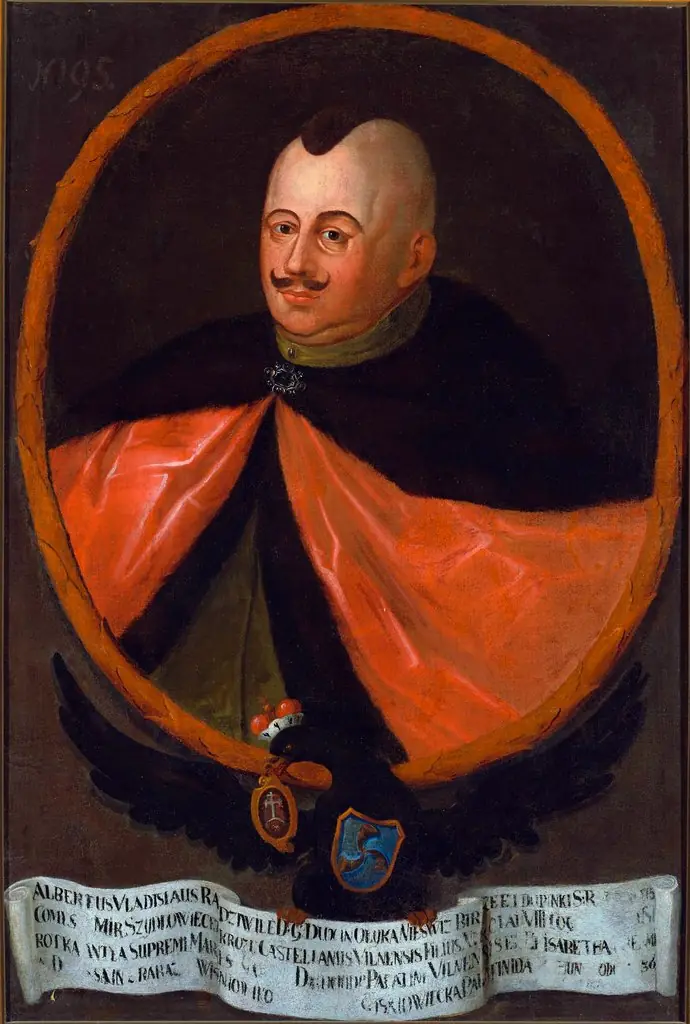
Portrait of Władysław Tyszkiewicz, Leliwa coat of arms (1644–1684), carver of the Grand Duchy of Lithuania
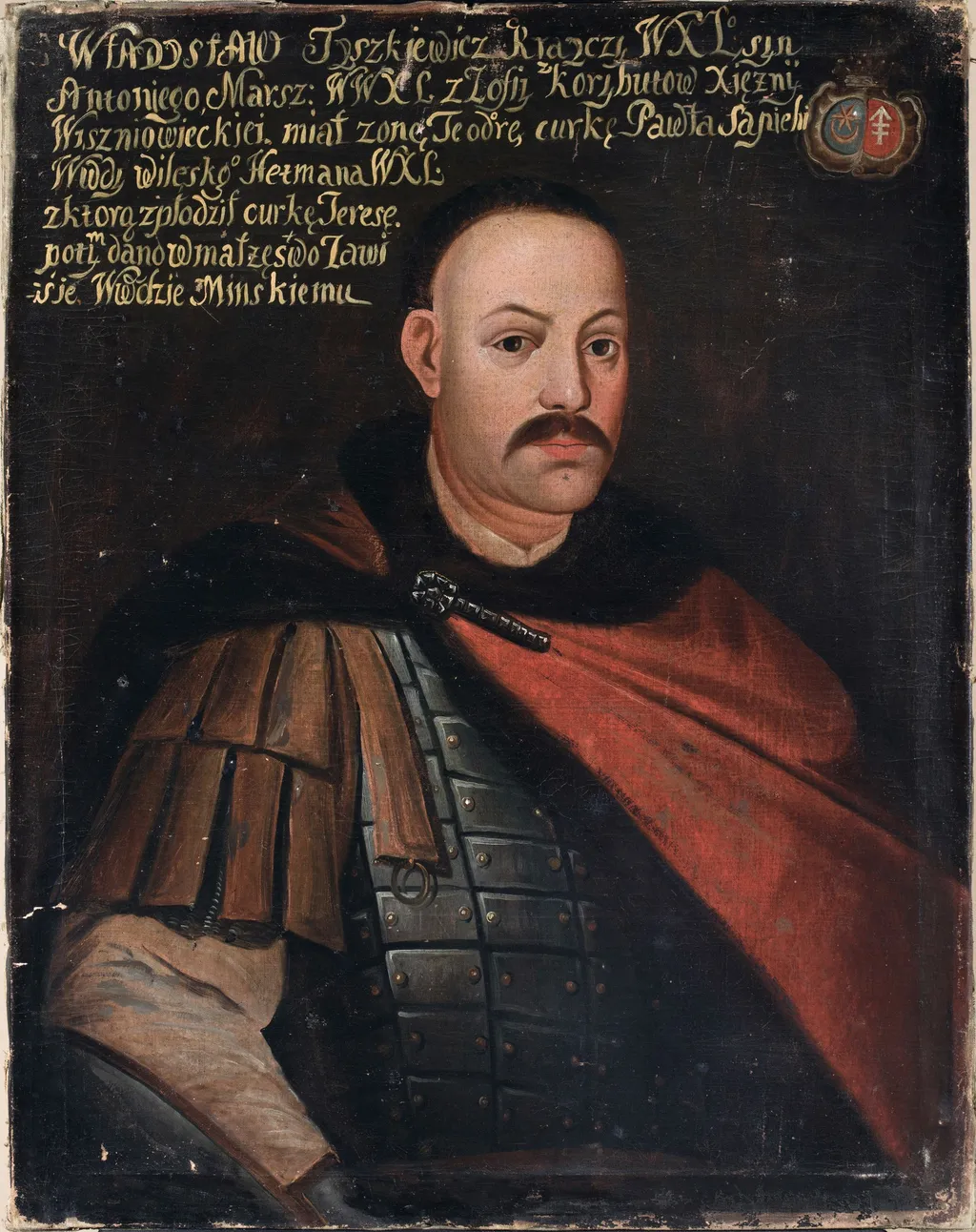
Portrait of Władysław Tyszkiewicz, Leliwa coat of arms (1644–1684), carver of the Grand Duchy of Lithuania is an oil painting by Unknown. It dates from 1797 and is held in the collection of the National Museum in Warsaw. The work is an oil portrait of Władysław Tyszkiewicz, a 17th‑century Lithuanian noble who served as carver of the Grand Duchy.
About this work
Overview
The work is an oil portrait of Władysław Tyszkiewicz, a 17th‑century Lithuanian noble who served as carver of the Grand Duchy. Rendered against a dark, unadorned backdrop, the figure dominates the composition, his facial features sharply illuminated. The painting records his name and titles in a period Polish script that frames the image.
Subject & Meaning
Tyszkiewicz is depicted as a solemn, authoritative presence, his thick moustache and short dark hair emphasizing a mature dignity. The inclusion of a padded brown armor sleeve and a hanging chain underscores his martial role and social rank, while the dark red cloak signals noble status. The portrait functions as a visual assertion of lineage and office.
Technique & Style
Executed in oil, the artist employs chiaroscuro to model the sitter’s face and armor, creating a strong contrast between illuminated flesh and the surrounding gloom. The rendering of the metal sleeve shows careful attention to texture and reflectivity, suggesting a realistic approach typical of mid‑17th‑century Central European portraiture.
History & Provenance
The canvas dates from the mid‑1600s, a period when the Tyszkiewicz family held prominent positions in the Grand Duchy of Lithuania. The inscription in historic Polish script identifies the sitter and his titles, indicating the work was likely commissioned for familial or official display. Its later ownership traces through regional collections before entering a museum setting.
Artist & collection

 Domestic Scene
 Giacomo and Cardinal Marco, investing Andrea, Abbot of San Zeno, with his Benefice
 The Nymph of Fontainebleau
 Portrait of a Woman
 Madonna and Child with Saints in the Enclosed Garden
 Venus and Minerva
 Family Group of Four on Sofa
 Wall painting from Room H of the Villa of P. Fannius Synistor at Boscoreale
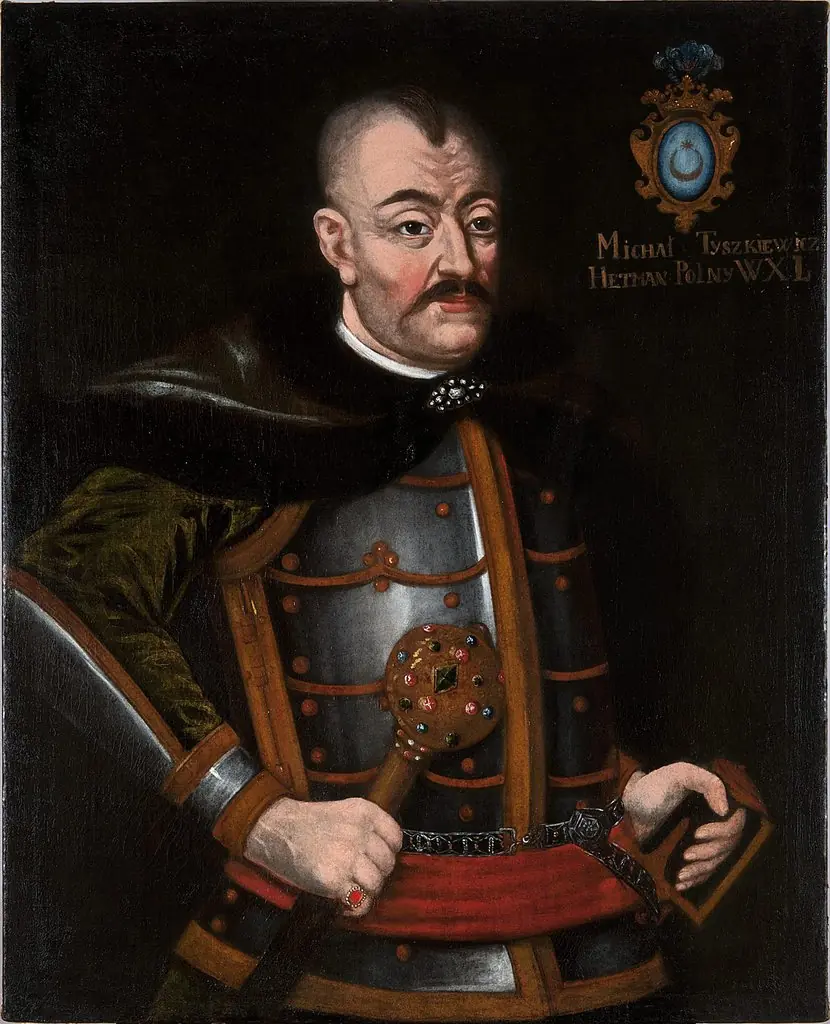 Portrait of Michał Tyszkiewicz, Leliwa coat of arms (?–after 1549), field hetman of the Grand Duchy of Lithuania
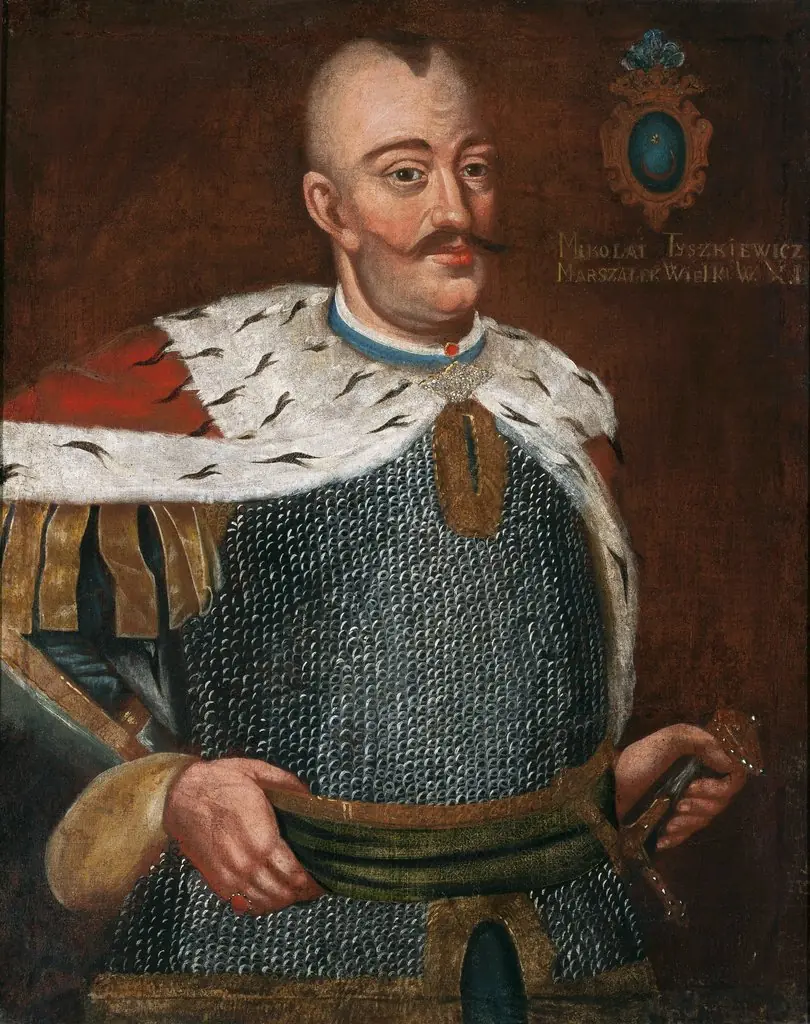 Portrait of Mikołaj Tyszkiewicz, Leliwa coat of arms, marshal of the Grand Duchy of Lithuania
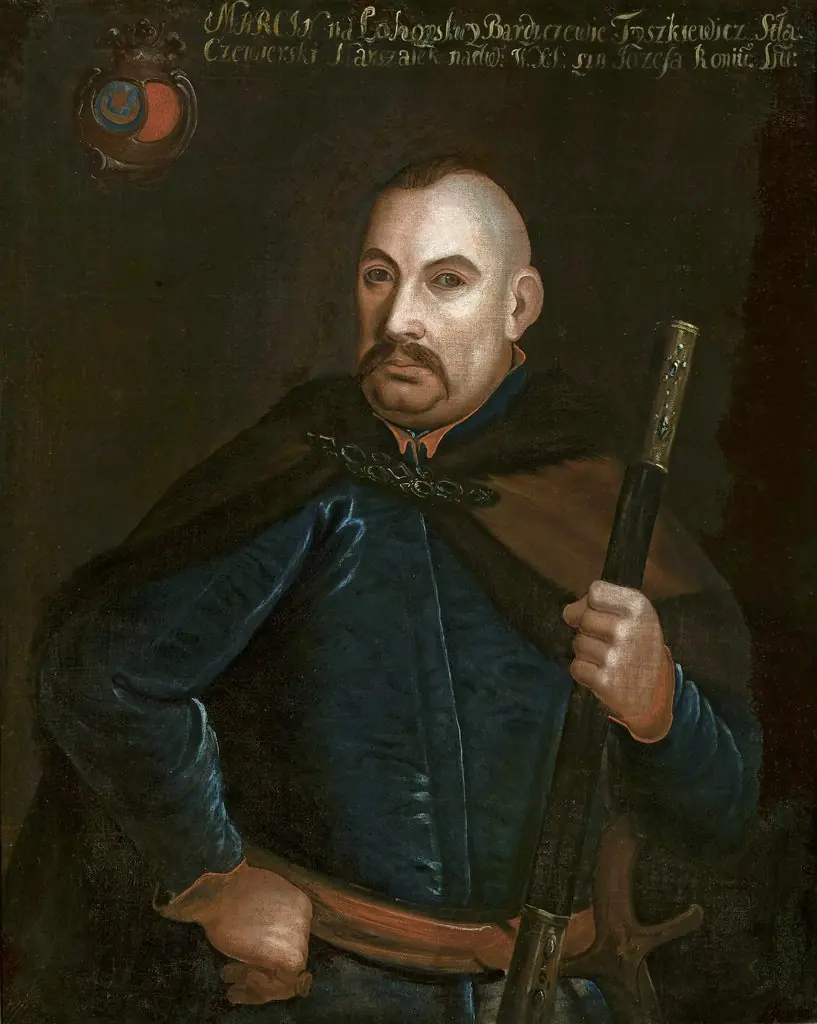 Portrait of Marcin Tyszkiewicz, Leliwa coat of arms (?–after 1631), court marshal of the Grand Duchy of Lithuania
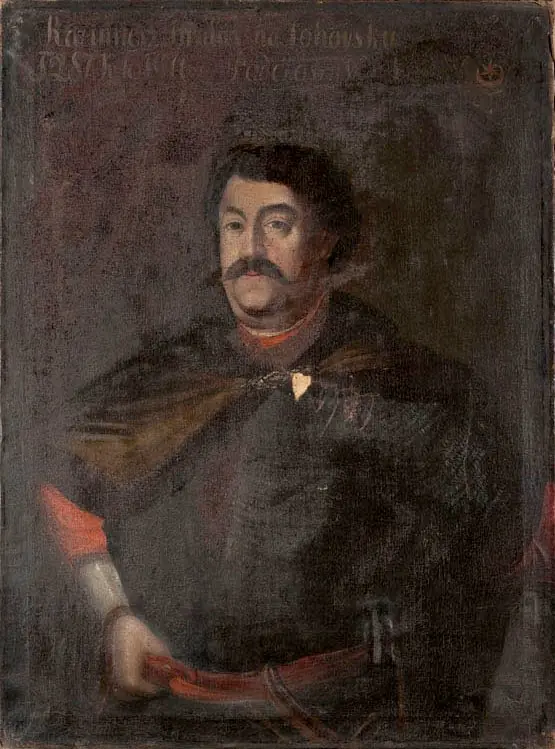 Portrait of Kazimierz Tyszkiewicz, Leliwa coat of arms (?–1652), cup-bearer of the Grand Duchy of Lithuania
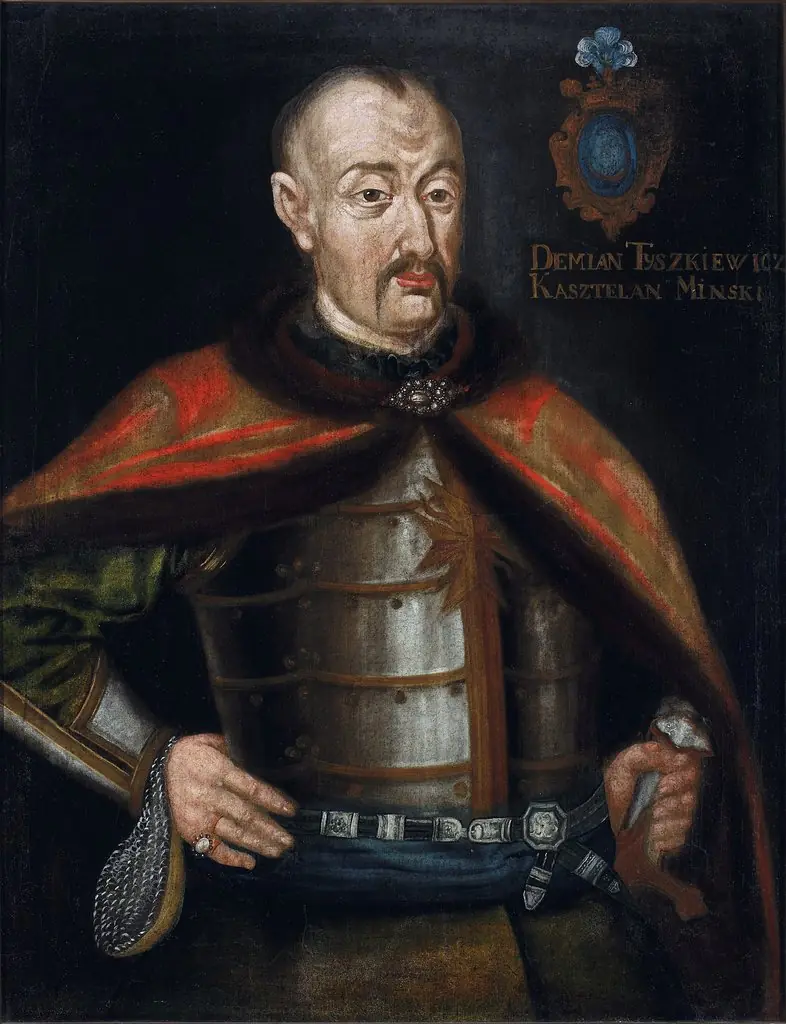 Portrait of Demian (Dmitri) Skumin Tyszkiewicz, Leliwa coat of arms (?–1609), castellan of Minsk
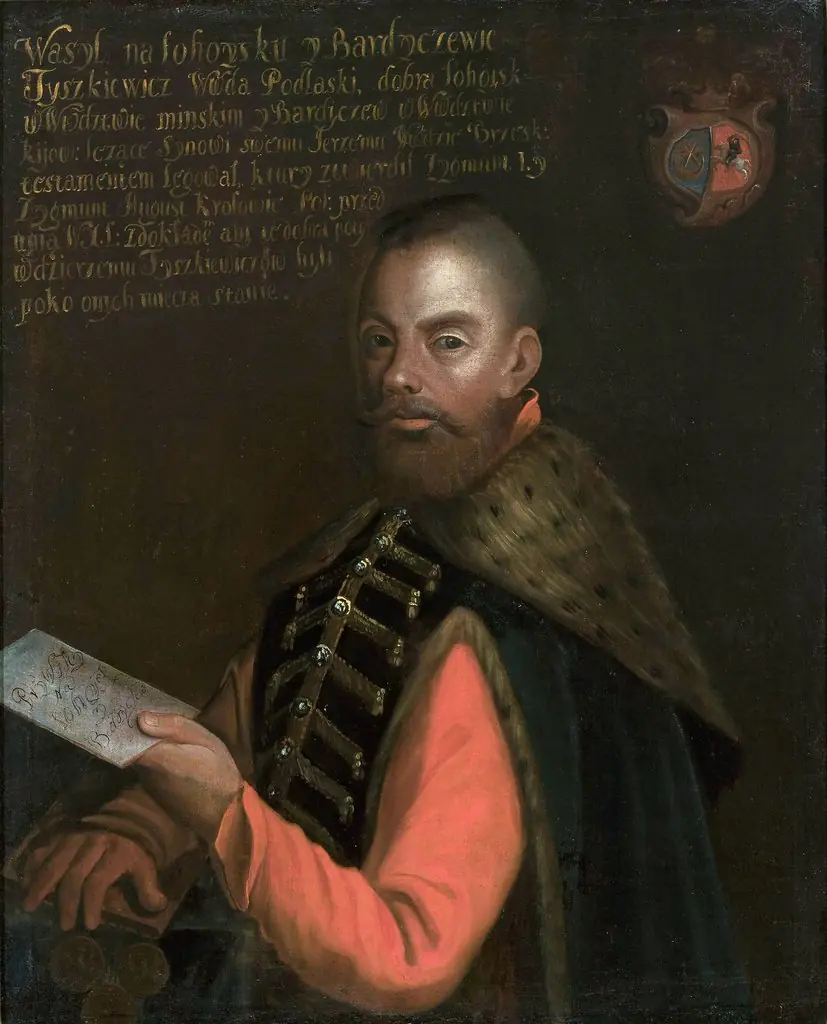 Portrait of Wasyl Tyszkiewicz, Leliwa coat of arms (?–1571), voivode of Podlasie
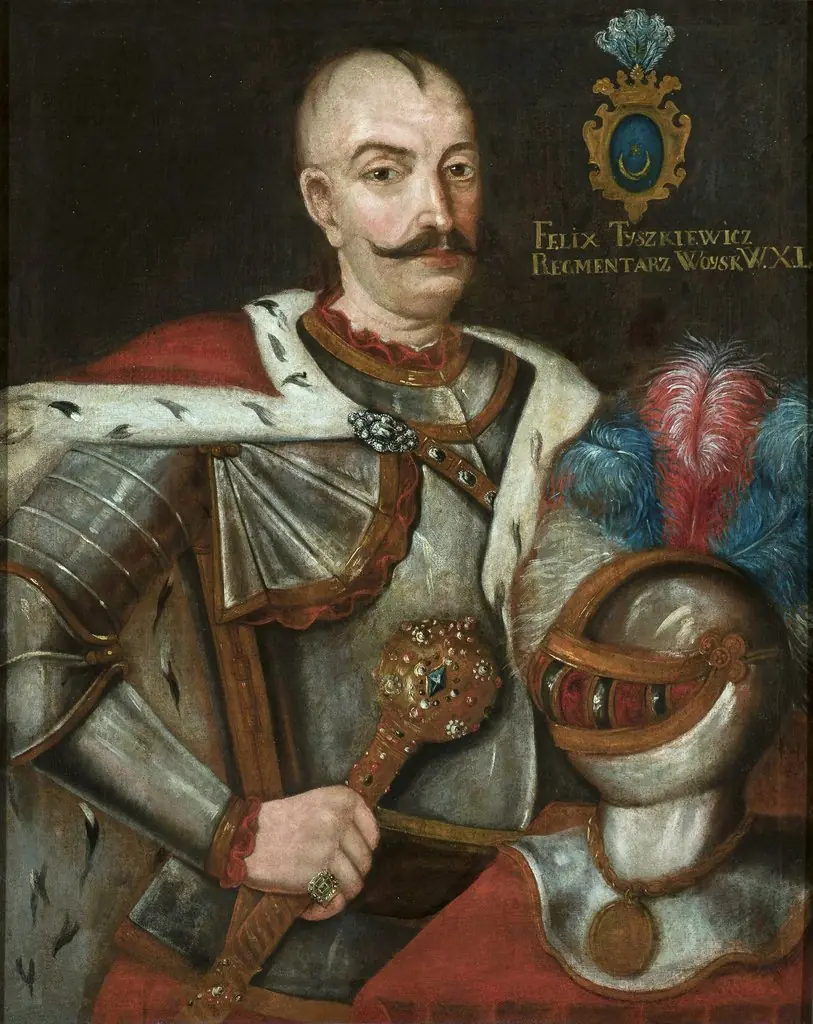 Portrait of Felix Tyszkiewicz (?–1649), Leliwa coat of arms, regimentarius (deputy hetman) of the Grand Duchy of Lithuania
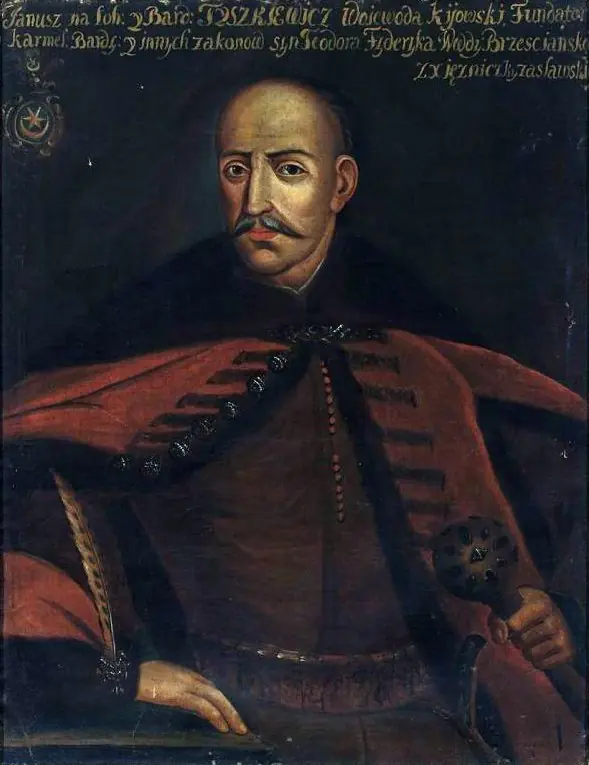 Portrait of Janusz Tyszkiewicz (1570–1649), Leliwa coat of arms, voivode of Kiev
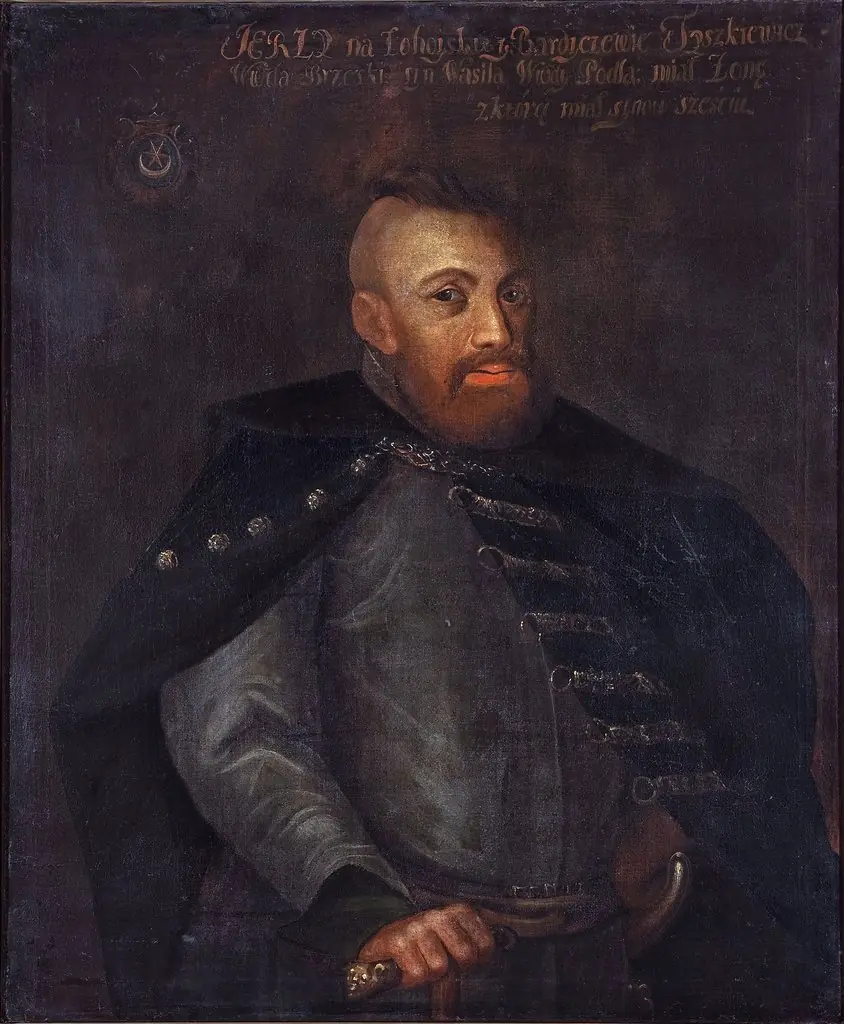 Portrait of Jerzy Tyszkiewicz, Leliwa coat of arms (?–1576), voivode of Brest
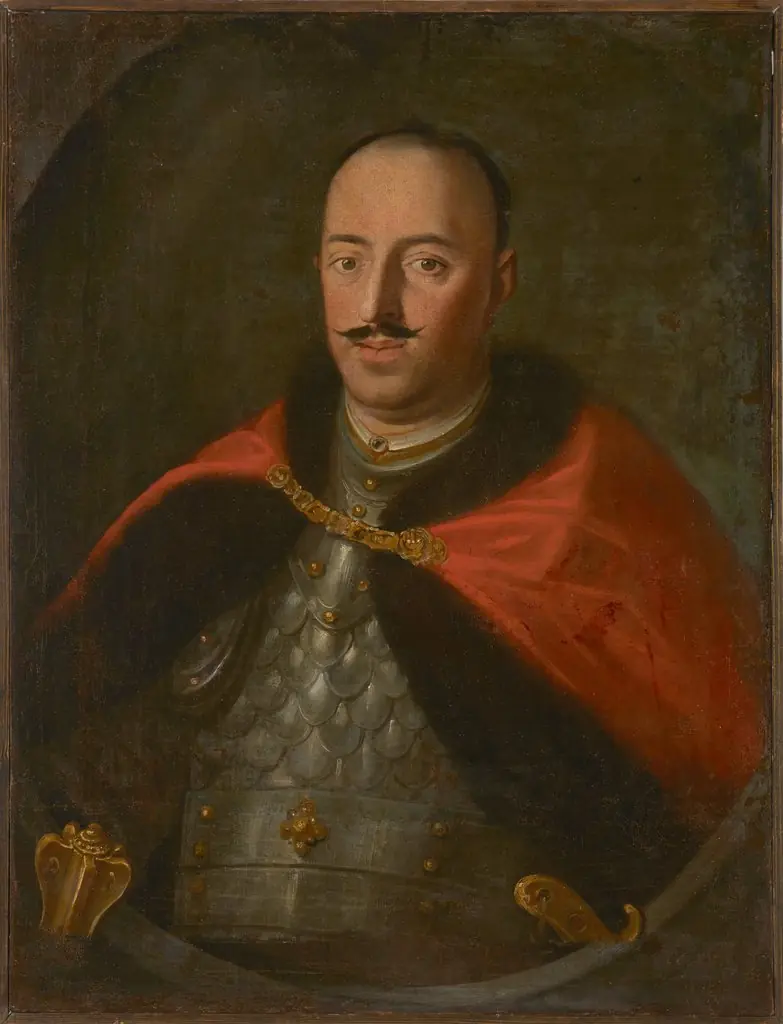 Portrait of Piotr Dembiński, Nieczuja coat of arms (1660–1734), Castellan of Biecz
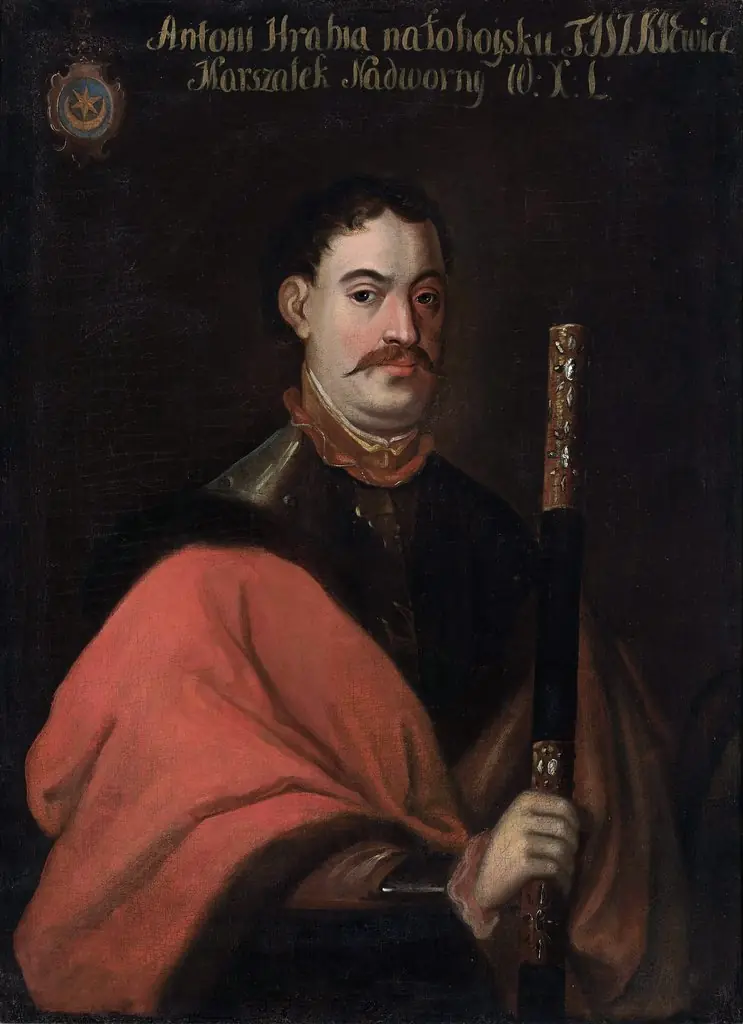 Portrait of Antoni Jan Tyszkiewicz (1609–1649), Leliwa coat of arms, court marshal of the Grand Duchy of Lithuania
 Portrait of Albert III Władysław Radziwiłł (1589–1636)