Artwork
Kalki avatar
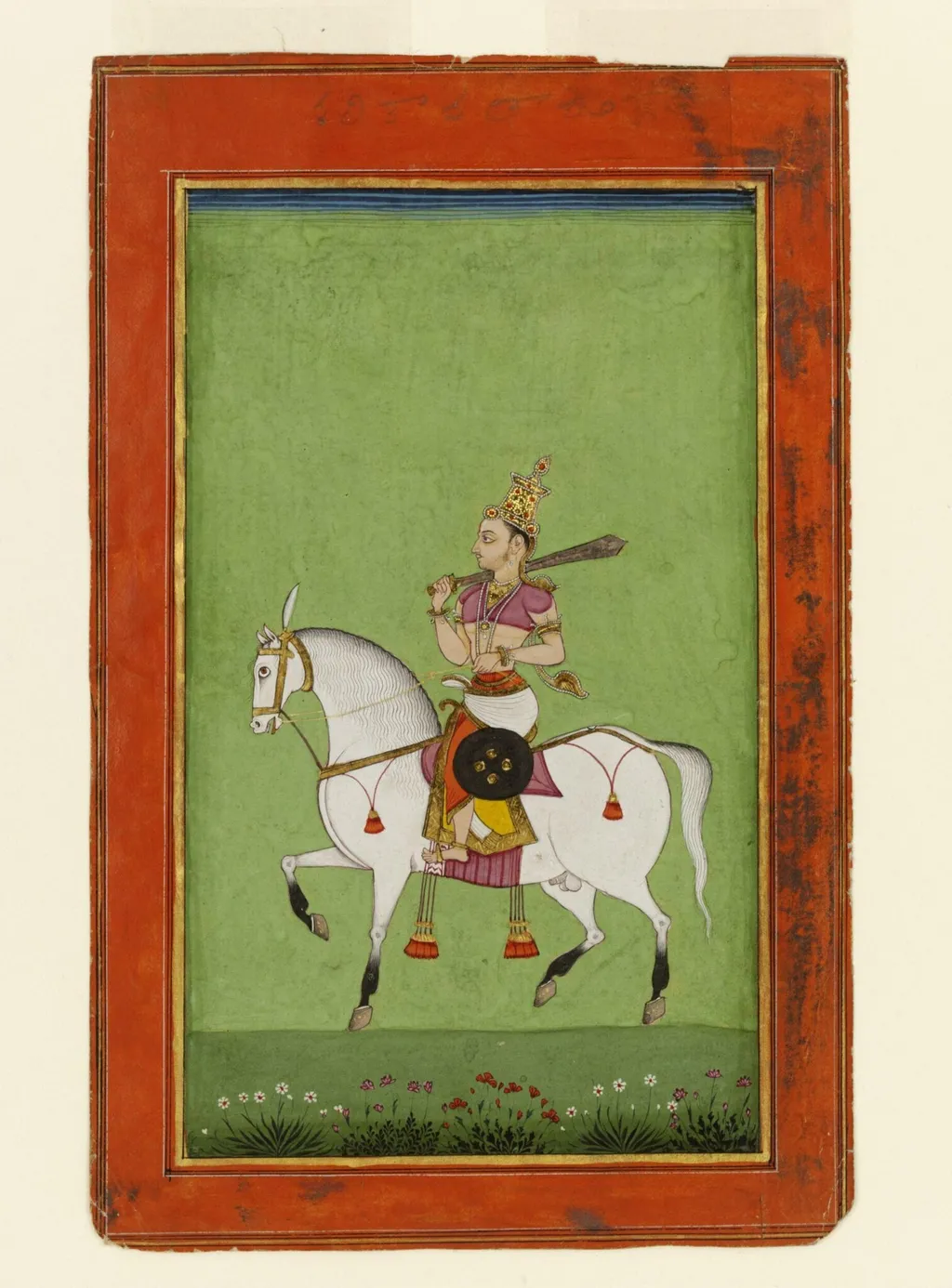
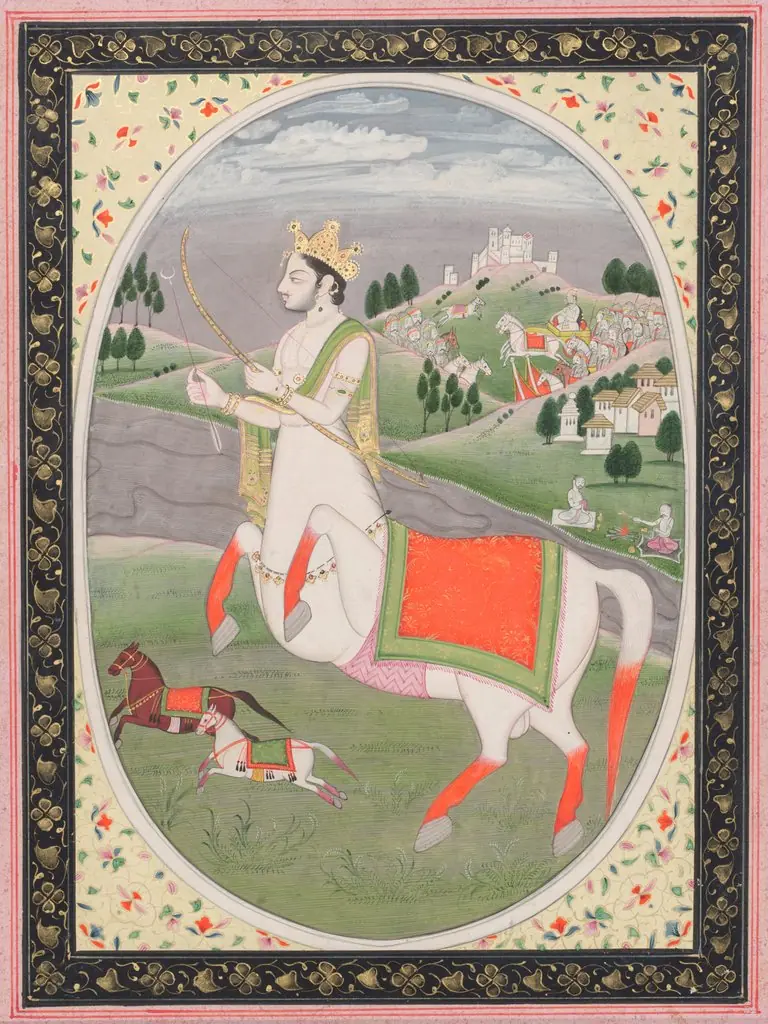
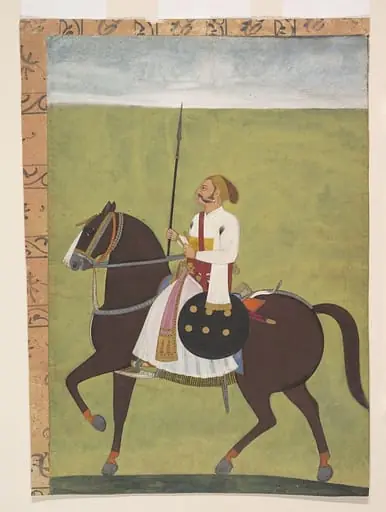
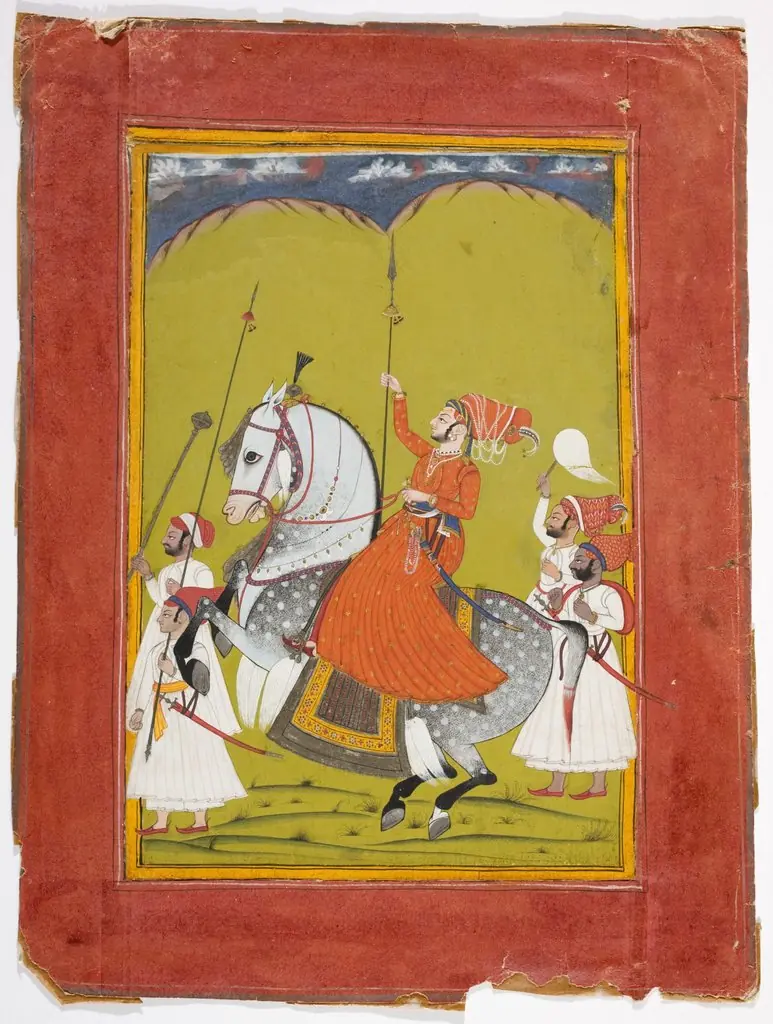
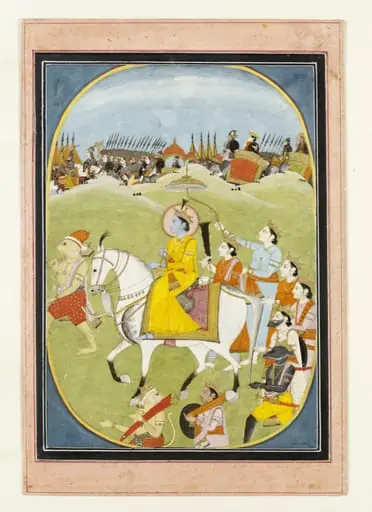
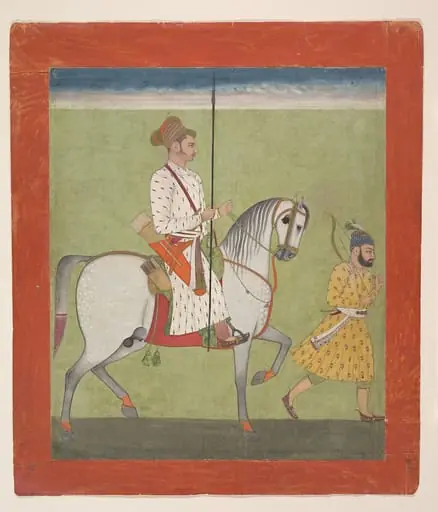
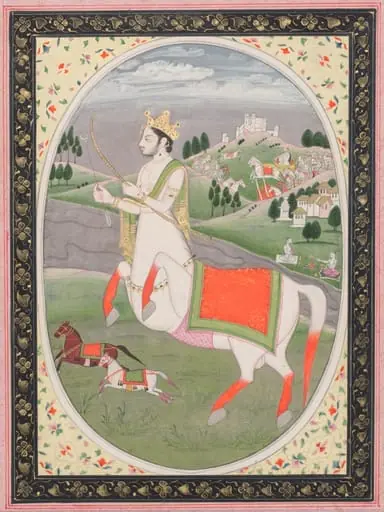
Kalki avatar is a paint painting by the Rococo painting artist Unknown. It dates from 1780 and is held in the collection of the Victoria and Albert Museum. This opaque watercolour on paper portrays Kalki, the final incarnation of the Hindu deity Vishnu, as a regal warrior on horseback.
About this work
Overview
This opaque watercolour on paper portrays Kalki, the final incarnation of the Hindu deity Vishnu, as a regal warrior on horseback.
This opaque watercolour on paper portrays Kalki, the final incarnation of the Hindu deity Vishnu, as a regal warrior on horseback. Executed in vivid pigments with strong outlines, the composition emphasizes symbolic grandeur over naturalism. The work belongs to a tradition of devotional Indian painting that blends spiritual narrative with ornamental detail, typical of late Mughal or Rajput court styles.
Subject & Meaning
Kalki is depicted as a messianic figure destined to restore dharma at the end of the current cosmic age. Mounted on a white horse, he holds a spear—symbolizing divine justice. The crown and elaborate jewelry signify his royal divine status, while the blindfolded horse may suggest unwavering faith or transcendence beyond worldly perception. The red flowers and green field evoke renewal and the cyclical nature of time in Hindu cosmology.
Technique & Style
The artist used opaque watercolour on paper, applying bold, flat areas of colour with sharp, clean contours. Gold leaf likely accents the jewelry and crown, adding luminosity. The stylized rendering of form, exaggerated proportions, and saturated hues reflect regional Indian painting conventions, prioritizing symbolic clarity and visual impact over perspective or anatomical realism.
History & Provenance
The painting likely originated in a Rajput or Pahari court workshop during the 18th or early 19th century, a period when devotional themes were frequently commissioned by Hindu rulers. It entered the Victoria and Albert Museum’s collection through colonial-era acquisitions, where it remains part of a broader archive of South Asian religious art.
Context
This image aligns with a broader tradition of illustrating the ten avatars of Vishnu, particularly popular in northern India. Such paintings served both ritual and didactic purposes, reinforcing religious narratives in courts and temples. The emphasis on colour and ornamentation reflects the fusion of Hindu iconography with Mughal-influenced aesthetics prevalent among regional patrons.
Legacy
Works like this continue to inform modern understandings of Hindu visual theology. They preserve stylistic conventions that distinguish Indian devotional art from Western traditions, emphasizing symbolism over realism. Today, they are studied as cultural artifacts that reveal how spiritual concepts were made tangible through art in pre-colonial India.
Artist & collection

 Domestic Scene
 Giacomo and Cardinal Marco, investing Andrea, Abbot of San Zeno, with his Benefice
 The Nymph of Fontainebleau
 Portrait of a Woman
 Madonna and Child with Saints in the Enclosed Garden
 Venus and Minerva
 Family Group of Four on Sofa
 Wall painting from Room H of the Villa of P. Fannius Synistor at Boscoreale