Artwork
De kruisiging
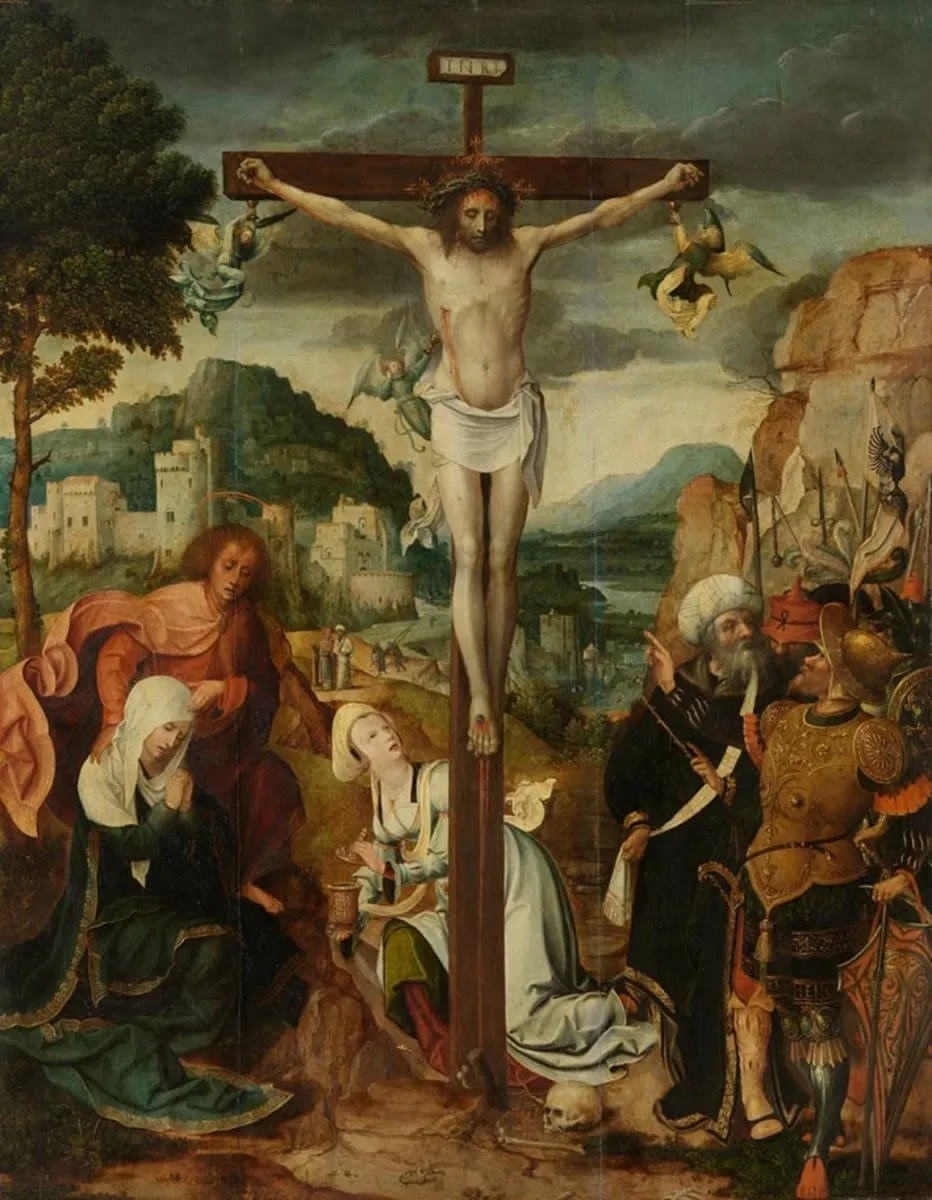
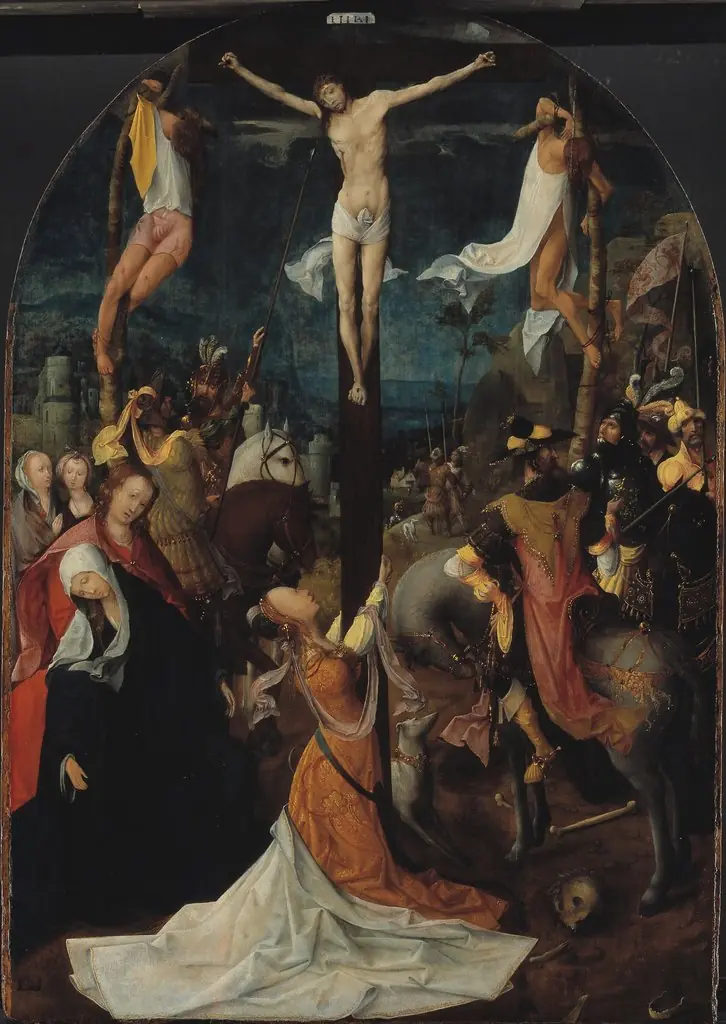
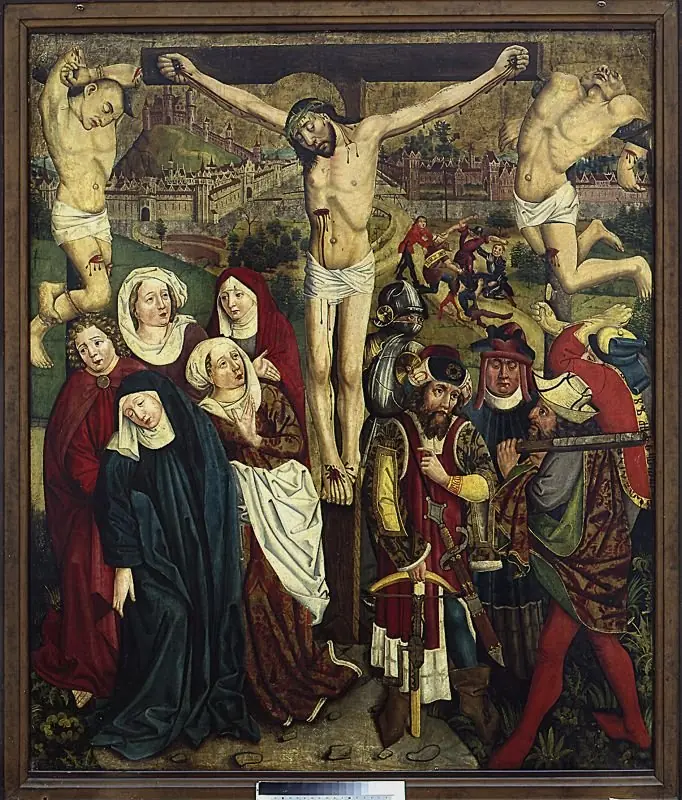
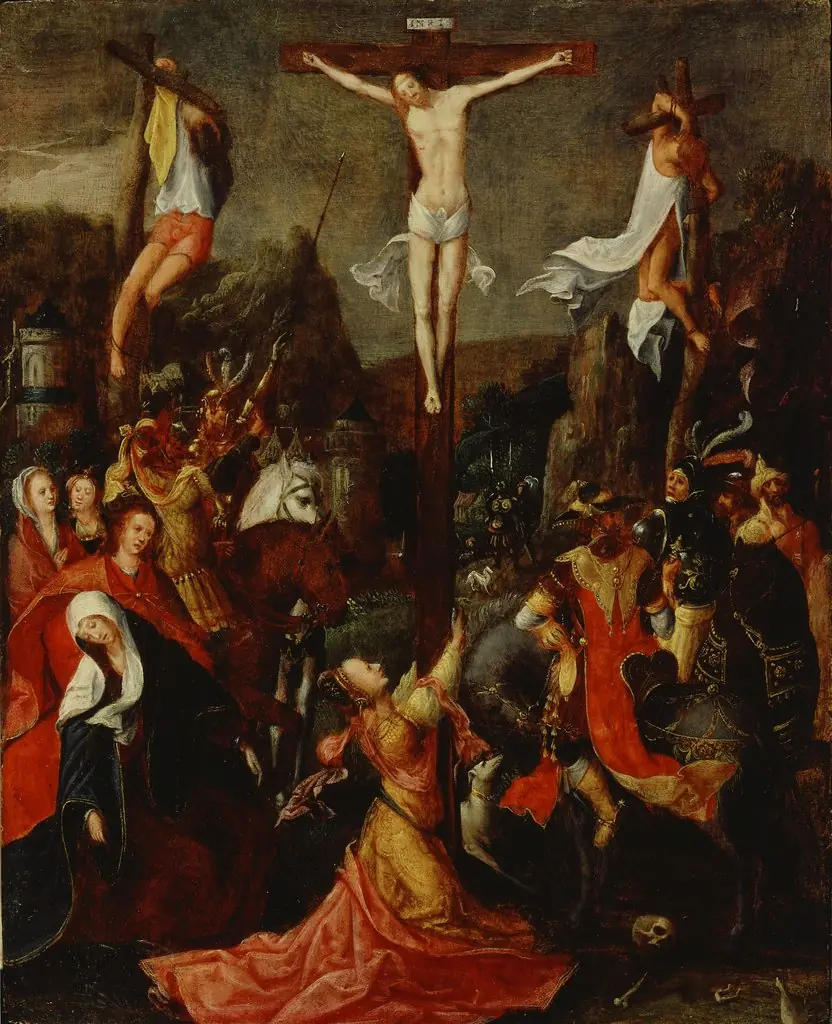
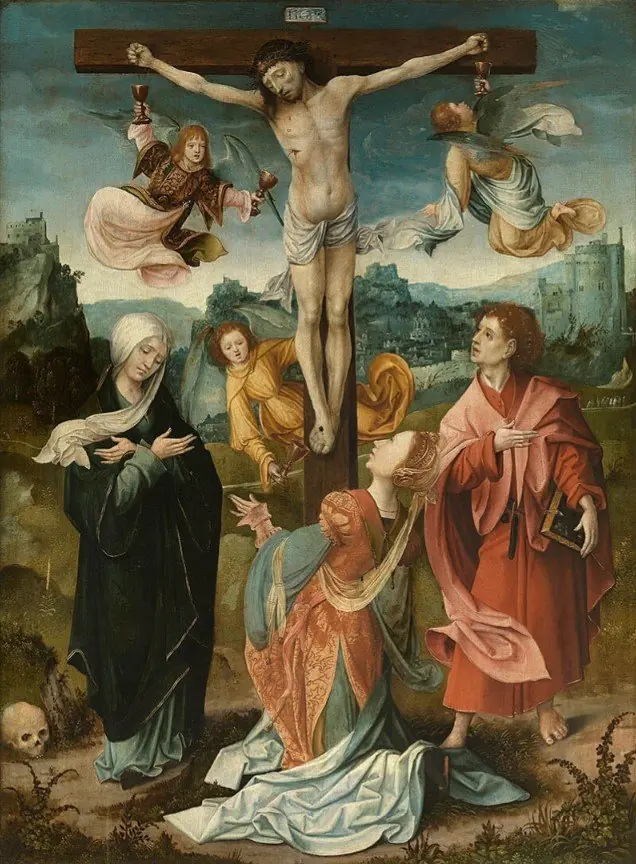
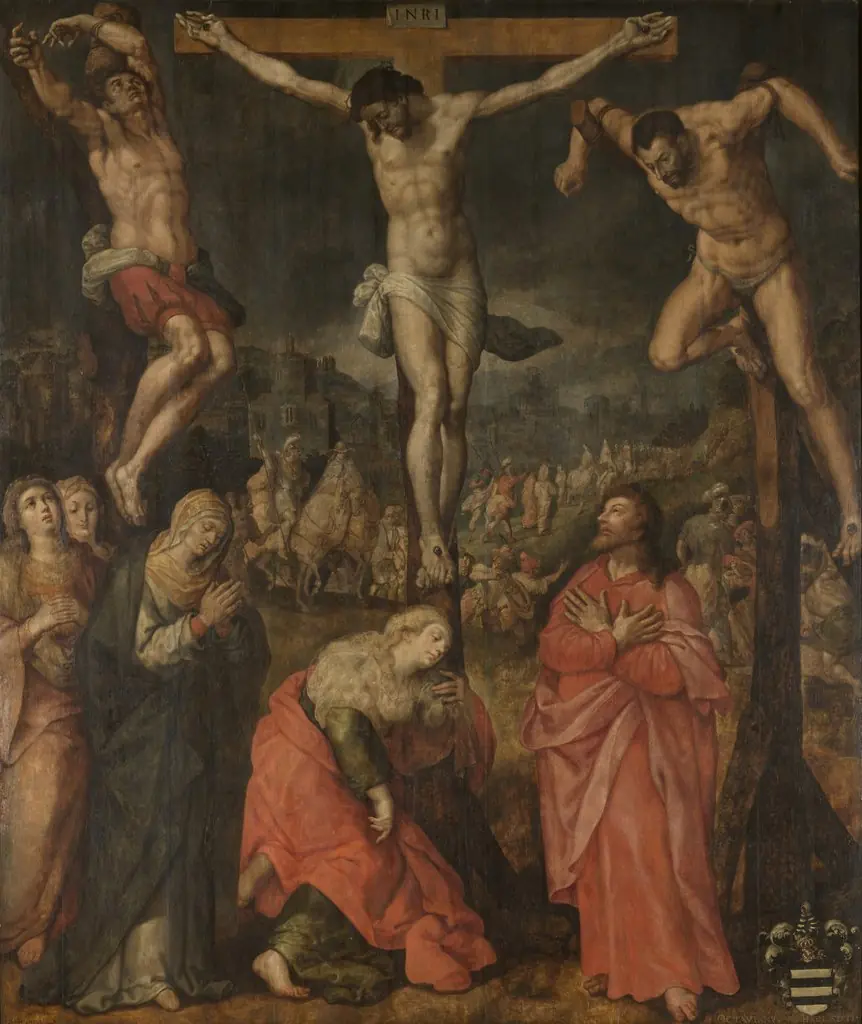
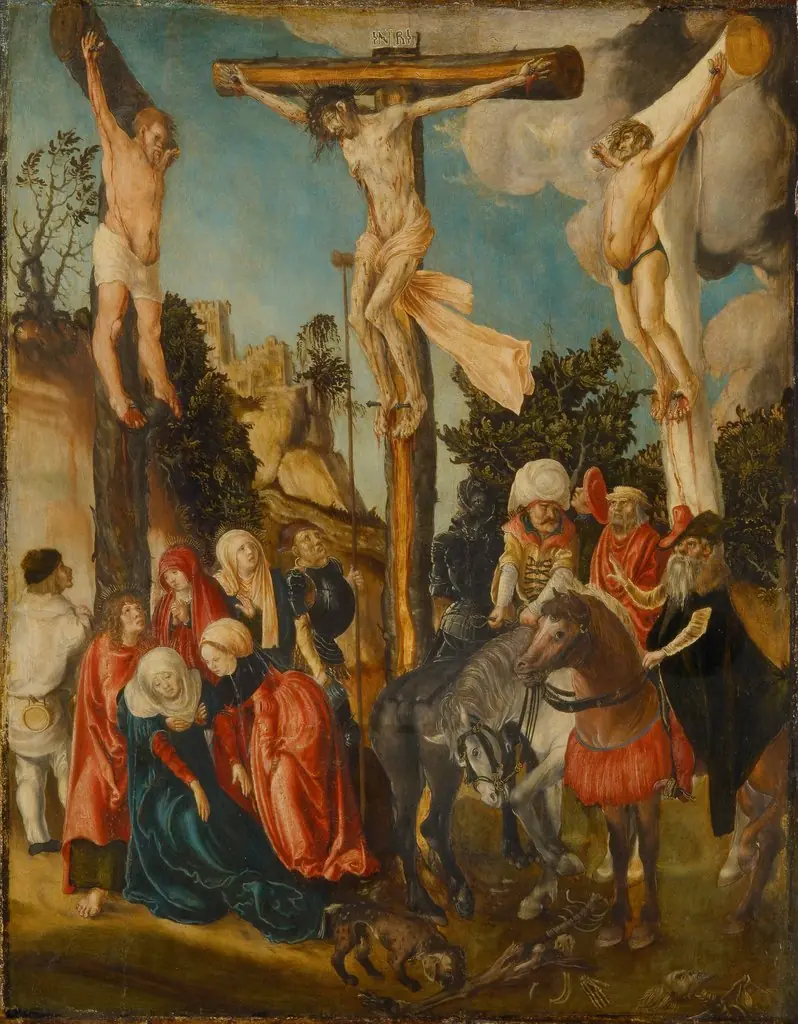
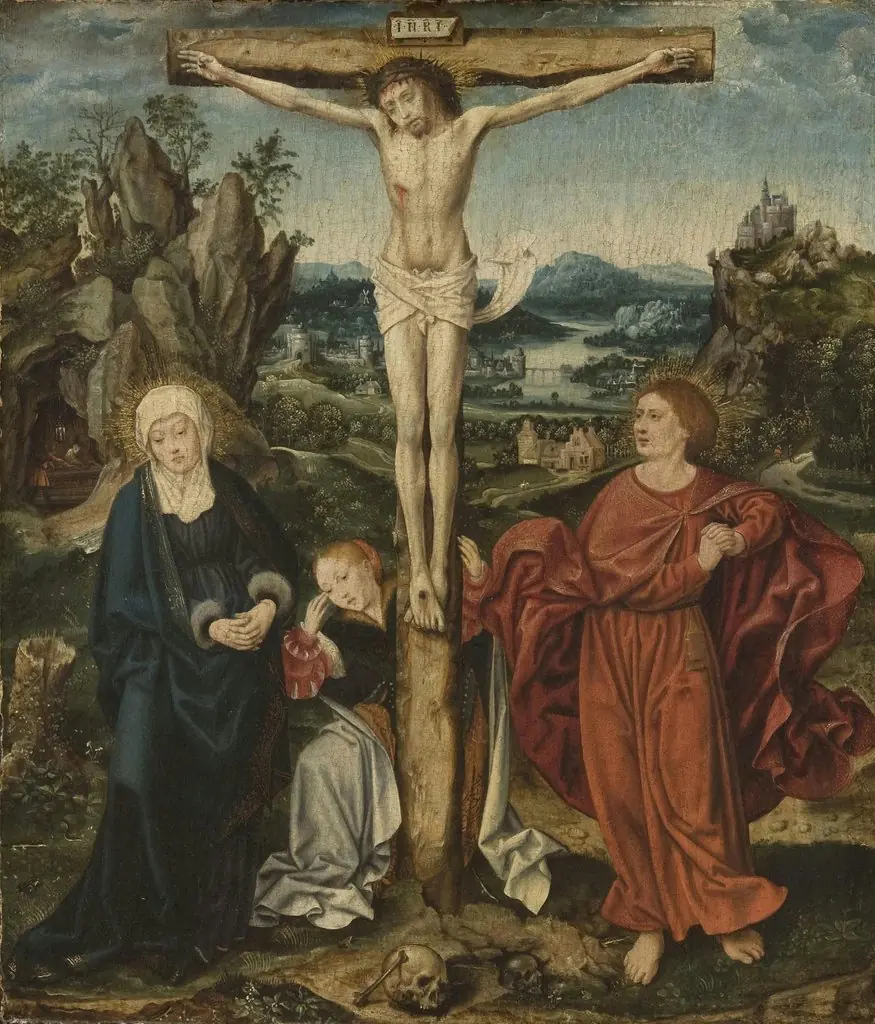
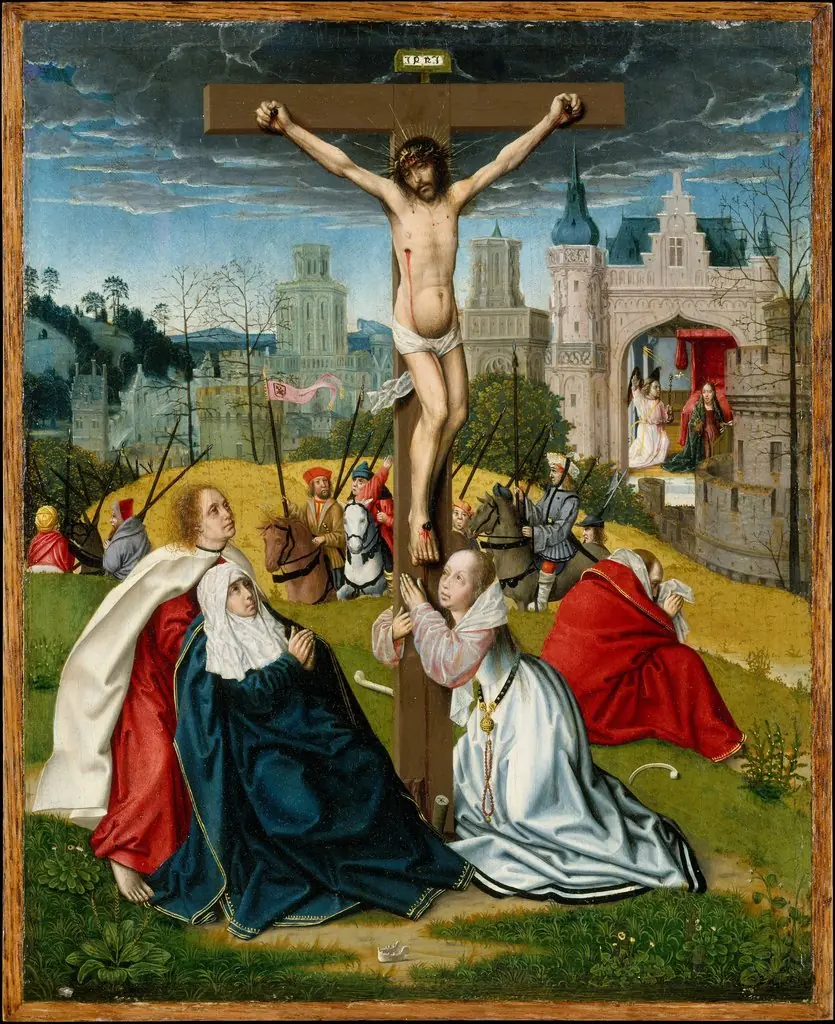
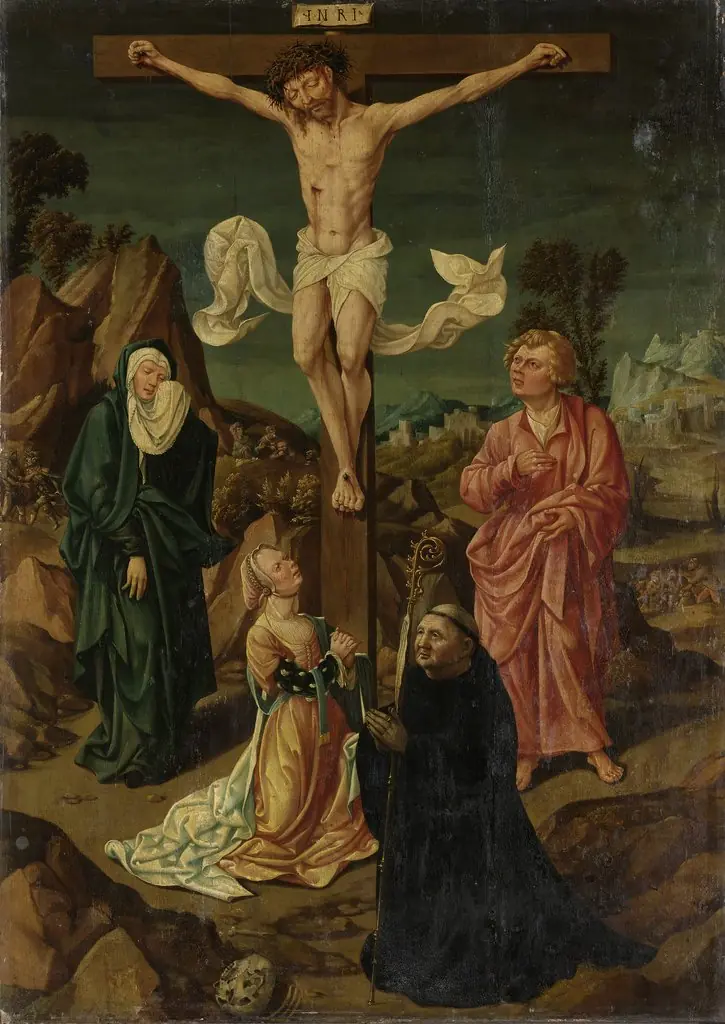
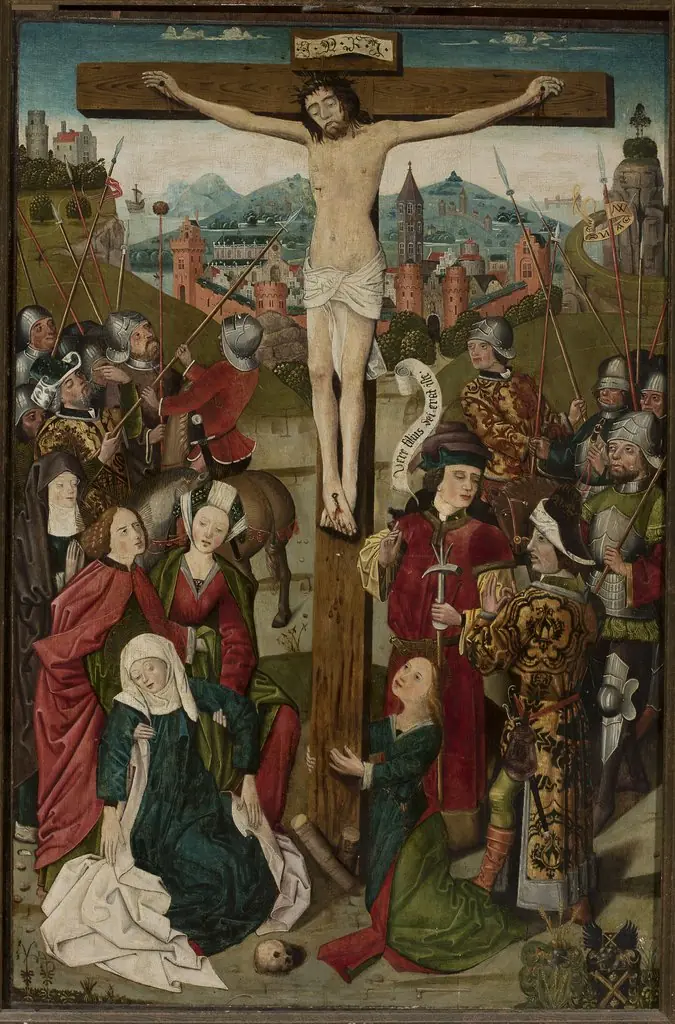
De kruisiging is an oil painting by the Northern Renaissance artist Jan de Beer. It dates from 1520 and is held in the collection of the Bavarian State Painting Collections.
About this work
Overview
Painted in 1520 by Jan de Beer, a Flemish artist active in Antwerp, *De kruisiging* is an oil-on-panel depiction of Christ’s crucifixion.
Painted in 1520 by Jan de Beer, a Flemish artist active in Antwerp, *De kruisiging* is an oil-on-panel depiction of Christ’s crucifixion. De Beer, known for both panel painting and stained glass design, was associated with the Antwerp Mannerists, a group blending Northern detail with expressive, sometimes exaggerated forms. The work resides today in the Alte Pinakothek in Munich, where it exemplifies early 16th-century religious painting in the Low Countries.
Subject & Meaning
The scene centers on Christ nailed to a cross, draped in a simple white loincloth, his body rendered with quiet dignity. Around him, mourners on the left include the Virgin Mary and other women, their gestures conveying grief. On the right, Roman soldiers and officials observe with detachment, their presence underscoring the political and human dimensions of the event. The composition invites contemplation of sacrifice, suffering, and witness.
Technique & Style
De Beer employed oil paint to achieve subtle gradations of light and shadow, enhancing the three-dimensionality of the figures and landscape. The use of chiaroscuro draws focus to Christ’s form while deepening the emotional gravity of the scene. Details in clothing, facial expressions, and the distant cityscape reflect the meticulous observation characteristic of Northern Renaissance art, though the figures’ elongated proportions hint at Mannerist tendencies.
History & Provenance
Commissioned during a period of religious and artistic ferment in Antwerp, the painting likely originated as part of a private devotional setting. It entered the Bavarian royal collection in the 18th century and was later transferred to the Alte Pinakothek, where it has remained since. Its survival through centuries of political and religious upheaval speaks to its enduring value as a work of spiritual and artistic significance.
Context
Created during the early Reformation, the painting reflects a Catholic devotional tradition still dominant in the Southern Netherlands. While Protestant regions moved away from religious imagery, Antwerp’s artists continued producing complex sacred scenes for both local patrons and export. De Beer’s work stands within this context—neither radical nor conventional, but deeply engaged with the emotional and theological weight of its subject.
Legacy
Though less widely known than contemporaries like Pieter Bruegel, de Beer’s *De kruisiging* remains a significant example of Antwerp Mannerism’s synthesis of emotional intensity and refined technique. Its preservation in a major European collection ensures its continued study as a bridge between late Gothic piety and the emerging visual language of the Northern Renaissance.
Artist & collection
Artist
Jan de Beer, formerly known as the Master of the Milan Adoration (c. 1475 – 1528) was a Flemish painter, draughtsman and glass designer active in Antwerp at the beginning of the 16th century. He is considered one of the…