Artwork
A prince visiting a holy man in a rocky landscape
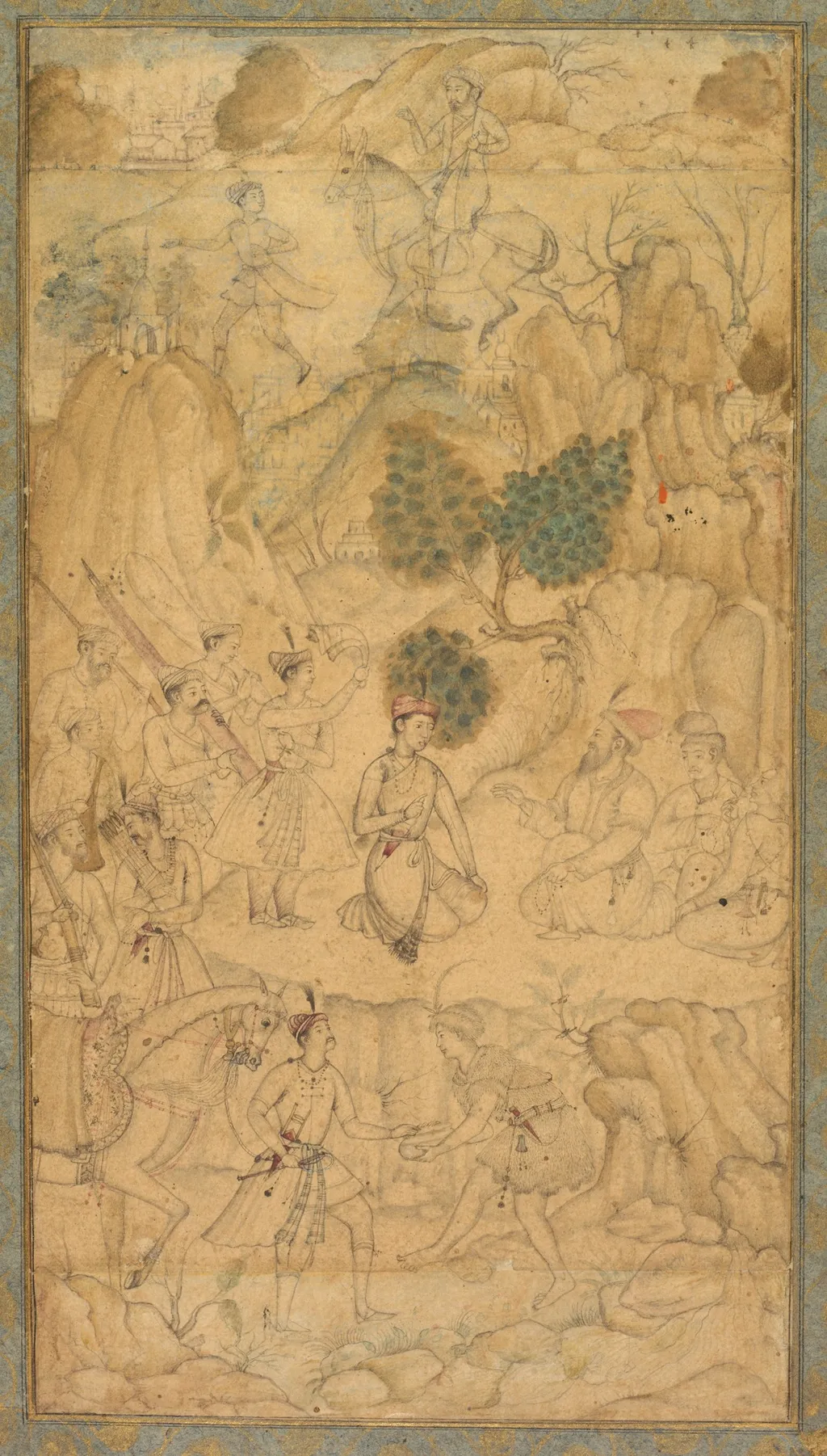
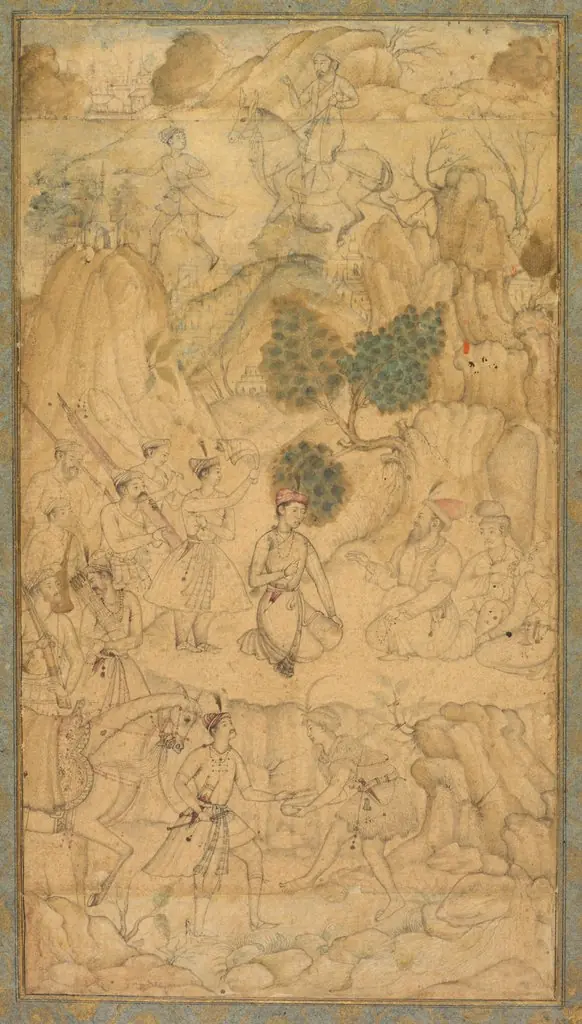
A prince visiting a holy man in a rocky landscape is an unspecified painting. It dates from 1596 and is held in the collection of the Cleveland Museum of Art. The work depicts a princely figure advancing across a rugged hillside toward a seated ascetic.
About this work
Overview
The work depicts a princely figure advancing across a rugged hillside toward a seated ascetic. The prince, distinguished by a red hat and elaborate attire, carries an object in his hand, while the holy man rests beneath a tree. Surrounding them are various onlookers, horses, structures, and foliage rendered in muted tones, creating a narrative tableau set within a rocky landscape.
Subject & Meaning
The composition juxtaposes secular authority with spiritual contemplation, illustrating a moment of encounter between a ruler and a religious figure. The prince’s forward motion and the offering he holds suggest a gesture of respect or petition, while the hermit’s calm posture under the tree conveys detachment and wisdom, inviting reflection on the relationship between power and piety.
Technique & Style
Executed with a delicate palette, the painting employs soft, blended colors to model the distant hills, trees, and architecture, contrasting with the more sharply defined figures in the foreground. The handling of light and shadow gives the rocky terrain a textured quality, while the fine brushwork on clothing details emphasizes the prince’s luxurious garments.
History & Provenance
The piece is part of the collection at the Cleveland Museum of Art, where it is catalogued among works that explore narrative scenes set in naturalistic environments. Its acquisition history and earlier ownership remain undocumented in the available record, limiting precise dating and attribution.
Context
Scenes of noble patrons meeting ascetics were common in medieval and early Renaissance art, often serving didactic purposes. The inclusion of everyday figures, animals, and architectural elements situates the encounter within a broader social landscape, reflecting contemporary interests in moral instruction and the integration of the sacred into daily life.
Artist & collection