Artwork
A Prince Visiting a Holy Man in a Rocky Landscape (recto)
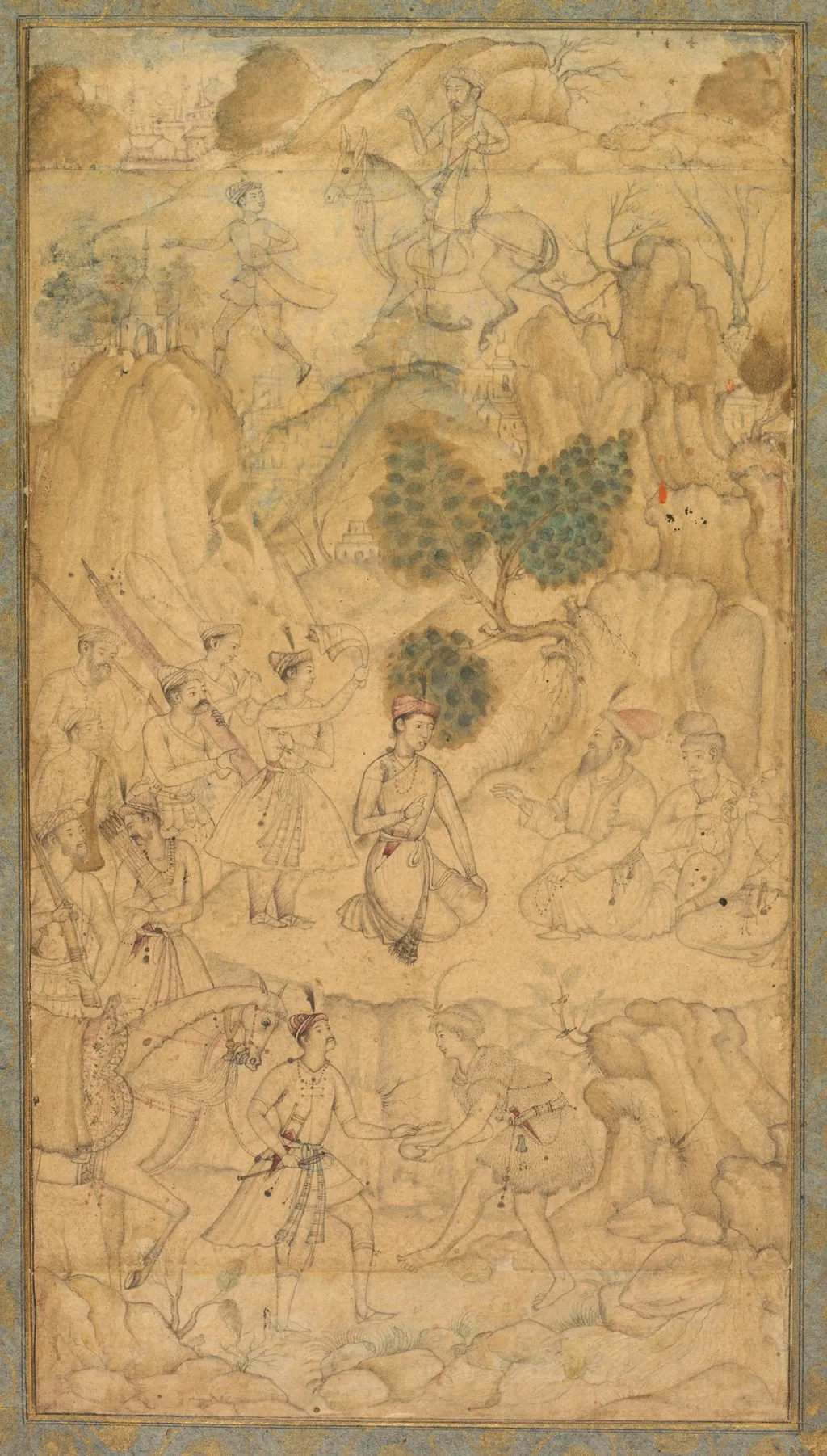
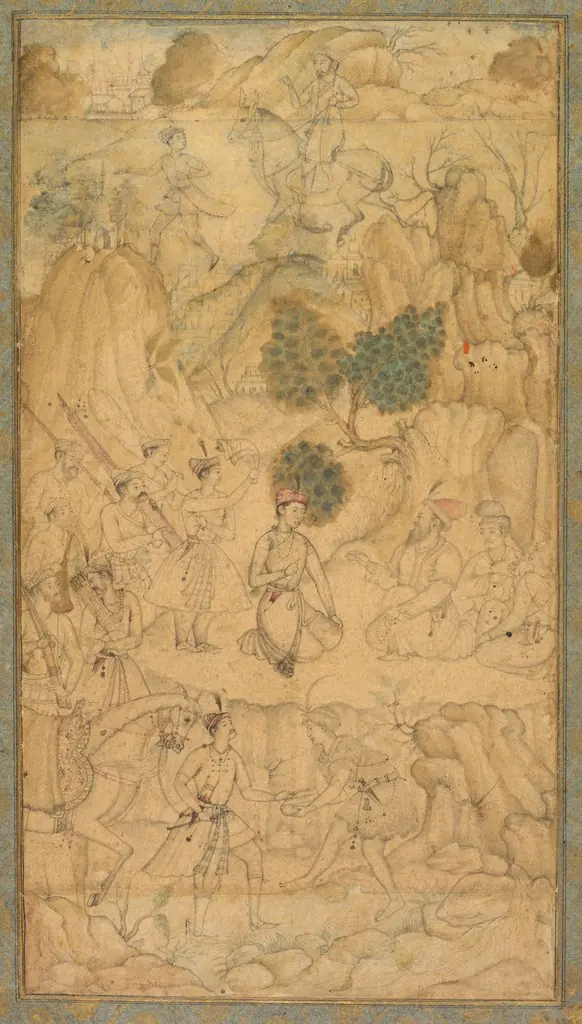
A Prince Visiting a Holy Man in a Rocky Landscape (recto) is an unspecified painting. It dates from 1596 and is held in the collection of the Cleveland Museum of Art. The work portrays a princely rider approaching a solitary ascetic seated amid a craggy terrain.
About this work
Overview
The work portrays a princely rider approaching a solitary ascetic seated amid a craggy terrain. The horseman, dressed in regal attire, halts beside the holy figure, who is surrounded by a modest assembly of men gathered around him. The composition unfolds across a layered landscape of rocks, trees, and distant hills, establishing depth and a contemplative atmosphere.
Subject & Meaning
The prince’s presence on horseback emphasizes temporal power, while the seated holy man, grounded among the stones, embodies contemplative detachment.
The narrative suggests a meeting between worldly authority and spiritual wisdom, a common motif in medieval and early Renaissance art. The prince’s presence on horseback emphasizes temporal power, while the seated holy man, grounded among the stones, embodies contemplative detachment. The surrounding figures appear engaged in quiet discussion, hinting at the transmission of counsel or moral instruction.
Technique & Style
The painter employs a pronounced chiaroscuro, juxtaposing illuminated figures against a shadowed rocky backdrop to heighten drama. Modeling of forms relies on subtle gradations of light, giving volume to the horse, rider, and the ascetic. Atmospheric perspective is achieved through diminishing detail and cooler tones in the distant hills, reinforcing a sense of spatial recession.
Context
Set within a tradition of courtly pilgrimage scenes, the image reflects the period’s fascination with the juxtaposition of secular and sacred realms. The rocky landscape serves both as a literal setting and a symbolic barrier, underscoring the prince’s journey toward spiritual insight. Such compositions were often used to illustrate moral exempla in manuscript illumination and panel painting.
Artist & collection