Artwork
A holy man prostrating himself before a learned prince
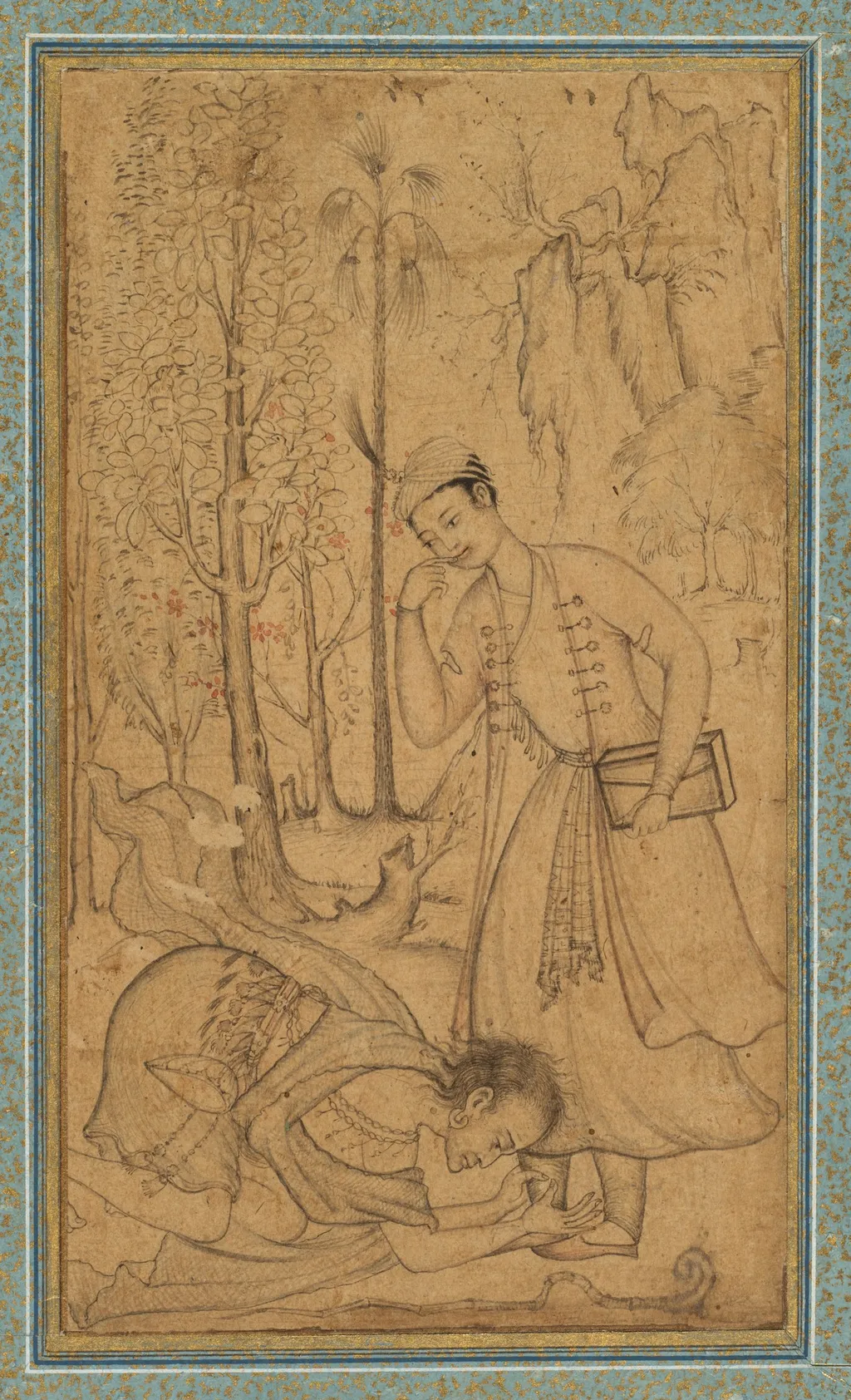
A holy man prostrating himself before a learned prince is an unspecified painting by the Mughal Painting artist Basawan. It dates from 1593 and is held in the collection of the Cleveland Museum of Art.
About this work
Overview
Created in 1593 by the Mughal painter Basawan, this small panel is part of the collection of the Cleveland Museum of Art. It depicts two figures set against a modest landscape of trees, a bird and a low hill rendered in delicate brown lines. The composition balances a standing, robed musician with a kneeling figure whose forehead nearly touches the ground, conveying a solemn atmosphere.
Subject & Meaning
The standing individual, dressed in a long robe and holding a stringed instrument, appears as a learned patron or ruler, while the prostrate figure is a holy man offering reverence. The gesture of deep bowing suggests devotion or supplication, highlighting the hierarchical relationship between spiritual authority and worldly power in Mughal court culture.
Technique & Style
Basawan employs fine, linear brushwork typical of early Mughal painting, using a restrained palette of soft browns to model forms and suggest depth. The figures are outlined with precise contours, and the landscape is rendered with minimal detail, allowing the narrative action to dominate the visual field.
History & Provenance
The work has remained in the Cleveland Museum of Art’s collection since its acquisition, where it is displayed among other Mughal pieces. Its attribution to Basawan, a prominent artist of Emperor Akbar’s atelier, situates it within the early phase of Indo-Persian artistic synthesis.
Artist & collection
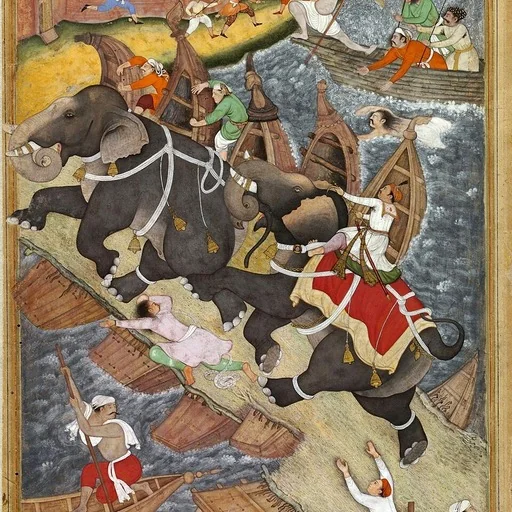
Artist
Basāwan, or Basāvan, was an Indian miniature painter in the Mughal style. He was known by his contemporaries as a skilled colorist and keen observer of human nature, and for his use of portraiture in the illustrations…

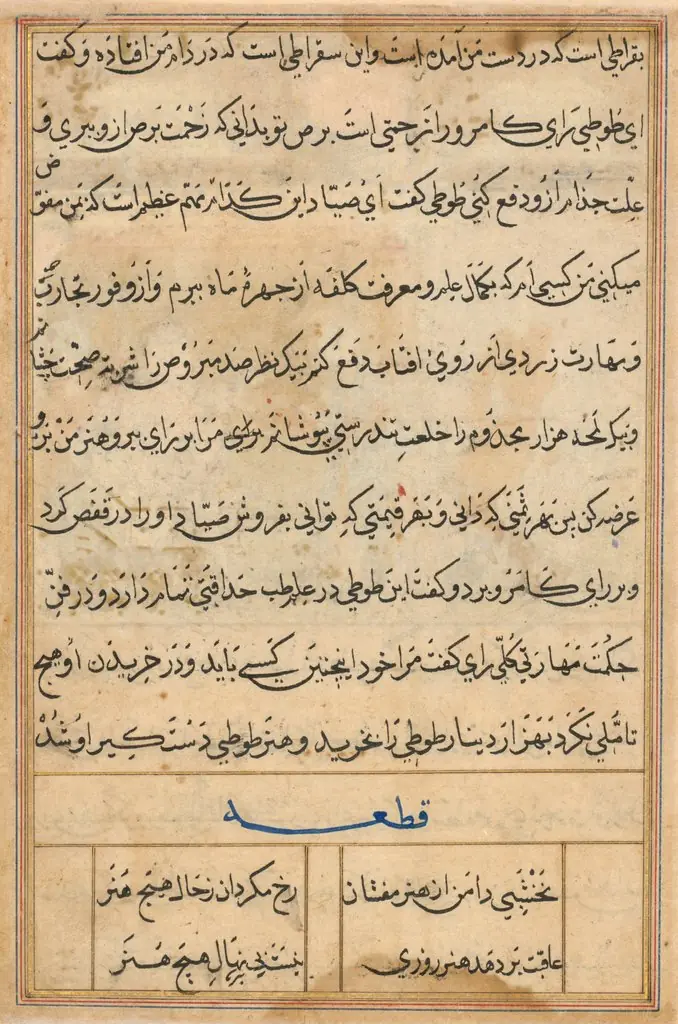 Page from Tales of a Parrot (Tuti-nama): text page
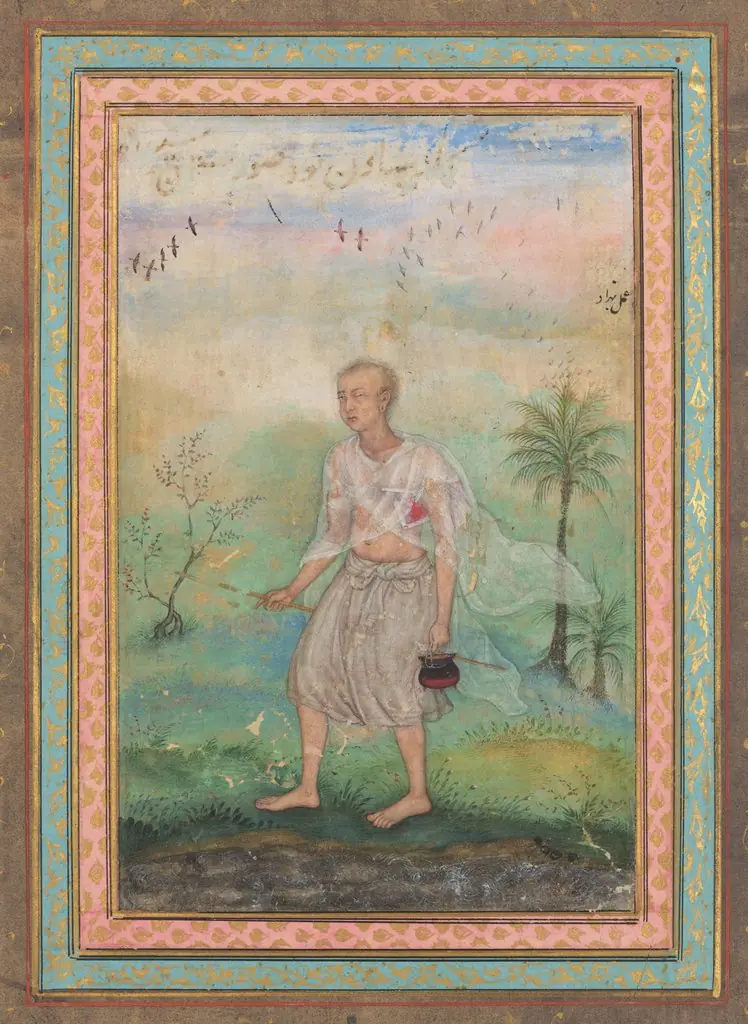 Jain Ascetic Walking Along a Riverbank
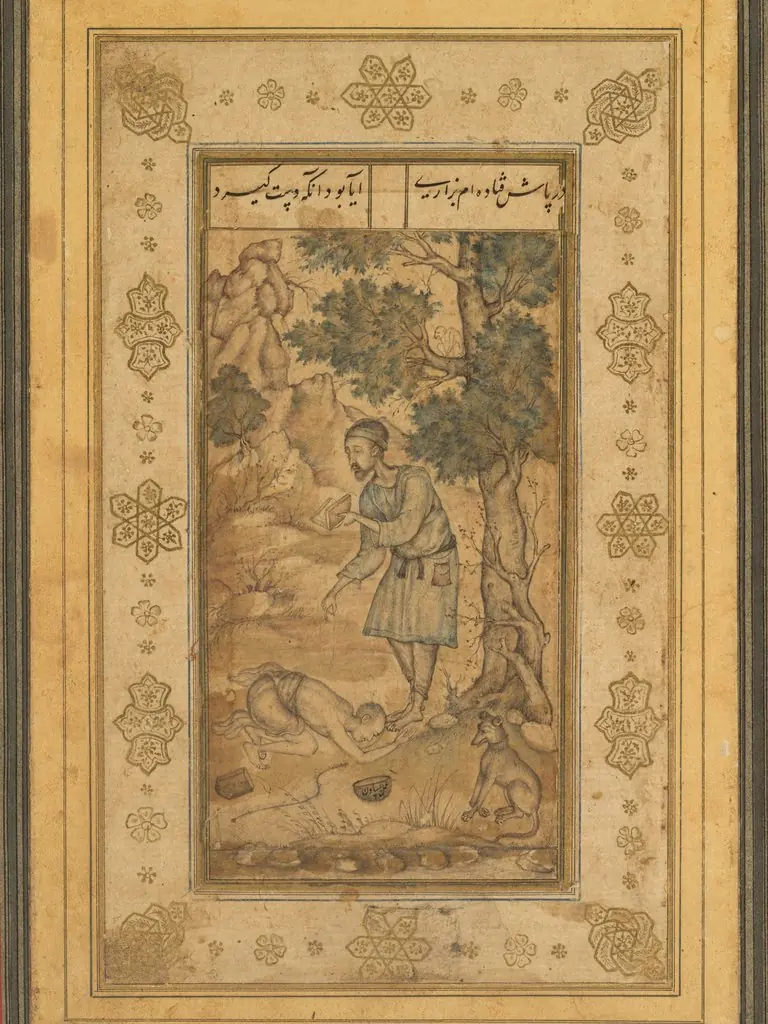 A mendicant bowing before a holy man, from the Prince Salim Album
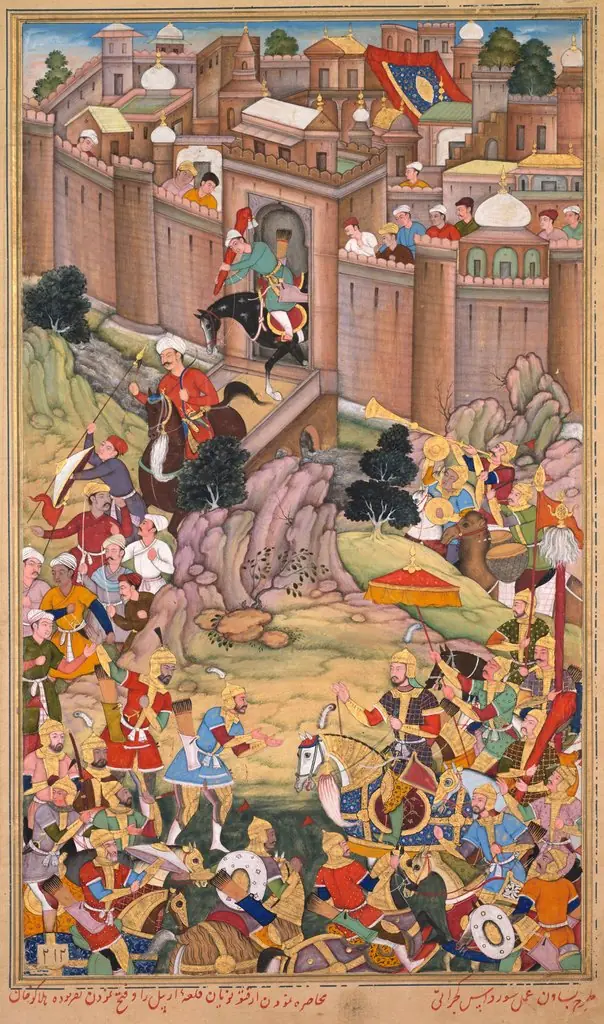 The siege of Arbela in the era of Hulagu Khan, from a Chingiz-nama (Book of Chingiz Khan) of the Jami al-tavarikh (Compendium of Chronicles) of Rashid al-Din (Persian, 1247–1318)
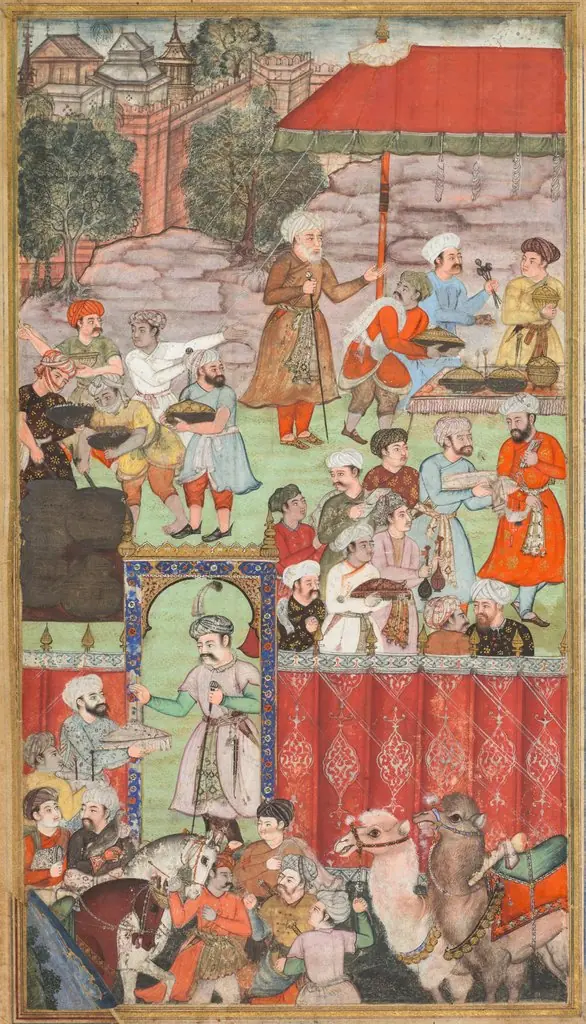 A feast for Babur hosted by his half-brother Jahangir Mirza in Ghazni in May 1505, from a Babur-nama (Memoirs of Babur)
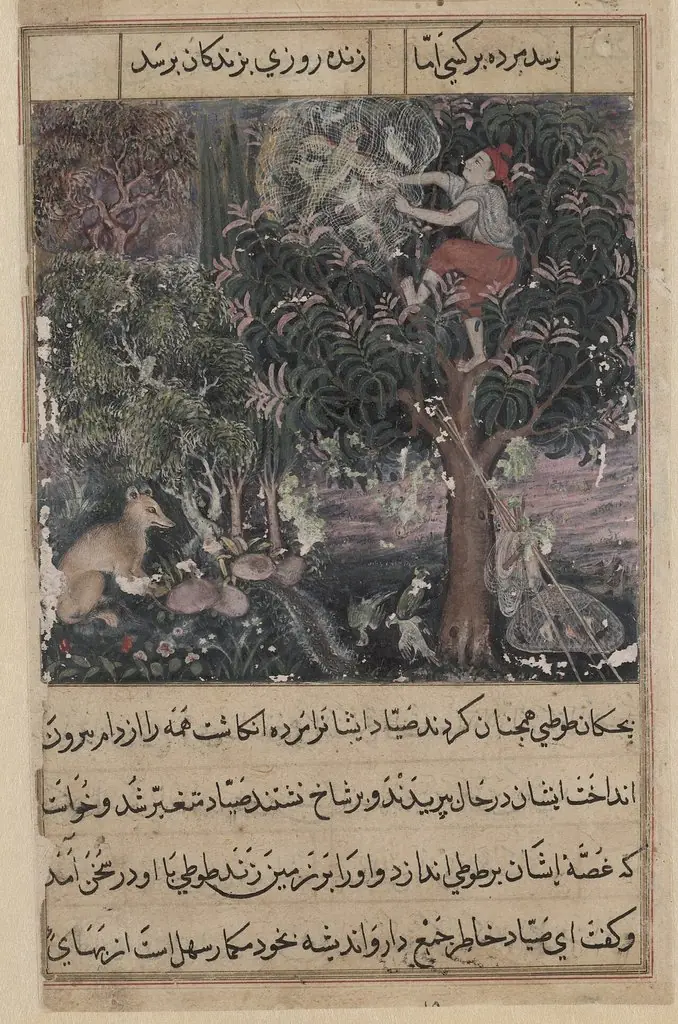 The hunter throws away the baby parrots, who pretend to be dead, and captures the mother, from a Tuti-nama (Tales of a Parrot): Fifth Night
 Page from Tales of a Parrot (Tuti-nama): text page
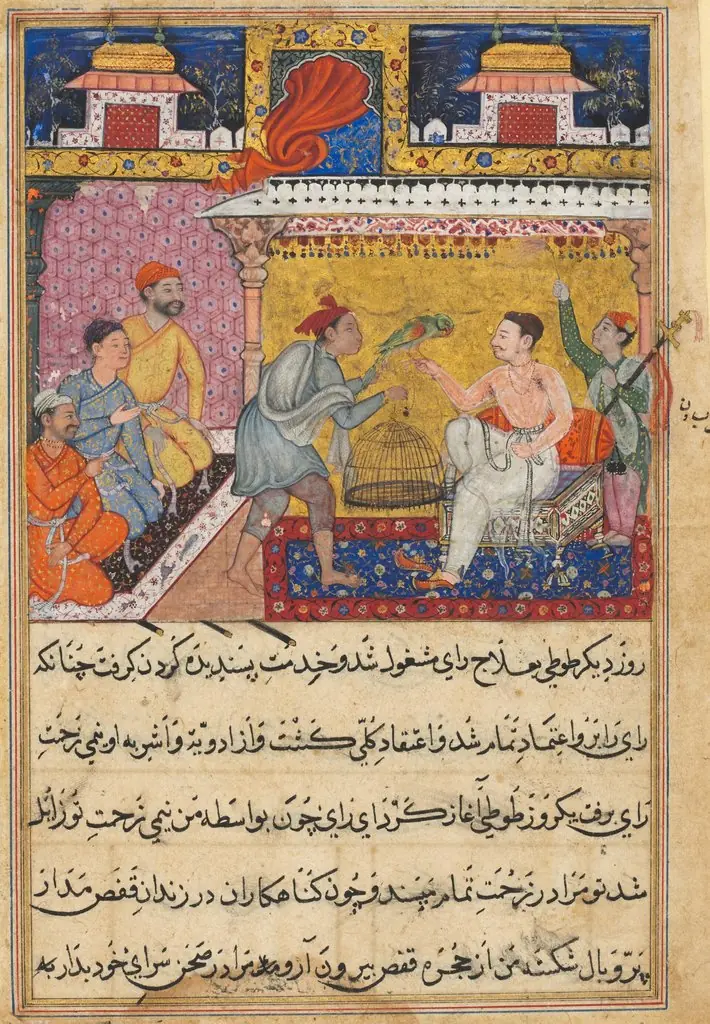 The hunter offers the mother parrot to the king of Kamarupa, from a Tuti-nama (Tales of a Parrot): Fifth Night