Artwork
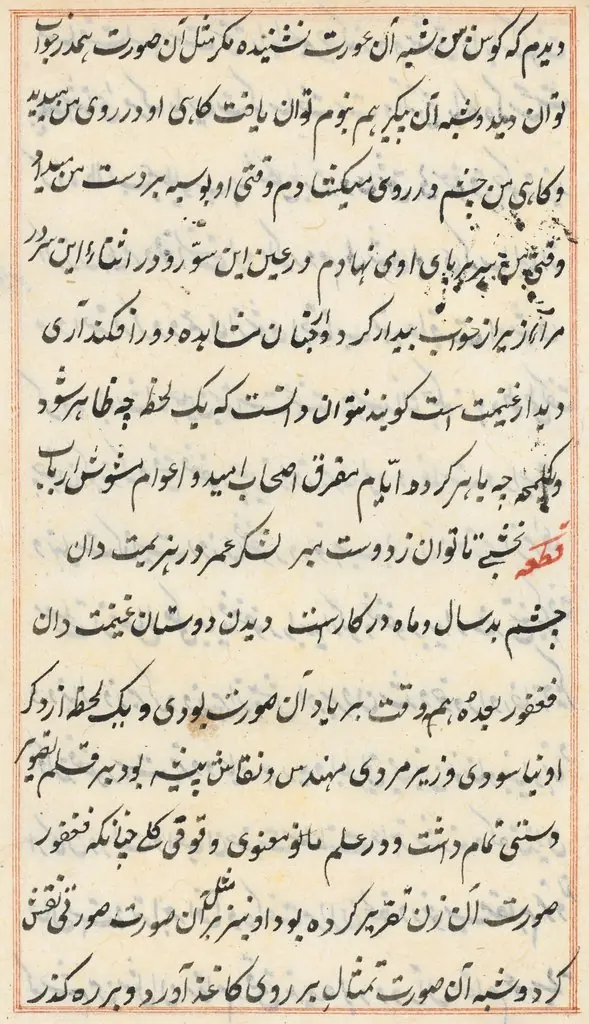
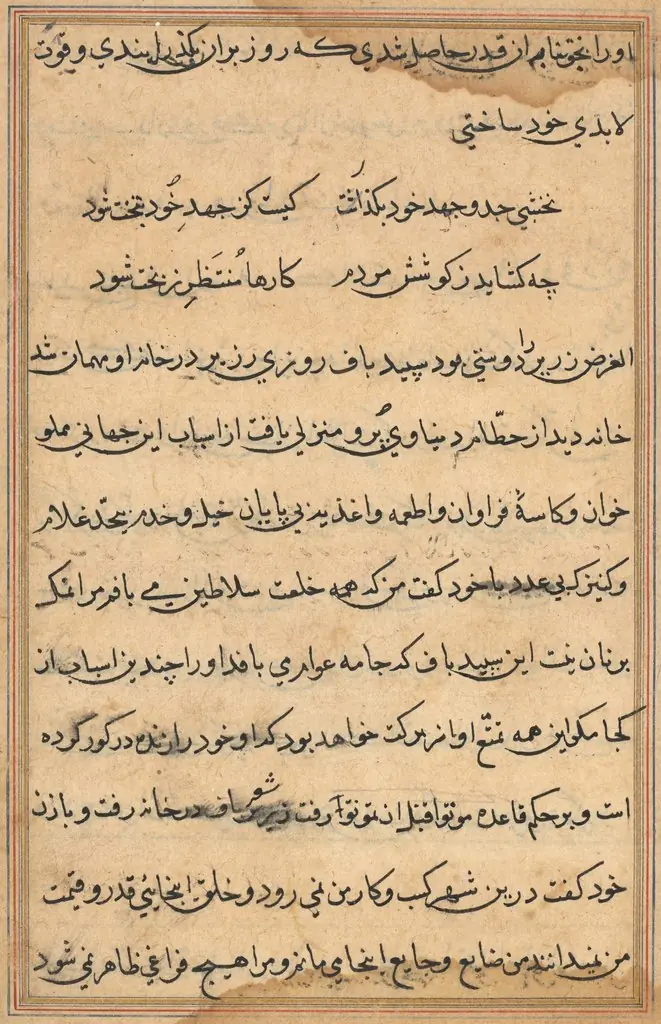
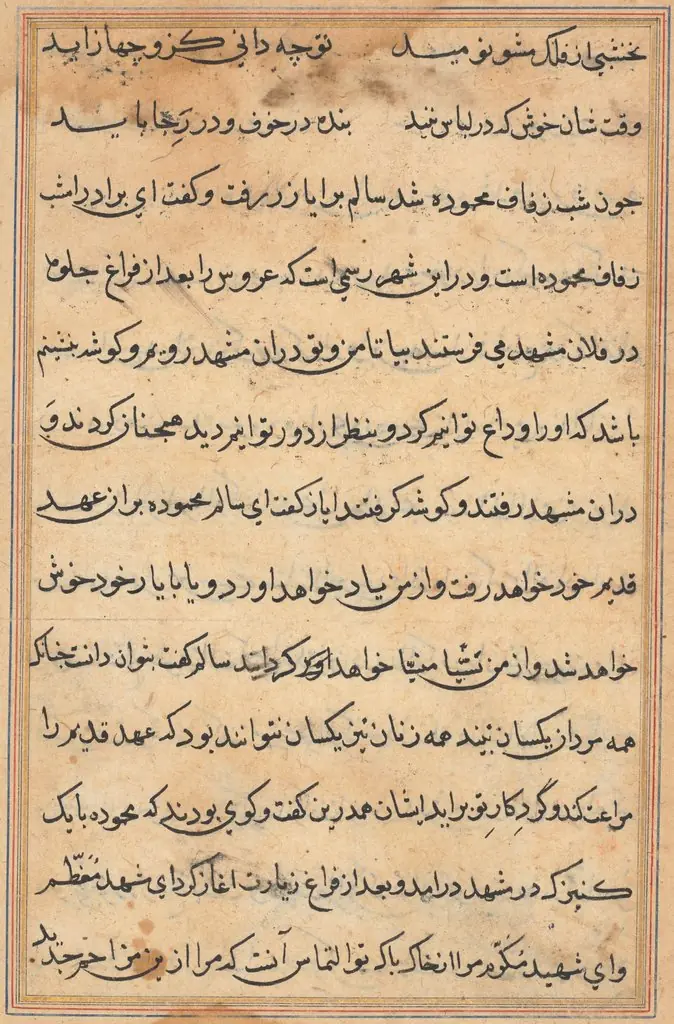
Page from Tales of a Parrot (Tuti-nama): text page
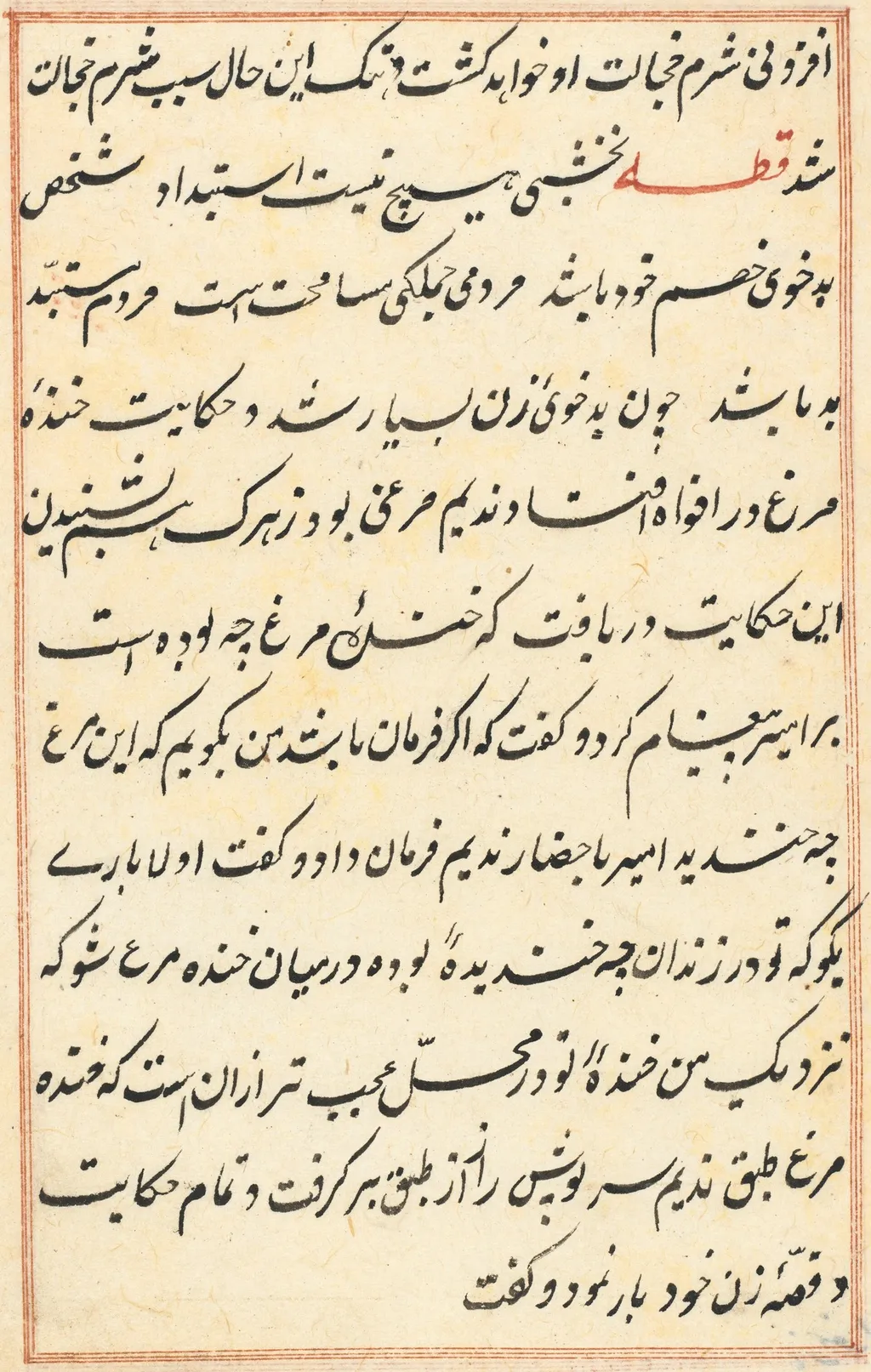
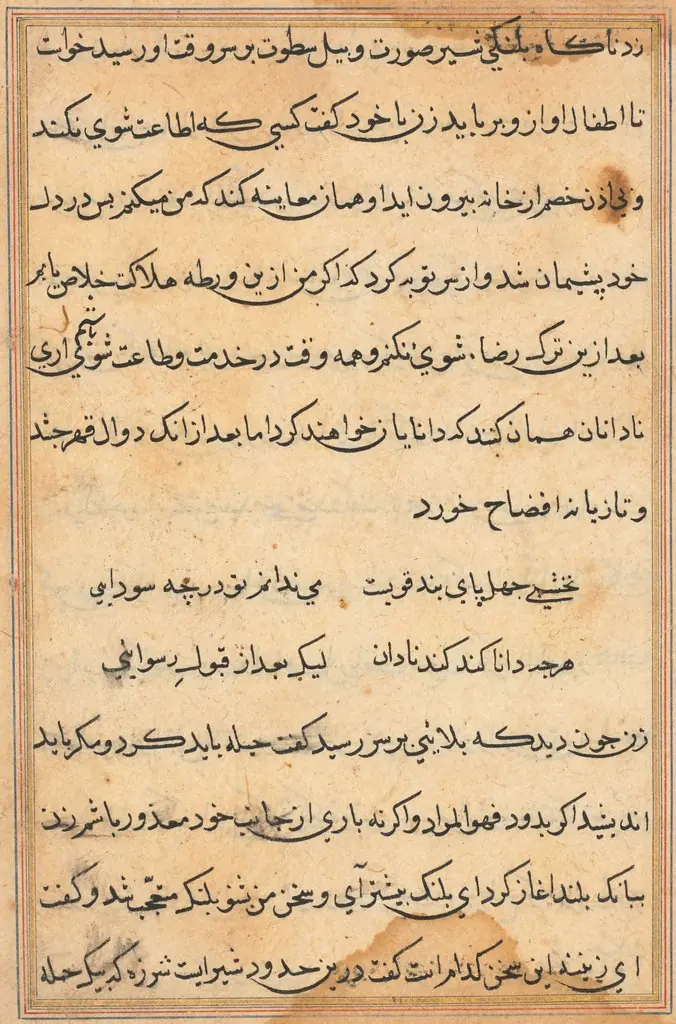
Page from Tales of a Parrot (Tuti-nama): text page is an unspecified painting. It dates from 1560 and is held in the collection of the Cleveland Museum of Art. This object is a single sheet from the Persian narrative work *Tales of a Parrot* (Tuti‑nama).
About this work
Overview
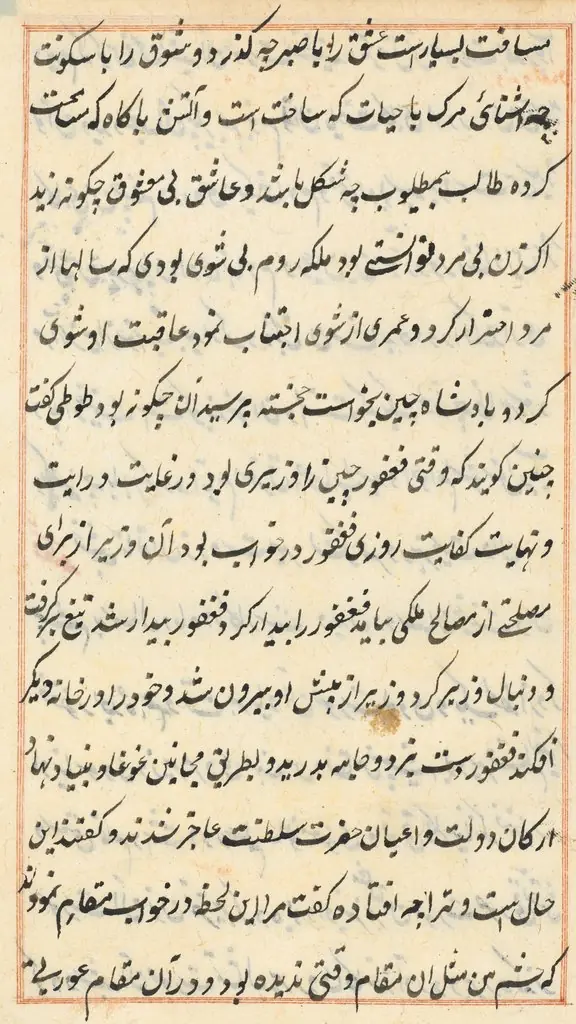
A thin red border frames the sheet, and a small red mark near the upper right corner suggests a marginal note or correction.
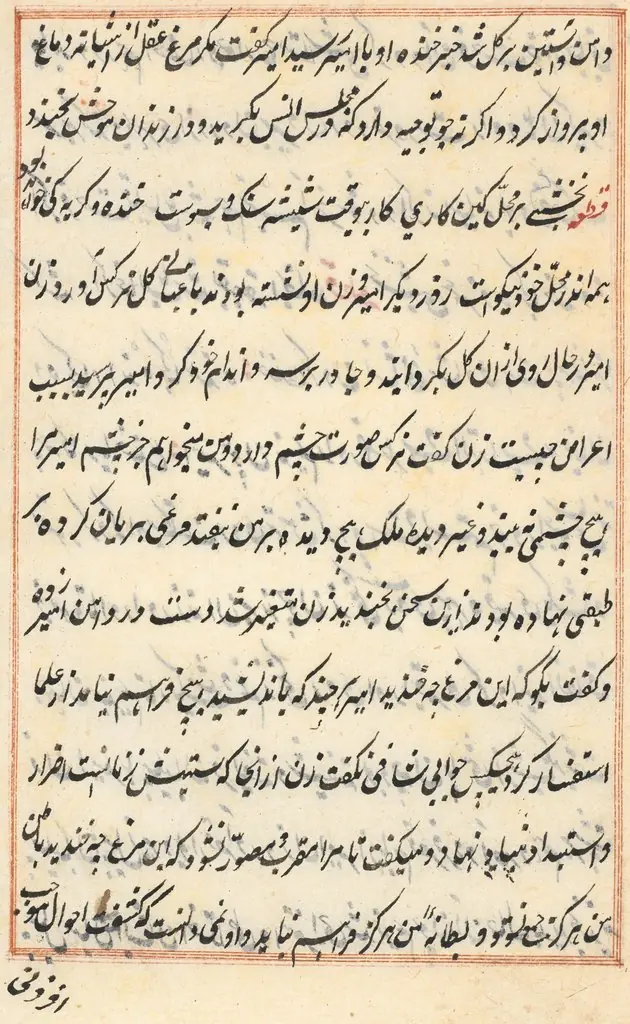
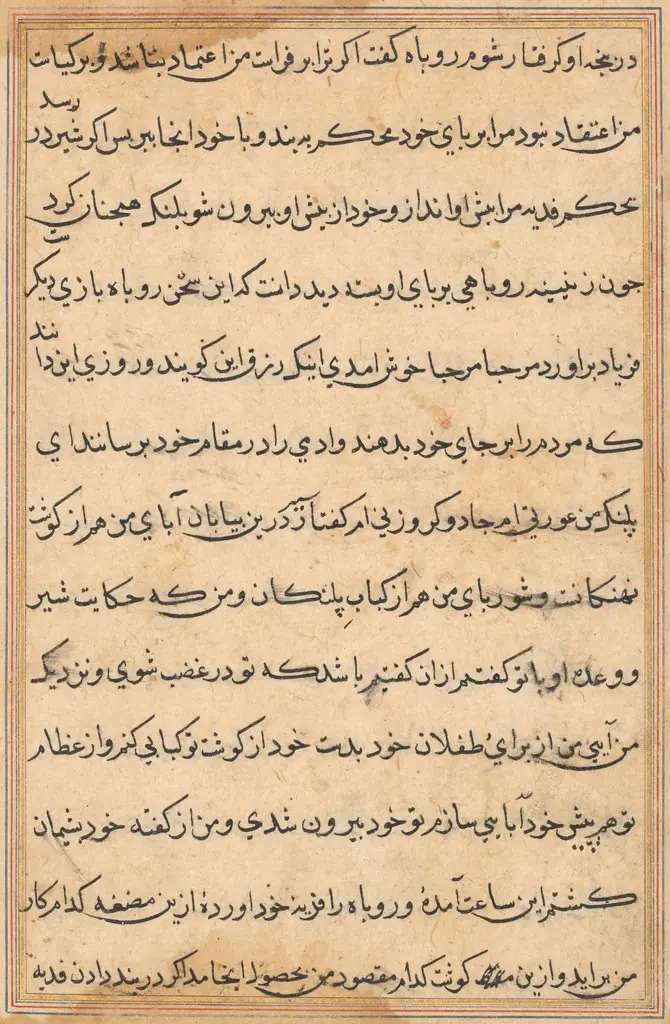
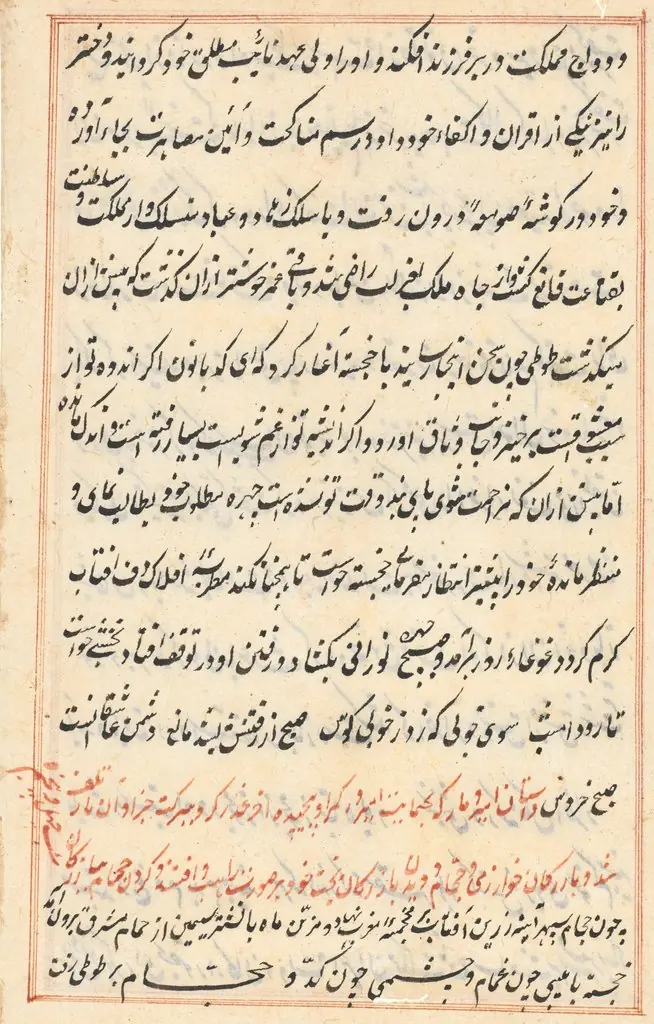
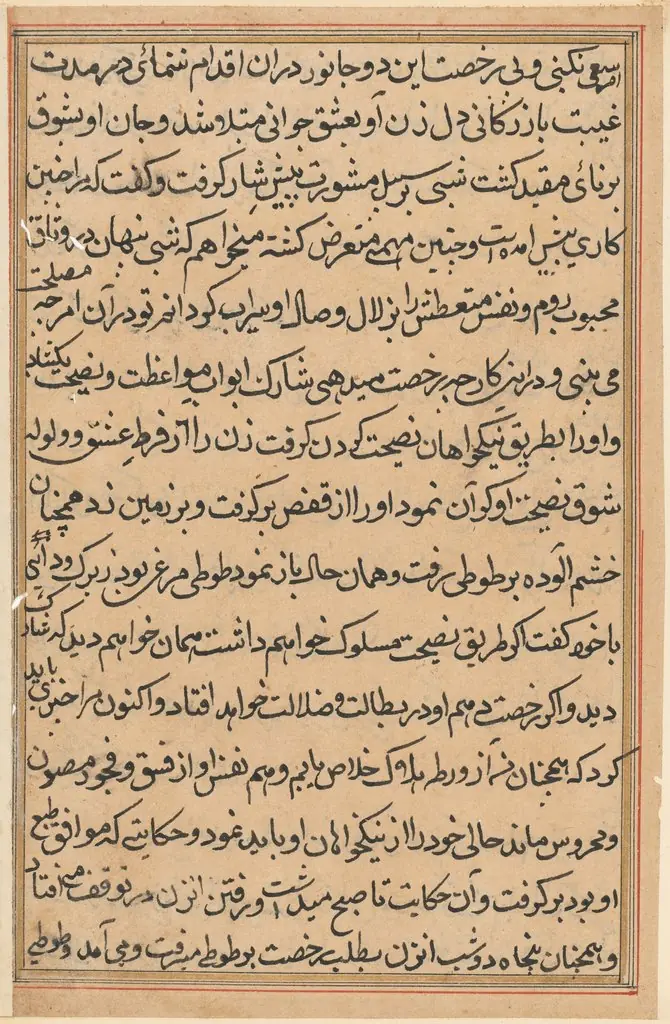
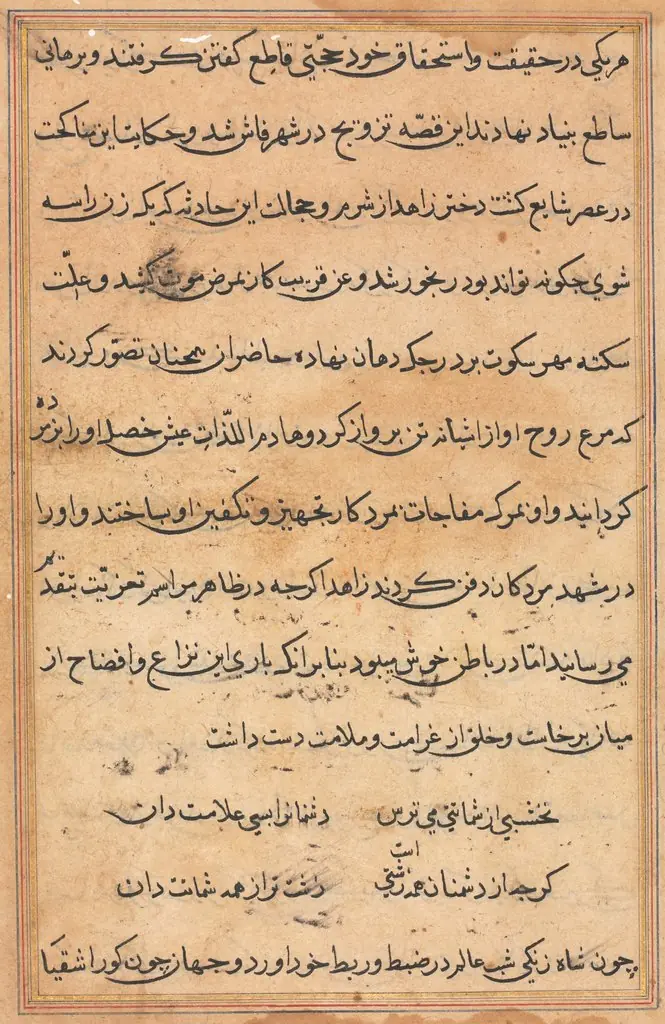
This object is a single sheet from the Persian narrative work *Tales of a Parrot* (Tuti‑nama). The page consists of dense black calligraphy arranged in tight, orderly rows, with occasional variations in line weight that give certain characters a bolder appearance. A thin red border frames the sheet, and a small red mark near the upper right corner suggests a marginal note or correction. The paper shows signs of age, lending it a softened, antiqued surface.
Subject & Meaning
The text on the page forms part of a larger literary composition that recounts moral and didactic stories featuring a parrot as a narrator. The careful, legible script reflects the importance of preserving the narrative accurately, indicating that the work was intended for readers who valued both its entertainment and its instructional content.
Technique & Style
The calligrapher employed ink of varying thickness, creating a subtle visual rhythm across the page. The script is executed in a neat, uniform hand, characteristic of Persian manuscript traditions that prioritize clarity and elegance. The red border and marginal mark are applied with pigment rather than ink, providing a visual contrast that highlights the page’s boundaries and any editorial interventions.
History & Provenance
The sheet originates from a manuscript tradition that flourished in Persian-speaking regions, where literary works were frequently copied by hand for circulation among scholars and patrons. Although the precise date and place of production are not recorded here, the aged appearance of the paper and the style of the calligraphy suggest a creation several centuries ago, before the advent of mechanical printing in the region.
Artist & collection

 Page from Tales of a Parrot (Tuti-nama): text page
 Page from Tales of a Parrot (Tuti-nama): text page
 Page from Tales of a Parrot (Tuti-nama): text page
 Page from Tales of a Parrot (Tuti-nama): text page
 Page from Tales of a Parrot (Tuti-nama): text page
 Page from Tales of a Parrot (Tuti-nama): text page
 Page from Tales of a Parrot (Tuti-nama): text page