Artwork
Page from Tales of a Parrot (Tuti-nama): text page
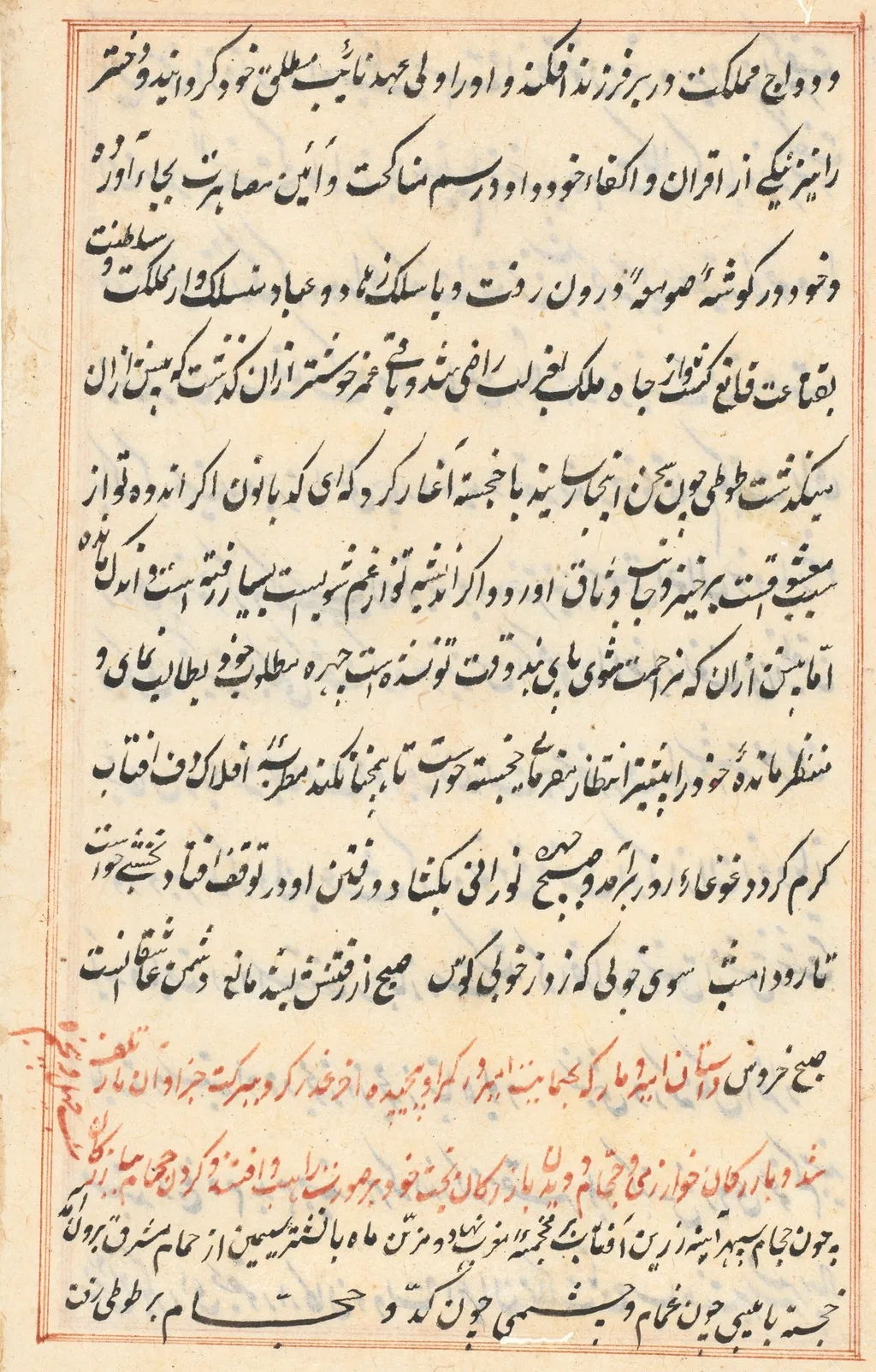
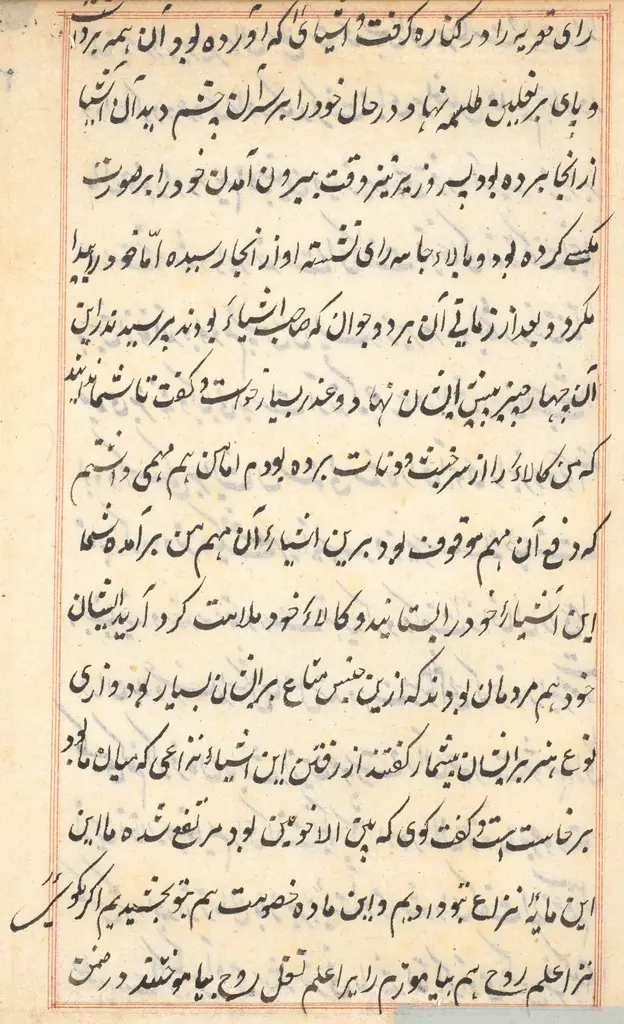
Page from Tales of a Parrot (Tuti-nama): text page is an unspecified painting. It dates from 1560 and is held in the collection of the Cleveland Museum of Art. The object is a single leaf from the Persian manuscript known as the *Tuti‑nama* or *Tales of a Parrot*.
About this work
Overview
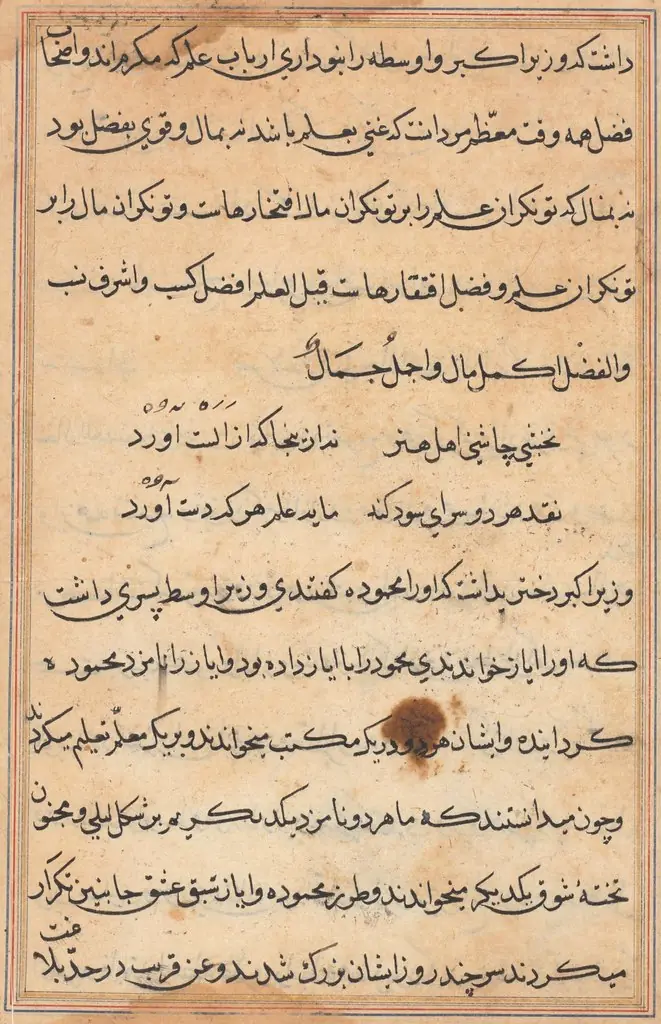
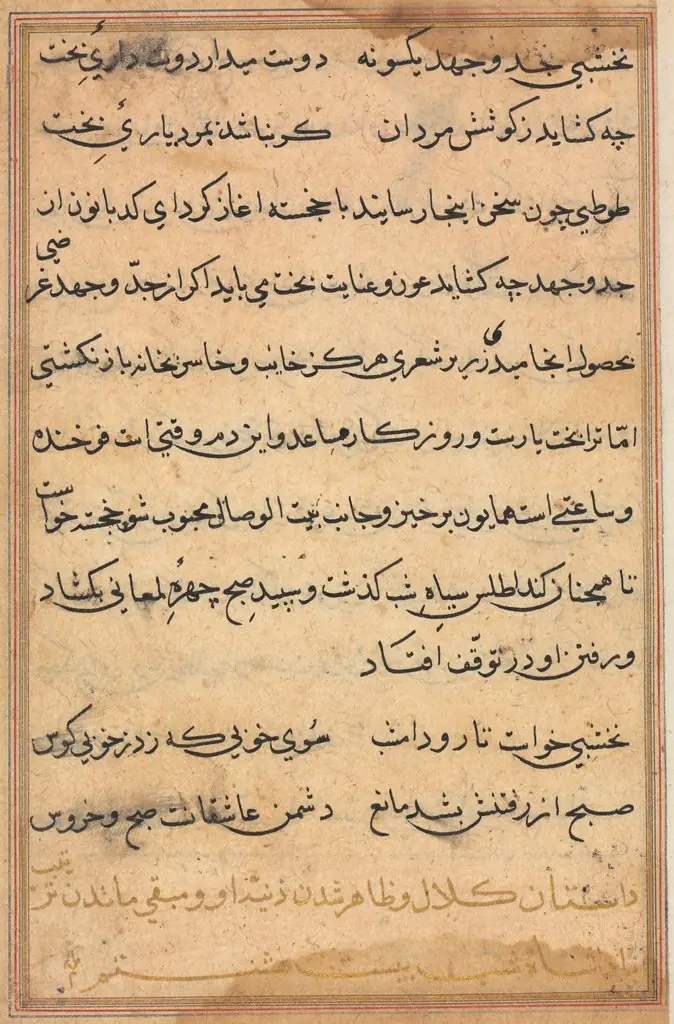
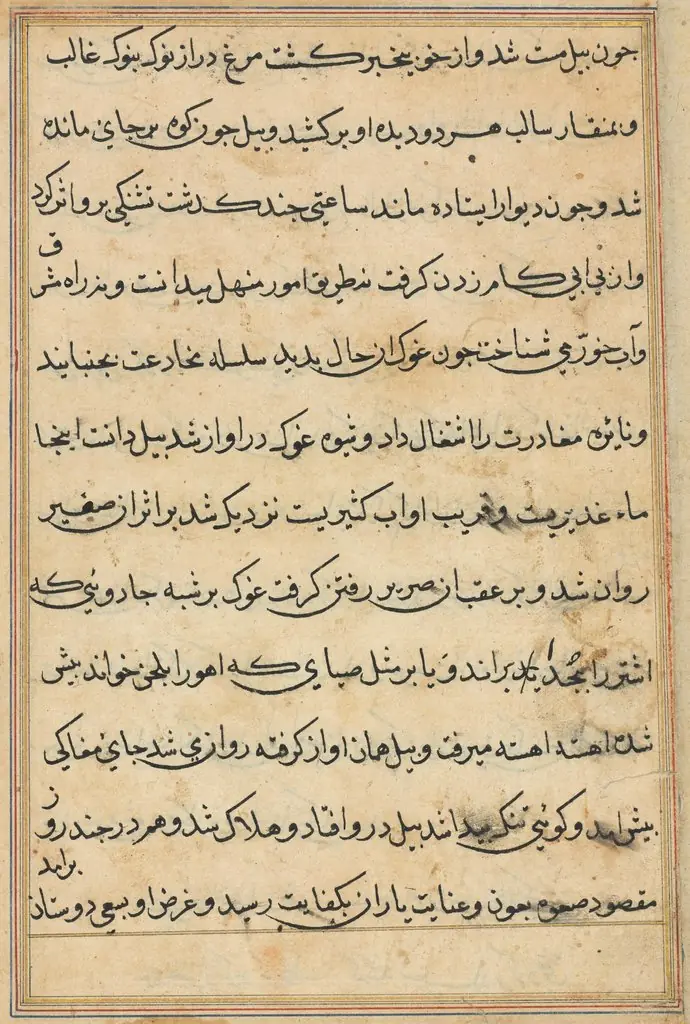
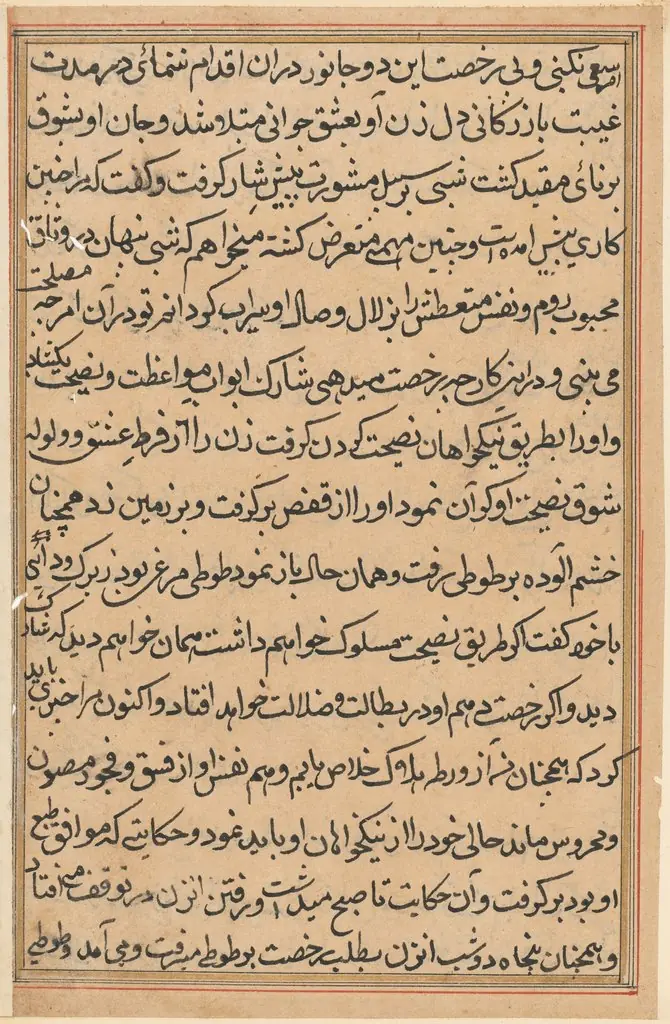
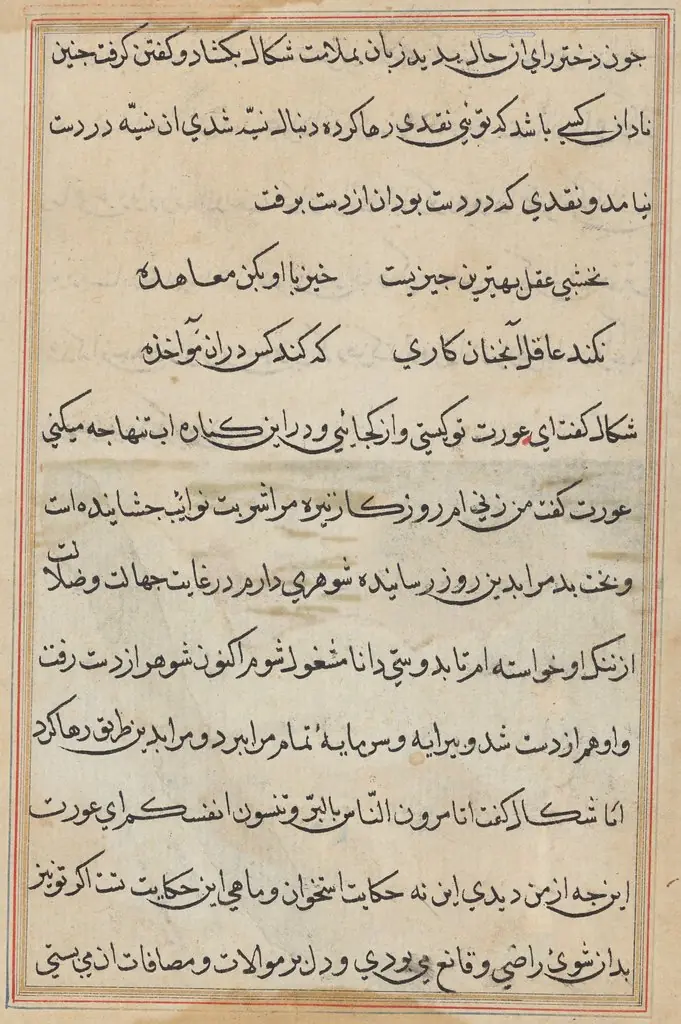
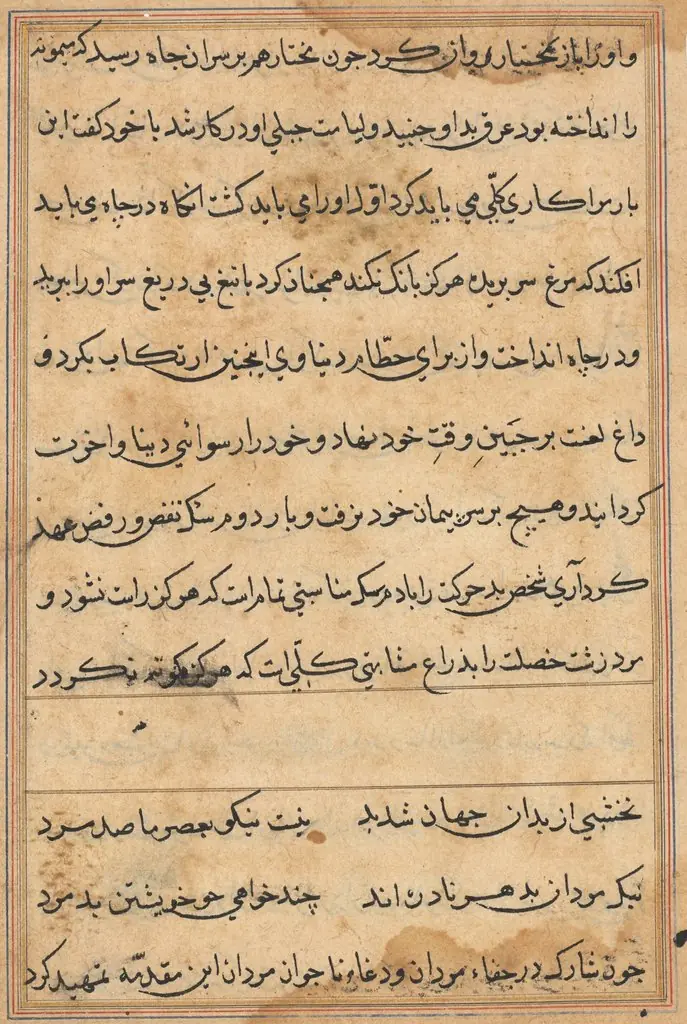
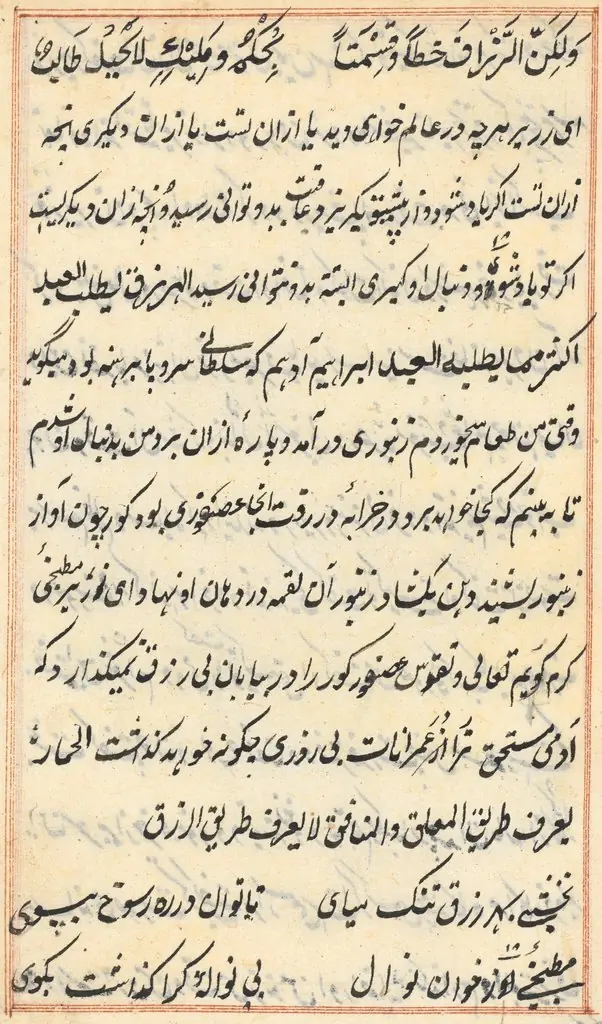
The object is a single leaf from the Persian manuscript known as the *Tuti‑nama* or *Tales of a Parrot*. It consists of a page of text rendered in black ink on a warm, beige paper, the ink forming a flowing, formal cursive script arranged in vertical columns.
Subject & Meaning
The page contains narrative prose drawn from the *Tuti‑nama*, a collection of moral and didactic stories traditionally illustrated with allegorical birds. The text itself serves as a literary vehicle for ethical instruction, reflecting the genre’s emphasis on virtue and wisdom.
Technique & Style
The calligraphy displays a refined, cursive hand characteristic of Persian manuscript tradition in the late medieval period. Ink is applied with a fine reed pen, producing deep, uniform strokes that contrast sharply with the paper’s light tone, while the careful spacing of lines creates a rhythmic visual flow.
History & Provenance
The *Tuti‑nama* was compiled and illustrated in Persia between the 14th and 16th centuries, circulating among elite patrons. Individual leaves such as this one have survived in various collections, often detached from their original codices during later disassembly for sale or study.
Context
Manuscript production in the Islamic world combined literary, artistic, and decorative practices. The *Tuti‑nama* exemplifies this synthesis, pairing moral storytelling with sophisticated calligraphic art, and it was commonly used in educational settings for the instruction of young readers.
Artist & collection

 Page from Tales of a Parrot (Tuti-nama): text page
 Page from Tales of a Parrot (Tuti-nama): text page
 Page from Tales of a Parrot (Tuti-nama): text page
 Page from Tales of a Parrot (Tuti-nama): text page
 Page from Tales of a Parrot (Tuti-nama): text page
 Page from Tales of a Parrot (Tuti-nama): text page
 Page from Tales of a Parrot (Tuti-nama): text page
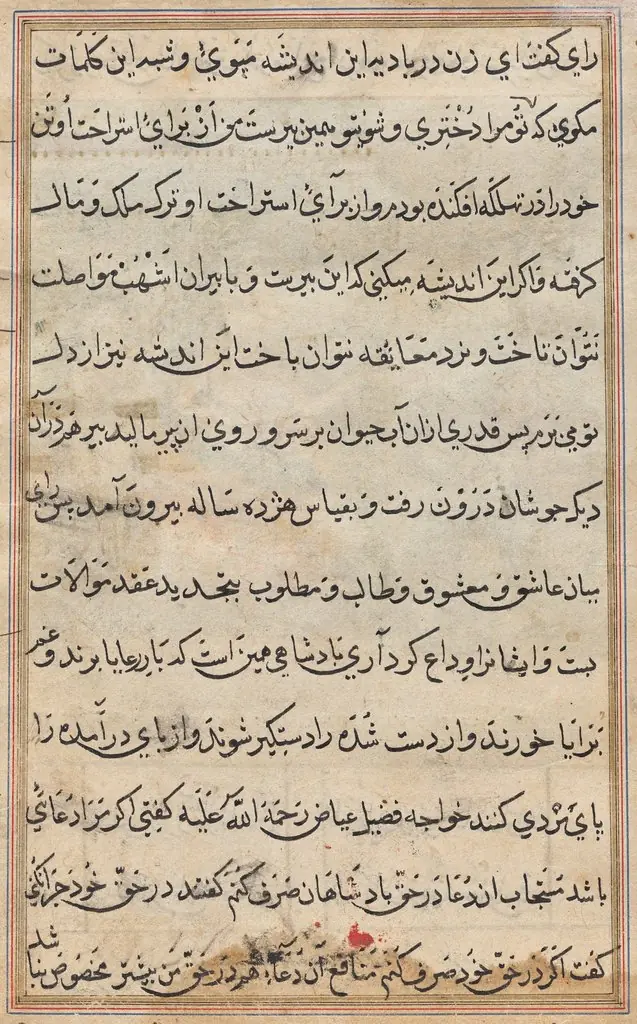 Page from Tales of a Parrot (Tuti-nama): text page
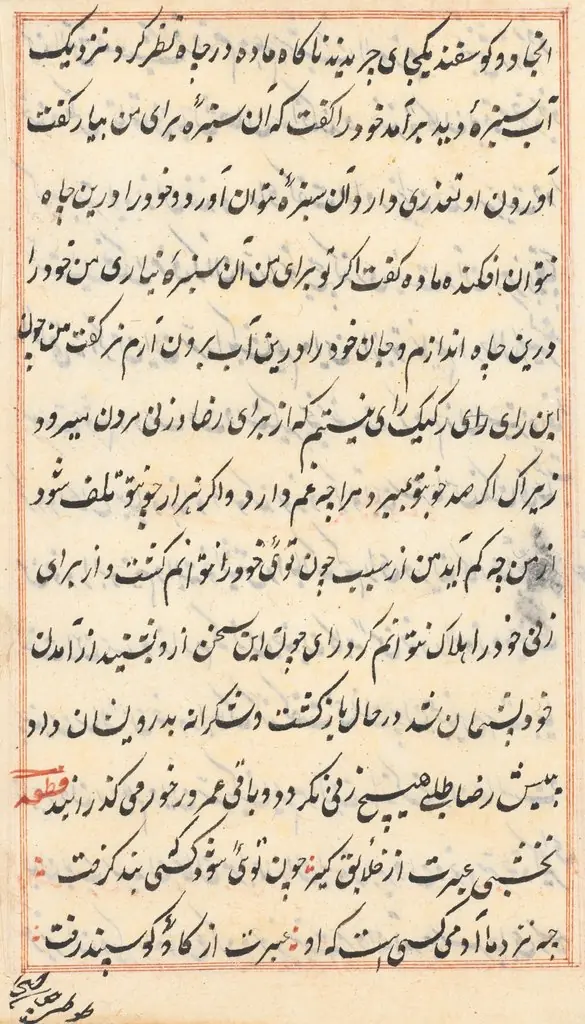 Page from Tales of a Parrot (Tuti-nama): text page
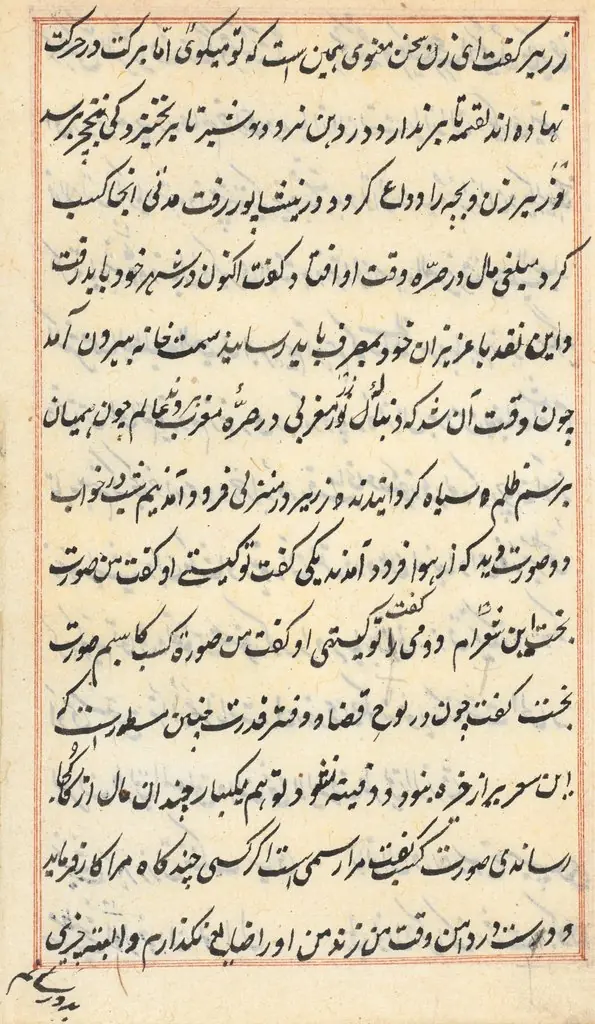 Page from Tales of a Parrot (Tuti-nama): text page
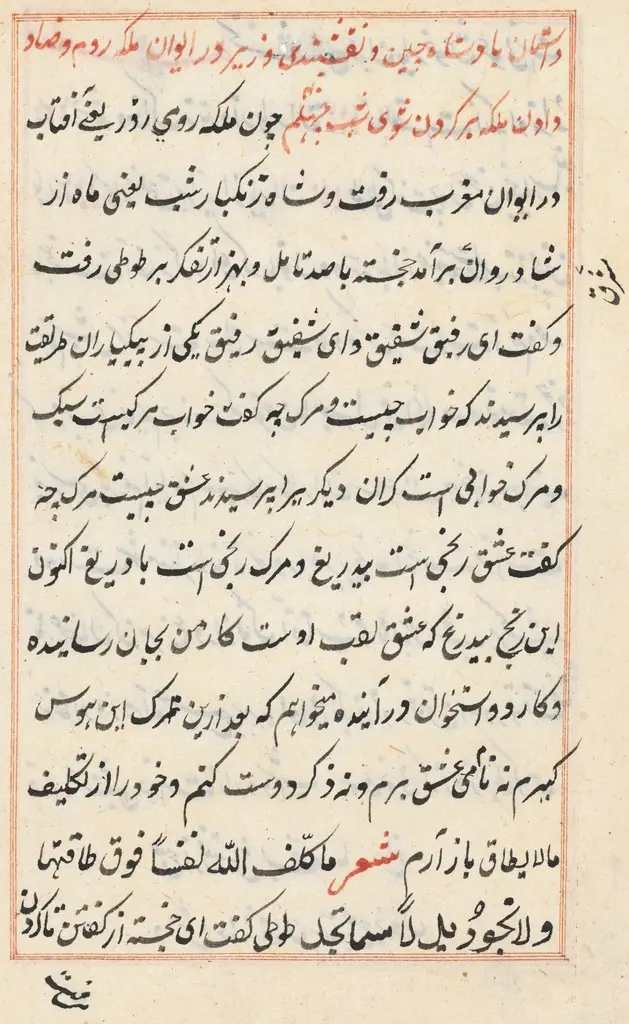 Page from Tales of a Parrot (Tuti-nama): text page
 Page from Tales of a Parrot (Tuti-nama): text page