Artwork
Page from Tales of a Parrot (Tuti-nama): text page
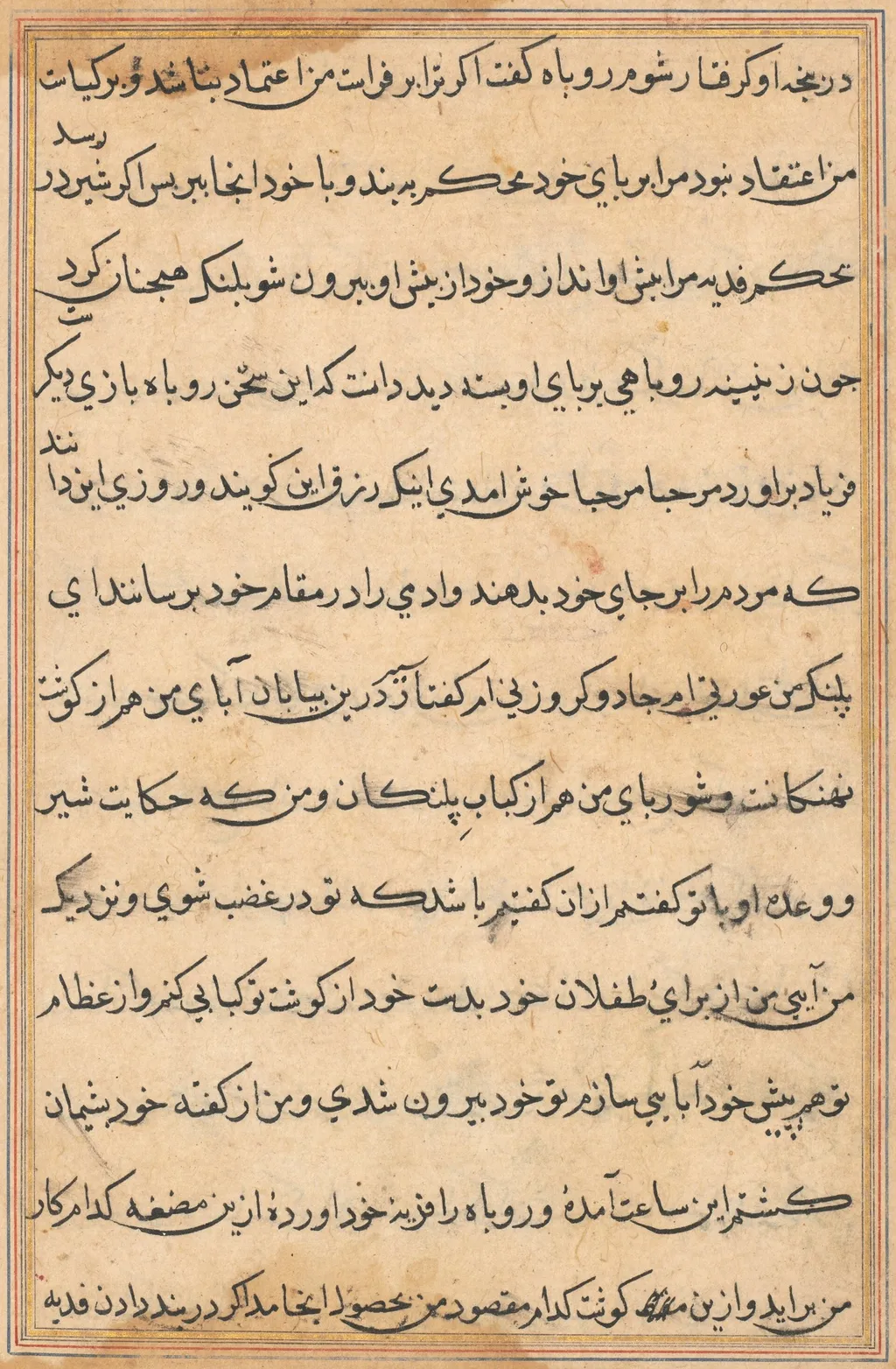
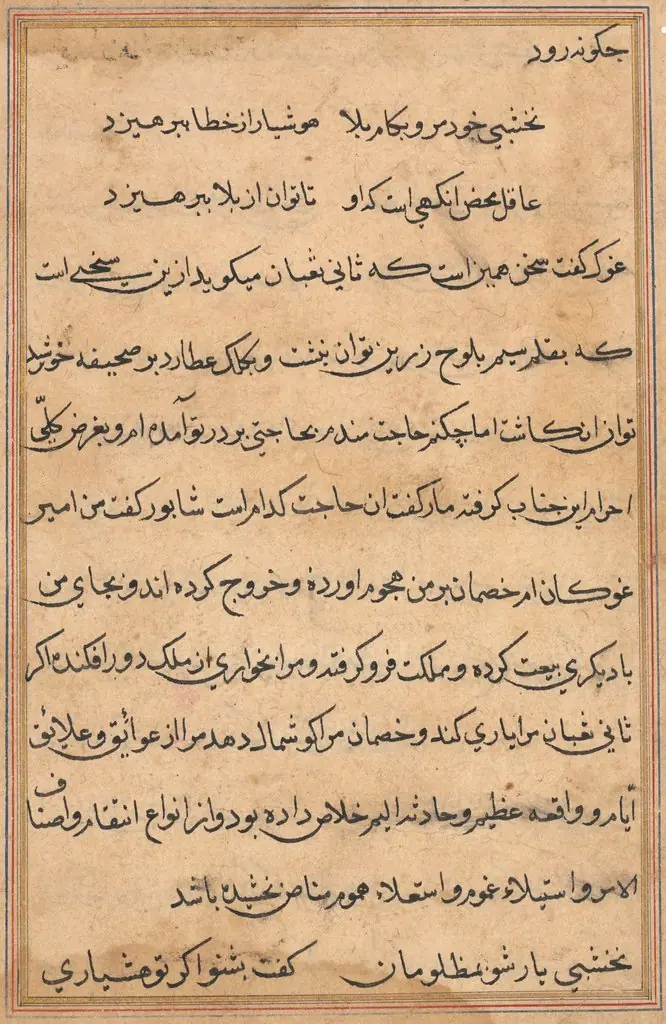
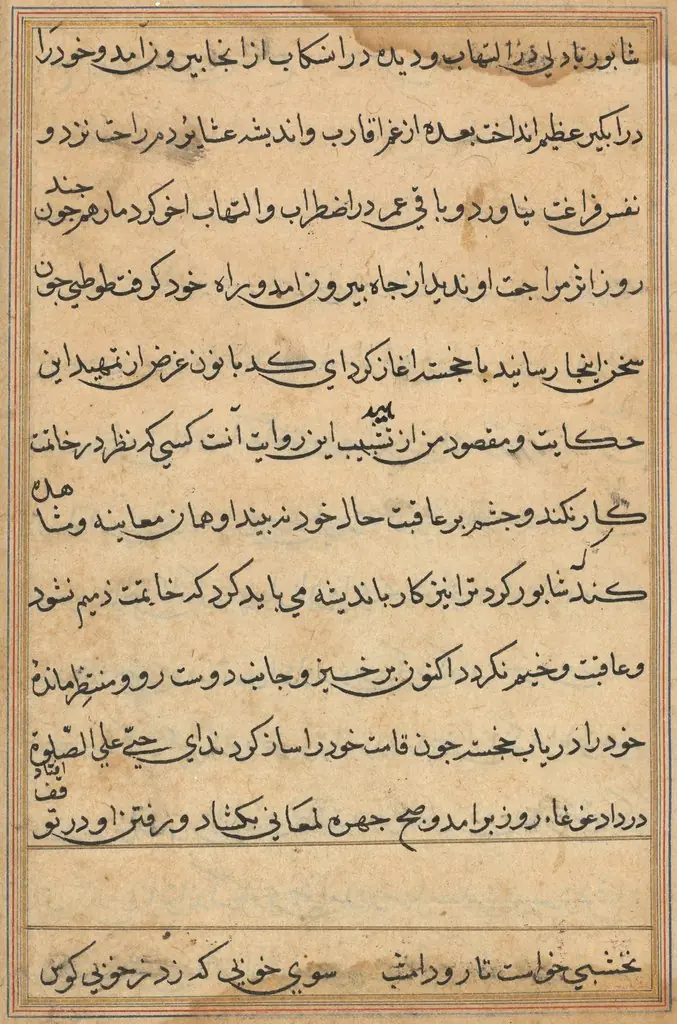
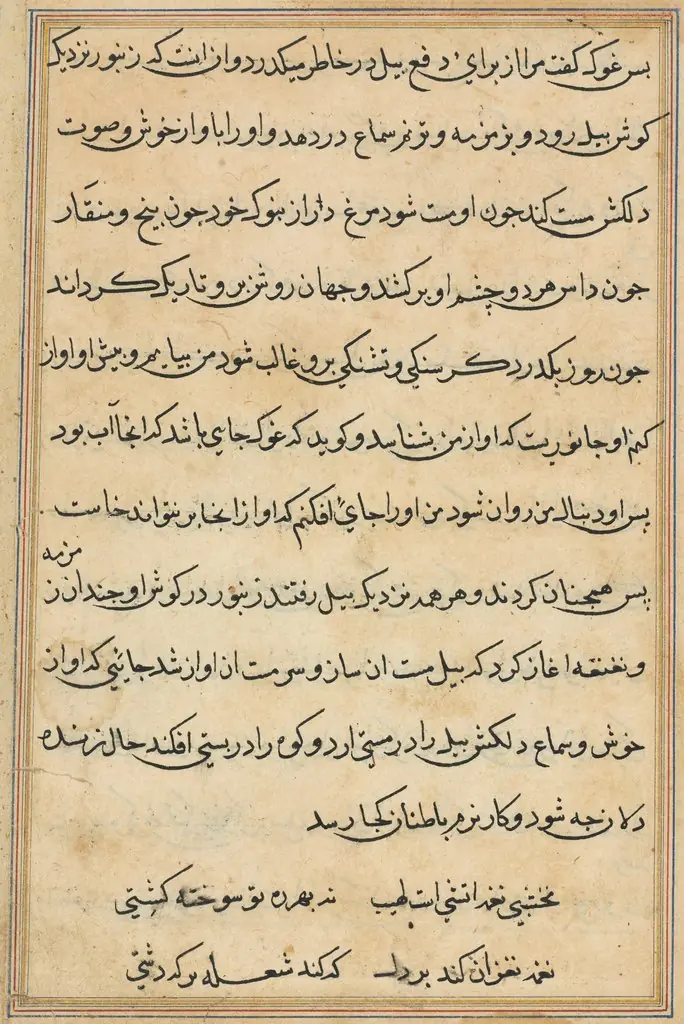
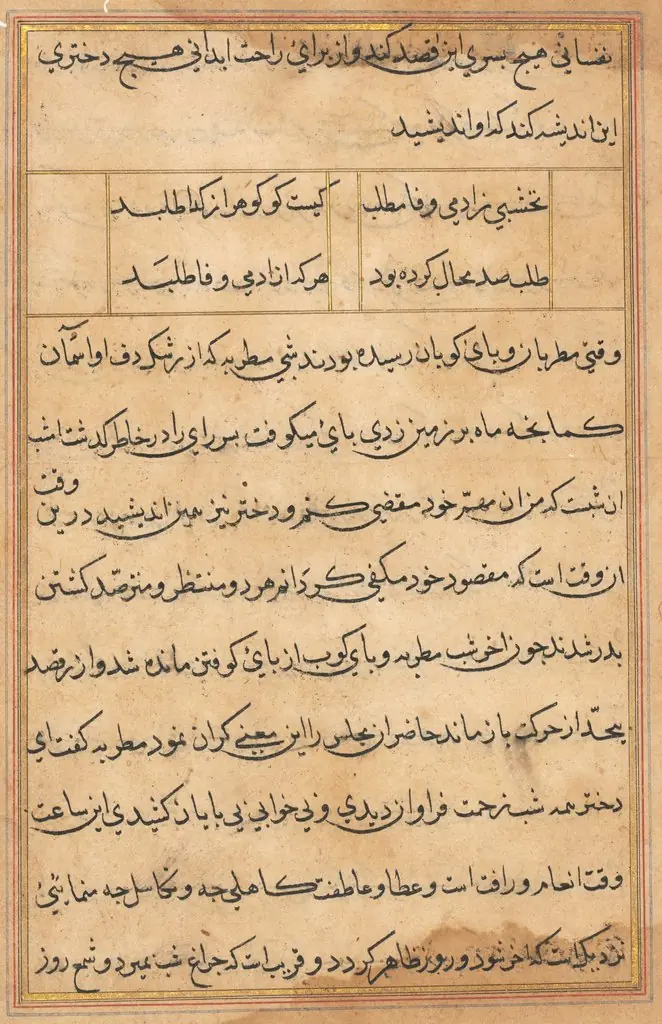
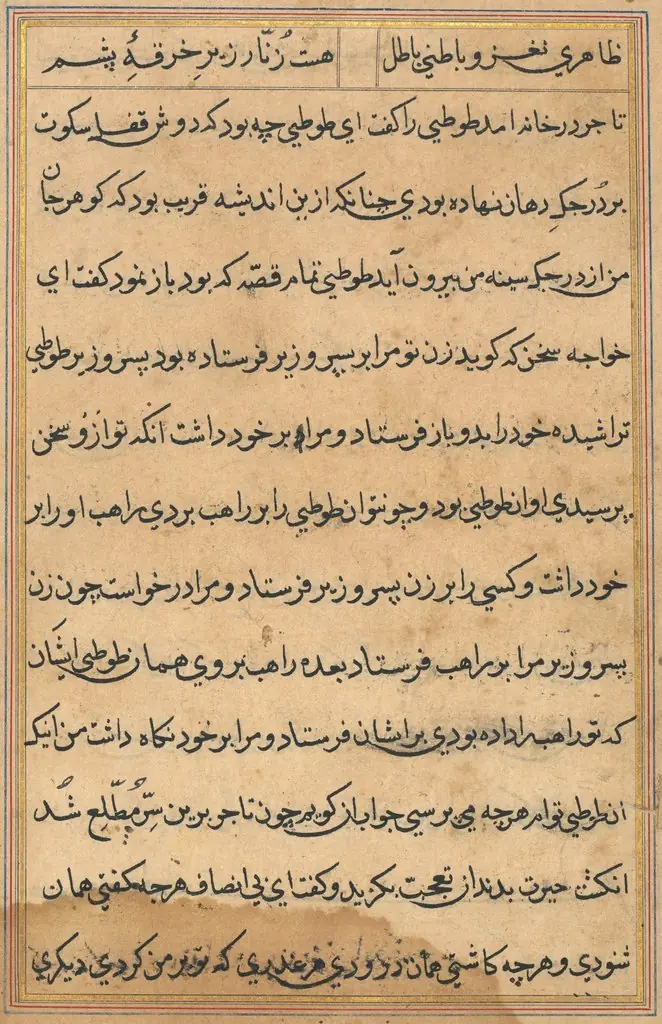
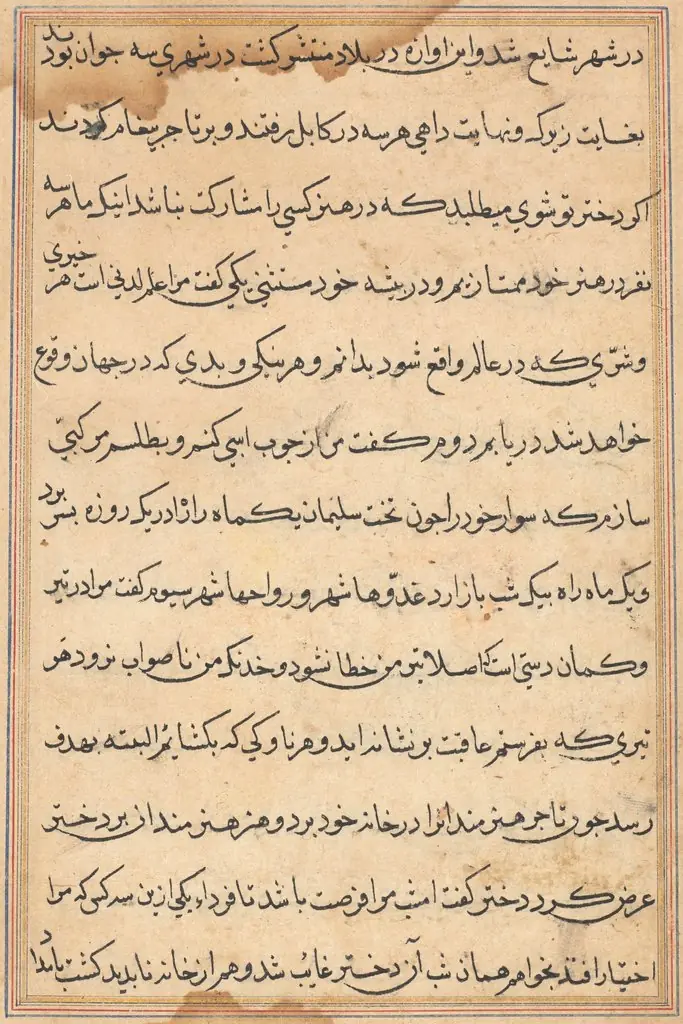
Page from Tales of a Parrot (Tuti-nama): text page is an unspecified painting. It dates from 1560 and is held in the collection of the Cleveland Museum of Art. The object is a single folio from the illustrated manuscript known as *Tuti‑nama* (Tales of a Parrot).
About this work
Overview
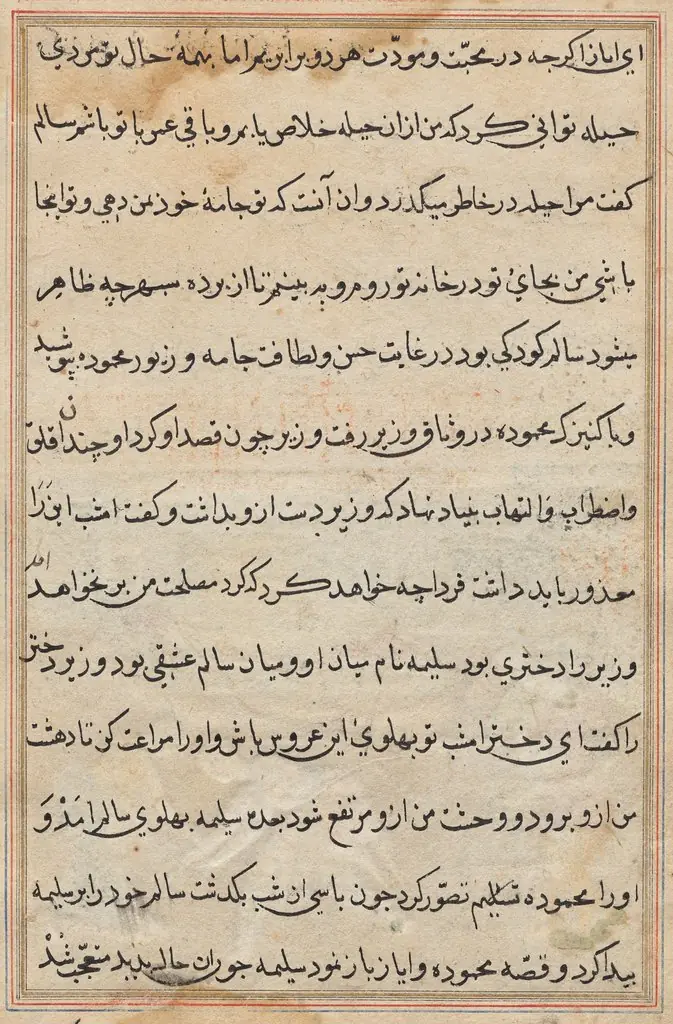
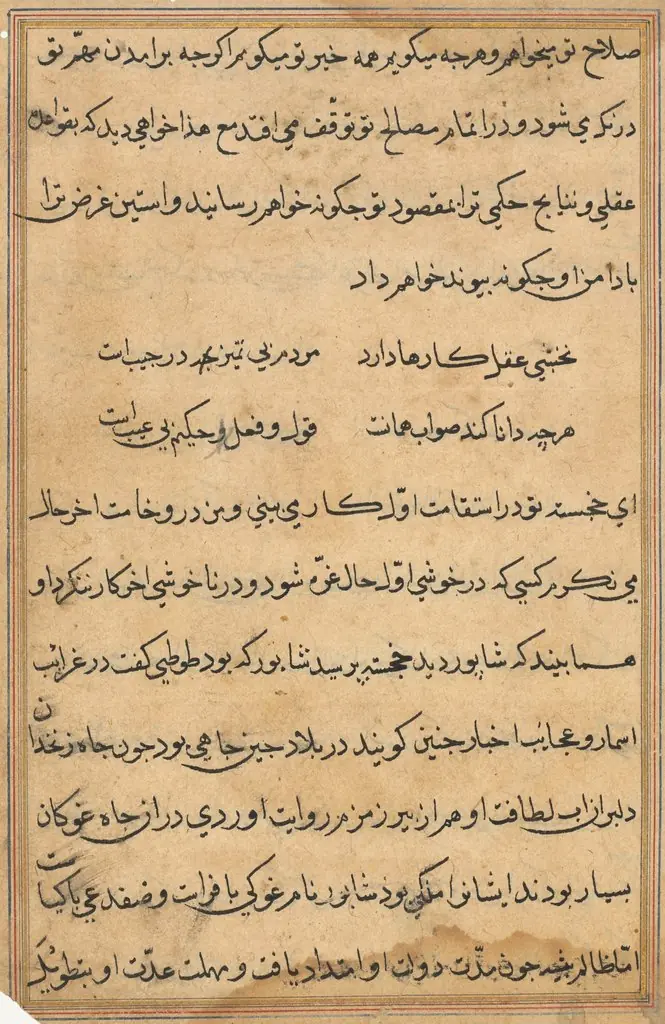
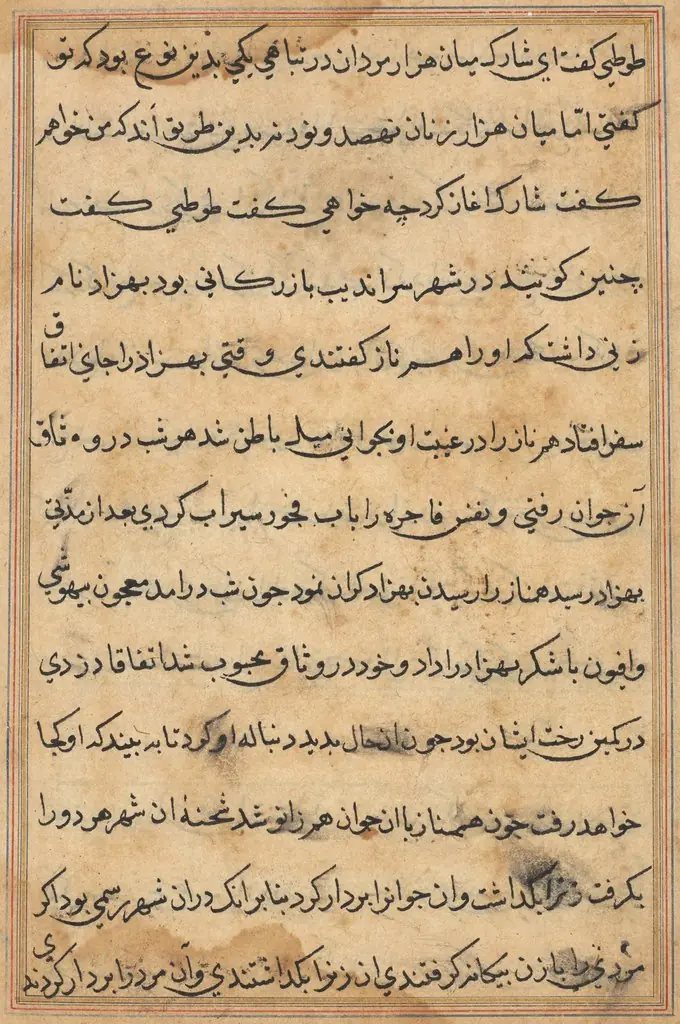
The object is a single folio from the illustrated manuscript known as *Tuti‑nama* (Tales of a Parrot). It consists solely of handwritten Persian text, arranged in tight, orderly lines across the page. The sheet is bordered by a narrow red line and rests on a slightly yellowed, aged paper that shows signs of wear.
Subject & Meaning
The narrative recorded on the page recounts a story centered on a parrot, a common motif in Persian literary tradition symbolizing wit and moral instruction. Although the tale itself is about the bird, the manuscript was commissioned for Prince Salim, indicating a personal or educational purpose for the young patron.
Technique & Style
The calligraphy employs a flowing black script typical of Persian storybooks, executed with a fine brush or pen that yields uniform strokes. The red border, applied with a thin line of pigment, frames the text without decorative illustration, emphasizing the textual content over visual ornamentation.
History & Provenance
Created for Prince Salim, the page reflects the courtly patronage of Persian manuscript production. Its survival in a museum collection suggests it was removed from its original codex at some point, likely during the 19th‑century market for Persian miniatures and manuscripts.
Context
*Tuti‑nama* belongs to a genre of didactic literature that used animal protagonists to convey ethical lessons. The use of Persian script and the absence of accompanying miniatures align with a tradition of text‑focused manuscripts intended for private reading rather than public display.
Artist & collection

 Page from Tales of a Parrot (Tuti-nama): text page
 Page from Tales of a Parrot (Tuti-nama): text page
 Page from Tales of a Parrot (Tuti-nama): text page
 Page from Tales of a Parrot (Tuti-nama): text page
 Page from Tales of a Parrot (Tuti-nama): text page
 Page from Tales of a Parrot (Tuti-nama): text page
 Page from Tales of a Parrot (Tuti-nama): text page
 Page from Tales of a Parrot (Tuti-nama): text page
 Page from Tales of a Parrot (Tuti-nama): text page