Artwork
Hell
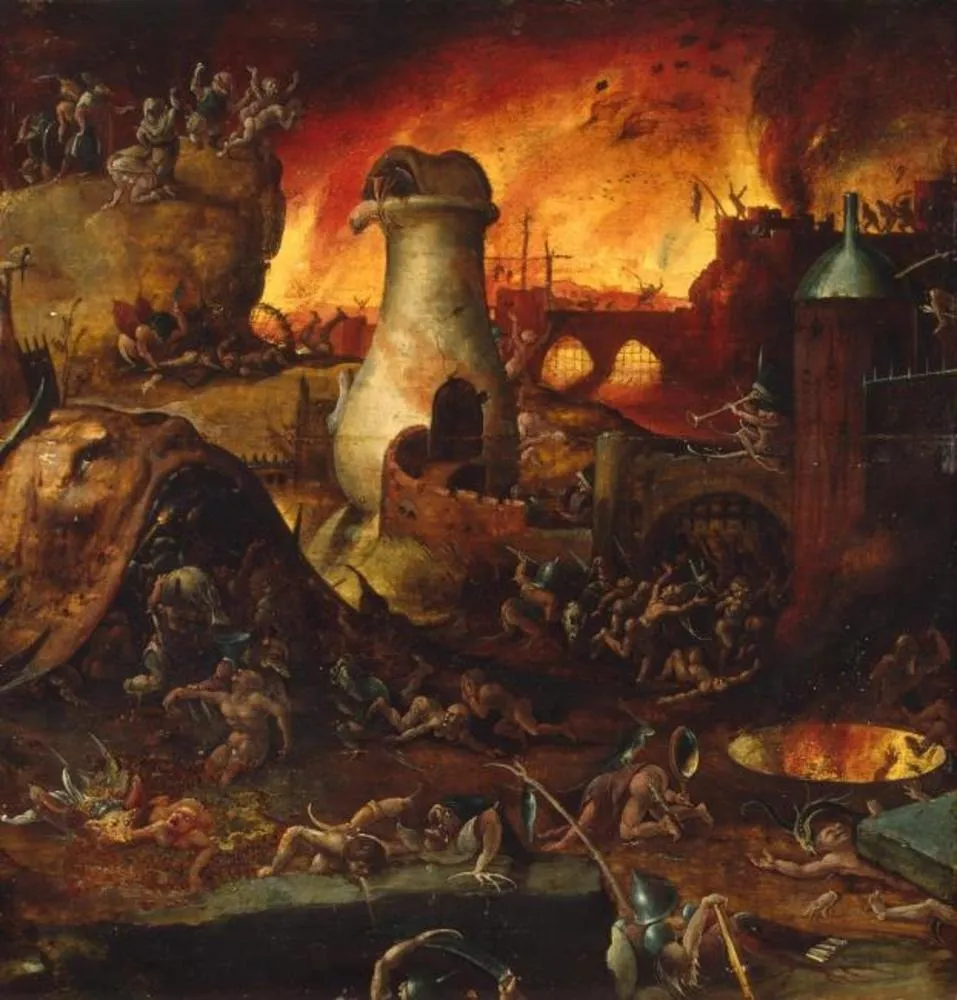
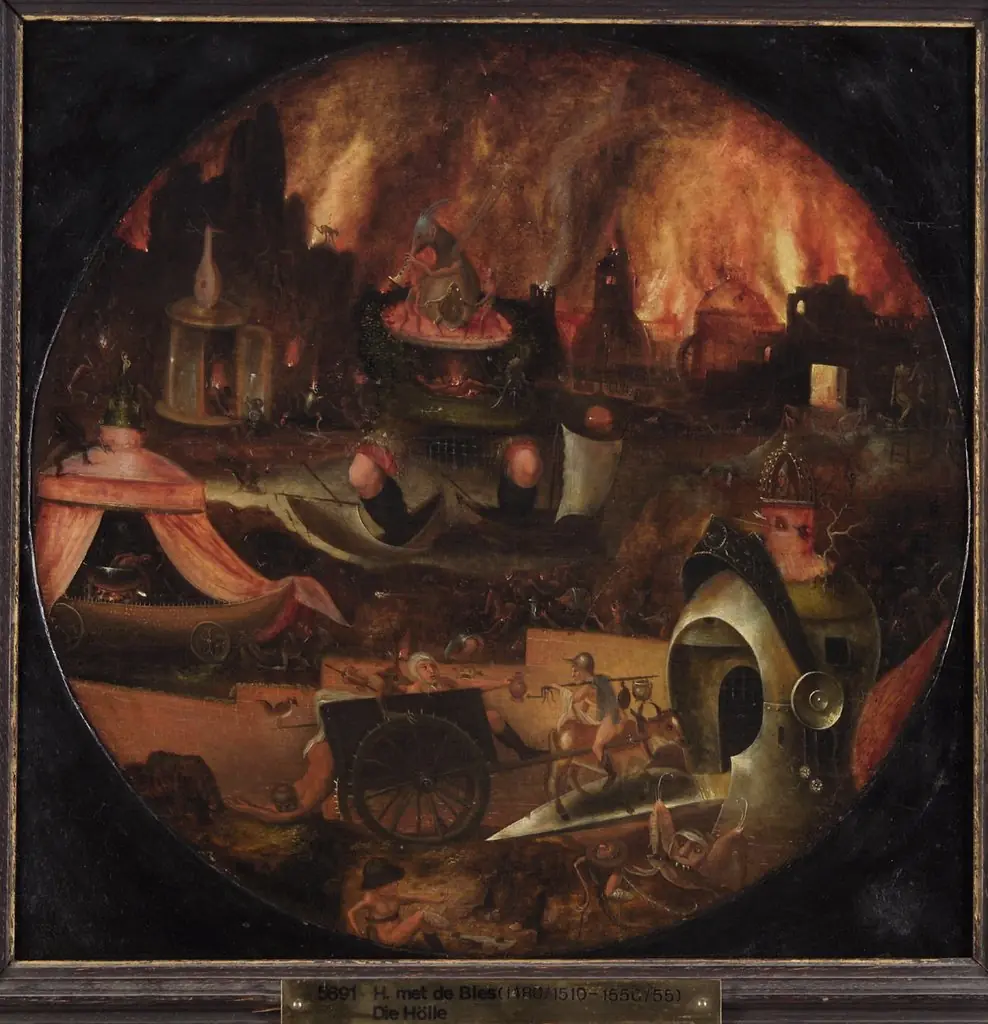
Hell is an oil painting by the Northern Renaissance artist Unknown. It dates from 1505 and is held in the collection of the Hermitage Museum.
About this work
Overview
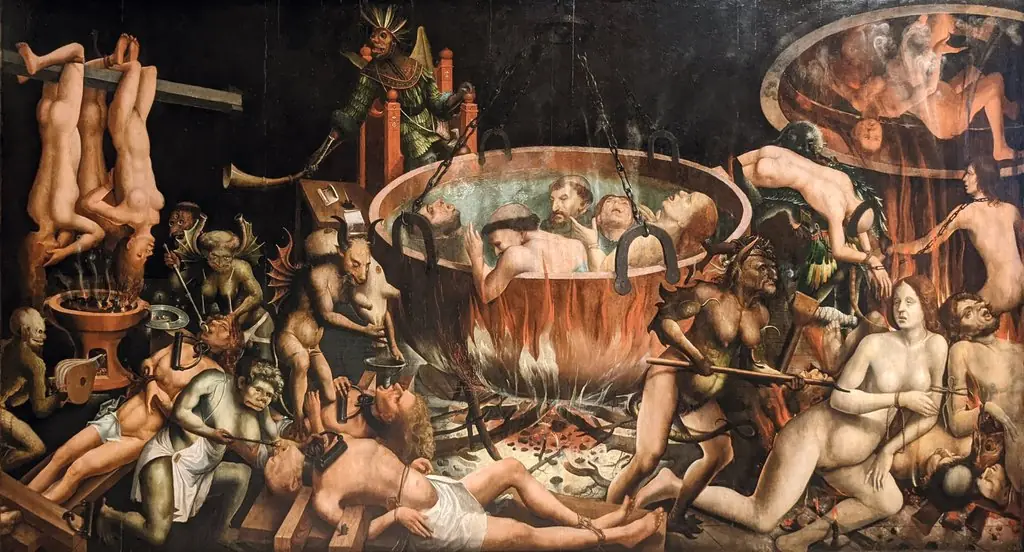
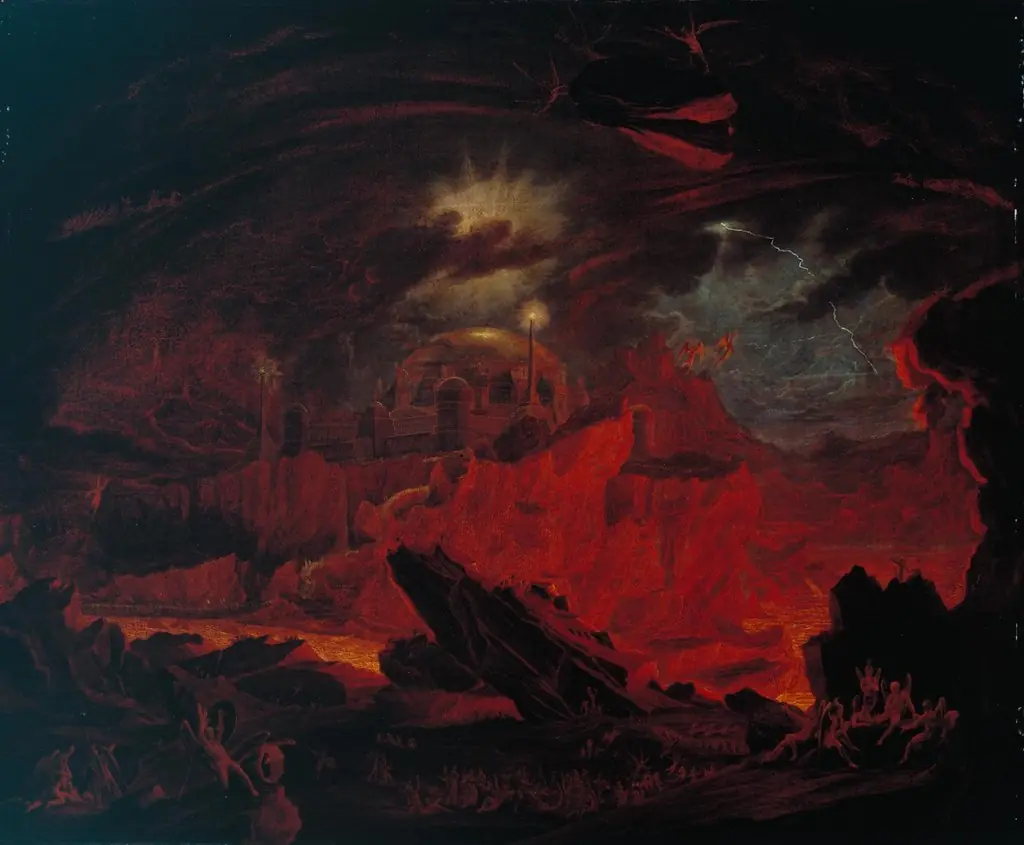
Hell is an oil painting depicting a tumultuous, fiery scene characterized by widespread panic and destruction. The composition is dominated by a large, flaming pot or vase at its center, set against a backdrop of burning buildings, smoke-filled skies, and ominous, shadowy figures.
Subject & Meaning
The painting's subject is a hellish, apocalyptic scenario. The chaotic arrangement of fleeing, falling, and prostrate figures conveys a sense of overwhelming despair and terror, while the central, flaming vessel and burning architecture amplify the theme of catastrophic upheaval.
Technique & Style
The artist employed thick, textured brushstrokes to achieve a rough, intense visual effect, enhancing the scene's emotional turmoil. The strategic use of chiaroscuro—a strong contrast between light and dark—directs the viewer's eye through the chaotic composition, emphasizing the dramatic intensity of the hellish scene.
Context
While specific contextual details about the painting's creation are not provided, the use of chiaroscuro suggests influences from Baroque-era artistic techniques, commonly used to evoke deep emotions and dramatic effects in religious or thematic works.
History & Provenance
No specific information is available regarding the painting's historical background, provenance, or exhibition history.
Legacy
The impact or legacy of 'Hell' in the broader art historical canon is not detailed in the provided information, though its compositional and technical elements reflect traditions of depicting tumultuous, thematic subjects in Western art.
Artist & collection

 Domestic Scene
 Giacomo and Cardinal Marco, investing Andrea, Abbot of San Zeno, with his Benefice
 The Nymph of Fontainebleau
 Portrait of a Woman
 Madonna and Child with Saints in the Enclosed Garden
 Venus and Minerva
 Family Group of Four on Sofa
 Wall painting from Room H of the Villa of P. Fannius Synistor at Boscoreale