Artwork
Paradise and Hell
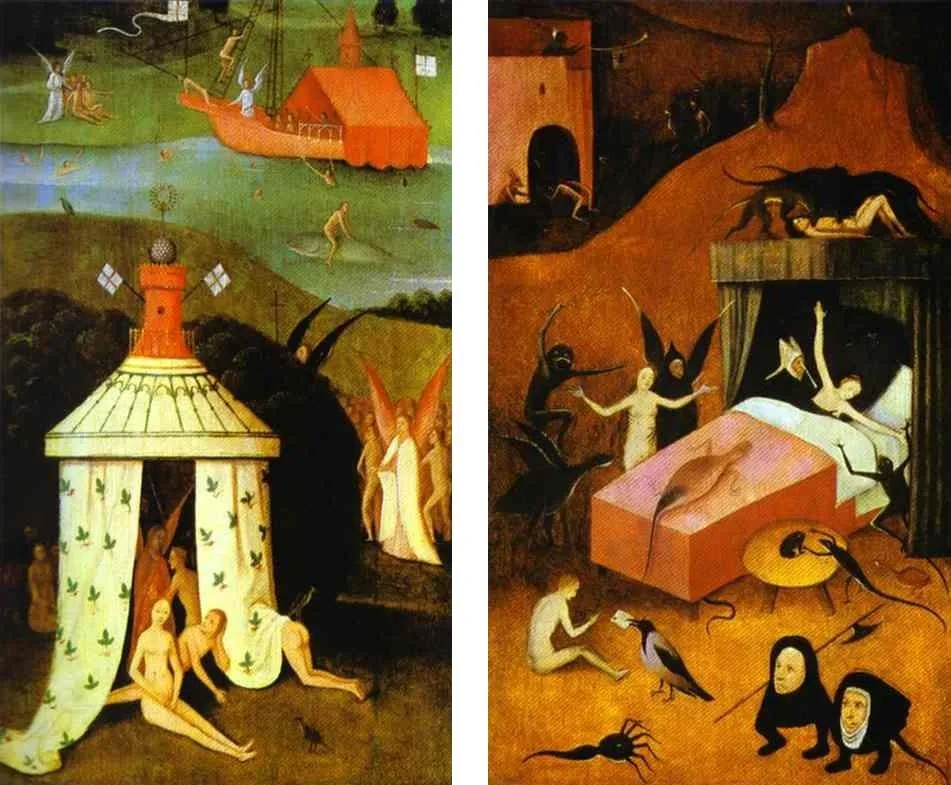
Paradise and Hell is an oil painting by the Northern Renaissance artist Hieronymus Bosch. It dates from 1513 and is held in the collection of the Museo del Prado.
About this work
Overview
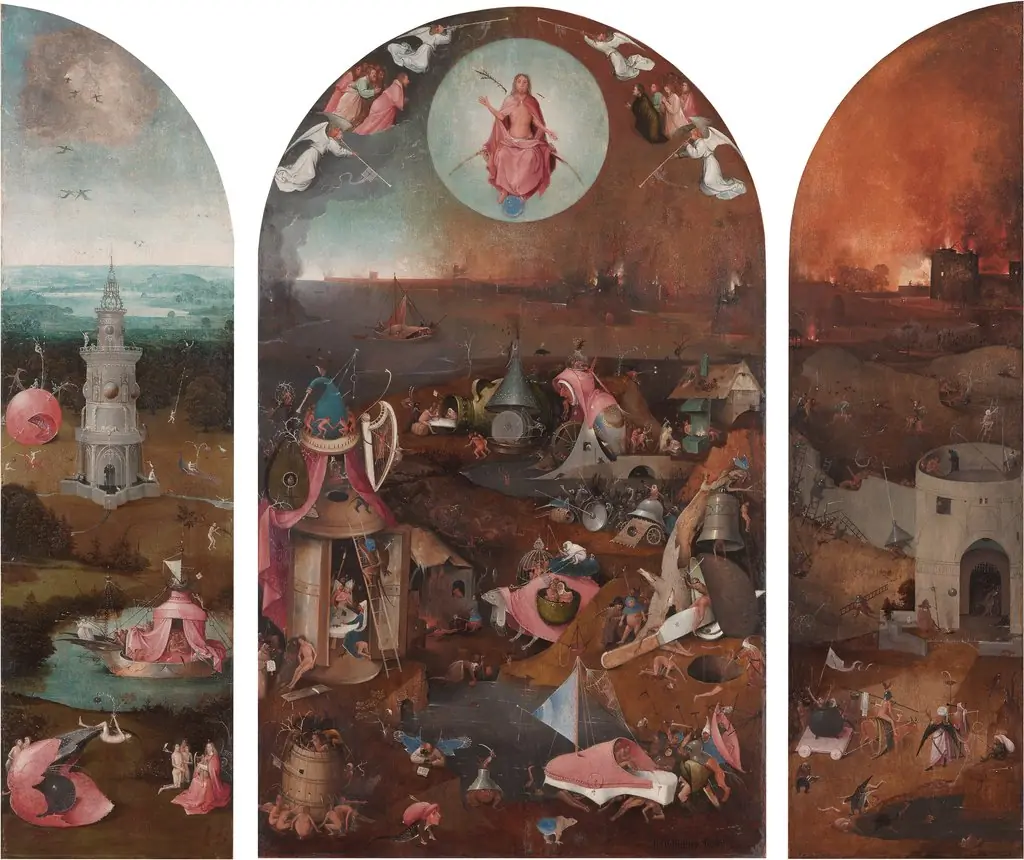
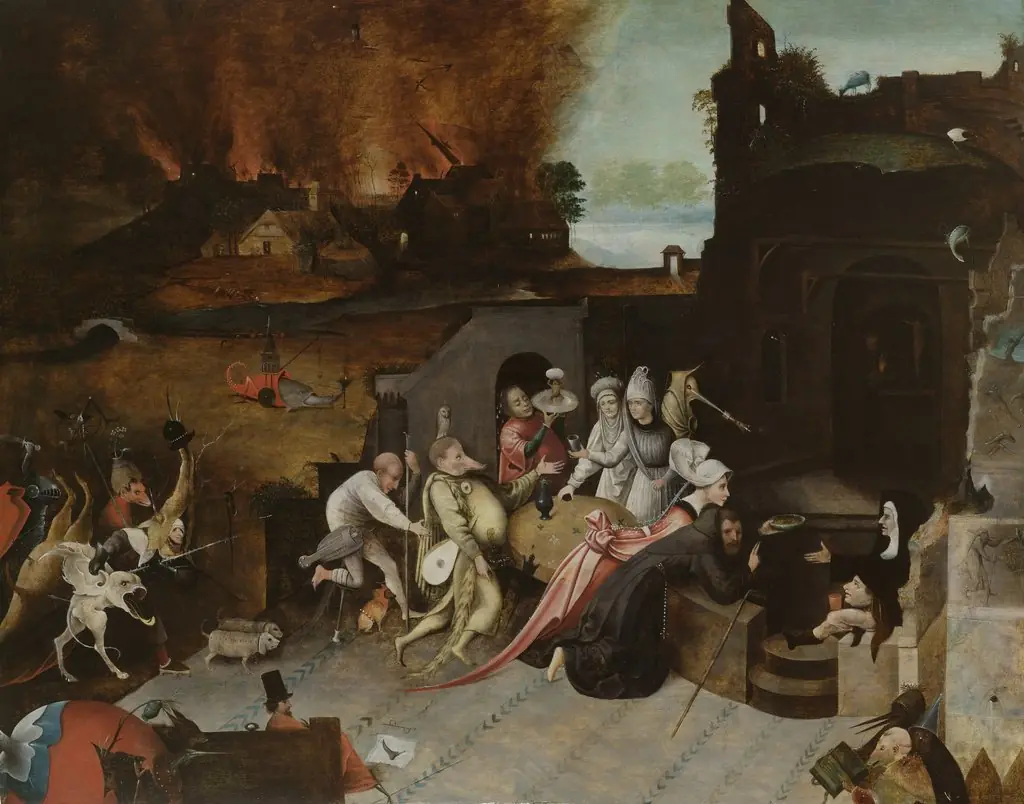
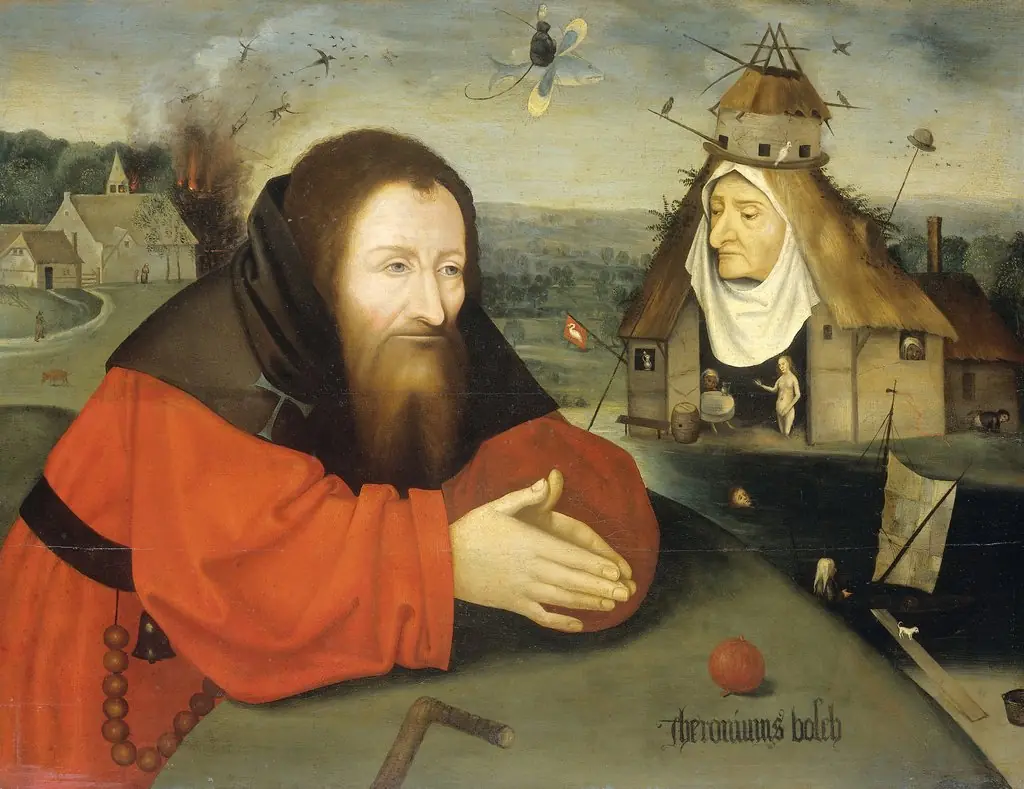
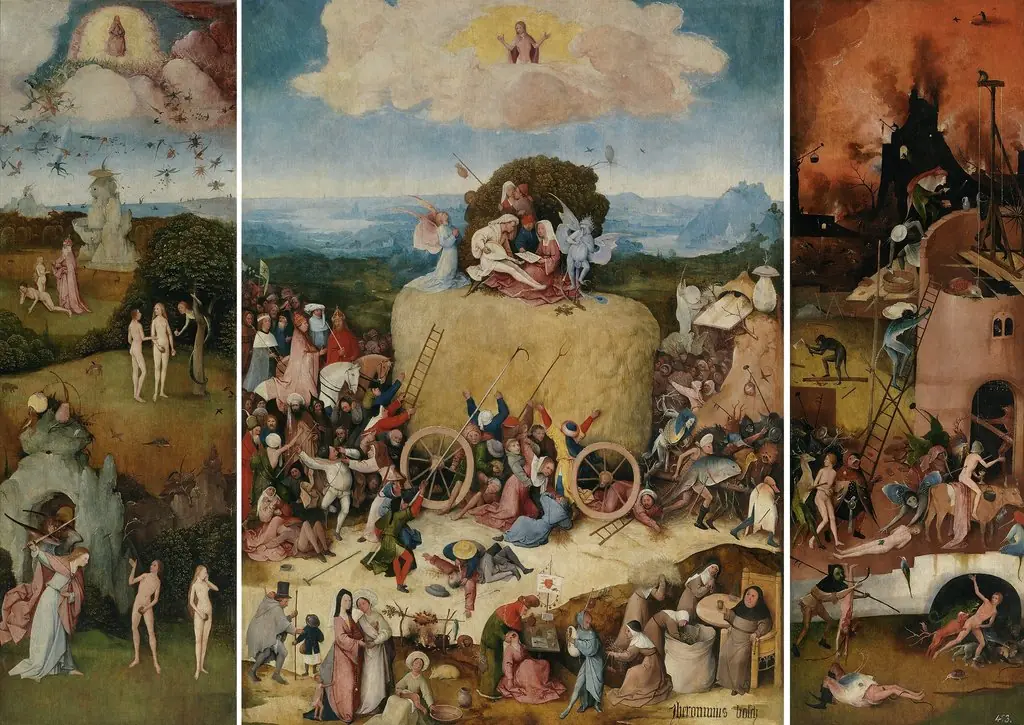
Created in 1513, *Paradise and Hell* is an oil painting by the Netherlandish artist Hieronymus Bosch. Executed during the Northern Renaissance, the work juxtaposes a luminous, pastoral landscape with a nightmarish interior, embodying the painter’s penchant for moral allegory. The piece is housed in the Museo del Prado in Madrid.
Subject & Meaning
The left half presents a sunlit realm where figures walk or kneel beneath a red tower, a river bears ships, and a modest orange structure rests on the shore. In contrast, the right half depicts a claustrophobic chamber filled with a crimson coffin, skeletal remains, and grotesque creatures, suggesting a visual meditation on salvation versus damnation.
Technique & Style
Bosch employs oil on panel to achieve vivid coloration and fine detail, allowing for the juxtaposition of realistic elements—such as the tiny spider on the floor—with fantastical hybrids of human and animal forms. The composition’s split format and the use of bright versus shadowy palettes reinforce the thematic dichotomy.
History & Provenance
Born and active in ’s‑Hertogenbosch, Bosch spent most of his career in the Brabant region, where his depictions of hell gained wide circulation and were frequently copied. *Paradise and Hell* entered the Prado’s collection in the 19th century, where it remains part of the museum’s representation of early Netherlandish painting.
Artist & collection
Artist
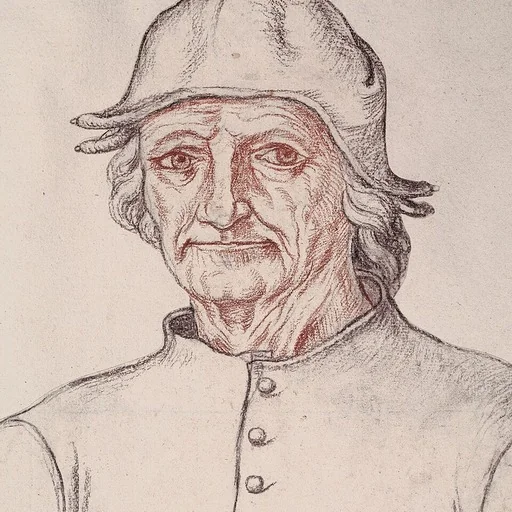
Hieronymus Bosch (; Dutch: ; born Jheronimus van Aken ; c. 1450 – 9 August 1516) was a Dutch painter from Brabant. He is one of the most notable representatives of the Early Netherlandish painting school. His work,…