Artwork
Portrait of an unknown woman
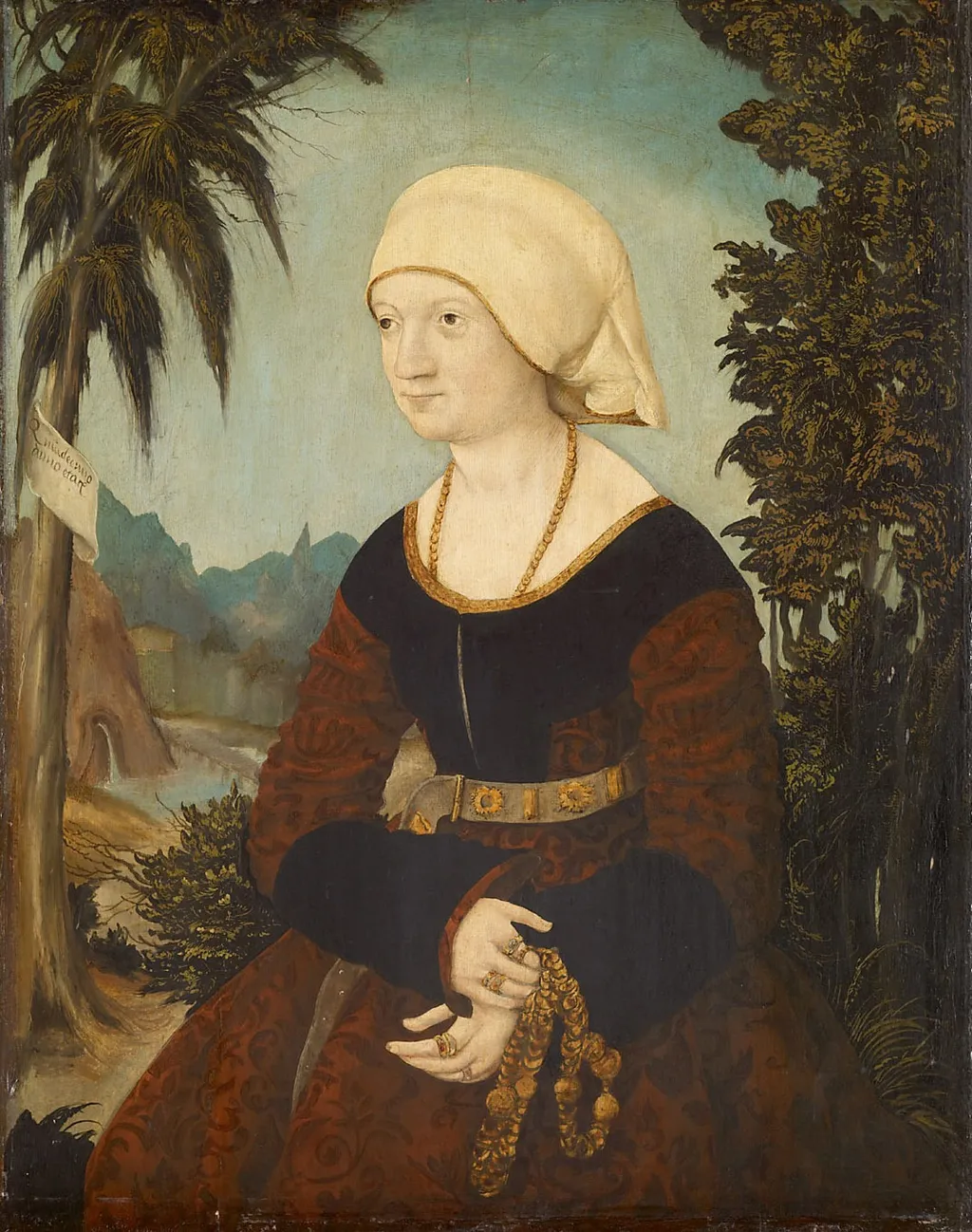
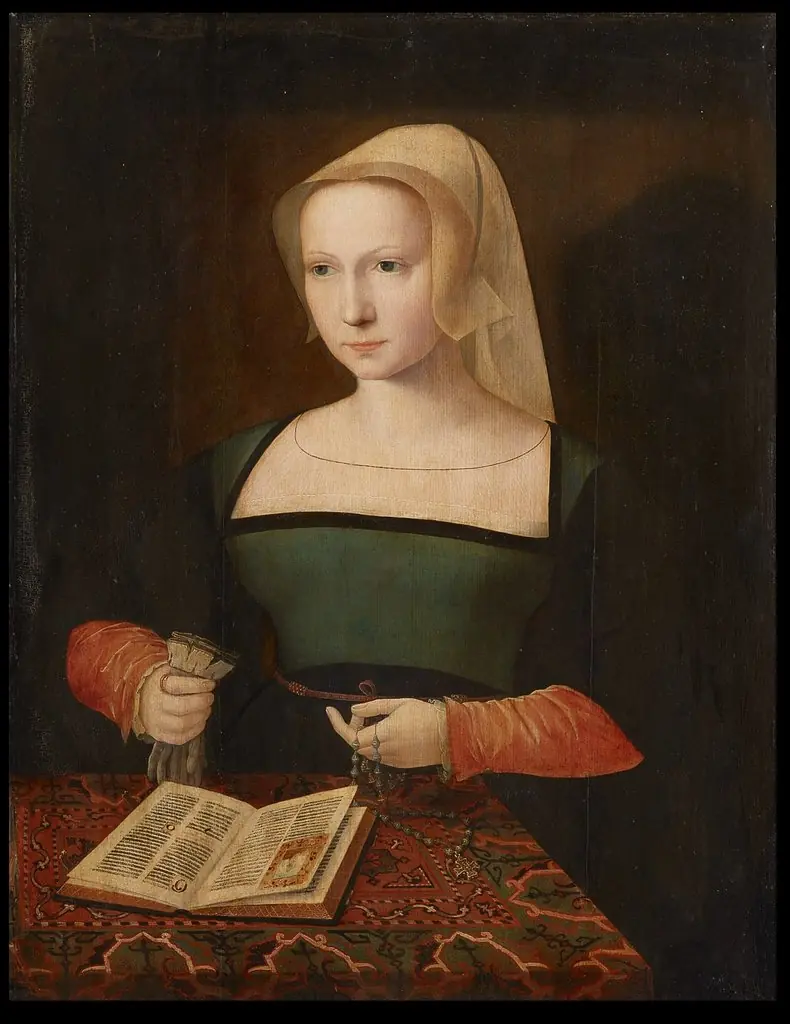
Portrait of an unknown woman is an oil painting by the Northern Renaissance artist Unknown. It dates from 1519 and is held in the collection of the Kunsthistorisches Museum. This oil painting depicts a seated woman against a tranquil, distant landscape.
About this work
Overview
Framing her are two trees—one with palm fronds, the other with golden foliage—while behind them, a quiet townscape and rolling hills recede into the distance.
This oil painting depicts a seated woman against a tranquil, distant landscape. She is dressed in a white cap, dark gown, and a red-brown cloak, with a gold necklace resting at her throat. In her hands, she holds a string of beads, their surface catching subtle light. Framing her are two trees—one with palm fronds, the other with golden foliage—while behind them, a quiet townscape and rolling hills recede into the distance.
Subject & Meaning
The identity of the woman remains unknown, and no textual records confirm her social status or role. The beads suggest possible devotional practice, while her composed posture and restrained expression convey quiet introspection. The landscape behind her may symbolize spiritual distance or inner contemplation, though no definitive narrative is established by the artist or period sources.
Technique & Style
The artist employs soft transitions between light and shadow to model the woman’s form and fabric, creating a sense of volume without harsh contrasts. The background is rendered with muted tones and gentle atmospheric perspective, enhancing depth. The beads and gold necklace catch localized highlights, drawing attention to the hands and the quiet focus of the moment.
History & Provenance
The painting’s origin is undocumented prior to its modern cataloging. No signatures, inscriptions, or archival references link it to a known artist or collection before the 20th century. Its preservation suggests it was privately held, possibly in a European household, but its early ownership and commission remain untraced.
Context
The composition reflects 16th- or early 17th-century Northern European portraiture, where sitters were often shown in domestic or contemplative settings with symbolic objects. The inclusion of a landscape background and devotional items like beads aligns with trends in Dutch and Flemish art, though the stylistic execution lacks the precision of major regional schools.
Legacy
The painting contributes to the broader study of anonymous portraiture from the early modern period. It illustrates how everyday subjects were rendered with dignity and subtlety, even without known patronage or fame. Its quiet composition continues to invite interpretation, particularly regarding gender, piety, and the representation of inner life in pre-modern art.
Artist & collection

 Domestic Scene
 Giacomo and Cardinal Marco, investing Andrea, Abbot of San Zeno, with his Benefice
 The Nymph of Fontainebleau
 Portrait of a Woman
 Madonna and Child with Saints in the Enclosed Garden
 Venus and Minerva
 Family Group of Four on Sofa
 Wall painting from Room H of the Villa of P. Fannius Synistor at Boscoreale
 Portrait of a Woman
 Portrait of the wife of a jurist
 A Woman
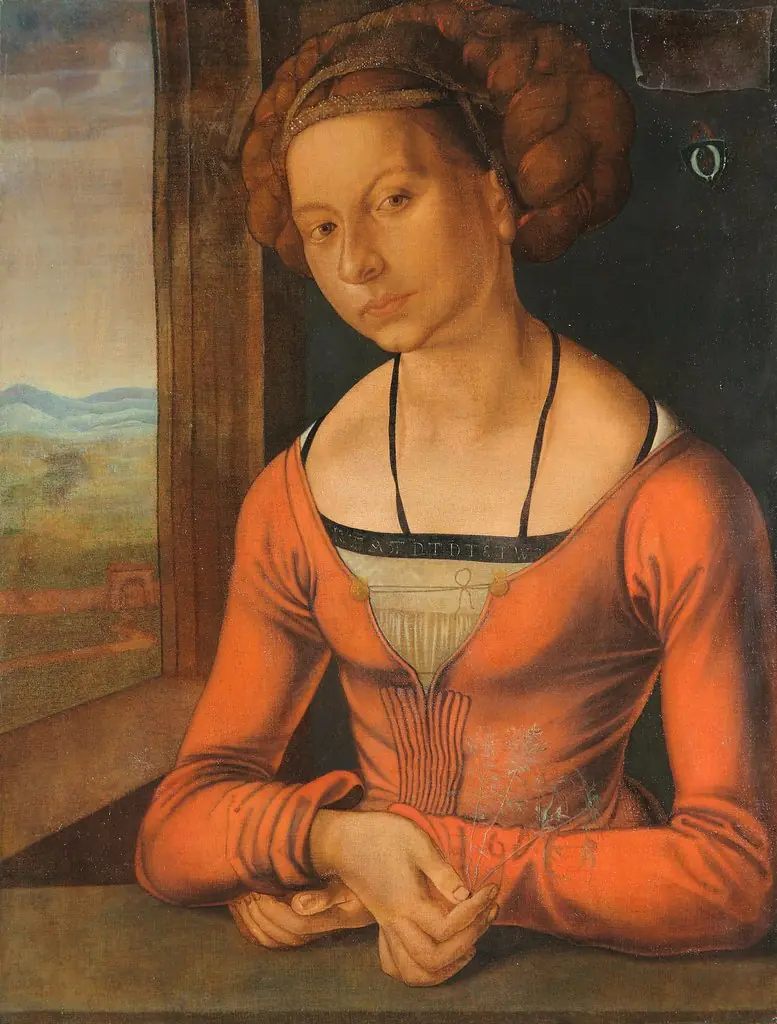 Portrait of a Young Woman with braided hair
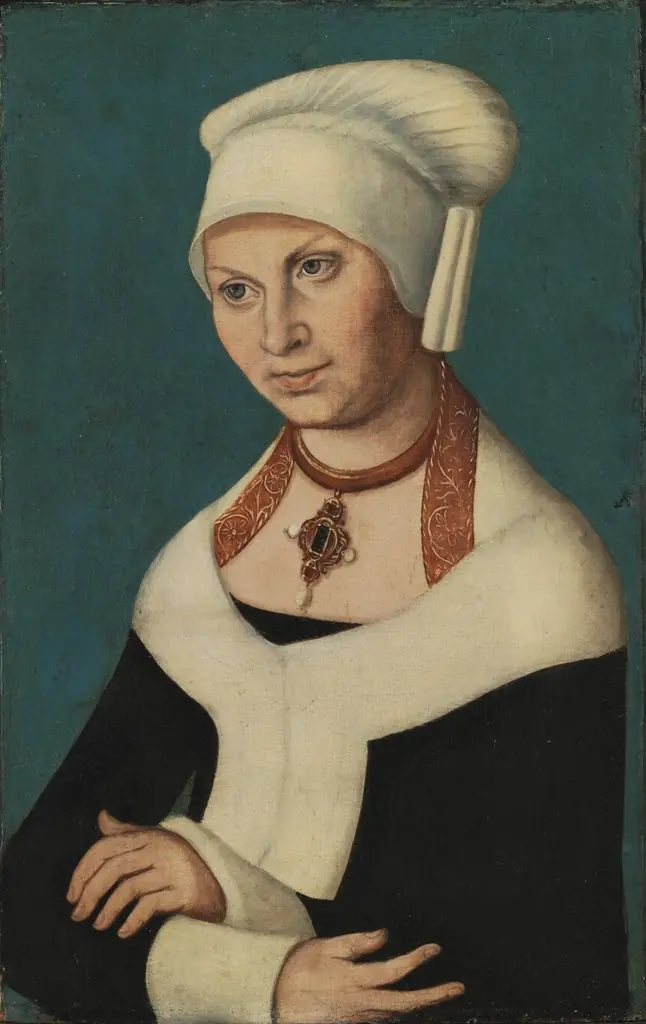 Portrait of the Duchess Barbara of Saxony, 1478-1534 (wife of George the Bearded)
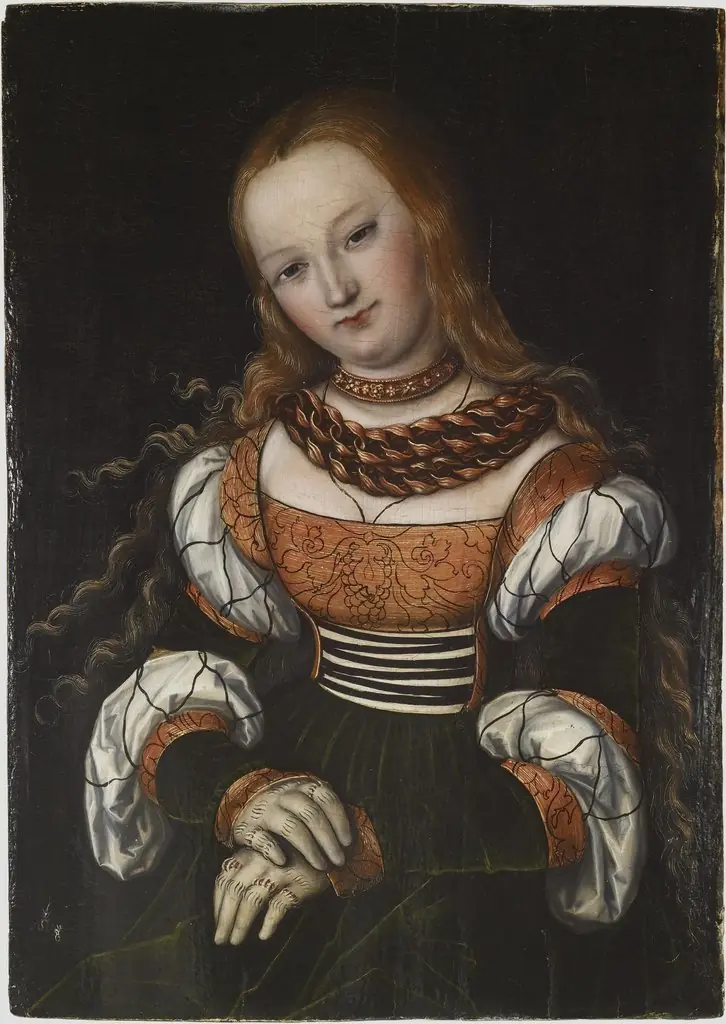 Portrait of a young woman
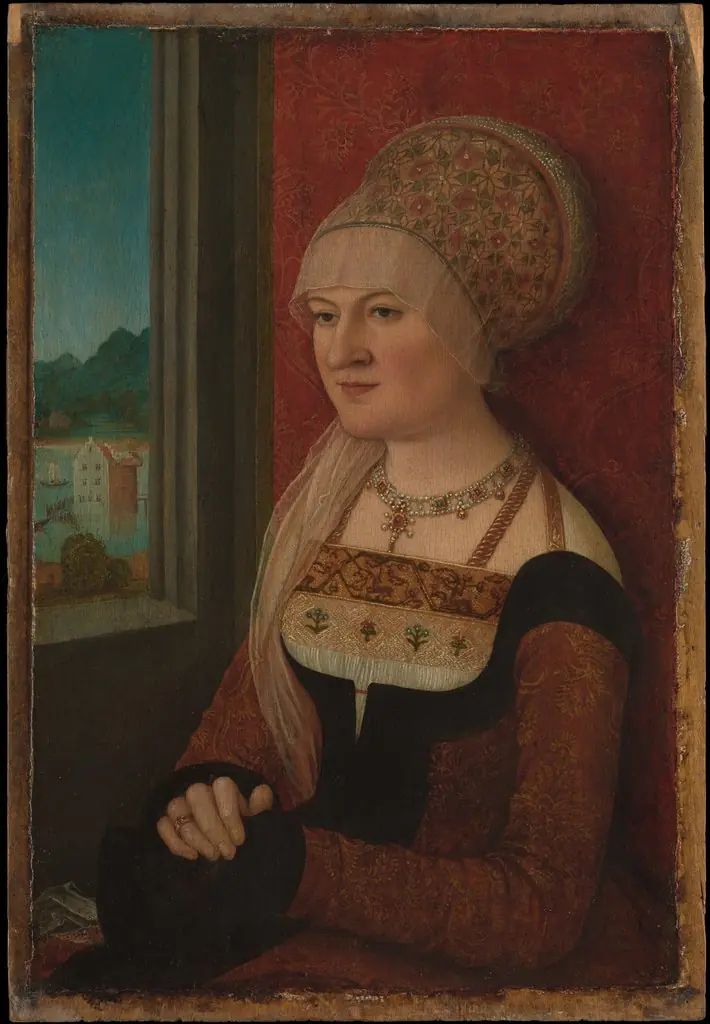 Portrait of a Woman
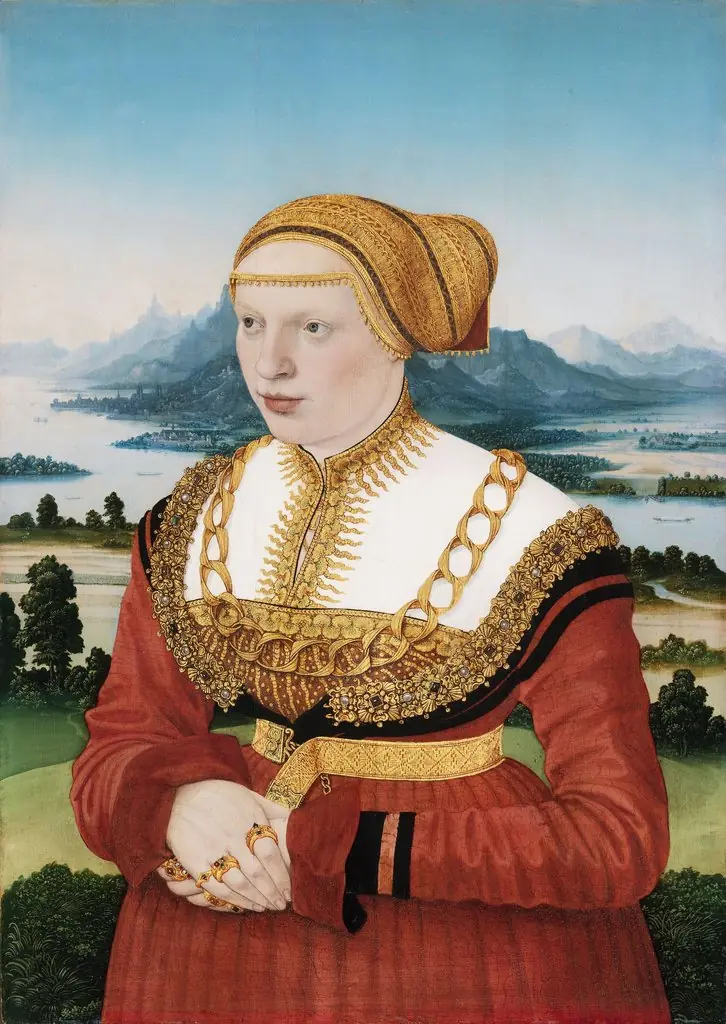 Portrait of Katherina Knoblauch (1513-1542)
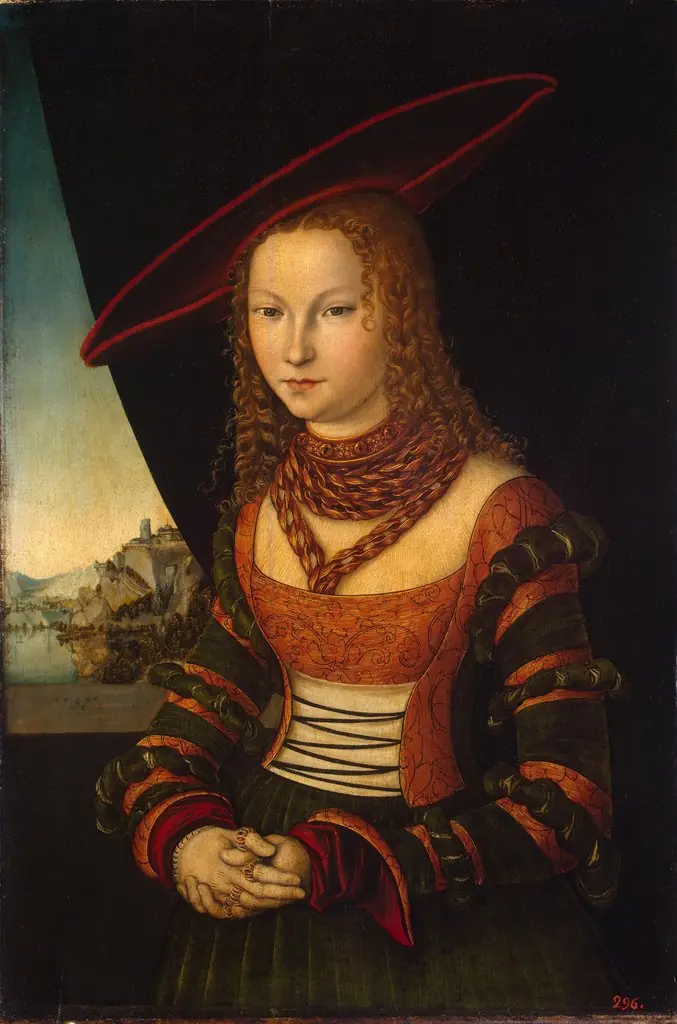 Portrait of a Young Woman
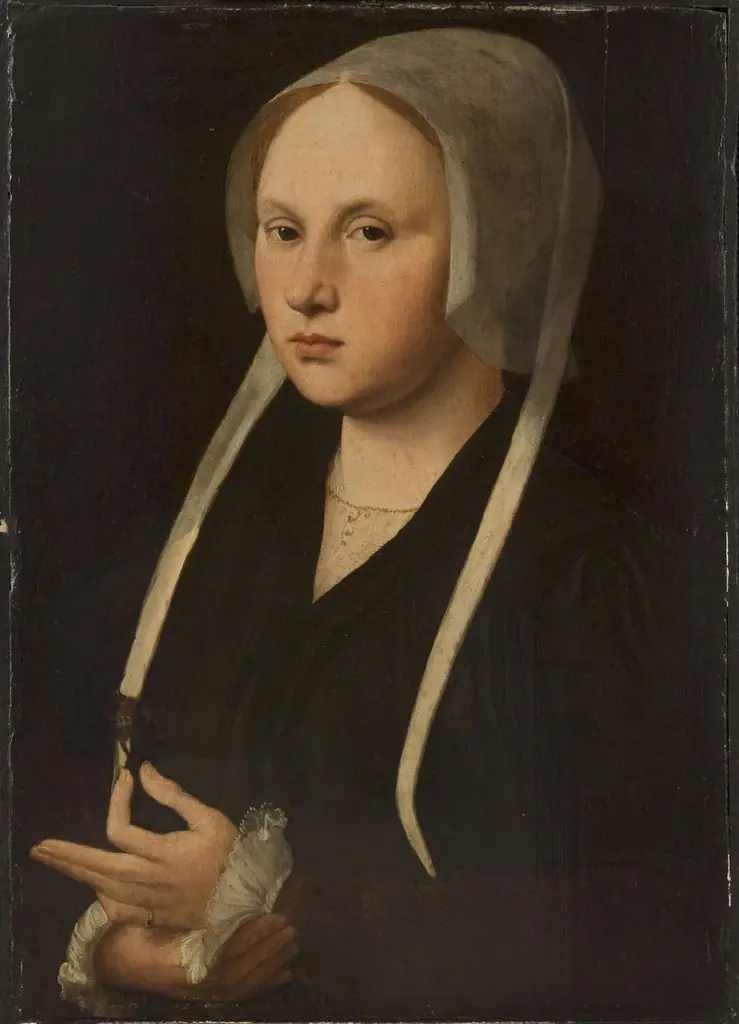 Portrait of a Lady
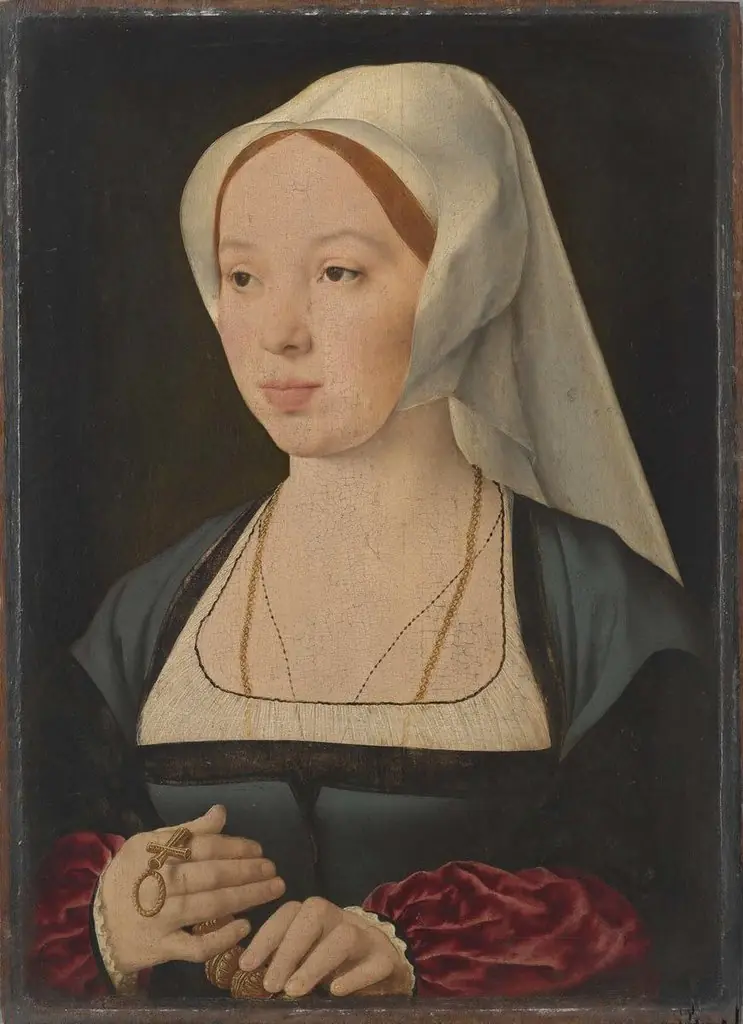 Portrait of a Lady
 Portrait of a Young Woman