Artwork
John Elias' grave
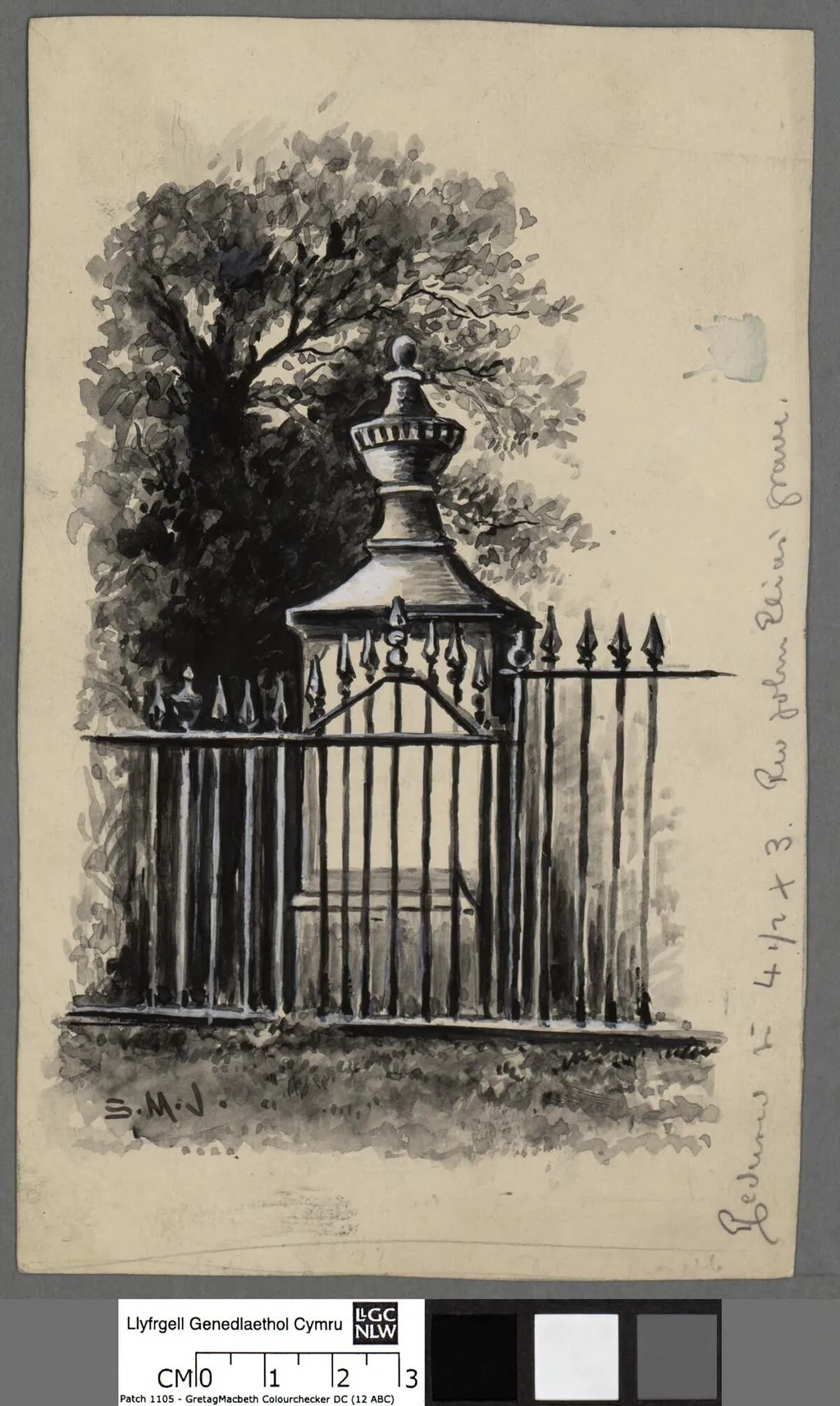
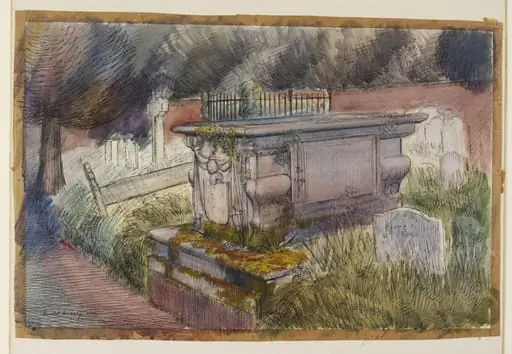
John Elias' grave is a paint painting by Unknown. It dates from 1800 and is held in the collection of the National Library of Wales. This painting portrays the grave of John Elias, rendered with careful attention to architectural and natural elements.
About this work
Overview
The composition is structured to focus the viewer’s gaze on the memorial, using light and shadow to heighten its solemn presence.
This painting portrays the grave of John Elias, rendered with careful attention to architectural and natural elements. A wrought-iron fence with spiked finials encloses the site, crowned by a decorative urn. A single tree in the background suggests seasonal change and quiet solitude. The composition is structured to focus the viewer’s gaze on the memorial, using light and shadow to heighten its solemn presence.
Subject & Meaning
The grave serves as a quiet monument to an individual, emphasizing remembrance over grandeur. The iron fence, though ornate, conveys containment and permanence, while the urn symbolizes mortality and the preservation of memory. The absence of figures or inscriptions invites contemplation rather than narrative, suggesting a personal, intimate tribute rather than public commemoration.
Technique & Style
The artist employs chiaroscuro to model form and direct attention, contrasting the illuminated grave with surrounding shadows. This technique enhances the three-dimensionality of the fence and urn, lending weight and texture to the scene. The brushwork is restrained, favoring clarity over flourish, aligning with a realist tradition that prioritizes emotional resonance through controlled lighting and precise detail.
History & Provenance
The painting’s origins are undocumented beyond its subject and medium. No record confirms John Elias’ identity or the artist’s full biography. Its creation likely dates to the 19th century, given the stylistic use of chiaroscuro and the typology of funerary ironwork depicted. The work may have been commissioned privately, reflecting local mourning customs rather than institutional commemoration.
Context
In the 19th century, private memorials like this were common in rural and small-town cemeteries, where families invested in ornamental fencing and urns to mark graves. The painting reflects a cultural moment when domestic grief was expressed through material objects and visual representation, bridging personal loss with the aesthetics of memorial design prevalent in the period.
Legacy
Though not widely exhibited or studied, the painting stands as a modest example of domestic funerary art. It contributes to a quieter strand of 19th-century visual culture that valued quiet observation over spectacle. Its preservation offers insight into how ordinary lives were memorialized through both physical monuments and their artistic representations.
Artist & collection

 Domestic Scene
 Giacomo and Cardinal Marco, investing Andrea, Abbot of San Zeno, with his Benefice
 The Nymph of Fontainebleau
 Portrait of a Woman
 Madonna and Child with Saints in the Enclosed Garden
 Venus and Minerva
 Family Group of Four on Sofa
 Wall painting from Room H of the Villa of P. Fannius Synistor at Boscoreale
 Chapelle de la Cambre à Ixelles, près Bruxelles
 Tomb of Miss Ann Nelson, sister of Horatio Nelson, Bathford churchyard, Bath
 The Old Gates, Ham House
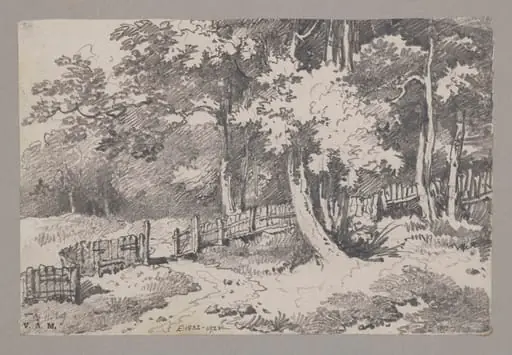 A wooded landscape with a fence and path
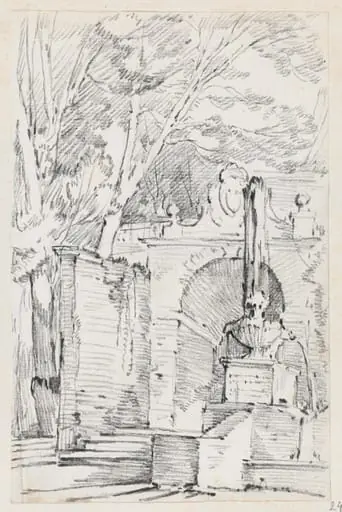 Fountain of Pomona in the Gardens of the Villa d'Este, Tivoli
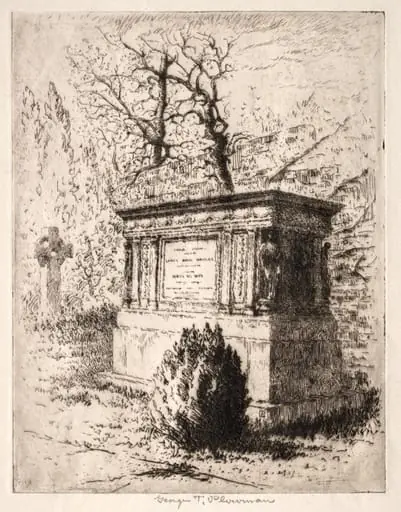 Whistler's Tomb, Chiswick, London
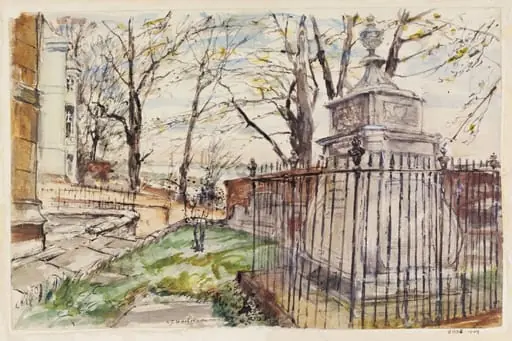 Hogarth's Tomb and Chiswick Reach
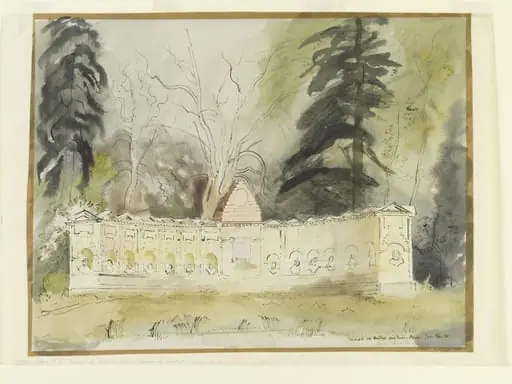 The Temple of British Worthies, Stowe, Gloucestershire
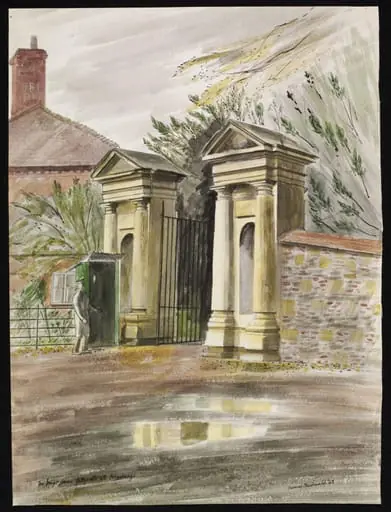 The Inigo Jones Gateposts at Amesbury
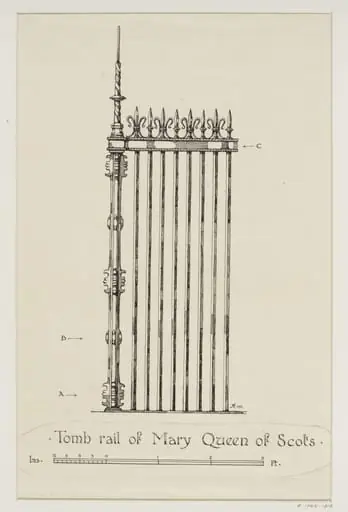 Drawing of the rail of Mary Queen of Scots' tomb
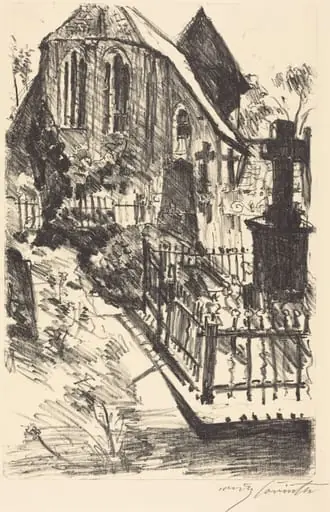 Kirchhof (Cemetery)
 Tomb in Hurley Churchyard