Artwork
Hogarth's Tomb and Chiswick Reach
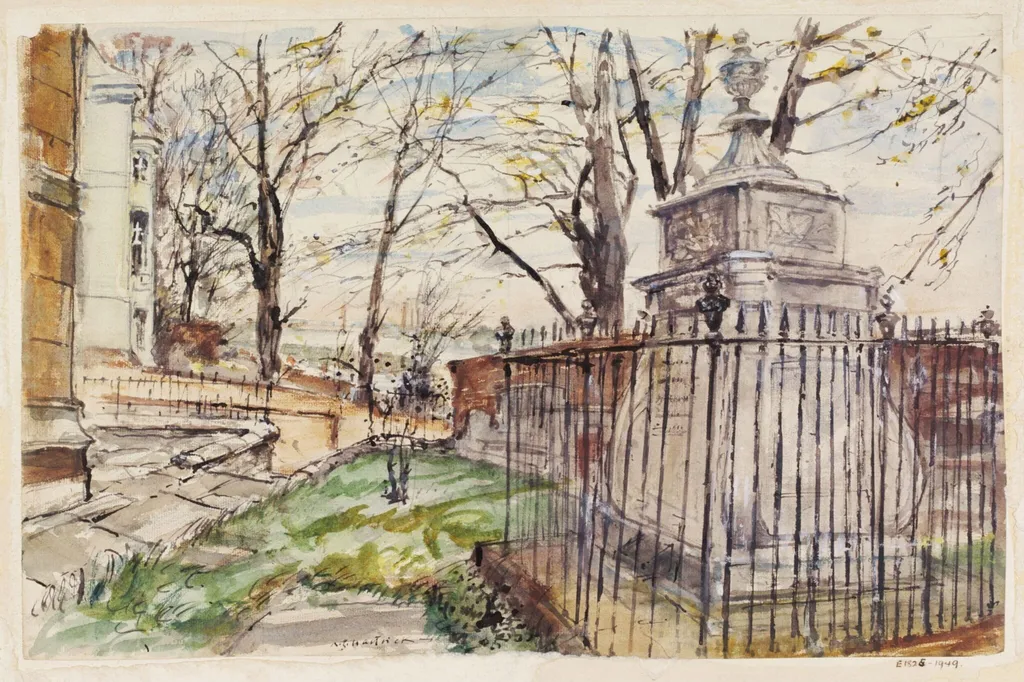
Hogarth's Tomb and Chiswick Reach is a watercolor work on paper by the British Romanticist artist Archibald Standish Hartrick. It dates from 1940 and is held in the collection of the Victoria and Albert Museum.
About this work
Overview
Part of the Recording Britain project, the work was produced during wartime to document landscapes deemed vulnerable to destruction or change.
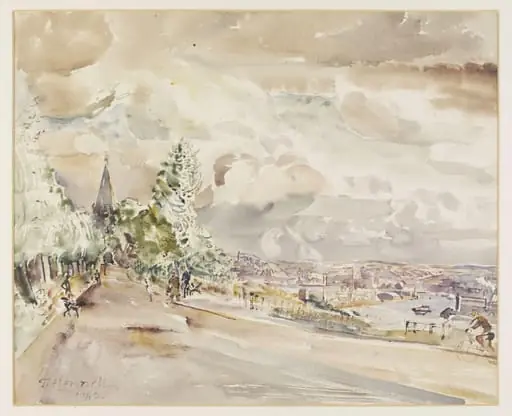
Archibald Standish Hartrick’s watercolour, created in 1940, captures a quiet stretch of the River Thames near Chiswick, focusing on the tomb of William Hogarth and the surrounding riverside. Part of the Recording Britain project, the work was produced during wartime to document landscapes deemed vulnerable to destruction or change. The piece reflects a deliberate effort to preserve visual records of England’s lesser-known but culturally significant sites through direct observation and modest technique.
Subject & Meaning
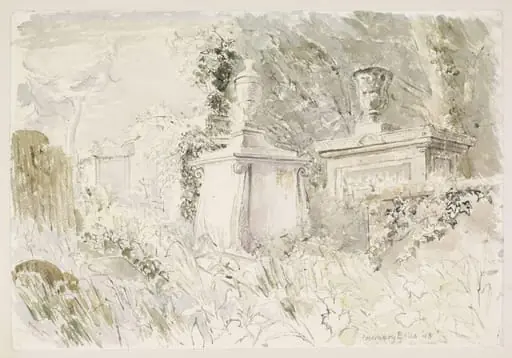
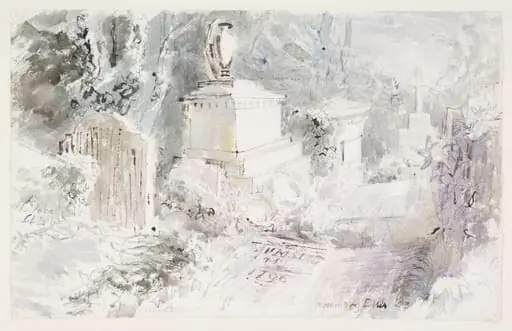
The scene centers on Hogarth’s burial monument, a small domed structure set behind a low stone wall, flanked by bare trees and a grassy riverbank. The tomb, though modest in scale, anchors the composition as a symbol of cultural continuity. The absence of human figures and the muted, wintry atmosphere suggest stillness and loss, echoing broader anxieties of the era about the fragility of heritage amid war and modernization.
Technique & Style
Hartrick employed loose, fluid brushwork and diluted watercolour to convey a sense of immediacy and spontaneity. The pale sky and muted tones of the landscape are rendered with minimal detail, emphasizing form over precision. The stone fence and tree trunks are simplified into clean, rhythmic lines, while the dome of the tomb emerges subtly through layered washes. The sketch-like quality reflects the project’s emphasis on rapid documentation over polished finish.
History & Provenance
Commissioned in 1940 under the Recording Britain initiative, the work was one of over 1,500 pieces produced by 97 artists during the Second World War. Funded by the Pilgrim Trust and overseen by Sir Kenneth Clark, the project aimed to safeguard visual records of Britain’s architectural and rural heritage. Hartrick’s watercolour entered the Victoria and Albert Museum’s collection as part of this national effort to archive a landscape under threat.
Context
Created during the early years of the war, the piece responds to fears of aerial bombardment, invasion, and the erosion of traditional English landscapes. The Recording Britain project emerged as a cultural countermeasure, prioritizing sites associated with national identity—churches, cottages, tombs, and riversides—before they could be lost. Hartrick’s quiet composition aligns with the project’s ethos: to record not grandeur, but the quiet endurance of place.
Legacy
Hartrick’s watercolour remains part of a significant archive that continues to inform historical and artistic understanding of wartime Britain. Its unembellished style and focus on overlooked sites have contributed to broader appreciation for documentary art as a form of cultural preservation. The work is now held in the Victoria and Albert Museum, where it stands as a testament to the quiet resilience of place and memory during times of upheaval.
Own this work as a print
Artist & collection
Artist
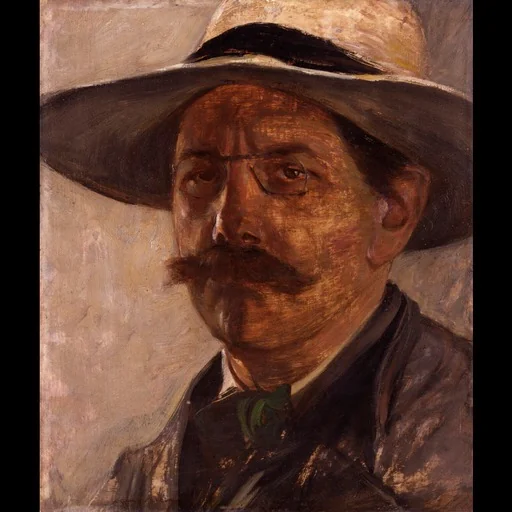
Archibald Standish Hartrick (7 August 1864 – 1 February 1950) was a Scottish painter known for the quality of his lithographic work.

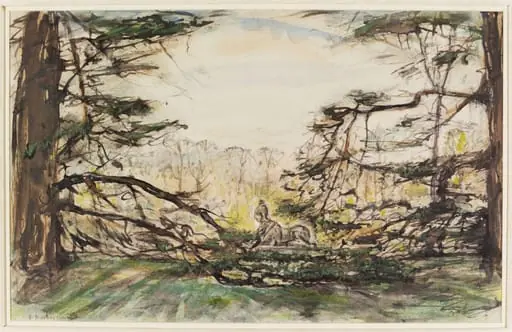 The Cedars, the Sphinx and the spring in the Grounds of Chiswick House
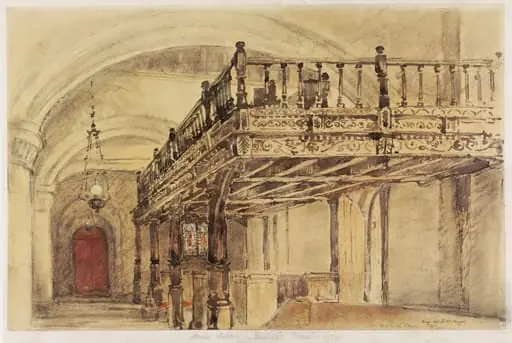 Music Gallery, St. Michael's Church, Bishop's Cleeve
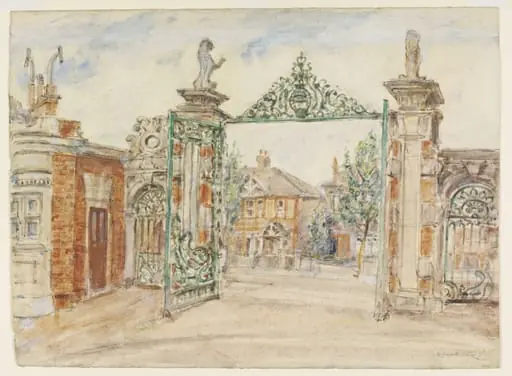 The Gateway, Boston Manor Park, Brentford.
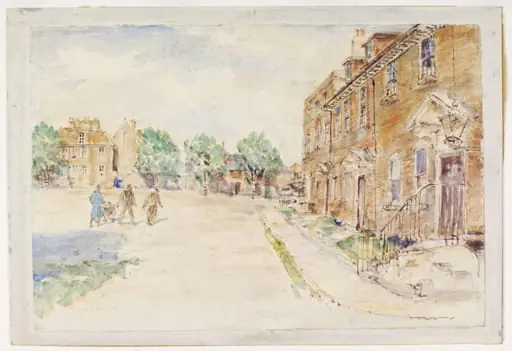 18th century houses at The Butts, Brentford
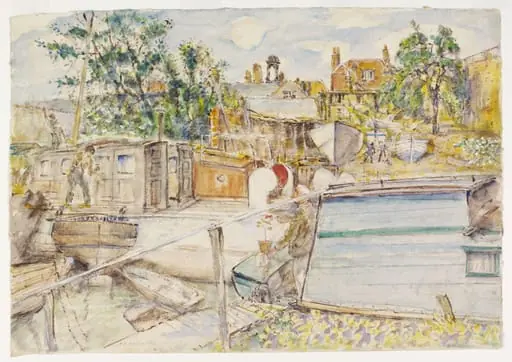 Dock of the Grand Union Canal Co., Brentford
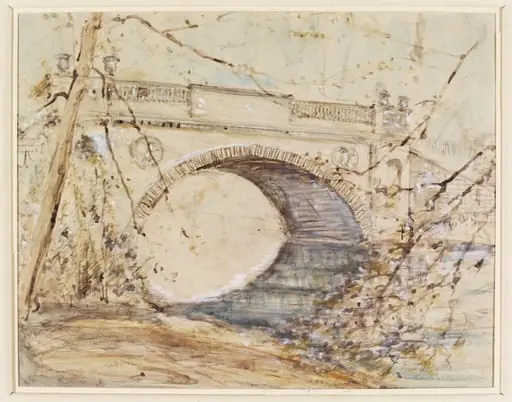 The Bridge in Chiswick House Grounds
 The Thames at Brentford
 Canal Barge at Brentford