Artwork
Still Life with Crab, Rummer and Grape
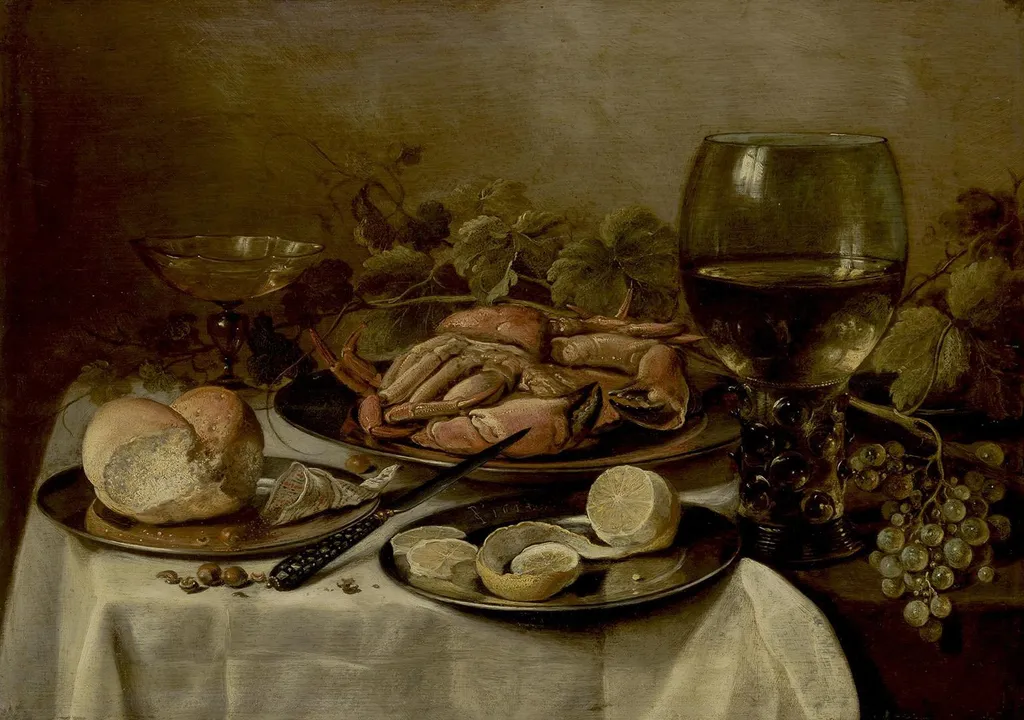
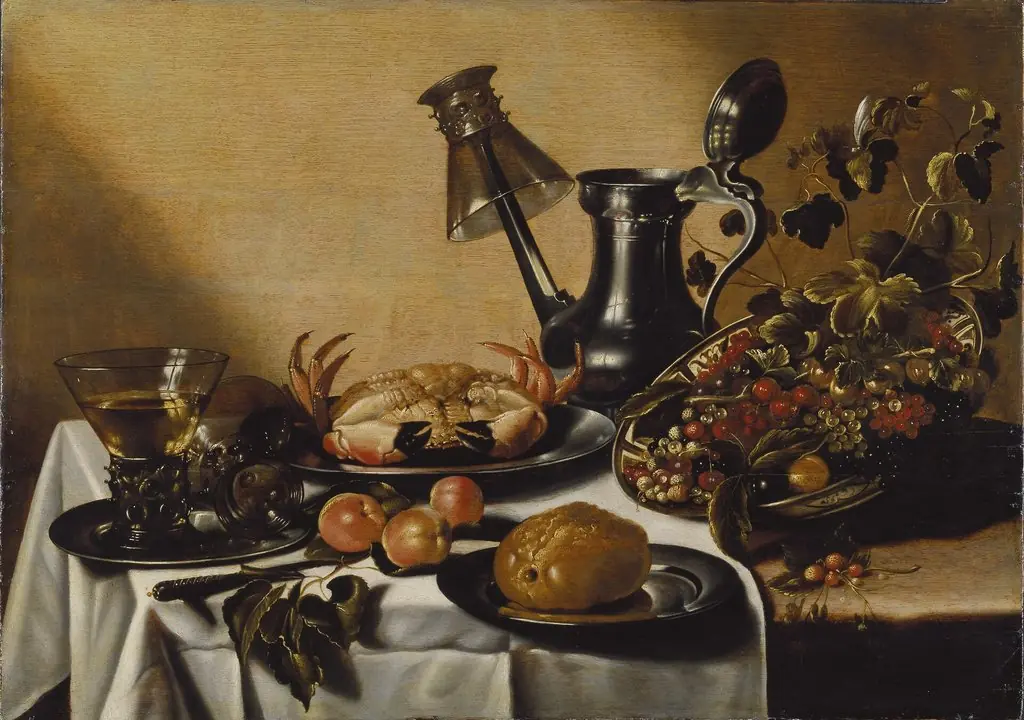
Still Life with Crab, Rummer and Grape is an oil painting by the Dutch Golden Age artist Pieter Claesz. It dates from 1644 and is held in the collection of the Hermitage Museum.
About this work
Overview
Painted in 1644, Pieter Claesz's Still Life with Crab, Rummer and Grape exemplifies the Dutch Golden Age tradition of the ontbijt, or breakfast piece.
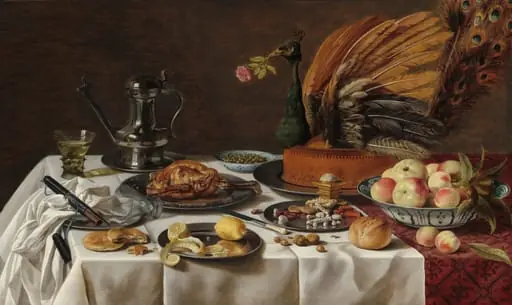
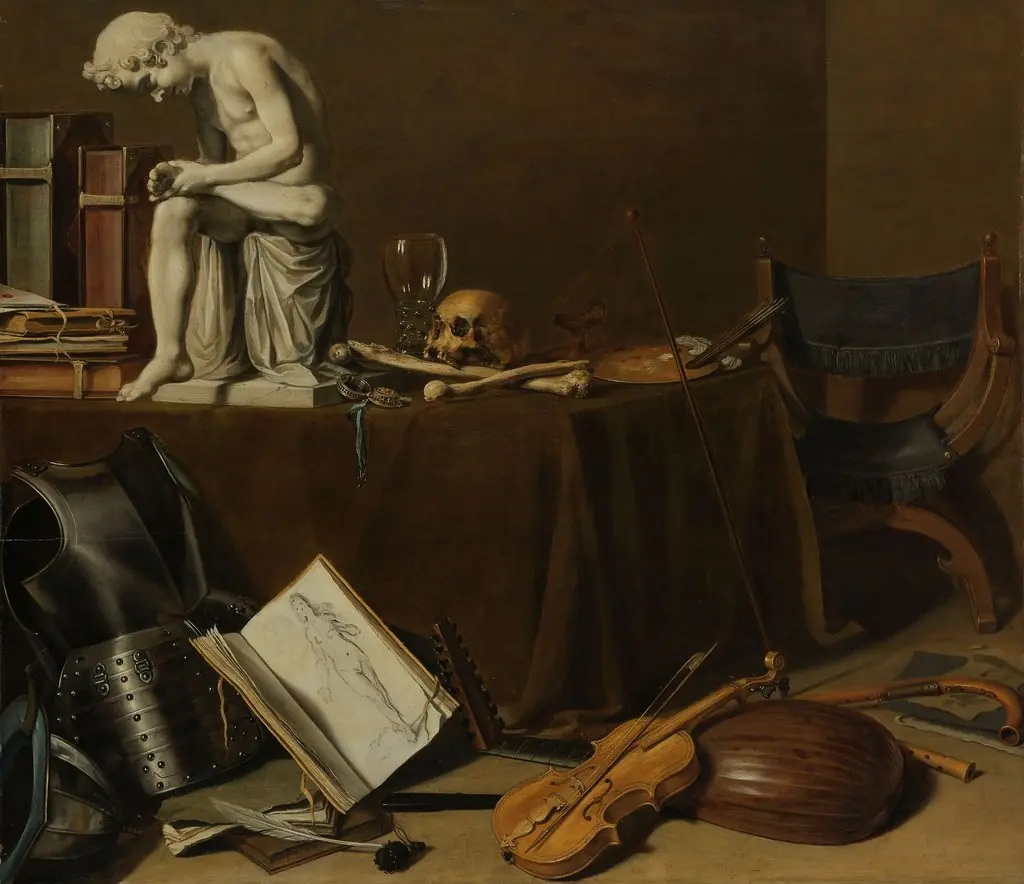
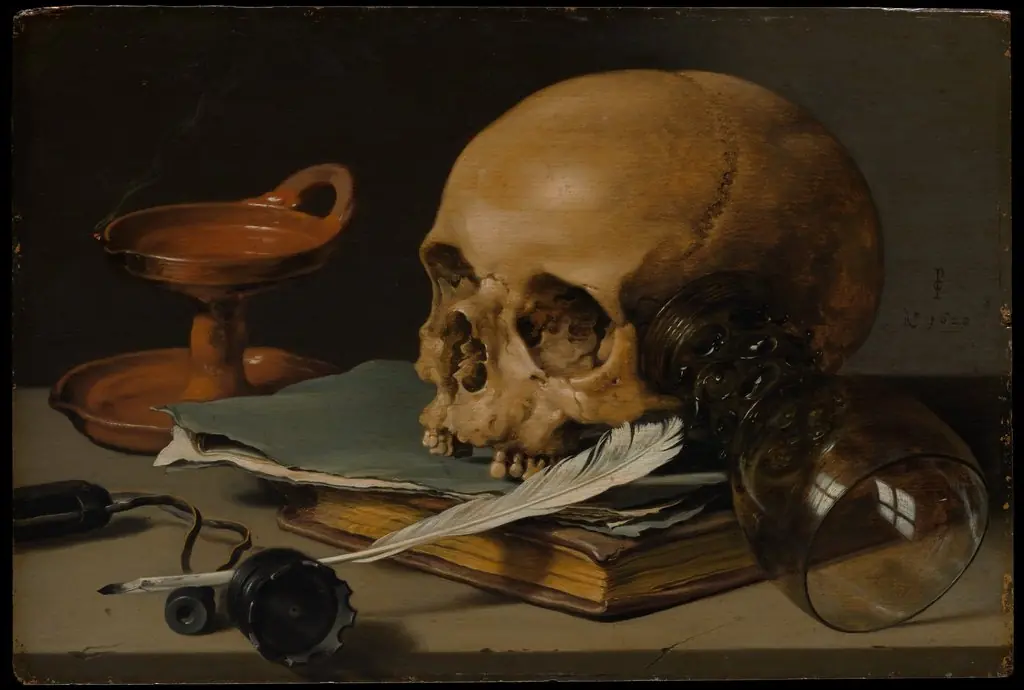
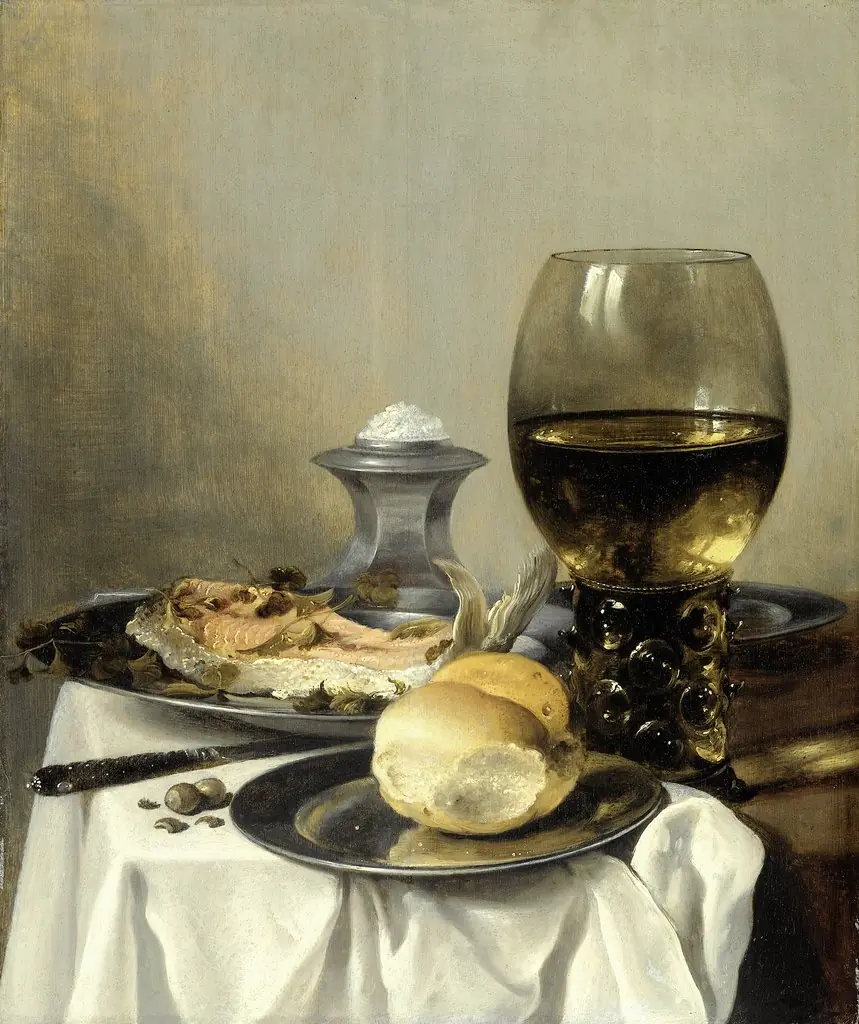
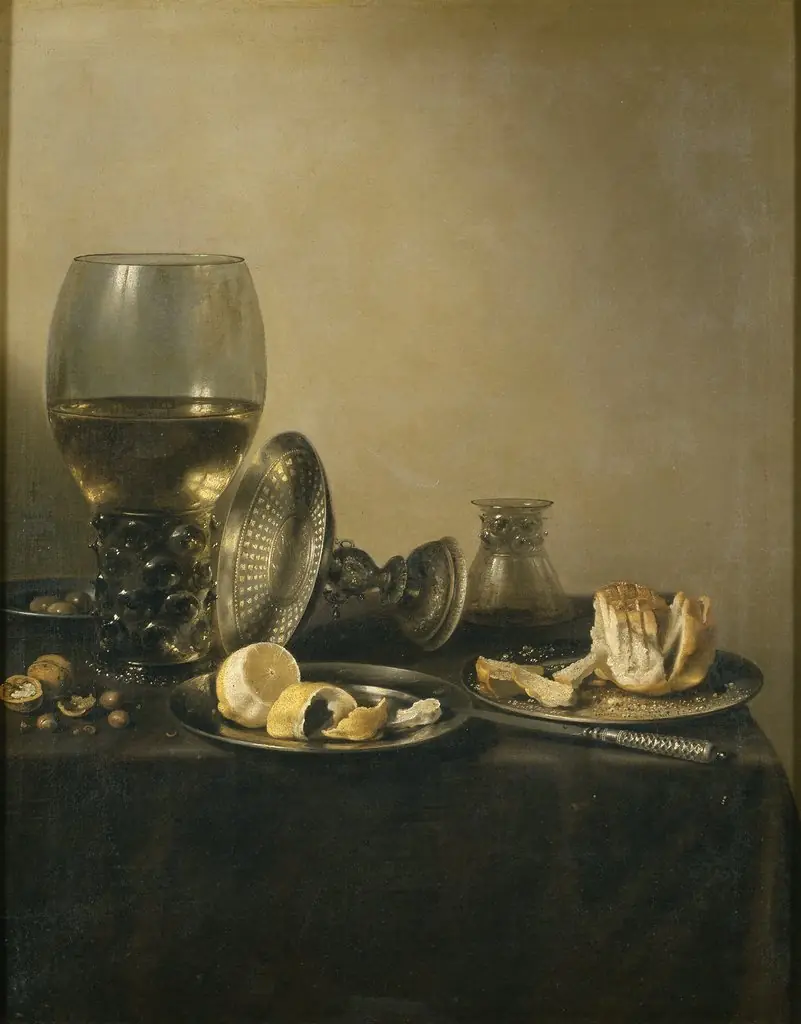
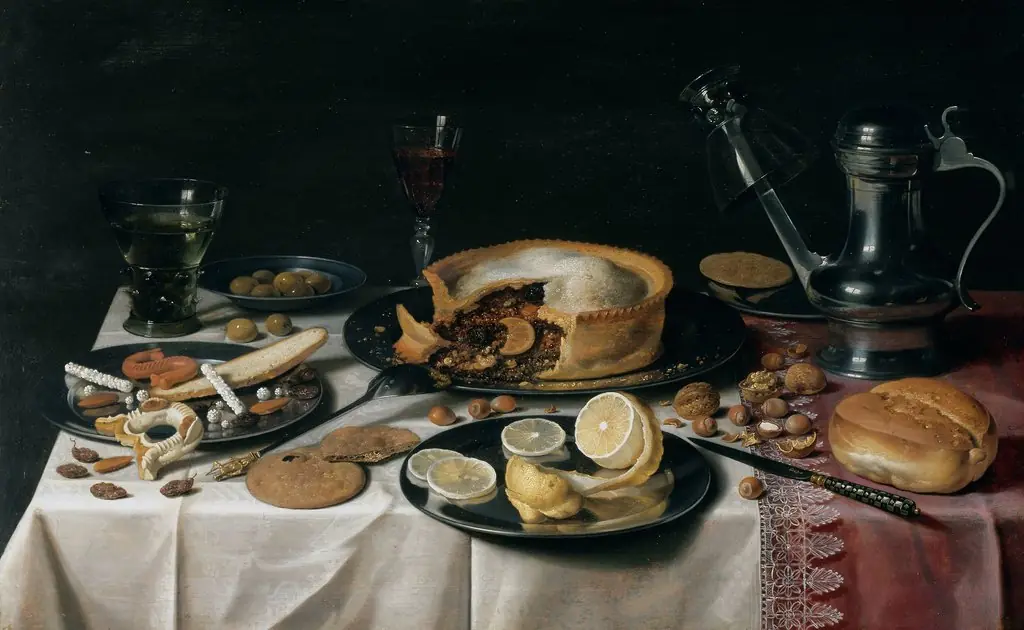
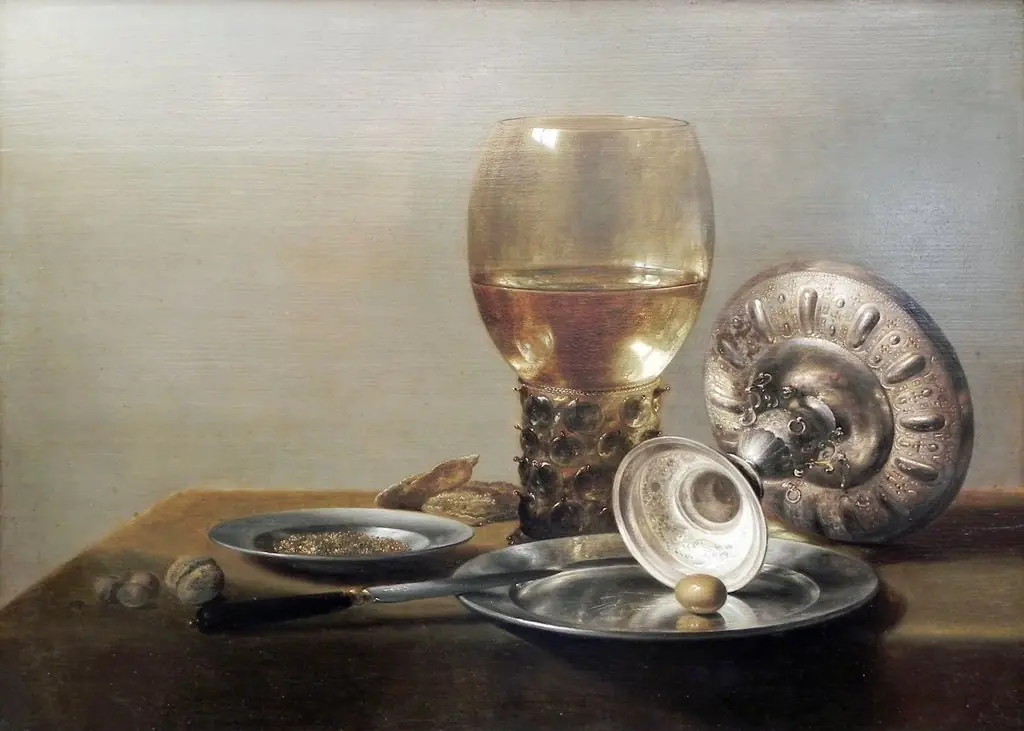
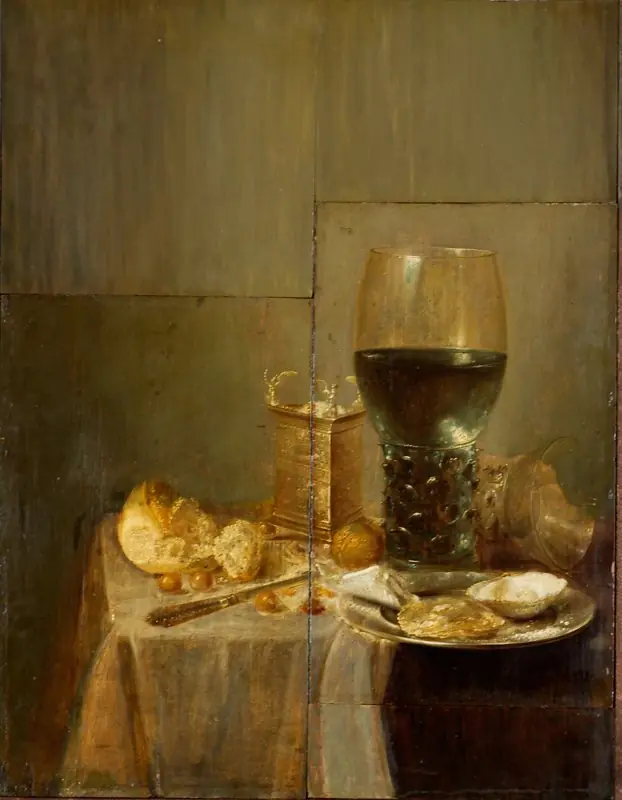
Painted in 1644, Pieter Claesz's Still Life with Crab, Rummer and Grape exemplifies the Dutch Golden Age tradition of the ontbijt, or breakfast piece. The composition arranges objects on a dark, receding table surface, utilizing a limited palette of browns, grays, and ochres punctuated by the bright yellow of a cut lemon and the translucent gold of wine. Central to the arrangement is a silver platter holding open crabs, their textured shells rendered with precise observation. To the side, a broken rummer and a partially filled wine glass demonstrate Claesz's mastery in depicting reflective surfaces and refraction. The inclusion of a torn piece of bread and scattered grapes adds a sense of immediacy and transience. This work reflects the artist's mature style, characterized by a unified tonal harmony and a subtle vanitas theme, where the abundance of food and drink serves as a reminder of life's fleeting nature. Claesz, a leading figure in Haarlem still-life painting, is renowned for his ability to imbue simple domestic objects with a quiet, meditative gravity, a quality fully realized in this 1644 canvas.
Subject & Meaning
The composition centers on a silver platter laden with open crabs, their claws extended, alongside a halved lemon whose inner flesh glows. A wine glass filled with golden liquid and a rummer stand nearby, complemented by grapes and bread. These carefully selected items, arranged on a plain white tablecloth against a dark background, evoke a sense of a paused meal, inviting contemplation of the depicted textures and forms.
Technique & Style
Claesz employed oil paint to achieve a high degree of realism, particularly evident in the varied textures of the objects. The artist masterfully utilized strong contrasts between light and shadow, a technique known as chiaroscuro, to create depth and volume. Brightly illuminated elements like the crabs and lemon emerge vividly against the painting's dark background, enhancing their tactile presence and making surfaces appear remarkably lifelike.
History & Provenance
Created in 1644, Still Life with Crab, Rummer and Grape has been preserved over centuries as a testament to 17th-century Dutch artistry. Today, this significant example of still-life painting is part of the esteemed collection at the State Hermitage Museum. Its acquisition by the museum ensures its continued study and appreciation within a public context, highlighting its enduring art historical value.
Artist & collection
Artist
Pieter Claesz was born in 1596 or 1597 in Berchem, near Antwerp, and moved to Haarlem in the Dutch Republic around 1620.