Artwork
Lucretia
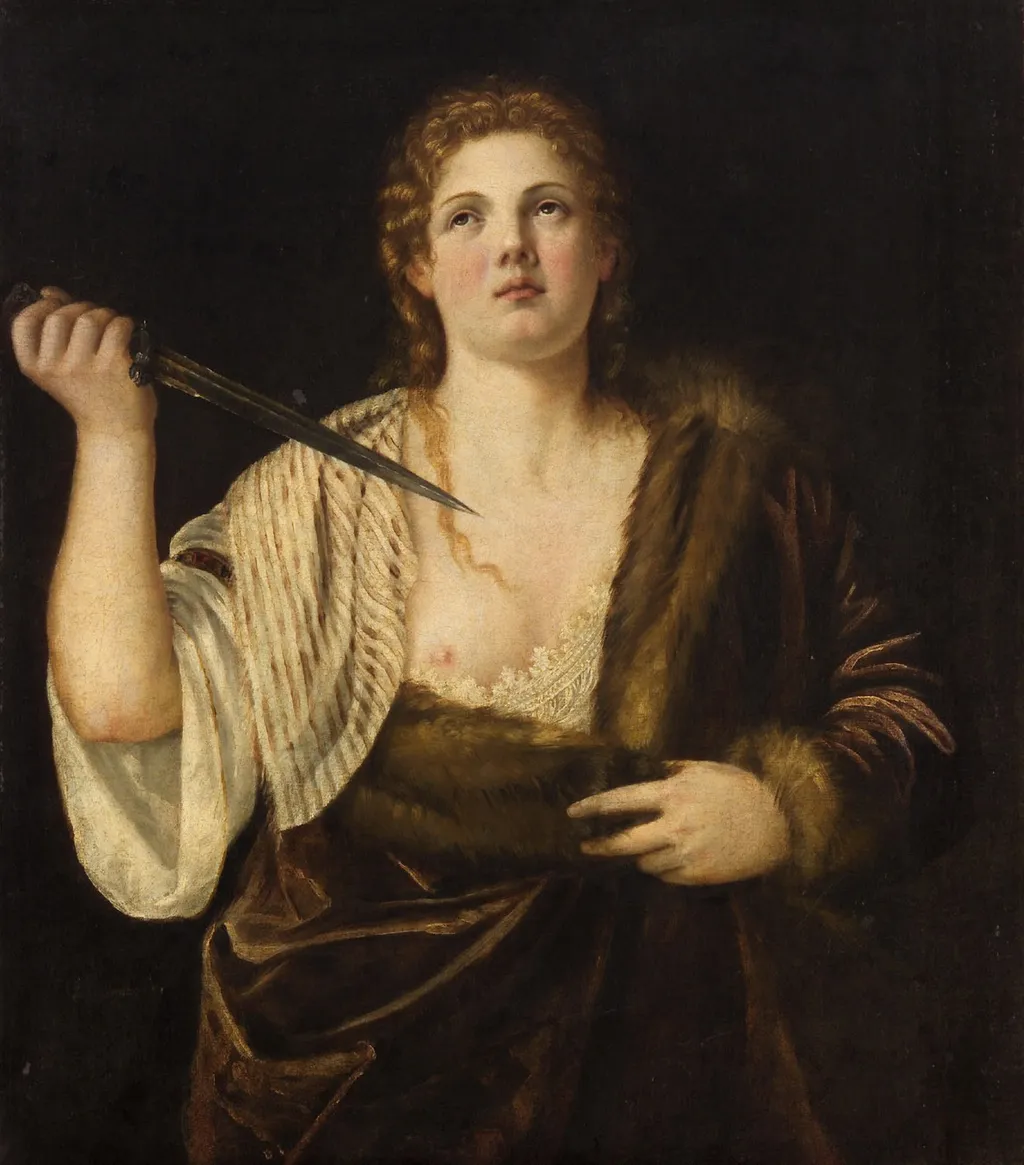
Lucretia is an oil painting by the Early Baroque Italian artist Unknown. It dates from 1570 and is held in the collection of the Kunsthistorisches Museum.
About this work
Overview
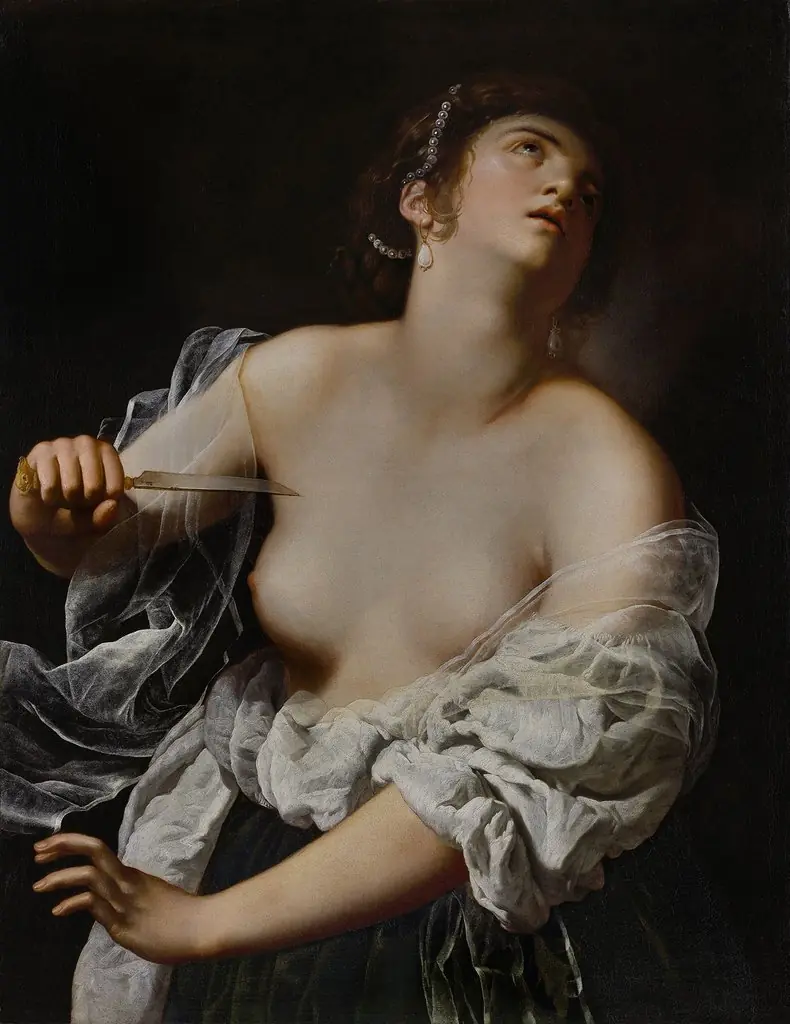
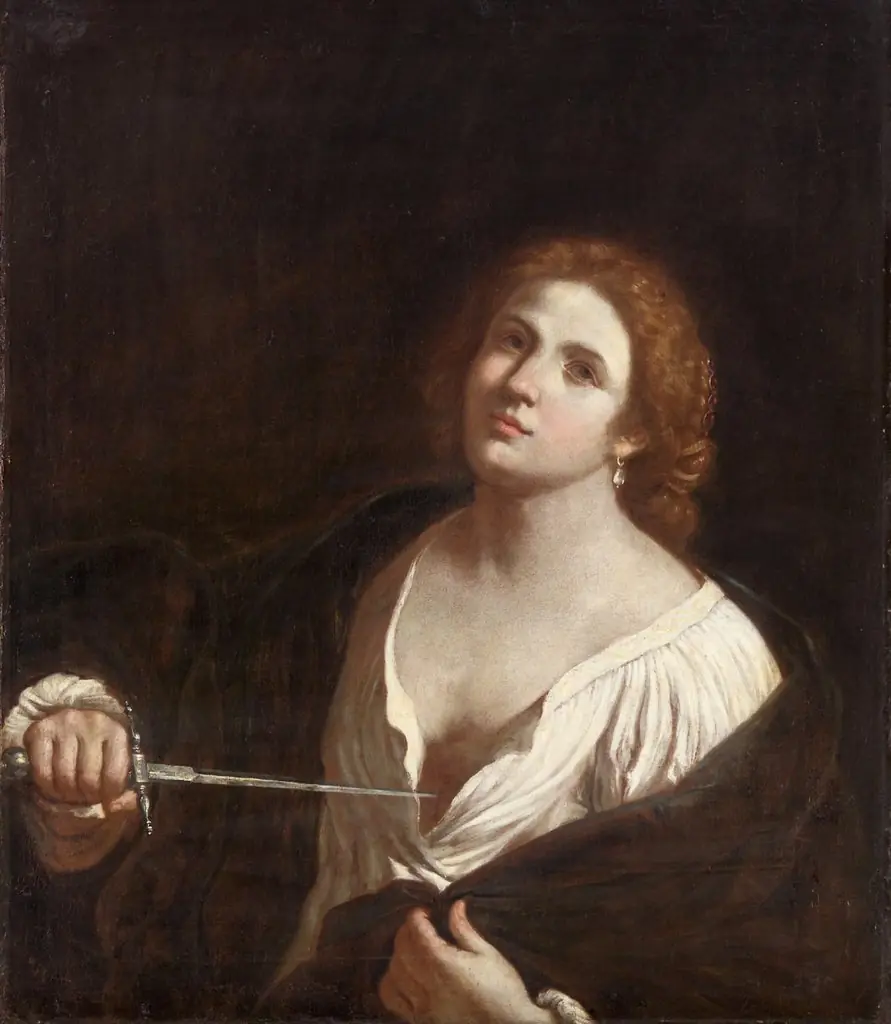
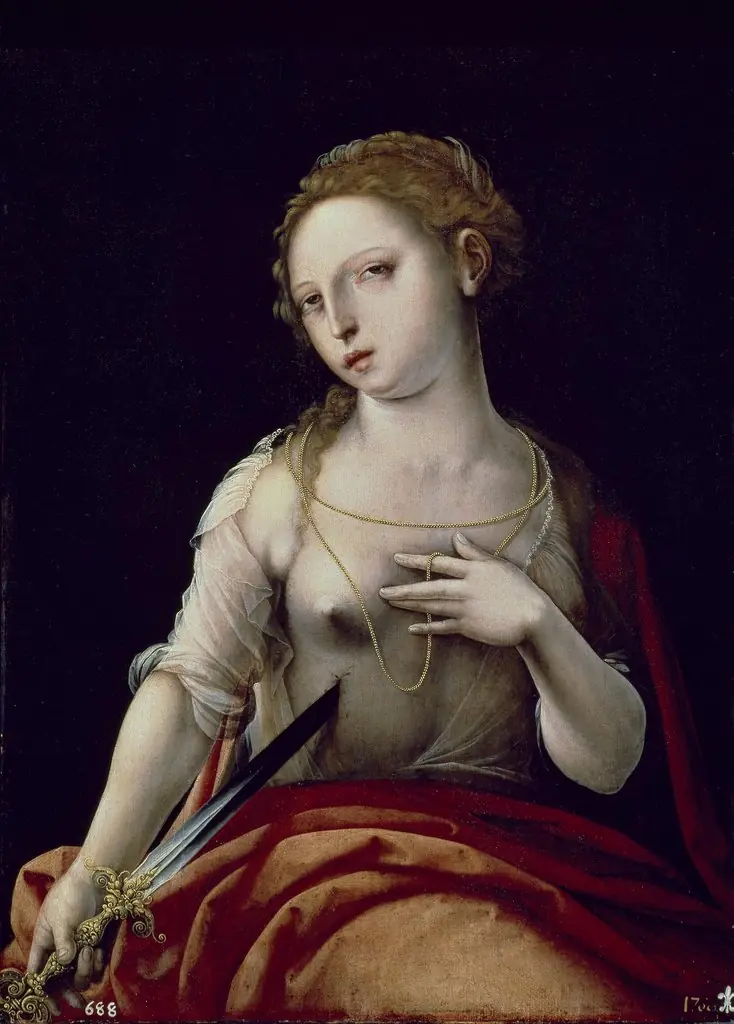
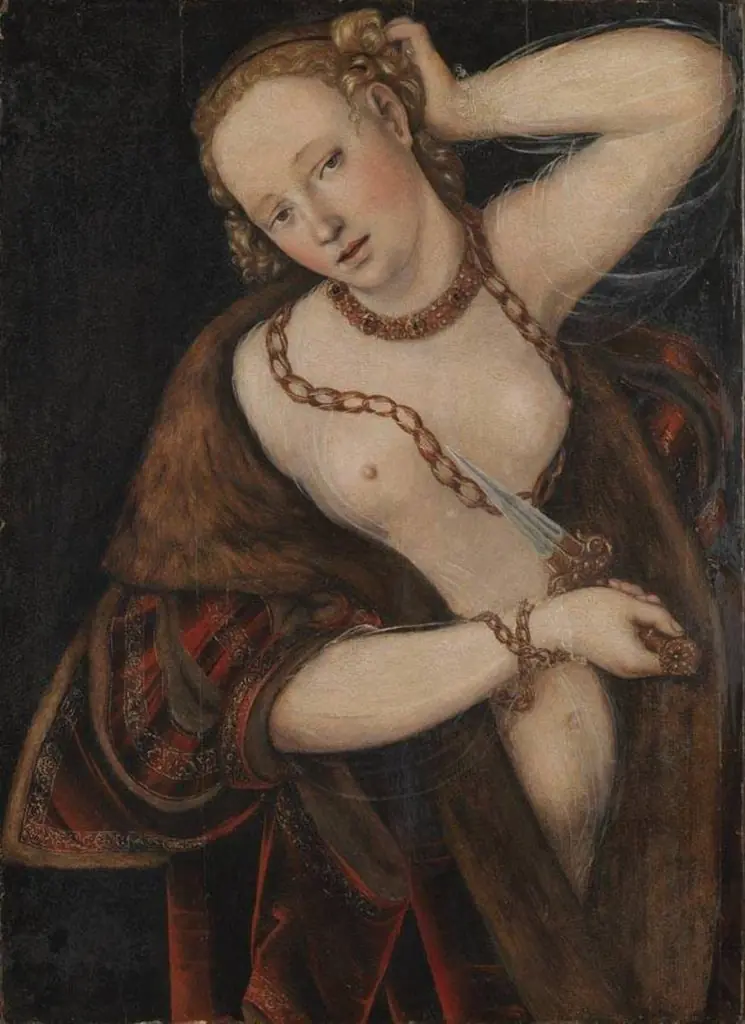
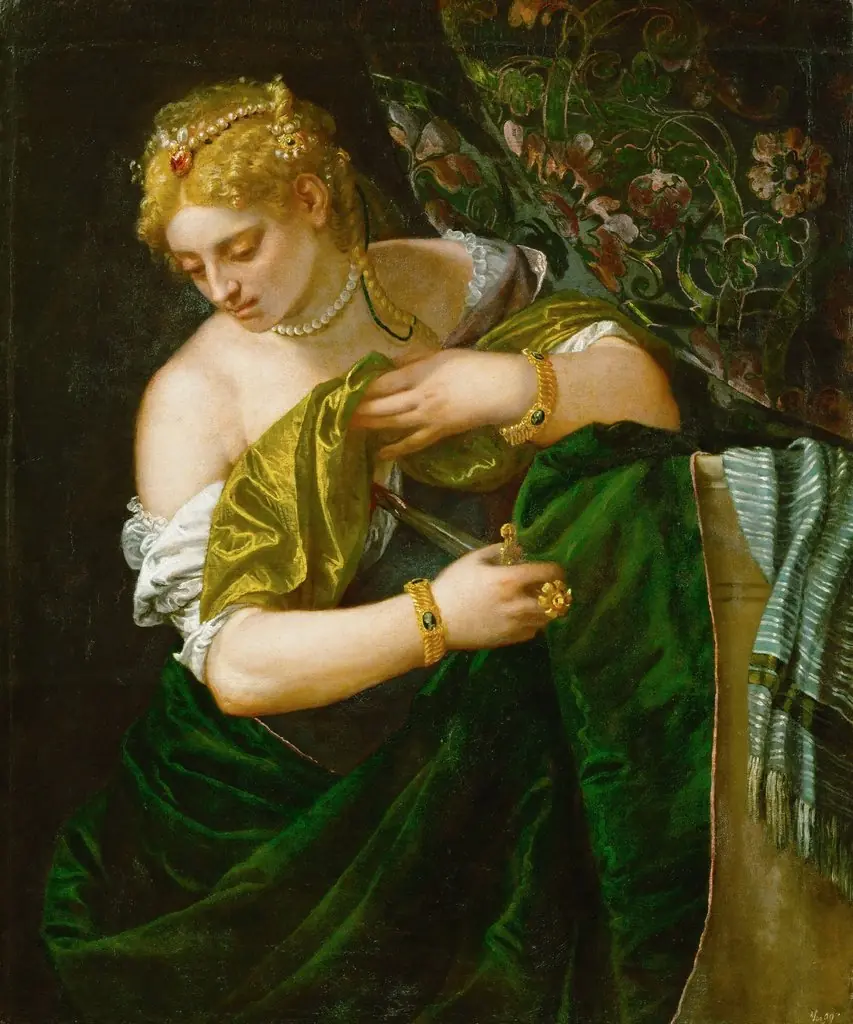
The oil painting titled “Lucretia” depicts a solitary female figure positioned centrally, illuminated against a deep, shadowy backdrop. She holds a knife in her right hand, poised as if ready to act, while her gaze lifts upward. Her attire consists of a white, lace‑trimmed top and a brown fur shawl draped over her left shoulder, rendered with careful attention to folds and texture.
Subject & Meaning
The work portrays the Roman heroine Lucretia at the moment of her tragic decision, symbolized by the knife she bears. Her somber expression and upward stare convey inner turmoil and resolve, reflecting the narrative of honor and sacrifice that has long been associated with her story in classical literature.
Technique & Style
Employing chiaroscuro, the artist contrasts the luminous flesh and delicate fabrics with a surrounding darkness, heightening the scene’s dramatic tension. Fine brushwork captures the intricate lace trim and the soft sheen of the fur shawl, while the knife is rendered with a crisp, metallic sheen that draws the viewer’s focus to the impending action.
Context
The painting belongs to a tradition of 17th‑century European works that revisited classical themes, often using Lucretia as a moral exemplar. Its composition, with a single figure illuminated against a dark field, aligns with the Baroque emphasis on emotional intensity and theatrical lighting.
Artist & collection

 Domestic Scene
 Giacomo and Cardinal Marco, investing Andrea, Abbot of San Zeno, with his Benefice
 The Nymph of Fontainebleau
 Portrait of a Woman
 Madonna and Child with Saints in the Enclosed Garden
 Venus and Minerva
 Family Group of Four on Sofa
 Wall painting from Room H of the Villa of P. Fannius Synistor at Boscoreale