Artwork
Portræt af Frederik Walter (1671-1718), gehejmeråd, overhofmester. Hvid Ridder 1701
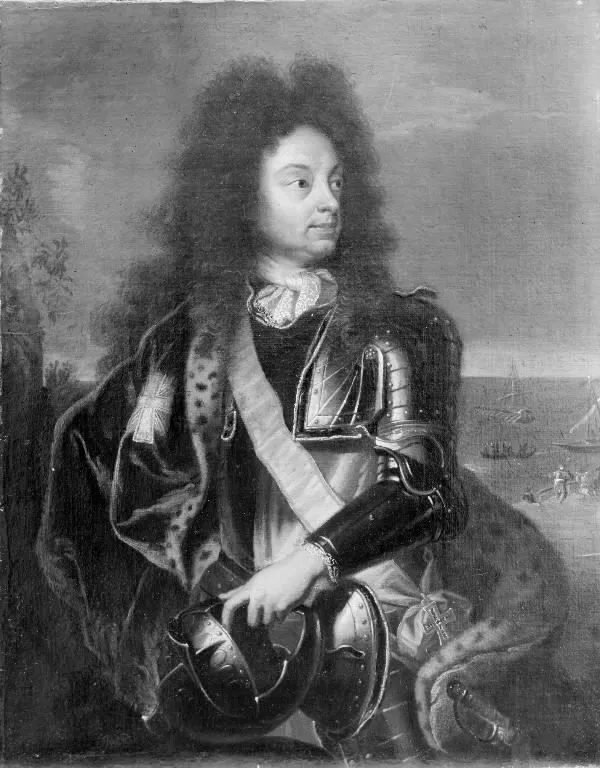
Portræt af Frederik Walter (1671-1718), gehejmeråd, overhofmester. Hvid Ridder 1701 is an oil painting by Unknown. It dates from 1818 and is held in the collection of the Statens Museum for Kunst.
About this work
Overview
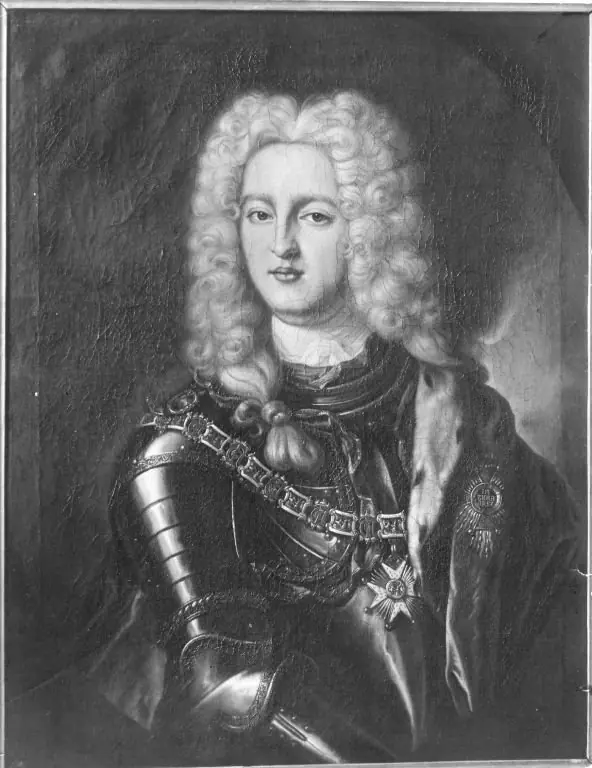
This oil painting from the early 18th century portrays Frederik Walter, a Danish nobleman holding high court offices, including Gehejmeråd and Overhofmester.
This oil painting from the early 18th century portrays Frederik Walter, a Danish nobleman holding high court offices, including Gehejmeråd and Overhofmester. Dressed in formal attire that blends civilian elegance with military symbolism, he is depicted mid-gesture, holding a helmet while wearing armor on his left arm. The composition balances portraiture with a tranquil landscape background, suggesting both status and contemplative authority.
Subject & Meaning
Frederik Walter is presented not merely as a court official but as a figure of refined power. The white sash and fur-lined cape denote rank and wealth, while the armor and helmet imply martial duty, even in peacetime. His poised stance and direct gaze convey dignity and composure. The distant landscape, with its quiet human activity, may symbolize the orderly realm he helped govern, reinforcing his role as a steward of state.
Technique & Style
The artist employs chiaroscuro to model the figure with strong contrasts between light and shadow, enhancing the three-dimensionality of the face, cape, and armor. Textures are rendered with precision—the fur, silk, and metal each respond differently to light. The landscape behind is softly rendered, creating spatial depth without distracting from the subject. Brushwork remains controlled, prioritizing clarity and presence over expressive flourish.
History & Provenance
Painted around 1701, shortly after Walter’s elevation to the Order of the White Knight, the portrait likely served as an official representation of his status. It remained within Danish aristocratic circles, possibly commissioned by the court or Walter himself. Its survival into modern times reflects its enduring significance as a record of elite identity in early modern Denmark.
Context
In early 18th-century Denmark, portraiture was a tool of political and social affirmation. Nobles like Walter, who held key administrative roles, used such images to assert legitimacy and continuity. The fusion of civilian dress with military accoutrements mirrored the era’s blurred lines between courtly and martial service. Landscape backgrounds were increasingly common, signaling cultivated taste and connection to a broader, ordered world.
Legacy
The portrait stands as a representative example of Danish court painting during the reign of Frederick IV. It preserves the visual language of aristocratic identity at a time when Denmark was consolidating its bureaucratic state. While not widely exhibited today, it remains a valuable artifact for understanding how power, status, and personal image were negotiated through art in early modern Scandinavia.
Artist & collection

 Domestic Scene
 Giacomo and Cardinal Marco, investing Andrea, Abbot of San Zeno, with his Benefice
 The Nymph of Fontainebleau
 Portrait of a Woman
 Madonna and Child with Saints in the Enclosed Garden
 Venus and Minerva
 Family Group of Four on Sofa
 Wall painting from Room H of the Villa of P. Fannius Synistor at Boscoreale
 Ludwig Anton in goldverzierter Rüstung
 Portrait of a Man
 Portrait of a Man
 Kong Christian V
 Portrait of Ferdinando de' Medici, Grand Prince of Tuscany
 Kong Christian V
 Bildnis des Kurfürsten Max Emanuel von Bayern
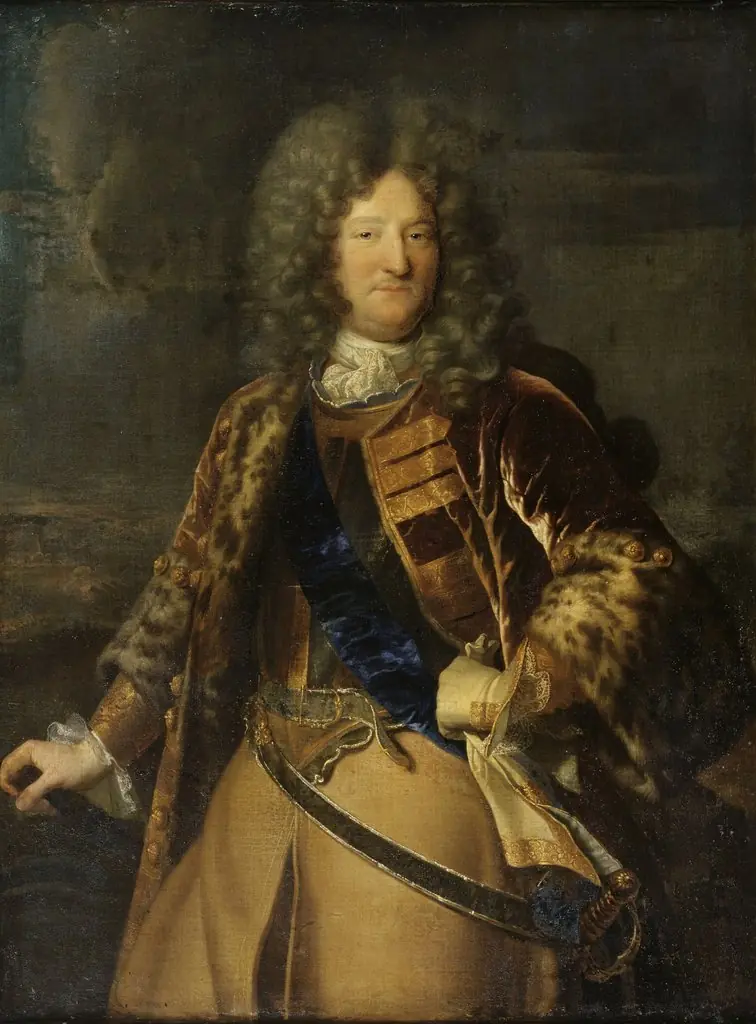 Porträt des Anne-Jules, Herzog von Noailles (1650-1708)
 Fürstenbildnis
 Portrait of Louis XIV
 Bildnis eines Prinzen
 Count Palatine Christian III from Zweibrücken-Birkenfeld